


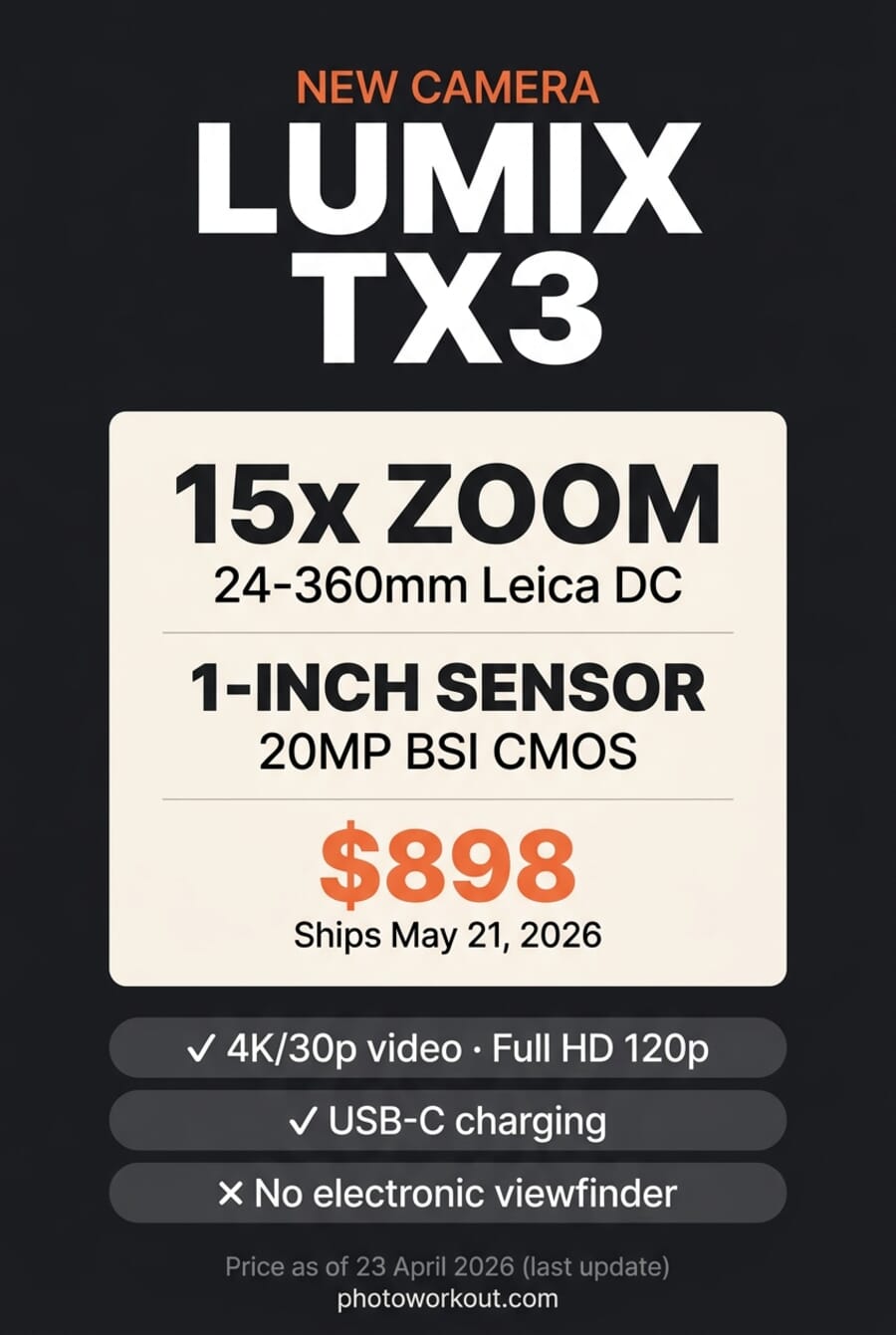
- Panasonic announced the Lumix TX3 on April 22, 2026. Pre-orders open April 27; US ships May 21, 2026 at $897.99 (Japan price ¥129,000).
- 20.1MP 1-inch BSI CMOS sensor (upgraded from the TX2’s front-illuminated chip) with a Leica DC Vario-Elmar 24-360mm f/3.3-6.4 (15x optical zoom), plus 3cm macro at wide.
- 4K/30p video (up from 4K/24p on the TX2), Full HD 120p slow-motion, and USB-C charging are the three headline upgrades over the outgoing TX2D.
- The big cut: no electronic viewfinder. That’s a deliberate size trade — the TX3 stays genuinely pocketable at 111.2 × 66.4 × 45.2mm and 337g — but it’s a deal-breaker for bright-daylight shooters.
- Sold as the ZS300 / TZ300 in the US and Europe. CIPA forecasts 13.6% growth in fixed-lens compact shipments in 2026 — this camera is timed for a category that’s actually growing.
Panasonic announced the Lumix TX3 in Japan on April 22, 2026 — a long-awaited refresh of the 1-inch pocket-compact line that began with the TX1/TZ100 in 2016 and last saw a proper update with the TX2D in 2022. Pre-orders open April 27, with ships from May 21, 2026. Japan price is ¥129,000; US and European markets get the camera as the ZS300 / TZ300 at $897.99, already listed on B&H and Amazon.
This isn’t a reinvention. It’s a measured tune-up of a beloved formula — the same 15x Leica DC zoom, the same 1-inch-class sensor, a bit more video capability, USB-C charging, and one important removal. Whether that’s what enthusiasts asked for depends on which part of the brief you weight.
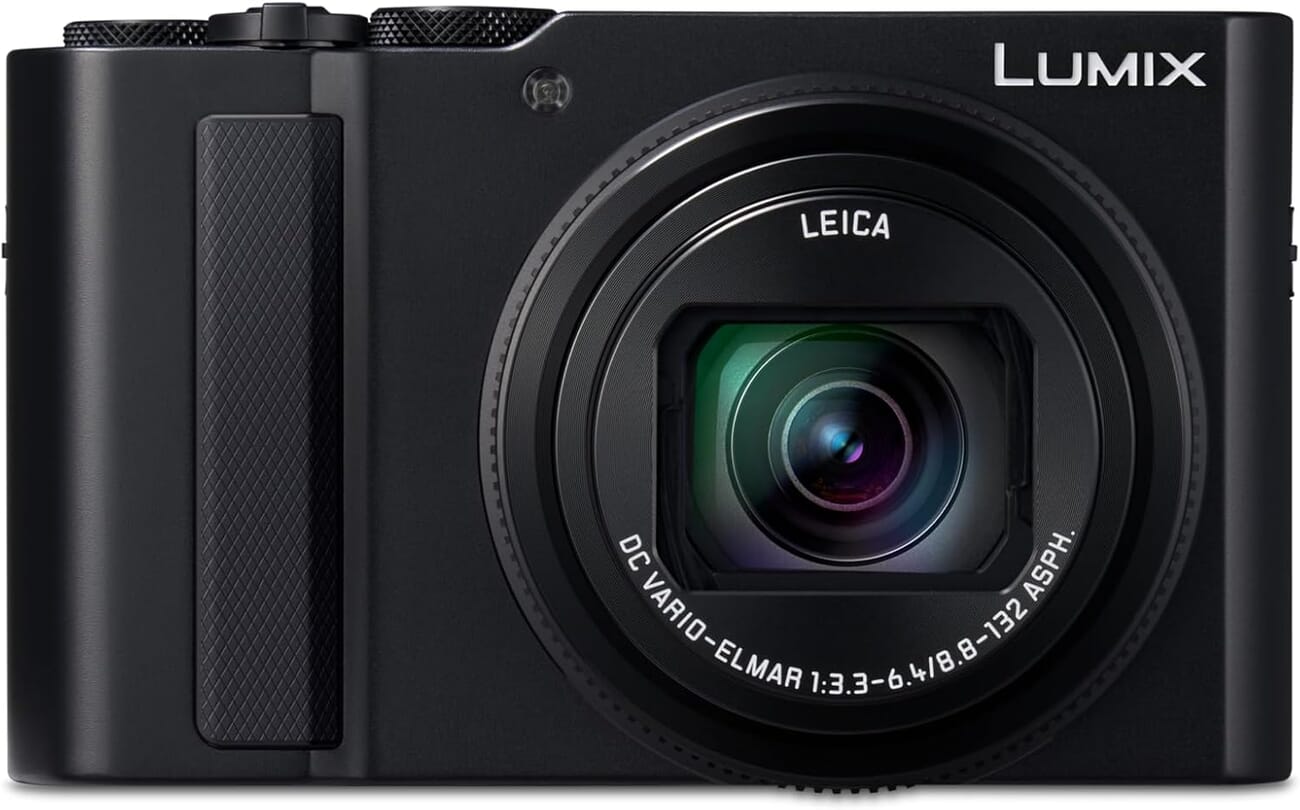
What’s New in the Lumix TX3
- Sensor upgrade: 20.1MP backside-illuminated 1-inch CMOS, replacing the TX2D’s front-illuminated sensor. Panasonic claims improved dynamic range and cleaner high-ISO output — the kind of low-light gain that matters most on a 24-360mm zoom where long-end apertures are narrow.
- 4K/30p video: up from 4K/24p on the TX2. Adds Full HD 120p for slow-motion capture. The TX3 remains a primarily stills-first camera, but the video spec is now competitive with entry Sony RX and Canon G-series bodies.
- USB-C charging: a long-overdue upgrade. The TX2D used micro-USB, which alienated anyone with a modern laptop or phone charger. USB-C PD support is a quality-of-life win for travel.
- Same lens: Leica-certified DC Vario-Elmar 24-360mm f/3.3-6.4 ASPH., with 3cm macro at the wide end. 15x optical is the signature spec — nothing else this pocketable offers that reach on a 1-inch sensor.
- Same ergonomics: 3-inch 1.84-megapixel touchscreen, Bluetooth 5.0, 2.4GHz Wi-Fi. 111.2 × 66.4 × 45.2mm, 337g with battery and card. Available in black and graphite silver.
The Missing Viewfinder
The TX2D had a small 0.21-inch electronic viewfinder that slid out of the body. The TX3 dropped it. Panasonic’s reason is explicit: keeping the body small enough to count as genuinely pocketable — 45.2mm deep, barely thicker than a paperback novel.
Whether that trade makes sense depends on shooting conditions:
- Fine in good light: for indoor use, social content, and content creators working from a tripod or handheld screen, the 3-inch rear touchscreen is more than enough.
- Compromised in bright sun: a 3-inch LCD at max brightness is very hard to compose against in direct daylight. Landscape photographers, hikers, and travel shooters who spend time outdoors will notice the missing EVF immediately.
- Difficult for stability: pressing a camera against your eye through a viewfinder is the single most effective way to stabilize a 360mm long-end shot. Arms-out screen framing at 360mm equivalent needs IBIS discipline to stay sharp.
The competing option that keeps the EVF is the Sony RX100 VII (still $1,298 new). It’s older but still has the slide-out viewfinder. If a viewfinder is non-negotiable, the RX100 VII remains the choice. For everyone else, the TX3’s smaller body and longer zoom is the better bet.
Yes, It’s Coming West — Quietly
Panasonic’s Japanese announcement led some reports to suggest this would be a Japan-only release. It isn’t. The camera is already listed on Amazon US and B&H as the Lumix ZS300 (North America) or TZ300 (Europe/Asia) at $897.99. US pre-orders open April 27 alongside Japan; shipments begin May 21.
The naming split is standard Panasonic practice — TX in Japan, ZS in North America, TZ everywhere else. Core body, specs, and price-parity (after currency) are identical. The only regional variance is accessory bundling and which colors each market gets.
The Compact-Camera Revival Is Real
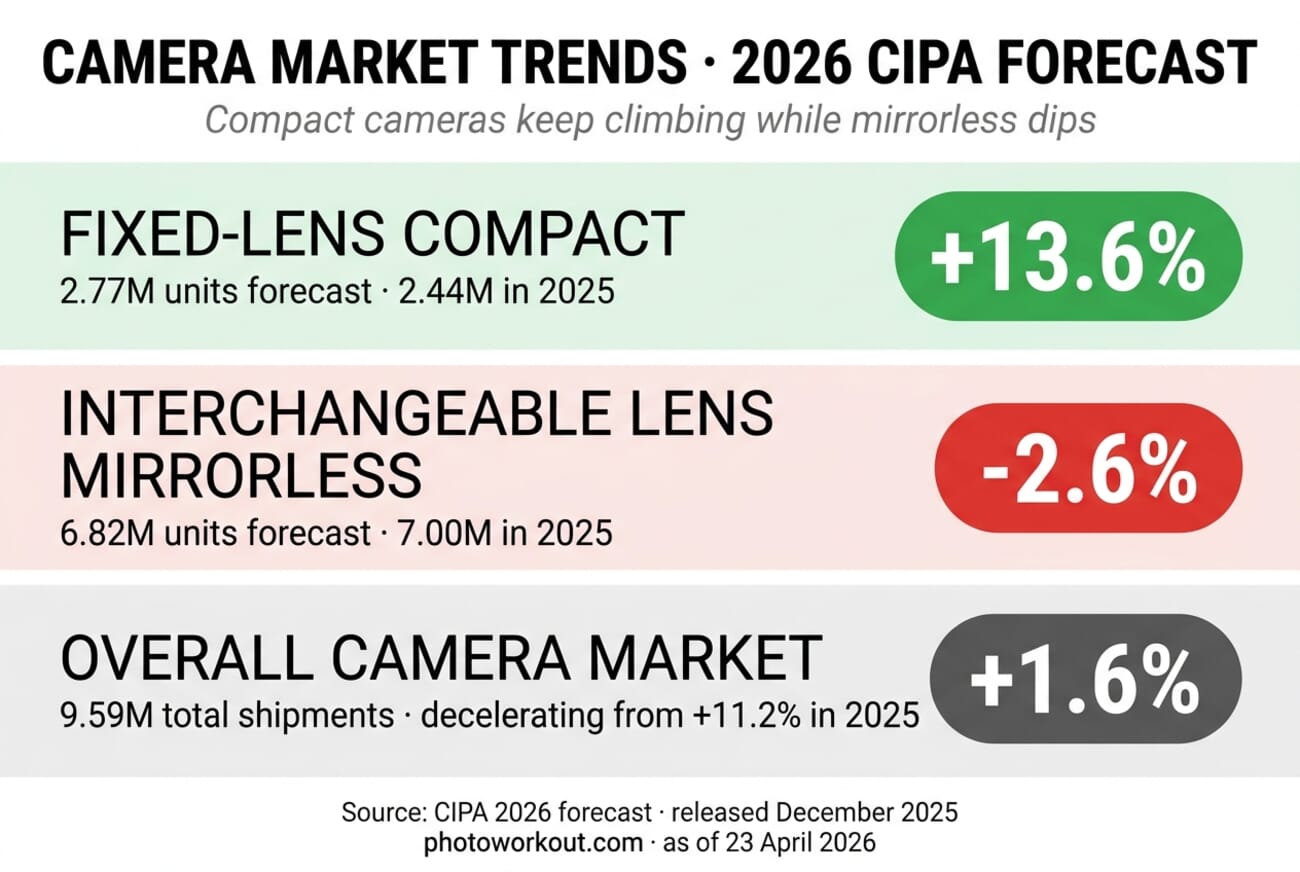
Panasonic’s timing is not accidental. The Camera & Imaging Products Association (CIPA) — the industry body that reports global camera shipments — forecasts fixed-lens compact cameras to grow 13.6% in 2026 to 2.77 million units shipped, up from 2.44 million in 2025. That 2025 figure was itself up 29.6% from 2024. Digital Camera World’s CIPA coverage frames compacts as the only camera category with actual momentum.
Meanwhile, interchangeable-lens mirrorless is declining — projected to fall 2.6% to 6.82 million shipments. Two opposing curves: a saturated mirrorless market that’s reached peak enthusiast density, and a compact market benefitting from Gen-Z interest in dedicated cameras, TikTok-driven vintage-camera trends, and serious photographers wanting a non-phone travel option.
Panasonic itself acknowledged the shift in a CP+ 2026 interview — DPReview quoted executives framing “the compact renaissance as an opportunity for Lumix.” The TX3 is the first visible product of that strategic pivot. Ricoh’s GR IV, OM System’s newly confirmed compact plans, and Fujifilm’s X100 waiting list point in the same direction.
Is This the Pocket Compact Enthusiasts Have Been Waiting For?
Depends on what “waiting for” means. The short answer:
- Yes, if you wanted a true pocket camera with a 1-inch sensor and long zoom: nothing else at this size gives you 24-360mm on a 1-inch chip. The Sony RX100 line caps out at 70-200mm. The Canon G5 X Mark II and G7 X Mark III top out at 120mm. The TX3 is alone in the 15x-zoom niche for 1-inch pocket compacts.
- Yes, if you wanted USB-C and a 4K bump: both long-overdue quality-of-life upgrades that make the camera easier to live with.
- No, if you wanted a full sensor/processor generation jump: this is the same formula tuned up. No stacked sensor. No Venus Engine successor. No phase-detect AF in a class that desperately needs it.
- No, if you wanted the EVF retained: the missing viewfinder is the single most-cited complaint in the Japanese reviewer reaction so far. If you shoot outdoors a lot, the 3-inch LCD-only setup is a meaningful downgrade.
- Maybe, if you wanted modern AF: Panasonic hasn’t disclosed whether the TX3 adopts the phase-detect autofocus that recent full-frame Lumix bodies now ship with. If it’s still contrast-detect, that’s another miss. If it’s PDAF-equipped, that’s a real upgrade that makes the 24-360mm actually usable for subjects that move.
Verdict: for the specific use case of “one-bag travel with a 1-inch sensor that can actually zoom,” the TX3 is the strongest option available and will be for the foreseeable future. For anyone hoping Panasonic would deliver a ground-up reimagining of the category — with stacked sensor, phase detection, and a ground-breaking new UI — this isn’t it.
Frequently Asked Questions
When is the Panasonic Lumix TX3 available in the US?
US pre-orders open April 27, 2026. Ships begin May 21, 2026. The camera is sold in the US as the Lumix ZS300 at $897.99, available through B&H, Amazon, and authorized Panasonic dealers. In Europe and Asia it’s the Lumix TZ300; in Japan, the TX3.
What’s the difference between the Lumix TX3 and the TX2D?
Three main upgrades: backside-illuminated CMOS sensor (replacing front-illuminated), 4K/30p video (up from 4K/24p), and USB-C charging (replacing micro-USB). One key removal: the electronic viewfinder. Same 15x Leica DC Vario-Elmar lens, same 20MP resolution, same body dimensions.
Why did Panasonic remove the electronic viewfinder?
To keep the body pocketable. The TX2D’s slide-out EVF added thickness and complexity. Panasonic’s explicit trade-off: a flat, genuinely-pocketable camera instead of one with an EVF bump. For shooters who need a viewfinder — particularly in bright outdoor light — the Sony RX100 VII remains the main alternative.
Is the lens really certified by Leica?
Yes, but with the usual caveat: the LEICA DC VARIO-ELMAR designation means the lens meets Leica’s optical quality standards (distortion, resolution, flare, ghosting) under contract, not that it was physically made in Leica’s Wetzlar factory. Panasonic has had a long-running Leica partnership on compact and Micro Four Thirds lenses for more than a decade.
Does the TX3 have image stabilization?
Yes — 5-axis Power O.I.S. (Panasonic’s optical IS system), plus electronic stabilization for 4K video. Dual IS becomes especially important at the 360mm long end, where handheld shots need every stop of stabilization the camera can offer to stay sharp.
How does the TX3 compare to the Ricoh GR IV for street photography?
Different tools. The Ricoh GR IV has a 28mm fixed prime, faster aperture, and APS-C sensor — better for low light and one-step street work. The TX3 has the 15x zoom that no GR IV can match. Street shooters who want reach (candid long-lens portraits, reach to architecture) will pick the TX3; purists who shoot only wide-normal will pick the GR IV.
Is the TX3 worth $898 versus used TX2D bodies under $600?
For most buyers, yes. The BSI sensor and 4K/30p are real upgrades, and USB-C charging alone is worth the difference for travel. If you already own the TX2D and it still works, the upgrade math is thinner — the lens is the same and the EVF is gone on the TX3. For new buyers coming in fresh, the TX3 is the better long-term investment.
What about the Canon PowerShot G7 X Mark III or Sony RX100 VII?
Both are tested, trusted, and smaller. Both have shorter zooms (G7 X Mark III = 4.2x to 120mm; RX100 VII = 8x to 200mm). If maximum zoom reach matters, the TX3 wins. If faster apertures in low light matter more, the G7 X series wins. If EVF and one-take all-rounder polish matters, the RX100 VII remains the pick despite its age.
Hero graphic composed by PhotoWorkout using Panasonic’s official Lumix TX3 press photo. CIPA forecast chart and Pinterest pin by PhotoWorkout editorial. Pricing and specs verified against Panasonic’s April 22, 2026 announcement and B&H / Amazon US listings on April 23, 2026.
All sources verified on April 23, 2026. Hands-on review will follow the US May 21 shipments.
Panasonic announcement
- Panasonic Japan — DC-TX3 product page – Official Japan-market product page with full specification sheet.
- Panasonic Japan — DC-TX3 specs (detailed) – Detailed spec table covering sensor, lens, video, and connectivity.
- Video SALON — Lumix DC-TX3 launch coverage – Japanese industry coverage confirming May 2026 ship window and price.
- dc.watch — LUMIX TX3 BSI upgrade – Detailed Japanese-language breakdown of sensor/video/EVF changes vs TX2D.
Market context
- Digital Camera World — CIPA 2026 compact growth forecast – Compact +13.6% vs mirrorless -2.6% CIPA forecast for 2026.
- DPReview — Panasonic CP+ 2026 interview – Panasonic executives on positioning Lumix for the compact revival.
This post contains affiliate links. If you buy through them, PhotoWorkout may earn a commission at no extra cost to you.