
DJI’s FCC Crackdown: 25 US Launches Blocked, $1.5B at Stake — What Photographers Lose

Key Takeaways
DJI’s FCC Crackdown: 25 US Launches Blocked, $1.5B at Stake — What Photographers Lose
  • DJI told the US 9th Circuit on April 22 that the FCC crackdown will cost it $1.5 billion in 2026 — the clearest dollar figure since the ban began.
  • $700M comes from 14 existing products losing FCC authorizations. $860M from 25 new 2026 launches that cannot be imported or sold in the US.
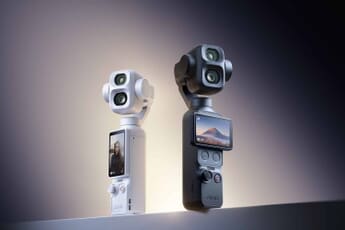
  • The first real casualty is the DJI Osmo Pocket 4, which launched globally but is unavailable to US buyers — followed by the DJI Action 7 and a rumored Pocket 4 Pro.
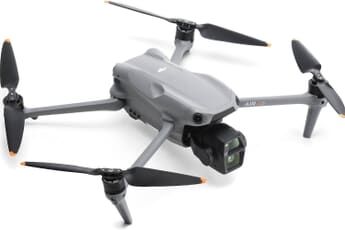
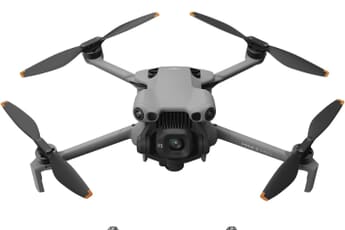
  • Pre-Dec 22, 2025 products (Mavic 4 Pro, Air 3S, Mini 4 Pro, Avata 2) remain legal to sell — this is not a retroactive ban.
  • DJI’s legal argument: the FCC’s designation is ‘procedurally and substantively flawed’ and violates the Fifth Amendment. Ninth Circuit decision pending.

DJI put a number on the US import ban for the first time today — $1.5 billion. In a filing to the Ninth US Circuit Court of Appeals, the company told the court that DroneDJ first reported the math: $700 million in lost authorizations for 14 existing products, plus $860 million projected from 25 new launches now blocked from the US market in 2026.

The figure is the clearest financial picture DJI has disclosed since the FCC added the company to its ‘Covered List’ on December 22, 2025 — a designation that immediately barred new equipment authorizations for products deemed a national-security risk. This is the follow-up to our earlier report on DJI’s February lawsuit, and it’s the first time DJI has attached hard numbers to the consequences.

Infographic breaking down DJI's $1.5 billion 2026 loss estimate from the FCC crackdown: $700 million lost authorizations across 14 products, $860 million from 25 blocked new launches
DJI's $1.5B loss estimate, broken down: $700M on 14 existing products losing FCC authorizations, $860M on 25 new US launches blocked in 2026. Source: DJI filing, US 9th Circuit, April 22, 2026.

The $1.5 Billion Math

DJI’s filing separates the losses into two distinct buckets:

  • $700 million — lost authorizations. 14 existing DJI products had FCC authorizations set aside after the Covered-List designation. Until or unless the court reverses the ruling, those products can still be sold if they already cleared FCC pre-December 22 — but newer units or revised SKUs in the same line cannot.
  • $860 million — new launches blocked. 25 drones, cameras, and accessories planned for US release in 2026 simply cannot be authorized. DJI can announce them (as it has for several), but they cannot be imported or sold legally in the US until authorization is granted — which under current rules, will not happen.

That $1.56 billion combined estimate represents roughly 15-20% of DJI’s total annual revenue (the company is private and doesn’t report publicly, but Bloomberg estimates put 2025 revenue in the $8-10B range). The US share of that loss is especially painful because, as DJI told the court, the US is “immediately prohibited” from marketing and importing its products without any further procedural steps.

Which Products Are Actually Blocked

DJI’s filing doesn’t name all 25 blocked products individually, but industry tracking since the Covered-List decision makes the picture clear. The cutoff is simple: anything authorized before December 22, 2025 is still sellable (existing stock only — not new units). Anything needing new authorization is stuck.

Pre-December 22 — Still legal to sell in the US

  • Drones: Mavic 4 Pro (May 2025), Air 3S (Oct 2024), Mini 4 Pro (Sep 2023), Mavic 3 Pro (Apr 2023), Avata 2 (Apr 2024), Mini 4K (Apr 2024), Neo (Sep 2024), Neo 2 (Nov 2025), Flip (Jan 2025)
  • Enterprise: Matrice 4T, Matrice 4E (both Jan 2025)
  • Cameras/gimbals: Osmo Pocket 3, Osmo Action 5 Pro, RS 4 Pro gimbal (all 2024 authorizations)

Post-December 22 — Blocked from US launch

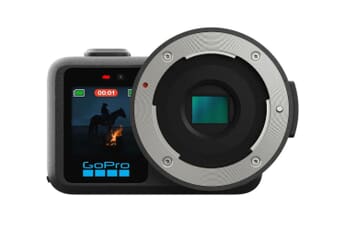
  • DJI Osmo Pocket 4launched globally at $499, not available to US buyers. First major casualty of the ban.
  • DJI Osmo Action 6 — the Action 6 and rumored Action 7 are cited as blocked in DJI’s own references.
  • DJI Avata 360made it to the US market in late 2025 ahead of the cutoff, but any successor or revised SKU is at risk.
  • DJI RS 5 Pro gimbal (November 2025) — caught in the gap.
  • DJI Osmo Mobile 8P (December 16, 2025) — authorized just days before the cutoff, future updates in limbo.
  • DJI Mic Mini 2 wireless audio (December 3, 2025), DJI Power 1000 Mini portable power, DJI Osmo FrameTap (December 17, 2025), DJI Lito X1 (November 29, 2025)
  • Rumored but blocked: DJI Action 7 camera, DJI Pocket 4 Pro variant, DJI Mavic 5, DJI Mic 3 Pro

For US photographers, this is the big one: the Osmo Pocket 4, the most-requested vlogging camera of 2025, is now the ban’s first real consumer casualty. Reviewers outside the US have been praising it for months; US buyers can watch the reviews but can’t order it.

Timeline: How We Got Here

  • December 22, 2025: FCC adds DJI to its Covered List. Effective immediately — no new DJI equipment authorizations.
  • February 20, 2026: DJI files federal appeal at the Ninth Circuit, calling the action “procedurally and substantively flawed” and a Fifth Amendment violation.
  • March 19, 2026: US Department of Defense cites classified intelligence in opposition to DJI’s petition — raising the stakes.
  • April 17, 2026: DJI Osmo Pocket 4 launches globally but skips the US. First consumer-visible casualty.
  • April 22, 2026: DJI filing discloses $1.5B expected 2026 loss. Requests court either expedite the case or pause it for six months.

Does DJI Have a Workaround?

Three paths being watched:

  • 1. The Ninth Circuit appeal. If DJI wins, the Covered-List designation is reversed and authorizations resume. If it loses — or the court defers — the status quo holds. No near-term ruling is expected; the filing explicitly requests either expedition or a six-month pause.
  • 2. Exemption list expansion. Some US drone programs (agricultural, public safety) have received exemptions already. DJI has been pushing for category-based exemptions for emergency response, utilities, and cinema. Progress has been incremental.
  • 3. A US-assembled or license-partnered product line. Rumored but not confirmed. Would require a significant manufacturing shift and may not satisfy the FCC’s Chinese-ownership concerns regardless.

None of the three offers relief before summer 2026 at the earliest. US photographers and filmmakers planning gear purchases for the next 6-12 months should assume the ban holds.

What It Means for US Photographers and Filmmakers

Three immediate practical implications:

  • If you need a DJI drone in 2026: buy now. The Mavic 4 Pro, Air 3S, and Mini 4 Pro have authorization and will remain for sale until inventory depletes. New DJI drones you might have been waiting for (Mavic 5, any new Air/Mini iterations) will not be available.
  • If you were waiting for the Osmo Pocket 4: you’re waiting indefinitely. Consider the Osmo Pocket 3 (still authorized) or a competitor like Insta360 GO 3S or Ace Pro 2.
  • If you’re a commercial or public-safety operator: exemption programs exist but move slowly. Reach out to DJI Enterprise or your authorized dealer — the Matrice 4T and 4E have cleared authorization and are still legal purchases.

The longer-term pressure is real. Police, fire departments, utilities, and emergency responders rely on DJI for aerial work — DJI’s filing emphasizes this repeatedly, framing the ban as a public-safety issue as well as a commercial one. How much weight that carries in federal court is the question the Ninth Circuit will answer.

Vertical Pinterest infographic: DJI FCC crackdown costs $1.5B, 25 new products blocked, breaking down drones, cameras, and accessories blocked from US launch
DJI's US crackdown at a glance — $1.5B at stake, 25 blocked products across drones, cameras, and accessories.

Frequently Asked Questions

Is my existing DJI drone illegal to use in the US?

No. The FCC ban is on imports and new authorizations, not on flight. Existing DJI drones you already own are fully legal to fly (subject to FAA Part 107 and Remote ID rules). The ban only blocks new purchases of products that weren’t authorized before December 22, 2025.

Which DJI drones are still legal to buy new in the US?

Mavic 4 Pro, Mavic 3 Pro, Air 3S, Mini 4 Pro, Avata 2, Neo, Neo 2, Mini 4K, Flip — plus the Matrice 4T and 4E for commercial operators. All of these received FCC authorization before December 22, 2025, and can still be imported and sold while existing authorizations remain valid.

What’s the Covered List and why is DJI on it?

The FCC’s Covered List is a designation of communications equipment considered a national-security risk. Inclusion immediately bars new equipment authorizations. The FCC added DJI on December 22, 2025, citing Chinese government ties and concerns about data routing — DJI disputes both characterizations.

Why $1.5 billion? How did DJI arrive at that figure?

DJI’s filing separates lost revenue from 14 existing products that had authorizations set aside ($700M) and 25 planned 2026 launches that cannot be imported ($860M). The company did not disclose unit-sale or price assumptions, but the $1.5B figure was provided specifically to quantify the harm for the Ninth Circuit’s consideration.

Is DJI likely to win the Ninth Circuit appeal?

Outcome is uncertain. DJI’s core legal argument — that the FCC action constitutes final agency action requiring judicial review — is a procedural question likely to be resolved first. The broader Fifth Amendment challenge is harder to predict. No ruling is expected before late 2026 at the earliest.

What about the DJI Pocket 4? Is there any way to get it in the US?

Legally imported and warranty-covered units are not available. Gray-market import from Canada, Hong Kong, or Europe is possible but carries warranty, tax, and compliance risk. US-based retailers cannot stock it. Expect the status to hold until either the court ruling or an FCC policy change.

Does the ban affect DJI’s enterprise and first-responder customers?

Yes, increasingly. DJI’s filing emphasizes that police, fire departments, utilities, and public-safety agencies rely on newly approved DJI hardware for emergency response, infrastructure inspection, and search-and-rescue operations. Exemption programs exist but are granted case-by-case and slowly.

Featured graphic, breakdown infographic, and vertical pin: PhotoWorkout. Financial figures and product references sourced from DJI’s April 22, 2026 filing to the US 9th Circuit Court of Appeals (via DroneDJ).

Don’t miss this week’s photography news

Every Tuesday: camera launches, lens announcements, and the photography industry moves that matter — curated before the big sites catch up. Free, one-click unsubscribe.

🔒 Free. No spam. One-click unsubscribe.

Written by

Andreas De Rosi

Andreas De Rosi is the founder and editor of PhotoWorkout.com and an active photographer with over 20 years of experience shooting digital and film. He currently uses the Fujifilm X-S20 and DJI Mini 3 drone for real-world photography projects and personally reviews gear recommendations published on PhotoWorkout.