


- Meta faces a class action lawsuit after reports revealed employees viewed private footage recorded by Ray-Ban smart glasses users.
- The case raises major questions about consent and wearable cameras — especially relevant for street and documentary photographers.
- Always-on cameras blur the line between photography and surveillance, creating new legal and ethical risks for anyone shooting in public.
Meta is being sued after reports emerged that employees and contractors watched private moments captured by users’ Ray-Ban Meta smart glasses. The class action lawsuit, filed March 4 in San Francisco federal court, alleges the company misled consumers about how their footage could be reviewed — and it raises uncomfortable questions for every photographer who shoots in public spaces.
What Happened: The Lawsuit Explained
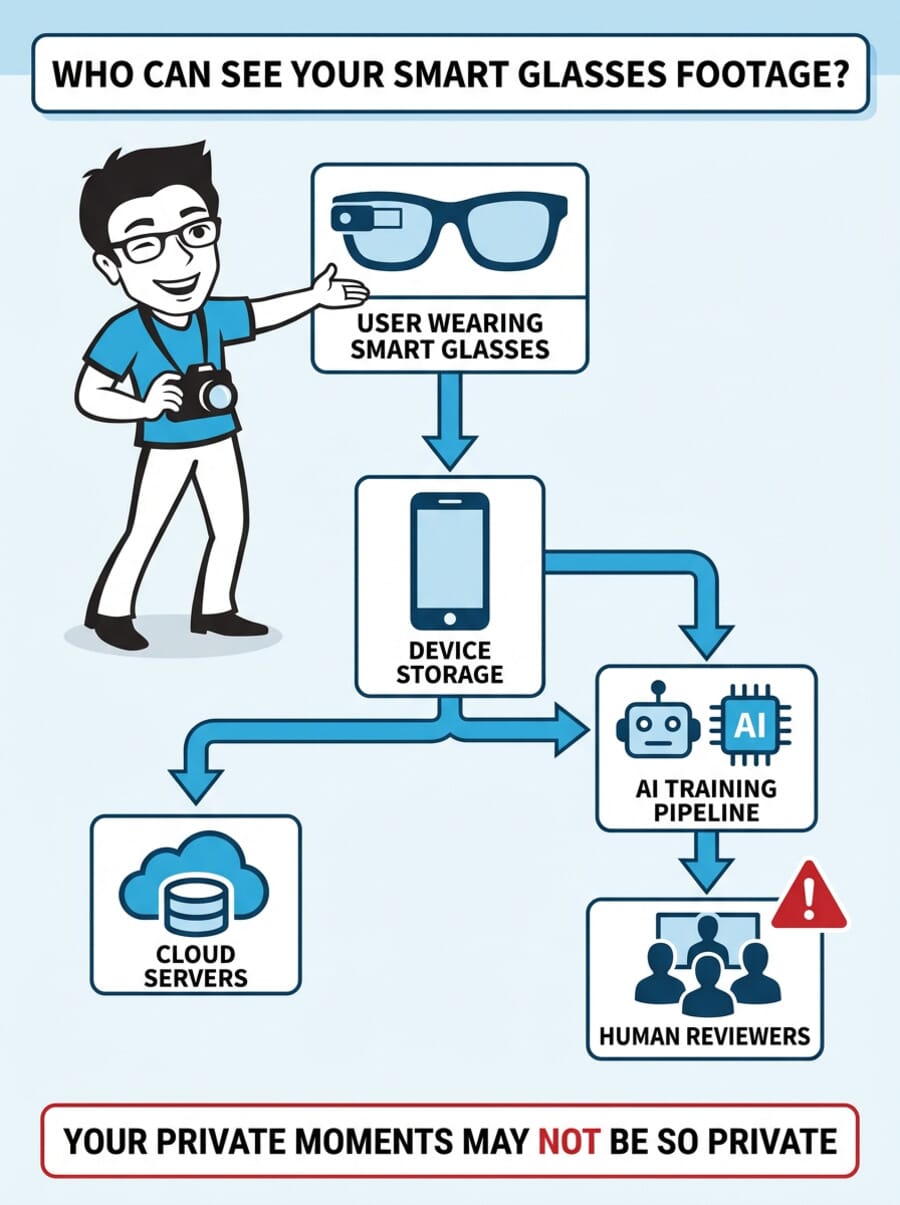
The lawsuit centers on claims that Meta’s marketing described the Ray-Ban smart glasses as “designed for privacy” — but failed to disclose that human reviewers could access footage captured by the devices. Swedish newspaper Svenska Dagbladet reported that contractors in Kenya, hired to label objects in video clips for AI training, had encountered intimate and sensitive recordings.
Workers reportedly viewed bathroom visits, sexual encounters, credit card numbers, and identifiable faces. The complaint, filed by Clarkson Law Firm on behalf of plaintiffs Gina Bartone (New Jersey) and Mateo Canu (California), argues this “transforms the product from a personal device into a surveillance conduit.”
Meta hasn’t commented directly on the lawsuit, but acknowledged that human reviewers “may be involved in some cases” when users share content with Meta AI. The company says footage stays on-device unless users choose to share it — but workers involved in the review process say Meta’s anonymization filters don’t always work.
Why Photographers Should Pay Attention
This lawsuit isn’t just about Meta. It’s about the growing tension between wearable camera technology and the expectation of privacy — a tension that directly affects street photographers and documentary shooters.
Traditional cameras are visible. When someone raises a DSLR or mirrorless body, people around them know they’re being photographed. Smart glasses eliminate that social signal. They look like regular sunglasses, and bystanders have no way to know they’re being recorded.
For photographers, this creates a ripple effect. Public backlash against covert recording devices could lead to stricter regulations on all forms of public photography — including the traditional street photography that has been legally protected for decades.
Street Photography Ethics in the Smart Glasses Era
Street photography has always operated in a legal gray area. In most Western countries, photographing people in public spaces is legal — but “legal” and “ethical” aren’t the same thing. The rise of always-on wearable cameras is forcing a long-overdue conversation about consent.
Key ethical questions photographers should consider:
- Visibility matters. A visible camera gives subjects the chance to opt out. Smart glasses don’t. Photographers who value candid work should still respect the principle of awareness.
- Intent matters. Are you documenting life, or surveilling it? The Meta lawsuit highlights how easily that line can blur when technology records everything passively.
- Storage matters. Where do your images go? Cloud-synced photos can be accessed by platform employees, as this case demonstrates. Keeping images on local storage gives you more control.
- Context matters. A photo of a busy market is different from a recording inside someone’s home. Wearable cameras don’t distinguish between public and private — but photographers must.
Legal Risks for Photographers and Wearable Camera Users
The Meta lawsuit could set precedents that affect all photographers. Several legal trends are converging:
- Two-party consent laws — In states like California, Illinois, and Massachusetts, recording someone without their consent can violate wiretapping laws. Smart glasses make accidental violations trivially easy.
- GDPR and international privacy laws — In the EU, photographing identifiable individuals can trigger data protection obligations. Wearable cameras that continuously record face the strictest scrutiny.
- Platform liability — The Meta case argues the manufacturer is liable for privacy violations, not just the user. This could shift legal risk upstream from photographers to the companies that make their tools.
- Venue-specific bans — Many gyms, schools, and private businesses already ban smart glasses. As wearable cameras become more common, expect more venues to restrict all photography devices.
What This Means for the Future of Public Photography
The broader concern for photographers is a chilling effect. Every high-profile privacy scandal involving cameras — whether wearable or traditional — chips away at public tolerance for being photographed. The ongoing legal battles around AI and photography rights show how quickly the legal landscape is shifting.
If courts rule that Meta’s glasses are inherently privacy-violating, it could embolden efforts to restrict photography in public spaces more broadly. Street photographers, photojournalists, and documentary shooters all operate in the same legal framework that wearable camera makers depend on.
The 58% of photographers who have already lost work to AI know that technology moves faster than regulation. Wearable cameras are another front in that same battle — and photographers need to be paying attention, even if they’d never wear a pair of smart glasses themselves.
How to Protect Yourself as a Photographer
- Know your local laws. Two-party consent states treat audio and video recording differently. Research the rules where you shoot.
- Store images locally. Cloud services may expose your images to third-party review. Use external drives for primary storage and encrypt sensitive files.
- Be transparent. Even when you’re legally allowed to photograph, being open about what you’re doing builds trust and avoids confrontation.
- Follow industry developments. The outcome of this lawsuit — and similar cases in the EU — will directly affect what photographers can and can’t do in public spaces.
What is the Meta smart glasses lawsuit about?
A class action lawsuit alleges Meta misled consumers about privacy protections on Ray-Ban Meta smart glasses. Reports revealed that human contractors reviewing footage for AI training saw private and intimate recordings, including nudity, financial details, and identifiable faces.
Can smart glasses legally record people in public?
Laws vary by location. In many U.S. states and most of Europe, recording video in public is legal, but audio recording may require consent. Two-party consent states like California have stricter rules. Always check local laws before recording.
How does this affect street photographers?
Public backlash against covert wearable cameras could lead to stricter regulations on all public photography. Photographers should stay informed about evolving privacy laws and maintain ethical practices like being visible and transparent when shooting.
Are cloud-synced photos private?
Not necessarily. As the Meta case shows, photos and videos uploaded to cloud services may be reviewed by human employees or contractors. For maximum privacy, store sensitive images on local drives and use encrypted storage.
Sources used for this article:
Featured image: Photo by Lianhao Qu on Unsplash.
Related Posts
Get the Weekly Photography News Digest
Join photographers who get our top stories delivered every Monday morning. No spam, unsubscribe anytime.