


- Matty Smith (Australia) wins Underwater Photographer of the Year 2026 with ‘Rockpool Rookies’ – two elephant seal pups in the Falkland Islands.
- Over 7,900 entries from photographers worldwide in this UK-based competition.
- Winners used everything from the Nikon Z9 to a Sony RX100 M7 compact and even smartphones.
- The beginner tips section covers how to start shooting underwater.
The Underwater Photographer of the Year (UPY) 2026 winners have been announced, and Australian photographer Matty Smith has taken the top prize with a breathtaking split-level portrait of two Southern elephant seal pups in the Falkland Islands.
Now in its latest edition, the UK-based competition attracted over 7,900 entries from photographers around the world. The winning images span everything from macro shots of tiny shrimp to haunting wrecks on the ocean floor – a testament to the incredible diversity of underwater photography.
The results were announced on February 26, 2026. You can see all the winning and commended images on the official UPY website.
Overall Winner: “Rockpool Rookies” by Matty Smith
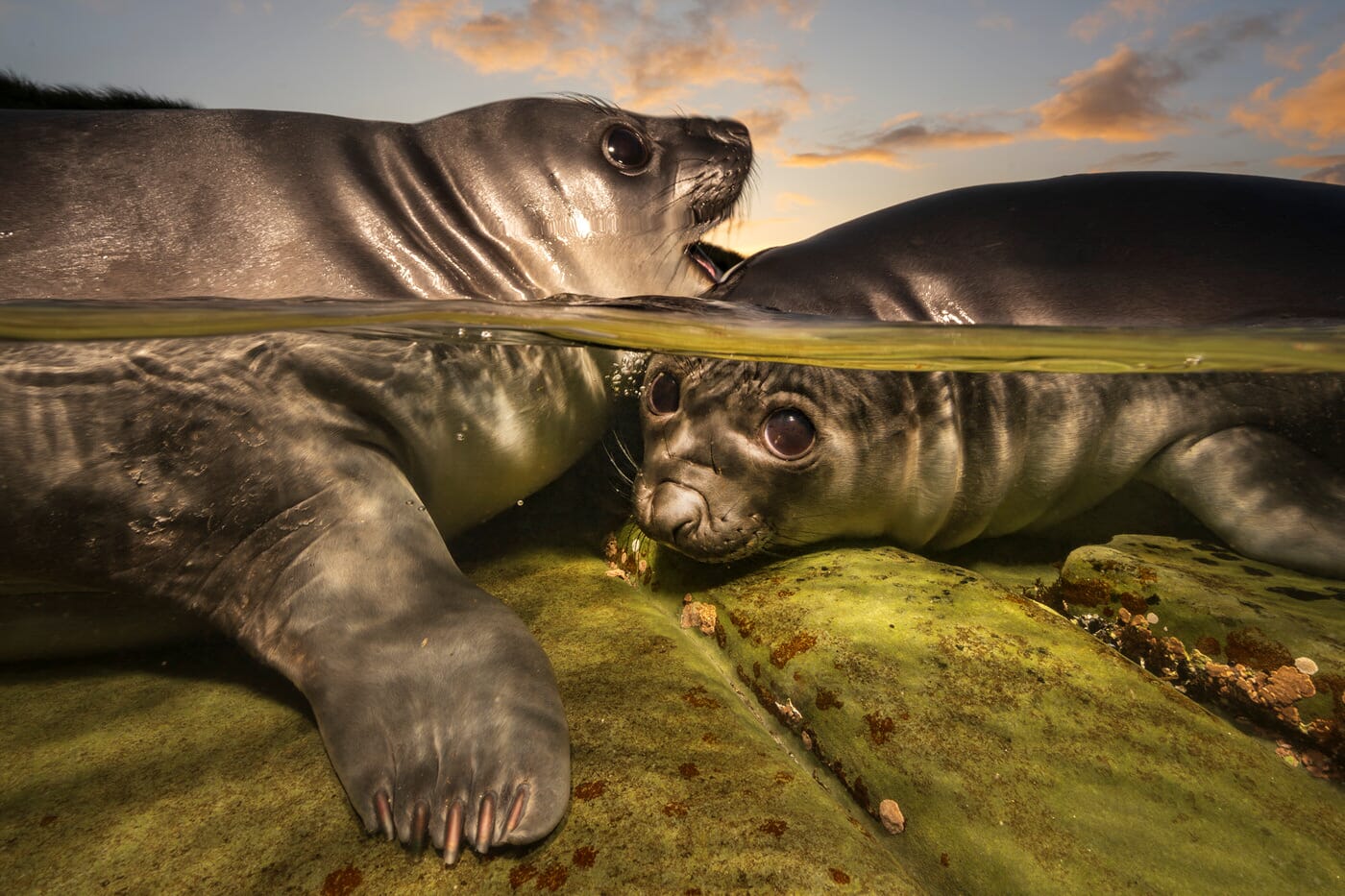
Smith’s winning image, titled “Rockpool Rookies,” captures two Southern elephant seal pups in a shallow rockpool on Sealion Island, Falkland Islands. Shot at sunset using an over-under (split) perspective with a custom dome housing, the image shows the pups awkwardly learning to swim while the sky above blazes with color.
Smith described the moment: “Once their pups are weaned, elephant seal mothers abandon them ashore. I watched dozens clamber over one another in shallow rockpools, awkwardly learning to swim. On my very first evening, the sky ignited with colour and I captured a handful of frames before the light vanished. It was the defining moment of the long trip.”
Gear used: Nikon Z9, Nikkor Z 14-30mm f/4 S lens, two Ikelite DS230 strobes, Aquatica AZ9 housing. Settings: ISO 200, f/16, 1/60s.
Judge Dr. Alex Mustard highlighted the conservation significance of the image, noting that elephant seals were hunted to near extinction: “Their recovery over the last 100 years is a great example of resilience of the ocean. A beautiful and hopeful photograph.”
Category Highlights
Several category winners stood out for their technical skill and storytelling power.
Wide Angle – Cecile Gabillon Barats
A juvenile sperm whale approaches the photographer head-on – an intimate encounter with one of the ocean’s largest predators. Wide-angle underwater photography demands nerve and positioning, and this image delivers on both.
Wrecks – Niclas Andersson
Andersson photographed the IJN Nagato, a Japanese battleship resting on the seabed at Bikini Atoll. This is the very ship from which the order to attack Pearl Harbor was issued – now a silent reef on the ocean floor. A powerful intersection of history and nature.
Marine Conservation – Khaichuin Sim
Perhaps the most emotionally challenging image in the competition: a boy sitting on a slain pilot whale during the Faroe Islands Grindadrap. Shot on a Sony A7R II with an 85mm f/1.4 GM lens, the image confronts viewers with the complex relationship between tradition and marine conservation.
Up and Coming – Sam Blount
A leopard seal lunging in Antarctica, captured with a Sony A1 and 16-35mm f/4 lens in a Nauticam housing. Fast autofocus and split-second timing made the difference here.
Other notable winners:
- Macro: SeongCheol Cho – commensal shrimp inside whip coral
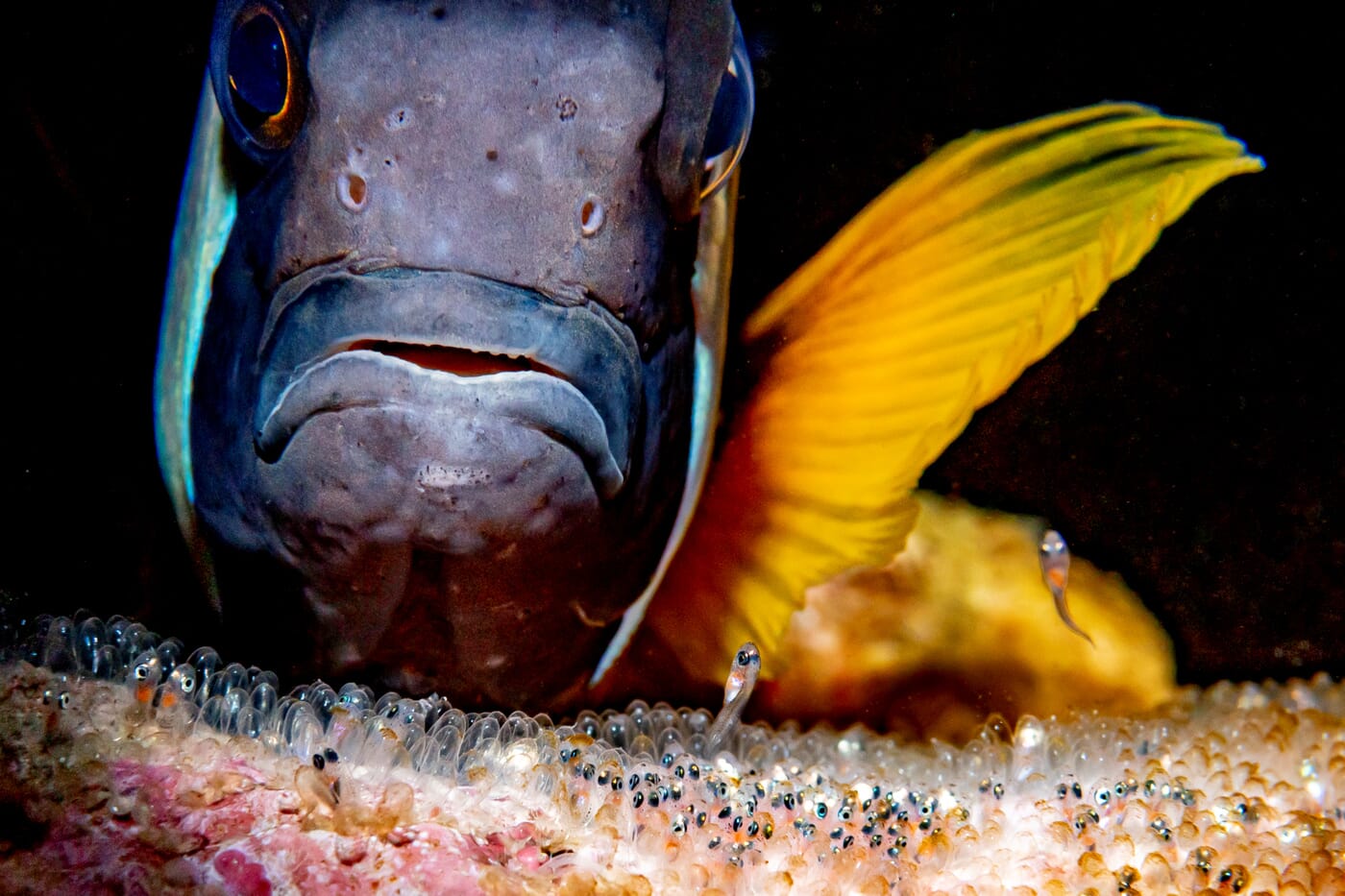
- Behaviour: Kazushige Horiguchi – clownfish eggs hatching
- Coral Reefs: Dr. Tom Shlesinger – coral reproducing
- Black and White: Shunsuke Nakano – lone wrasse through a coral window, Sado Island, Japan
- Compact: Andrea Michelutti – freshwater crayfish with an Alpine peak (Sony RX100 M7)
- Smartphone: Cack Ho – frogfish
Gear Behind the Winners
One of the most interesting takeaways from UPY 2026 is the range of gear used by the winners. There is no single “right” camera for underwater photography.
The overall winner, Matty Smith, used a Nikon Z9 – a flagship mirrorless body paired with professional underwater housing and strobes. Total system cost: well into five figures.
But look at the other end of the spectrum. Andrea Michelutti won the Compact category with a Sony RX100 M7 – a pocketable camera that costs a fraction of a full mirrorless setup. And the Smartphone category proves you can create competition-winning images with the device already in your pocket.
Sam Blount’s Up and Coming win with a Sony A1 and 16-35mm f/4 showcases how fast autofocus systems excel when photographing unpredictable marine life. Meanwhile, Khaichuin Sim’s Marine Conservation entry was shot on a Sony A7R II – a camera released back in 2015 – proving that older gear still delivers when the moment matters.
The takeaway? Vision and timing matter more than gear. A well-composed shot on a compact camera will always beat a technically perfect but boring image from a flagship body.
How to Get Started in Underwater Photography
Inspired by these images? Getting into underwater photography is more accessible than you might think. Here are some practical steps to get started.
Start with what you have. As UPY 2026 proves, even a smartphone can produce winning images. Many waterproof phone cases and compact camera housings cost under $100. You do not need a $10,000 rig to begin.
Get comfortable in the water first. Your diving or snorkeling skills matter more than your camera skills initially. Take a PADI or SSI certification course, practice buoyancy control, and learn to move slowly and deliberately underwater. Stressed photographers take bad photos.
Learn to use natural light. Before investing in strobes, learn how light behaves underwater. Colors disappear with depth (red goes first), and shooting upward toward the surface creates dramatic silhouettes and sunbursts.
Get close, then get closer. Water reduces contrast and sharpness. The less water between your lens and your subject, the sharper and more colorful your images will be. This is the single most impactful tip for new underwater photographers.
Consider a compact camera system. The camera industry is evolving fast, but for underwater work, a compact like the Sony RX100 series or Olympus TG-7 in a dedicated housing offers an excellent balance of image quality, size, and cost. You can always upgrade to mirrorless later.
Featured image: Photo by Bostan Florin Catalin on Unsplash.
Sources used for this article: