

- Vivo’s X300 Ultra Photography Edition Kit ships with 11 real camera accessories including ZEISS teleconverter lenses, a 67mm ND filter, tripod mounts, and a camera grip with hardware controls.
- The kit includes 200mm and 400mm G2 Ultra teleconverter lenses co-engineered with ZEISS – the 400mm being the longest focal reach ever on a smartphone accessory.
- The X300 Ultra’s triple camera features a 1/1.12-inch Sony LYTIA-901 main sensor (35mm), a 200MP Samsung HP0 telephoto (85mm), and a 1/1.28-inch ultrawide (14mm) – outgunning most flagships on sensor size alone.
- Launching alongside the Vivo X300s on March 30, 2026 – initially in China, with global availability confirmed for later in the year.
Vivo just showed off what might be the most ambitious smartphone retail package ever assembled. The Vivo X300 Ultra Photography Edition Kit doesn’t just ship with a phone and a charger – it ships with an entire photography studio’s worth of accessories, all packed inside a premium box-within-a-box presentation.
In a series of teaser videos released ahead of the March 30 launch, Vivo revealed the full contents of the Photography Edition Kit – and the accessory list reads more like a camera bag inventory than a smartphone unboxing.
What’s Inside the Photography Edition Kit
The standard X300 Ultra retail box already includes a 100W fast charger and a protective case. But the Photography Edition Kit wraps that box inside a larger one containing a drawer full of pro-grade camera gear.
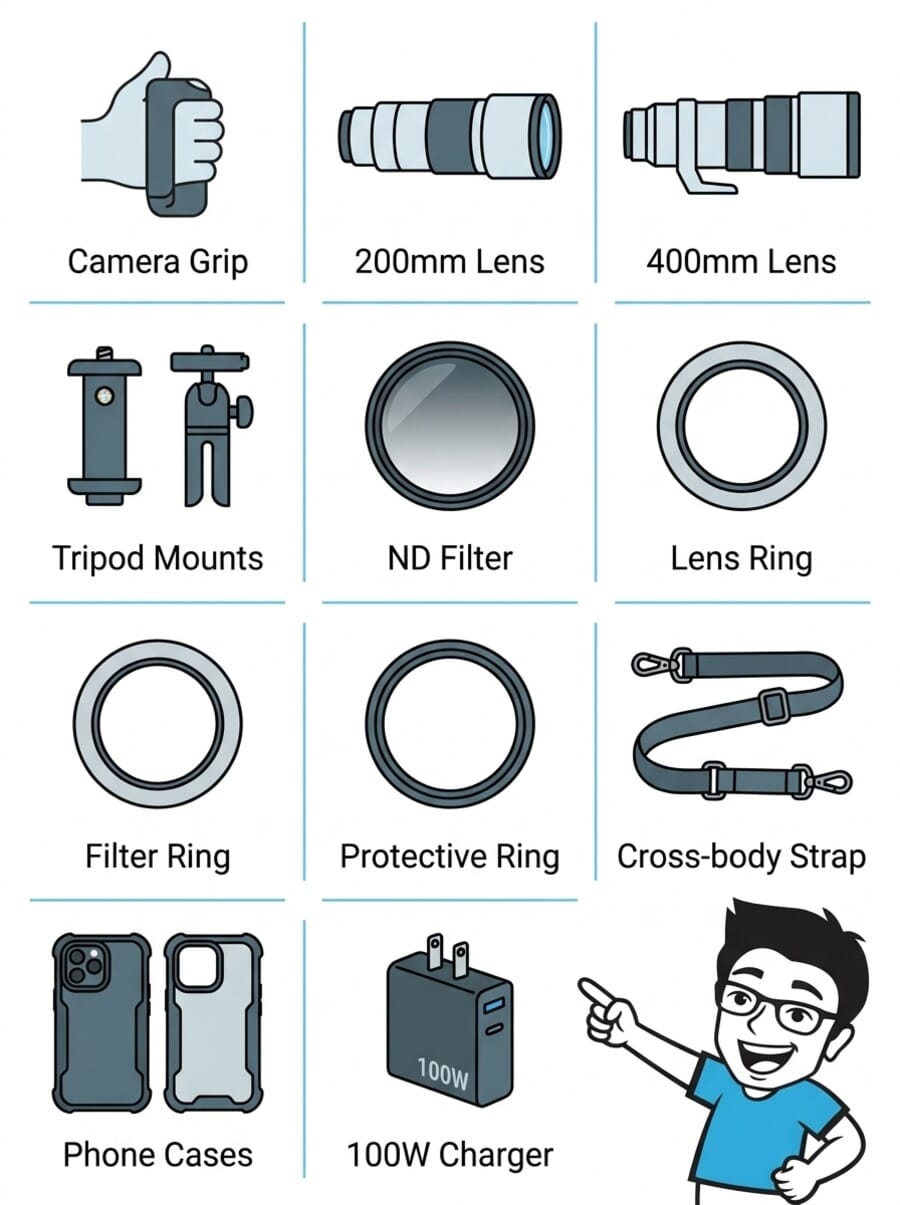
Here’s the full accessory breakdown:
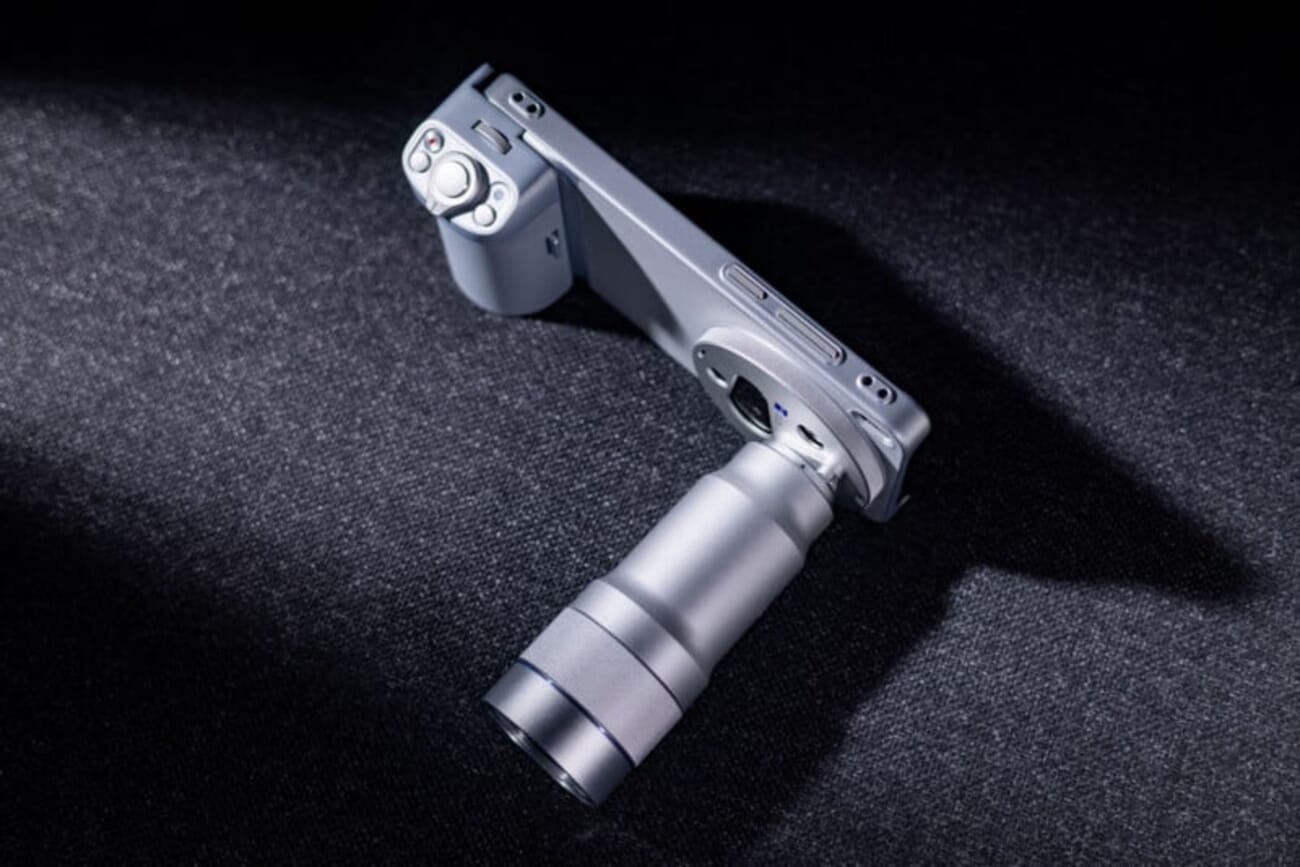
- Camera grip – Features a hardware shutter button, zoom lever, scroll wheel, video record button, a new flash button, and an extra function button
- 200mm G2 Ultra teleconverter lens – ZEISS co-engineered, noticeably smaller than its predecessor
- 400mm G2 Ultra teleconverter lens – The longest focal reach ever offered as a smartphone accessory, only slightly longer than the 200mm
- Two tripod mounts – One fitted for each teleconverter lens (essential at these focal lengths)
- 67mm ND filter – Screws onto a threaded mounting ring for precise exposure control
- Protective ring – Adds a raised ledge around the camera island glass
- Lens mounting ring – Thread mount for attaching the teleconverter lenses
- ND filter mounting ring – With 67mm threading for the included ND filter (or any standard 67mm filter)
- Cross-body strap – Because you’ll need one carrying all this gear
- Two protective cases – Including a case that doubles as the mounting point for the other accessories
The X300 Ultra Camera System: What’s Under the Hood
Before we dive into the accessories, it’s worth understanding the camera hardware they’re built to enhance. The X300 Ultra packs a triple-camera system covering classic photography focal lengths: 14mm ultrawide, 35mm main, and 85mm telephoto.
The 35mm main camera debuts the world’s first Blueprint x Sony LYTIA-901 sensor – a massive 1/1.12-inch chip that delivers a 30% increase in single-pixel light-sensitive area and 32% improvement in full-well capacity over its predecessor. For context, that’s larger than the main sensor in both the iPhone 16 Pro Max and the Samsung Galaxy S25 Ultra.
The 85mm ZEISS telephoto is where things get wild. Dubbed the “fifth-generation 200MP Overlord Telephoto,” it uses the new Blueprint x Samsung HP0 sensor with micro-gimbal stabilization that Vivo claims provides a 300% equivalent increase in light intake. The stabilization system features 3-degree micro-gimbal technology plus a proprietary OIS algorithm, resulting in a 24% improvement in telephoto video stability over the X200 Ultra.
The 14mm ultrawide retains the Sony LYT-818 sensor with a 1/1.28-inch light-sensitive area – still unmatched among smartphone ultrawide cameras. Stabilization jumps from CIPA 5.0 to CIPA 6.0 for this generation.
Rounding out the imaging hardware is a new 12-spectral channel 5MP color sensor that captures precise color information across a dozen spectral bands. This feeds into Vivo’s new Blueprint Color Science system, which aims for color accuracy that holds up across complex lighting conditions – think tungsten mixed with LED, or golden hour shadows.
The ZEISS G2 Ultra Teleconverter Lenses
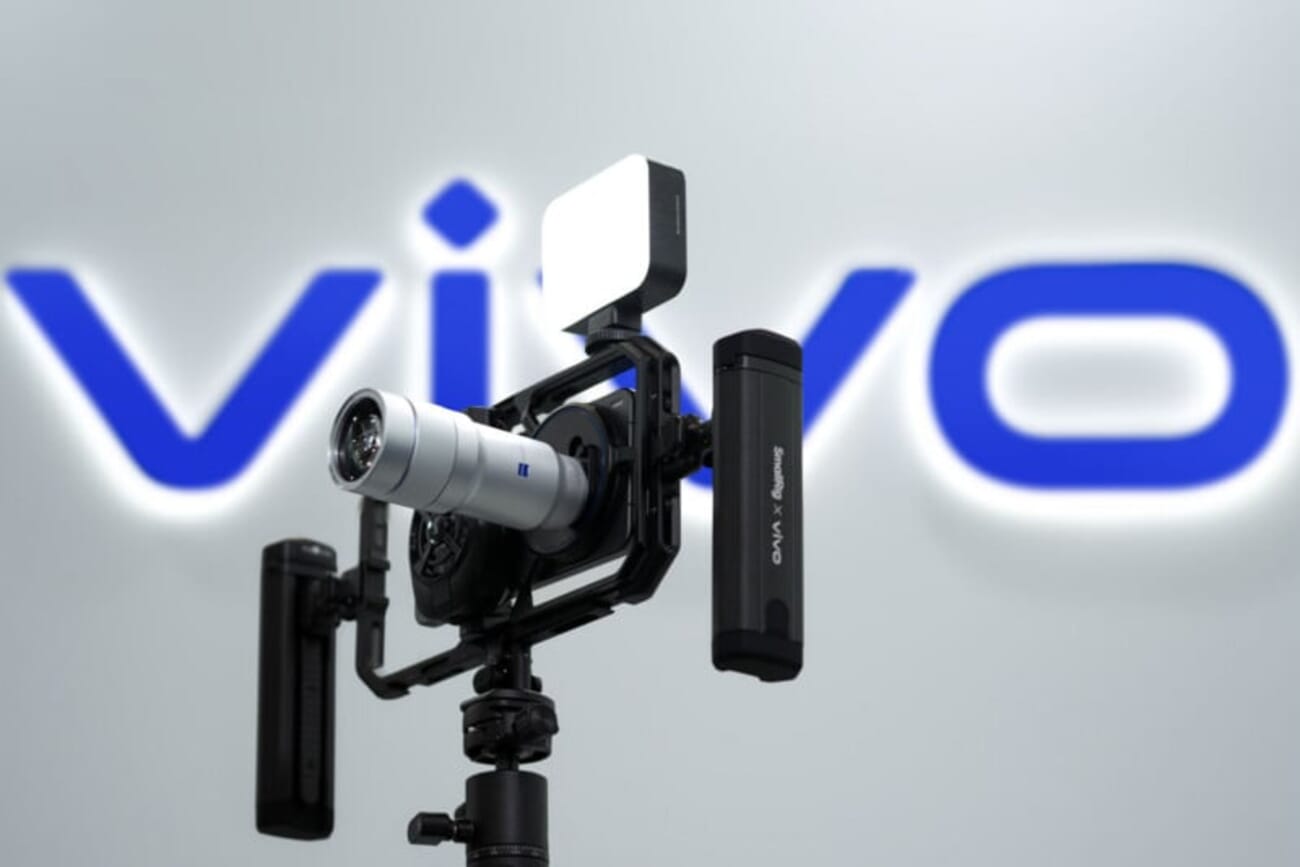
The star accessories are the two ZEISS-branded G2 Ultra teleconverter lenses. These aren’t clip-on novelties – they provide real optical magnification, extending the phone’s native focal length to 200mm and 400mm equivalents while the phone handles stabilization and computational processing.
Both teleconverters carry ZEISS APO (apochromatic) certification, meaning the optics are designed to minimize chromatic aberration across the visible spectrum – the same standard applied to professional camera lenses costing thousands of dollars. The 200mm G2 offers a 2.35x magnification factor with a CIPA 6.5 stabilization rating, while the 400mm G2 Ultra provides 4.7x magnification with CIPA 4.5 stabilization.
Vivo first showed off these lenses at MWC Barcelona 2026 in early March, where the 400mm teleconverter won “Best of MWC” awards from several tech outlets. The external optics do the optical heavy lifting, while the X300 Ultra’s computational photography refines the final output. With digital cropping on top, the 400mm lens can serve as a 1600mm super-telephoto equivalent – unprecedented reach from a device that fits in your pocket.
The 400mm lens makes the rig noticeably front-heavy – a familiar challenge for anyone who’s used long telephoto glass on a traditional camera. That’s exactly why Vivo included dedicated tripod mounts for each lens in the kit.
67mm ND Filter: Real Exposure Control on a Phone
Perhaps the most surprising inclusion is the 67mm neutral density filter. ND filters are a staple in traditional photography – they reduce the amount of light entering the lens, letting you use slower shutter speeds or wider apertures in bright conditions.
On the X300 Ultra, the ND filter screws onto a dedicated threaded ring that fits around the camera module. Since it uses a standard 67mm thread, photographers can also use their own third-party filters – a thoughtful touch that bridges the smartphone and traditional camera worlds. For anyone exploring external lenses for Android phones, this level of filter compatibility is unprecedented.
Camera Grip with Full Hardware Controls
The kit’s camera grip transforms the phone-holding experience into something much closer to operating an actual camera. It features a hardware shutter button, a zoom lever, a scroll wheel, and a video record button – all inherited from the X300 Pro version.
New additions for the X300 Ultra kit include a flash button and an extra function button, giving photographers tactile control over key settings without fumbling through touchscreen menus while shooting.
How the X300 Ultra Compares to iPhone 16 Pro Max and Galaxy S25 Ultra
On paper, the X300 Ultra’s camera system competes directly with – and in several ways surpasses – the best from Apple and Samsung. Here’s how the core specs stack up:
The iPhone 16 Pro Max uses a 48MP main camera with a 1/1.28-inch sensor, a 12MP ultrawide, and a 12MP 5x telephoto (120mm equivalent). It relies heavily on Apple’s computational photography and Photonic Engine for low-light performance, but the hardware tops out at 120mm native zoom – less than a third of what the X300 Ultra achieves with its 400mm teleconverter.
The Samsung Galaxy S25 Ultra packs a 200MP main sensor (1/1.3-inch), a 50MP ultrawide, and dual telephoto lenses reaching 3x (10MP) and 5x (50MP, 111mm equivalent). Samsung’s zoom range is impressive but still relies on digital cropping beyond 5x. The X300 Ultra matches Samsung’s 200MP telephoto resolution while offering optical reach that Samsung simply can’t touch.
Where the X300 Ultra really pulls ahead is sensor size. Its 1/1.12-inch main sensor is the largest in any current flagship smartphone – bigger than both the iPhone 16 Pro Max and Galaxy S25 Ultra. Larger sensors capture more light per pixel, which translates directly to better dynamic range, less noise in low light, and shallower depth of field.
And then there’s the accessory ecosystem. Neither Apple nor Samsung offers anything remotely comparable to a bundled ND filter, ZEISS teleconverter lenses, or a camera grip with hardware controls. The closest parallel might be Samsung’s older Camera Grip Case or third-party MagSafe lens kits for iPhone, but those pale in comparison to what Vivo bundles in the box.
Pro Video Rig: SmallRig Camera Cage (Sold Separately)
Beyond the Photography Edition Kit, Vivo also announced a pro-grade camera cage built in collaboration with SmallRig. This separate accessory features cold shoe mounts, dual-hand grips with Bluetooth shutter controls, a zoom lever on each handle, and an integrated multi-level cooling fan for sustained 4K recording.
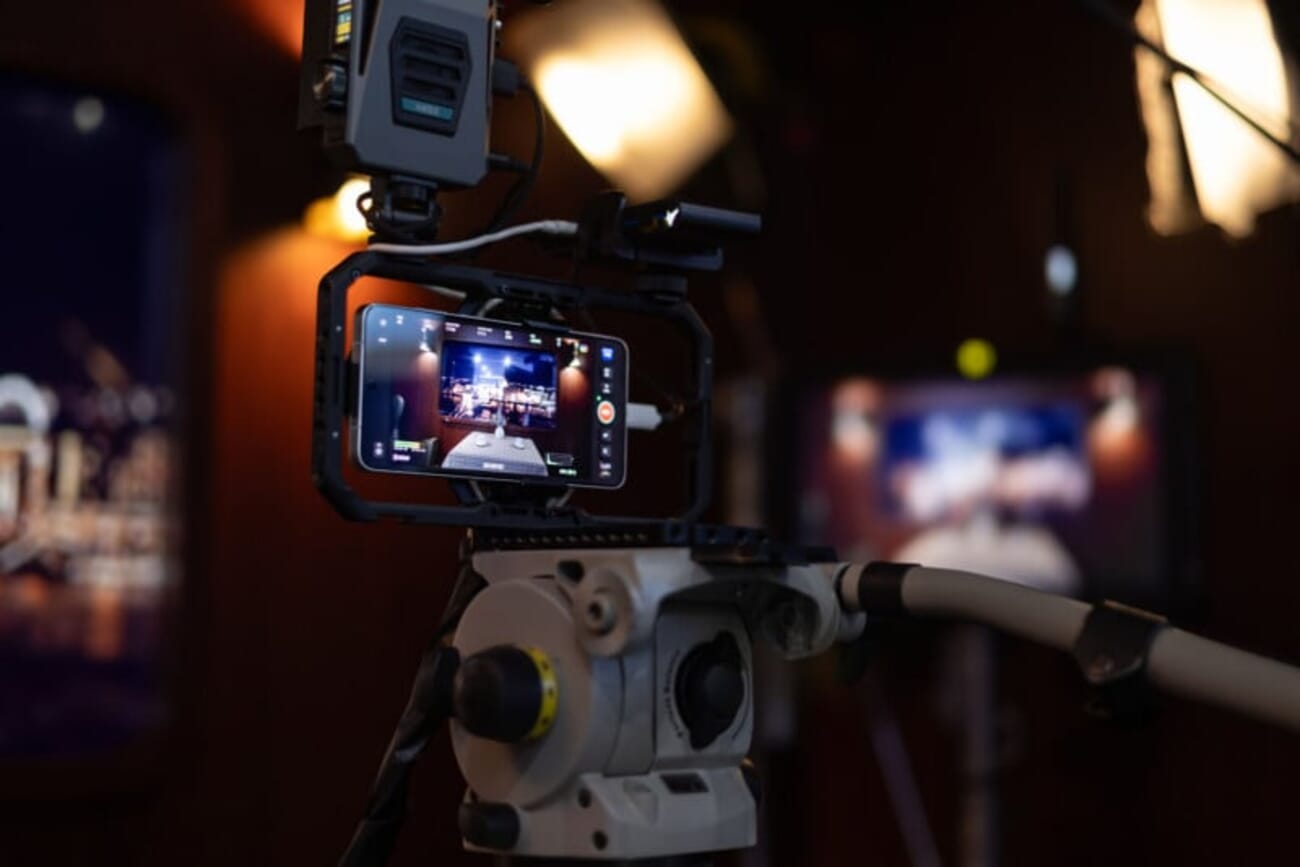
The cage supports the X300 Ultra’s telephoto extenders too, making it possible to build a complete video production rig around a smartphone. It’s a similar philosophy to what we saw with the Honor’s robotic gimbal camera phone – manufacturers are increasingly treating smartphones as serious production tools.
The Smartphone Photography Accessory Trend
Vivo’s Photography Edition Kit doesn’t exist in a vacuum. There’s a growing trend among premium smartphone makers to treat their flagships as modular camera systems rather than just phones that happen to take photos.
Xiaomi’s partnership with Leica on the Leitzphone / Xiaomi 17 Ultra brought Leica’s optical engineering to a smartphone. Honor went even further with a built-in robotic gimbal arm for stabilization. Samsung has experimented with camera grip cases, and Apple’s ProRes video workflow has attracted professional filmmakers who pair iPhones with external monitors and storage.
But Vivo’s approach is arguably the most comprehensive: a complete kit that bridges the gap between smartphone convenience and traditional camera capability, all included in a single retail package. The inclusion of standard 67mm filter threading is particularly noteworthy – it doesn’t lock photographers into a proprietary ecosystem but instead invites them to use gear they may already own.
For astrophotography enthusiasts and wildlife shooters especially, the 400mm (or 1600mm with digital crop) reach could be a game-changer. These are focal lengths that traditionally require lenses costing more than the phone itself.
Launch Date and Availability
The Vivo X300 Ultra launches on March 30, 2026 alongside the Vivo X300s. Both phones will debut in China first.
Vivo confirmed at MWC 2026 that the X300 Ultra will see a broader global rollout than previous Ultra models – a significant shift for a brand whose most ambitious camera phones have historically been China-only. Pricing for both the phone and the Photography Edition Kit hasn’t been announced yet.
Why This Matters for Smartphone Photography
Smartphone manufacturers have been chipping away at the camera-phone divide for years, mostly through computational photography. Vivo is taking a different approach – bundling the kind of physical accessories that professional photographers actually use: real optical lenses, ND filters, tripod mounts, and hardware controls.
The Photography Edition Kit positions the X300 Ultra not as a phone that takes good photos, but as a compact camera system that happens to also make calls. Whether the market agrees remains to be seen – but the hardware ambition here is hard to argue with.
Sources used for this article:
Featured image: AI-generated illustration. Some product images credited to Vivo.


Get the Weekly Photography News Digest
Join photographers who get our top stories delivered every Monday morning. No spam, unsubscribe anytime.