


- The Fujifilm X-E5 packs the same 40.2MP sensor and X-Processor 5 found in the X-T5 and X100VI into a compact rangefinder body with interchangeable lenses.
- Key upgrades over the X-E4 include 5-axis IBIS, a Film Simulation dial, 6.2K video, and AI-powered autofocus — basically a new camera in every way.
- Priced at $1,699 body-only ($1,899 with the new XF 23mm f/2.8 lens), the X-E5 is available now in black and silver.
- Think of it as the X100VI with swappable lenses — same sensor, same film simulation heritage, but far more versatile.
Fujifilm announced the X-E5 on June 12, 2025, at the X Summit in Shanghai, and the camera began shipping on August 28, 2025. After a three-year gap since the X-E4 was discontinued in 2022, the X-E5 represents a complete overhaul of Fujifilm’s rangefinder-style mirrorless line — and it’s arguably the most exciting X-mount camera since the X100VI.
Where the X-E4 was a stripped-down, budget-friendly option, the X-E5 repositions the series as a premium mid-range offering. It shares the same 40.2MP X-Trans CMOS 5 HR sensor and X-Processor 5 engine found in the X-T5, X-H2, and the wildly popular X100VI — but in a body that accepts any Fujifilm X-mount lens.
When you buy through links on our site, we may earn a commission at no cost to you. We evaluate products independently. Commissions do not affect our evaluations. As an Amazon Associate, we earn from qualifying purchases.
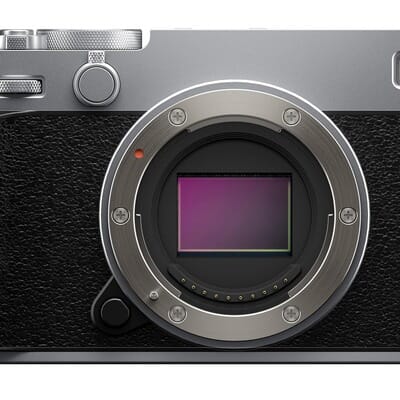
40.2MP APS-C X-Trans CMOS 5 HR sensor, X-Processor 5, 5-axis IBIS (7 stops), 6.2K/30p video, 425-point AI autofocus, Film Simulation dial, 445g body. Available in black and silver.
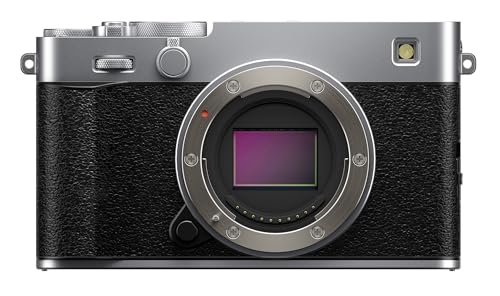
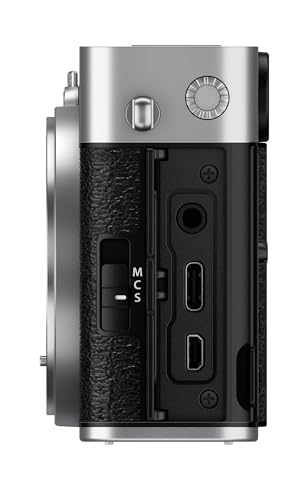
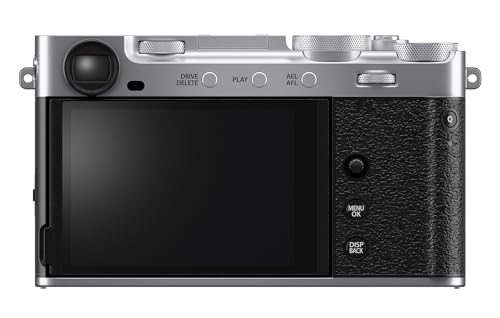
A Rangefinder Reborn: Design and Build
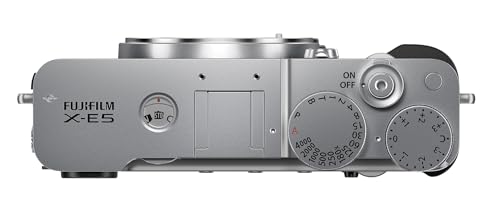
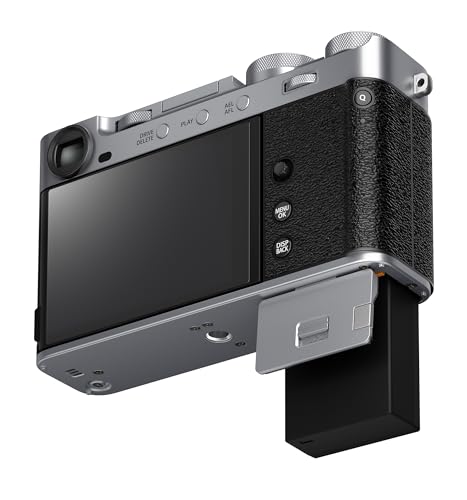
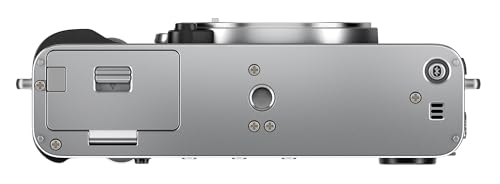
The X-E5 maintains the rangefinder-style silhouette that defines the X-E series, but the build quality has taken a major leap forward. The top plate is machined from a single piece of aluminum — a first for any X Series camera — giving it a rigidity and premium feel that reviewers say rivals the X-T5.
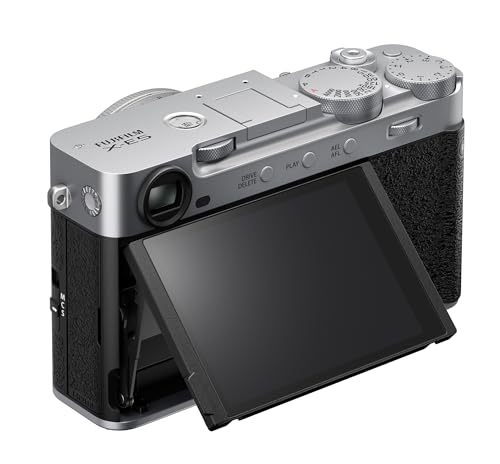
At 124.9 × 72.9 × 39.1 mm and just 445g with battery, it’s remarkably close to the X100VI in size and weight. Fujifilm has clearly positioned this as a companion piece: same retro DNA, same modern guts, but with the freedom to swap lenses. The camera is available in both black and silver finishes.
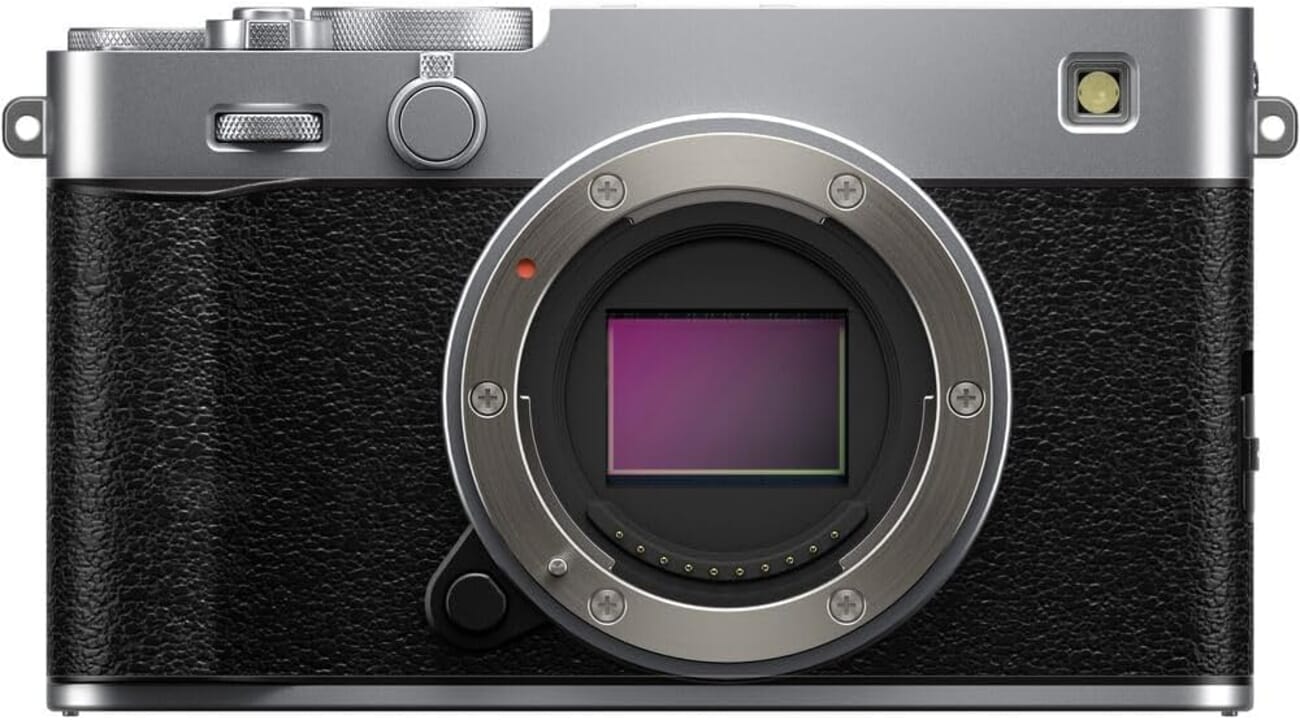
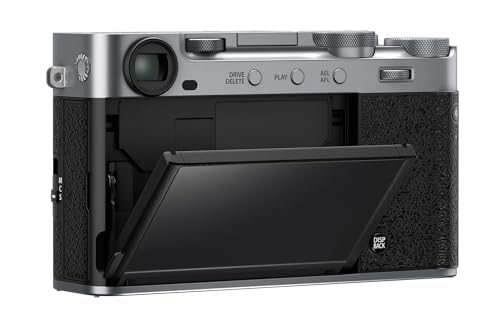
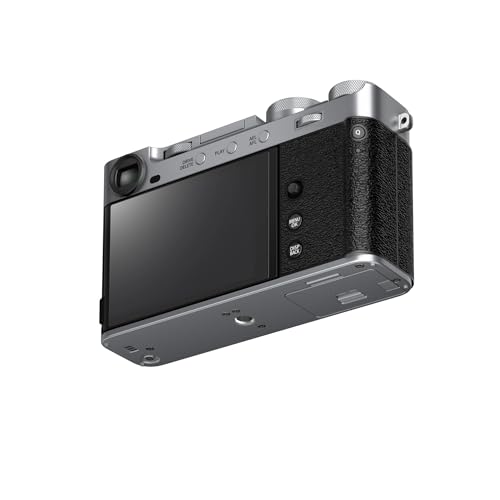
Fujifilm also restored several physical controls that were missing on the X-E4, including a rear command dial and AF/MF switch. The new front-mounted Control Lever (borrowed from the X100VI) adds five customizable functions for one-handed operation. It’s a return to the “enthusiast-friendly” philosophy of the original X-E models.
The Film Simulation Dial: A Game-Changer
The standout design feature is the dedicated Film Simulation dial, tucked beneath the aluminum top plate with a circular window that shows your selected simulation — even when the camera is off. It provides instant access to all 20 of Fujifilm’s Film Simulation modes, plus three custom recipe slots (FS1, FS2, FS3) where you can save your own looks.
For photographers who love Fujifilm’s color science — and that’s a huge part of the brand’s appeal — this dial eliminates menu-diving entirely. It’s the kind of tactile, analog-inspired control that makes the X-E5 feel less like a digital tool and more like a creative instrument.
Key Specs: Flagship Power in a Compact Body
Under the hood, the X-E5 is essentially an X-T5 in a smaller package. Here’s what you’re getting:
- Sensor: 40.2MP back-illuminated X-Trans CMOS 5 HR (APS-C, 23.5 × 15.7 mm)
- Processor: X-Processor 5
- ISO Range: 125–12,800 (native), expandable to 64–51,200
- Autofocus: 425-point hybrid AF with AI-powered subject detection (animals, birds, cars, motorcycles, bicycles, airplanes, trains, insects, drones)
- IBIS: 5-axis in-body image stabilization, up to 7.0 stops (center)
- Continuous Shooting: 8 fps (mechanical), 13 fps (electronic), 20 fps (1.29× crop)
- Video: 6.2K/30p, 4K/60p, Full HD/240p, 4:2:2 10-bit internal, up to 200 Mb/s
- Shutter: Mechanical to 1/4,000s, electronic to 1/180,000s
- EVF: 0.39-inch OLED, 2.36 million dots, 0.62× magnification
- LCD: 3.0-inch tilting touchscreen, 1.04 million dots, 180° flip
- Flash: Hot shoe for external flash (no built-in flash)
- Connectivity: USB-C (PD charging), Wi-Fi 802.11ac, Bluetooth 4.2, HDMI Micro
- Storage: Single SD/SDHC/SDXC slot (UHS-II)
- Digital Teleconverter: 1.4× and 2.0× crop options
The native ISO 125 base is a welcome improvement — on the X-E4, this was only available as an extended option. Combined with the electronic shutter’s maximum speed of 1/180,000s, you get extremely precise exposure control even in bright conditions.
X-E5 vs. X100VI: The Lens Factor
The Fujifilm X100VI became one of the most sought-after cameras of 2024–2025, with waiting lists stretching for months. But it has one fundamental limitation: a fixed 23mm f/2 lens. If you want wider, longer, or faster glass, you’re out of luck.
The X-E5 solves that problem entirely. It shares the X100VI’s sensor, processor, IBIS system, and now even the Film Simulation dial — but it uses the Fujifilm X-mount, giving you access to over 40 native lenses plus third-party options from Sigma, Tamron, Viltrox, and others.
Want to replicate the X100VI experience? Pair the X-E5 with the new XF 23mm f/2.8 R WR pancake lens (available as a $1,899 kit). Want something completely different? Mount a 56mm f/1.2 for portraits, a 10-24mm for landscapes, or a 50-140mm for events. That flexibility is what makes the X-E5 the more practical choice for most photographers — if you can get past the slightly higher price.
Massive Upgrade Over the X-E4
For X-E4 owners, the X-E5 is a generational leap in almost every dimension:
- Resolution: 40.2MP vs. 26.1MP — a 54% increase
- IBIS: 7 stops of stabilization vs. none
- Video: 6.2K/30p vs. 4K/30p
- Autofocus: AI-powered subject detection vs. basic phase detect
- Build: Machined aluminum top plate vs. hollow-feeling plastic-and-metal construction
- Controls: Restored rear dial, AF/MF switch, Film Simulation dial, Control Lever
- EVF: New Classic Display mode and Surround View function
The X-E4 was essentially a sensor in a minimal body. The X-E5 is a fully-featured enthusiast camera that happens to be compact. The price reflects that repositioning — jumping from the X-E4’s $849 launch price to $1,699 — but so does the capability.
New EVF Tricks: Classic Display and Surround View
The electronic viewfinder gets two noteworthy new features. Classic Display mode moves all shooting information to the bottom of the frame, mimicking the viewfinder experience of vintage film cameras. Surround View displays the area outside your frame as a black, semi-transparent, or outlined border — similar to an optical viewfinder’s ability to see beyond the captured area.
Both features can be toggled via the front Control Lever, making it easy to switch between a clean, immersive view and an information-rich display on the fly.
Pricing and Availability
The Fujifilm X-E5 is available now in both black and silver at the following US retail prices:
- Body only: $1,699.95
- Kit with XF 23mm f/2.8 R WR lens: $1,899.95
The camera has been generally available since its August 28, 2025 release date, though some configurations may have limited stock. Early Amazon reviews have been largely positive. If you’ve been waiting for an interchangeable-lens alternative to the X100VI — or simply want a compact mirrorless camera with flagship-level image quality — the X-E5 deserves a serious look.
If you’re shopping for Fujifilm’s excellent lens ecosystem, the Fujifilm lens community vote results can help you decide which glass to pair with your X-E5. And if you’re coming from the X100VI, you’ll want to check out the best SD cards for Fujifilm cameras — the same UHS-II cards work perfectly with the X-E5.
Frequently Asked Questions
Is the Fujifilm X-E5 weather sealed?
No. Despite its premium $1,699 price, the X-E5 does not have weather sealing. If weather resistance is a priority, consider the Fujifilm X-T5 instead.
What’s the difference between the Fujifilm X-E5 and the X100VI?
They share the same 40.2MP sensor, X-Processor 5, and IBIS system. The key difference is that the X-E5 uses interchangeable X-mount lenses, while the X100VI has a fixed 23mm f/2 lens. The X-E5 also adds the Film Simulation dial and a tilting 180° screen.
Can I use my existing Fujifilm X-mount lenses with the X-E5?
Yes. The X-E5 is fully compatible with all Fujifilm X-mount lenses, including older models. It also works with third-party X-mount lenses from Sigma, Tamron, Viltrox, and others.
How does the X-E5 compare to the X-T5?
Both share the same sensor and processor. The X-T5 offers weather sealing, a larger EVF (0.5-inch vs. 0.39-inch), dual card slots, and an SLR-style body. The X-E5 is smaller, lighter (445g vs. 557g), and adds the unique Film Simulation dial. It’s $300 cheaper than the X-T5’s $1,999 body price, too.
Sources used for this article:
Featured image: Fujifilm / Amazon. This article contains affiliate links. If you purchase through our links, we may earn a commission at no extra cost to you.
Related Posts
Disclosure/Disclaimer: As an Amazon Associate, we earn from qualifying purchases. Certain content was provided "as is" from Amazon and is subject to change or removal at any time. Product prices and availability: Amazon prices are updated daily or are accurate as of the date/time indicated and are subject to change. Any price and availability information displayed on Amazon.com at the time of purchase will apply to the purchase of this product.
Get the Weekly Photography News Digest
Join photographers who get our top stories delivered every Monday morning. No spam, unsubscribe anytime.