

- Sony Alpha Rumors has confirmed a major new full-frame E-mount camera is coming in May 2026.
- The mystery camera is described as “expensive” and “advanced” – ruling out budget or mid-range models like the ZV-E1 II, FX30 II, or A6700 successor.
- Top candidates based on community speculation: Sony A7R VI (37% of reader votes), Sony A7S IV (21%), and Sony FX3 II (21%).
- Leaked A7R VI specs include an 80MP stacked sensor, 30fps RAW bursts, and 16 stops of dynamic range – which would set a new full-frame resolution record.
- If true, the A7R VI would leapfrog the Canon R5 II (45MP) and Nikon Z8 (46MP) in resolution while matching or exceeding their burst speeds.
Sony is preparing to drop a bombshell. Trusted sources have confirmed to Sony Alpha Rumors that a major new full-frame E-mount camera will hit the market in May 2026 – and the rumor mill is already in overdrive trying to figure out exactly which model it is.
What we know so far: it’s not an incremental update. The source explicitly describes this camera as “expensive,” “advanced,” and a “high-end” release. Budget models like the ZV-E1 successor, FX30 II, or an A6700 replacement have been ruled out. This is something bigger.
What We Know So Far
Sony Alpha Rumors – the most reliable source for Sony camera leaks – published the confirmation on March 25, 2026. According to their trusted sources:
- A major full-frame E-mount camera will be released within May 2026
- It’s unclear whether this means an April announcement with May shipping, or a full May reveal
- The camera is described as “expensive” and “advanced”
- It is not a ZV-E1 II, FX30 II, or A6700 successor
- The source teased it as “a bit unexpected” – suggesting it may not be the most obvious candidate
The wording is particularly interesting. “Unexpected” could mean either a surprise model entirely, or a model that wasn’t expected this soon in Sony’s product cycle.
The Top Candidates: What Could It Be?
Sony Alpha Rumors ran a reader poll alongside the announcement, and the results paint a fascinating picture of community expectations. With nearly 800 votes cast, here’s how the speculation breaks down.
Sony A7R VI – The Resolution King (37% of votes)
The community favorite by a wide margin. Leaked specs – which appeared around the same time as this confirmation – suggest the A7R VI could feature an 80MP stacked sensor, 30fps RAW bursts, 8K/30p video, and an astonishing 16+ stops of dynamic range. If true, it would set a new resolution record for full-frame cameras and put serious pressure on medium format.
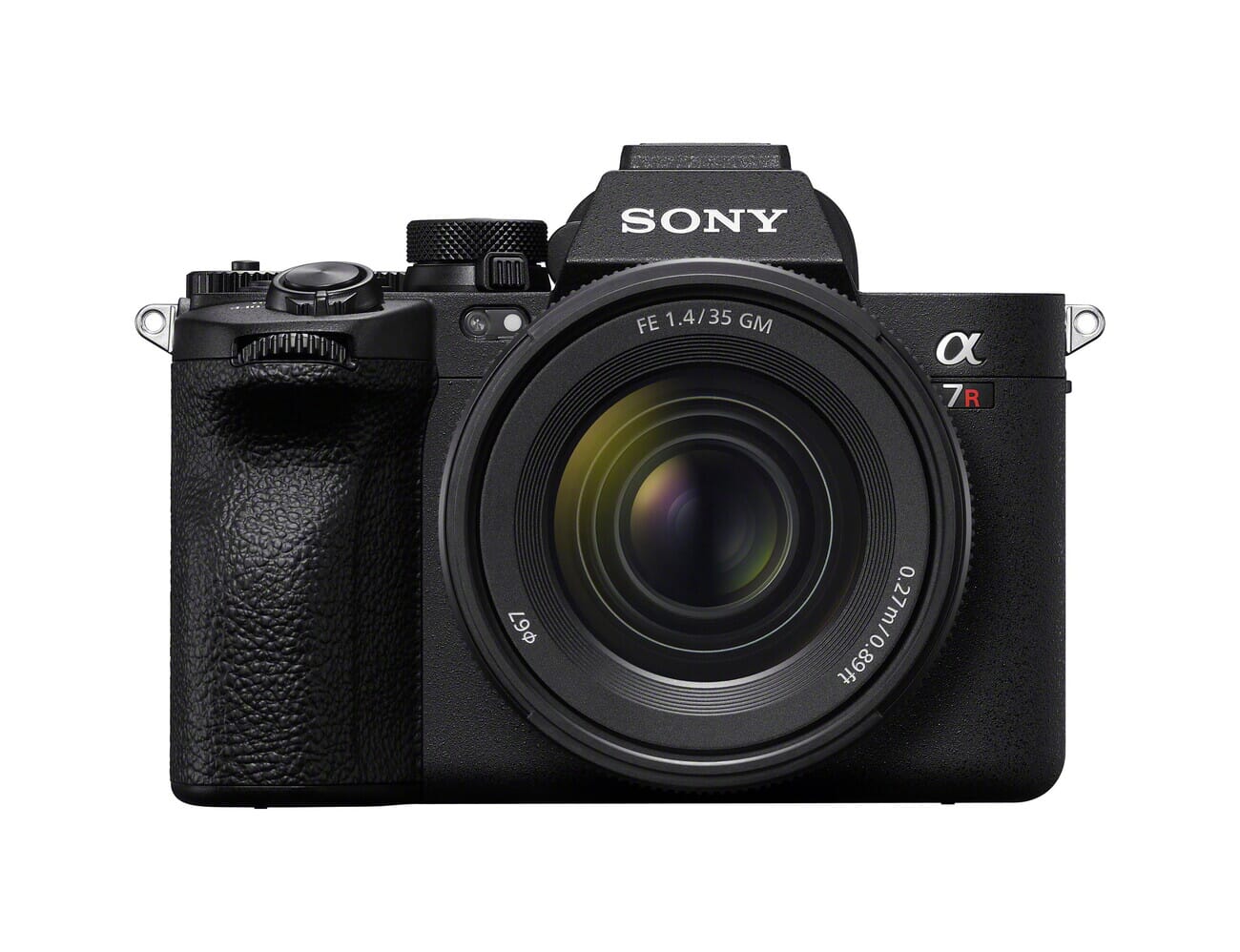
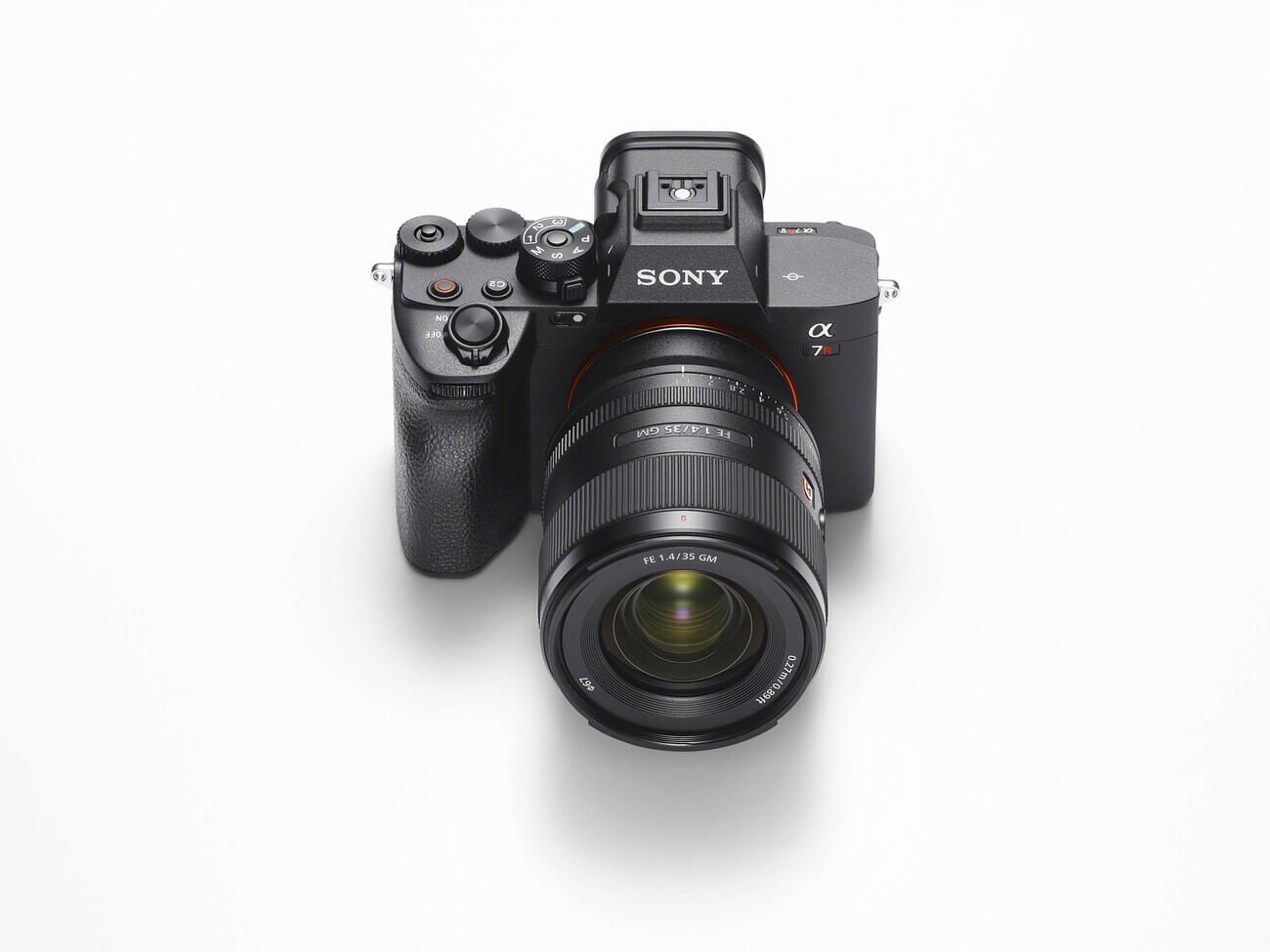
The A7R V launched in November 2022 with a 61MP sensor, making it due for an upgrade. An 80MP stacked sensor would be a generational leap – combining high resolution with the speed advantages typically reserved for lower-megapixel bodies.
Sony FX3 II – The Cinema Workhorse (21% of votes)
The FX3 is now four years old and built on the decade-old architecture of the A7S III. With both Canon (EOS C50) and Nikon (ZR) now directly challenging its position, Sony has strong incentive to fast-track a successor. Rumors point to a 16MP partially stacked sensor with near-5K video capabilities and a price tag around $3,500-$4,000.
Digital Camera World’s James Artaius has noted that Sony may be developing a new sensor platform to share across the FX3 II, A7S IV, and potentially a new ZV camera – which would explain why all three have been delayed.
Sony A7S IV – The Low-Light Legend (21% of votes)
Tied with the FX3 II in the poll, the A7S IV is arguably the most overdue camera in Sony’s lineup. The A7S III launched in October 2020 – nearly six years ago. At CP+ 2026, Sony still declined to comment on whether an A7S IV would ever materialize, but sources suggest it could share a new sensor platform with the FX3 II.
However, industry watchers like The New Camera place the A7S IV later in the timeline – possibly late 2026 or early 2027 – making it a less likely candidate for the May release.
Dark Horse Candidates
The remaining votes split across several models: Sony A1 III (5%), A7C III (5%), A9 IV (4%), and A7CR II (3%). The source’s use of “unexpected” has fueled speculation that it could be something outside the usual product cycle – perhaps the A9 IV leveraging Sony’s new 68MP global shutter sensor that recently entered testing, or even a completely new product line.
Dissecting the SAR Poll: What 800 Votes Tell Us
The Sony Alpha Rumors poll results are more revealing than they first appear. The A7R VI’s commanding 37% lead over the second-place finishers (FX3 II and A7S IV, tied at 21%) reflects a community that’s hungry for resolution more than anything else. That’s a significant shift from just two years ago, when video-centric bodies dominated wish lists.
Several factors explain this pivot. The rise of AI-powered cropping and computational photography means higher base resolution translates directly into more creative flexibility. Landscape and commercial photographers who’ve been stretching the 61MP ceiling of the A7R V are running into the limits of what can be delivered for large-format prints and billboard-scale output. An 80MP sensor would give them roughly 30% more linear resolution to work with.
The tied result between the FX3 II and A7S IV (21% each) is equally telling. These are effectively the same audience – video-first creators – split between two form factors. Combined, they represent 42% of the vote, which actually exceeds the A7R VI’s share. This suggests the video community is just as engaged, but divided on which body Sony should prioritize.
Meanwhile, the low vote share for the A1 III (5%) and A9 IV (4%) suggests the community doesn’t expect Sony to refresh its flagship sports bodies this early. The A1 II is still relatively recent, and the A9 III with its global shutter remains unique enough in the market to hold its position.
The A7R Series: A Decade of Resolution Leadership
If the A7R VI is indeed the mystery camera, it would continue one of the most impressive product lineages in digital photography. Since the original A7R launched in 2013, Sony has systematically pushed the boundaries of full-frame resolution with each generation.
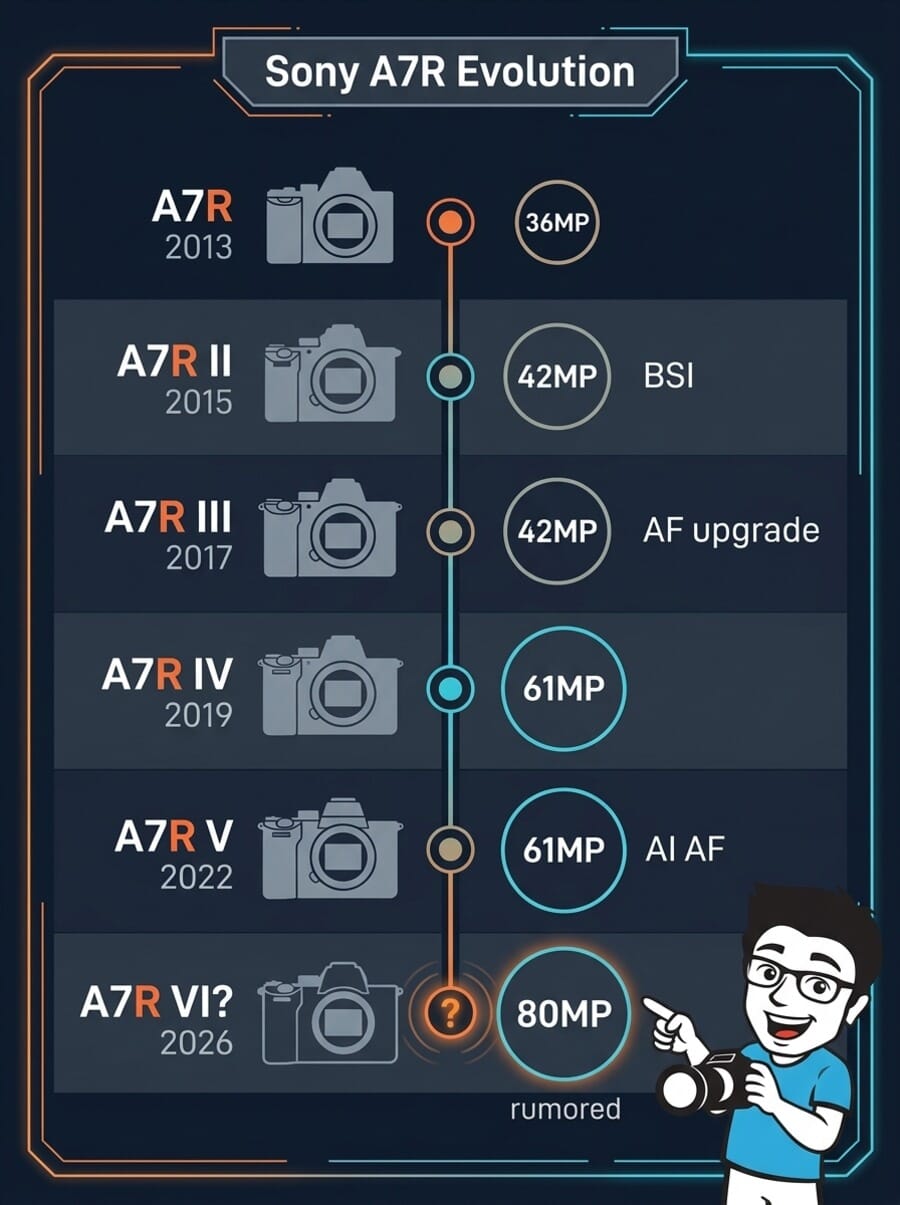
The original A7R (2013) debuted with 36MP – groundbreaking for a full-frame mirrorless camera at the time, though it suffered from shutter shock and limited autofocus. The A7R II (2015) jumped to 42MP and introduced back-side illuminated (BSI) sensor technology, dramatically improving low-light performance while adding 4K video. The A7R III (2017) kept the same 42MP resolution but overhauled the autofocus system and added dual card slots – the features working professionals had been demanding.
The A7R IV (2019) made the big resolution jump to 61MP, a number that seemed almost excessive at the time but has since become the benchmark that competitors measure against. The A7R V (2022) maintained 61MP but introduced Sony’s AI Processing Unit for subject recognition – a dedicated chip that fundamentally changed how the camera identified and tracked subjects.
An 80MP A7R VI would represent a 31% resolution increase over its predecessor – the largest percentage jump since the A7R IV. Combined with a stacked sensor design (a first for the R series), it would eliminate the traditional trade-off between resolution and speed that has defined this product line.
The Resolution Race: How 80MP Changes the Competitive Landscape
An 80MP Sony A7R VI wouldn’t exist in a vacuum. It would land in a market where resolution competition has intensified dramatically over the past two years. Here’s how it stacks up against the current high-resolution leaders.
The Canon EOS R5 II (released August 2024) offers 45MP with a stacked CMOS sensor, 30fps electronic shutter bursts, 8K/60p video, and Canon’s most advanced Dual Pixel CMOS AF II system. It’s priced at $4,299 and has earned acclaim as one of the most versatile hybrid cameras on the market. However, at 45MP, it’s firmly positioned as a hybrid body rather than a resolution specialist.
The Nikon Z8 (released June 2023) packs 45.7MP from a stacked sensor derived from the Z9 flagship, with 20fps RAW bursts, 8K/30p video, and Nikon’s excellent 3D tracking AF. At $3,999, it offers flagship-level performance in a more compact body. Like the Canon, it prioritizes versatility over pure resolution.
Against these competitors, an 80MP A7R VI would offer nearly double the resolution of both the Canon R5 II and Nikon Z8. Even more importantly, the leaked 30fps burst spec would match the Canon R5 II’s top speed – meaning photographers would no longer have to sacrifice speed for resolution. That’s a paradigm shift.
The 16+ stops of dynamic range would also surpass both competitors. The Canon R5 II delivers approximately 14.6 stops, while the Nikon Z8 offers about 14.7 stops. If the A7R VI truly achieves 16 stops, it would set a new standard for full-frame dynamic range – approaching territory previously reserved for medium format sensors.
Perhaps most significantly, an 80MP stacked sensor would fire a shot across the bow of medium format. The Fujifilm GFX 100 II with its 102MP sensor has been the go-to choice for photographers needing maximum resolution. But if Sony can deliver 80MP in a body that shoots 30fps and likely costs under $4,000, the value proposition of medium format cameras gets a lot harder to justify for anyone outside of dedicated studio work.
Breaking Down the Leaked A7R VI Specs
The spec leak that surfaced alongside the SAR confirmation deserves closer examination. While unconfirmed, the claimed specifications paint a picture of a camera that would redefine what’s possible in the high-resolution full-frame segment.
- 80MP stacked CMOS sensor: The “stacked” designation is crucial. Every previous A7R model has used a conventional or back-illuminated (BSI) sensor. A stacked architecture places processing circuitry directly behind the photodiodes, enabling dramatically faster readout speeds. This would virtually eliminate rolling shutter and enable the high burst rates that R-series shooters have always wished for.
- 30fps RAW bursts: Current A7R V manages 10fps. Tripling that number would put the A7R VI in the same burst territory as Sony’s own A9 III sports camera – a remarkable achievement for a resolution-focused body.
- 8K/30p video: With 80MP of resolution, the sensor could theoretically output up to 10.9K. An 8K/30p mode would use substantial oversampling from the full sensor width, delivering extremely detailed video footage.
- 16+ stops of dynamic range: This would be a new record for full-frame sensors, likely enabled by a combination of the new 3-layer stacked architecture and dual-gain output technology. Some commenters on SAR have suggested Sony’s new sensor uses a three-layer design that inherently reduces noise.
- Estimated price around $3,999: Based on comparison site listings and the A7R V’s $3,899 launch price, expect a modest price increase reflecting the new sensor technology.
Why May Matters
The camera industry has had a notably slow start to 2026. RedShark News recently characterized it as “the least activity in the camera market I’ve seen in the last 25 years.” Amateur Photographer’s piece asking “Why have there been no new cameras in 2026?” gained serious traction online.
A major Sony launch in May would break that drought in spectacular fashion. It would also align with Sony’s fiscal year timing – Q2 of their FY2026 – which is historically when they schedule significant product launches.
For context, the Sony A7 V launched late last year and has dominated sales charts since, topping Mapcamera’s best-seller rankings in Japan for multiple consecutive months. Sony is clearly riding momentum in the full-frame segment.
The timing also matters competitively. Canon refreshed its high-resolution lineup with the R5 II in August 2024, and Nikon’s Z8 has been on the market since mid-2023. Both competitors have had time to establish their positions. A May 2026 Sony launch would give the company a fresh product to counter both – especially if the A7R VI’s specs are as dramatic as the leaks suggest.
What to Watch For
Sony Alpha Rumors says they’re working on final confirmation of the specific model. If the camera is announced in April with a May ship date, we could see leaks intensify over the next few weeks. Key things to watch:
- Regulatory filings – New cameras typically appear in FCC/wireless certification databases 2-4 weeks before announcement
- Lens roadmap hints – Sony sometimes releases complementary lenses alongside new bodies
- Retailer activity – Placeholder listings or “coming soon” pages at B&H, Adorama, or Amazon
- Source follow-ups – Sony Alpha Rumors has asked readers with insider knowledge to reach out
Whatever this camera turns out to be, one thing is clear: Sony isn’t resting on the A7 V’s success. The full-frame mirrorless war is about to heat up again.
We’ll update this story as more details emerge. Stay tuned.
Frequently Asked Questions
When will the new Sony camera be announced?
According to Sony Alpha Rumors, the camera will be released within May 2026. It’s unclear whether “released” means announced and shipped in May, or announced in April with May availability.
Is this the Sony A7R VI?
The A7R VI is the leading candidate based on community speculation (37% of reader votes) and concurrent spec leaks suggesting an 80MP stacked sensor. However, Sony Alpha Rumors has not confirmed the specific model yet.
How much will the new Sony camera cost?
The source describes the camera as “expensive” and “advanced.” If it’s the A7R VI, expect pricing around $3,500-$4,000 based on the A7R V’s $3,899 launch price. An FX3 II would likely fall in a similar range.
How does the rumored A7R VI compare to the Canon R5 II and Nikon Z8?
If the leaked specs are accurate, the A7R VI’s 80MP sensor would offer nearly double the resolution of both the Canon R5 II (45MP) and Nikon Z8 (46MP). The leaked 30fps burst speed would match the Canon R5 II and exceed the Z8’s 20fps. With 16+ stops of dynamic range, it would also lead in that category. Pricing is expected to be competitive at around $3,999.
Could this be a completely new camera model?
The source described the release as “a bit unexpected,” which has led to speculation about a new product category. However, most industry watchers believe it will be an existing line refresh – most likely the A7R VI or FX3 II.
Sources used for this article:
Featured image: Photo by Pang Yuhao on Unsplash. Sony A7R V product images: Sony Electronics via PixelShift Studio pressroom.


Get the Weekly Photography News Digest
Join photographers who get our top stories delivered every Monday morning. No spam, unsubscribe anytime.