


- Sigma 35mm f/1.4 DG II Art launches April 16, 2026 at $1,059 — 20% lighter and optically superior to its legendary predecessor.
- Viltrox 35mm f/1.2 Lab offers the widest aperture of the trio at $999, with VCM autofocus rivaling Nikon’s native glass.
- Nikon Z 35mm f/1.4 remains the value play at just $600 — lightest in the group at 415g with full native compatibility.
- Sigma CEO Kazuto Yamaki confirms the II Art series was only made possible by new HLA motor and aspherical glass technologies unavailable when the original launched in 2012.
- Third-party Z-mount lenses face uncertain futures — Nikon’s ongoing firmware restrictions make the Viltrox’s long-term compatibility a question mark.
The 35mm Battleground
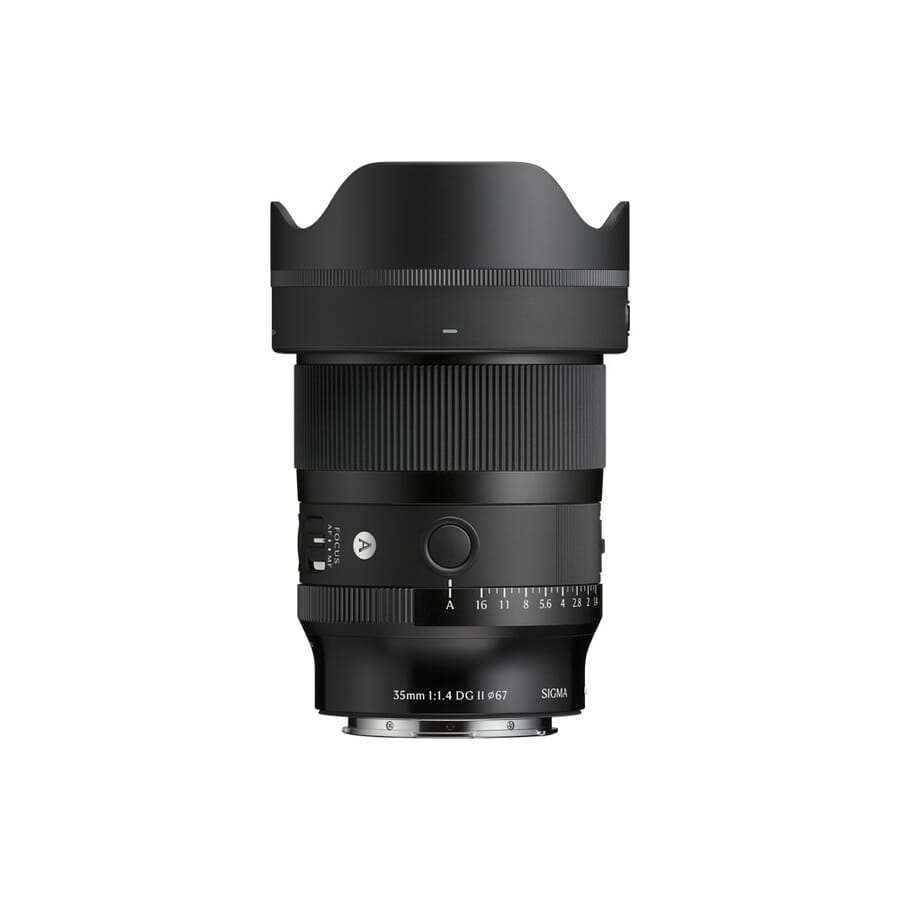
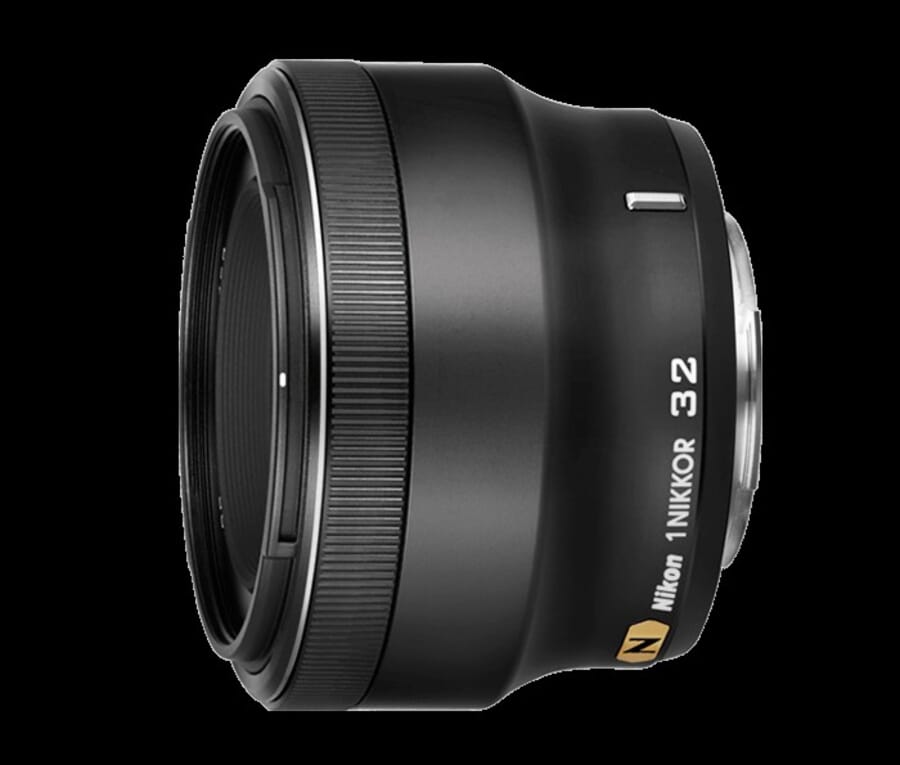
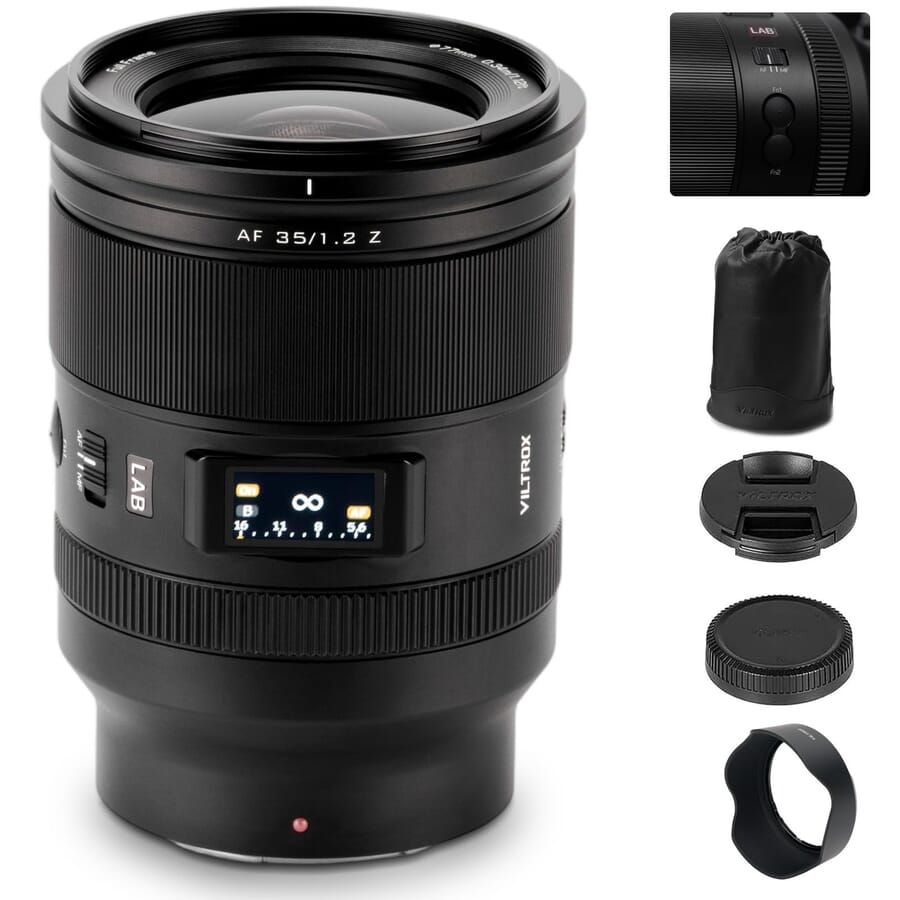
The 35mm focal length has always been contested territory. Wide enough for environmental storytelling, tight enough for intimate portraits — it sits at the crossroads of street, documentary, and everyday photography. And right now, three lenses are vying for the title of best 35mm prime for mirrorless shooters.
Sigma just unveiled the 35mm f/1.4 DG II Art, a ground-up redesign of the lens that single-handedly changed how photographers thought about third-party glass when it launched in 2012. Viltrox has brought its ambitious 35mm f/1.2 Lab to Nikon Z-mount — a half-stop faster than anything else here, at a price that undercuts Sigma. And Nikon itself offers the Z 35mm f/1.4, a compact native option that launched at a surprisingly aggressive $600.
PetaPixel’s review of the new Sigma calls it “Return of the King” — high praise for a sequel to what was already considered one of the most important third-party lenses ever made. But the competition isn’t standing still.
Sigma 35mm f/1.4 DG II Art — The Sequel 13 Years in the Making
The original Sigma 35mm f/1.4 Art, released in 2012, was the lens that put Sigma on the map as a serious optical contender. It was the first lens in Sigma’s now-iconic Art line, and it proved that third-party glass could match — and sometimes beat — the best from Canon, Nikon, and Sony.
The 35mm f/1.4 DG II Art is a complete redesign. Sigma has cut the length by 14% and reduced weight by 20%, bringing it down to 530g (L-Mount) from the previous 640g. The optical formula is entirely new: 15 elements in 12 groups, including four high-precision aspherical elements and two SLD glass elements. Sigma says it delivers “the best optical performance ever in Sigma’s 35mm f/1.4 Art line.”
PetaPixel’s reviewer found the sharpness “even more impressive than expected,” noting exceptional corner performance at wide-open apertures — historically a weak point for fast primes. Chromatic aberration, particularly the longitudinal variety that plagued the original, is dramatically reduced. The new Advanced Amorphous Coating (AAC) virtually eliminates ghosting and flare.
Under the hood, dual HLA (High-response Linear Actuator) motors — the same system used in Sigma’s 35mm f/1.2 Art — deliver fast, quiet autofocus with minimal breathing. The lens features a dedicated aperture ring with de-click functionality, customizable AFL buttons, and full weather sealing. Available in Sony E-mount and L-Mount at $1,059, shipping April 16, 2026.
Viltrox 35mm f/1.2 Lab — The Chinese Challenger Goes Native
Viltrox’s Lab series represents the company’s push into premium territory, and the 35mm f/1.2 Lab is its boldest statement yet. Originally available for Sony E-mount, the lens arrived on Nikon Z-mount in late 2025 — a significant move for Z-mount shooters who have limited third-party options due to Nikon’s restrictive approach to mount licensing.
The optical design is complex: 15 elements in 10 groups, featuring five ED elements, two aspherical elements, and three high-refractive elements. The result is an f/1.2 aperture that delivers remarkably thin depth of field — about a third of a stop more light-gathering and blur than f/1.4 alternatives. Dustin Abbott’s review noted that the Z-mount version’s autofocus feels “more mature and polished” than earlier Lab releases, with the dual VCM (Voice Coil Motor) system holding a slight edge over Nikon’s own STM motors in pure speed tests.
At $999, the Viltrox undercuts the Sigma by $60 while offering a wider aperture. The tradeoff is weight: at 970g, it’s nearly double the Sigma’s mass. Weather sealing is included, along with an LCD info display on the barrel. Photography Life called it “a beast of a lens in more ways than one.” Available for Nikon Z-mount and Sony E-mount.
Nikon Z 35mm f/1.4 — The Lightweight Native
Nikon surprised the market when it launched the Z 35mm f/1.4 in June 2024 at just $600 — well below what anyone expected for a native f/1.4 prime. Notably, this lens doesn’t carry the “S-Line” designation, which signals Nikon’s premium tier. Instead, it’s positioned as an accessible, everyday fast prime.
At just 415g and 88.5mm long, it’s the most compact option in this comparison by a significant margin. The 11 elements in 9 groups design includes two aspherical elements, and the 62mm filter thread keeps the front end small. Autofocus uses a stepping motor — not as fast as Sigma’s HLA or Viltrox’s VCM, but reliable and quiet.
Optically, it’s no S-Line, but reviewers have been impressed relative to the price. Photography Life notes that Nikon “shaved so much weight off this lens” compared to both the F-mount predecessor (600g) and Sony’s FE 35mm f/1.4 GM (524g). The value proposition is hard to argue with — full native Z-mount compatibility, guaranteed firmware support, and no third-party compatibility concerns.
Head-to-Head: Specs Comparison
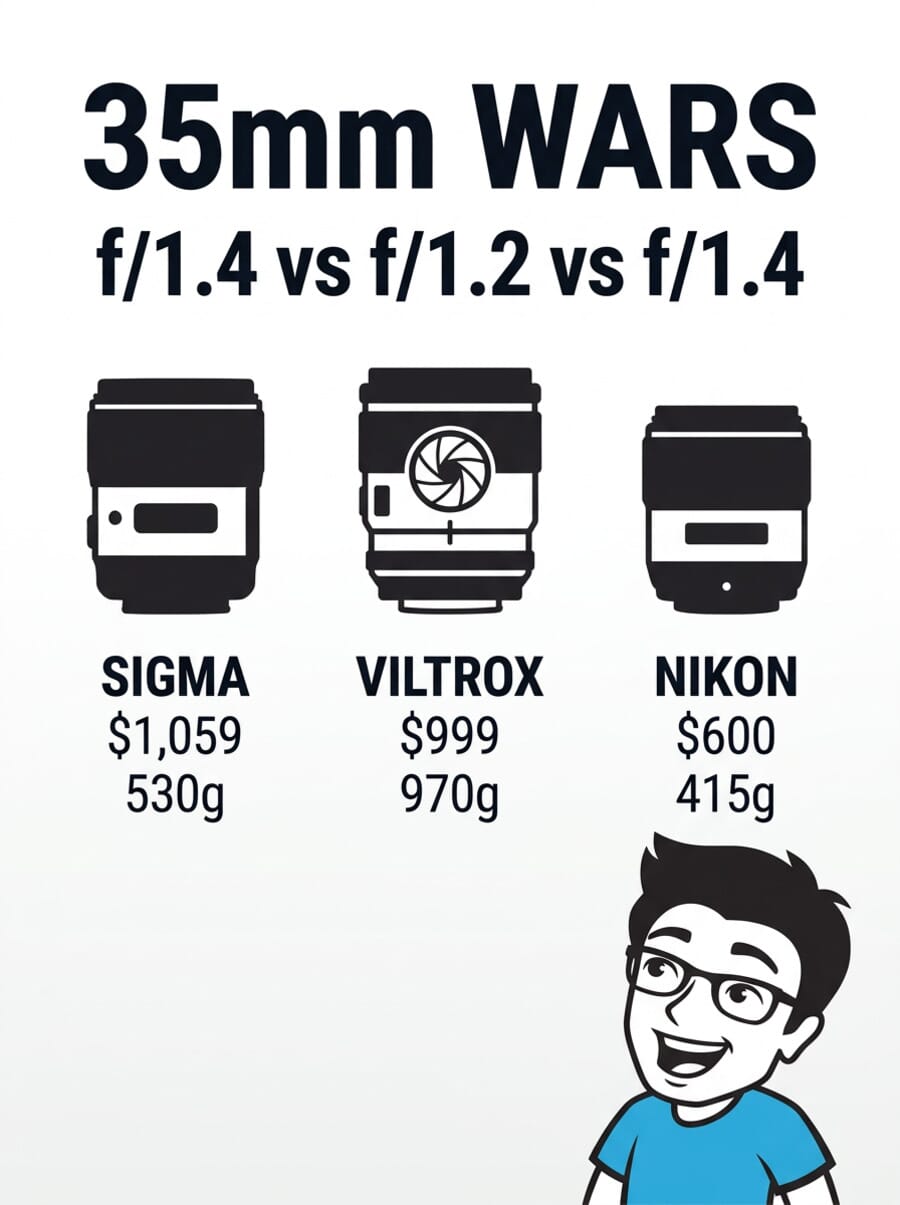
| Spec | Sigma 35mm f/1.4 II Art | Viltrox 35mm f/1.2 Lab | Nikon Z 35mm f/1.4 |
|---|---|---|---|
| Price (March 2026) | $1,059 | $999 | $600 |
| Max Aperture | f/1.4 | f/1.2 | f/1.4 |
| Weight | 530g / 18.7oz | 970g / 34.2oz | 415g / 14.7oz |
| Elements/Groups | 15/12 | 15/10 | 11/9 |
| AF Motor | Dual HLA | Dual VCM | STM |
| Aperture Blades | 11 | 11 | 9 |
| Filter Size | 67mm | 67mm | 62mm |
| Mount Options | Sony E, L-Mount | Sony E, Nikon Z | Nikon Z only |
| Weather Sealed | Yes | Yes | No |
| Aperture Ring | Yes (de-clickable) | Yes (stepless) | No |
Inside Sigma’s Philosophy: Yamaki on the II Art Series
In a wide-ranging interview with Phototrend at CP+ 2026, Sigma CEO Kazuto Yamaki revealed the thinking behind the II Art series. The 35mm f/1.4 DG II Art was made possible by technologies that simply didn’t exist when the original launched in 2012 — specifically the HLA linear motor and new aspherical glass processing techniques.
Yamaki explained that Sigma will only develop a “Version II” lens when the team expects “a clear and significant improvement in performance.” If the gap is small, no update is made — which is why the 2018 85mm f/1.4 DG DN Art hasn’t been refreshed yet. This philosophy of restraint stands in contrast to annual product cycles common elsewhere in consumer electronics.
The interview also surfaced remarkable details about Sigma’s corporate culture. The company, headquartered in Aizu, Japan, has an employee turnover rate below 1% — a near-unheard-of figure in manufacturing. Sigma recruits just a few people annually but retains almost everyone, maintaining deep institutional knowledge across engineering, manufacturing, and sales teams.
Perhaps most surprisingly, Sigma grows and sells rice on fields surrounding its factory. The initiative, as Yamaki explained, serves a deeper purpose: maintaining the local community’s pride and economic stability. “Seeing only abandoned rice fields could cause residents to lose confidence and pride in their hometown,” he noted. The Aizu Prime lenses — named after the region — carry this philosophy into the products themselves. For the full story on Sigma’s farming operation and its connection to lens design, see the Sigma Aizu factory and farm feature.
What This Means for Photographers
The right choice depends entirely on your system and priorities:
Sony E-mount shooters have the most options. The Sigma 35mm f/1.4 II Art is the clear frontrunner — lighter, sharper, and better-corrected than the Viltrox, at a similar price. Sony’s own 35mm f/1.4 GM remains excellent but costs significantly more ($1,398) for comparable optical results. PetaPixel’s verdict: “Might as well save some money.”
Nikon Z-mount shooters face a more nuanced decision. The native Nikon Z 35mm f/1.4 is a bargain at $600 with zero compatibility concerns. The Viltrox 35mm f/1.2 Lab offers that extra third-stop and premium build, but comes with a risk: Nikon’s history of firmware restrictions on third-party lenses means long-term compatibility isn’t guaranteed. Note that the Sigma II Art is not available in Z-mount — only E-mount and L-Mount.
L-Mount users (Panasonic, Leica, Sigma bodies) get the Sigma as the obvious choice. Panasonic’s own 35mm f/1.8 is more affordable but optically simpler, and there’s no native f/1.4 option in the L-Mount system.
For portrait photographers who crave maximum background separation, the Viltrox’s f/1.2 aperture is tempting — just be prepared for the weight penalty. For street photographers who value compactness, the Nikon Z 35mm f/1.4 at 415g is hard to beat. And for optical perfectionists who want the sharpest, best-corrected 35mm f/1.4 available, the Sigma II Art appears to be the new king — or as PetaPixel puts it, the return of one.
For a comprehensive look at the broader best Sigma lenses for mirrorless cameras, check our updated guide.
Featured image: Sigma 35mm f/1.4 DG II Art product photo courtesy of Sigma Corporation.
Sources and references:
Related Posts
Get the Weekly Photography News Digest
Join photographers who get our top stories delivered every Monday morning. No spam, unsubscribe anytime.