


- Today (April 22, 2026) is the 56th Earth Day — a holiday founded in 1970 and catalyzed in large part by a single photograph.
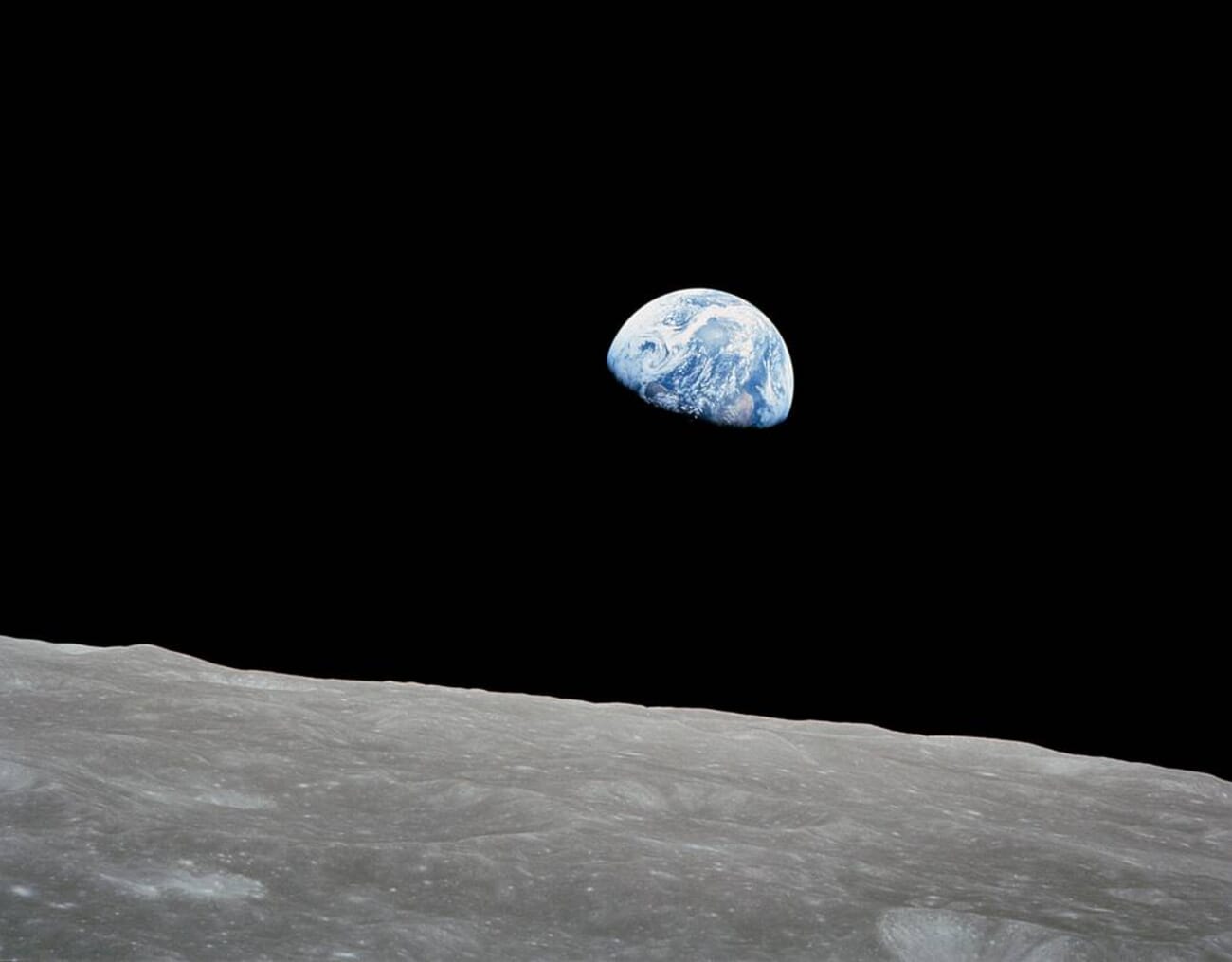
- Earthrise was taken by Apollo 8 astronaut Bill Anders on Christmas Eve 1968 using a modified Hasselblad 500 EL, 250mm lens, Kodak Ektachrome film — 1/250s at f/11.
- Galen Rowell called it ‘the most influential environmental photograph ever taken’; Al Gore credited it with launching the modern environmental movement within 18 months.
- The story of the shot is a masterclass in photographic readiness: the crew wasn’t supposed to be looking at Earth, and Anders nearly missed it.
- Practical takeaway for photographers today: the most important frame of your life often shows up unplanned — be ready, not scripted.
Earth Day turns 56 today. The first one — April 22, 1970 — pulled twenty million Americans into the streets to demand environmental action, and a year and a half before it happened, three men in a tin capsule in lunar orbit made the image that arguably caused it.
The image is Earthrise. It was captured by Apollo 8 lunar module pilot Bill Anders on Christmas Eve 1968, and it changed how the species thought of itself. On Earth Day 2026, Digital Camera World is among the publications revisiting Anders’ life (he was killed in a 2024 plane crash) and the 250mm frame he almost didn’t take. Here’s the story of how a single photograph became the spark for modern environmentalism — and what it still teaches photographers today.
The Shot That Almost Didn’t Happen
Apollo 8’s mission wasn’t supposed to be about Earth. It was about the Moon — the first crewed flight to escape Earth’s gravity well, the first to orbit another body, the dress rehearsal before Apollo 11. Mission control had Anders, Frank Borman, and Jim Lovell on a tight photographic script focused on the lunar surface: crater reconnaissance for future landing sites, geological mapping, black-and-white plate film for science documentation.
On the fourth of ten orbits, the capsule rotated and Earth came unexpectedly over the lunar horizon. Borman, the commander, saw it first and called out: “Oh my God! Look at that picture over there! Here’s the Earth coming up. Wow, is that pretty.” Anders was holding the Hasselblad with a 250mm telephoto lens, loaded with black-and-white film for the scripted lunar work. He asked for the color film magazine. Lovell found it. Anders swapped it into the back of the camera, framed Earth above the cratered edge of the moon, and fired off three exposures at 1/250 second, f/11 — the middle one became one of the most reproduced photographs in human history.
What makes the backstory beautiful is that none of this was in the flight plan. If the Hasselblad had stayed loaded with black-and-white film — or if Anders hadn’t been the crewmember with the camera at that moment — the photo that launched modern environmentalism would not exist. Anders later reflected: “We’d come 240,000 miles to see the moon, and it was the Earth that was really worth looking at.”
From One Frame to a Global Movement
The photograph was released to the public in late December 1968. Within a week, it was on the cover of major US newspapers and LIFE magazine. It arrived at a cultural moment when American environmentalism was already simmering — Rachel Carson’s Silent Spring had been published in 1962, the Santa Barbara oil spill would hit six weeks later in January 1969, and Wisconsin senator Gaylord Nelson was quietly organizing a national teach-in about environmental issues.
That teach-in became the first Earth Day on April 22, 1970. Twenty million Americans — roughly 10% of the US population at the time — took part. Within eight months, President Nixon signed the legislation establishing the Environmental Protection Agency. Within three years, the Clean Air Act, Clean Water Act, and Endangered Species Act had all been signed into law. Al Gore would later say, simply: “Within 18 months of this picture the environment movement had begun.”
Today EARTHDAY.ORG counts more than a billion people across 190 countries participating each April 22. The 2026 theme is “Our Power, Our Planet,” focused on tripling global renewable-energy generation by 2030. The Earthrise image still anchors much of the visual identity of the movement — including the Artemis II mission patch, which directly references it, down to the cloud patterns.
Why the Photograph Works (As Photography)
Set aside the cultural weight for a moment and look at Earthrise as a photograph. Three craft decisions did most of the work:
- A telephoto lens. The 250mm compressed the visual distance between the lunar horizon and Earth, placing them in the same pictorial plane. A wide-angle lens would have turned Earth into a small dot in a void — dramatic in a different way, but nowhere near as emotionally legible.
- Color on a monochrome backdrop. The black of space and the grey of the lunar surface make Earth’s blue-and-white palette pop in a way that feels almost hand-colored. The first shot Anders took was a black-and-white exposure of the same frame; it’s visually flatter and hasn’t become famous.
- The rule of thirds — accidentally. Earth sits roughly at the upper-right third intersection, with the lunar horizon cutting across the lower third. Anders wasn’t composing to the rule; he was composing to what the 250mm framed when Earth cleared the horizon. The result is a textbook composition achieved under zero-gravity time pressure.
Anders used settings that any modern photographer would recognize as a solid high-contrast-scene baseline: 1/250s at f/11 on ISO-equivalent Ektachrome (roughly ASA 64). That’s a working professional exposure, not an artistic choice — the exposure triangle working exactly as designed.
The Other Earth Photo That Changed Everything
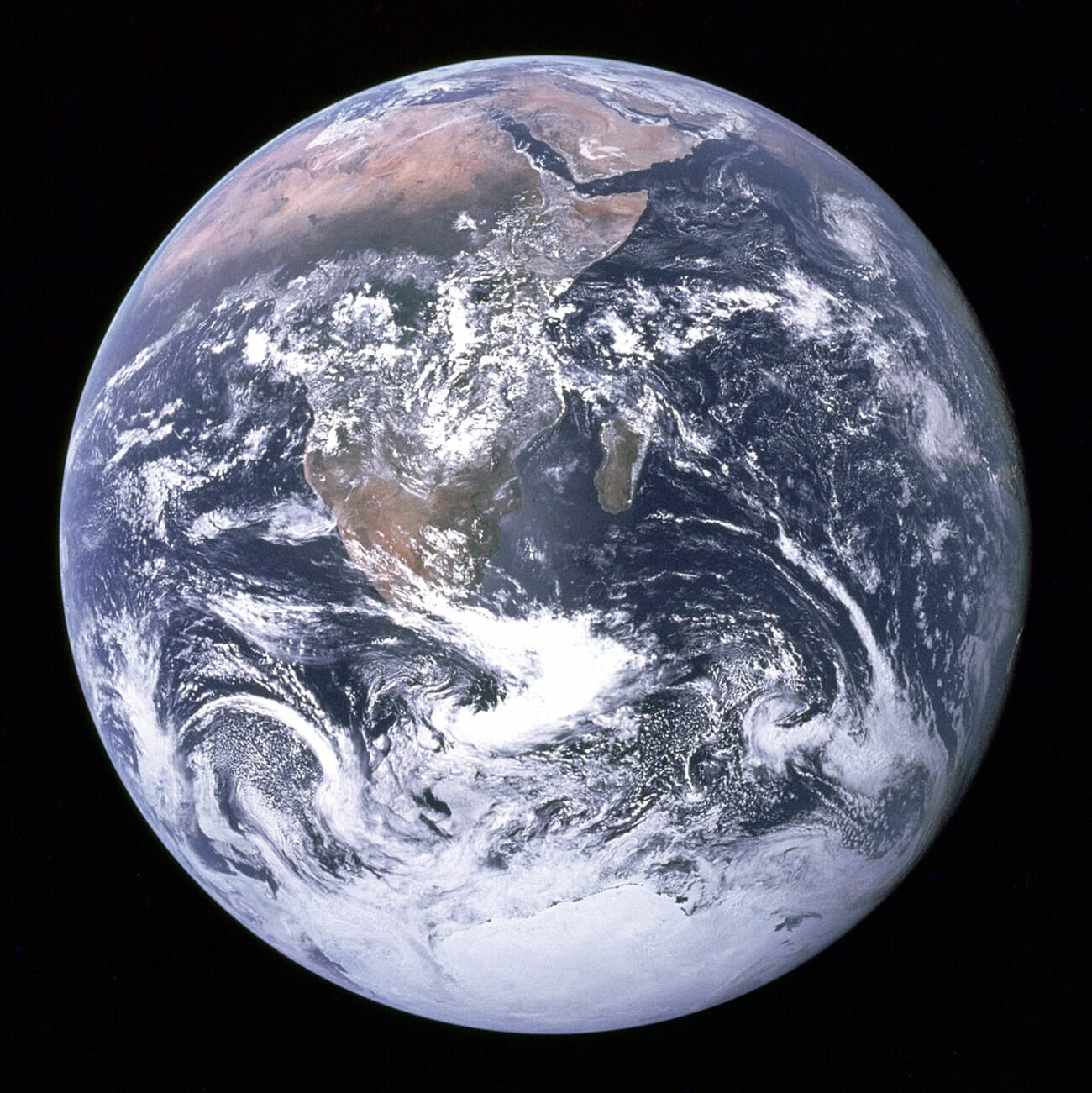
Four years after Earthrise, the Apollo 17 crew shot The Blue Marble — a fully illuminated Earth from 29,400 km out. If Earthrise forced us to see Earth in context, the Blue Marble showed us Earth as a whole: one coherent, finite, living thing with no visible borders. It remains one of the most distributed images in human history — printed on stamps, flags, environmental movement posters, and the original NASA Earth Day logo.
Between the two frames lies a useful lesson: one photograph gave environmentalism its emotion; the other gave it its symbol. For a photographer, the distinction matters — the emotional photograph is the one you think you can’t plan for, but the symbolic photograph usually is planned (carefully framed, well-lit, finished). Both have a place.
Shooting Earth Day 2026: Nature and Landscape Tips
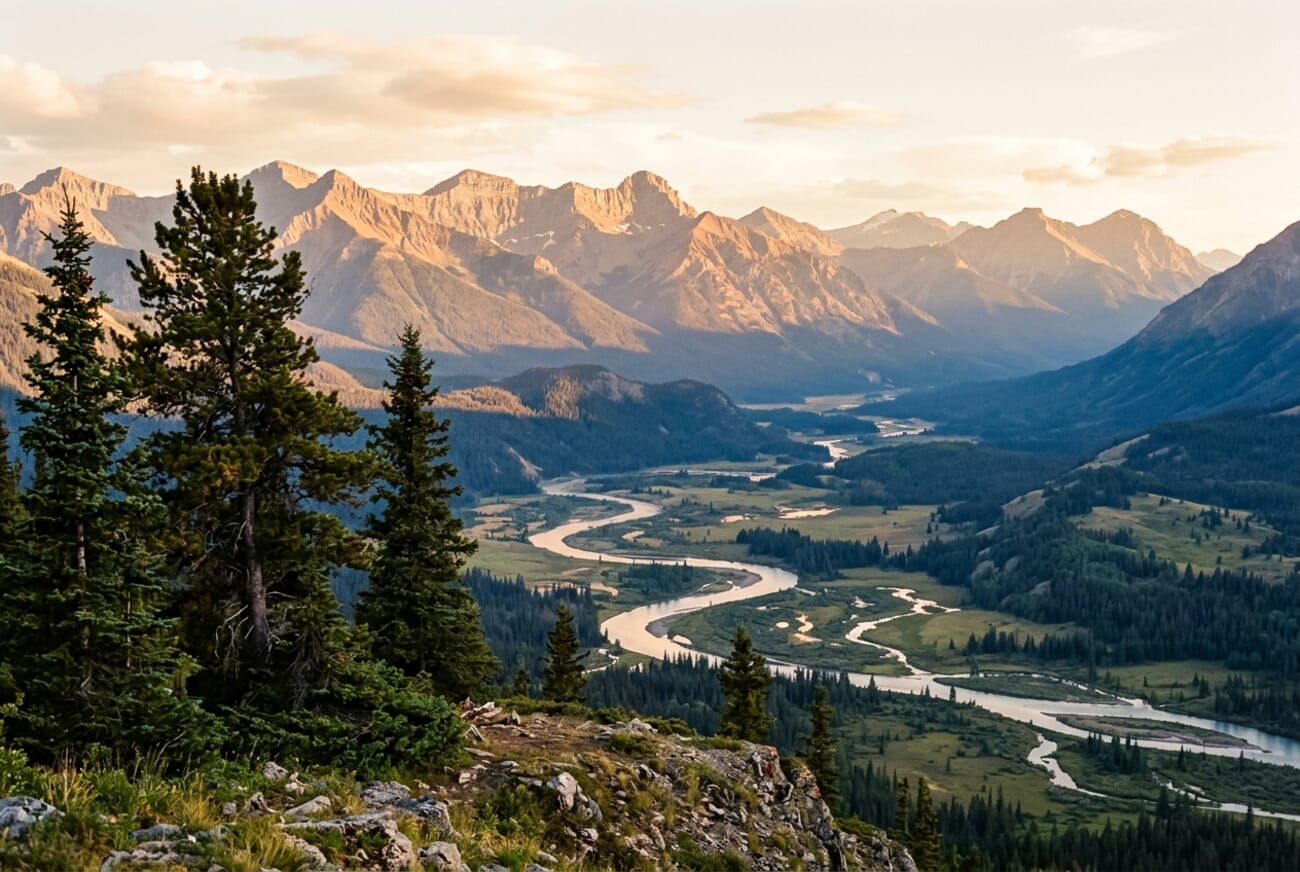
If Earth Day has you reaching for a camera, here’s what actually matters in the field today:
1. Chase the golden hour, not the blue hour
The 30–60 minutes after sunrise and before sunset produce the warm, directional light nature photography depends on. Blue hour (the 20 minutes before sunrise and after sunset) is lovely for cityscapes but flattens most landscape texture. If you’re photographing for Earth Day — meaning you want to convey a connection to place — commit to golden hour. Check your local times and arrive 20 minutes early.
2. Shoot narrow aperture, low ISO — mostly
For landscapes, start at f/8 to f/11 for deep depth of field and sharp corner-to-corner detail. Keep ISO at 100 or 200 when you can. Let shutter speed float — use a tripod for anything slower than 1/focal-length handheld. This is the same recipe Anders used by intuition more than calculation. For a complete breakdown, see our camera settings cheat sheet.
3. Composition: one strong foreground element
The strongest landscape photographs usually have a clear foreground subject — a rock, a tree, a figure — anchoring a broader scene behind it. Without that anchor, a panorama reads as record-keeping. With it, the viewer has a way into the frame. Earthrise obeys this rule: the lunar horizon is the foreground, Earth the subject.
4. Pack a polarizer and an ND filter
A circular polarizer deepens skies, cuts reflections off water and wet foliage, and saturates colors in a way no post-processing can match. An ND filter lets you slow shutter speeds in bright light — useful for silky-water waterfalls, cloud streaks, and cutting glare in a midday shoot. Together, they’re the two most useful accessories for nature photography — and both fit in a shirt pocket.
5. Be ready, not scripted
This is the Anders lesson. The best frame you’ll take today probably isn’t the one you planned. It’s the one you caught because you had the camera in your hand, the right lens mounted, and an exposure already close to correct when the light broke through or the animal crested the ridge. Pre-set a sensible baseline (f/8, 1/250s, Auto ISO with a floor). Practice framing-to-shot in under three seconds. Carry the camera even on short walks. If a bird, a cloud, or a light-shaft catches you off-guard, you should be ready to expose it in the time it takes to raise the camera.
What Earthrise Still Teaches About Photography’s Power
Fifty-eight years later, Earthrise is a reminder of something easy to forget in an age of billions-of-images-per-day: a single photograph can still change public opinion. It does it not by being technically perfect (Earthrise’s color is cool and slightly underexposed) but by doing something no words can: it forces the viewer to see a thing they thought they already knew.
Photography’s best frames arrive under constraints. Anders had one camera, one roll of color film, one chance to swap magazines, and no ability to go back and reshoot. That’s more constraint than almost any working photographer faces today, and the discipline of it is part of why the image endures. The lesson isn’t “shoot less” — it’s that intent in the moment matters more than unlimited post-production.
On Earth Day 2026, with AI image generators producing technically perfect synthetic Earths by the billion (and reshaping the visual economy as they go), the enduring value of a real photograph has never been clearer. What Anders had in 1968, and what no AI model has today, is presence — the fact of being 240,000 miles from home with a camera and a half-second to decide. That’s still the thing worth carrying a camera for.
Frequently Asked Questions
When was Earth Day first celebrated?
The first Earth Day was held on April 22, 1970, organized by US Senator Gaylord Nelson. It has been observed every April 22 since, now across more than 190 countries. 2026 marks its 56th observance.
Who actually took the Earthrise photo?
Apollo 8 astronaut Bill Anders, on December 24, 1968 (Christmas Eve), during the fourth of ten lunar orbits. Commander Frank Borman spotted Earth rising first; Anders swapped the Hasselblad’s film magazine from black-and-white to color in real time and took three exposures. The second frame is the iconic one.
What camera took Earthrise?
A modified Hasselblad 500 EL with a Zeiss Sonnar 250mm f/5.6 telephoto lens, loaded with Kodak Ektachrome color film (ISO 64 equivalent). Exposure: 1/250s at f/11. Several of the original cameras were left on the lunar surface during later Apollo missions to reduce ascent weight.
Is the Earthrise photograph in the public domain?
Yes. Like almost all NASA imagery produced by government employees in the course of their duties, Earthrise is in the public domain. It’s freely reproducible for editorial, commercial, and educational use — NASA requests credit but does not require permission.
What’s the best Earth Day photography challenge for 2026?
Earthday.org’s community is pushing a one-week personal challenge: photograph one piece of your local environment every day for seven days — the same spot each time if you want to track change over time, or different locations for range. It’s the opposite of the Anders scale: hyper-local, durational, and designed to slow you down.
How can I make photography part of environmental action?
Three practical angles: (1) document local change (a tree, a stream, a shoreline) over months or years to build a before/after record; (2) contribute to citizen-science projects like iNaturalist that require georeferenced photos of species; (3) share images with conservation nonprofits you support — most are starved for good, usable, rights-cleared visuals.
Image credits: Earthrise (AS08-14-2383) and The Blue Marble (AS17-148-22727) courtesy NASA, public domain. Earth Day hero composition and vertical pin graphic: PhotoWorkout. Landscape reference image: PhotoWorkout editorial.
All sources verified on April 22, 2026.
The Earthrise story
- NASA — Apollo 8 Astronaut Bill Anders Captures Earthrise – Official NASA archive entry with mission context and image ID AS08-14-2383.
- Digital Camera World — Bill Anders obituary and photograph history – Details on the camera gear, shot settings, and Anders' reflections on the image.
- TIME — How Apollo 8's Famed 1968 Photo Was Made – Behind-the-scenes narrative of the Christmas Eve 1968 exposure sequence.
- Wikipedia — Earthrise – Comprehensive reference on the photograph's provenance and cultural impact.
Earth Day 2026
- EARTHDAY.ORG — 2026 theme and campaigns – Global Earth Day coordinating body. 2026 theme: Our Power, Our Planet.