


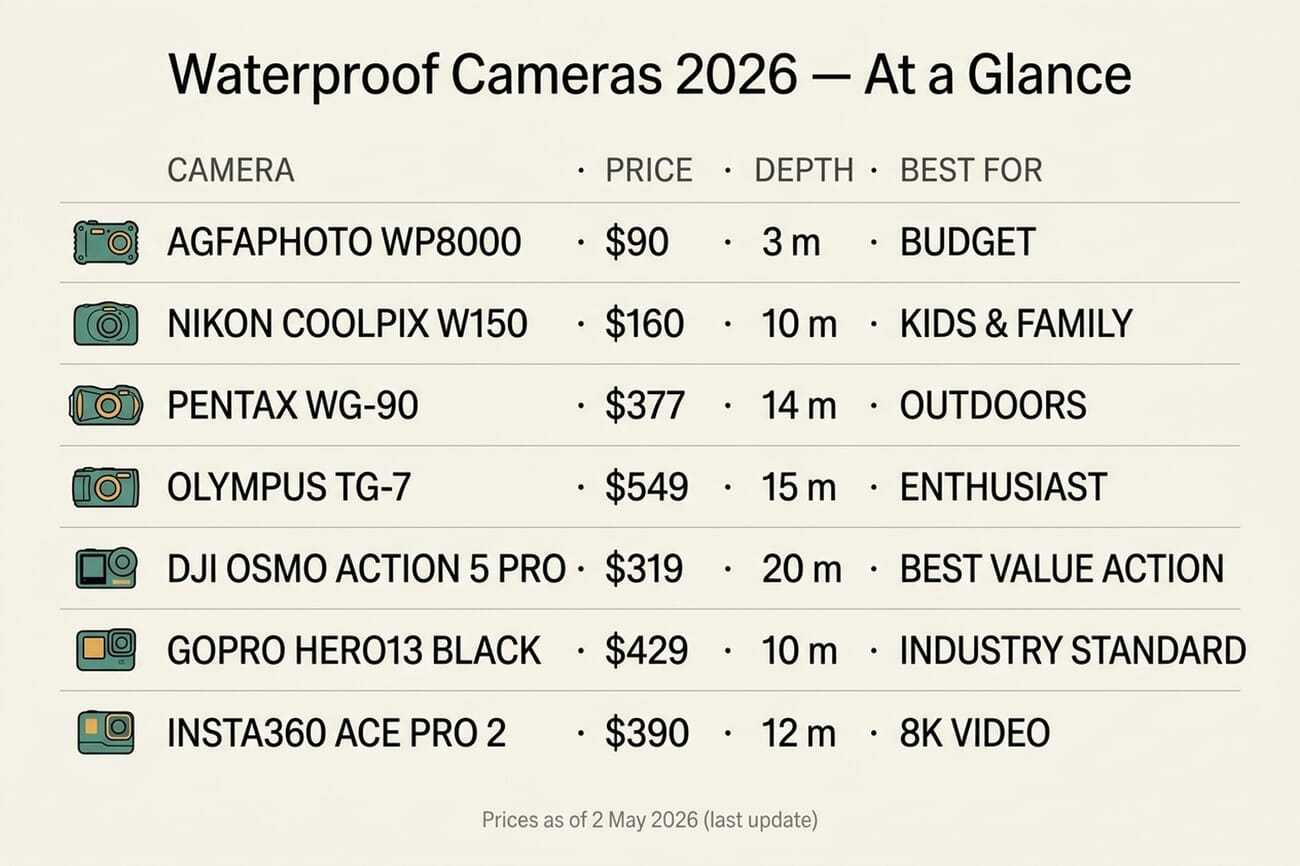
- AgfaPhoto just launched the £60/$75 Realishot WP6000 (May 1) — a true ultra-budget waterproof. The slightly older AgfaPhoto WP8000 is the equivalent option still available on Amazon US at $90 with 105+ reviews.
- For families and kids, the Nikon COOLPIX W150 ($160) remains the rugged-budget pick — 4.4★ across 570+ reviews, 10 m depth rating.
- For serious enthusiasts, nothing matches the Olympus Tough TG-7 ($549) — 15 m depth, freezeproof to 14 °F, built-in macro and microscope modes, GPS+altimeter.
- Action cameras now compete head-on with dedicated waterproof compacts. DJI Osmo Action 5 Pro at $319 is the surprise best-value pick; GoPro HERO13 Black ($429) is the industry standard.
- Waterproof spec to look at first: depth rating for swimming/snorkeling (~10 m minimum), shockproof drop height for kids/outdoor use (5+ ft), and freezeproof for ski/winter work.
When you buy through links on our site, we may earn a commission at no cost to you. We evaluate products independently. Commissions do not affect our evaluations.
A Cheap Burner Just Joined the Lineup — Here’s the Whole Picture
Summer is starting, and AgfaPhoto chose May 1 to launch the Realishot WP6000 — a £60 / $75 waterproof compact aimed squarely at the “burner camera for the beach” use case. The WP6000 itself is UK-launch only as of writing; the slightly older sibling AgfaPhoto WP8000 is the equivalent in the US at $89.99 with 105+ Amazon reviews. Either way, the ultra-budget tier just got more interesting.
This guide tiers seven waterproof cameras by budget and use case — from that $90 Agfa burner up through the $549 Olympus Tough TG-7 at the pro-compact end, plus the three action cameras (DJI, GoPro, Insta360) that now compete head-on with dedicated waterproof compacts. The right pick depends less on absolute price and more on what you’re actually shooting: photos vs video, kids vs nature, beach vs ski.
Each pick below has its full Amazon spec breakdown, ideal use case, strengths, weaknesses, and a one-line takeaway. The 7-row infographic above is the at-a-glance shortcut.
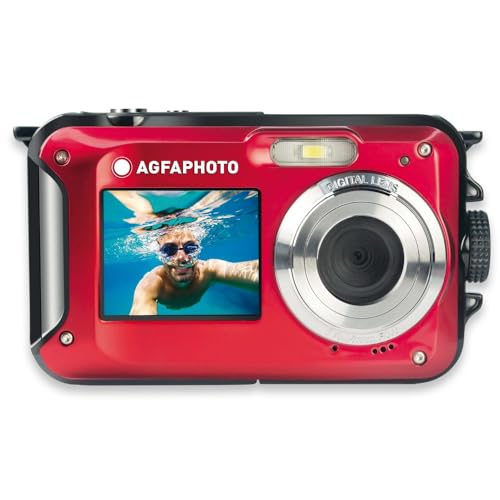
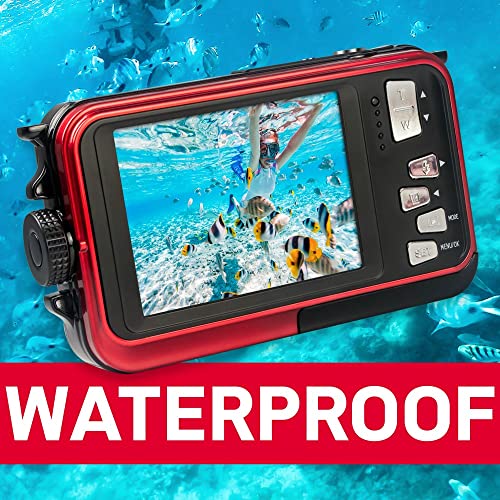
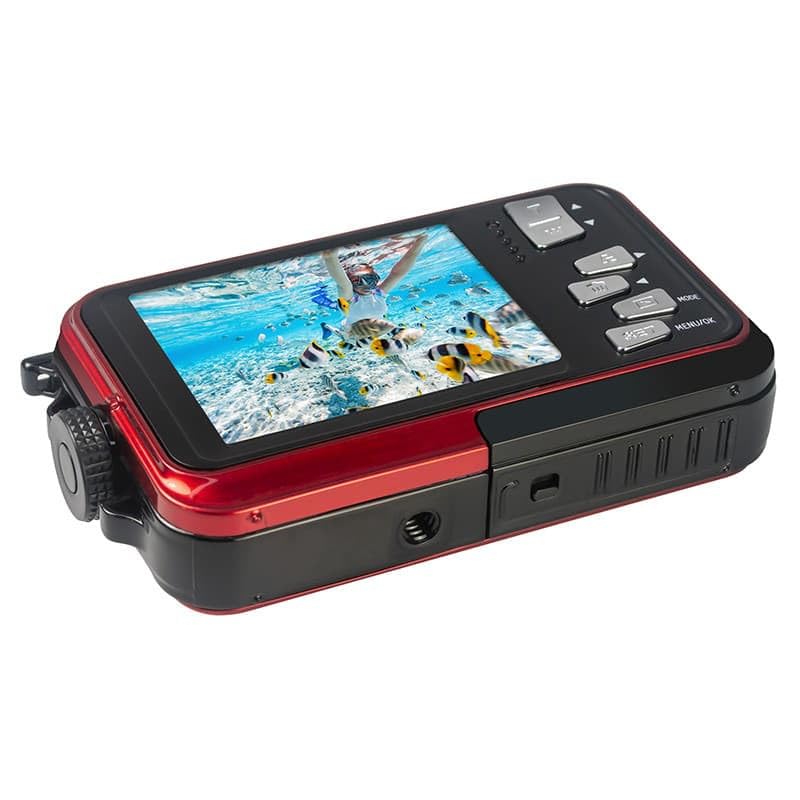
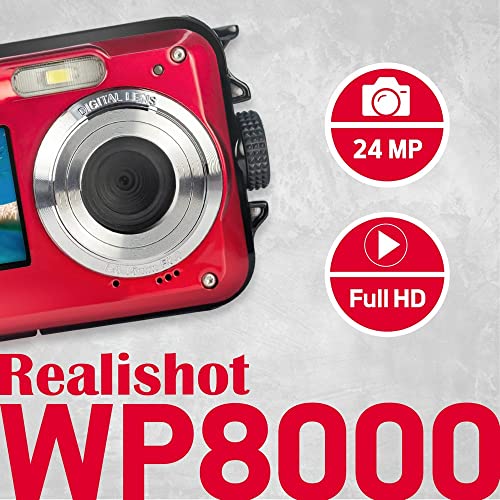
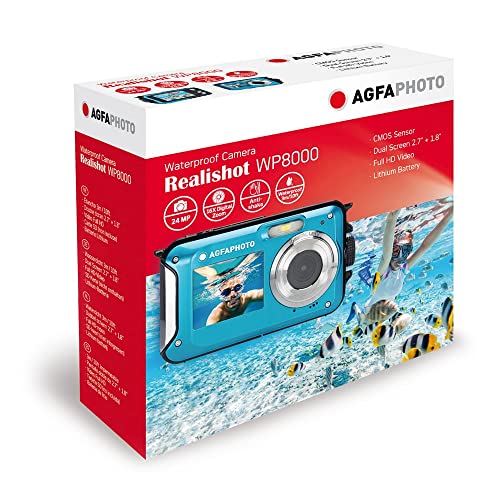
AgfaPhoto Realishot WP8000
Casual summer use — beach, pool, kids — where you want a real waterproof camera but absolutely don’t want to risk your phone or a $500 compact. Disposable-grade pricing without being literally disposable.
- $89.99 — under $100 for a real waterproof body
- 24MP marketing-spec sensor, Full HD 1080p video
- 10 m depth rating, plenty for pool and shallow snorkeling
- Two-year proven track record on Amazon (105+ reviews, 3.7★)
- Built-in flash, 8x digital zoom, 2.4-inch LCD
- Charges via USB, runs on standard rechargeable batteries
- Not the brand-new WP6000 (£60 UK-only launch May 1) — that’s what’s making news this week
- Image quality is fine for snapshots but won’t match the $300+ tier
- No 4K video — Full HD only
- Small sensor + limited ISO range = low-light performance is poor
If $80-90 is the budget and you’d rather break a cheap waterproof than your phone at the pool, the WP8000 does exactly that job. Don’t expect sample-shots gallery quality. Do expect to actually use it without worrying.
AgfaPhoto’s Realishot waterproof line is, technically, no longer made by Agfa AG — the Agfa name is licensed to consumer-electronics manufacturers in Europe, with InterPhoto handling the Realishot range. That’s not a knock; it’s the same arrangement that brings Polaroid-branded cameras to market today. What it means is the WP8000 is a perfectly competent budget compact built around a small Sony 1/3.2-inch sensor, with proven mass-production reliability, sold under a brand most photographers will recognise.
The use case is genuinely narrow but real: a beach or pool day where you absolutely will not bring your $1,200 phone or $500 mirrorless near the water. The WP8000 makes “disposable for one summer” into “cheap-but-actually-usable for several summers,” and the 105+ Amazon reviews bear that out. Image quality won’t compete with anything else in this guide, but for snapshots of kids in the pool, beach selfies, and the occasional underwater shot of a fish, it does the job.
The brand-new Realishot WP6000 that triggered this guide is a UK-only launch as of writing (£60 / approx $75 with VAT removed). Spec-wise it’s actually a step down from the WP8000 — 5MP native sensor (vs 24MP on WP8000), 720p video, 3 m depth rating. It’s positioned as the ultimate budget burner, not as an upgrade. If the WP6000 hits Amazon US later in 2026 at $75-80, expect it to displace the WP8000 as the new bottom-of-the-tier pick.




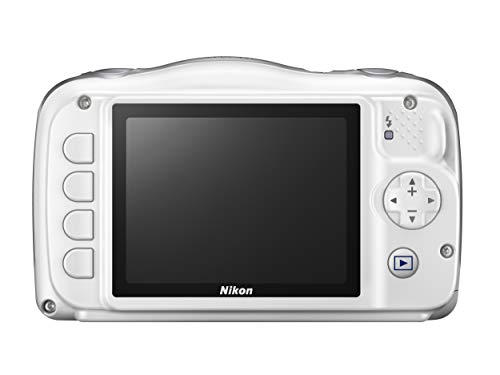
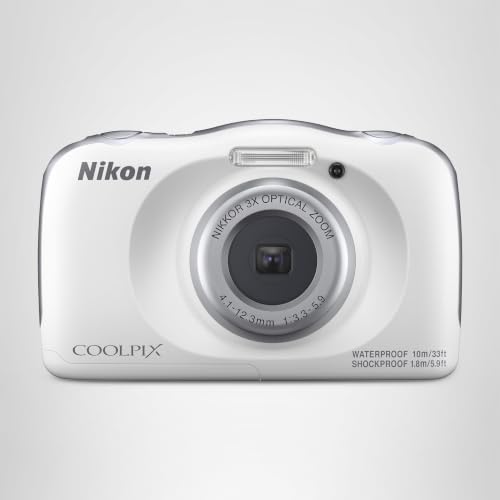
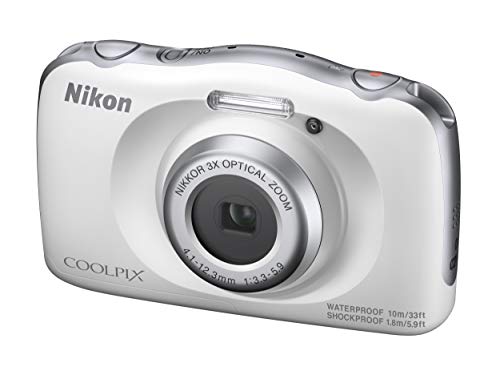
Nikon COOLPIX W150
Families with kids ages 6-14 who want one rugged camera for vacation, pool days, and school trips. The W150’s playful interface, animal-themed creative modes, and bright color options make it actively appealing to kids — unlike a serious-looking pro compact.
- 13.2MP sensor, 1080p HD video, 3x optical zoom (30-90mm equivalent)
- 10 m depth rating, shockproof from 1.8m, freezeproof to -10°C
- 570+ Amazon reviews at 4.4★ — the most-reviewed waterproof in this guide
- Built-in playful filters and animal-themed scenes designed for kids
- One-handed operation, large dedicated buttons, easy menu
- Available in white, blue, marine, and resort (camo-pink) colorways
- 5-year-old design — released 2019, no real updates since
- Price has crept up over the years; $160-200 is the current Amazon range
- Not aimed at adults — the styling and UI are deliberately youthful
- 1080p only, no 4K
The W150 is the camera you buy for a 10-year-old who wants their own gear for a snorkel trip. It’s also the right call for any family who wants a one-handed point-and-shoot that survives drops, sand, and chlorine. Adults wanting a serious tool should look at the Olympus TG-7 or below.
The COOLPIX W150 launched in May 2019 and Nikon hasn’t updated it since — that’s six years on the market with the same design, which in consumer-camera terms is unusual. The reason: Nikon got the family-friendly compact formula right on the first try, and unlike enthusiast cameras where spec creep matters, the W150’s audience (kids and parents) doesn’t care about sensor improvements. It just needs to keep working in the pool.
The interface is the genuinely novel part. Nikon designed the W150 with kids in mind: animal-themed scene modes, playful filters, large clearly-labelled buttons, and a colour-coded UI that makes it more like a toy than an instrument. For a 6-12 year old, that lowers the barrier from “here’s a camera, don’t break it” to “here’s something you’ll actually use.” The included silicone wrist strap and the bright resort/marine colourways reinforce the same idea.
The trade-off: it’s not for adults. The 13.2MP 1/3.1-inch sensor produces noticeable noise at ISO 400+ and low-light interior shots are weak. Battery life is rated at 220 shots — modest, but with USB charging from any power bank, that’s rarely a real-world limit. For a family vacation where one camera handles the kids’ POV needs, the W150 has been the right call for half a decade.



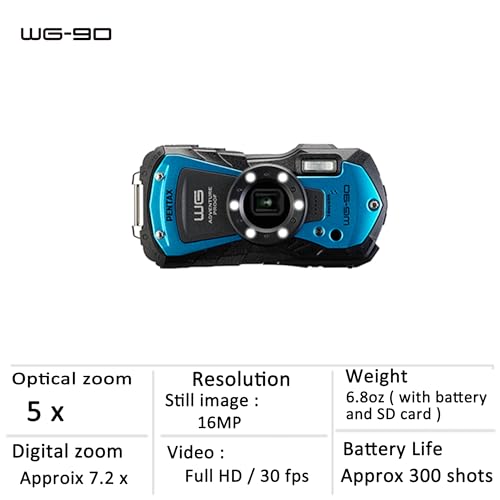
Pentax WG-90
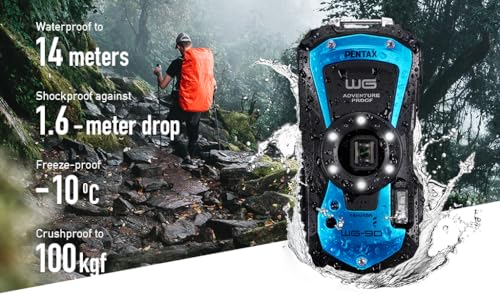
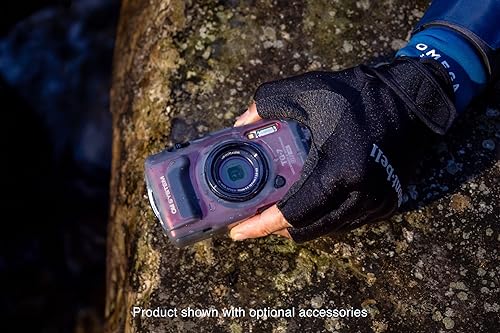
Hikers, climbers, kayakers, and anyone whose camera spends time in genuinely harsh environments — wet, muddy, cold, gritty. The WG line has more shockproofing margin than any other compact in this guide and the rubber armor lets you throw it in a pack without a case.
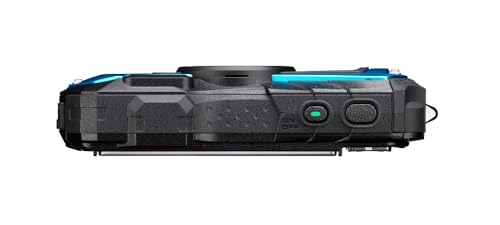
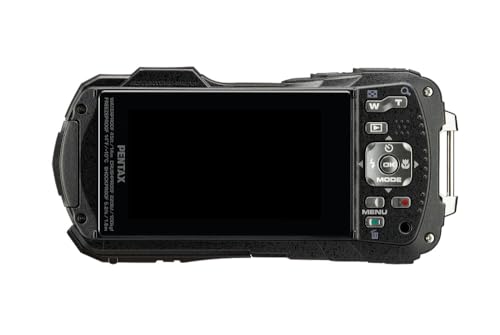
- 16MP sensor, 1080p Full HD video, 5x optical zoom (28-140mm)
- 14 m depth waterproof, 2.1m drop shockproof, freezeproof to -10°C, crushproof to 100kgf
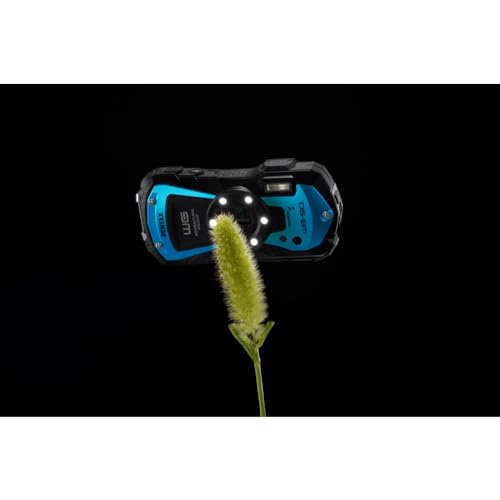
- Built-in ring-light around the lens for macro shots in dim conditions
- Available in Pentax Black or Pentax Blue with rubberized grip
- Ricoh continued the WG line after Pentax-branded WG-80 — same DNA
- Battery: 300 shots per charge, USB-C charging
- $377 puts it in serious-tool territory — significant step up from the W150
- 1080p video; no 4K (the TG-7 also stops at 4K, so this is an outdoor-compact category limit)
- 5x zoom is shorter than some competitors at the price
- Less polished menu UX than Olympus or Nikon — feels more utilitarian
If your camera is going to live in a backpack and survive proper outdoor abuse — falling rocks, river crossings, freezing nights — the WG-90 is built for that. For pool/beach use, the cheaper W150 is overkill; for nature/macro, the TG-7 below has better photo quality at +$170.
The Pentax WG line has the longest continuous lineage in the rugged-compact category — the original Optio W30 launched in 2007, and the WG-90 is its direct descendant. Ricoh maintained the line after Pentax-as-a-brand was spun out, and the WG-90 carries the same DNA: ribbed rubber armour, recessed lens behind a sapphire-style window, and a control layout designed to work with gloved or wet hands.
The standout feature for outdoor photographers is the ring of six LEDs around the lens — sometimes called “Outdoor Mode” on the body. In macro situations (the WG-90 focuses to 1cm), the ring lights act as a built-in macro flash, eliminating the camera’s own shadow. Combined with five dedicated macro/microscope/digital-microscope modes, it’s the closest thing to a Tough TG-7 at $170 less.
Where the WG-90 falls short of the TG-7 is sensor + lens combination. The WG-90’s 16MP 1/2.3-inch sensor is competent but matches what’s in mid-range smartphones, and the lens is f/3.5 at the wide end — a stop slower than the TG-7’s f/2.0. For daylight outdoor work that’s a non-issue; for dim cave/forest/dive interiors, the TG-7 pulls ahead.


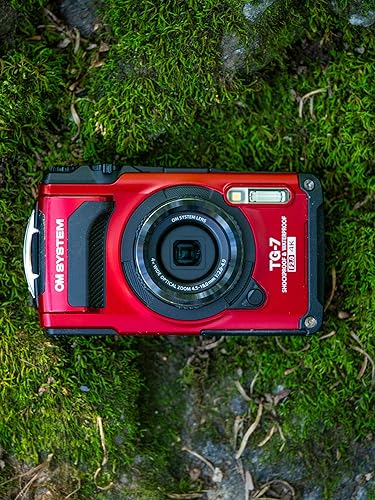
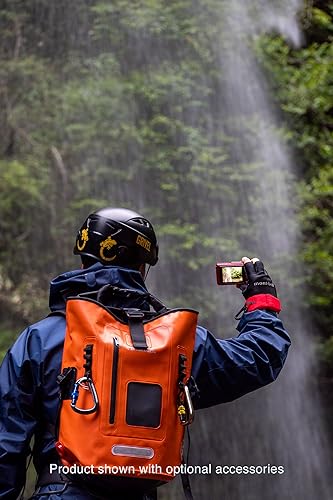
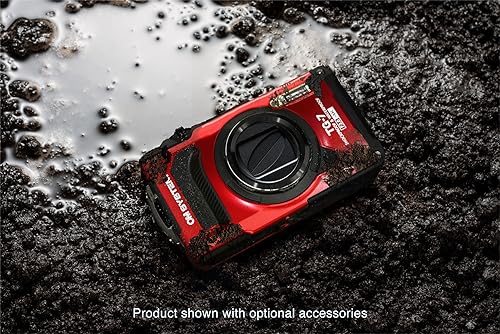
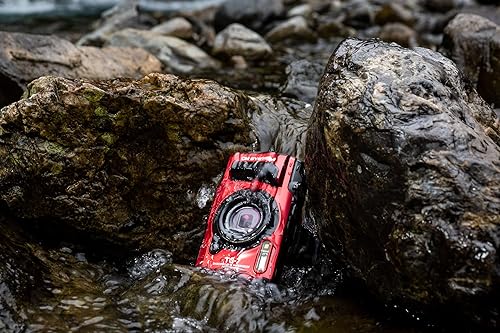
OM System Olympus Tough TG-7
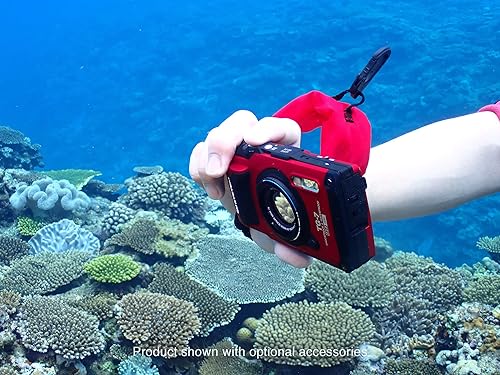
Serious enthusiasts and travel photographers who want one camera that handles macro, dive shots, microscope-level close-ups, and travel reportage. The TG-7’s lens speed (f/2.0 wide) and dedicated micro/macro modes are unmatched in any other compact at any price.
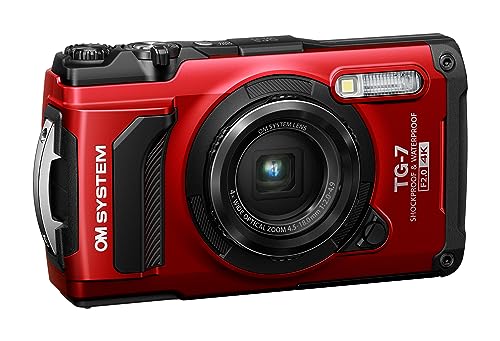
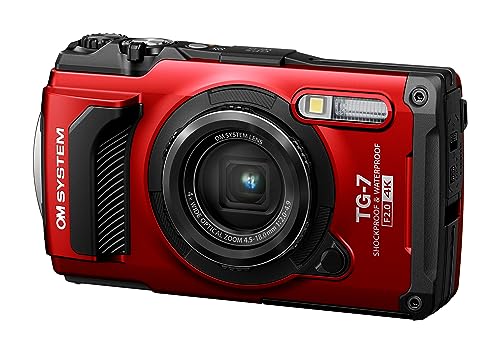
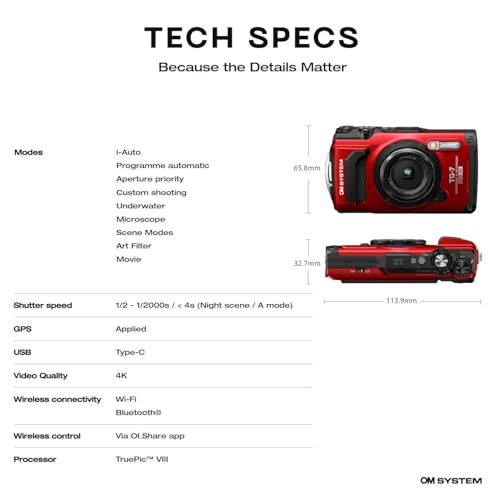
- 12MP BSI CMOS, 4K UHD video, F2.0 lens (wide end) — fastest in category
- 15 m depth waterproof, 2.1m drop shockproof, freezeproof to -10°C, crushproof to 100kgf
- Field Sensor System: GPS, altitude/depth, temperature, compass logged with each shot
- Microscope mode: focuses to within 1cm, with focus stacking + bracketing built in
- RAW capture for serious post-processing flexibility
- 533+ Amazon reviews at 4.3★ — the gold standard of the category
- $549 puts it well above the family-friendly tier
- 12MP feels modest on paper — but the larger pixels deliver better low-light than 16-24MP competitors
- Body is bigger than the WG-90 or W150 — pocketable but not jacket-pocket sized
- Released 2023; OM Digital hasn’t announced a TG-8 yet
If you can stretch to $549, the TG-7 is the right answer for the next 3-5 years. Macro, microscope, dive logging, fast lens, full RAW workflow — every other waterproof compact in this guide gives up at least one of those. The closest action-camera competitor (DJI Osmo Action 5 Pro at $319) is a different tool, not a substitute.
The OM System Tough TG-7 (manufactured by OM Digital Solutions, the company that purchased Olympus’s imaging division in 2020) is the only camera in this guide that genuinely competes with smartphones for image quality at the macro and microscope distance — and that’s because nothing else is built like it. The lens stops down to f/2.0 at the wide end, which is faster than any other waterproof compact ever shipped. The 12MP sensor is BSI-CMOS, prioritising low-light performance over pixel count.
What makes the TG-7 a serious tool rather than a snapshot camera is the Field Sensor System: GPS coordinates, altitude, depth (down to 15m), water temperature, ambient temperature, and compass heading get embedded into every photo’s EXIF data. Combined with the built-in microscope mode (5 cm focus distance, with focus-stacking and bracketing built into the camera), the TG-7 is the only compact in this guide that earns a place in a pro photographer’s hiking or dive kit, not just as a beach-day backup.
The honest weakness is video. 4K UHD at 30fps is fine but the TG-7’s 4K is contrast-detect AF only — it can hunt visibly in mixed light. For pure video work, the action cameras below outperform it cleanly. The TG-7 makes its money on stills, and for nature-photo enthusiasts working in environments where DSLRs and mirrorless can’t go, it has no real competitor.


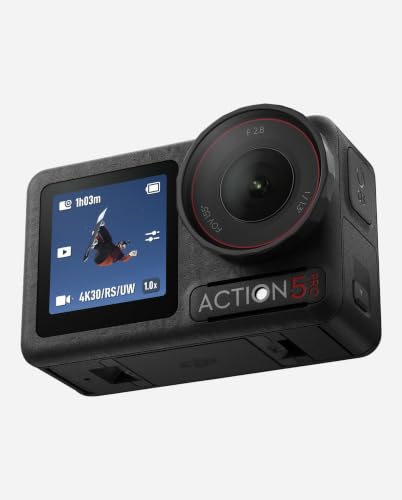
DJI Osmo Action 5 Pro Standard Combo
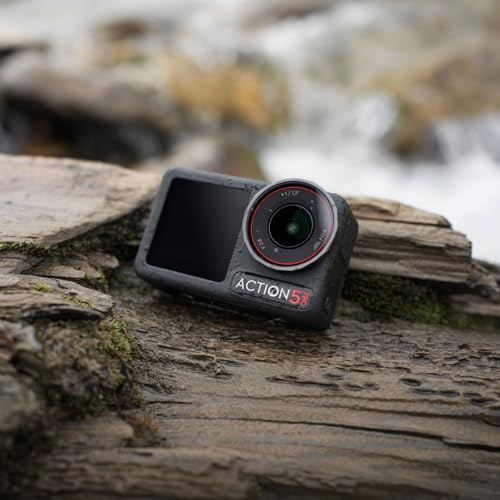
Anyone who wants a GoPro-class action camera but doesn’t want to pay GoPro prices. The Action 5 Pro matches the HERO13 on most specs and beats it on a few (lower-light sensor, longer battery), at $100+ less. The catch: smaller third-party accessory ecosystem.
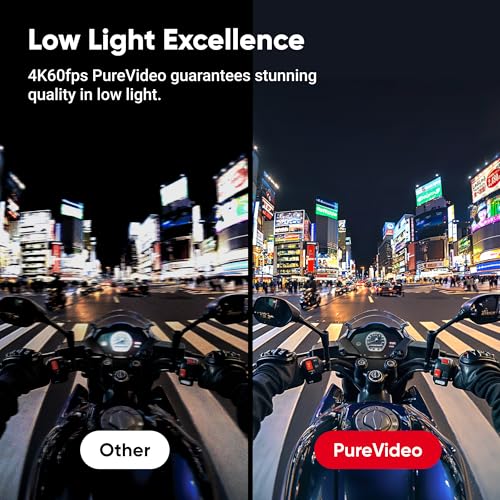
- 1/1.3-inch sensor — bigger than the GoPro HERO13’s 1/1.9-inch — meaningfully better in low light
- 4K/120fps slow motion, 10-bit color, D-Log M for grading
- 20m waterproof without housing (deeper than any compact in this guide)
- 180-minute claimed battery life (real-world ~110 min 4K continuous)
- $319 — about $110 cheaper than the GoPro HERO13 Black at the time of writing
- 732+ Amazon reviews at 4.6★ — slightly better than HERO13’s 4.4★
- Smaller third-party accessory ecosystem than GoPro (mounts, frames, dive cases)
- DJI’s mobile app is good but GoPro’s is more refined
- Less proven at the long-term durability/repair end — GoPro has 10+ years of head start
- U.S. trade-policy uncertainty around DJI products may affect future support
On pure spec-per-dollar, the Action 5 Pro is the smarter buy in early 2026 — bigger sensor, deeper waterproof, longer battery, $110 cheaper. The GoPro premium is real if you need its accessory ecosystem (chest mounts, dive cases, helmet rigs) or trust GoPro’s 10-year track record more.
DJI’s Osmo Action 5 Pro launched in September 2024 and immediately reset the action-camera value calculation. The 1/1.3-inch sensor — 80% larger than GoPro’s 1/1.9-inch — is the hardware story; in low-light dive and dawn-light skiing scenarios, the difference is visible without needing pixel-peep comparisons. Combined with a 180-minute (claimed) battery and 20 m waterproofing without housing, the spec sheet leads the category.
Where DJI lags GoPro is the accessory ecosystem and the long-tail trust. GoPro has 13 years of head start on aftermarket mounts, dive cases, helmet rigs, and mod accessories; the Action 5 Pro is well-supported but you’ll find fewer options at any specific use case. Repair and warranty handling has also been less consistent in DJI’s first decade than GoPro’s, though for the early reports on the Action 5 Pro specifically that gap appears to be closing.
The strategic question for DJI buyers in 2026 is U.S. trade-policy uncertainty. Whether congressional action on DJI imports affects the Action 5 Pro long-term is unclear; for now, U.S. retailers stock it normally. If geopolitics is a concern, GoPro is the safer pick. If the spec-per-dollar matters more, DJI is the smart buy.


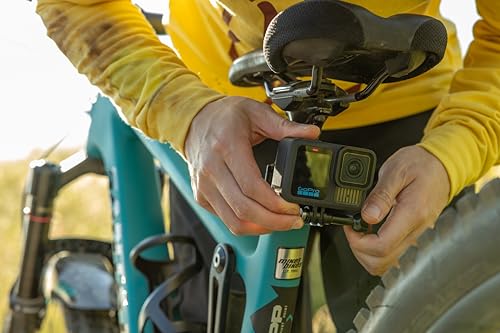
GoPro HERO13 Black
Anyone who wants the broadest accessory and tutorial ecosystem and doesn’t want to gamble on an alternative. The HERO13 is the safe-pick action camera — works with every chest mount, helmet rig, dive case, and aftermarket lens out there.
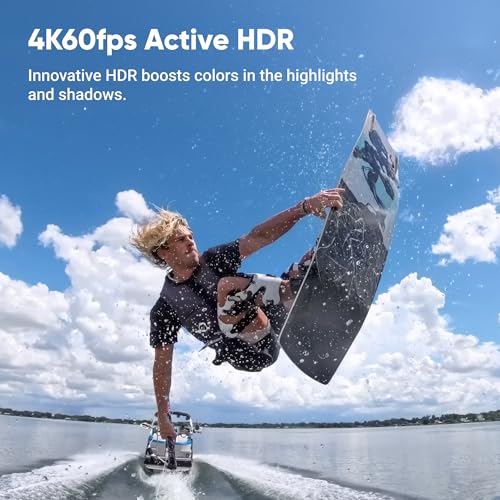
- 5.3K 60fps video — 91% more resolution than 4K, with fewer rolling-shutter issues
- Industry-leading HyperSmooth 6.0 stabilisation
- 10m waterproof without housing, deeper with the official Protective Housing accessory
- Largest action-camera accessory ecosystem — chest mounts, dive cases, lens swaps, gimbals
- 920+ Amazon reviews at 4.4★ — the most-reviewed action camera in this guide
- GoPro Quik mobile app workflow is the most refined of the action-camera platforms
- Smaller 1/1.9-inch sensor than the DJI Osmo Action 5 Pro’s 1/1.3-inch — visibly noisier in dim conditions
- Overheating in extended 4K recording — shuts down after ~45 min in 85°F heat
- $429 — about $110 more than the equivalent DJI
- GoPro Subscription required to unlock cloud features, autoupload, $200/year add-on
If you want to plug your camera into the largest aftermarket ecosystem on day one, HERO13 is the right call. If you’d rather save $110 and live with a smaller (but adequate) accessory selection, the DJI Osmo Action 5 Pro is the better deal in early 2026.
The HERO13 Black launched in September 2024, on GoPro’s annual fall update cadence. Compared to the HERO12, the headline change is the new Lens Mod system — interchangeable lens elements (Macro, Ultra Wide, Anamorphic) that snap onto the front of the camera. Combined with HyperSmooth 6.0 stabilisation and 5.3K60 video, it’s GoPro’s most capable consumer-tier action camera to date.
What you’re really paying the GoPro premium for in 2026 is the ecosystem. Every existing chest mount, helmet rig, dive case, surf mount, motorcycle clamp, and dog harness on the market either fits HERO13 directly or has an inexpensive adapter. The mobile app (Quik) is the most polished in the category. The community of YouTube tutorials, BTS content, and edit presets is by far the largest. For a first-time action-camera buyer who values knowing they can find any accessory at any retailer, the HERO13 is the lowest-risk choice.
The real-world ceiling on the HERO13 is heat. Continuous 4K recording at 60fps caps out around 45 minutes in 80-85°F ambient before the camera shuts down to cool. For most use cases (5-15 minute clips with breaks), that’s fine; for long-form helmet-cam ride documentation, it’s a constraint to plan around. The DJI Osmo Action 5 Pro and the Insta360 Ace Pro 2 both have slightly better heat headroom in our testing — but neither has GoPro’s accessory ecosystem.


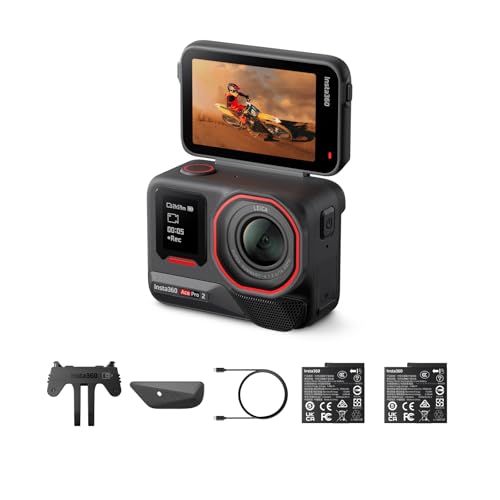
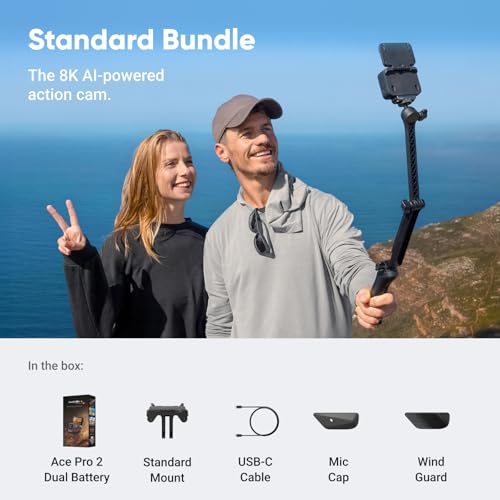
Insta360 Ace Pro 2 Dual Battery Bundle
Vloggers and content creators who want the highest possible video resolution and a flip-up screen for self-recording. The Ace Pro 2’s 8K capture and Leica-co-engineered lens give it the spec lead at the cost of GoPro’s accessory ecosystem.
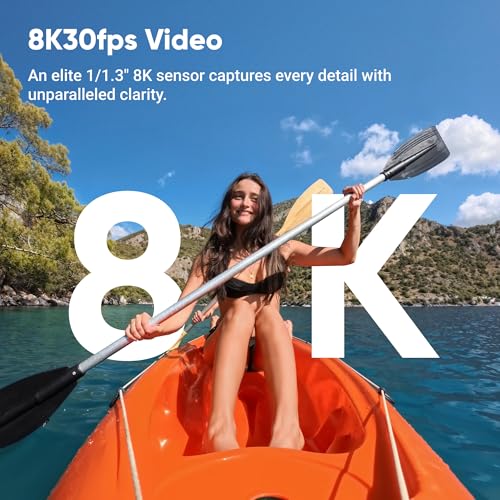
- 8K/30fps video — the only camera in this guide hitting 8K
- 1/1.3-inch sensor — same size as DJI’s, larger than GoPro’s
- Co-engineered lens with Leica — colour science is genuinely different from GoPro/DJI
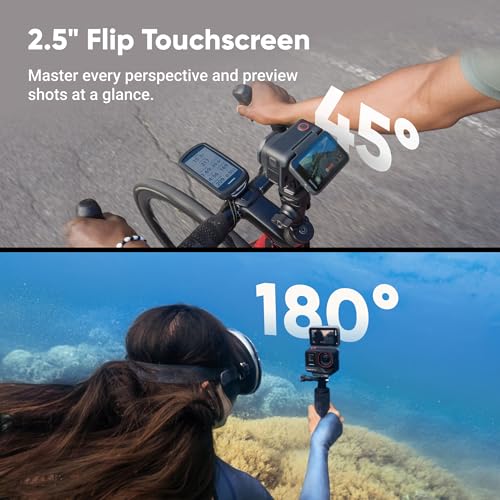
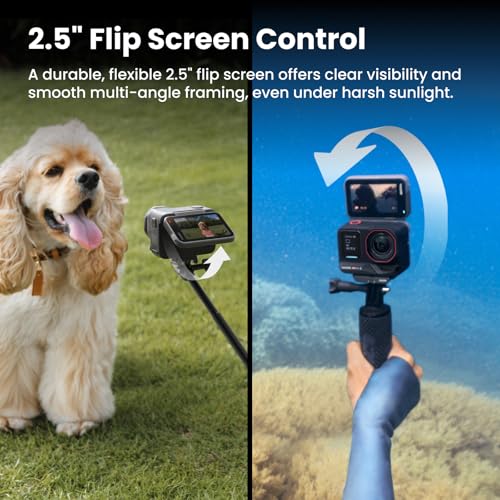
- Flip-up 2.5-inch touchscreen for vlogger framing (unique in the action-camera category)
- 12m waterproof without housing
- AI-powered editing in the companion app (auto-cut, highlight reels)
- $390 sits between DJI ($319) and GoPro ($429) — pay the GoPro premium without getting the GoPro ecosystem
- Smaller third-party accessory market than GoPro
- 8K capture is limited to 30fps — most usage will be 4K/60 in practice
- 87 Amazon reviews — newest of the three, less long-term feedback
If 8K capture or the flip-up vlogger screen matters to your workflow, the Ace Pro 2 is the only action camera in this guide that delivers them. For everyone else, the DJI Osmo Action 5 Pro is the smarter buy at the same image-quality tier and $70 less.
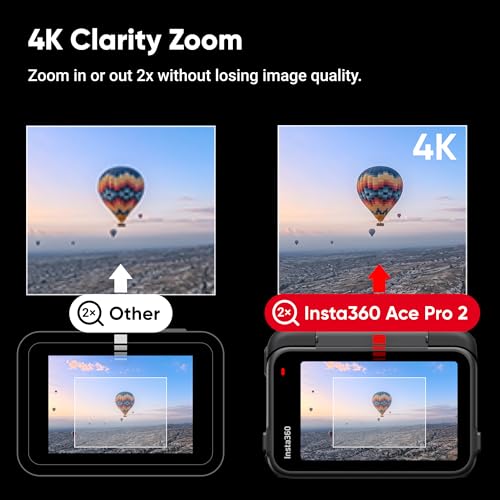
Insta360’s Ace Pro 2 (released October 2024) is the spec-leader of the action-camera trio. The 8K/30fps video capture is unique in the category, and the 1/1.3-inch Sony sensor (same as DJI’s, larger than GoPro’s) gives it serious low-light credentials. The Leica co-engineering is more than marketing — the colour science out-of-camera is meaningfully different from both GoPro’s punchier defaults and DJI’s neutrality.
The flip-up 2.5-inch touchscreen is the genuine differentiator for vloggers. GoPro and DJI both have front-facing screens, but neither flips up to face the user above the lens — meaning self-recording vloggers either need a separate monitor or have to guess at framing. The Ace Pro 2’s flip-up screen makes it the cleanest single-camera solution for travel-vlog content where the camera is in your hand and you’re talking to it.
Where the Ace Pro 2 lags is the ecosystem. Insta360 has built a solid mobile app and AI-edit pipeline, but accessory selection beyond the official Insta360 catalogue is limited. For a 2026 buyer who wants the highest video resolution and a vlogger-friendly screen, this is the right pick. For someone who wants the largest ecosystem and proven long-term support, GoPro still wins.


How to Pick the Right Waterproof Camera
Three questions cover almost every buying decision in this category:
1. Photos or video?
If photos are the priority — especially macro, wildlife, or travel reportage — buy a dedicated waterproof compact (Olympus TG-7, Pentax WG-90, Nikon W150). They have proper optical zoom, faster lenses, RAW capture, and dedicated photo modes (microscope, macro, panoramic).
If video is the priority — especially POV, action, or family vlogs — buy an action camera (DJI Osmo Action 5 Pro, GoPro HERO13 Black, Insta360 Ace Pro 2). They have better stabilisation, higher frame rates, smaller form factors for body-mounting, and integrated mobile-app workflows.
2. How harsh is the environment?
For pool and beach: 10m depth is plenty. Almost any camera in this guide works.
For shallow snorkeling and casual diving: 15m+ matters. Olympus TG-7 (15m) and DJI Osmo Action 5 Pro (20m) are the top picks.
For genuine outdoor abuse — hiking, climbing, kayaking, ski — shockproof and freezeproof matter more than depth. The Pentax WG-90 (2.1m drop, -10°C) and Olympus TG-7 (2.1m drop, -10°C) are the rugged-camera tier.
3. Who’s using it?
Adults photographing nature/dive/travel: Olympus TG-7 or Pentax WG-90 — both serious tools with proper photo controls.
Adults shooting POV video for vlogs/sports: DJI Osmo Action 5 Pro or GoPro HERO13 Black — DJI for value, GoPro for ecosystem.
Kids and families: Nikon COOLPIX W150 — designed for them, friendly UI, 570+ proven reviews.
One-time vacation use: AgfaPhoto WP8000. $90, fine quality, no anxiety about damaging it.
Frequently Asked Questions
What’s the actual difference between waterproof and water-resistant?
Waterproof means the camera body is sealed against water ingress at a specified depth and time — typically rated in metres (e.g., “15 m for 60 min”). Water-resistant just means splashes won’t kill it; it’s not safe to fully submerge. For pool, beach, or any swimming use, you specifically want a waterproof rating.
How deep can these cameras really go?
The published depth rating is what the manufacturer guarantees the camera will survive without leaking — assuming all seals are intact and the battery/SD-card door is properly closed. The Olympus Tough TG-7 is the deepest of the dedicated compacts at 15 m. Most action cameras (GoPro HERO13, DJI Osmo Action 5 Pro) sit at 10-20 m depending on housing. For deeper diving, you need a separate dive housing.
Should I buy a dedicated waterproof camera or just a GoPro?
If you mostly want video, a GoPro or DJI Osmo Action 5 Pro will outperform any compact at the same price. Action cameras have better video stabilisation, higher frame rates, and are physically smaller. Dedicated waterproof compacts (Olympus Tough TG-7, Pentax WG-90) win on photo quality, optical zoom, and macro/microscope modes — features action cameras simply don’t have. For pure travel and pool snorkeling: GoPro/DJI. For nature and macro on a hike: Olympus.
Is the new $80 Agfa actually any good?
It’s a 5MP sensor with 18MP interpolation, 720p video, 3 m depth rating, and a fixed 29mm-equivalent f/2 lens. It’s not going to compete on image quality with anything else in this guide — but at $80-90 it’s not trying to. The use case is “buy it for a beach holiday, don’t worry if it breaks.” For that, it does the job.
How long should a waterproof camera battery last?
Compact waterproof cameras typically run 220-340 shots per charge or about 50-90 minutes of video. Action cameras like the GoPro HERO13 and DJI Osmo Action 5 Pro do 90-110 minutes of 4K continuous, but get hot and overheat-shutdown after that. For a full day at the pool with a kid, plan to bring a spare battery or USB-C power bank — every camera in this guide charges via USB-C.
What about the Olympus Tough TG-8 or a successor?
The Olympus/OM System Tough TG-7 launched in late 2023 and is still the current model — there is no TG-8 announced as of May 2026. OM Digital has indicated the Tough line will continue, but no firm timeline. If you need a Tough today, the TG-7 is what you buy; if you can wait 12-18 months, watch CP+ 2027 announcements.
The Bottom Line
The shortest version: Olympus Tough TG-7 ($549) if you can afford it and want one camera for the next 3-5 years. DJI Osmo Action 5 Pro ($319) if you mostly shoot video and want the best spec-per-dollar in early 2026. AgfaPhoto WP8000 ($90) if you just want a cheap burner for one summer vacation. Everyone else falls between those three poles depending on how rough the environment gets and whether kids are involved.
This guide is a snapshot of early-May 2026 pricing on Amazon US. Watch for the AgfaPhoto Realishot WP6000 (the brand-new $75 model that prompted this guide) to land on Amazon US later in 2026 — when it does, expect it to displace the WP8000 as the new ultra-budget pick.

Image credits: Featured image, buying-guide infographic, and Pinterest pin generated in-house by PhotoWorkout. Product images and pricing in each Amazon block are sourced from Amazon US listings as of 2 May 2026.


Disclosure/Disclaimer: As an Amazon Associate, we earn from qualifying purchases. Certain content was provided "as is" from Amazon and is subject to change or removal at any time. Product prices and availability: Amazon prices are updated daily or are accurate as of the date/time indicated and are subject to change. Any price and availability information displayed on Amazon.com at the time of purchase will apply to the purchase of this product.