


- Getty Images deployed 63 photographers (39 editorial + 24 commercial) at Milano Cortina 2026, capturing over 6 million images.
- Photographer Jared C. Tilton used a PlayStation controller to operate a robotic overhead Canon EOS R1 camera rig above the ice.
- Getty also ran experimental creative projects including thermal imaging, infrared, and vintage Graflex cameras from 1956.
- The IOC capped press credentials at 3,000 for the entire Games, making photographer spots highly competitive.
When you think of Olympic photography, you probably picture a row of photographers crouched at the sidelines with massive telephoto lenses. But at the Milano Cortina 2026 Winter Olympics, one Getty Images photographer was shooting some of the most iconic overhead shots of the Games — using a PlayStation controller.
Getty Images’ operation at the 2026 Winter Games was massive. The agency deployed 63 photographers across northern Italy’s mountain towns and valleys, collectively shooting more than 6 million images over 16 days of competition. Here’s a behind-the-scenes look at how they pulled it off.
The PlayStation Controller Setup
Getty staff photographer Jared C. Tilton spent much of the Olympics capturing high-angle shots directly above the ice — but he wasn’t using a drone or climbing into the rafters. His setup involved a Canon EOS R1 paired with a 70-200mm lens, mounted inside a robotic overhead rig.
The camera fed a live view straight to Tilton’s laptop. Using specially designed software, he could remotely trigger the shutter, adjust the composition, and move the robotic mount — all controlled with a PlayStation controller. The gaming-style interface makes sense: drone controllers have long borrowed from video game design, and a moving robotic camera needs the same kind of multi-axis precision input.
The results speak for themselves. Tilton captured bird’s-eye compositions that would be impossible from a traditional press position: athletes framed by the Olympic rings painted on the ice, a top-down view of figure skater Ilia Malinin’s viral backflip, and hockey teams huddled together after winning gold.
How Remote Cameras Work at the Olympics
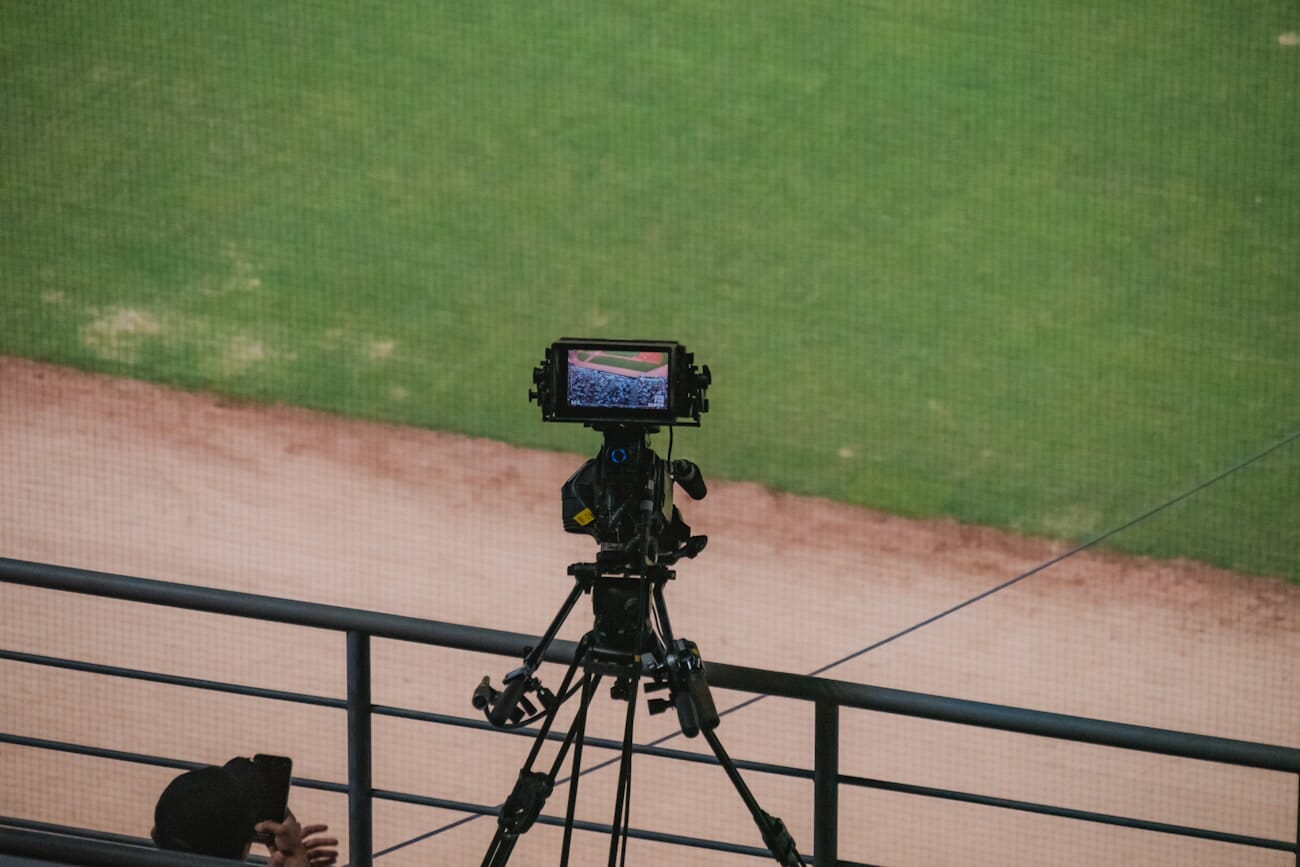
Remote camera rigs have been a staple of Olympic photography for years, but the technology keeps advancing. At Milano Cortina 2026, Getty used several types of remote setups:
- Overhead robotic rigs — Cameras suspended above the ice on motorized tracks, controlled remotely via software (like Tilton’s PlayStation setup)
- Fixed-position remotes — Cameras pre-mounted at key locations (behind goals, at finish lines) and triggered wirelessly
- Ice-level cameras — Low-angle rigs placed at rink-side for dramatic close-ups of skaters and hockey players
- Multi-exposure fixed rigs — Used for Getty’s “Layers of the Games” project, where photographer Hector Vivas captured an entire event in a single composite frame
Every image was transmitted in near real-time through Getty’s editing pipeline. Photographers in the field shot the images, editors processed them on-site, and the photos were available to newsrooms worldwide within minutes. This rapid turnaround is essential for breaking news coverage — a gold medal moment needs to be on websites before the athlete even finishes their victory lap.
Beyond Standard Coverage: Creative Projects
Getty didn’t just shoot the Olympics the usual way. The agency launched several experimental creative projects that pushed the boundaries of sports photography:
- Back to the Future — Photographer Ryan Pierse shot with a modified 1956 Graflex camera, paying homage to the last time the Winter Games were held in Cortina
- Winter Heat — Pauline Ballet used thermal imaging cameras to show the heat of athletes’ bodies against the cold ice and snow
- Infrared — Modified mirrorless cameras captured the Games in infrared light, revealing what the human eye can’t see
- Layers of the Games — Hector Vivas used long exposures and composites to compress an entire event into a single dramatic image
- Olympic Projections — Images from the Games were projected onto the architecture of Milan and Cortina in real-time
“We wanted to show how the beauty and artistry of photography can come into the world of sport,” said Paul Gilham, Getty Images’ Senior Director of Global Sports Content, in an interview with PetaPixel. The photographers were given creative free rein — and the risk paid off.
By the Numbers: Getty’s Olympic Operation
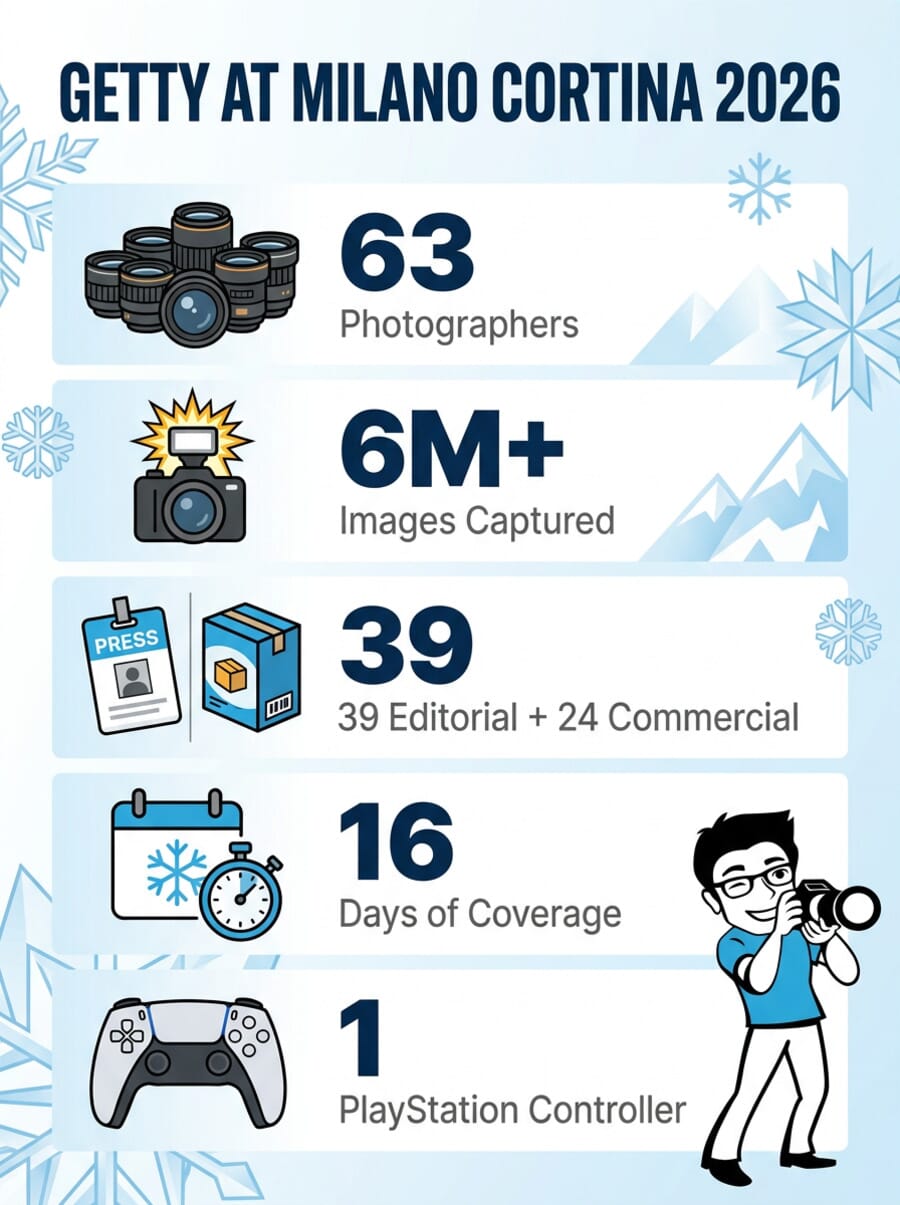
The scale of Getty’s operation at Milano Cortina 2026 is staggering:
- 63 total photographers — 39 editorial, 24 commercial
- 6+ million images captured over 16 days
- 3,000 press credential cap set by the IOC for the entire Games
- Multiple venues spread across northern Italy — from Milan’s ice arenas to the Dolomite mountain towns of Cortina, Val di Fiemme, and Bormio
- Real-time transmission — images edited and delivered to newsrooms worldwide within minutes
Photographer Maddie Meyer, a chief sports photographer for Getty, described the daily logistics: her four-person team started at 7:30 AM with breakfast, was on buses by 8 AM, and spent the day rotating between shooting positions based on pre-planned course maps. “No one wants to duplicate angles or miss a key moment because two photographers ended up being side by side,” she told Adorama.
What Aspiring Sports Photographers Can Learn
While most of us won’t be shooting the Olympics anytime soon, there are practical takeaways from how Getty operates at this level:
- Plan your positions in advance. Getty’s photographers study venue maps and assign shooting positions before events start. Do the same at local sports events — scout the venue, identify key angles, and know where the best light falls.
- Coordinate with your team. If you’re shooting with other photographers, divide coverage areas so you don’t duplicate shots and miss moments.
- Experiment with angles. Tilton’s overhead shots stood out because they offered a perspective no one else had. Look for unusual vantage points — balconies, low angles, behind-the-scenes access.
- Consider remote triggers. You don’t need a PlayStation controller, but a basic wireless remote can let you place a camera in a position you can’t physically occupy during the action.
- Speed matters. Getty’s real-time editing pipeline is a competitive advantage. Practice culling and editing quickly so your best shots are ready when they matter.
What camera did Getty use with the PlayStation controller at the Olympics?
Photographer Jared C. Tilton used a Canon EOS R1 with a 70-200mm lens mounted in a robotic overhead rig. The PlayStation controller was used to move the rig and trigger the shutter remotely.
How many images did Getty capture at the 2026 Winter Olympics?
Getty Images photographers captured more than 6 million images across 63 photographers (39 editorial and 24 commercial) during the Milano Cortina 2026 Winter Games.
Why did Getty use a PlayStation controller for photography?
Robotic camera rigs require multi-axis control for movement and composition — similar to drone controls. A PlayStation controller provides familiar, precise analog input that works well for panning, tilting, and triggering a remote camera in real time.
What creative photography projects did Getty run at Milano Cortina 2026?
Getty launched five experimental projects: Back to the Future (vintage 1956 Graflex cameras), Winter Heat (thermal imaging), Infrared (modified mirrorless cameras), Layers of the Games (multi-exposure composites), and Olympic Projections (projecting images onto buildings).
Sources used for this article:
Featured image: Photo by Sandip Roy on Unsplash.