

Add key takeaways to display here
When you think of Olympic photography, you probably picture a row of photographers crouched at the sidelines with massive telephoto lenses. But at the Milano Cortina 2026 Winter Olympics, one Getty Images photographer was capturing some of the most iconic overhead shots of the Games — using a PlayStation controller.
Getty Images’ operation at the 2026 Winter Games was nothing short of massive: 63 photographers deployed across the mountain towns and valleys of northern Italy, collectively shooting more than 6 million images over 16 days of competition. But the numbers don’t tell the full story. Behind the scenes, Getty pulled off something genuinely creative — using thermal cameras, modified infrared rigs, a 70-year-old Graflex camera, and yes, a PlayStation controller — to produce Olympic photography that looked like nothing that had come before.
Getty’s photographers also inadvertently sparked one of the biggest gear rumors of the year: a Getty photographer named Eyes Wide Open captured a Sony camera wrapped in dazzle camouflage in the press box during Women’s Ice Hockey, captioned as “a Sony photo camera in prototype design.” Whether it’s a genuine A9 IV prototype or just a dressed-up A9 III remains anyone’s guess — but it’s a reminder that Getty’s cameras capture everything at the Olympics, not just the athletes.
The PlayStation Controller Camera Rig
Getty staff photographer Jared C. Tilton spent much of the Olympics capturing high-angle shots directly above the ice — but he wasn’t using a drone or climbing into the rafters. His setup involved a Canon EOS R1 paired with a 70-200mm lens, mounted inside a robotic overhead rig suspended above the rink on motorized tracks.
The camera fed a live video stream straight to Tilton’s laptop at his workstation. Using specially designed software, he could remotely trigger the shutter, adjust the composition, and physically move the robotic mount along the overhead track system — all controlled with a PlayStation DualSense controller. The analog sticks handled pan and tilt movements, triggers controlled zoom and shutter, and the familiar gaming interface allowed the kind of precise, fluid multi-axis control that a moving robotic camera demands.
Why a PlayStation controller? It’s not as unusual as it sounds. Drone controllers have borrowed from video game design for years, and military operators use similar gamepads for remote vehicle control. The DualSense’s haptic feedback and adaptive triggers provide tactile confirmation of movements — useful when you’re controlling a heavy camera rig you can’t physically see.
The results were extraordinary. Tilton captured bird’s-eye compositions that would be impossible from any traditional press position: athletes framed by the Olympic rings painted on the ice, a top-down view of figure skater Ilia Malinin’s viral backflip captured in mid-rotation, and hockey teams huddled together in emotional celebration after winning gold. These weren’t drone-style wide shots — the 70-200mm lens gave them a compressed, intimate quality that felt like being suspended invisibly above the action.
How Remote Cameras Work at the Olympics
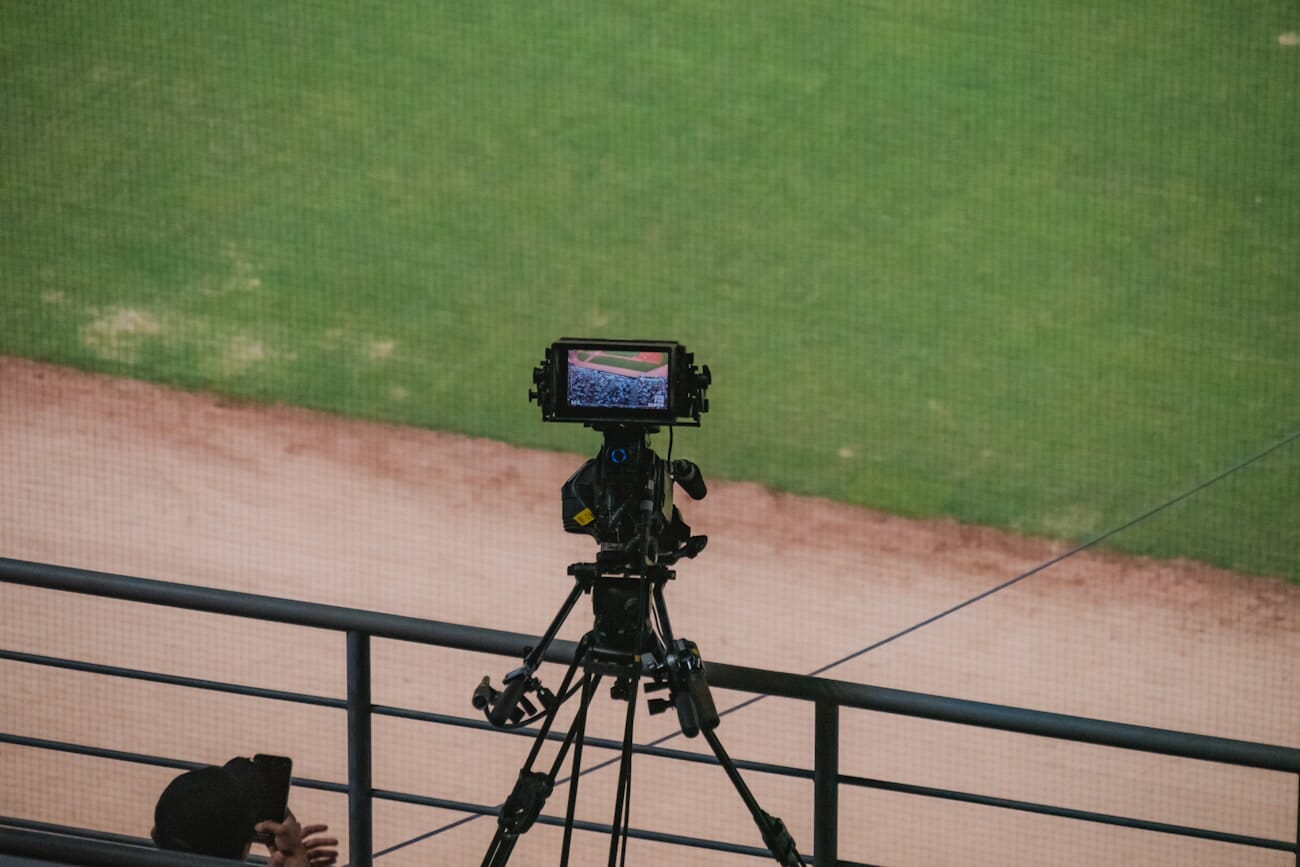
Remote camera rigs have been a staple of Olympic photography for decades, but the technology has evolved dramatically. At Milano Cortina 2026, Getty used several types of remote setups:
- Overhead robotic rigs — Cameras suspended above the ice or track on motorized rail systems, controlled remotely via software. Tilton’s PlayStation setup is the most dramatic example, but similar rigs were deployed at multiple ice venues.
- Fixed-position remotes — Cameras pre-mounted at key locations (behind hockey goals, at the finish line of downhill skiing, embedded in the ice at figure skating venues) and triggered wirelessly. These are set up hours before competition and left in place.
- Ice-level cameras — Low-angle rigs placed at rink-side for dramatic close-ups of speed skaters and hockey players, often protected by plexiglass shields.
- Multi-exposure fixed rigs — Used for Getty’s “Layers of the Games” project, where photographer Hector Vivas captured an entire event in a single composite frame by shooting hundreds of exposures from a fixed position and stacking them in post-production.
Every image was transmitted in near real-time through Getty’s editing pipeline. Photographers in the field shot the images, and they were wirelessly transmitted to Getty’s editing team — who were physically located in London, not on-site. Editors in London provided live feedback via WhatsApp threads, flagging exposure issues or color temperature shifts. “I trust their calibrated monitors more than my own eyes on a mountainside under mixed artificial light,” photographer Maddie Meyer told Adorama.
The rapid turnaround is essential for breaking news coverage — a gold medal moment needs to be on websites before the athlete even finishes their victory lap. At this level, photography is as much a logistics operation as a creative one.
A Day in the Life of an Olympic Photographer
What does a typical day look like for a Getty photographer at the Winter Olympics? Maddie Meyer, a chief sports photographer covering ski jumping and cross-country skiing in Val di Fiemme, described the daily logistics to Adorama:
- 7:30 AM — Breakfast with her four-person team at the hotel
- 8:00 AM — Bus to the venue. Cameras unpacked, lenses mounted, shooting positions confirmed with the photo manager, transmitters tested.
- Pre-competition — The team reviews venue maps labeled with official shooting positions and decides who starts where. One photographer covers “stock” (clean peak-action of every athlete), one holds the finish line for emotional reactions, others work remote rigs or find interpretive angles.
- During competition — Continuous shooting, rotating positions mid-event. “No one wants to duplicate angles or miss a key moment because two photographers ended up side by side,” Meyer explained.
- Post-event — Medal ceremonies immediately follow. Shot lists to fulfill: athletes receiving medals, IOC members presenting, flags raised, anthems sung.
- Evening — Transfer back to hotel, review the day’s coverage, plan for tomorrow.
Cross-country skiing and ski jumping demand entirely different approaches. Cross-country courses can stretch 10+ kilometers through forests and snowfields, allowing photographers to move and find creative layered compositions. Ski jumping is more contained — athletes are confined to the in-run and landing hill, and you’re making the most of fixed vantage points.
“If an athlete is chasing history, like Norway’s record-breaking cross-country star aiming for multiple gold medals, I ask myself: ‘How do I show the weight of that? When might a stoic competitor finally break?’” Meyer said. “I watch for sportsmanship, for the hugs between athletes from different countries, and for the quiet respect built over years of competing on the same circuit.”
The Five Creative Projects That Changed the Game
The standard Olympic photography coverage — peak action, medal ceremonies, crowd reactions — is well established and doesn’t leave much room for creative risk. So about 12-18 months before the 2024 Paris Olympics, Getty’s Paul Gilham and Matthias Hangst asked themselves: how can we repicture the Olympic Games?
“We talked about what brought us to photography in the first place — being drawn to a creative, expressive art form,” Gilham told PetaPixel. “We ended up in sports because we love sports, but there is a lot to the genre of photography, and we wanted to explore how we could bring something different.”
They chose three photographers — Pauline Ballet (France), Ryan Pierse (Australia), and Hector Vivas (Mexico) — and gave them creative free rein to develop experimental projects. The results were five distinct series:
1. Back to the Future — Ryan Pierse shot with a modified 1956 Graflex camera, paying homage to the last time the Winter Games were held in Cortina. The catch: vintage cameras have no autofocus, no burst mode, no image stabilization, and incredibly limited ISO ranges. Pierse had to anticipate moments rather than react to them — predicting where a skier would be and manually focusing in advance. The resulting images have a dreamy, film-grain quality that looks nothing like modern sports photography, while still capturing genuine Olympic moments. And they were distributed in real-time, just like images from digital cameras.
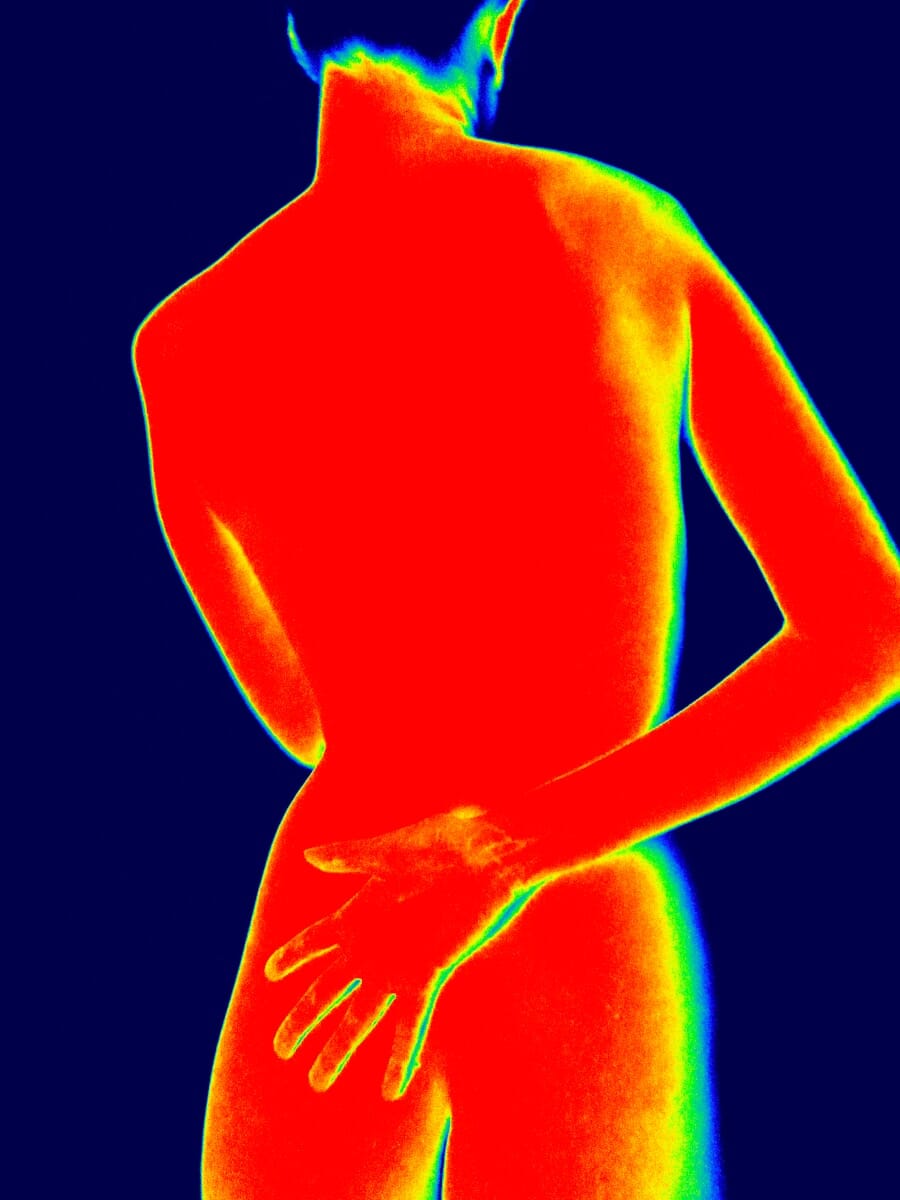
2. Winter Heat — Pauline Ballet used thermal imaging cameras to show the heat of athletes’ bodies against the frozen landscape. The results are striking — glowing orange-red human silhouettes against deep blue ice and snow, revealing the raw physical effort that’s invisible to the naked eye. However, thermal cameras aren’t designed for photographing moving objects at all. They’re slow, sluggish, and have limited resolution. Ballet had to develop entirely new shooting techniques for an environment the equipment was never built for.
3. Infrared — Modified mirrorless cameras captured the Games in infrared light, transforming familiar scenes into alien landscapes. Snow becomes glowing white against dark skies, vegetation turns bright, and the whole scene takes on an otherworldly quality. The challenge: infrared cameras react differently to snow, harsh sunshine, and artificial floodlights, and there was limited testing in winter environments ahead of the Games.
4. Layers of the Games — Hector Vivas used a fixed camera position and captured hundreds of exposures throughout an entire event, then composited them into a single dramatic frame. The result compresses time — showing every phase of a skating routine, every jump in a ski event, every skater in a speed skating race, all layered into one image. NBC Olympics described the technique as “dynamic and visually arresting.” This project actually started at the Paris 2024 Summer Olympics and was expanded for Milan Cortina.
5. Olympic Projections — Getty projected images from the Games onto the architecture of Milan and Cortina in real-time, turning the host cities themselves into living galleries of Olympic photography. This was the most ambitious project logistically, requiring coordination between photographers in the venues, editors processing images, and projection teams on the streets.
“We went all in, and the risk paid off,” Hangst said. “The most important thing is that the photographers enjoy it. It’s a great way of expressing creativity, different to what we do on a day-by-day basis.”
Each of the three creative photographers had to carry all the experimental equipment — thermal cameras, infrared cameras, the Graflex, and standard digital bodies — and decide on the spot which tool best served each moment. “When they arrive at a venue, they have to decide what is the best option to tell a story that day based on the conditions,” Hangst explained.
By the Numbers: Getty’s Olympic Operation
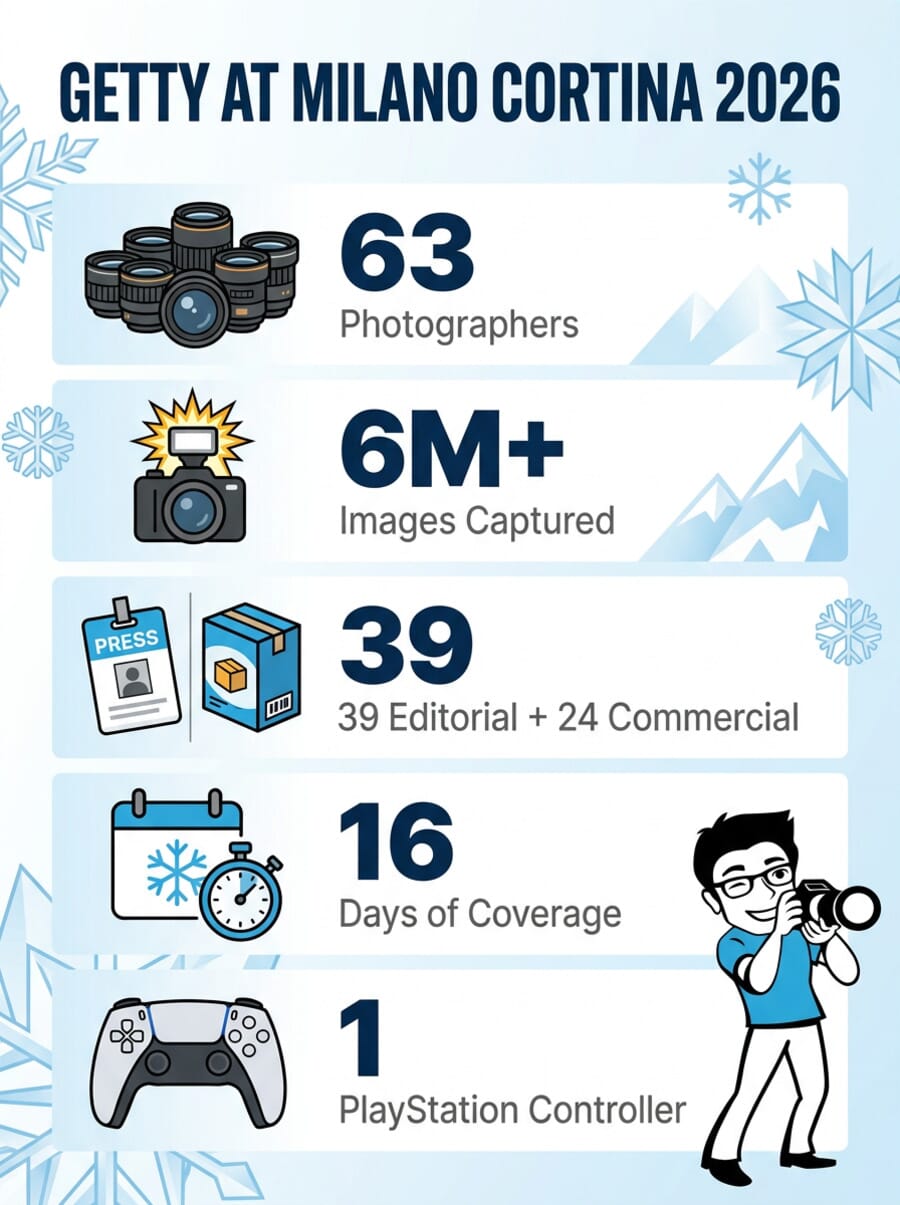
The scale of Getty’s operation at Milano Cortina 2026:
- 63 total photographers — 39 editorial, 24 commercial
- 6+ million images captured over 16 days of competition
- 3,000 press credential cap set by the IOC for the entire Games (all media, not just photographers)
- 5 creative experimental projects running simultaneously alongside standard coverage
- Multiple venue clusters spread across northern Italy — Milan, Cortina d’Ampezzo, Val di Fiemme, Anterselva, and Bormio, separated by hundreds of kilometers of mountain roads
- Real-time transmission — images edited by a team in London and delivered to newsrooms worldwide within minutes of capture
To put that in perspective: 6 million images over 16 days means roughly 375,000 images per day or about 5,900 images per photographer per day. Even accounting for motor drive bursts, that’s an enormous volume. The vast majority are culled during editing, but the sheer number reflects the “spray and pray” reality of high-speed sports photography — when the difference between a gold medal expression and a blink is 30 milliseconds, you shoot everything and sort later.
The Broadcast Side: 810+ Cameras
Getty’s stills operation was just one layer of the imaging infrastructure at Milano Cortina. Olympic Broadcasting Services (OBS) deployed over 810 camera systems for the live broadcast, including 32 dedicated cinematic cameras (Sony VENICE 2, BURANO, and FX6 units shooting in Super 35mm and full-frame), 25 drones including 15 FPV units for immersive perspectives, and AI-driven volumetric replay systems that can reconstruct key moments from multiple angles.
For the first time at a Winter Olympics, the “Cinelive” approach put large-format cinema cameras directly into the live broadcast switch — cutting between traditional 2/3-inch broadcast cameras and Super 35mm cinema cameras with shallow depth of field. The result is a broadcast that looks markedly more cinematic than previous Olympics, with subject separation and bokeh that previously only appeared in post-produced highlight reels.
The entire production ran over an IP-based network backbone connecting venues separated by mountain terrain, supported by 1,800 microphones, 50 jibs and cranes, and 12 cablecam rigs. When you add Getty’s 63 stills photographers, the Associated Press and Reuters teams, national media, and hundreds of other credentialed photographers, Milano Cortina 2026 may be the most comprehensively photographed Winter Olympics in history.
What You Can Learn From Getty’s Approach
Most of us won’t shoot the Olympics anytime soon. But Getty’s approach contains practical lessons that apply at every level of sports photography:
- Scout and plan your positions before the event starts. Getty’s photographers study detailed venue maps and assign shooting positions in advance. Do the same at local sports events — arrive early, walk the venue, identify key angles, and know where the best light falls at different times of day.
- Coordinate to avoid duplication. If you’re shooting with other photographers, divide coverage areas so you get diverse angles rather than three versions of the same shot. Meyer’s team assigns specific roles: stock coverage, finish line emotions, creative interpretive shots.
- Look for the angle nobody else has. Tilton’s overhead PlayStation rig stood out because it offered a perspective no one else could access. You don’t need a robotic rig — but a balcony, a low-angle position, or access to a spot behind the scenes can produce images that stand apart from the crowd.
- Use remote triggers for inaccessible positions. You don’t need a PlayStation controller. A basic wireless remote or smartphone app can let you place a camera behind a goal, at the finish line, or at ice level — anywhere you can’t physically stand during the action.
- Edit fast. Getty’s real-time pipeline is a competitive advantage. Practice culling and editing quickly — your best shots lose value if they’re delivered hours after the moment has passed. Set up wireless transfer if your camera supports it.
- Experiment with techniques outside your comfort zone. Getty’s thermal and infrared projects prove that the most memorable sports images don’t always come from the latest AF system or fastest burst rate. Sometimes it’s a completely different tool that produces something no one’s seen before.
What camera did Getty use with the PlayStation controller at the Olympics?
Photographer Jared C. Tilton used a Canon EOS R1 with a 70-200mm lens mounted in a robotic overhead rig suspended above the ice on motorized tracks. The PlayStation DualSense controller was used to pan, tilt, move the rig along the tracks, and trigger the shutter remotely via specially designed software.
How many images did Getty capture at the 2026 Winter Olympics?
Getty Images photographers captured more than 6 million images across 63 photographers (39 editorial and 24 commercial) during the 16-day Milano Cortina 2026 Winter Games. That works out to roughly 375,000 images per day or about 5,900 per photographer per day.
Why did Getty use a PlayStation controller for photography?
Robotic overhead camera rigs require precise multi-axis control for movement and composition — similar to drone operation. The PlayStation DualSense controller provides familiar analog stick input, haptic feedback, and adaptive triggers that work well for smoothly panning, tilting, and triggering a remote camera. Military and industrial operators use similar gamepads for remote vehicle control.
What creative photography projects did Getty run at Milano Cortina 2026?
Getty launched five experimental projects: Back to the Future (vintage 1956 Graflex cameras as a nod to Cortina’s last Olympics), Winter Heat (thermal imaging showing athletes’ body heat), Infrared (modified mirrorless cameras revealing invisible light), Layers of the Games (multi-exposure composites compressing entire events into one frame), and Olympic Projections (projecting images onto Milan and Cortina’s architecture in real-time).
How does Getty transmit Olympic photos so quickly?
Images are wirelessly transmitted from photographers in the field to Getty’s editing team in London (not on-site) in near real-time. Editors provide live feedback via WhatsApp, process images on calibrated monitors, and the finished photos are available to newsrooms worldwide within minutes of capture. The entire pipeline is designed for speed because breaking news value decays rapidly.
What is the ‘Layers of the Games’ photography technique?
Photographer Hector Vivas placed a camera in a fixed position and captured hundreds of exposures throughout an entire sporting event. The images were then composited in post-production into a single dramatic frame that shows every phase of the competition simultaneously — every jump, every skater, every routine — compressed into one image. The technique originated at the Paris 2024 Olympics and was expanded for Milan Cortina.
Sources used for this article:
Featured image: Photo by Seungmin Yoon on Unsplash.
Related Posts
Get the Weekly Photography News Digest
Join photographers who get our top stories delivered every Monday morning. No spam, unsubscribe anytime.