


- The Viltrox AF 26mm f/2.8 EVO full-frame pancake is now shipping, in stock at B&H for $299, for Sony E and Nikon Z (L-mount to follow). It uses a new VCM autofocus motor and adds dual control rings.
- The bigger news: Viltrox launched its first-ever Micro Four Thirds lens, an MFT version of the AF 25mm f/1.7 AIR, with the 35mm f/1.7 expected to follow. It is the neglected M43 crowd’s first fresh, affordable third-party autofocus prime in a while.
- Also in the wave: the AF 90mm f/2.2 EVO, which TechRadar rated a top-value portrait lens at roughly 40 percent of the price of Fujifilm’s own 90mm f/2.
- The real story is the pattern. Third-party glass now ships faster, cheaper, and into more mounts than the camera makers themselves, and it is expanding into systems the OEMs have largely ignored.
Viltrox spent the middle of July doing what it now does better than almost anyone: flooding the market with cheap, competent glass. The wave that landed on July 15 is not a single lens but a strategy on display, a $299 full-frame pancake that is already in stock, the company’s first step into Micro Four Thirds, and a portrait prime that undercuts a first-party lens by more than half.
Individually, each is a solid budget option. Together, they show why the third-party lens makers have become the most interesting part of the camera business. Here is what shipped, what it costs, and why the Micro Four Thirds move matters more than the pancake everyone is talking about.
The $299 Pancake That Is Actually Shipping
The headliner is the Viltrox AF 26mm f/2.8 EVO, a genuinely pocketable full-frame pancake that is now shipping and in stock at B&H for $299, in Sony E and Nikon Z, with L-mount promised to follow. We covered this lens when it first leaked; the news now is that it is real, priced, and on shelves, also available on Amazon.
The 26mm sits at an unusually useful 39mm full-frame equivalent, a natural everyday focal length that splits the difference between 35mm and 50mm. What makes the EVO more than a novelty is the hardware underneath: a new VCM (voice coil motor) autofocus system that is faster and quieter than Viltrox’s older stepping motors, plus dual control rings for focus and aperture on a lens barely thicker than a body cap. This is a different, more capable lens than the older 28mm f/4.5 pancake, not a rebadge.
Day-one reviews have been broadly positive, calling it the pancake that finally makes sense: small enough to leave on the camera permanently, sharp enough to be a real lens rather than a compromise, and cheap enough that the decision is easy.
The Real Headline: Viltrox Enters Micro Four Thirds
The pancake got the attention, but the more significant move is quieter: Viltrox has launched its first-ever Micro Four Thirds lens. The debut is an MFT version of the popular AF 25mm f/1.7 AIR, with a 35mm f/1.7 expected to follow, giving Panasonic and OM System shooters a fresh, affordable, autofocus prime from a major third party.
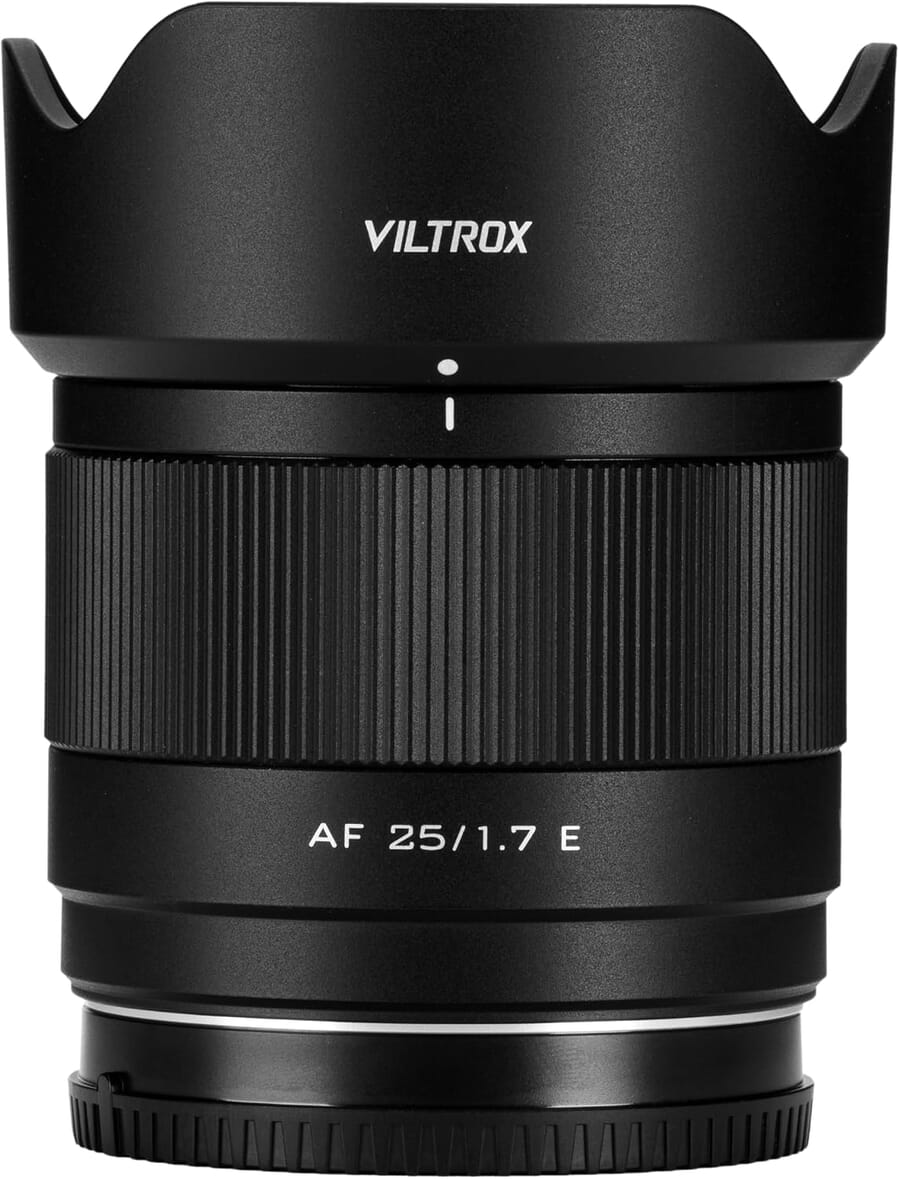
Why it matters: Micro Four Thirds has spent years as the system the big third parties skipped. Sigma and others largely moved on, and M43 owners watched Sony E and Fujifilm X get a steady stream of cheap primes while their own mount went quiet. A 25mm f/1.7, which gives a classic 50mm-equivalent field of view, at AIR-line prices is exactly the kind of everyday lens that system has been starved of. For a mount whose whole appeal is small, light, and affordable, an affordable fast prime is a genuinely big deal.
The 90mm That Undercut Fujifilm
Rounding out the wave is the AF 90mm f/2.2 EVO, a short telephoto portrait lens available across Sony E, Nikon Z, and Fujifilm X. In a head-to-head, TechRadar rated it a top-value portrait option, noting that it costs roughly 40 percent of the price of Fujifilm’s own XF 90mm f/2, a lens with the same equivalent reach.
That comparison is the whole thesis in one lens. Viltrox is not just making cheaper alternatives to first-party glass; it is making lenses good enough that reviewers reach for them over the camera maker’s own, at a fraction of the cost. The f/2.2 aperture is marginally slower than Fujifilm’s f/2, but for most portrait shooters the price gap more than covers the difference.
The Pattern: Third-Party Glass Is Out-Launching the OEMs
Step back from the individual lenses and the trend is unmistakable. Viltrox, along with Sigma, Tamron, Samyang, and Voigtländer, now releases lenses faster, cheaper, and across more mounts than the camera manufacturers do. A single mid-July week brought a shipping pancake, a new mount entry, and a first-party-beating portrait lens from one company.
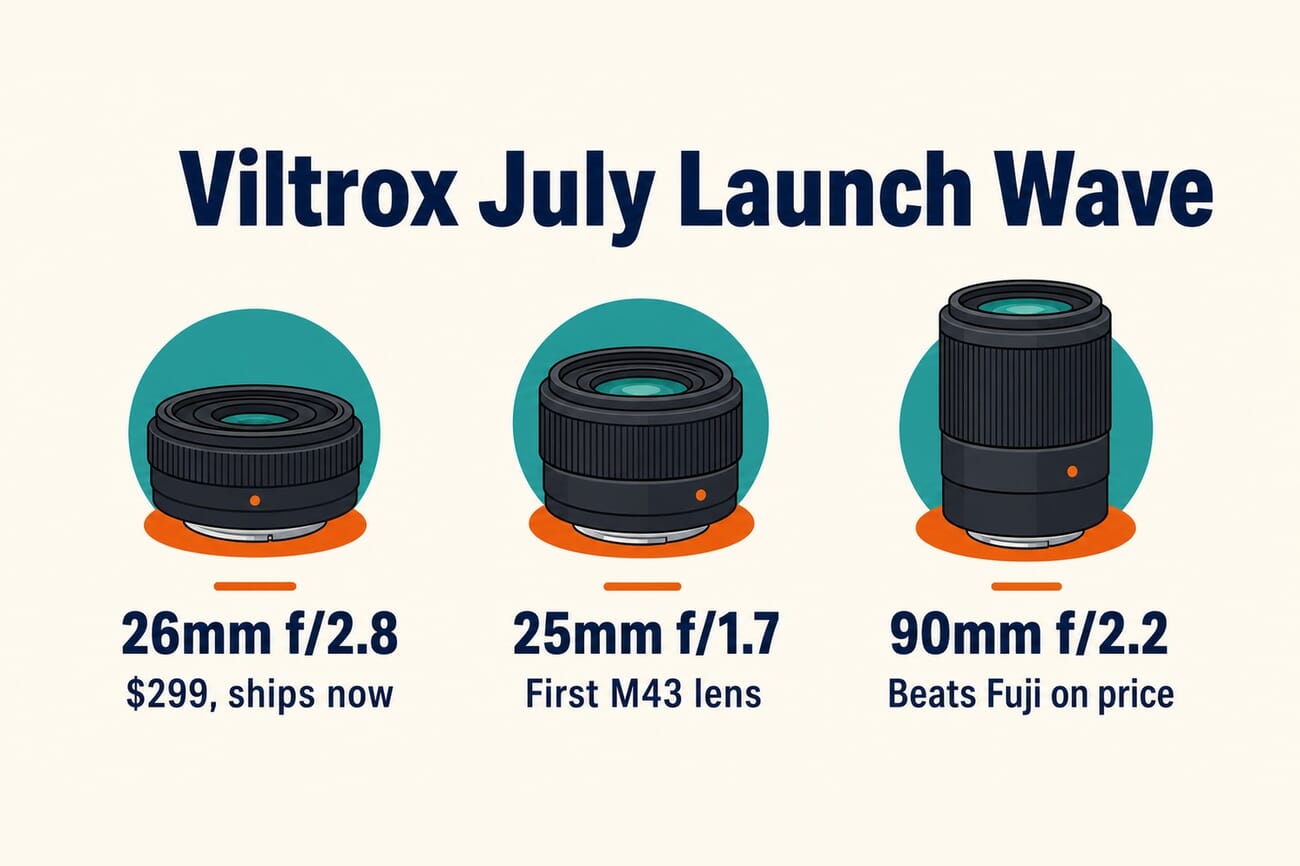
For photographers, this is close to an unqualified win: more choice, lower prices, and coverage for systems the majors neglect. The catch, as always, is fragmentation and the occasional autofocus quirk on bodies the third parties reverse-engineer rather than license. If you are unsure which lenses even fit your camera, our guide to mirrorless lens mounts untangles who makes what for which system. The same budget-glass momentum runs through recent launches like Samyang’s 60-180mm f/2.8 and Voigtländer’s manual 35mm for Nikon Z.

Frequently Asked Questions
How much is the Viltrox 26mm f/2.8 EVO and where can I buy it?
It is $299 and shipping now, in stock at B&H and on Amazon, in Sony E and Nikon Z mounts, with an L-mount version promised to follow. It is a full-frame pancake with a new VCM autofocus motor and dual control rings.
Is this the same as the older Viltrox pancake?
No. The AF 26mm f/2.8 EVO is a newer, more capable lens than the earlier 28mm f/4.5 pancake. It has a brighter f/2.8 aperture, a faster VCM autofocus system, and dual control rings, making it a real everyday prime rather than a minimalist body-cap lens.
What is Viltrox’s first Micro Four Thirds lens?
An MFT version of the AF 25mm f/1.7 AIR, the company’s first lens for the Micro Four Thirds mount. A 35mm f/1.7 is expected to follow. On an M43 body the 25mm gives a 50mm-equivalent field of view, a versatile everyday focal length.
Is the Viltrox 90mm f/2.2 better than Fujifilm’s 90mm?
On value, TechRadar found the Viltrox AF 90mm f/2.2 EVO a top pick, costing about 40 percent of Fujifilm’s XF 90mm f/2 while offering the same equivalent reach. Fujifilm’s lens is marginally faster at f/2 and has premium weather sealing, but for most portrait shooters the Viltrox delivers most of the result for far less money.
The Bottom Line
The $299 pancake is the lens people will talk about, and it deserves the attention. But the Micro Four Thirds debut is the move that signals where this is going: Viltrox is not just competing with the camera makers on price, it is going where they will not, into mounts the majors have left to wither. For anyone shopping on a budget, or shooting a system the OEMs have forgotten, that is very good news, and there is clearly more coming.
Primary Coverage
- Viltrox – AF 26mm f/2.8 EVO product page – Specs, mounts, and $299 pricing for the shipping pancake.
- DPReview – Viltrox adds a pocketable wide-angle lens – Coverage of the 26mm EVO launch.
- 43Rumors – Viltrox will launch its first MFT lens, the AF 25mm f/1.7 Air – The first Micro Four Thirds lens news.
- TechRadar – Viltrox AF 90mm f/2.2 EVO review – The 90mm as a top-value alternative at roughly 40 percent of Fujifilm's 90mm price.
Image Sources
- Viltrox – AF 26mm f/2.8 EVO and AF 25mm f/1.7 AIR product images – Manufacturer product photography.
- PhotoWorkout – launch-wave infographic and pin – Original PhotoWorkout editorial graphics.