

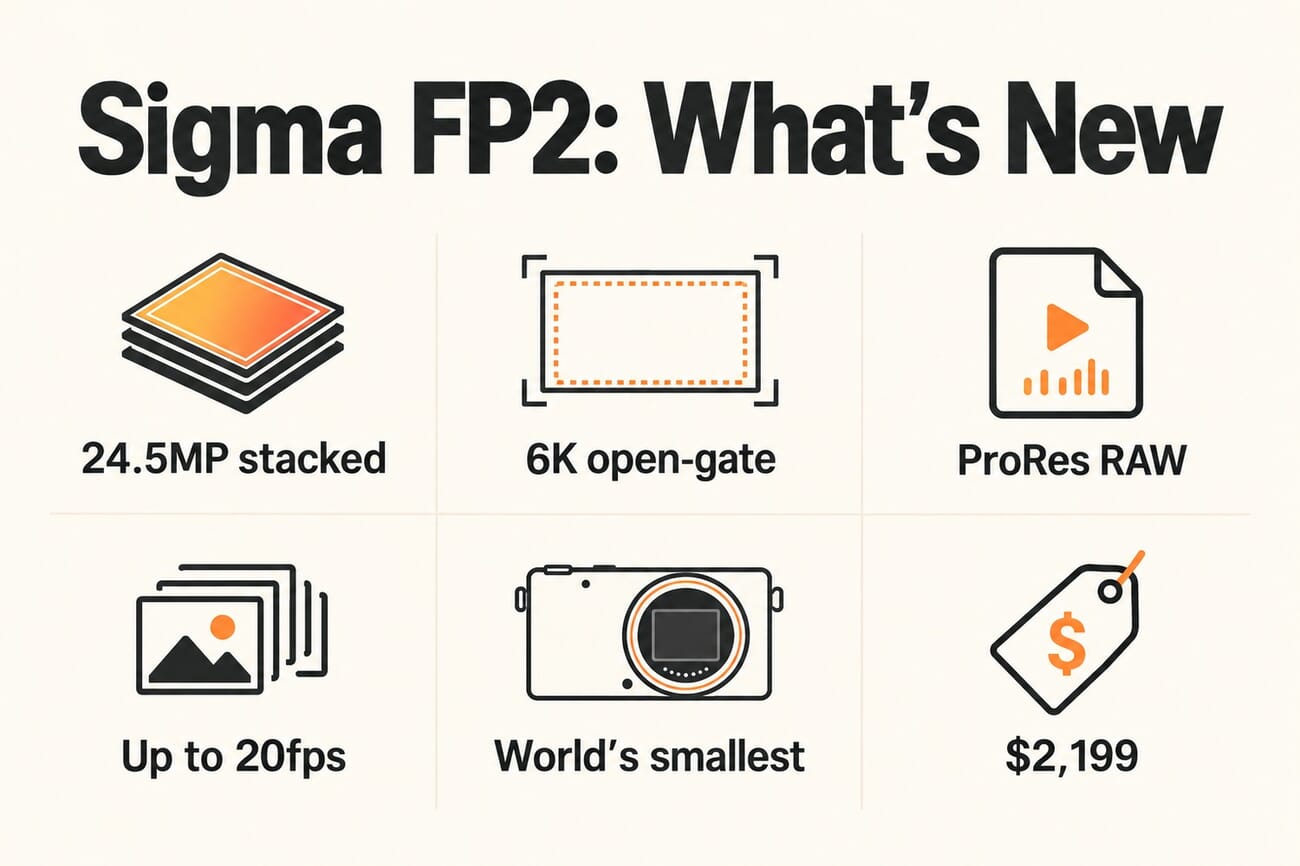
- Sigma announced the FP2, the second generation of its ultra-compact modular full-frame camera. At roughly 112.8 x 69.9 x 41.8 mm and about 388g body-only, Sigma again claims the world’s smallest full-frame interchangeable-lens body.
- The big upgrade is a new 24.5MP partially stacked CMOS sensor. It brings much faster readout, proper phase-detect autofocus with subject detection, far less rolling shutter, and up to about 20fps stills, all things the original fp lacked.
- It is a serious video tool: 6K open-gate capture, internal ProRes RAW up to 6K/30, a claimed 14.1 stops of dynamic range in 4K L-Log, plus H.264 and H.265. It adds a tilting 3.15-inch touchscreen, 70GB of internal storage, dual USB-C, and full-size HDMI.
- It costs $2,199 body-only ($2,749 with the EVF or a 50mm F2 lens) and ships November 11, 2026. Sigma also teased a new 50mm f/1.4 CL DG Contemporary, the first in a character-focused CL prime line, plus a 20-60mm f/2.8-4 zoom.
Sigma just pulled off a neat trick: it made the world’s smallest full-frame camera, and then made it a genuinely capable one. Announced today, the Sigma FP2 is the long-awaited follow-up to the cult-favorite fp, keeping the pocketable, modular, screen-forward body that made the original special while fixing nearly everything photographers and filmmakers complained about. The result is a tiny box that now shoots 6K ProRes RAW and finally focuses like a modern camera.
This is a meaningful release in a corner of the market Sigma basically invented. Here is everything the FP2 brings, the new autofocus and video features that matter most, what it costs, and the new Sigma lenses announced alongside it.
When you buy through links on our site, we may earn a commission at no cost to you. We evaluate products independently. Commissions do not affect our evaluations.
The world’s smallest full-frame body
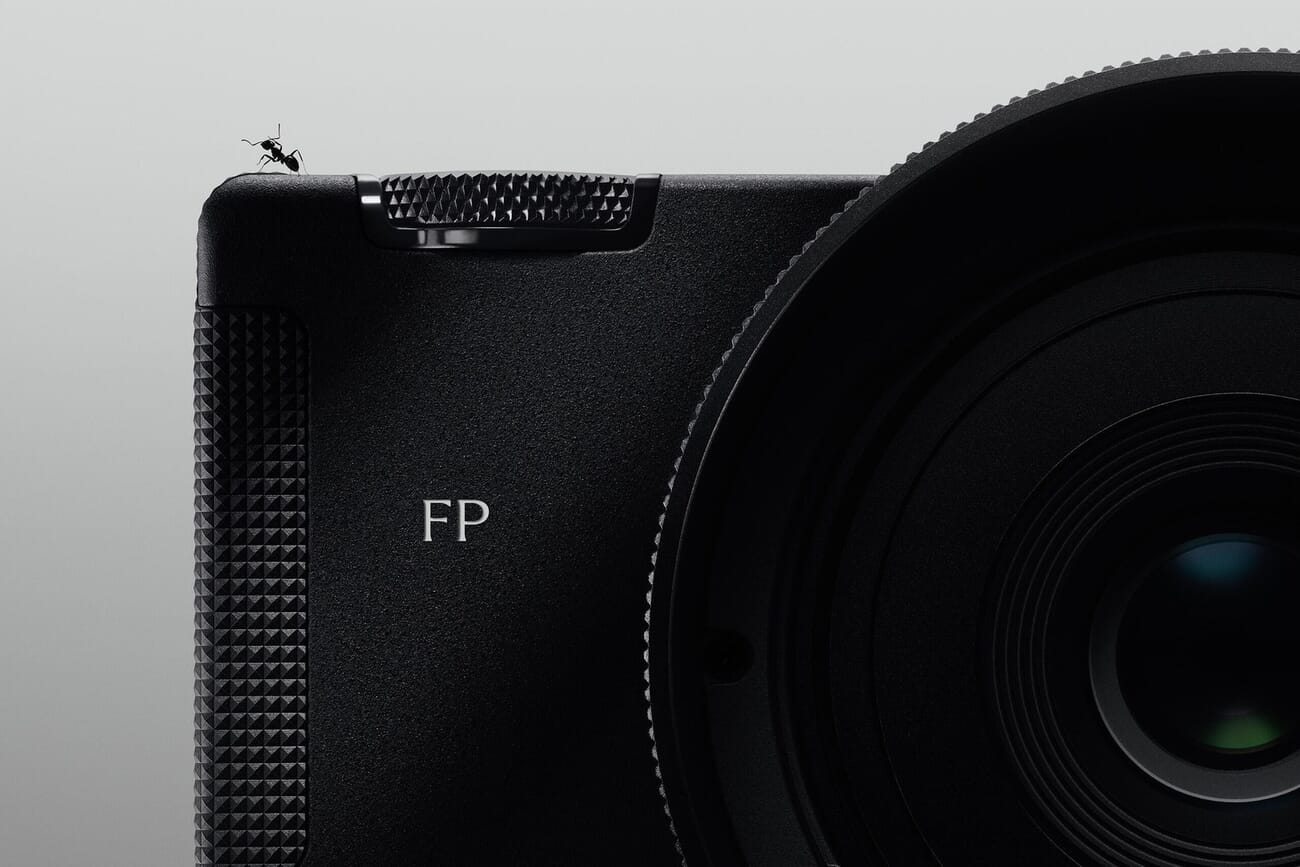
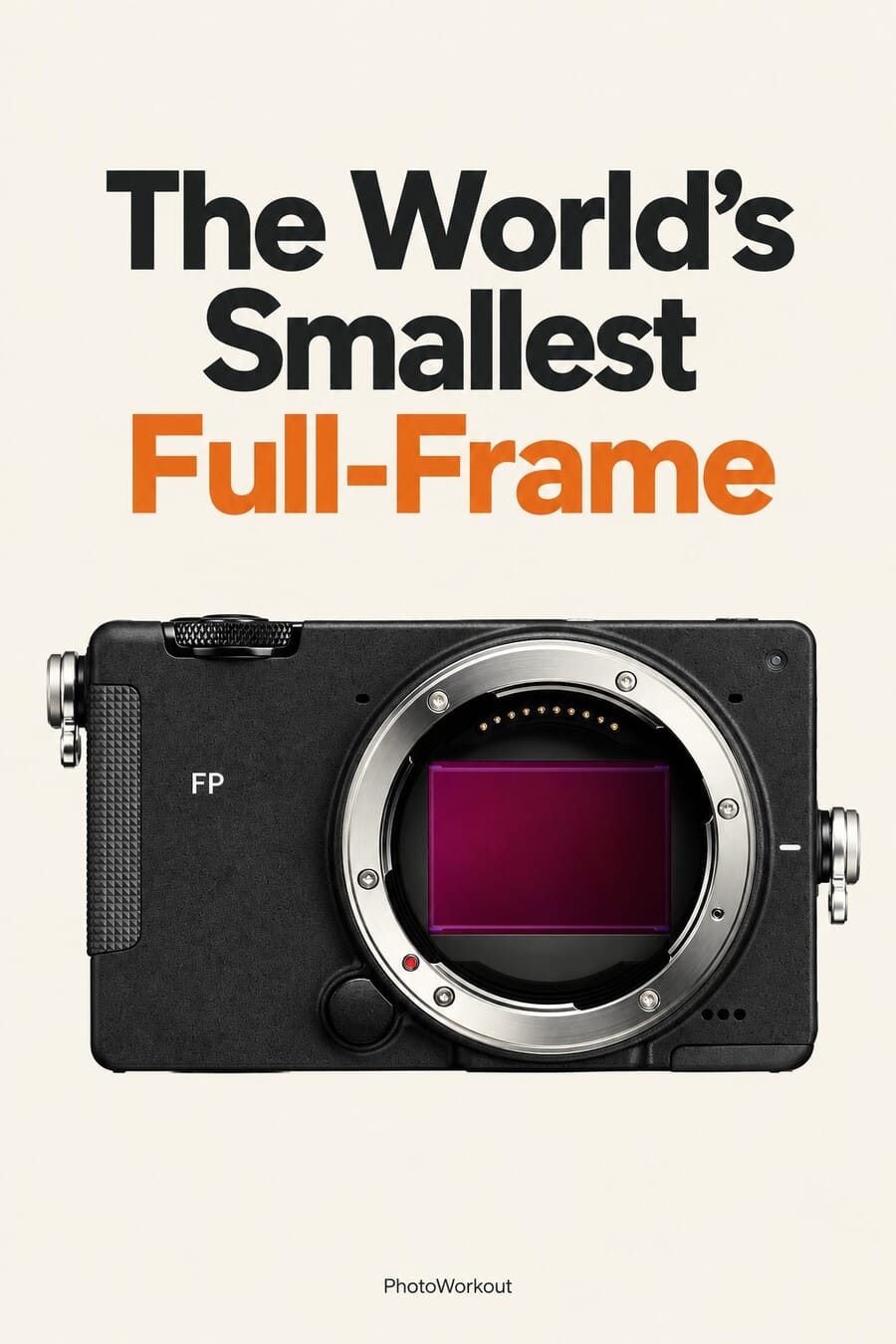
The FP2’s headline claim is the same one that made the original fp famous: it is the smallest full-frame interchangeable-lens camera you can buy. The body measures about 112.8 x 69.9 x 41.8 mm and weighs roughly 388g body-only (around 460g ready to shoot with a battery and card). That is closer to a large compact than a traditional mirrorless camera, and it is the entire point.
Sigma has also carried over the fp’s modular philosophy. The FP2 is a bare core you build around: there is an optional electronic viewfinder, plus a system of grips, cages, and accessories that let it scale from a pocket stills camera to a rigged-out cine setup. For anyone who found full-frame mirrorless bodies too big or too locked-down, the FP2 remains refreshingly different, a camera designed to disappear into a jacket pocket or bolt onto a gimbal with equal ease.
What’s new over the original fp
The upgrade that changes everything is the sensor. The FP2 moves to a 24.5MP partially stacked CMOS chip, and the “stacked” part is what matters. Faster readout means the FP2 finally gets reliable phase-detect autofocus with subject detection, dramatically reduced rolling shutter (less of the “jello” skew that plagued the fp in fast pans), and burst shooting of up to around 20fps. The original fp’s slow contrast-detect AF was its biggest weakness; this is the fix.
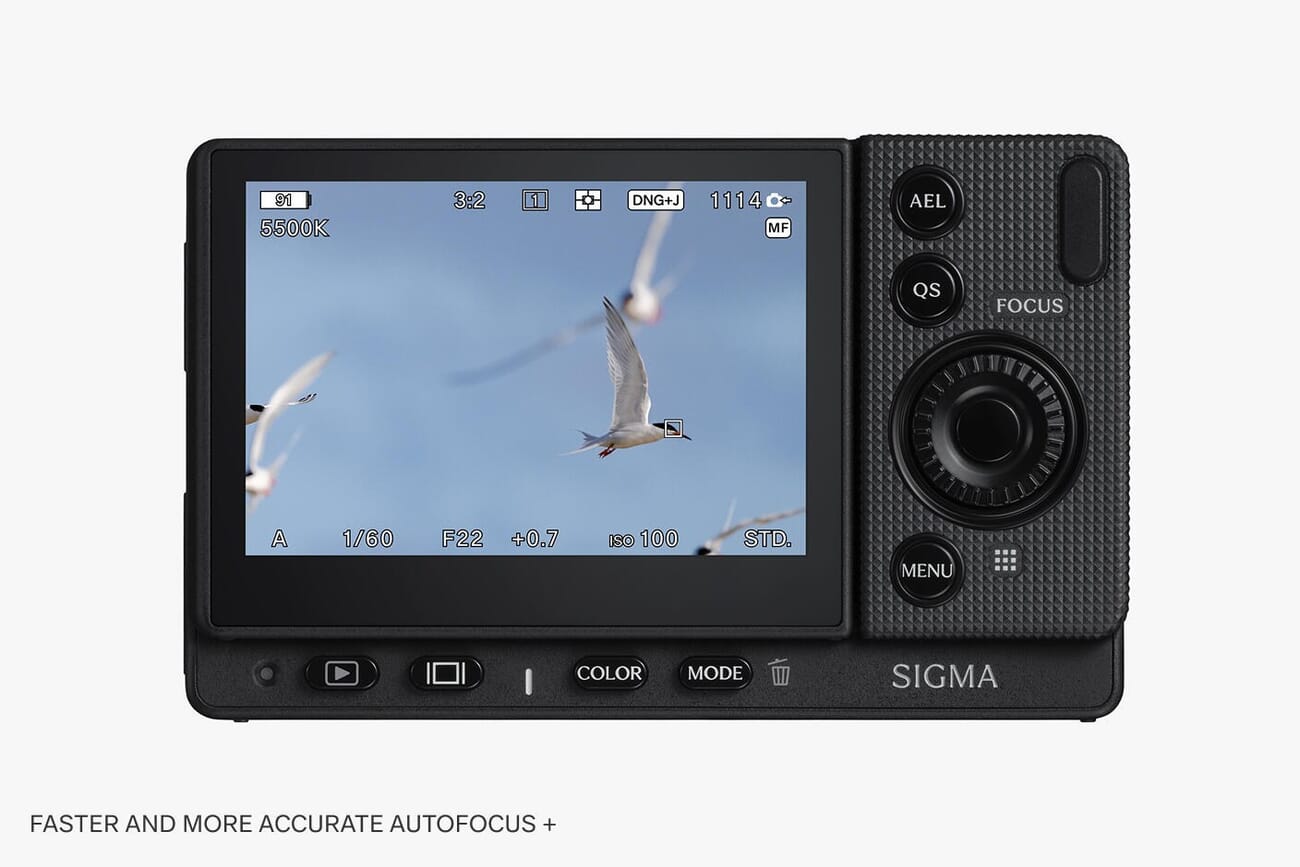
Everything flows from that faster sensor. Subject detection means the camera can lock onto people and animals and track them, something the fp simply could not do, while the lower rolling shutter makes both stills and video far more usable for action. For a camera this small, going from “quirky manual-focus curiosity” to “can actually track a bird in flight” is a generational leap.
A serious video tool
Video is where the FP2 flexes hardest. It records 6K open-gate, using the full sensor area so filmmakers can reframe between widescreen and vertical in post, and it can capture internal ProRes RAW up to 6K/30. Sigma claims about 14.1 stops of dynamic range in 4K L-Log, with H.264 and H.265 options for smaller files. For a body this size shooting RAW internally, that is a genuinely high-end feature set.
The practical upgrades back it up. There is a new tilting 3.15-inch touchscreen (the fixed screen was a common fp complaint), 70GB of internal storage so you can shoot without a card in a pinch, dual USB-C ports, and a full-size HDMI output for external monitors and recorders. Battery life improves to roughly 370 stills or about 130 minutes of video per charge. It is still a camera that rewards a deliberate shooter, but the rough edges are gone.
Specs, price, and availability
The Sigma FP2 costs $2,199 body-only, with two bundle options at $2,749, one pairing it with the optional EVF and one with a 50mm F2 DG lens. It ships November 11, 2026. You can check current FP2 availability at B&H as pre-orders open. At that price it sits below full-frame flagships while offering video features some of them cannot match, which has always been the fp line’s sweet spot.
Sigma also launched new lenses
Alongside the camera, Sigma introduced a lens that photography enthusiasts should note: the 50mm f/1.4 CL DG Contemporary. It is the first in a new “CL” line of compact, all-metal I-series primes that deliberately prioritize character, textured rendering, and classic aesthetics over clinical, corner-to-corner sharpness, a direct answer to the growing taste for lenses with a vintage soul. It uses a new Rotary Direct Drive (RDD) autofocus motor to stay tiny (about 375g and 54 to 56 mm long) and is expected in early spring 2027 for L-mount and Sony E, with pricing to be announced.
Sigma also highlighted a 20-60mm f/2.8-4 DG Contemporary zoom pitched as a better alternative to the bland kit lenses most cameras ship with. Together with the FP2, it signals where Sigma is headed: small, distinctive, character-driven gear. If you want more on Sigma’s recent run, see our coverage of the 50-120mm f/2.8 and how it compares to rivals like the Tamron 16-50mm f/2.8.
Frequently Asked Questions
What is the Sigma FP2?
The Sigma FP2 is the second generation of Sigma’s ultra-compact, modular full-frame mirrorless camera. Announced in October 2026, it uses a 24.5MP partially stacked sensor, shoots 6K open-gate video with internal ProRes RAW, and is billed as the world’s smallest full-frame interchangeable-lens camera.
How much does the Sigma FP2 cost and when does it ship?
It costs $2,199 body-only, or $2,749 in a bundle with either the optional EVF or a 50mm F2 lens. It ships on November 11, 2026.
What is new in the FP2 compared to the original fp?
The FP2 adds a partially stacked sensor with phase-detect autofocus and subject detection, up to around 20fps shooting, greatly reduced rolling shutter, 6K open-gate video with internal ProRes RAW, a tilting touchscreen, 70GB of internal storage, improved battery life, and a full-size HDMI port. In short, it fixes the fp’s slow autofocus and usability gaps.
What lens mount does the Sigma FP2 use?
The FP2 uses the Leica L mount, shared across the L-Mount Alliance (Sigma, Leica, and Panasonic). That gives it access to a wide range of Sigma, Leica, and Panasonic full-frame lenses, including Sigma’s new 50mm f/1.4 CL DG Contemporary.
The bottom line
The original Sigma fp was a brilliant idea held back by real-world limits, chiefly its sluggish autofocus. The FP2 keeps everything that made it a cult classic, the pocketable size, the modular build, the filmmaker-friendly design, and finally gives it a modern stacked sensor, proper AF, and a seriously capable 6K ProRes RAW video pipeline. At $2,199 it is a specialist tool rather than a do-everything camera, but for shooters who want full-frame image quality and cinema features in the smallest body on the market, Sigma just made the fp impossible to ignore.
Based on Sigma's official FP2 announcement and specifications from October 23, 2026, plus early hands-on coverage. Verified as of October 23, 2026.
Primary Coverage
- Sigma – FP2 announcement and specifications – Official specs: sensor, 6K open-gate, ProRes RAW, dimensions, pricing, and ship date.
- Sigma press release – Sigma Announces FP2 Camera – The official US press release and feature overview.
- DigitalCameraWorld – Sigma FP2 hands-on review – Pricing, bundles, and first impressions.
- Amateur Photographer – Sigma FP2 review – At-a-glance specs, ISO range, and bundle pricing.
Image Sources
- Sigma FP2 product images (featured and in-body) – Official Sigma FP2 press and product images. Credit Sigma.
- PhotoWorkout specs infographic and pin – Original PhotoWorkout editorial illustrations.
When you buy through links on our site, we may earn a commission at no cost to you.