


- Insta360 has now fully revealed the Leica-co-branded Luna Ultra (June 10, 2026) and it’s available immediately at $769.99 (or $969.99 for the Creator Bundle).
- The Ultra is a dual-lens gimbal camera: a Leica Summicron + 1-inch 8K main sensor, plus a Type 1/1.3 f/2.0 telephoto for up to 6x lossless optical zoom (12x digital).
- Video tops out at 8K30 in Dolby Vision with 10-bit I-Log and a claimed 14 stops of dynamic range; stills include 37MP “UltraPhotos” and 200MP “Scenic Panorama” shots.
- It keeps Insta360’s standout detachable OLED touchscreen controller, 3-axis stabilization and AI tracking — landing it squarely against DJI’s Osmo Pocket 4P.
- The single-lens Luna Pro sits below it as the lower-cost option; this piece now covers both, with the Ultra the fully-official flagship.
Insta360’s Luna Pro is no longer a rumor or a frosted-glass tease. The Leica-co-engineered Luna line has hands-on previews, first footage, and — for the dual-lens Ultra — early pre-orders already open in Europe. And it is shaping up as a serious, distinctly premium challenger to DJI’s Osmo Pocket, not a budget undercut.
Here is where the single-lens Luna Pro actually stands: what’s confirmed, what its pricing really looks like, and the few pieces still to come.
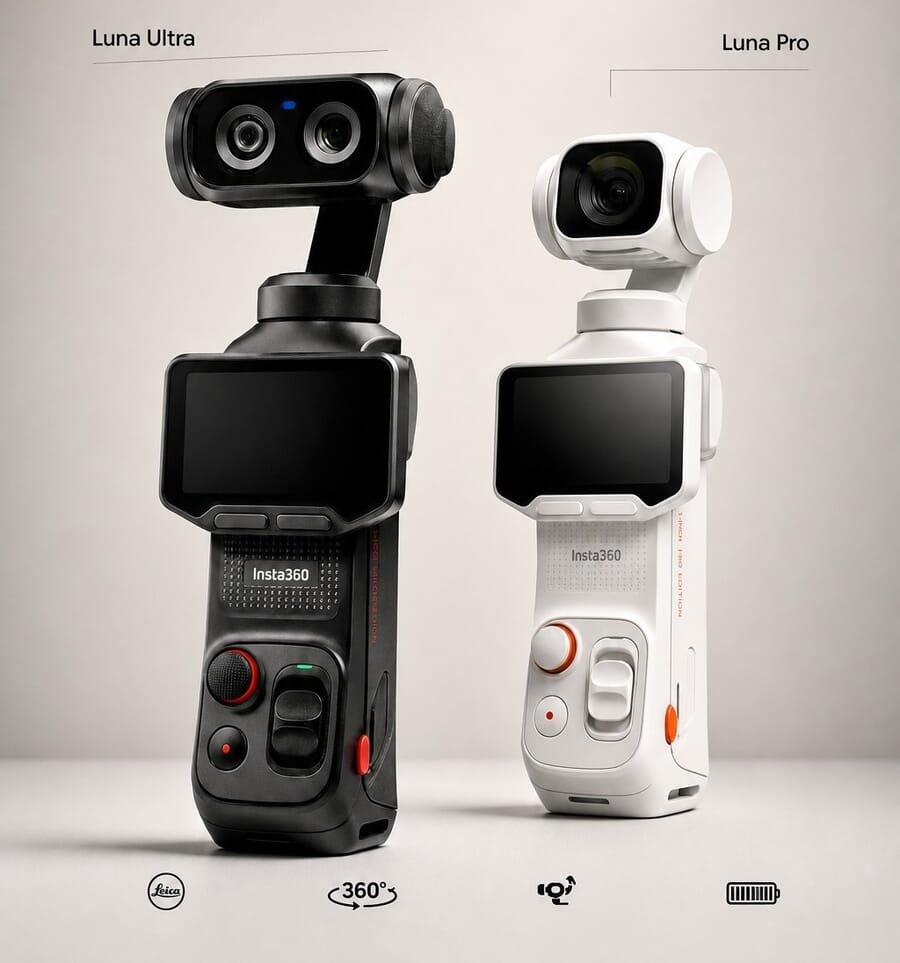
Update — June 10, 2026: Insta360 has now officially revealed the Luna Ultra in full. It’s available immediately at $769.99, and the confirmed specs — dual Leica lenses, a 1-inch 8K sensor, the detachable touchscreen — are below.
The Luna Ultra Is Official: Full Specs and Price
After trickling out details since February, Insta360 has finally pulled the curtain fully off the Leica-branded Luna Ultra — and “full details” this time means a real spec sheet, a price, and stock on shelves, not another frosted-glass tease. Per PetaPixel, the reveal was even pulled forward: B&H had the camera on shelves in New York a day early, which appears to have forced Insta360’s hand on the announcement.
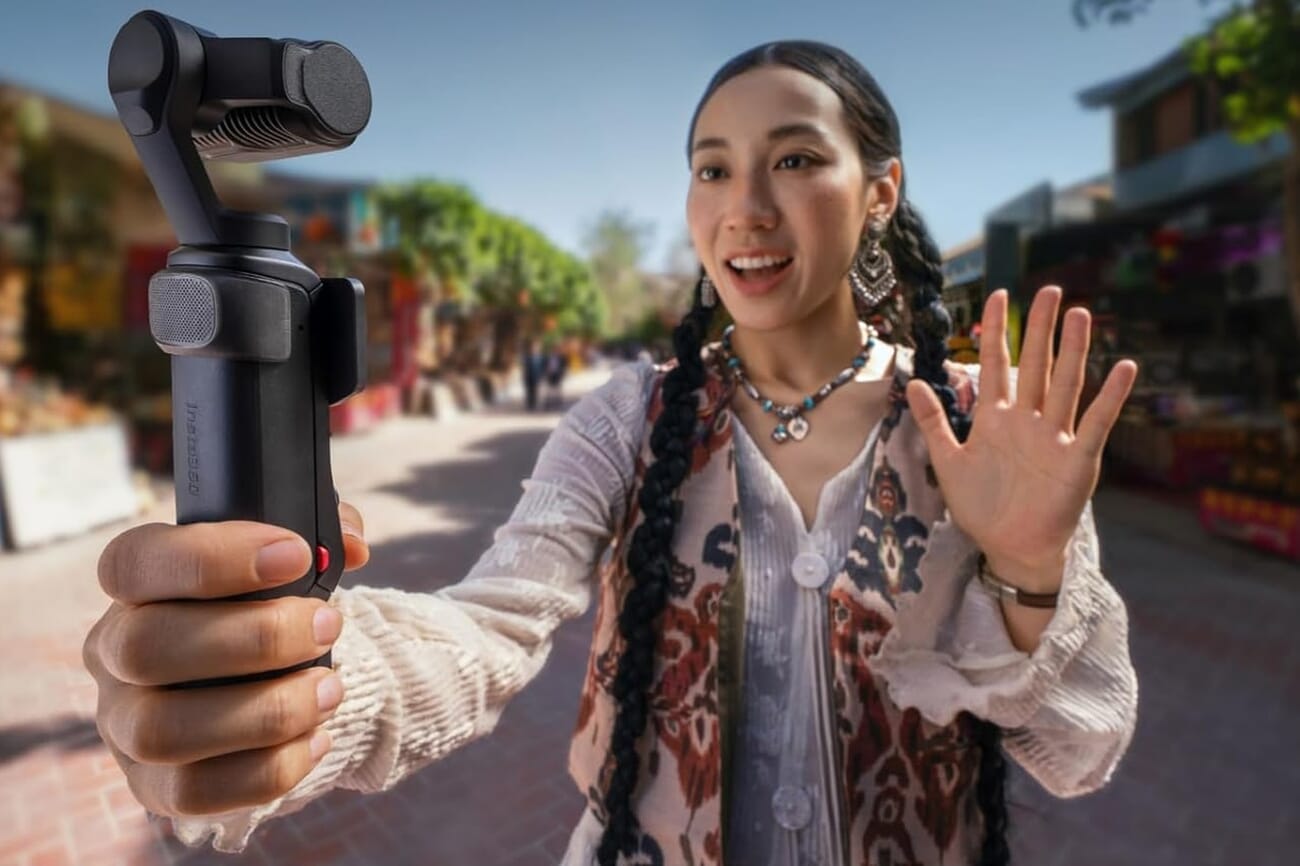
Dual Leica lenses and a 1-inch sensor
The headline is the optics. The Ultra pairs a Leica Summicron lens with a 1-inch (Type 1) 8K sensor as its main camera, then adds a second telephoto lens system on a smaller Type 1/1.3 sensor at f/2.0. That second lens is the real differentiator: it delivers up to 6x lossless optical zoom (and 12x digital), genuine reach that rivals leaning on a digital crop can’t match. The whole system rides on Insta360’s three-axis gimbal, with Leica handling the lens design and color science.
8K Dolby Vision video and big stills
On the video side the Ultra captures up to 8K at 30fps in Dolby Vision, with 10-bit I-Log (Insta360’s log profile) and a claimed 14 stops of dynamic range — serious latitude for a pocketable gimbal. For photographers, it also shoots 37-megapixel “UltraPhotos” and stitched 200-megapixel “Scenic Panorama” images, plus AI subject tracking to keep the gimbal locked on a moving subject. The detachable OLED touchscreen controller — the trick that set the Luna apart on its listing — is confirmed here too.
Price, availability, and how it stacks up
The Luna Ultra is available now at $769.99, with a Creator Bundle (adding a protective case, wind guard, handle and wrist strap) at $969.99. You can find the Luna Ultra on Amazon. That price slots it above the single-lens Luna Pro covered below, which trades the telephoto lens for a lower entry point while keeping the same Leica color science and gimbal core. Against its most direct rival, the DJI Osmo Pocket 4P, the Ultra matches the dual-camera, three-axis-gimbal formula but leans harder on the Leica branding and the detachable touchscreen — and asks a premium for it, exactly as Insta360 said it would. For anyone who wanted true optical reach in a pocket gimbal, the Ultra is the more interesting of the two Lunas; for everyone else, the Pro is the value play.
From Tease to Pre-Order
Insta360 first showed the Luna line at NAB 2026. Since then it has moved quickly: outlets including TechRadar and Geeky Gadgets have run hands-on previews, the first sample footage is out, and German retailer Foto Erhardt has opened an early pre-order (a €50 deposit, roughly a one-month wait) for the dual-lens Luna Ultra — ahead of Insta360’s own formal announcement. The single-lens Luna Pro hasn’t opened for pre-order yet, but the lineup and core hardware are now well established rather than rumored.
Luna Pro vs Luna Ultra
The Pro is the single-lens model, tuned for low-light performance and clarity, and positioned below the Ultra in price. The Ultra adds a second, telephoto lens for genuine optical zoom — a real edge over rivals that lean on digital crop. Both share the same sensor, Leica optics and color science; the Ultra simply buys reach and sits at the top of the line.
Leica Optics and the Confirmed Specs
The optics and color were developed with Leica, and the hardware listed on the Ultra’s pre-order page — which the Pro is expected to share at its core — is squarely aimed at creators who grade footage:
- 1-inch sensor paired with a Leica Summicron lens
- 8K video, plus 4K at up to 120fps
- 10-bit i-Log capture with Leica color profiles
- 3-axis mechanical gimbal stabilization
- A Triple AI chip with Deep Track subject tracking, and support for Insta360’s Mic Pro
The single-lens Pro will trade the Ultra’s second telephoto lens for a lower price, but is expected to keep this core imaging stack.
| Spec | Luna Pro (single-lens) | Luna Ultra (dual-lens) |
|---|---|---|
| Lenses | Single lens | Dual: wide + ~3× telephoto |
| Sensor | 1-inch | 1-inch |
| Lens | Leica Summicron | Leica Summicron |
| Zoom | Digital | Optical (up to ~6× lossless) |
| Video | 8K · 4K up to 120fps* | 8K · 4K up to 120fps |
| Color | 10-bit i-Log, Leica profiles | 10-bit i-Log, Leica profiles |
| Stabilization | 3-axis mechanical gimbal | 3-axis mechanical gimbal |
| AI | Triple AI chip, Deep Track | Triple AI chip, Deep Track |
| Remote | Detachable, with touchscreen | Detachable, with touchscreen |
| Audio | Insta360 Mic Pro support | Insta360 Mic Pro support |
| Price (indicative) | Below the Ultra — TBC | ~$780–960 (US) |
| Availability | Announced; pre-order TBC | Early EU pre-order open |
The Detachable Remote — Luna’s Standout Trick
The feature reviewers keep flagging — and now confirmed on the Ultra’s listing — is a detachable remote with its own touchscreen, something DJI’s Osmo Pocket doesn’t offer. Pop it off and you can frame yourself from a distance, monitor the shot, and direct a piece-to-camera without extra gear. For solo creators, it’s the kind of feature that closes a sale.
A Premium Swing at DJI’s Osmo Pocket
This is where expectations need resetting. Insta360 isn’t chasing DJI on price: a co-founder told TechRadar the company is “not going to compete on price,” and the Ultra has been quoted as high as roughly $780–960 in the US. That’s above DJI’s Osmo Pocket, not below it. Insta360’s bet is differentiation — Leica optics, optical zoom on the Ultra, and the detachable remote — rather than undercutting DJI’s next Pocket. The single-lens Pro will be the more affordable way in, but “more affordable than the Ultra” is not the same as cheap.
What’s Still to Come for the Pro
The Ultra is the model with momentum right now — pre-orders, listed specs, promo images. The single-lens Luna Pro still needs its own confirmed price, an exact ship date, and Insta360’s formal announcement, which is expected around the line’s launch following the NAB preview. Until then, treat the Pro’s price and availability as the open questions — the hardware and positioning are clear.
FAQ
What’s the difference between the Insta360 Luna Pro and Luna Ultra?
The Luna Pro has a single lens and sits below the Ultra in price. The Luna Ultra adds a second telephoto lens for real optical zoom, making it the choice when reach matters. They share the same 1-inch sensor and Leica optics.
How much does the Insta360 Luna cost?
Insta360 says it’s “not going to compete on price.” The dual-lens Ultra has been quoted around $780–960 in the US; the single-lens Pro will come in below that but is still a premium device, not a budget one. Official Pro pricing hasn’t been confirmed.
Where to buy: the Luna Ultra is listed at the Insta360 store, with the Luna Pro expected to follow.
When does the Insta360 Luna Pro come out?
There’s no confirmed date for the Pro. The Ultra already has an early retailer pre-order in Europe with a roughly one-month delivery estimate; Insta360’s formal announcement is expected around the line’s launch.
Is the Luna better than the DJI Osmo Pocket?
It’s a premium alternative rather than a cheaper one. The Luna counters with Leica optics, optical zoom (on the Ultra) and a detachable remote DJI lacks — but at a higher price. A final verdict waits on shipping units and full Pro specs.
Bottom line: the Luna Pro is real, the hardware is set, and Insta360 is aiming up-market rather than cutting under DJI. The remaining unknowns are the Pro’s exact price and ship date — and whether buyers will pay a premium for Leica color and that detachable remote.
Images: Leica × Insta360 — the official Luna key visual (the Luna Pro is the white, single-lens model on the right).
Primary Coverage
- PetaPixel — Luna Ultra: Insta360 reveals full details – Official full reveal: specs, $769.99 price, June 10 availability
- Notebookcheck — Luna Ultra pre-orders open early; official specs and images listed – Retailer pre-order, listed specs (8K, 4K120, Leica Summicron, detachable remote) and US price indication.
- TechRadar — “We’re not going to compete on price,” says Insta360 co-founder – Premium positioning straight from Insta360.
- Geeky Gadgets — Insta360 Luna Pro and Ultra vs DJI Pocket 4 – Pro vs Ultra breakdown and DJI comparison.
- RedShark News — Insta360 Luna first footage – First sample footage from the Luna line.
- Digital Camera World — Luna series with Leica tech challenges DJI – Leica co-engineering and the detachable-remote angle.
Image Sources
- Leica × Insta360 — product imagery – The Luna lineup photo and the staged Luna Ultra image use official Leica×Insta360 / Insta360 product imagery
This post contains affiliate links. If you buy through the Amazon link we may earn a commission, at no extra cost to you.