


- California’s superbloom season is peaking from late February through April, with Death Valley seeing its best display in a decade.
- Stay on trails, never trample flowers, and skip the drone — responsible photography protects future blooms.
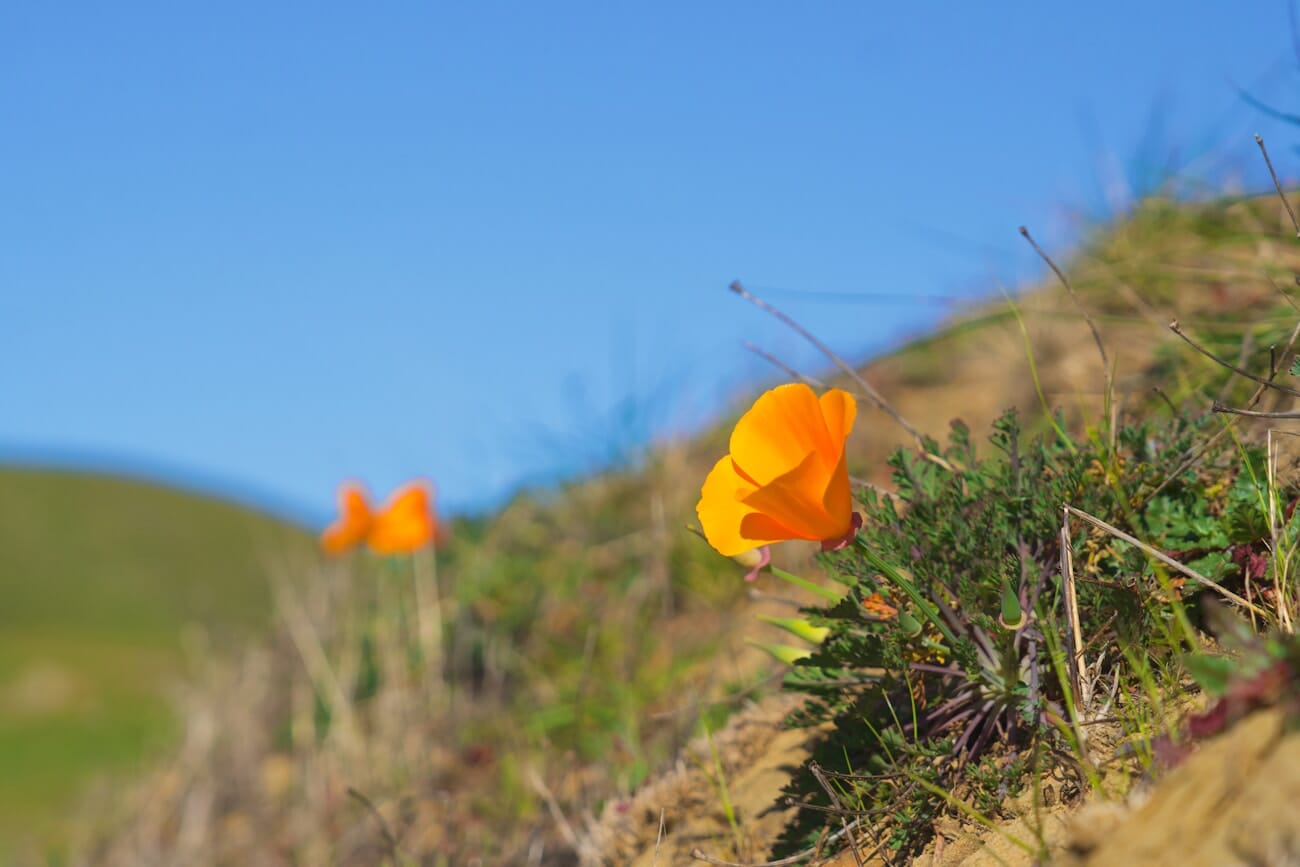
- Shoot at f/8–11 for landscapes, f/2.8–4 for bokeh, and time visits for golden hour for the best light.
- A wide-angle lens, polarizing filter, and knee pad are the essential gear for wildflower photography.
California’s deserts are exploding with color. Death Valley National Park declared an above-average bloom year in late February — the best in a decade — and parks from Anza-Borrego to Antelope Valley are following suit. Heavy late-2025 rainfall soaked deep into desert soils, and the result is miles of desert gold, evening primrose, sand verbena, and California poppies carpeting landscapes that were bare rock six months ago.
If you’re planning to photograph the superbloom, good. You should go — a display at this scale happens so rarely that missing it means waiting years for the next chance. But the photography community needs to do better than it did in 2019, when the so-called “Poppy Apocalypse” at Walker Canyon led to trampled fields, road closures, and lasting ecological damage. Here’s how to get stunning wildflower photos without becoming part of the problem.
Where and When: The Superbloom Season
The bloom is running ahead of schedule. UC Riverside plant ecologist Loralee Larios confirmed that flowers are appearing a full month earlier than the typical mid-March start, driven by unusual rainfall timing. Here’s where the action is:
- Death Valley National Park — Peak activity now through March. Desert gold, brown-eyed evening primrose, and phacelia are covering valley floors and alluvial fans. The Furnace Creek area recorded roughly 2.4 inches of rain between November and early winter, far above normal.
- Anza-Borrego Desert State Park — Already showing robust bloom activity with sand verbena and desert sunflowers. Located 85 miles northeast of San Diego.
- Antelope Valley California Poppy Reserve — Expected to peak March through April. California poppies are the star here.
- Joshua Tree National Park — Early wildflowers near Hidden Valley and the Belle and Ryan campgrounds.
- Carrizo Plain National Monument — Peak expected March through April. One of the most dramatic displays when it blooms.
- Higher elevations — Blooms at higher altitudes could extend through May and June, giving photographers a longer window.
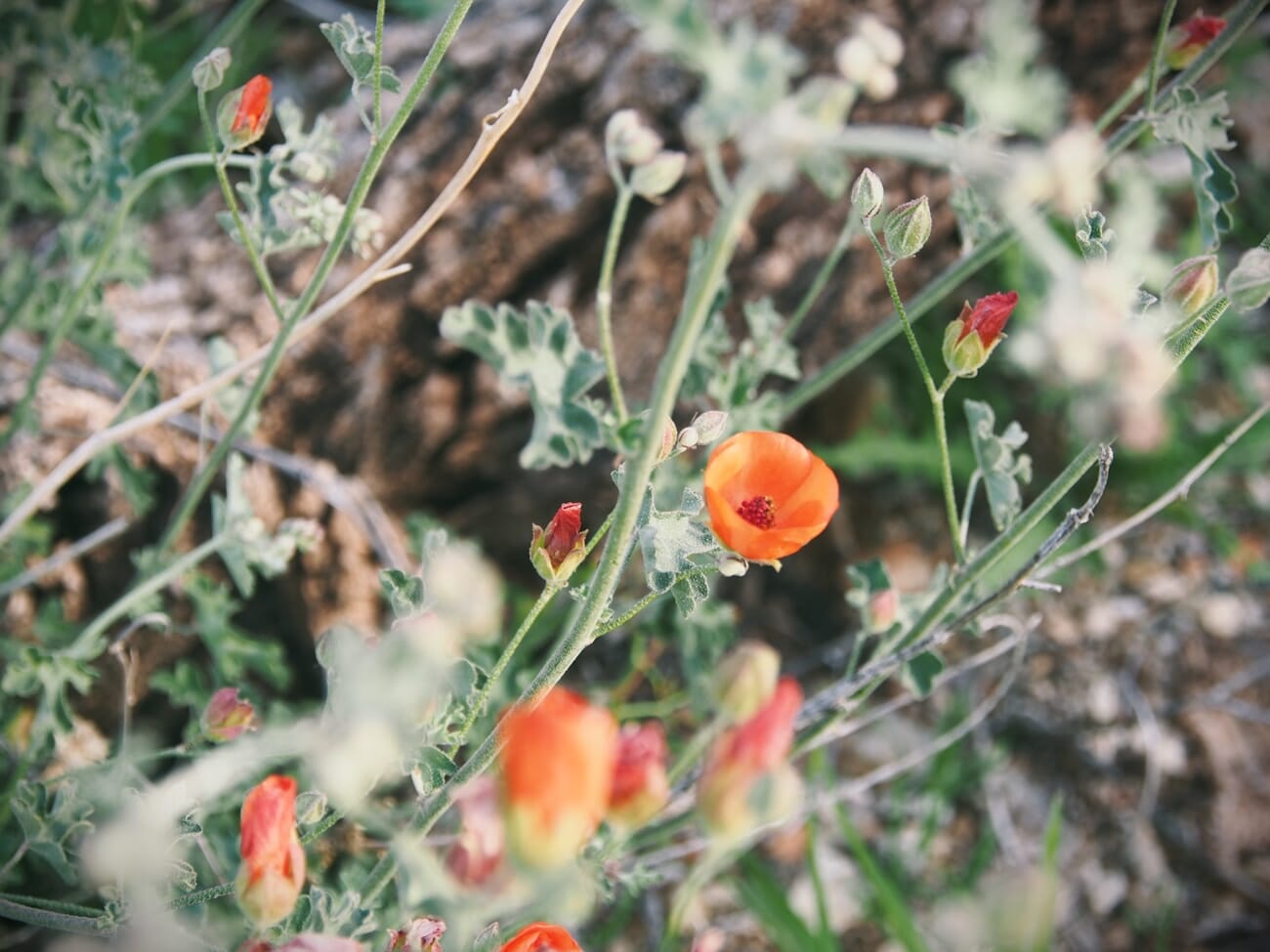
California State Parks has set up a dedicated wildflower tracking page with updated bloom conditions. Check it before you drive — conditions change weekly, and what’s peaking today may be fading by next weekend.
The Ethics: How to Photograph Without Destroying
In 2019, an estimated 150,000 visitors overwhelmed Walker Canyon near Lake Elsinore. People climbed over barriers, trampled flowers by the thousands, and pulled entire plants out by the roots. The city was forced to shut down access entirely and has continued strict closures during subsequent bloom seasons. The ecological damage went far beyond aesthetics — a single California poppy can produce hundreds of seeds, and when thousands of plants are trampled before going to seed, future blooms are directly diminished.
Photographers set the visual standard that everyone else tries to replicate. That waist-deep-in-poppies shot that goes viral? It tells millions of people that standing in flower fields is acceptable. It’s not. Here’s how to get great shots responsibly:
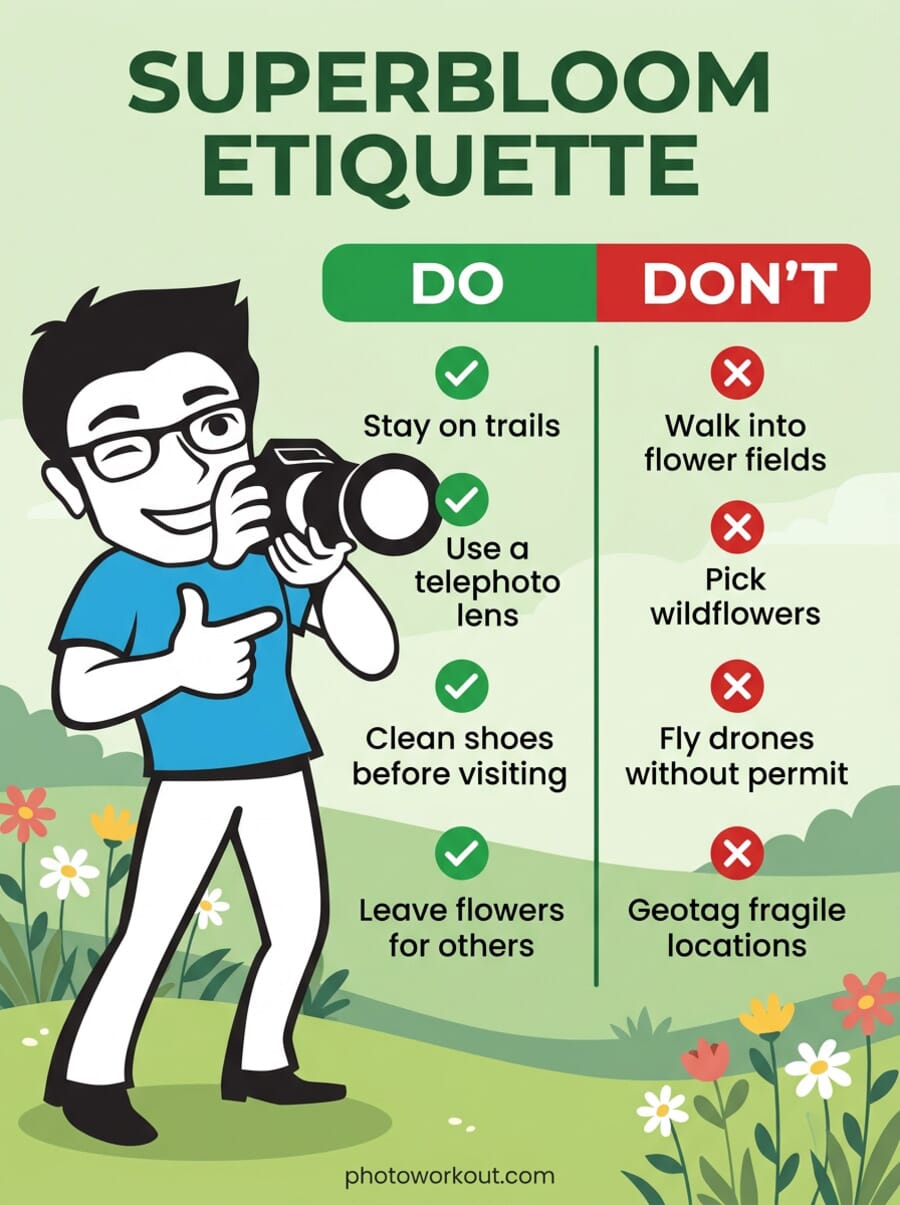
- Stay on designated trails and paths. No photo is worth destroying a patch of flowers that took months to grow and won’t come back for years.
- Use a telephoto or zoom lens to get close-up shots from the trail. A 70-200mm lens can isolate stunning details without stepping off the path.
- Never pick wildflowers. Besides being illegal in state and national parks, removing flowers prevents seed production for future blooms.
- Clean your shoes before and after visiting bloom sites. Invasive plant seeds hitchhike on footwear — this is one of the primary ways invasive species spread to fragile habitats.
- Check drone regulations. Most national parks prohibit drone flights entirely. State parks have varying rules — check before you fly.
- Think twice before geotagging. Sharing exact coordinates of fragile bloom locations on social media can drive overwhelming foot traffic to areas with no infrastructure to handle it.
Essential Gear for Wildflower Photography
Wildflower photography doesn’t require exotic gear. Here’s what works:
- Wide-angle lens (16-35mm) — The go-to for capturing sweeping flower fields against dramatic skies. Get low to the ground and let the flowers fill the foreground while mountains or clouds anchor the background. Check our guide to landscape photography settings for detailed setup tips.
- Telephoto zoom (70-200mm) — Compresses layers of flowers into dense, colorful compositions. Also lets you photograph individual blooms from the trail without stepping into the field.
- Macro lens or close-up filters — For detail shots of individual petals, stamens, and the insects visiting them. See our complete macro photography guide for technique deep-dives.
- Polarizing filter — Cuts glare from waxy petals, deepens blue skies, and boosts color saturation. Arguably the single most useful filter for flower photography.
- Knee pad or ground sheet — Many of the best wildflower compositions are shot from ground level. Your knees will thank you.
- Tripod — Essential for macro work and low-light golden hour shots. A tripod with a reversible center column makes ground-level shooting much easier.
Camera Settings That Work
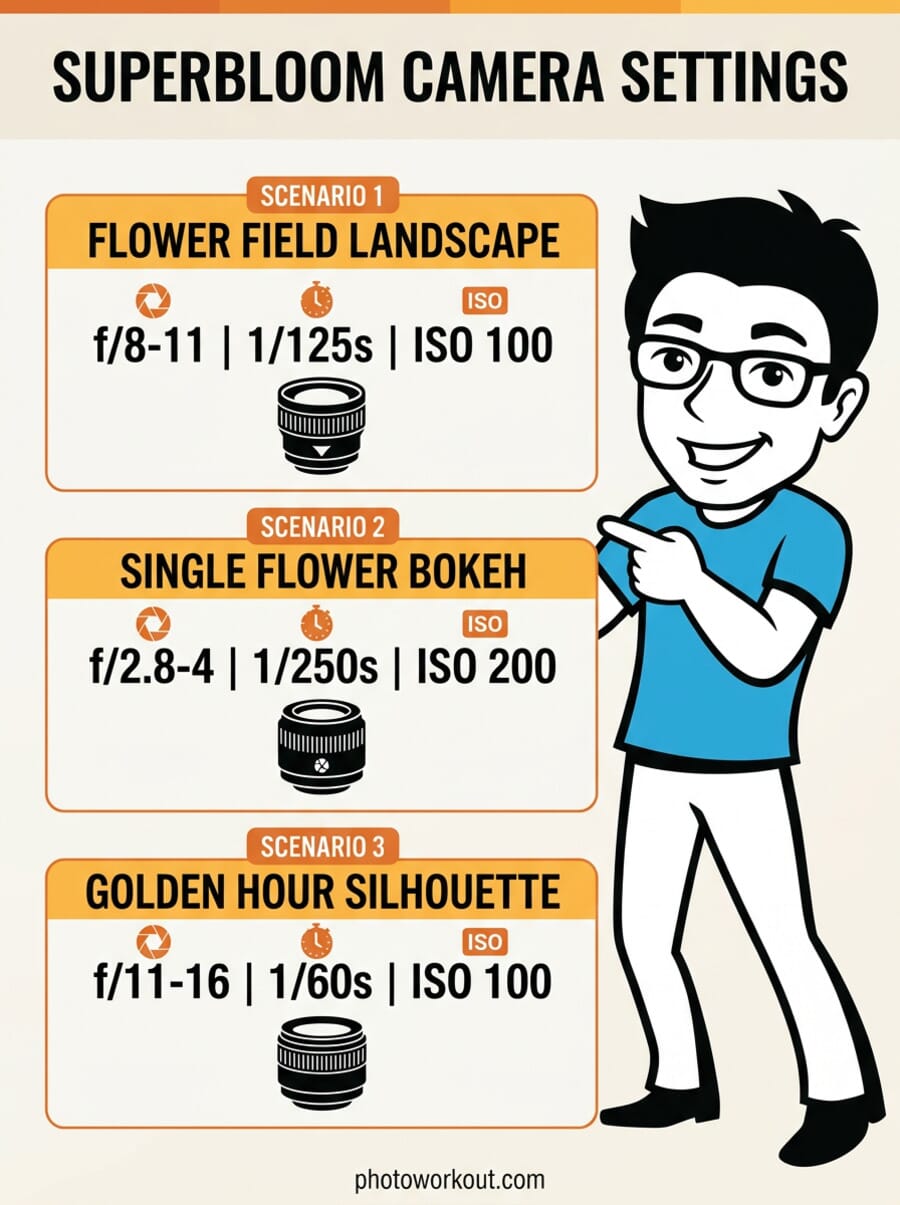
Wildflower photography spans everything from vast landscapes to tiny macro details, and each scenario calls for different settings. Understanding the exposure triangle is key to nailing these shots. Here are proven starting points:
Flower Field Landscapes
- Aperture: f/8–f/11 for maximum sharpness across the frame
- Shutter speed: 1/125s or faster (flowers move in even light wind)
- ISO: 100–200 to keep noise minimal
- Focus: Manual focus or single-point AF about one-third into the scene
Single Flower Portraits (Bokeh)
- Aperture: f/2.8–f/4 to blur the background into creamy bokeh. Learn more about how wide vs. narrow aperture affects your results.
- Shutter speed: 1/250s or faster to freeze any movement
- ISO: 100–400 depending on light
- Focus: Single-point AF locked on the nearest petal or stamen
Golden Hour / Backlit Flowers
- Aperture: f/11–f/16 for sunstar effects through petals
- Shutter speed: 1/60s (use a tripod at slower speeds)
- ISO: 100
- Metering: Spot meter on the flowers, not the bright sky behind them
Composition Techniques for Flower Fields
Wildflower fields can look chaotic through the viewfinder. These composition techniques help bring order to the color:
Get Low
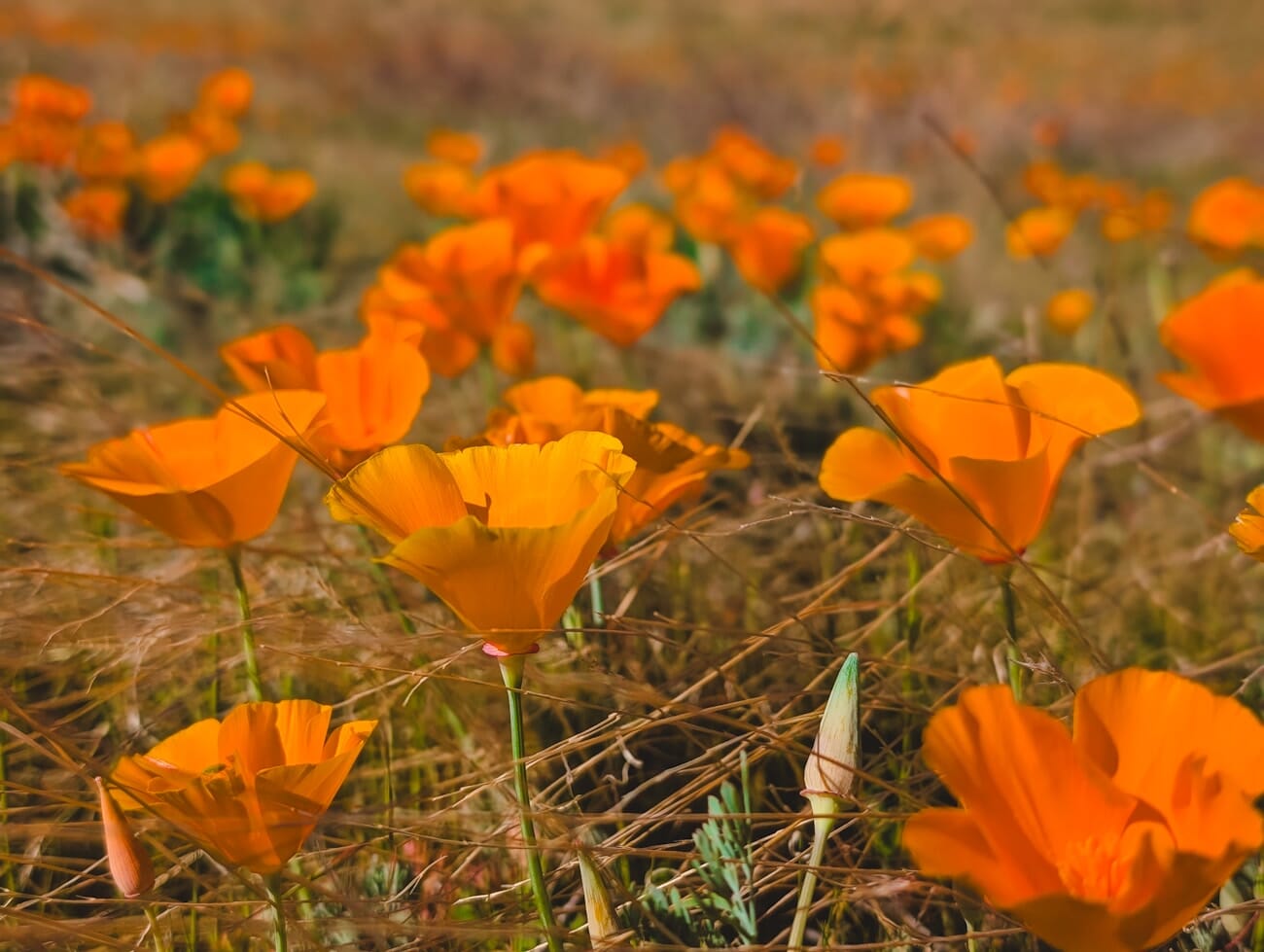
The single most effective move for wildflower photography. Shooting from ground level transforms a flat field into a towering wall of color. Place the camera at flower height or even below, and let the blooms fill the foreground while the sky stretches behind them. This is where that knee pad earns its spot in the bag.
Use Leading Lines and Paths
Trails, fences, irrigation channels, and natural ridgelines all create leading lines through flower fields. They give the eye a path to follow and add depth to what might otherwise be a flat wall of color. Position yourself so the line draws the viewer from foreground to background.
Mix Wide and Tight
Don’t just shoot landscapes. Alternate between wide establishing shots (16-35mm) that show the scale of the bloom and tight detail shots (100mm+) that isolate individual flowers or small clusters. The contrast between the two perspectives tells a more complete story. For macro inspiration, check out our guide to flower macro photography.
Include Context Elements
A person walking on a trail, a distant mountain, or a lone tree gives the viewer a sense of scale. Without context, a flower field photo could be ten feet wide or ten miles. People (on the trail, not in the flowers) make particularly effective scale elements and add human interest to the scene.
Timing Is Everything
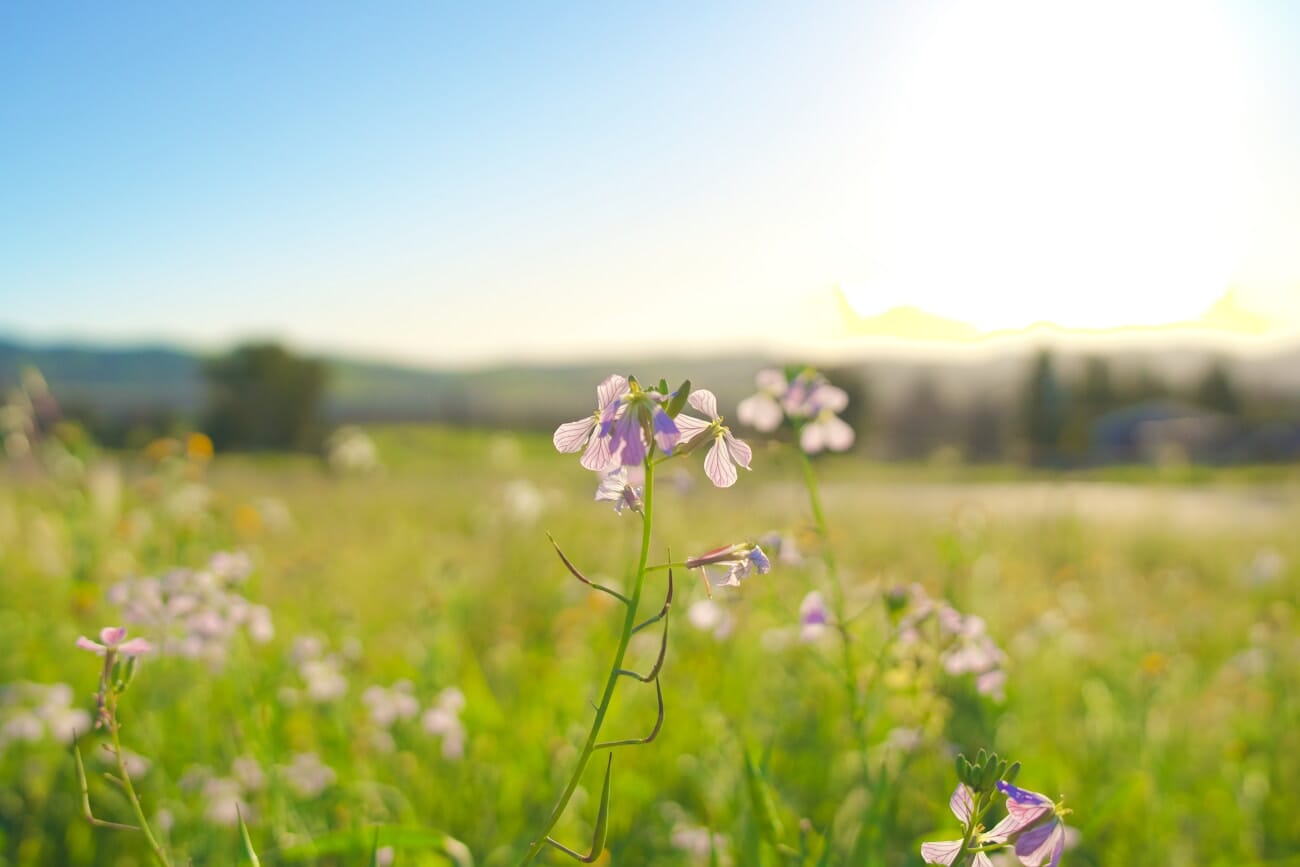
Golden hour (the first and last hour of sunlight) transforms wildflower photography. Backlit petals glow like stained glass, and the warm, low-angle light adds dimension that midday sun simply can’t match. Many California poppies also close their petals in the evening and on cloudy days, so morning golden hour often works better than evening. For outdoor photography settings across different lighting conditions, see our dedicated guide.
Overcast days work well too — the soft, even light eliminates harsh shadows and lets flower colors saturate naturally without blown highlights. Overcast light is especially good for macro and detail work.
Post-Processing Tips
Wildflower photos often need careful color work to match what the eye actually saw. Here’s how to approach it without overdoing it:
- Vibrance over saturation. The Vibrance slider boosts muted colors while protecting already-saturated tones — exactly what flower photos need. Saturation pushes everything equally and can make poppies look radioactive. Start with +15 to +25 vibrance and leave saturation alone.
- HSL adjustments. Target specific color channels. Push orange and yellow luminance up slightly for poppies. Shift purple hues toward blue for lupines and wild hyacinths. Small, targeted moves beat global adjustments every time.
- White balance. Shoot in RAW and adjust white balance in post. Slightly warm (toward 6000-6500K) often matches the golden, sun-drenched look of desert blooms better than auto white balance.
- Dehaze sparingly. A touch of dehaze (+10 to +15) can cut through desert atmospheric haze and make distant flowers pop. More than that and the image looks crunchy.
- Protect the highlights. Bright petals against dark soil or blue sky can blow out easily. Pull highlights down in post and recover detail in the brightest blooms.
Frequently Asked Questions
How long does a superbloom last?
It depends on location and weather. Desert blooms at lower elevations typically last 2-4 weeks once they peak, while higher elevation blooms can persist through May or June. Heat waves and strong winds can shorten the window dramatically — check current conditions before driving out.
Can I use a drone to photograph the superbloom?
In most cases, no. National parks prohibit drone flights entirely. State parks have varying regulations — some allow drones with permits, others ban them outright during peak bloom to avoid disturbing wildlife and visitors. Always check the specific park’s rules before bringing a drone.
What’s the best time of day to photograph wildflowers?
Golden hour (the first and last hour of sunlight) produces the most dramatic results. Morning is often better than evening because many California poppies close their petals as temperatures drop in the late afternoon. Overcast midday also works well for macro and detail shots.
Do I need a macro lens for flower photography?
Not necessarily. A telephoto zoom (70-200mm) can produce beautiful close-up shots from the trail. Close-up filters that screw onto existing lenses are an affordable alternative to a dedicated macro lens. That said, a true macro lens reveals detail — stamens, pollen, water droplets — that no other lens can match.
Is the superbloom only in California?
No. Parts of Arizona, Nevada, and Texas are also seeing wildflower blooms when conditions align. The Sonoran Desert in Arizona and Big Bend in Texas can produce spectacular displays. California gets the most attention because of the scale and accessibility of its bloom sites.
Sources used for this article:
Featured image: Photo by Rod Long on Unsplash.
Related Posts
Get the Weekly Photography News Digest
Join photographers who get our top stories delivered every Monday morning. No spam, unsubscribe anytime.