


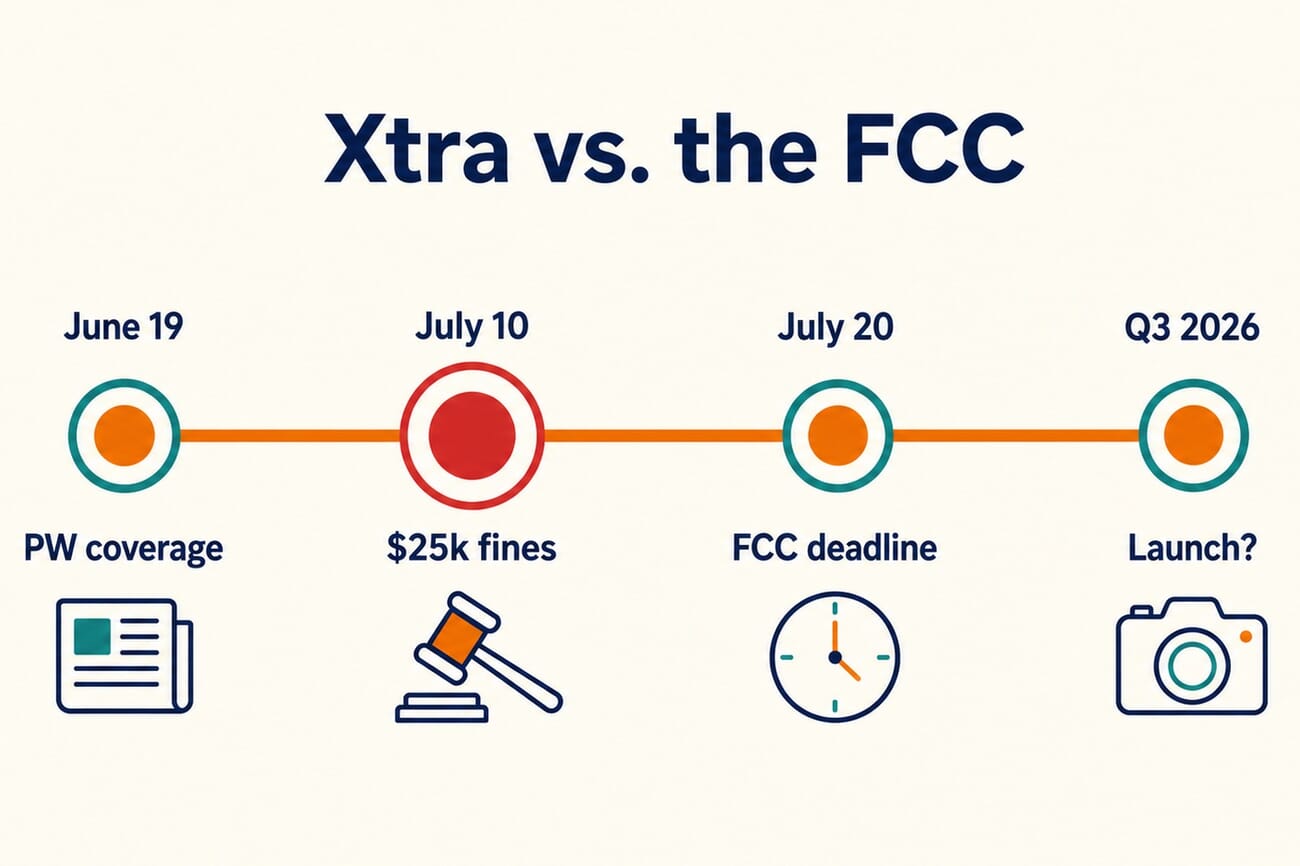
- On July 10, the FCC proposed $25,000 fines against eight companies suspected of funneling DJI hardware into the US under other brand names. Xtra Technology, maker of the Muse 2 Pro that PhotoWorkout covered in June, is on the list.
- The fine is for stonewalling, not for the rebadge itself: the companies ignored formal FCC Letters of Inquiry, and each has until July 20 to respond before further enforcement.
- Already-shipped Xtra cameras keep working. A proposed forfeiture is not a recall, and owning or using the gear is not illegal. The real risks are pre-orders, app support, and warranty if the brand folds.
- The FCC is also moving to disqualify the Chinese lab that certified the DJI Pocket 4P, a step that could choke off DJI-derived gear at the certification stage rather than device by device.
Four weeks ago, PhotoWorkout pointed readers at the Xtra Muse 2 Pro as the realistic way to get DJI Pocket 4P hardware in the United States, where DJI itself can no longer certify new products. On July 10, the FCC proposed a $25,000 fine against Xtra Technology and seven other companies it suspects of being DJI front operations.
That makes this a follow-up PhotoWorkout owes its readers, not just another enforcement story. Here is exactly what the FCC did, what it did not do, and what it means if a Muse 2 Pro pre-order or an Xtra camera is already sitting in your bag.
What the FCC Actually Did (and Did Not Do)
On July 10, the FCC’s Enforcement Bureau issued Notices of Apparent Liability proposing $25,000 forfeitures against eight companies: Cogito Tech, Fixaxo Technology, Lyno Dynamics, Skyhigh Tech, Spatial Hover, SZ Knowact, WaveGo Tech, and Xtra Technology. Each had received a formal Letter of Inquiry asking whether it markets radio-frequency equipment covered by the national-security Covered List, which DJI gear joined on December 22, 2025. Each, according to the FCC, simply never answered, even after a follow-up letter.
Read that carefully, because most coverage blurs it: the $25,000 is not a penalty for rebadging DJI cameras. It is a penalty for ignoring a federal regulator’s questions. The FCC has not ruled that the Muse 2 Pro is illegal, and it has not accused Xtra of violating the equipment restrictions themselves. What the agency now has is eight companies that behaved exactly the way front companies would, which is arguably more damning than any spec sheet. The eight have until July 20, three days from now, to respond before the FCC considers further enforcement.
The FCC is also working the problem from the other end. In May it signaled its intent to disqualify SGS-CTST, the Shenzhen test lab that certified the DJI Osmo Pocket 4 and 4P (and WaveGo Tech’s products), from its list of accredited labs, citing partial ownership traced to a Chinese state standards body. Every RF product sold in the US needs certification through an accredited lab. Pull the lab, and the certifications behind DJI-derived gear start to wobble at the source.
The Evidence Against Xtra Keeps Piling Up
When PhotoWorkout covered the Muse 2 Pro in June, the polite framing was that Xtra was a “Delaware-registered startup” with a suspiciously familiar catalog: the Muse mirrors the Osmo Pocket 3, the Edge and Edge Pro mirror the Osmo Action 4 and 5 Pro, and the Muse 2 Pro matches the Pocket 4P point for point, from the 1-inch main sensor and 3x telephoto second lens to the 17 stops of claimed dynamic range and 10-bit log recording.
The investigative work since then has removed most of the doubt. The Verge, working with independent researcher Konrad Iturbe, found that Xtra’s companion app contains references to Chinese data servers and APIs, appears to use the same Bangcle/SecNeo code-obfuscation tool DJI uses, and that Xtra’s US address belongs to a Delaware company-formation service. Side by side, the Verge’s testing found the Muse and the Osmo Pocket 3 fold, click, track faces, and even heat up identically. Teardowns point to the same boards and chips inside.
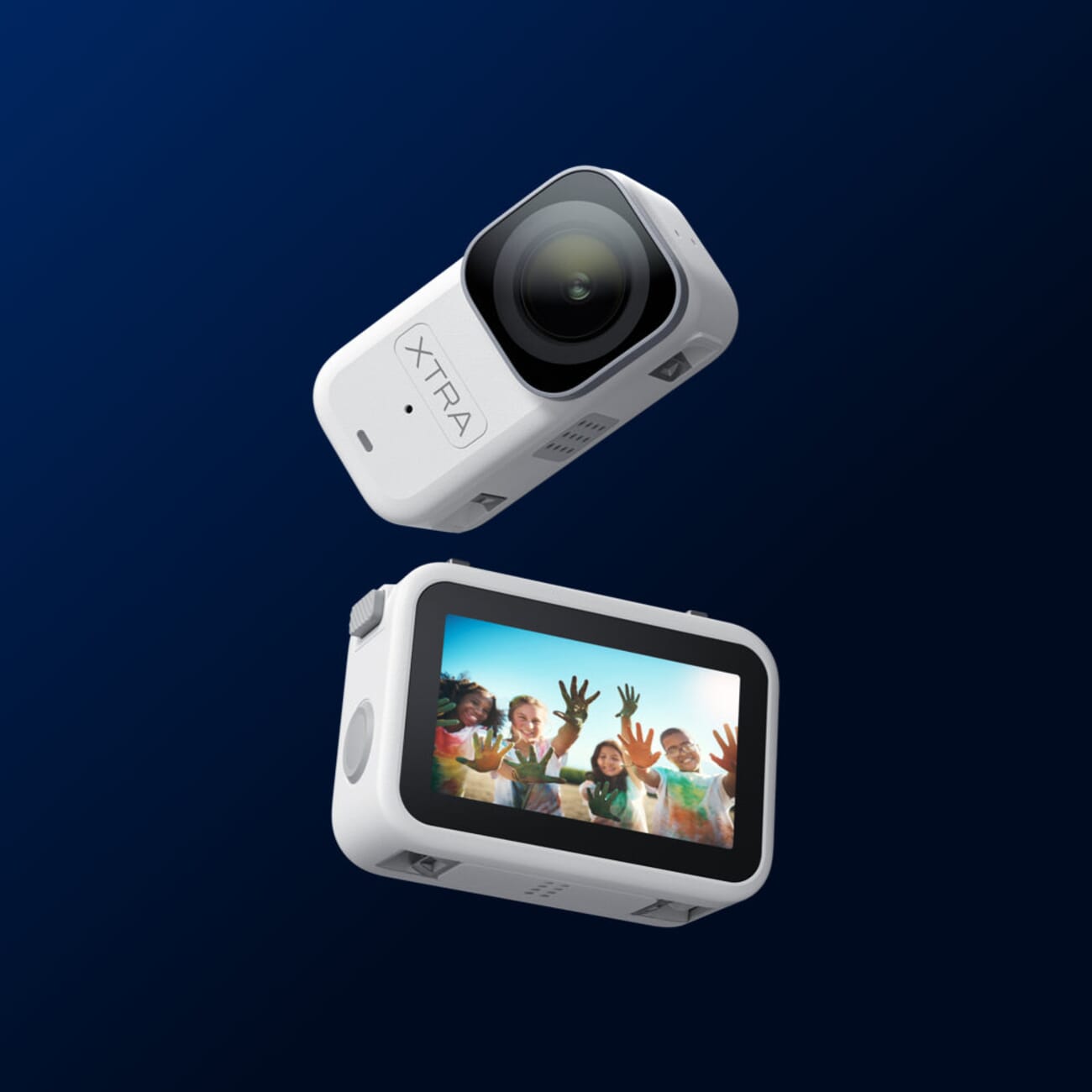
The most telling detail: Iturbe found trademarked codenames in the app for products Xtra had not yet announced, “Atto” for DJI’s Osmo Nano and “Sphra” for the Osmo 360. As of this week, the Xtra Atto and an 8K Xtra 360 are live products on Xtra’s own store. The catalog keeps expanding on schedule while the FCC’s letters go unanswered.
What This Means If You Pre-Ordered (or Already Own One)
If an Xtra camera is already in your bag, nothing changes today. A proposed forfeiture is not a recall, and no US rule makes owning or using the gear unlawful. The camera will keep shooting regardless of what happens on July 20.
The pre-order is the exposed position. The Muse 2 Pro was slated for a Q3 2026 US launch at an indicated $600 to $700, taken as an early-access deposit through Xtra’s Shopify store. Three scenarios matter. If Xtra answers the FCC and fights, the launch likely slips but may survive. If the FCC escalates, import and certification pressure could kill the US launch entirely. And if Xtra simply evaporates, the way thinly-capitalized Delaware shells can, deposits become chargeback claims. Anyone holding a deposit should know their card issuer’s dispute window and calendar it.
The quiet risk is software. These cameras depend on a companion app for firmware, transfers, and some shooting modes. An app built on Chinese infrastructure by a company under federal scrutiny can disappear from US app stores fast, and a warranty from a brand that stops answering regulators is unlikely to answer customers either. That risk was in our June piece; the July 10 action moves it from theoretical to live.
The June advice was to wait for the full spec drop and confirmed price before committing money. That advice upgrades today: do not put new money down until Xtra responds to the FCC and the July 20 deadline resolves. A $650 camera is not worth a $650 unsecured loan to a company that will not answer its regulator’s mail.
The Counterpoint: Who Does This Crackdown Protect?
Not everyone reads this as a win. CineD calls it “a selective crackdown that only hurts filmmakers,” and the argument deserves a fair hearing. No agency has shown a concrete consumer harm from a Pocket-style gimbal camera. The Covered List restrictions stem from national-security determinations about DJI as a company, not from any finding about these specific devices. Meanwhile the people actually squeezed are American solo shooters and small production houses, who lose access to the best pocket gimbal on the market while professional DJI users in every other country carry on.
The counter-counterpoint: whatever one thinks of the DJI restrictions, a regulated market where sellers answer regulators is what keeps warranties, certifications, and radio compliance meaningful. Xtra could have responded, argued its case, and kept selling. It chose silence. Buyers pay for that choice either way, which is why the practical advice above leans cautious. Readers weighing gray-route hardware generally can see the same calculus in our Xiaomi 17 Ultra import guide.
Frequently Asked Questions
Will my Xtra Muse or Edge stop working?
No. The FCC action is a proposed monetary forfeiture against the company, not a recall or a use ban. Hardware you own keeps working. The realistic long-term risk is the companion app and firmware pipeline going dark if Xtra shuts down US operations.
Should I cancel my Muse 2 Pro pre-order?
If the deposit is refundable, converting it back to cash until after the July 20 deadline costs nothing but a place in line. At minimum, note your card issuer’s chargeback window. Do not add new money until Xtra responds to the FCC and the launch timeline firms up.
Is it illegal to buy or import Xtra gear now?
No. Nothing in the July 10 notices makes buying, owning, or using these cameras unlawful for consumers. The legal exposure sits with the companies selling and certifying the equipment. That said, if certifications behind the products are revoked later, US retail availability can vanish quickly.
What happens after July 20?
If the companies respond, the FCC weighs their answers and can adjust or finalize the forfeitures. If they stay silent, the agency has signaled further enforcement, which can include larger penalties and action against the equipment authorizations themselves. The parallel move against the SGS test lab suggests the FCC wants to close the certification pipeline, not just fine the shells at the end of it.
The Bottom Line
PhotoWorkout told readers the Xtra Muse 2 Pro was the realistic route to Pocket 4P hardware in America. That was true then and it is technically still true now, but the ground under it has shifted: the company behind it is stonewalling a federal regulator with a deadline three days out, and the certification pipeline that made the whole rebadge economy possible is under direct attack. Owners can relax. Pre-order holders should get their money where they can reach it. And anyone about to put down a deposit should wait until Xtra proves it answers mail, because a camera brand that ignores the FCC will have no trouble ignoring you.
Primary Documents
- FCC Enforcement Bureau — Proposed $25,000 Penalty Against Xtra Technology LLC – The Notice of Apparent Liability for Forfeiture naming Xtra, July 10, 2026.
News Coverage
- PetaPixel — FCC Fines Multiple Companies It Says Are Bringing DJI Tech into the U.S. – First report naming all eight companies with the NAL text and July 20 deadline.
- DroneXL — FCC Fines Eight Alleged DJI Front Companies $25,000 Each – Enforcement context and the stonewalling framing.
- RedShark News — Xtra Muse 2 Pro: FCC action threatens DJI Pocket 4P clone – Muse 2 Pro launch details, pricing, and the point that Xtra has not been accused of breaching equipment restrictions.
- CineD — DJI Front Companies Fined by the FCC: A Selective Crackdown That Only Hurts Filmmakers – The counterargument, plus the SGS-CTST test-lab disqualification details.
- The Verge — Xtra: the company that lets DJI sneak its popular cameras into the US – Konrad Iturbe's app-code findings, the Delaware address, and the Atto/Sphra codenames.
Image Sources
- Xtra Store — official product photography (featured image and Atto product shot) – Manufacturer marketing images from Xtra's US store.
- PhotoWorkout — timeline infographic and pin illustration – Stylized PhotoWorkout illustrations created for this article.