


- HoverAir has revealed the Versa, a pocket gimbal camera that clicks onto a caged drone body to become a self-flying drone, one device that replaces both a handheld vlogging cam and a selfie drone.
- In the air it flies itself and follows you without a controller, with subject tracking and AI-assisted framing, the same hands-free approach as HoverAir’s X1 and Aqua drones.
- Its most unusual trick is a 360-degree autonomous flight that stitches images into a shareable, interactive 3D capture of a scene, no LiDAR required.
- HoverAir has not published camera specs, weight, pricing, or a release date yet. It only says an industry-leading processor is inside and that details are coming soon.
- The Versa lands the pocket-camera and selfie-drone categories on a collision course, squaring up against DJI’s Osmo Pocket and Neo lines and a pocket drone Insta360 is now patenting.
Every year the line between a pocket vlogging camera and a tiny selfie drone gets blurrier. On July 30, 2026, HoverAir erased it. The company behind the palm-launched X1 and the waterproof Aqua drone unveiled the Versa, a handheld gimbal camera that snaps onto a caged drone body and takes off, turning one gadget into two.
HoverAir is calling it a new kind of all-in-one, and reviewers have gone further, with PetaPixel labeling it the world’s first flying pocket camera. It arrives just as the two categories converge from the other direction too: DJI keeps pushing its Osmo Pocket line, and Insta360 is now patenting a pocket selfie drone of its own. Here is what HoverAir has actually shown, and the big questions it has not answered.
What the HoverAir Versa Actually Is
In your hand, the Versa looks and works like a normal pocket gimbal camera. It has a compact body you can wrap a hand around, a small built-in display for framing and playback, physical controls including a record button and a joystick, and a 3-axis mechanical gimbal that smooths out walking, running, and panning. If you have used a DJI Osmo Pocket, the handheld half of the Versa will feel familiar.
The twist is what happens next. According to HoverAir, the camera module attaches to a drone body with a single click. The combined unit stays relatively compact and wraps the rotors in integrated guards to cut the risk of nicks and injuries, a design HoverAir has leaned on since its earliest selfie drones. Point the whole thing at yourself, let go, and it flies.
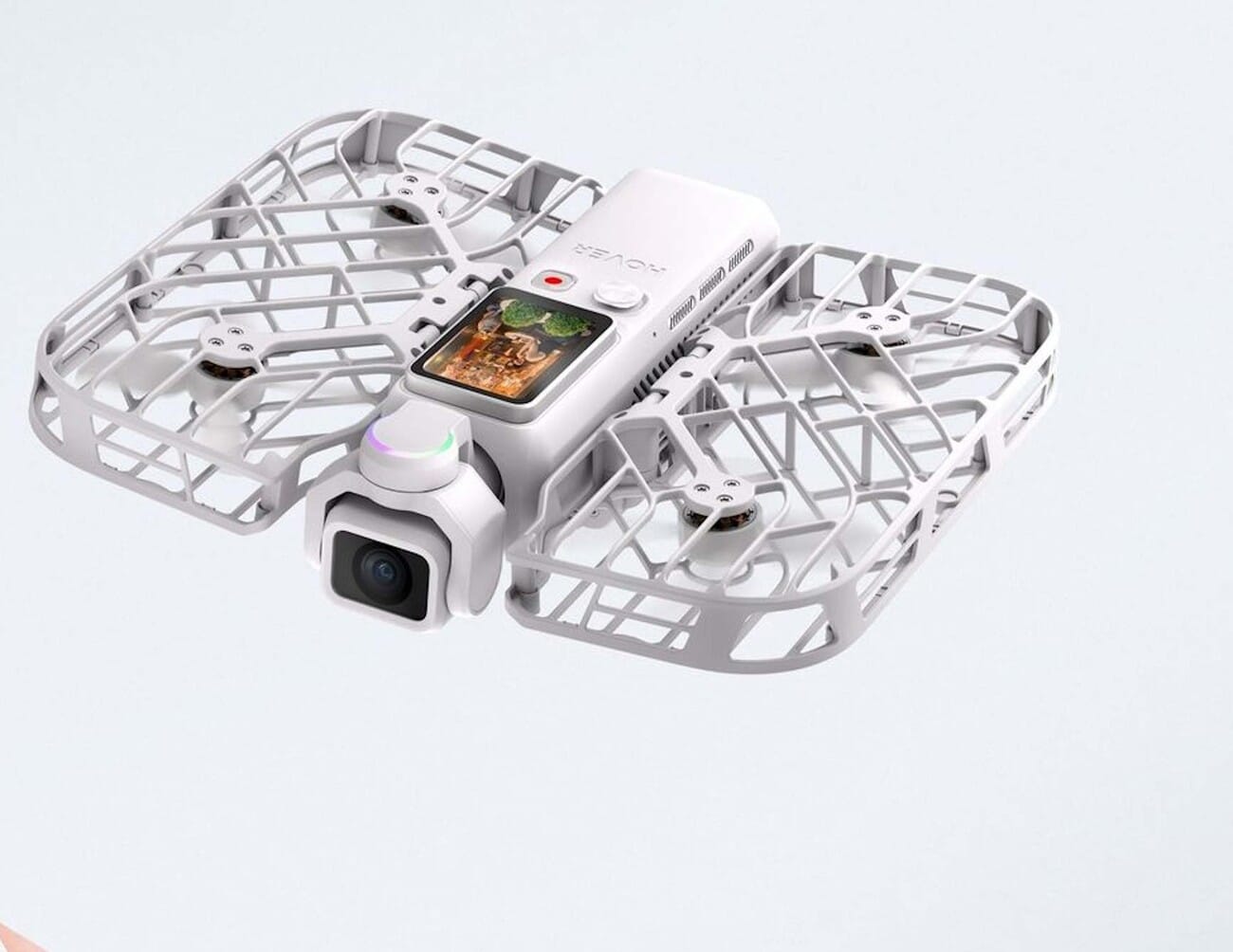
A Pocket Camera That Clicks Into a Drone
The appeal is simple: instead of buying and carrying both a handheld vlogging camera and a small drone, you carry one device and use whichever mode the moment calls for. Walking through a market, shoot handheld. Want the reveal shot pulling back over a viewpoint, click it into the drone body and send it up. HoverAir is clearly aiming this at beginners and casual creators who want the aerial look without learning to fly a traditional drone or juggling two separate gadgets.
That framing matters, because HoverAir’s products have never really been drones in the hobbyist sense. They are best understood as flying action cameras: you do not pilot them so much as point them and let them follow. The Versa extends that idea by giving the flying camera a second life as a stabilized handheld once it is back on the ground.
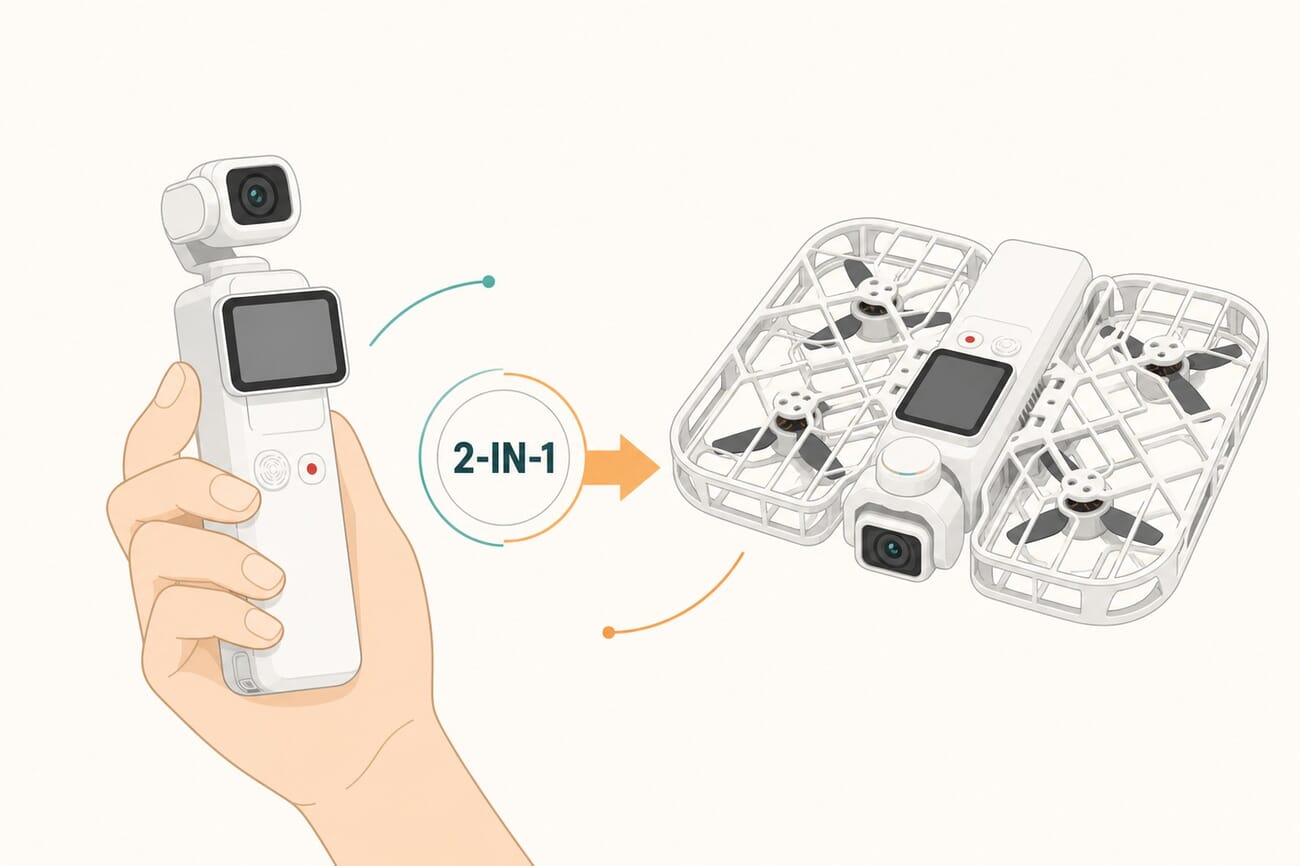
It Flies Itself, and Builds 3D Scenes
Like the rest of HoverAir’s lineup, the Versa is controller-free. It uses automatic subject tracking to keep you in frame, and HoverAir says onboard AI suggests the best camera positions rather than leaving you to think about angles. That is the same hands-free pitch that made the X1 a hit with people who would never call themselves drone pilots.
The genuinely novel feature is 3D capture. HoverAir says the Versa can fly a precise 360-degree path around a subject or space and stitch the resulting images into a three-dimensional model you can rotate, explore from different angles, and share as an interactive scene. Crucially, it does this photogrammetry-style, by combining many photos rather than using a LiDAR scanner, which is likely why HoverAir hints it works best in enclosed spaces like rooms. It is an unusual capability for a consumer camera at this size, and a real differentiator if it works as smoothly as the promo suggests.
How It Takes On DJI and Insta360
The Versa is a direct shot at the two companies that own this space. DJI splits these jobs across products, the Osmo Pocket for handheld gimbal footage and the featherweight Neo for hands-free selfie flights. HoverAir’s argument is that you should not need both. Insta360, meanwhile, is heading toward the exact same convergence from the software-and-360 side and is patenting a pocket selfie drone, so the Versa may have just beaten a much larger rival to market with the idea.
Whether that is enough depends on the parts HoverAir is still hiding. DJI and Insta360 win on sensor quality, ecosystem, and editing software. HoverAir wins, at least on paper, on the one-device convenience and the follow-me simplicity. The 3D-capture trick is the kind of headline feature neither DJI nor Insta360 currently offers in this category, which is smart positioning for a smaller player that needs a reason to stand out.
What HoverAir Isn’t Saying Yet
Here is the catch: this is a reveal, not a spec sheet. HoverAir has not published the sensor size, video resolutions, frame rates, or lens details. It only claims an industry-leading image processor with strong dynamic range and low-light performance, which is marketing language until independent reviewers can test it. There is no announced price and no firm release date either, just a promise that more is coming soon and a sign-up form for launch notifications.
Two unknowns matter most. First, weight: HoverAir’s recent drones have targeted the sub-249-gram threshold that keeps flyers free of registration in the US and many other regions, and whether the Versa clears that bar in drone mode will shape who can actually fly it hassle-free. Second, price: HoverAir has used crowdfunding and introductory offers before, so early pricing may not reflect the final retail cost. Until those land, the smart move is to treat the Versa as a very promising concept rather than a confirmed buy.
Frequently Asked Questions
Is the HoverAir Versa a camera or a drone?
Both. In handheld mode it is a pocket gimbal camera with a 3-axis mechanical gimbal and a built-in screen. Click it into the included drone body and it becomes a self-flying drone that follows you and shoots from the air.
Does the HoverAir Versa need a controller?
No. Like HoverAir’s other products, the Versa is designed to fly itself, tracking your subject automatically and using AI to help frame the shot, so there is no separate remote to learn.
How much will the HoverAir Versa cost?
HoverAir has not announced pricing yet. The company says details are coming soon and is inviting interested buyers to sign up for launch notifications. Given HoverAir’s history of crowdfunding and introductory offers, early pricing may differ from the final retail price.
When is the HoverAir Versa release date?
There is no confirmed release date. The Versa was revealed on July 30, 2026, as a teaser, with full specifications and availability promised soon after.
What are the Versa’s camera specs?
HoverAir has not published sensor size, resolution, frame rates, or lens details. It only says the Versa uses an industry-leading image processor with good dynamic range and low-light performance. Treat those claims as unverified until reviewers test the camera.
The Bottom Line
The HoverAir Versa is one of the more interesting camera ideas of 2026: a single, beginner-friendly device that is a stabilized pocket camera on the ground and a controller-free drone in the air, with a 3D-capture party trick neither DJI nor Insta360 offers today. It also arrives right as the pocket-camera and selfie-drone categories crash into each other, which makes its timing look shrewd. The reveal is genuinely exciting. The missing specs, weight, and price are exactly the details that will decide whether it is a breakthrough or just a clever demo, so this is one to watch closely rather than pre-order on faith.
Reference
- HoverAir, Versa product page – Official manufacturer reveal.
- PetaPixel, HoverAir Versa Is the World's First Flying Pocket Camera – Hands-on-style coverage of the announcement.
- Engadget, HoverAir's Versa is a pocket gimbal camera and drone mashup – Feature and positioning overview.
- Imaging Resource, HoverAir Unveils Versa – 3D-capture and processor-claim details.
Image Sources
- HoverAir Versa product images, courtesy HoverAir – Featured image and drone-mode photo.
- 2-in-1 concept diagram and pin: original PhotoWorkout illustrations – Editorial graphics created for this article.