

- The Canon RF 24-70mm f/2.8L IS USM remains the gold standard for Canon mirrorless shooters – top-tier optics, 5-stop IS, and weather sealing justify the $2,399 price for professionals.
- The Canon RF 28-70mm f/2.8 IS STM is the biggest story in 2026 – a native RF f/2.8 zoom with IS and macro capability for just $1,049, roughly half the L-series price.
- No third-party manufacturers (Tamron, Sigma) offer native RF-mount f/2.8 standard zooms yet – Canon’s RF mount licensing keeps this a Canon-only game for now.
- EF-mount lenses remain excellent options when adapted via Canon’s EF-RF adapter – the Canon EF 24-70mm f/2.8L II and Tamron G2 deliver outstanding results on RF bodies.
- Renewed (refurbished) options from Amazon bring premium glass within reach of tighter budgets, with the Sigma 24-70mm f/2.8 Art (Renewed) starting around $1,239.
The 24-70mm f/2.8 zoom is the workhorse lens that most Canon photographers reach for first. It covers portraits, events, street photography, and general shooting with a fast, constant aperture that handles low light and delivers shallow depth of field. For Canon shooters in 2026, the landscape has shifted significantly toward RF-mount glass – but EF options still hold their own through Canon’s excellent EF-RF adapter.
The big news for 2026 is Canon’s RF 28-70mm f/2.8 IS STM – the first affordable native RF f/2.8 standard zoom. At $1,049, it costs roughly half what the L-series version commands, and adds macro capability that the premium lens lacks. This opens up professional-grade f/2.8 performance to a much wider audience of Canon mirrorless shooters. Worth noting: Canon also released the RF 24-105mm f/2.8L Z ($3,099) for those wanting even more range, though it comes with extra weight and cost.
Third-party options remain EF-mount only for f/2.8 standard zooms. Canon started licensing its RF mount to Sigma and Tamron in 2024, but so far only for APS-C: you can buy a native RF Sigma 18-50mm f/2.8 or Tamron 17-70mm f/2.8, yet neither maker offers a native RF full-frame f/2.8 standard zoom in 2026. That makes adapted EF glass from Tamron and Sigma the go-to path for shooters who want third-party alternatives. Below are 8 lenses ranked by overall performance, value, and real-world usability for Canon photographers.
When you buy through links on our site, we may earn a commission at no cost to you. We evaluate products independently. Commissions do not affect our evaluations. As an Amazon Associate, we earn from qualifying purchases.
Best 24-70mm Lenses for Canon


Canon RF 24-70mm f/2.8L IS USM
Professional Canon RF shooters who need the best standard zoom with no compromises
- Outstanding edge-to-edge sharpness with L-series optics
- 5-stop optical image stabilization (works with IBIS on R5/R6)
- Fast, silent Nano USM autofocus with full-time manual override
- Comprehensive weather sealing with fluorine coating on front element
- Customizable control ring for aperture, ISO, or exposure compensation
- Premium price at $2,399 – significantly more than EF equivalent
- No macro capability (0.21x max magnification)
- Heavier than the new RF 28-70mm STM at 900g
The RF 24-70mm f/2.8L IS USM is Canon’s flagship standard zoom for mirrorless and the lens most professional Canon shooters choose. The combination of L-series optics, built-in 5-stop IS (which pairs with IBIS on bodies like the R5 and R6 for up to 8 stops), and Nano USM AF makes this the most capable 24-70mm in Canon’s lineup. If the budget allows, this is the one to get.
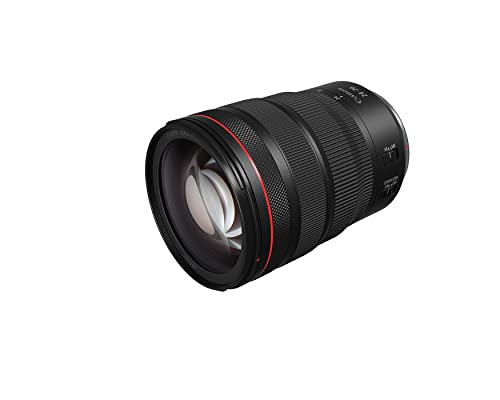

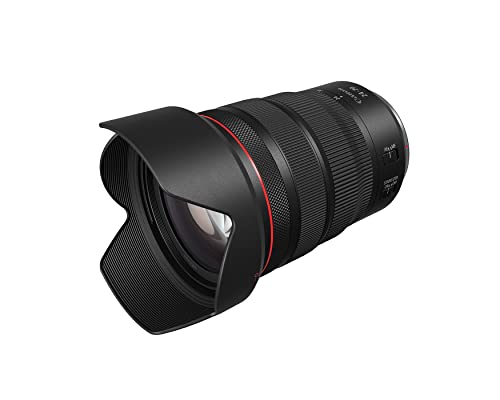
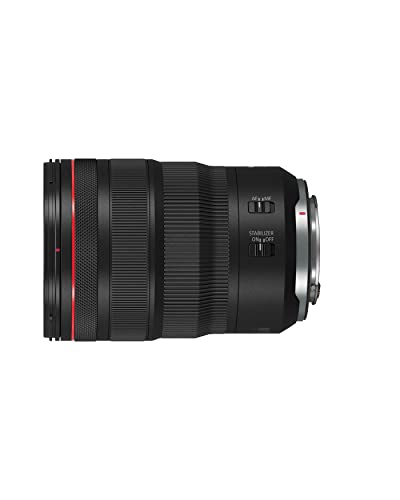

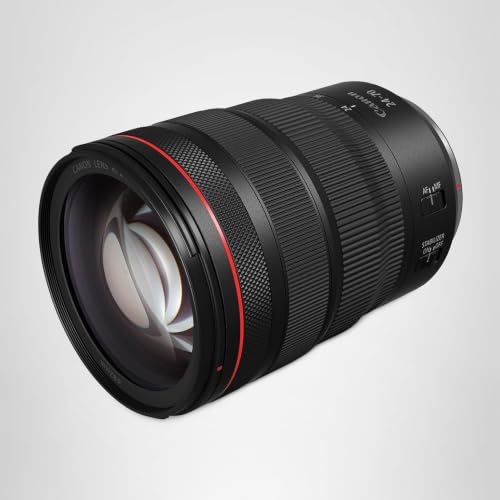
The Canon RF 24-70mm f/2.8L IS USM tops Canon’s standard zoom lineup with prime-rivaling sharpness and excellent contrast across the full zoom range.
- Stabilization: 5-stop optical IS, up to 8 stops combined with IBIS on R5, R6, and R1
- Autofocus: Nano USM – fast, accurate, nearly silent (great for video)
- Control ring: Customizable for aperture, ISO, or exposure compensation
- Build: Magnesium alloy, full weather sealing, fluorine-coated front element
- Size: 900g, 82mm filter thread (shared with other RF L lenses)
Rated 4.8/5 across 636+ reviews, the RF 24-70mm f/2.8L IS USM is the definitive choice for professionals on Canon mirrorless.
Canon RF 28-70mm f/2.8 IS STM
Canon mirrorless shooters who want native RF f/2.8 performance without the L-series price tag
- Native RF mount with f/2.8 constant aperture for just $1,049
- Built-in optical image stabilization (5.5 stops, up to 7.5 with IBIS)
- 0.5x macro magnification – doubles as a close-up lens
- Smallest and lightest RF f/2.8 zoom at just 490g
- Excellent optical quality that punches well above its price class
- 28mm wide end is slightly narrower than traditional 24-70mm range
- STM motor is slower than Nano USM for fast action tracking
- Not weather-sealed like the L-series version
The RF 28-70mm f/2.8 IS STM is the most exciting Canon lens release for standard zoom shooters in years. At $1,049 – roughly half the L-series price – it brings native RF f/2.8 performance to a much wider audience. The added macro capability (0.5x magnification) and incredibly compact 490g weight make it a versatile everyday lens that does more than the premium version in some ways.


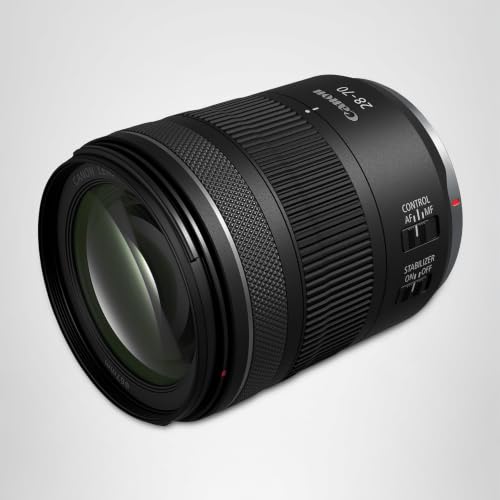
The Canon RF 28-70mm f/2.8 IS STM is the biggest story in 2026 – the first affordable native RF f/2.8 zoom at roughly half the L-series price.
- Macro: 0.5x magnification for product shots and food photography (L-series only does 0.21x)
- Weight: Just 490g – nearly half the L-series, excellent for travel
- Stabilization: 5.5-stop IS, up to 7.5 stops combined with IBIS
- Compatible bodies: R6 III, R8, R50, and all EOS R mirrorless
Tradeoffs: 28mm wide end is 4mm narrower than traditional 24-70mm (noticeable for interiors). STM autofocus is smooth for video but slower than Nano USM for sports. No weather sealing.
Rated 4.7/5 across 161 reviews, the RF 28-70mm f/2.8 IS STM is the best value in Canon’s RF zoom lineup.
Canon EF 24-70mm f/2.8L II USM
Canon shooters with existing EF glass who want the best adapted standard zoom on RF bodies
- Exceptional sharpness – one of the best standard zooms ever made in any mount
- Fast, reliable ring-type USM autofocus
- Full L-series weather sealing and build quality
- Adapts perfectly to RF bodies via Canon EF-RF adapter with zero AF penalty
- Proven track record with over 991 Amazon reviews at 4.6/5 rating
- No optical image stabilization
- Heavier than modern RF alternatives at 805g
- $2,199 is steep when the RF 28-70mm STM offers IS for half the price
The EF 24-70mm f/2.8L II USM has been Canon’s sharpest standard zoom for over a decade. It adapts flawlessly to RF-mount cameras and still delivers optical quality that holds up against modern RF lenses. The main drawback is the lack of IS – a significant omission now that both RF alternatives include stabilization. Best for shooters who already own it or can find it at a discount.


The Canon EF 24-70mm f/2.8L II USM has been a staple in professional Canon kits since its 2012 release – and for good reason. Its optical quality was considered class-leading at launch and still holds up remarkably well against modern RF lenses. Edge-to-edge sharpness is excellent even wide open, with minimal chromatic aberration and distortion that Canon’s in-camera corrections handle easily.
On RF-mount bodies, this lens adapts seamlessly through Canon’s EF-RF adapter with no loss in autofocus speed or accuracy. The ring-type USM motor is fast and decisive, and the adapter adds minimal length and weight. For Canon full-frame mirrorless shooters who already own EF glass, keeping this lens in the kit makes practical sense – especially since it covers the full 24mm to 70mm range (unlike the newer RF 28-70mm STM).
The critical weakness is the lack of optical image stabilization. When this lens launched in 2012, Canon’s standard zooms did not include IS. In 2026, with both RF alternatives offering 5+ stops of stabilization, the absence is felt more acutely – particularly for video shooters and those using bodies without IBIS. Canon discontinued this lens in spring 2026 – Canon USA’s store now lists it as no longer available – so new copies are limited to remaining dealer stock. With the RF 28-70mm f/2.8 IS STM offering IS and macro for roughly half the price, the renewed version below or the used market is now the realistic path for most buyers. The EF 24-70mm f/2.8L II remains an outstanding lens, but new buyers should carefully weigh it against the more modern RF options.
Tamron SP 24-70mm f/2.8 Di VC USD G2
Canon shooters who want stabilized f/2.8 quality at a third-party price point
- Built-in VC (Vibration Compensation) image stabilization
- Excellent price-to-performance ratio at $1,299
- Sharp across the zoom range with pleasing bokeh rendering
- Moisture-resistant construction for outdoor shooting
- Compatible with Tamron TAP-in Console for AF fine-tuning
- EF mount only – requires adapter for RF bodies
- Autofocus can hunt in very low contrast scenes
- Not as sharp in the corners wide open as Canon L-series glass
The Tamron G2 is the best value proposition among new f/2.8 standard zooms for Canon shooters. At $1,299 with built-in VC stabilization, it offers what the Canon EF 24-70mm f/2.8L II cannot – IS at roughly half the price. Optical quality is very good, if not quite at L-series levels in the corners. An excellent adapted lens for RF shooters on a budget.

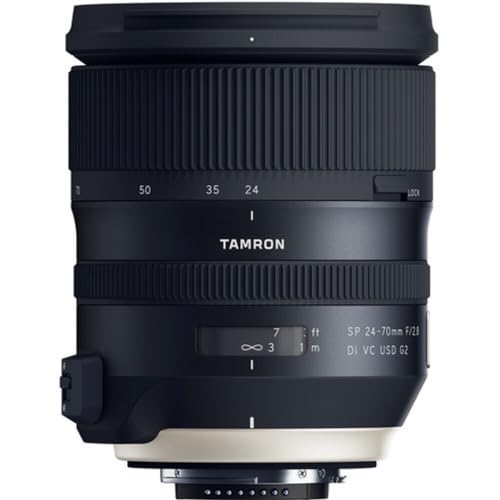
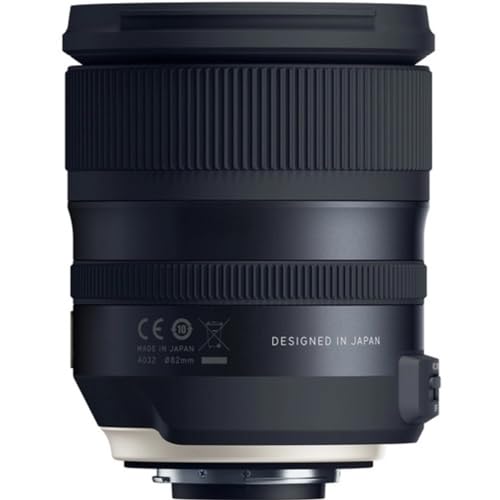
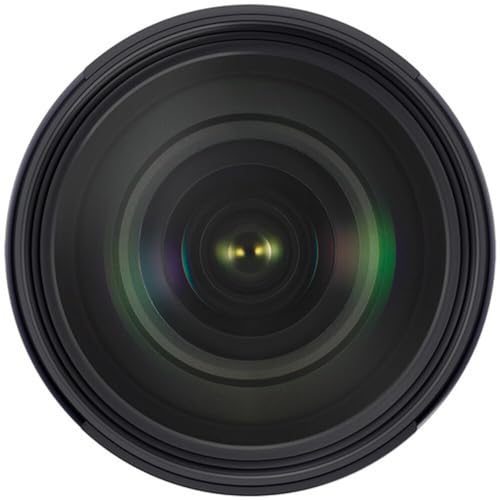
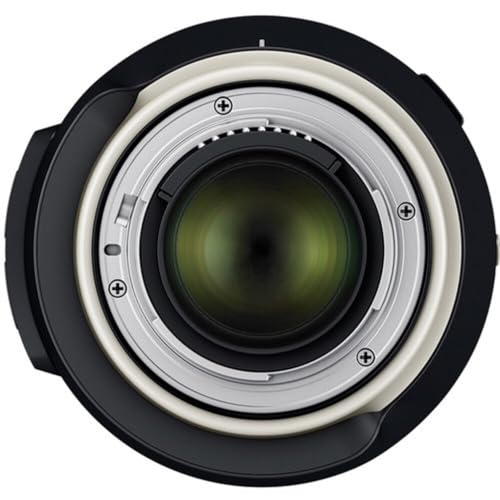


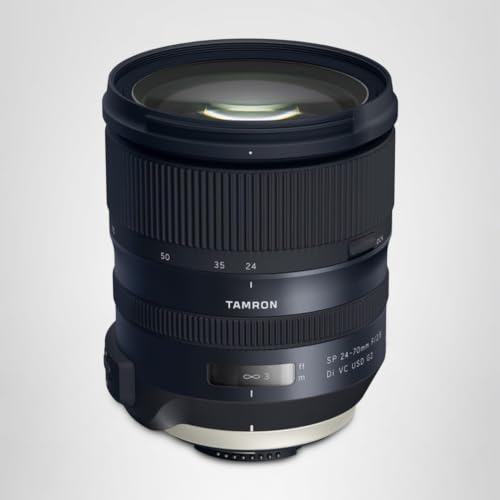
The Tamron SP 24-70mm f/2.8 Di VC USD G2 represents the strongest third-party value in this category. At $1,299, it undercuts Canon’s EF 24-70mm f/2.8L II by $1,250 while adding something Canon’s own EF version lacks: built-in image stabilization. The VC system provides approximately 5 stops of stabilization, making handheld shooting in low light significantly more practical.
Optically, the G2 is very good without being exceptional. Center sharpness is excellent at all focal lengths, and the corners improve nicely when stopped down to f/4. Bokeh rendering is smooth with the rounded 9-blade diaphragm. The lens also features Tamron’s eBAND and BBAR coatings for good flare resistance, and a moisture-resistant build that handles light rain and dust. The TAP-in Console accessory ($49) allows photographers to fine-tune autofocus, adjust VC behavior, and update firmware – a thoughtful addition that Canon does not offer on its EF lenses.
When adapted to Canon RF bodies, the Tamron G2 performs well, though AF speed is slightly behind native RF lenses – particularly for continuous tracking. For sports and fast action, a native RF lens is preferable. But for events, portraits, street, and general photography, the Tamron G2 delivers excellent results at a price that is hard to argue with. Rated 4.5/5 across 278 reviews.
Sigma 24-70mm f/2.8 DG OS HSM Art
Photographers who prioritize optical quality and want Art-series performance with stabilization
- Art-series optics deliver excellent sharpness and contrast
- Built-in OS (Optical Stabilization) for handheld shooting
- Solid build quality with Sigma’s thermally stable composite material
- Compatible with Sigma USB Dock for AF calibration and firmware updates
- Strong 4.5/5 rating across 2,575+ Amazon reviews
- Heavier than competitors at 1,020g
- EF mount only – adds adapter bulk on RF bodies
- $1,329 sits in an awkward price range between Tamron G2 and Canon L
Sigma’s Art-series 24-70mm brings the optical pedigree the Art line is known for – sharp, contrasty images with excellent rendering. The built-in OS and USB Dock compatibility are practical advantages. The main concern is weight: at over 1kg, it is the heaviest lens in this roundup, and the $1,329 price positions it uncomfortably between the cheaper Tamron G2 and the more capable Canon RF options.


The Sigma 24-70mm f/2.8 DG OS HSM Art carries the Art-series reputation for exceptional optical quality into the standard zoom category. Sigma’s Art line has earned widespread respect for rivaling and sometimes surpassing first-party lenses in sharpness, and this zoom delivers on that promise. Center sharpness wide open is excellent, with strong performance maintained across the frame by f/4.
The lens includes Sigma’s OS (Optical Stabilizer) system providing approximately 4 stops of stabilization – useful for handheld work, though not quite as effective as the Tamron G2’s VC or Canon’s RF IS systems. Build quality uses Sigma’s TSC (Thermally Stable Composite) material, which provides a solid feel without excessive weight – though at 1,020g, this is still the heaviest lens in the roundup. The USB Dock accessory allows photographers to fine-tune autofocus, adjust OS speed, and install firmware updates without sending the lens to Sigma.
At $1,329, the Sigma Art sits in a challenging price position. It costs $380 more than the Tamron G2 while offering only marginally better optics, and $230 more than the Canon RF 28-70mm f/2.8 IS STM which is a native RF lens with better IS and macro capability. The Sigma makes the most sense for photographers who already own it, those who want the sharpest possible optics from a third-party zoom, or those shooting on EF bodies without plans to go mirrorless. With 2,575+ reviews at 4.5/5 on Amazon, the Sigma Art has a large, satisfied user base.
Canon EF 24-70mm f/2.8L II USM (Renewed)
Budget-conscious photographers who want L-series quality at a reduced price
- Same L-series optics as the $2,199 new version
- $520 savings over buying new
- Amazon Renewed guarantee with return policy
- Full EF-RF adapter compatibility
- No manufacturer warranty – Amazon Renewed guarantee only
- Potential cosmetic wear or shutter count concerns
- Limited availability – stock varies
This is the same excellent Canon EF 24-70mm f/2.8L II in renewed condition at $1,679 – a $520 discount from new. If cosmetic perfection is not a priority and you want L-series optical quality on a budget, this is a smart path to premium glass. Inspect carefully on arrival and test AF accuracy.


The Canon EF 24-70mm f/2.8L II USM (Renewed) offers the same optical formula and L-series build as the new version at a meaningful discount. At $1,679, you save $520 compared to buying new while getting the same outstanding sharpness, fast USM autofocus, and weather-sealed construction. Amazon’s Renewed program ensures the lens has been inspected and tested, with a return policy if it does not meet expectations.
The practical considerations with renewed lenses apply here: there may be minor cosmetic wear on the barrel or mount, the lens may have accumulated shutter actuations on a previous body, and there is no Canon manufacturer warranty. That said, L-series lenses are built to professional standards and tend to hold up well over time. Most reviewers report receiving units in excellent condition with no AF or optical issues. With a 4/5 rating across 19 reviews, satisfaction is generally high.
This renewed option makes the most sense for photographers who specifically want the EF 24-70mm f/2.8L II – perhaps for its full 24mm wide end or because they already own EF glass and want to consolidate. For those open to alternatives, note that the brand-new Canon RF 28-70mm f/2.8 IS STM costs $580 less, includes IS and macro, and comes with a full warranty – a compelling comparison.
Canon RF 28-70mm f/2L USM
Pros who want prime-level optics and a full stop more light than any f/2.8 zoom, and can carry the weight
- Constant f/2 aperture, a full stop brighter than every f/2.8 zoom here
- Prime-level sharpness across the frame, often compared to carrying a bag of fast primes
- Robust L-series weather sealing and build quality
- Fast, quiet ring-USM autofocus on native RF bodies
- Very heavy at 1,430g and physically large
- No optical image stabilization, relies on in-body IS
- Expensive at around $3,199
- Costly 95mm filters
On pure optics the RF 28-70mm f/2L is arguably the best standard zoom Canon makes, with prime-like image quality and a full stop more light than any f/2.8 rival. It sits mid-pack in this ranking only because its $3,199 price, 1.43kg heft and lack of IS make it a specialist tool rather than an everyday carry. For wedding, event and low-light shooters who need that extra stop, nothing else on this list competes.


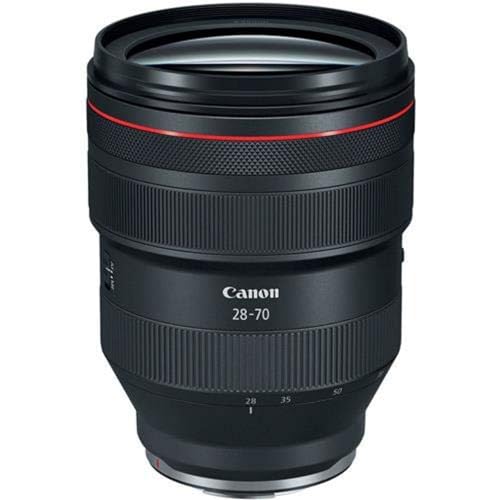


The Canon RF 28-70mm f/2L USM is the lens that rewrote what a standard zoom can do. Its constant f/2 aperture is a full stop brighter than every f/2.8 rival here, which means more light for low-light work and noticeably shallower depth of field. Reviewers routinely describe its image quality as prime-like across the zoom range.
The trade-off is size, weight and price. At 1,430g it is nearly three times the weight of the RF 28-70mm f/2.8 STM, it has no optical image stabilization (you lean on your body’s IBIS instead), and it takes expensive 95mm filters. At around $3,199 it is the most expensive lens on this list by a wide margin. This is a specialist tool, not an everyday carry.
For wedding, event and available-light shooters who can justify the cost and carry the weight, nothing else here competes: the extra stop and the rendering genuinely replace a bag of fast primes. Buyers who choose the RF 28-70mm f/2L know exactly why they need it. If that extra stop will not earn its keep for your work, the Canon RF 28-70mm f/2.8 IS STM delivers most of the everyday usefulness at a fraction of the price and weight.
Sigma 24-70mm f/2.8 DG OS HSM Art (Renewed)
Photographers who want Art-series optical quality with stabilization at a reduced cost
- Art-series optics at a $122 discount from new
- Built-in OS stabilization included
- Amazon Renewed guarantee with return policy
- Same compatibility with Sigma USB Dock
- Small discount compared to new – only $122 savings
- Still the heaviest option at 1,020g
- No manufacturer warranty
The renewed Sigma Art at $1,207 saves $122 over buying new. The discount is modest enough that buying new may be worth it for the full warranty. Best for photographers who are specifically set on the Sigma Art and want any available savings.


The Sigma 24-70mm f/2.8 DG OS HSM Art (Renewed) offers the same Art-series optical quality described above in renewed condition at $1,207 – a $122 savings compared to the new price. You get the excellent sharpness, OS stabilization, and solid build quality that define the Art series, along with Amazon’s Renewed guarantee for peace of mind.
The honest assessment: the $122 discount is relatively small. Unlike the Canon L renewed options which save $500+, the savings here may not justify the trade-off of losing the manufacturer warranty. Note that Sigma has discontinued the EF-mount 24-70mm f/2.8 Art, so new stock is limited to what dealers still have – which makes this renewed option (or the Tamron G2, which remains in production) more relevant than it was at launch. The renewed option makes the most sense if the price drops further or if availability of the new version is limited.
Rated 4/5 across 44 Amazon reviews, buyers generally report good experiences with the renewed Sigma Art. As with all renewed lenses, inspect the optical elements for haze or scratches, test AF accuracy, and verify OS function on arrival. For budget-focused buyers who want stabilized third-party glass, the Tamron G2 at $1,299 new may actually be a smarter buy.
How to Choose the Best 24-70mm f/2.8 Lens for Canon
Lens Comparison Table
24-70mm f/2.8 Lenses for Canon – Side by Side
| Specifications | ||||||||
|---|---|---|---|---|---|---|---|---|
| Mount | RF | RF | EF | EF | EF | EF | RF | EF |
| Focal Range | 24-70mm | 28-70mm | 24-70mm | 24-70mm | 24-70mm | 24-70mm | 28-70mm | 24-70mm |
| Image Stabilization | 5 stops | 5.5 stops | No | Yes (VC) | Yes (OS) | No | No (IBIS) | Yes (OS) |
| Weight | 900g | 490g | 805g | 905g | 1,020g | 805g | 1,430g | 1,020g |
| Filter Size | 82mm | 67mm | 82mm | 82mm | 82mm | 82mm | 95mm | 82mm |
| Weather Sealed | Yes | No | Yes | Moisture-resistant | Dust/splash | Yes | Yes | Dust/splash |
| Score | 94/100 | 90/100 | 87/100 | 83/100 | 80/100 | 76/100 | 83/100 | 72/100 |


Can You Use Sigma or Tamron Lenses on Canon RF in 2026?
This is the question most buyers ask, and the answer still surprises people. Canon began licensing its RF mount to Sigma and Tamron in 2024, but only for APS-C (crop-sensor) lenses. In 2026 you can buy native RF-mount zooms like the Sigma 18-50mm f/2.8 DC DN and the Tamron 17-70mm f/2.8 Di III-A, yet both are built for Canon crop bodies, not full-frame. No third-party maker currently sells a native RF full-frame 24-70mm or 28-70mm f/2.8 standard zoom.
So if you shoot a full-frame Canon (R5, R6, R8, RP or similar) and want third-party glass at this focal range, the only route is an EF-mount Sigma or Tamron adapted with Canon’s EF-RF adapter. That pairing works well for stills, with autofocus nearly as fast as native, and it is exactly why the Tamron G2 and Sigma Art still earn their place on this list. It does add a little length and weight, and continuous autofocus for video can lag slightly behind a native RF lens.
Which 24-70mm f/2.8 Lens Should You Get?
Final Recommendations
Canon RF 24-70mm f/2.8L IS USM
Canon RF 28-70mm f/2.8 IS STM
Tamron SP 24-70mm f/2.8 Di VC USD G2
Sigma 24-70mm f/2.8 DG OS HSM Art (Renewed)
For most Canon mirrorless shooters in 2026, the decision comes down to two lenses: the Canon RF 24-70mm f/2.8L IS USM for those who want the best, and the Canon RF 28-70mm f/2.8 IS STM for those who want exceptional value. The RF 28-70mm’s arrival has fundamentally changed this category – making native RF f/2.8 performance accessible at a price point that previously only bought adapted EF glass.
Photographers with existing EF lens collections should consider the Tamron G2 for its stabilization and value, or the Canon EF 24-70mm f/2.8L II for the absolute sharpest EF option. And for video-focused Canon shooters, the RF lenses with built-in IS are strongly recommended over any unstabilized EF option. Whatever your budget, there is a quality f/2.8 standard zoom on this list that fits.
Specs and pricing verified against manufacturer pages and live Amazon listings at the time of this update.


Disclosure/Disclaimer: As an Amazon Associate, we earn from qualifying purchases. Certain content was provided "as is" from Amazon and is subject to change or removal at any time. Product prices and availability: Amazon prices are updated daily or are accurate as of the date/time indicated and are subject to change. Any price and availability information displayed on Amazon.com at the time of purchase will apply to the purchase of this product.