


- “Dreams of Violets,” a 75-minute docudrama generated entirely with AI tools, gets its world premiere at the Tribeca Film Festival on June 10, 2026 — billed as the first AI-generated live-action feature to premiere there.
- It was made by first-time-filmmaker brothers Ash and Pooya Koosha — with no crew, no actors and no camera — dramatizing decades of Iranian civilian resistance Ash couldn’t film on location.
- The real story for visual creators isn’t the film itself; it’s that a top-tier festival programmed an all-AI feature, moving AI visual tools from hobbyist novelty to festival-legitimate medium.
- For photographers eyeing video or documentary work, it reframes a practical question: which AI tools are usable now, and where does “no camera” stop being viable? (Hint: it’s a new genre, not a replacement for photojournalism.)
A feature-length film just earned a slot at one of the world’s most prestigious festivals — and not a single frame of it was captured with a camera. Dreams of Violets, a 75-minute docudrama generated entirely with AI tools, premieres at the Tribeca Film Festival on June 10, 2026, reportedly the first AI-generated live-action feature to do so.
It’s easy to file that under “AI hype,” but for anyone who makes images for a living, the festival selection is the signal worth reading. We’ve covered AI’s collision with photography from copyright to competition controversies; this is the same shift arriving in motion. Here’s what the film actually is, why the Tribeca nod matters, and the practical question it raises for photographers moving into video.
What “Dreams of Violets” Actually Is
Per synopses from the producers, the film opens on “Tehran, January 2026” and dramatizes events drawn from roughly 47 years of Iranian civilian resistance, following five strangers through a single fictionalized account inspired by real reports of a massacre. It’s the work of brothers Ash and Pooya Koosha — tech entrepreneurs and first-time filmmakers. Ash, who is from Tehran but lives in Los Angeles, has said he started building the film after reading about the killings, but had no access to a crew, actors, or Iran itself.
So he built it with AI. Koosha frames the result less as “a movie shot by a robot” and more as a distinct storytelling genre — closer to animation than to live-action cinema, where the entire image is authored rather than recorded. That framing matters, and we’ll come back to it.
Why a Festival Selection Is the Real Story
AI imagery has spent two years getting rejected from serious arenas. A generated photo was pulled from the Hasselblad Masters shortlist; the wider industry has been busy building provenance and authenticity tooling precisely to keep synthetic and captured media separate. Against that backdrop, a festival of Tribeca’s stature accepting an all-AI feature is a genuine inflection point: it treats AI not as a thing to detect and disqualify, but as a legitimate medium with its own creative merit.
That doesn’t settle the ethics — a synthetic dramatization of real, recent atrocities raises hard questions about representation and truth, and not everyone will be comfortable with it. But “legitimized at the top of the industry” and “ethically settled” are different statements. The first is now true; the second is still being argued.
What It Means for Photographers Eyeing Video and Documentary
Here’s the part that’s actually actionable. If a first-time filmmaker can assemble a 75-minute feature with no production crew, the barrier between “I take stills” and “I make moving-image stories” just got dramatically lower — and the skills that transfer are exactly the ones photographers already own. Composition, light, pacing, sequencing, and a point of view are what separate a watchable AI film from slop. The model generates frames; you still have to direct them.
The honest caveat: this is a new lane, not a replacement for a camera. AI generation is powerful for stylized, interpretive, or impossible-to-shoot subjects — the kind of work Koosha did because he physically couldn’t film in Iran. It is not a substitute for photojournalism or any work whose value is that it really happened. If your documentary’s worth is its authenticity, “no camera” isn’t viable — and provenance standards like C2PA exist to keep that line visible.
The “No Camera” Toolkit — and Where It Stops
So where does “no camera” actually become workable today? The current visual-storytelling stack is roughly: text-to-video models (Runway, OpenAI’s Sora, Google’s Veo, Kuaishou’s Kling) for motion; image generators (Midjourney, gpt-image) for stills and keyframes; and AI features now baked into the editors photographers already use — from Topaz’s video and photo models to the Adobe tools you can now drive from a chat window. Stitching them into a coherent 75 minutes is the hard, human part.
It works now for the interpretive and the unfilmable. It breaks down the moment the story’s value depends on a real lens pointed at a real moment — and audiences are getting better, if imperfectly, at telling the difference. The takeaway for photographers isn’t “put the camera down.” It’s that there’s a new, festival-validated genre sitting next to your existing craft — and the people who understand image-making are best positioned to use it well.
Frequently Asked Questions
Is “Dreams of Violets” really 100% AI, with no camera?
It was generated entirely with AI tools — no crew, actors, or on-location footage, according to its makers. Director Ash Koosha describes it as an authored medium closer to animation than recorded live-action.
When and where does it premiere?
It’s programmed for its world premiere at the Tribeca Film Festival in New York on June 10, 2026 — reported as the first AI-generated live-action feature to premiere at the festival.
Does an AI film count as photography or filmmaking?
Neither in the traditional sense. There’s no captured frame, so it isn’t photography or cinematography as we’ve defined them — it’s a generated, authored medium. That’s exactly why provenance standards label synthetic media separately from captured media.
Should photographers learn AI video tools?
If you’re interested in moving-image or documentary work, they’re worth understanding — your eye for composition and story is the scarce skill. Treat them as a new genre for interpretive work, not a replacement for honest, camera-captured reporting.
A camera-free feature reaching Tribeca won’t end the debate over AI and truth — if anything it sharpens it. But for visual storytellers, the signal is clear: AI image-making just crossed from the margins into a recognized medium, and the photographers who bring real craft to it will define what it’s good for.
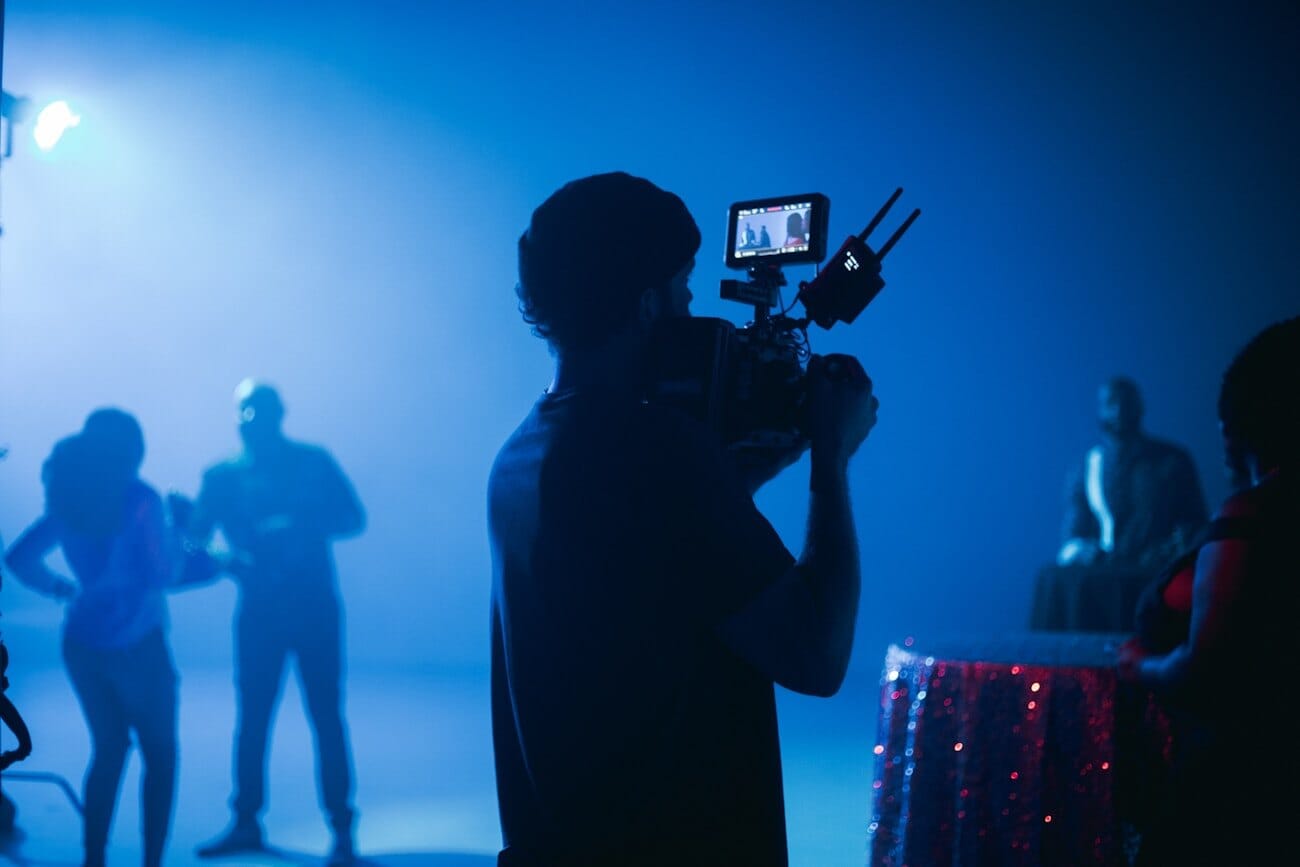
Images are illustrative and were not taken from the film. Featured photo: Jakob Owens via SampleShots.
Coverage
- Variety — Tribeca Festival accepts fully AI-generated film – Festival selection and director statement.
- The Hollywood Reporter — AI feature to premiere at Tribeca – Producer synopsis and premise.
- Deadline — AI-generated drama to premiere at Tribeca – Filmmakers Ash and Pooya Koosha; subject.
- CBC — AI-generated film about Iranian resistance – Koosha on AI as a storytelling genre.