


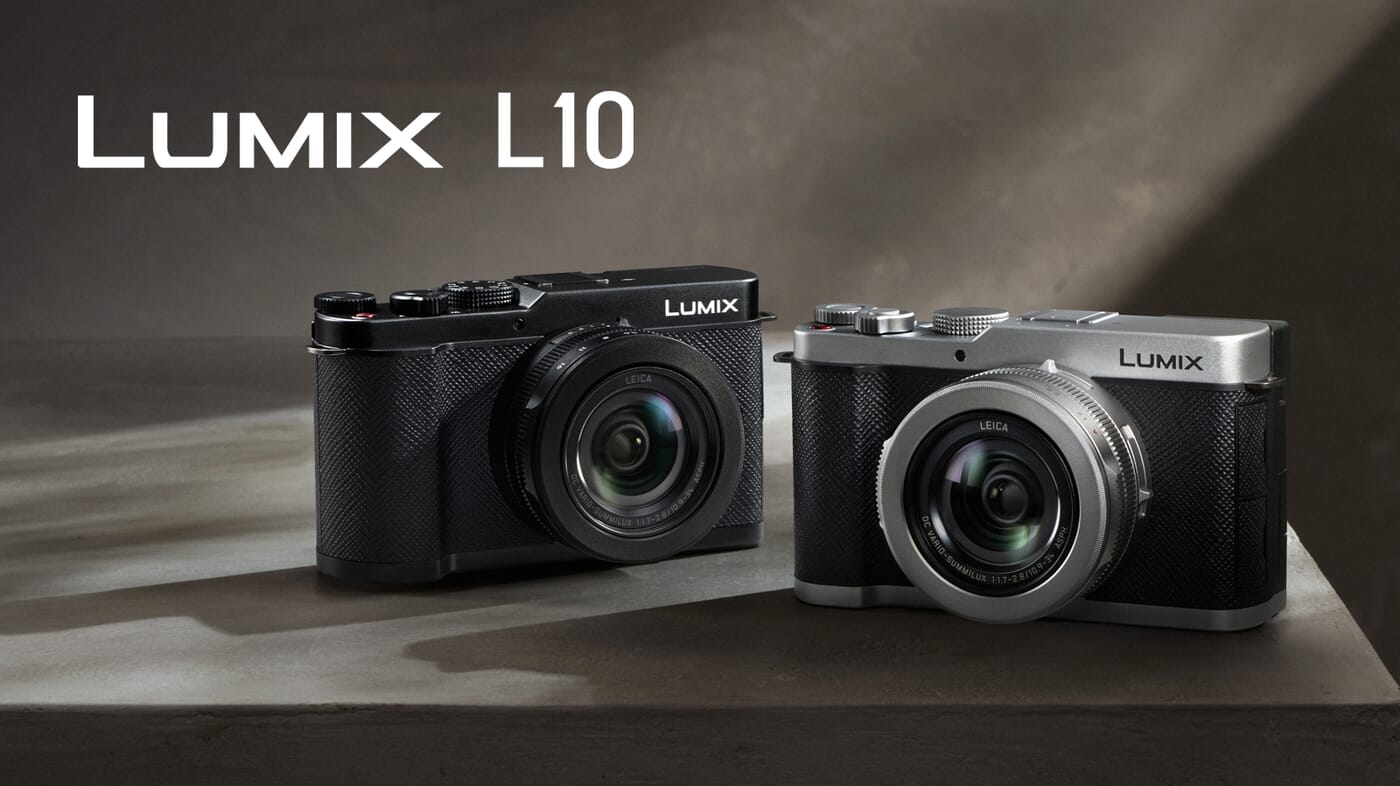
- Panasonic launched the LUMIX L10 on May 12, 2026 — the long-overdue successor to the LX100 II from 2018. First major Panasonic enthusiast compact in 8 years, releasing for the brand’s 25th anniversary.
- Same Leica DC Vario-Summilux 24-75mm f/1.7-2.8 zoom lens as the LX100 II, paired with a brand-new 26.5MP BSI Four Thirds sensor (20.4MP effective due to multi-aspect cropping) — the same sensor as the Lumix GH7.
- 779-point hybrid phase-detect AF, 30fps electronic shutter, OLED EVF, fully articulated LCD (vs the LX100 II’s fixed screen), magnesium-alloy body with saffiano leather texture. Pricing: $1,499 standard (June), $1,599 Titanium Gold limited edition (July, Panasonic-direct only).
- Direct competitor framing: Fujifilm X100VI is a fixed 35mm f/2 prime; the L10 offers zoom flexibility (24-75mm equivalent) plus an articulated screen. For street shooters who want one-camera versatility instead of one-focal-length commitment, the L10 is the X100VI alternative that didn’t exist last week.
Update (June 2026): The LUMIX L10 Is Now in Stock in the US
The wait is over. After the May launch, the LUMIX L10 is now shipping in the US at its $1,499 launch price. It’s confirmed in stock at B&H Photo and Amazon (also listed at Adorama). The Titanium Gold limited edition ($1,599) remains a Panasonic-direct exclusive arriving later in the summer. If you’ve been holding out for the LX100 successor, this is your green light — early stock on Panasonic’s anniversary compacts tends to move fast.
Panasonic announced the LUMIX L10 on May 12, 2026 — and after eight years without a successor, the LX100 lineage finally has a worthy modern entry. The L10 shipped in black or silver in June 2026 at $1,499 and is in stock in the US; a Titanium Gold limited edition follows this summer at $1,599, sold direct from Panasonic only. The launch coincides with Panasonic’s 25th anniversary of the Lumix camera brand.
The LX100 II from 2018 was an excellent enthusiast compact when it launched — and then sat unloved for nearly a decade as Panasonic ignored the category. In that time, the Fujifilm X100VI sold out globally, the Leica D-Lux 8 (which uses the LX100 II’s now-aging 17MP sensor and lens) became the de facto premium-compact benchmark, and a generation of street photographers wondered if the dedicated enthusiast compact category was effectively dead. Today’s L10 launch puts that question to bed.
What’s New vs the LX100 II
The L10 keeps two things from the LX100 II: the Leica DC Vario-Summilux 24-75mm equivalent f/1.7-2.8 zoom, and the multi-aspect dial on the lens that lets you switch between 3:2, 4:3, and 16:9 in-camera. Everything else is rebuilt from scratch.
- Sensor: brand-new 26.5MP BSI Four Thirds CMOS (20.4MP effective due to multi-aspect cropping) — the same sensor as the Lumix GH7, vs the LX100 II’s 17MP sensor that dated back to 2014
- Autofocus: 779-point hybrid phase-detect AF — vs the LX100 II’s 49-point contrast-detect (the single biggest functional upgrade)
- Subject recognition: tracking for eyes, faces, bodies, animals, vehicles, and dynamic urban-sports scenes (carried over from S1RII / GH7 firmware)
- Burst: 30fps electronic shutter, 11fps mechanical (vs LX100 II 11fps)
- Stabilization: Power OIS (the same lens-based system, retuned for the new sensor)
- Viewfinder: OLED EVF (vs the LX100 II’s now-dated non-OLED viewfinder)
- Screen: fully articulated LCD (vs the LX100 II’s fixed rear screen — a massive ergonomic upgrade for street work where you shoot from hip level or overhead)
- Photo Styles: two new ones — L.Classic and L.ClassicGold (the Gold one is featured prominently in the limited edition)
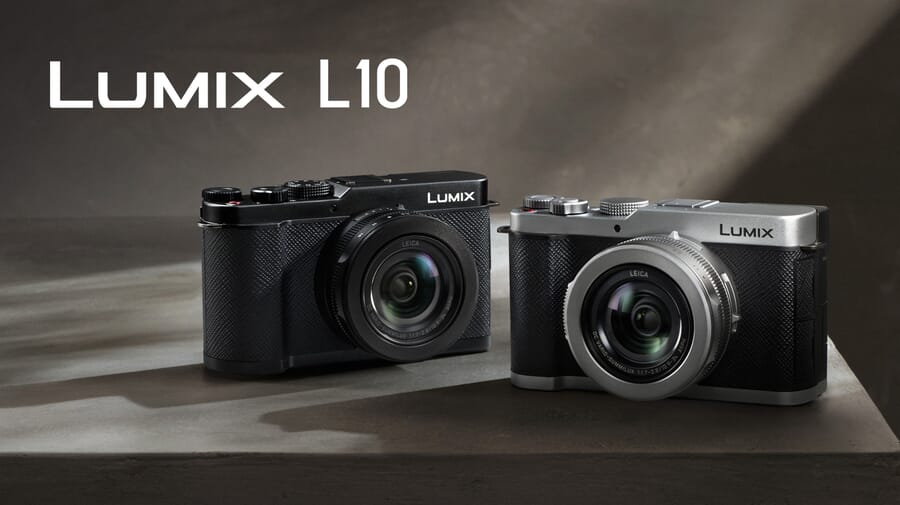
- Body: magnesium-alloy front case + saffiano-leather-textured exterior, in black, silver, or limited Titanium Gold
Video Capabilities
The L10 isn’t a video-first camera the way the GH7 or the new Canon R6 V is, but it inherits the GH7’s video pipeline at consumer-tier specs. The headline number is 5.6K video capture (cropped from the 26.5MP sensor area), with 4K available at standard frame rates. Dynamic Range Boost is enabled — the dual-conversion-gain technology from the higher-end Lumix bodies.
For street photographers and travel shooters who occasionally shoot video as a secondary, this is more than adequate. For dedicated video work, the Lumix GH7 or S1H bodies remain the right choice. The L10 is a stills-first body with capable video, not a hybrid in the modern sense.
The X100VI Comparison That Defines the Buyer Decision
Every reviewer covering the L10 launch — Amateur Photographer, PetaPixel, DPReview, Notebookcheck — has framed it against the Fujifilm X100VI. That framing is correct, and the buyer decision comes down to one structural question: do you want a zoom lens or a fixed prime?
The Fujifilm X100VI commits to a fixed 35mm-equivalent f/2 lens. That commitment is the X100 line’s defining trait — it forces a specific compositional discipline (you zoom with your feet) and gives the camera a recognizable visual signature. The trade-off: when you need a wider environmental shot or a tighter portrait crop, the X100VI can’t give it to you.
The L10 commits to a 24-75mm-equivalent f/1.7-2.8 zoom. That covers wide environmental work (24mm), the canonical street focal length (35mm), and short-telephoto portrait compression (75mm) — without changing cameras. The trade-off: you give up the focal-length discipline that some shooters consider the X100’s defining feature, and you’re paying for a more complex lens system.
Two further structural differences matter:
- Sensor size: X100VI uses an APS-C sensor (1.5x crop); L10 uses Four Thirds (2x crop). At equivalent apertures, the X100VI delivers shallower depth of field and slightly better high-ISO. For low-light street work and portrait separation, the X100VI wins.
- Articulated screen: L10 has a fully-articulated LCD; X100VI has a tilt screen (much more limited). For overhead, hip-level, and selfie-angle work, the L10 wins.
Most street shooters considering both will land on personal aesthetic — the X100VI looks and feels like a 1970s rangefinder; the L10 looks like a modern enthusiast compact. Neither is wrong; they’re different products solving slightly different versions of the same buyer brief.
Pricing, Availability, and Pre-Order
- Standard L10 (black or silver): $1,499 (£1,299), shipping since June 2026, in stock in the US
- L10 Titanium Gold Limited Edition: $1,599 (£1,399), sold only direct from Panasonic this summer
- Availability: in stock at B&H Photo and Amazon, and Panasonic direct (Adorama expected September 2026)
The Titanium Gold edition adds a few things beyond the color: a special lens hood, a leather strap, a threaded shutter button (for cable releases), and a gold-themed menu system. For collectors and 25th-anniversary commemorative buyers, the $100 premium is the obvious move. For working photographers planning to actually use the camera daily, the standard black or silver is the right pick.
Worth noting: at $1,499, the L10 is more expensive than Panasonic’s own Lumix S9 full-frame body with kit lens ($1,399 at Amazon). That’s the full-frame trade-off in reverse — paying more for a smaller-sensor camera because of the lens-and-form-factor packaging. For shooters who already own a full-frame system and want a true pocket-friendly second body, that’s a feature, not a bug.
Bottom Line
The Panasonic LUMIX L10 is the LX100 successor enthusiast compact buyers stopped expecting. Same beloved Leica zoom, modernized sensor and AF system, fully articulated screen, OLED EVF, and the Lumix GH7’s processing pipeline at a $1,499 price point. For street photographers, travel shooters, and anyone who wants a serious compact second body, this is the most credible new entry in the category since the X100VI.
The X100VI comparison is the buyer-decision framework: zoom flexibility (L10) vs focal-length discipline (X100VI), articulated screen (L10) vs rangefinder aesthetic (X100VI), Four Thirds sensor (L10) vs APS-C (X100VI). Neither is the universally correct choice — but for a meaningful slice of street and travel shooters, the L10 is the X100 alternative that didn’t exist a week ago.
Manufacturer
- Panasonic Newsroom Japan — LUMIX DC-L10 Press Release (May 13) – Panasonic's official launch press release with full specs, pricing, availability, and product photography.
Primary Coverage
- DPReview — Is this the enthusiast compact we have been waiting for? – DPReview's launch coverage with the modernization framing vs the LX100 II.
- Amateur Photographer — Panasonic Lumix L10 arrives – Best framing of the X100VI competition angle — UK pricing and the Titanium Gold edition details.
- PetaPixel — The Lumix L10 is a New Fixed-Lens Compact in the Spirit of the LX100 – PetaPixel's launch hands-on with the 779-point AF system and Photo Style details.
- Notebookcheck — Lumix L10 takes on Leica D-Lux 8 – Comparison framing vs the Leica D-Lux 8, which uses the now-aging LX100 II sensor.
Image Sources
- Panasonic Press Kit — LUMIX L10 product photography – Featured + lead image is Panasonic's official LUMIX L10 launch press image, distributed via Panasonic Newsroom Japan. Image credit: Panasonic.