


- The Sony E PZ 16-50mm f/3.5-5.6 OSS is the classic Sony APS-C kit lens — compact, light, fast to focus, optically unremarkable. It now ships on camera kits as the older option next to its successor.
- Pricing in April 2026: original OSS is being cleared at $125–$200 on Amazon; the newer OSS II (launched July 2024 with the ZV-E10 II) sells standalone at $348.
- OSS II upgrade story: faster AF motor, AF during zoom, video-optimized stabilization, updated optics. Meaningful upgrade for video shooters; marginal for stills-only.
- If you inherit the original OSS with a used camera kit — keep it. It’s worth the zero-dollar price. Paying even $150 new today makes less sense than buying the ZV-E10 II kit ($1,099, OSS II included) or a proper prime.
- For APS-C zoom range beyond kit, the 2025 Sigma 16-300mm DC OS Contemporary ($694) is now the default step-up — covers 24–450mm equivalent, modern AF, weather sealed.
When you buy through links on our site, we may earn a commission at no cost to you. We evaluate products independently. Commissions do not affect our evaluations.
Introduction
The Sony E PZ 16-50mm f/3.5-5.6 OSS is the classic Sony APS-C kit lens — the one that’s shipped on every a5000-, a6000-, and ZV-E10-series camera since 2013. In April 2026 its position in the lineup changed: Sony quietly launched the 16-50mm OSS II as the kit lens for the ZV-E10 II, and the original now shows up mostly as old-stock discounts ($125–$200 on Amazon) or inherited in used-camera bundles.
This review covers the original OSS — how it actually performs, where it excels, where it falls apart — and a direct OSS vs OSS II comparison so readers landing here via used-camera kit inheritance or leftover-stock deals can make the right call. Updated April 2026 with current pricing, the OSS II feature delta, and the Sigma 16-300mm DC OS Contemporary as the modern APS-C alternative most readers actually want.
Sony 16-50mm f/3.5-5.6 OSS: Overview
The Sony 16-50mm f/3.5-5.6 is a kit lens, which means that it generally comes bundled with a camera.
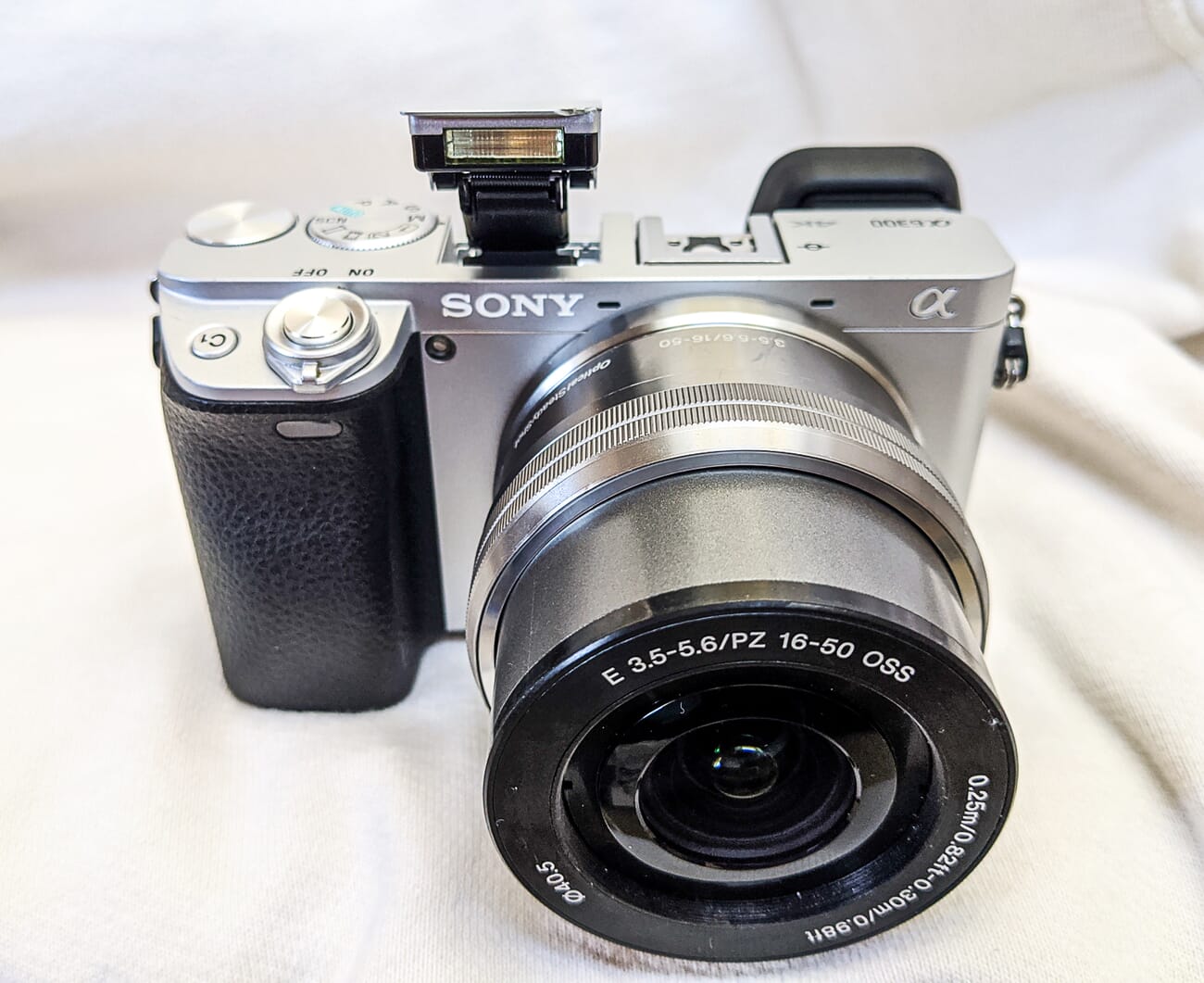
In this case, we’re talking about Sony APS-C cameras, such as the Sony a6400.
Kit lenses are designed to be fairly cheap, which means compromises–in terms of build quality and image quality.
They’re not meant to stun you with incredible images straight out of the box. Instead, kit lenses are designed to get beginners and hobbyists shooting right away so you don’t have to go hunting for an interchangeable lens as soon as you buy your first mirrorless body.
That said, it is possible to buy kit lenses separately. You can grab the 16-50mm f/3.5-5.6 for under $150 on Amazon–in what seems to be a steal, given how expensive Sony’s other lenses cost.
But it’s not worth buying a cheap kit lens if that kit lens can’t perform optically.
The review covers several key aspects of the Sony 16-50mm f/3.5-5.6.
I’ll discuss its focal length, which is pretty typical for a kit lens, and allows you to shoot wide to standard subjects.
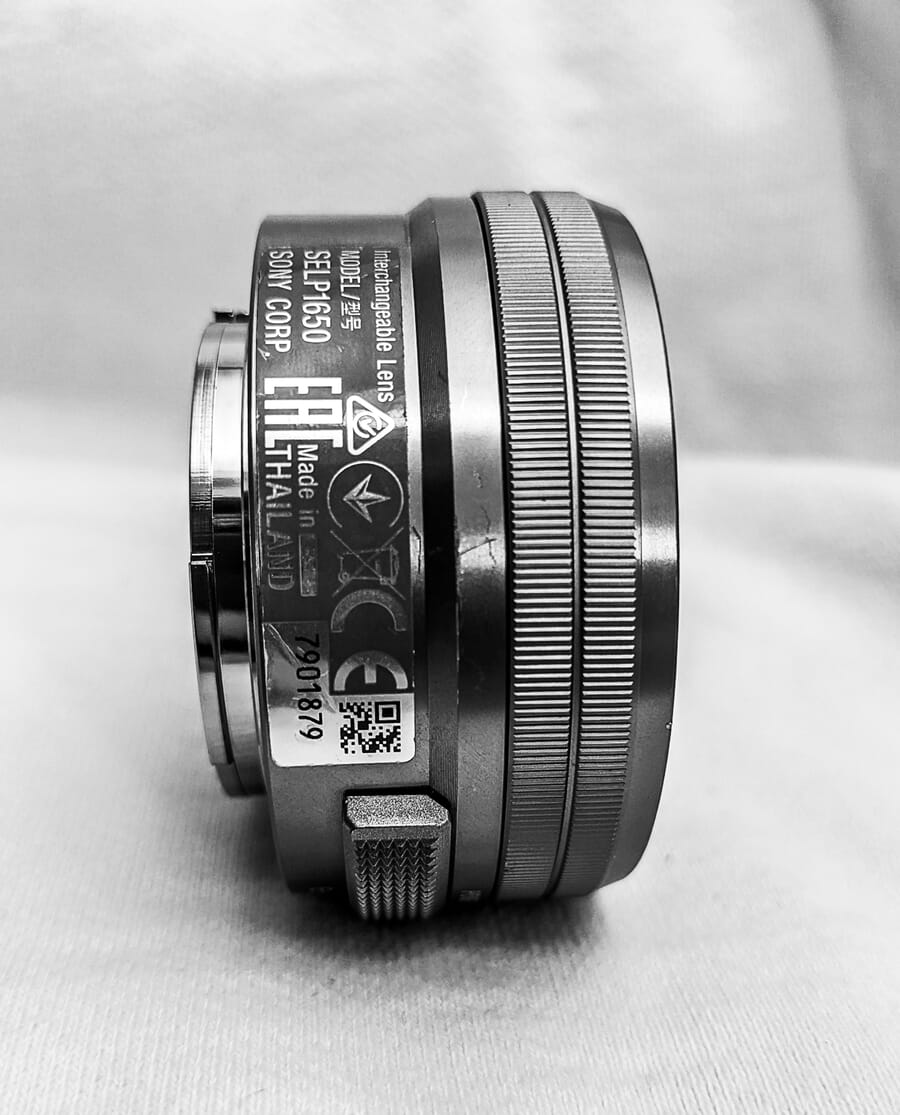
I’ll discuss its build quality, which is below average. After only a few minutes with this lens, it was clear that I couldn’t just toss it around and expect it to hold up. If you want to use the Sony 16-50mm f/3.5-5.6, then you need to take care of it.
I’ll discuss its autofocus capabilities, which are surprisingly good for such a cheap lens. When combined with Sony’s generally impressive autofocus algorithms, you can easily use this lens for action photography or fast street shooting.
And I’ll discuss its image quality, which is the make or break feature for a lot of photographers. Unfortunately, I’ll tell you right now that the Sony 16-50mm f/3.5-5.6 just doesn’t perform well in terms of sharpness. It’s noticeably soft when zoomed out to 16mm, and it only improves marginally when zoomed in.
This is obviously a problem, but I don’t think it’s disqualifying. No, you won’t want to use it for landscape photography, where every little detail matters. But for portrait photography, street photography, and walkaround photography, sharpness is less important than you might think.
So, if you’re still interested in this neat little lens, then let’s dive right in.

OSS vs OSS II: Should You Upgrade?
Sony shipped the E PZ 16-50mm f/3.5-5.6 OSS II in July 2024 as the kit lens for the ZV-E10 II — not a redesign, but a targeted refresh aimed at content creators. For anyone deciding between the two (or inheriting the original via a used-camera kit and weighing an upgrade), here’s the delta that actually matters.
| Feature | Original OSS (2013) | OSS II (2024) |
|---|---|---|
| Focal range | 16-50mm (24-75mm equiv.) | 16-50mm (24-75mm equiv.) |
| Max aperture | f/3.5-5.6 | f/3.5-5.6 |
| Stabilization | Optical SteadyShot (stills-focused) | OSS optimized for video (reduced breathing) |
| Autofocus motor | Older stepping motor | Linear motor, AF during zoom |
| Optical design | Original 2013 formula | Refreshed elements for edge sharpness |
| Weight | 116 g | 107 g |
| Weather sealing | None | None |
| Standalone price (April 2026) | $125-$200 (clearing old stock) | $348 new |
| Kit bundle | a6000-series legacy, ZV-E10 (original) | ZV-E10 II kit |
Should you upgrade from OSS to OSS II?
- You’re primarily a video shooter — yes. The AF-during-zoom and reduced focus breathing are real upgrades for vlog-style work. Worth the $200 premium over the old lens.
- You’re primarily a stills shooter — no. The optical refresh is marginal; the Mark II’s sharpness curve still tops out at “adequate.” At $348 you’re paying for a kit lens that won’t replace a real prime.
- You already own the original OSS and it works — no. Keep the original. Spend the $348 on the Sony E 35mm f/1.8 OSS or a Sigma prime that’ll actually change your output.
- You’re buying a new body — get the ZV-E10 II kit. The OSS II adds roughly $101 over body-only, which is less than the standalone price. Kit bundle is the right answer.
What if you inherit the original OSS with a used camera?
Keep it. A free kit lens is always worth what it costs (nothing). Shoot it for a few months, get a feel for which focal lengths you actually use, and then invest in a sharp prime that matches your actual style — the Sony E 35mm f/1.8 OSS for everyday, the Sigma 30mm f/1.4 DC DN for portraits, or the Sigma 16-300mm DC OS Contemporary if you need real zoom range. The 16-50mm OSS is the training lens, not the endpoint.
Quick reference: both lenses at a glance
Sony SELP1650 16-50mm OSS Lens: Sony E PZ 16-50mm f/3.5-5.6 OSS Lens (Black)
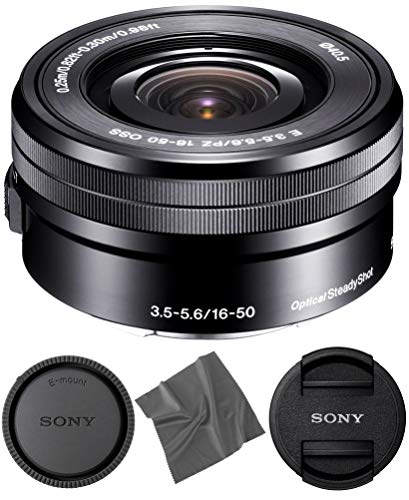
APS-C Sony shooters who inherited this lens with a used camera kit, or budget buyers who want a compact walkaround zoom under $200 and can accept soft images.
- Ultra-compact retractable design — at 107g it disappears on the camera, rare for a 16-50mm zoom
- Fast autofocus that holds up against moving subjects in good light — the standout feature
- Covers wide-to-short-telephoto range (24–75mm equiv.) useful for travel, street, and walkaround shooting
- Optical SteadyShot stabilization helps handheld shooting in lower light
- Currently discounted to $199.96 — well below its original $299 MSRP
- Soft at every focal length, worst at 16mm — dealbreaker for landscape, architecture, or product photography
- Noticeable distortion at the wide end and heavy vignetting around the frame edges
- Plastic construction with no weather sealing — can’t take rain, snow, or rough handling
- f/3.5–5.6 variable aperture limits low-light performance and shallow depth of field
- Superseded by the OSS II (2024) — old-stock purchase in 2026 feels like paying for a discontinued design
The original OSS is now old stock in 2026 and shows it. Strong points: 107g body, retractable design, fast AF, and a 24–75mm equivalent range in one tiny package. Weak points: soft at every focal length (worst at 16mm), plasticky build, no weather sealing, f/3.5–5.6 variable aperture struggles in dim light. At $199.96 it costs roughly the same as a sharper Sony 50mm f/1.8 OSS prime — making the 16-50mm hard to recommend as a new purchase. Inherit it via a used camera kit? Keep it. Buying new standalone? Get the OSS II in the ZV-E10 II kit, or skip to a prime.
Sony E PZ 16–50 mm F3.5–5.6 OSS II

Content creators, vloggers, and video-first shooters pairing a ZV-E10 II (or any modern Sony APS-C body) with a compact zoom that handles stills and video equally well.
- New linear-motor AF — faster, quieter, works smoothly during zoom (the original could hunt mid-zoom)
- Video-optimized stabilization with reduced focus breathing — genuinely noticeable in vlog footage
- Refreshed optics deliver improved edge sharpness vs the original (though still not prime-sharp)
- Slightly lighter than the original (107g vs 116g) — negligible but always welcome
- Kit-bundled with the ZV-E10 II for ~$100 premium over body-only — kit route is the value play
- Same f/3.5–5.6 variable aperture as the original — low-light and shallow DOF still compromised
- Still no weather sealing — kit-lens build quality hasn’t changed
- $348 standalone is expensive for a kit lens; the ZV-E10 II kit bundle is the right purchase path
- Stills-only shooters won’t notice most of the upgrades — the improvements target video workflow
- Same 16–50mm range as before — if you want more reach, a Sigma 16-300mm DC OS Contemporary ($694) is the modern answer
The OSS II is a targeted refresh of the 2013 original — not a redesign. Sony improved the things that matter for 2026 creators: linear-motor AF that keeps focus during zooming, video-optimized stabilization with reduced focus breathing, and refreshed optics. Same 16–50mm range and f/3.5–5.6 aperture. At $348 standalone it’s $150+ more than the original OSS; the better play is the ZV-E10 II kit at $1,099 (only ~$100 over the body-only price). For stills-only shooters, the optical upgrade is modest and a sharp prime probably serves better at the same budget.
Sony 16-50mm f/3.5-5.6 OSS: Focal Length
The Sony 16-50mm f/3.5-5.6 features a fairly normal kit lens focal length–albeit with a little extra at the wide end and a little less at the long end.
Note that most photographers using this lens will be working with a crop-sensor camera. This means that your field of view will narrow on this lens, giving you a 24mm to 75mm focal length equivalent.
(If you’re shooting on a full-frame camera, such as one of the Sony a7 options, you won’t be able to utilize the full sensor; I don’t recommend this.)
The 16-50mm focal length is genuinely versatile. It gives you a lot of bang for your buck, so to speak, stretching from decently wide to short telephoto (with a nice medium-wide series of focal lengths in between).
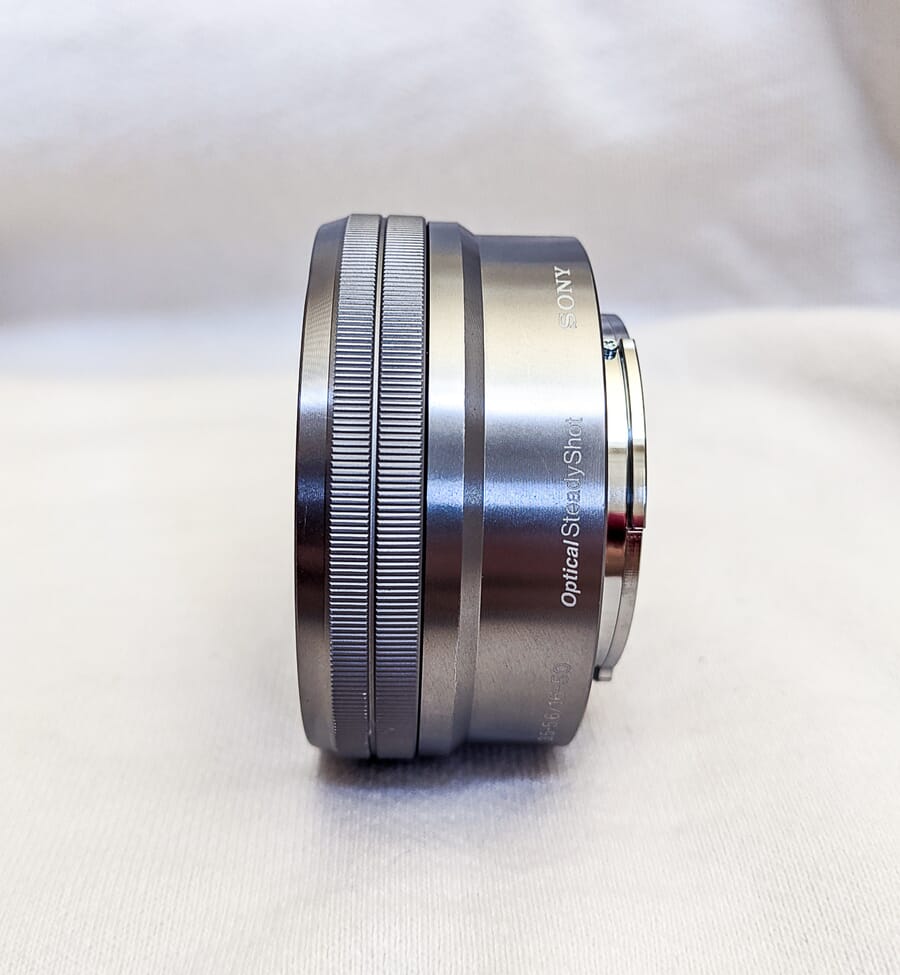
At the wide end, you can shoot architecture, landscapes, travel, and even some interesting environmental street shots.
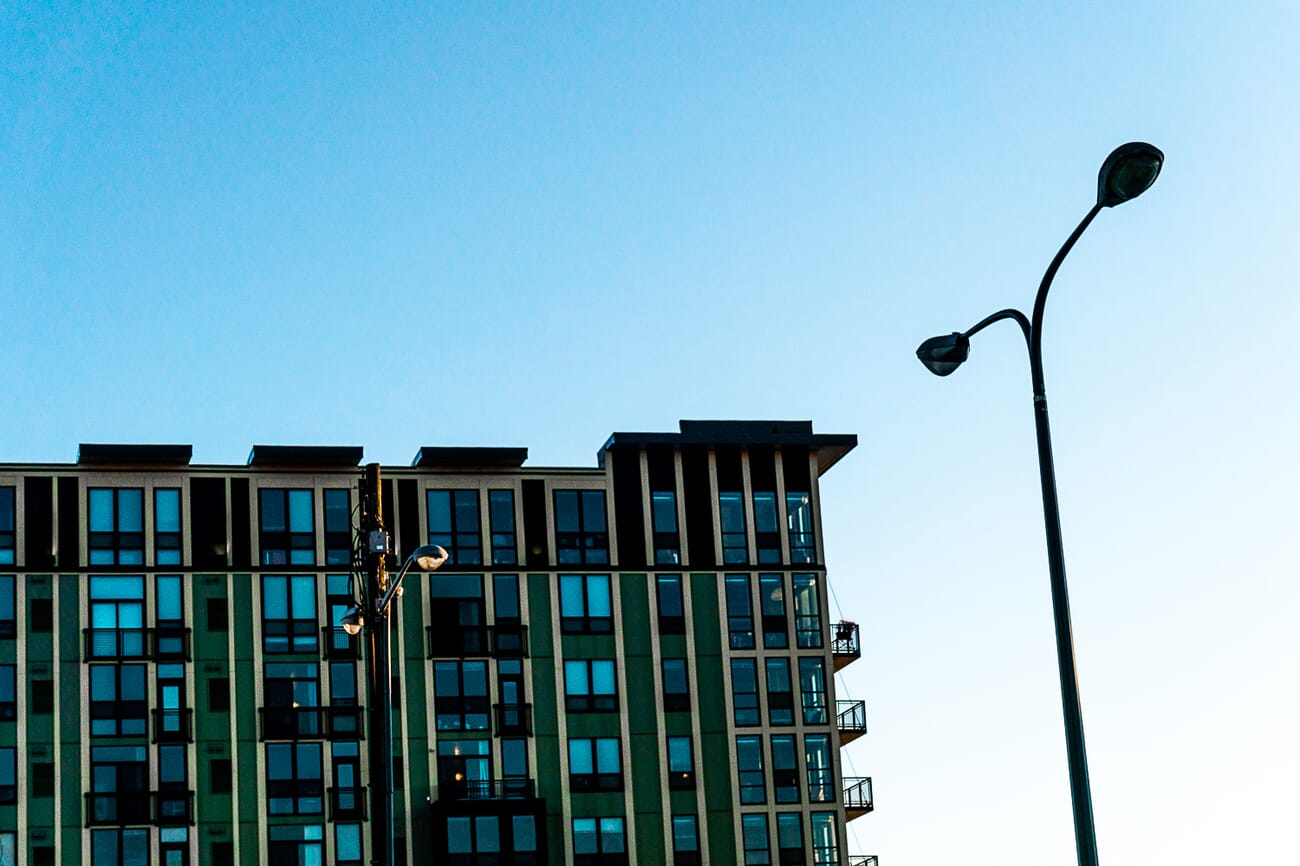
In the medium (25mm or so) area, you can shoot more standard street images, tighter landscape shots, and environmental portraiture.
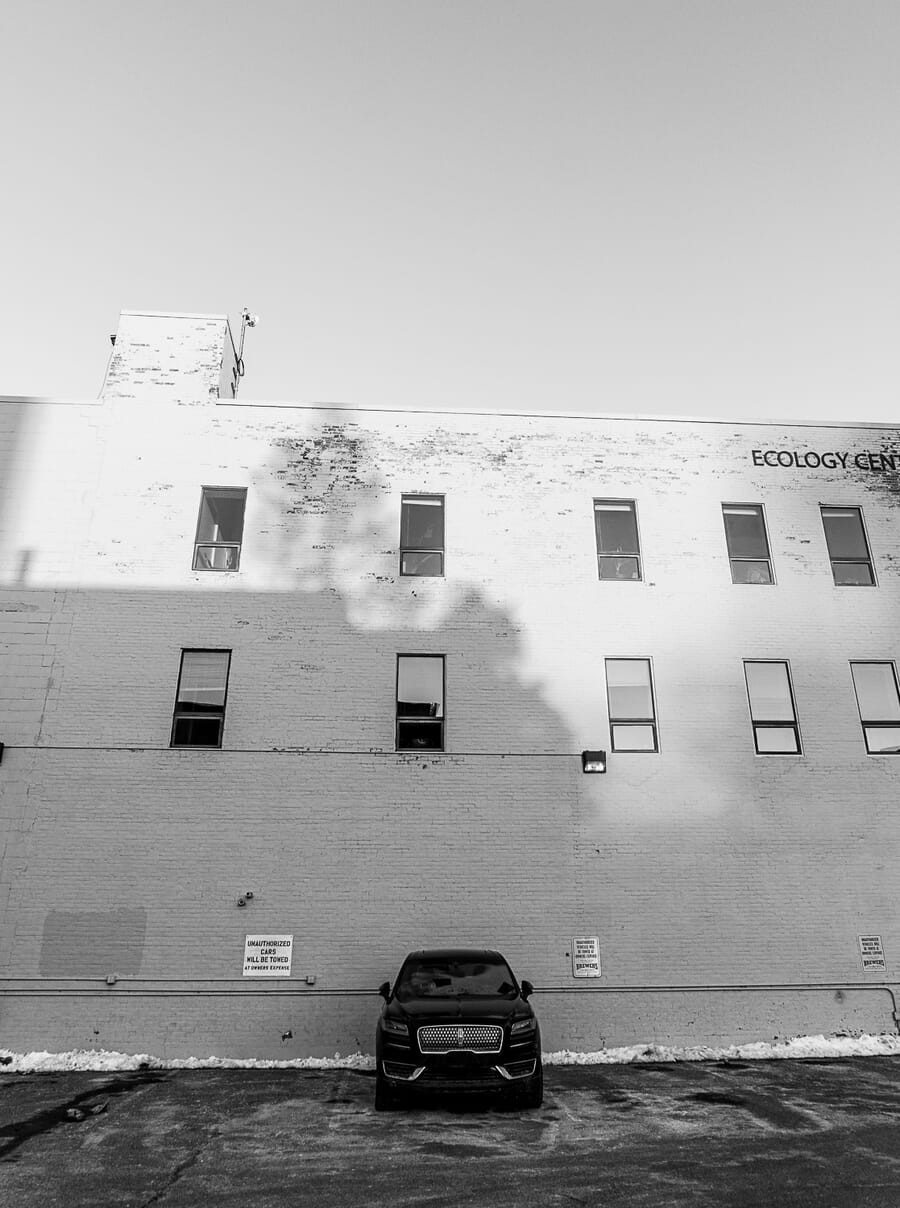
And when zoomed all the way out to 50mm, you have a perfect focal length for portraits and tighter street shots (though you can also co-opt it for product photography, still lifes, and detail shots, if you so desire).

On the other hand, this ‘kit’ focal length comes with some drawbacks. The wide end isn’t quite what you need for sweeping landscape shots, the type that professionals love to use in order to create scenes full of depth.
And the long end isn’t enough for real telephoto landscapes, nor is it great for portrait headshots (for both of these applications, a 70-200mm lens will serve you better).
In other words, the 16-50mm focal length has a bit of that ‘jack of all trades’ vibe. But at the same time, you can get great results with this focal length, and it’s perfect for standard portraiture, street photography, and travel photography.
One area that I haven’t really touched on is walkaround/casual photography. It’s not a genre, per se; it’s more of a ‘carry a camera and see what happens’ deal.
And, in that area, this Sony 16-50mm f/3.5-5.6 excels. The focal length is perfect for much of what you’ll encounter, plus this lens offers a few other features that make it great for walkaround photography (more on this later).

So, to sum up, the Sony 16-50mm f/3.5-5.6 focal length is:
- Useful in quite a few situations
- Can get you nice landscapes at 16mm, street and travel shots at 25mm, and portraits at 50mm
- A bit limiting on the short end and long end
- Great for walkaround photography
Build and Ergonomics
I want to get this out there from the very beginning:
The Sony 16-50mm f/3.5-5.6 isn’t well built.
It has a partially metal exterior, but the whole thing comes off as very plasticky, and you’ll know it from the moment you hold it in your hands. No, it doesn’t feel like it’s about to fall apart at any second, but I definitely wouldn’t want to drop it on the ground or bang it against a wall.
And don’t even ask about weather sealing; a lens like this shouldn’t be taken out in rain, snow, or anything in between.
Before you write this lens off, however, ask yourself:
How important is build quality to you?
Because the truth is that most photographers don’t need much in terms of build quality. Sure, you want a lens that can survive a scrape or two, but do you actually plan to take your equipment out in bad weather? Do you actually plan to subject your gear to all sorts of bangs and bruises?
One way to evaluate the build quality you need is to look at previous cameras, lenses, or other electronic items you’ve owned. If you’re the type who tends to drop your lenses every time you pull them out of your camera bag, then that sends a clear message. But if you’ve never damaged your equipment even slightly, then build quality is going to be less of a big deal to you.
Personally, I’m not the type who is all that concerned about build quality. I’ve never damaged any of my equipment in the 10+ years I’ve been doing photography (with the exception of a tripod that got covered in sea spray and I forgot to clean, but let’s ignore that).
Sure, I like to have lenses that are built like a tank. It makes me feel far less anxious–but it’s not essential.
And a plastic build comes with one huge advantage:
It’s far, far lighter than other, better-built lenses.
That holds true for the Sony 16-50mm f/3.5-5.6. The lens only weighs a few ounces, and it feels like nothing when mounted onto the front of your camera. For casual, walkaround-type photography, where you want to have your camera on you at all times, this is invaluable. The same is true for street photography, where you just don’t want to carry a huge lens for hours on end.
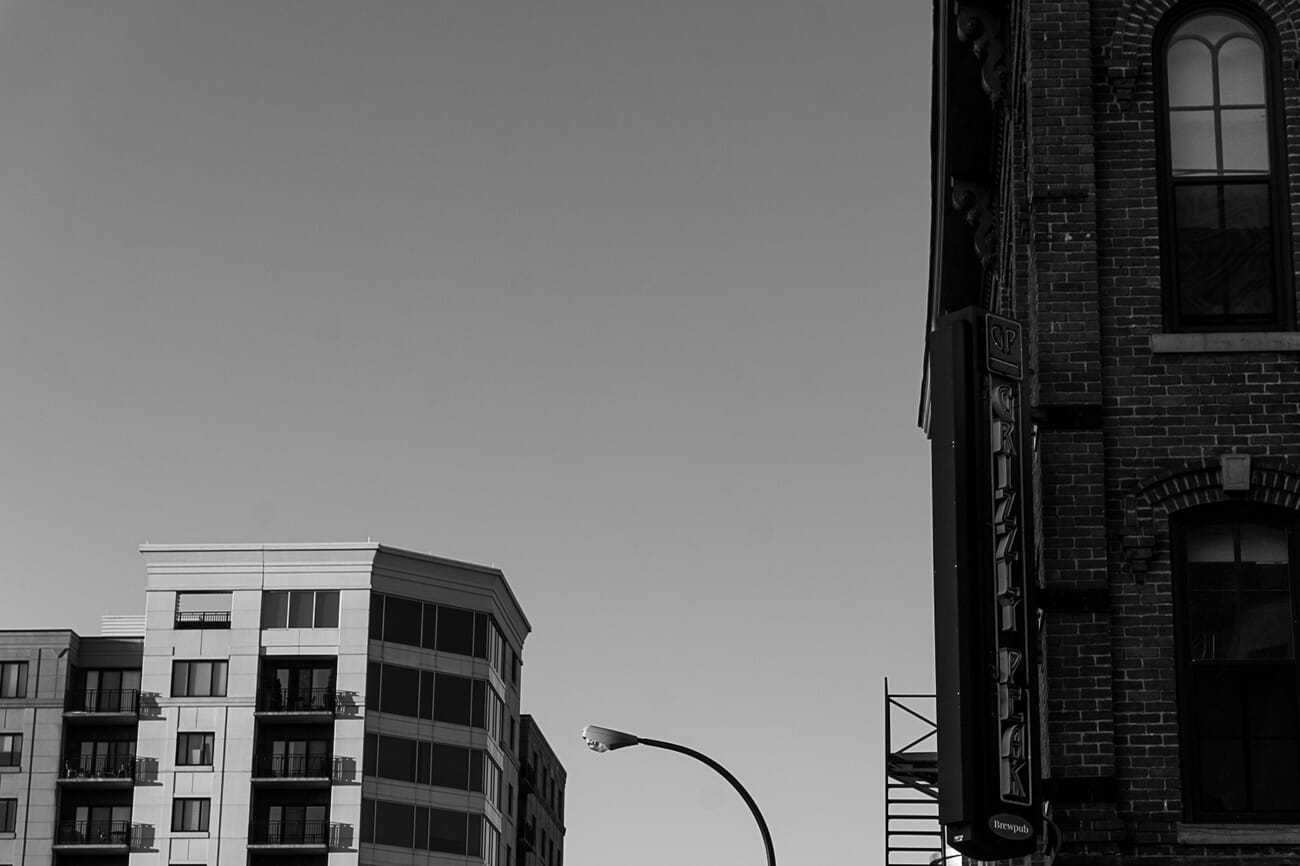
And speaking of walkaround and street photography, the Sony 16-50mm f/3.5-5.6 comes with another key benefit:
It’s small.
Really, really small.
In fact, it’s one of the smallest lenses I’ve ever seen, especially given its zoom range. It’s the perfect size for street photography, where you want to remain as inconspicuous as possible. It’s also a great size for walkaround photography, because you can hang it around your neck without people giving you weird looks, plus it packs away easily in a camera bag or even a pocket.
Interestingly, Sony uses a retractable design, so that the lens extends when you turn your camera on–and then retracts when you turn your camera off (for easy storage).
When the lens is off and mounted on my Sony a6000-series camera, I can stick the whole thing in my jacket pocket without much trouble at all.
How’s that for compact?
As for ergonomics, don’t expect much. The lens includes a zoom ring for changing focal lengths, but it just doesn’t feel great. There’s also a power zoom slider, which offers an alternative, smoother method of zooming, but I found it to be annoyingly slow (though a videographer might think otherwise).
To sum up, the Sony 16-50mm f/3.5-5.6 is:
- Very plasticky
- Small and compact for walkaround shooting and street photography, not to mention easy travel
Sony 16-50mm f/3.5-5.6: Autofocus
Given this lens’s price and build, I wasn’t expecting much in terms of autofocus.
But boy, was I wrong–in the best possible way.
This little lens is lightning fast, quickly grabbing focus on fast-moving people, bikers, and more. I tested it in a number of street photography situations, and never had a problem with moving subjects.
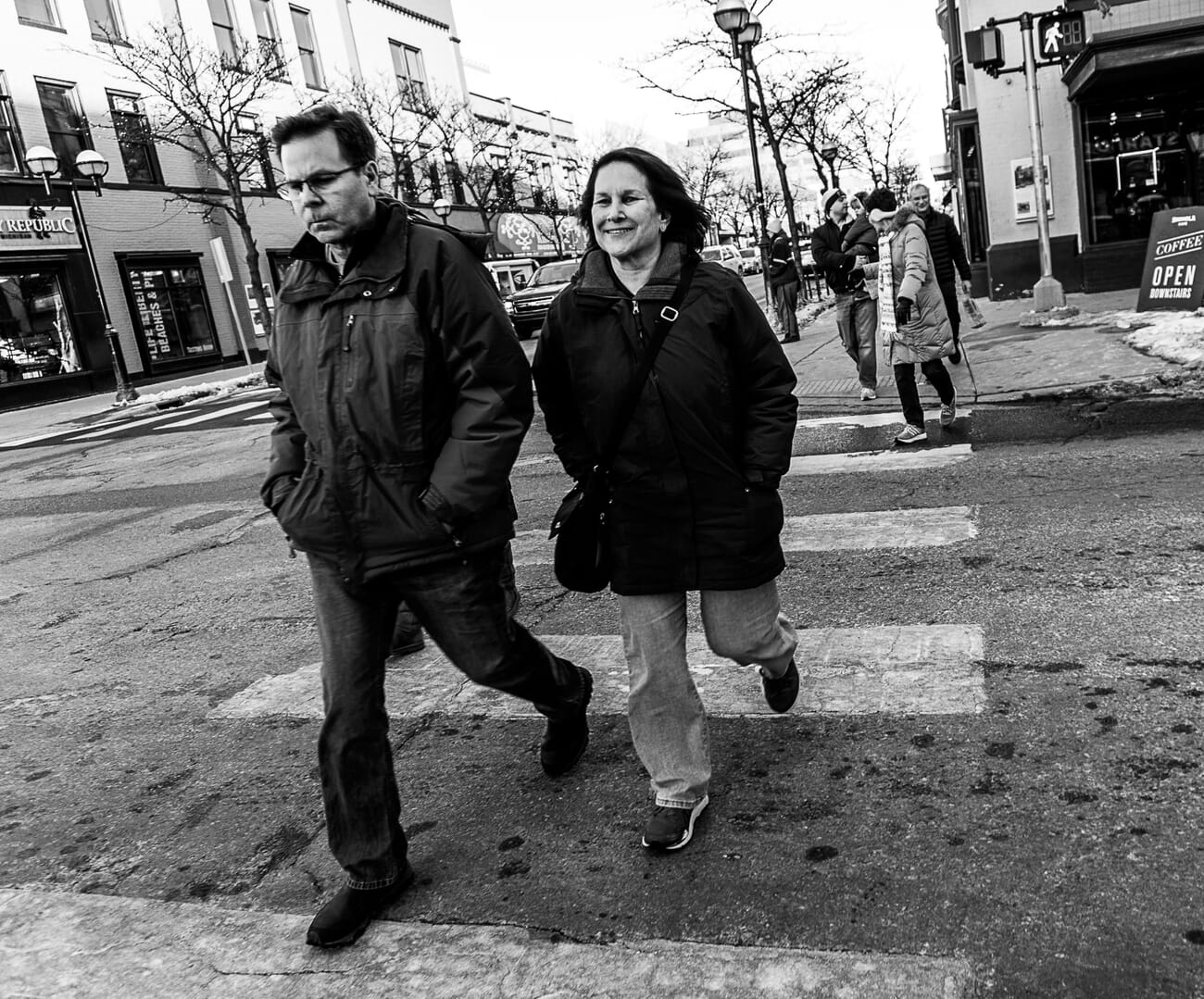
Where this lens did struggle a bit was when working with heavy backlighting situations or in low light. But even then, the focusing mechanism managed to power through with only a slight drop in speed.
Impressive, especially for the price.
Of course, part of this is down to Sony’s excellent autofocus system. I was working with the Sony a6300, which uses an older focusing algorithm, and it worked great; I can only imagine how things would seem on a camera like the a6400 or a6600, both of which feature Sony’s Real Time Tracking.
But the lens is responsible, too, which means that you can pair pretty much any a6000s-series camera with the Sony 16-50mm f/3.5-5.6, and you’ll come away with some stunning images.
In a lot of ways, autofocus speed is the saving grace of the Sony 16-50mm f/3.5-5.6. It ensures that you can capture all sorts of casual photos, including photos of your kids zooming around and your dogs playing. You can also use this lens for some stunning street images, even when shooting from the hip.
Overall, I was extremely impressed by the Sony 16-50mm’s AF system. I feel very comfortable using the lens in fast street situations, and–when combined with Sony’s excellent AF algorithm–it feels close to unstoppable.
To sum up, the Sony 16-50mm f/3.5-5.6 is:
- Extremely fast at focusing in good light
- Decent in low light and in tricky lighting situations
- Great for action photography, street photography, or photos of moving kids or animals
The Sony 16-50mm f/3.5-5.6: Image Quality
I wanted to like the image quality on the Sony 16-50mm f/3.5-5.6. I really, really did.
Because this lens is great in a number of other key ways. It’s amazingly light. It offers a great range of focal lengths. It’s lightning-fast when autofocusing.
But the image quality…
…is just not good.
I took photos at all different focal lengths at quite a few different apertures, and my overwhelming feeling when I pulled the shots up in Lightroom and magnified them to 100% was:
Is that it?
Every image I took was at least slightly soft, with the wide-angle shots performing the most poorly. To my eye, the midrange area wasn’t much better, with things only looking up at the longest (50mm) portion of the focal length range–and even here, I was pretty disappointed.
Of course, you do have the option to sharpen heavily in post-processing, but this comes with other issues (e.g., haloing), and no amount of sharpening can completely fix a blurry image.
The lens also has noticeable distortion on the wide end, though this can be corrected pretty easily in Lightroom. Slightly more problematic is the heavy vignetting I noticed around the edges of the frame, though this is another issue that Lightroom can take care of (or can even be left in as an artistic addition, if you’re into that sort of thing).
On top of these problems, the f/3.5-5.6 variable aperture, while typical for kit lenses, makes low light shooting tough. And the addition of Sony’s OSS (Optical SteadyShot) technology, while marginally helpful when it comes to handholding in dim lighting, struggles to overcome these aperture limitations.
Overall, then, the Sony 16-50mm f/3.5-5.6 is at best optically unimpressive, and at worst just plain bad. The lack of sharpness takes away quite a few of the focal length benefits I mentioned earlier; landscape photographers and architectural photographers, for instance, need more detail than this lens can provide.
That said, if you’re just getting started in photography, you may be satisfied with the subpar optical performance. And there are a few areas of photography where sharpness just isn’t that important. I’m talking about genres such as portrait photography, where a bit of softness can enhance your image and smooth over your subject’s imperfections, as well as street photography, where it’s more about the moment captured than it is the technical prowess of your equipment.
To sum up, the Sony 16-50mm f/3.5-5.6 is:
- Fairly soft at all focal lengths, though better at 50mm
- Prone to vignetting and distortion
- Optical SteadyShot is nice, but can’t counteract the narrow variable aperture
Who Should Get the Sony 16-50mm f/3.5-5.6 in 2026?
The landscape in April 2026 is more complicated than it was at launch. Four scenarios cover most readers:
Buying new in 2026
Skip the standalone original OSS. At $125–$200 it looks cheap, but the ZV-E10 II kit bundle gets you the OSS II for a modest $101 premium over body-only. If the body fits, take the kit. If you’re on an older a6000-series body, spend the equivalent money on a sharp APS-C prime (Sony 35mm f/1.8 OSS, Sigma 30mm f/1.4 DC DN) — either will outperform the 16-50mm on image quality and cost roughly the same as a new old-OSS copy.
Inheriting via a used camera kit
Keep it. It’s a competent walkaround and street lens at zero marginal cost. The review’s caveats still apply — it’s soft, it’s plasticky, it’s slow in low light — but as a free loaner you use until you figure out your real needs, it earns its spot in the bag.
Need more zoom range — APS-C step-up
The modern APS-C zoom answer is the Sigma 16-300mm f/3.5-6.7 DC OS Contemporary, which landed in 2025 and covers a 24-450mm equivalent range on Sony E. At $694 it’s a substantial jump from kit-lens pricing, but it replaces a kit lens and a short telephoto in one package. Modern AF motor, weather-sealing rating, proper optical stabilization — it’s the lens most readers who’re shopping the 16-50mm category actually want once they see the photos they’d need a longer focal length for. PCMag routed readers toward it in their March 2026 APS-C roundup update for exactly this reason.
Image quality matters more than anything
Neither the original OSS nor the OSS II will satisfy you. Move to a prime. The Sony E 35mm f/1.8 OSS, Sigma 30mm f/1.4 DC DN, or Sigma 56mm f/1.4 DC DN each deliver image quality the kit zoom can’t approach — and they’re all still under $500.
Final verdict for the original OSS
In 2026 the original OSS is a keep-if-you-have-it lens, not a go-buy-it lens. It’s compact, fast to focus, and genuinely useful for street and walkaround work — but spending $150+ on one new when the OSS II exists in a kit bundle for not much more is the wrong move. The review’s original verdict still holds: it’s a mixed bag. The 2026 market just made the bag less interesting to open.
Frequently Asked Questions
Is the Sony 16-50mm f/3.5-5.6 a good lens?
It’s a mixed bag. Small, light, fast to autofocus, and priced at $125–$200 as of April 2026. The catch: softness at every focal length, worst at 16mm. For casual/walkaround/street work, fine. For detail-sensitive work like landscape or architecture, no. If you’re buying new in 2026, consider the OSS II (bundled with the ZV-E10 II) or skip straight to a prime.
What’s the difference between the OSS and OSS II?
The OSS II (2024) has a faster linear AF motor that works during zoom, video-optimized stabilization with reduced focus breathing, refreshed optics, and ships as the kit lens for the ZV-E10 II. Same 16-50mm range and f/3.5-5.6 aperture. Video shooters will notice the improvements; stills-only users probably won’t.
Is the original OSS still worth buying in 2026?
Only as part of a used-camera kit where it’s effectively free. Buying new standalone at $150+ makes little sense when the ZV-E10 II kit bundle includes the OSS II for about $101 over body-only, or the same money buys a sharper Sony 35mm f/1.8 OSS prime.
Is the Sony 16-50mm sharp?
Not really. It’s softer at 16mm than at 50mm, but it struggles at every focal length. If sharpness matters to you, pair it with heavy post-processing sharpening, or move to a prime lens (Sony 35mm f/1.8, Sigma 30mm f/1.4) that’ll deliver better out-of-camera results.
What’s the best APS-C zoom upgrade from the Sony 16-50mm?
The Sigma 16-300mm f/3.5-6.7 DC OS Contemporary ($694) is the default 2026 step-up. It covers 24–450mm equivalent on Sony E, replaces both a kit lens and a short telephoto in one package, and has modern AF and OSS built in. For a lighter step up, the Sony 18-135mm f/3.5-5.6 OSS is the classic mid-tier pick.
Which cameras support the Sony E 16-50mm?
Any Sony APS-C E-mount mirrorless: a5000, a6000, a6100, a6400, a6500, a6600, a6700, plus the ZV-E10 series. It mounts on full-frame bodies but produces a cropped image and isn’t worth using there.


Disclosure/Disclaimer: As an Amazon Associate, we earn from qualifying purchases. Certain content was provided "as is" from Amazon and is subject to change or removal at any time. Product prices and availability: Amazon prices are updated daily or are accurate as of the date/time indicated and are subject to change. Any price and availability information displayed on Amazon.com at the time of purchase will apply to the purchase of this product.