


- The Canon EOS R6 Mark III is the best Canon flip screen camera overall — 32.5MP, 7K RAW video, 40fps burst, and 8.5-stop IBIS in a compact body.
- Every Canon RF mirrorless camera features a fully articulating vari-angle touchscreen — ideal for vlogging, low-angle, and overhead shots.
- Full-frame picks range from the budget-friendly EOS RP ($949) to the pro-grade R5 Mark II ($3,899).
- APS-C shooters get strong options too: the EOS R50 ($679) is the most affordable, while the EOS R7 ($1,449) adds IBIS and weather sealing.
- All 8 picks include Dual Pixel CMOS AF with face/eye detection, 4K video, and a 3.5mm mic input for content creation.
- Jump to our buying guide for help choosing between full-frame vs APS-C, IBIS vs lens-only stabilization, and budget tiers.
Why a Flip Screen Matters on a Canon Camera
A fully articulating flip screen transforms how you shoot. Point the camera at yourself for a vlog, tilt it down for a waist-level street shot, or flip it overhead to clear a crowd — all while seeing exactly what the sensor sees. Every Canon RF mirrorless camera uses a vari-angle touchscreen that swings out to the side and rotates 180 degrees, giving you framing flexibility that a fixed or tilt-only screen simply cannot match.
This guide compares 8 Canon cameras with flip screens, all currently available and shipping. The lineup spans APS-C and full-frame sensors, budget-friendly bodies under $700, and professional tools pushing $4,000. Every pick includes Dual Pixel CMOS AF with face and eye detection, 4K video recording, and a 3.5mm microphone input — the baseline features vloggers and content creators need.
Whether you are building a YouTube channel, shooting run-and-gun travel content, or looking for a camera that handles both stills and video, the right Canon flip screen body is somewhere in this list. Cameras are ranked by overall capability, with detailed breakdowns of video specs, autofocus performance, stabilization, and audio features for each model.
When you buy through links on our site, we may earn a commission at no cost to you. We evaluate products independently. Commissions do not affect our evaluations. As an Amazon Associate, we earn from qualifying purchases.
Top Picks





Canon Flip Screen Camera Comparison: 8 Models Side by Side
| Specifications | ||||||||
|---|---|---|---|---|---|---|---|---|
| Sensor | Full-frame 32.5MP | Full-frame 45MP (stacked) | Full-frame 24.2MP | APS-C 32.5MP | Full-frame 24.2MP | APS-C 24.2MP | APS-C 24.2MP | Full-frame 26.2MP |
| Max burst (fps) | 40 (e-shutter) | 30 (e-shutter) | 40 (e-shutter) | 30 (e-shutter) | 40 (e-shutter) | 23 (e-shutter) | 15 (e-shutter) | 5 |
| Max video resolution | 7K RAW 60p | 8K RAW 60p | 4K 60p | 4K 60p (1.81x crop) | 4K 60p | 4K 60p (1.56x crop) | 4K 30p | 4K 24p (1.6x crop) |
| IBIS | Yes (8.5 stops) | Yes (8.5 stops) | Yes (8 stops) | Yes (7 stops) | No | No | No | No |
| Flip screen | 3.0" vari-angle touch | 3.2" vari-angle touch | 3.0" vari-angle touch | 3.0" vari-angle touch | 3.0" vari-angle touch | 3.0" vari-angle touch | 3.0" vari-angle touch | 3.0" vari-angle touch |
| Headphone jack | Yes | Yes | Yes | Yes | Yes | No | No | Yes |
| Weather sealed | Yes | Yes | Yes | Yes | No | No | No | No |
| Card slots | CFexpress + SD | Dual CFexpress | Dual SD | Dual SD | Single SD | Single SD | Single SD | Single SD |
| Weight (body) | 670g | 738g | 670g | 612g | 461g | 429g | 375g | 485g |
| Year released | 2025 | 2024 | 2022 | 2022 | 2023 | 2022 | 2023 | 2019 |
Canon EOS R6 Mark III Body
Hybrid content creators, vloggers, and serious enthusiasts who want the best Canon flip screen camera under $3,000.
- 32.5MP full-frame sensor — a massive resolution jump from the R6 II’s 20MP
- Internal 7K RAW video at 60fps and 4K120 for slow motion
- 8.5-stop IBIS with Coordinated Control IS for rock-steady handheld footage
- 40fps burst with 20-frame pre-continuous shooting — never miss the moment
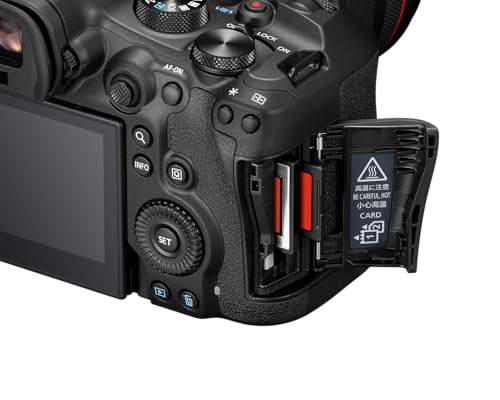
- Dual card slots: CFexpress Type B + UHS-II SD for backup or overflow
- $2,799 body-only price is a significant investment
- Heavier than the R8 at 670g — not the lightest vlogging option
- CFexpress cards required for 7K RAW recording add to the cost
The R6 Mark III is the biggest generational leap Canon has made in its mid-range lineup. The jump from 20MP to 32.5MP resolves the R6 II’s biggest weakness, while 7K RAW and 4K120 put it in a class normally reserved for cinema cameras. For creators who shoot both stills and video, this is the Canon flip screen camera to beat.
The Canon EOS R6 Mark III arrived in early 2025 as a ground-up redesign of Canon’s most popular hybrid camera. The headline upgrade is the sensor: a brand-new 32.5MP full-frame CMOS chip that delivers significantly more detail than the 20MP sensor in the R6 Mark II, while maintaining excellent high-ISO performance. The 3-inch vari-angle touchscreen flips and rotates freely for self-shooting, low-angle work, and overhead framing.
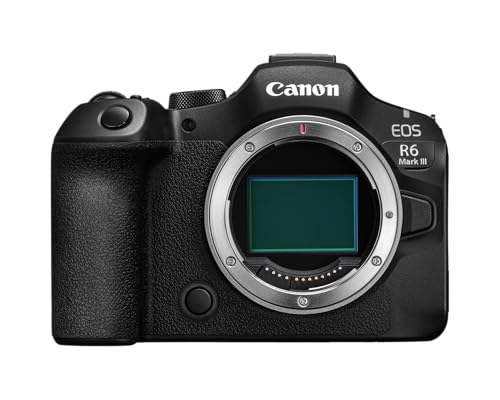
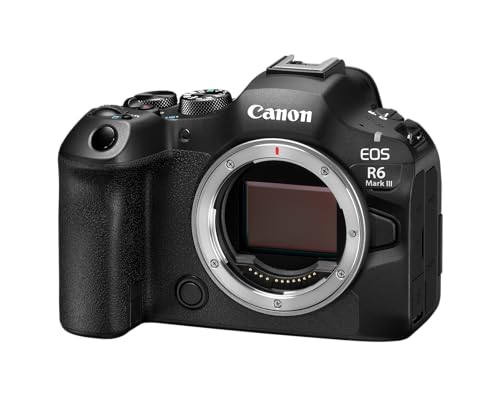
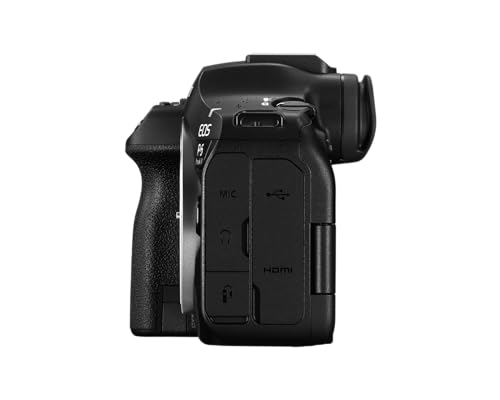
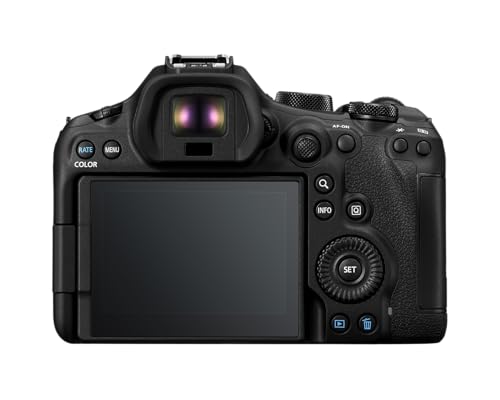
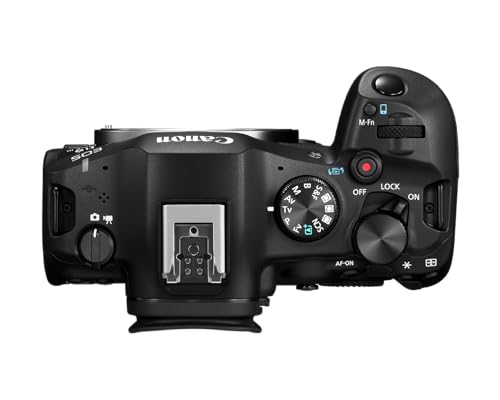
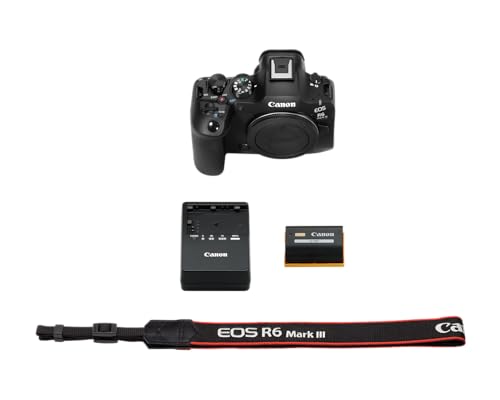
Video performance sets the R6 III apart from everything else in Canon’s lineup below the R5 II. Internal 7K RAW recording at up to 60fps captures the full sensor readout with massive post-production flexibility. For delivery-ready footage, 4K at 120fps produces buttery slow motion without an external recorder. Canon Log 2 and Canon Log 3 are both available with 10-bit 4:2:2 color depth, giving colorists plenty of headroom. For more on what makes this camera special, see our full Canon EOS R6 Mark III breakdown.
The autofocus system uses Canon’s latest Dual Pixel CMOS AF II with deep-learning subject detection. It tracks people (face, eye, head, body), animals, vehicles, and aircraft across the entire frame. Register People Priority lets you teach the camera to prefer specific faces — useful for vloggers who frequently have guests. Combined with 8.5-stop IBIS and Coordinated Control IS with compatible lenses, walk-and-talk footage is remarkably smooth without a gimbal.
Build quality is professional-grade: magnesium alloy body, full weather sealing, and dual card slots (one CFexpress Type B, one UHS-II SD). The LP-E6P battery delivers around 380 shots per charge (LCD), and USB-C Power Delivery keeps the camera running during long shoots or livestreams.
Pricing & Where to Buy
The Canon EOS R6 Mark III body is priced at $2,799 (as of March 2026). Kit options with the RF 24-105mm f/4-7.1 IS STM or RF 24-105mm f/4L IS USM are also available.
- Buy on Amazon — Prime shipping available
- Check price at B&H Photo
- Check price at Adorama
- Canon USA official store
Canon EOS R5 Mark II Body
Professional photographers and filmmakers who need the highest resolution and video specs Canon offers in a mirrorless body.
- 45MP back-illuminated stacked CMOS sensor — Canon’s most advanced imaging chip
- Internal 8K 60p RAW and 4K120 video recording
- Eye-control AF and Action Priority for predictive subject tracking
- 8.5-stop IBIS for handheld shooting in any light
- Dual CFexpress Type B card slots for maximum write speed
- $3,899 body-only price puts it firmly in professional territory
- Heaviest body in the lineup at 738g
- Overkill for casual vlogging — the R6 III covers most creators better
The R5 Mark II is Canon’s flagship hybrid mirrorless. Its stacked sensor enables blazing readout speeds with minimal rolling shutter, and 8K 60p RAW opens cinematic workflows that no other Canon body matches. For creators who need both 45MP stills and top-tier video, nothing else in the RF system competes.
The Canon EOS R5 Mark II sits at the top of Canon’s mirrorless lineup. The 45MP back-illuminated stacked CMOS sensor is a first for Canon — the stacked architecture allows much faster readout speeds, which dramatically reduces rolling shutter distortion and enables continuous shooting at 30fps with full AF and AE tracking.

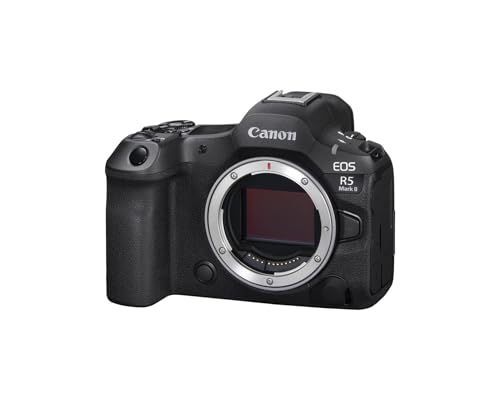
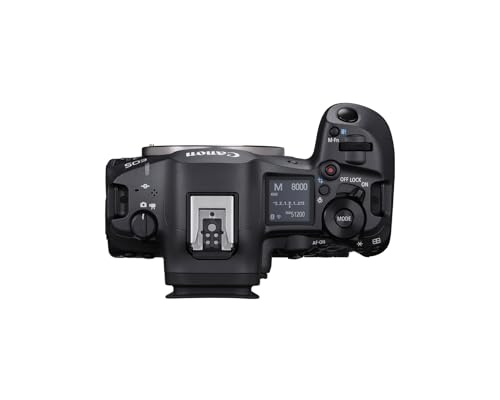
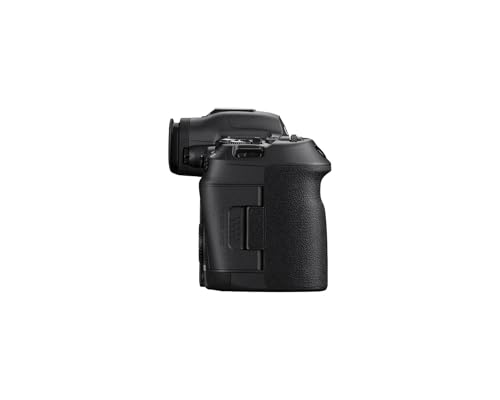
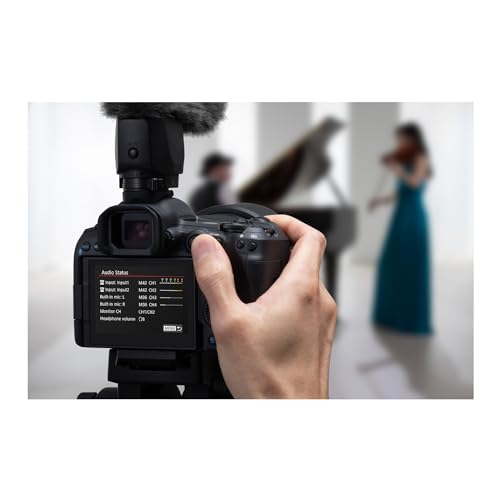
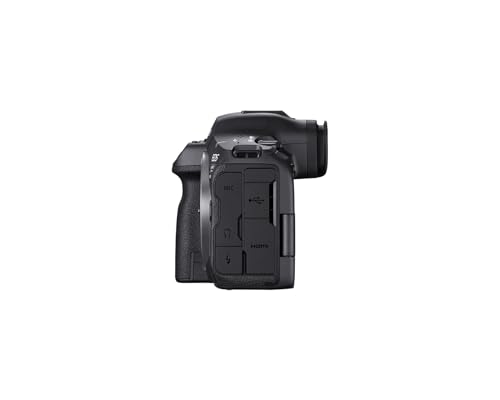
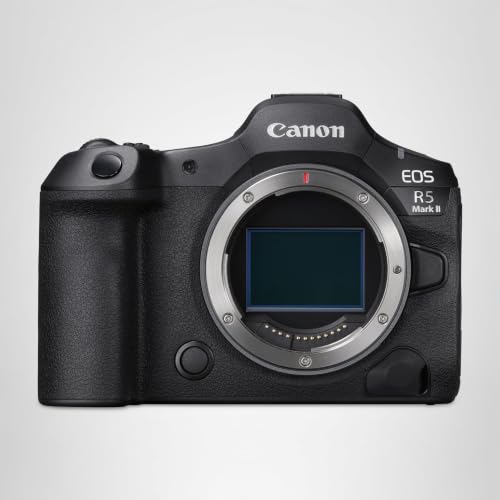
Video capabilities are extraordinary. Internal 8K 60p RAW recording captures the full sensor output with enough resolution for aggressive cropping and reframing in post. 4K120 delivers gorgeous slow motion. The camera supports Canon Log 2 and Cinema RAW Light, bridging the gap between Canon’s mirrorless and Cinema EOS lines. The 3.2-inch vari-angle touchscreen is slightly larger than the 3-inch panels on other RF bodies, which helps when monitoring detailed compositions.

The autofocus system adds eye-control AF, letting you move the focus point by looking at different areas of the viewfinder. Action Priority uses machine learning to predict and lock onto the main subject in fast-moving scenes. Build quality matches Canon’s 1D-series expectations: full magnesium alloy construction, comprehensive weather sealing, and dual CFexpress Type B slots for the fastest write speeds available.
Pricing & Where to Buy
The Canon EOS R5 Mark II body is priced at $3,899 (as of March 2026). A kit with the RF 24-105mm f/4L IS USM is also available.
- Buy on Amazon — Prime shipping available
- Check price at B&H Photo
- Check price at Adorama
- Check used prices at KEH — save with certified pre-owned
- Canon USA official store
Canon EOS R6 Mark II Mirrorless Camera (Body Only)
Hybrid shooters who want full-frame quality with IBIS at a lower price than the R6 III.
- 8-stop IBIS with Coordinated Control IS — excellent handheld stabilization
- Clean 4K60 video with 10-bit 4:2:2 internal recording
- 40fps burst shooting (electronic) with deep buffers
- Dual SD card slots for backup and overflow
- Now $800 less than the R6 III — outstanding value
- 20MP resolution is noticeably lower than the R6 III’s 32.5MP
- No 7K RAW or 4K120 — limited to 4K60 and 1080p120 for slow motion
- Rolling shutter is more pronounced than the R6 III’s faster readout
The R6 Mark II remains one of Canon’s best all-rounders. It does not have the R6 III’s resolution or video ceiling, but it delivers reliable IBIS, fast AF, and clean 4K60 for $800 less. If 20MP is enough for your output and you do not need 7K RAW, this is the smarter buy.
The Canon EOS R6 Mark II launched in late 2022 and quickly became one of Canon’s best-selling mirrorless bodies. The 24.2MP full-frame sensor paired with the DIGIC X processor delivers excellent image quality across a wide ISO range, with particularly clean results up to ISO 12800 for stills and ISO 6400 for video.


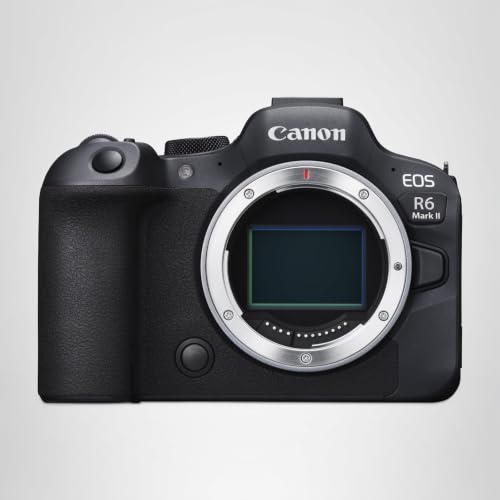
The vari-angle touchscreen works identically to the R6 III’s panel — same 3-inch size, same 1.62 million-dot resolution, same responsive touch AF controls. For vlogging, the shooting experience is nearly identical between the two bodies. The difference shows up in resolution and video specs: the R6 II maxes out at 4K60 oversampled and 1080p120 for slow motion, while Canon Log 3 with 10-bit 4:2:2 color provides solid grading headroom.

The 8-stop IBIS with Coordinated Control IS makes this one of the steadiest Canon bodies for handheld shooting. Walk-and-talk vlogging at moderate focal lengths stays smooth without a gimbal. The body shares the same weather-sealed magnesium alloy construction as the R6 III, with dual SD card slots. At its current price of $1,999 body-only, it is an excellent value for creators who prioritize stabilization and full-frame image quality over raw resolution.
Pricing & Where to Buy
The Canon EOS R6 Mark II body is priced at $1,999 (as of March 2026). With the R6 III now available, the R6 II may see price drops from select retailers.
- Buy on Amazon — Prime shipping available
- Check price at B&H Photo
- Check price at Adorama
- Check used prices at KEH — save with certified pre-owned
Canon EOS R7 Mirrorless Camera (Body Only)
Wildlife, sports, and outdoor vloggers who benefit from APS-C crop reach plus in-body stabilization.
- Only Canon APS-C camera with IBIS (7 stops) — steadier handheld than any R10 or R50
- 32.5MP APS-C sensor with oversampled 4K30 HQ mode for crisp detail
- 10-bit 4:2:2 internal with Canon Log 3 — serious color grading headroom
- Weather-sealed magnesium alloy body — ready for rain and dust
- Dual SD card slots and LP-E6NH battery (same as R6 series)
- 4K60 applies a 1.81x crop — very tight field of view for vlogging
- Heavier than other APS-C options at 612g
- APS-C sensor limits low-light performance compared to full-frame bodies
The R7 is the only Canon APS-C body with IBIS, which makes it the best choice for handheld shooting in the crop-sensor lineup. The 1.6x crop factor extends telephoto reach, making it popular with wildlife and sports shooters. The catch for vloggers is the additional crop in 4K60, which pushes the effective field of view very tight.
The Canon EOS R7 occupies a unique position in Canon’s APS-C lineup: it is the only crop-sensor RF body with in-body image stabilization. The 7-stop IBIS pairs with compatible lens IS and digital stabilization for noticeably smoother handheld footage compared to the R10 and R50, which rely on lens IS alone.

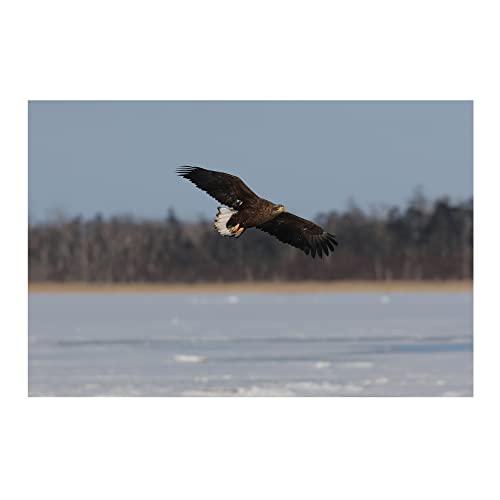
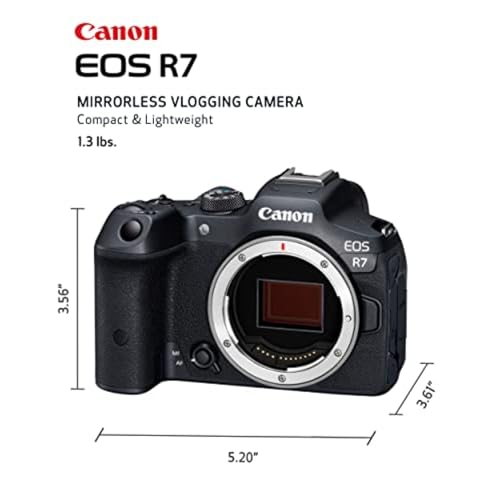
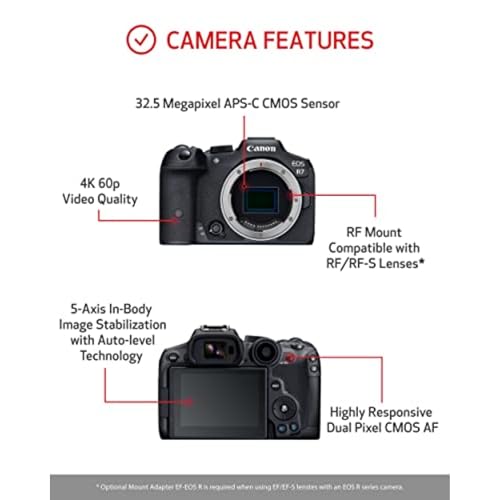
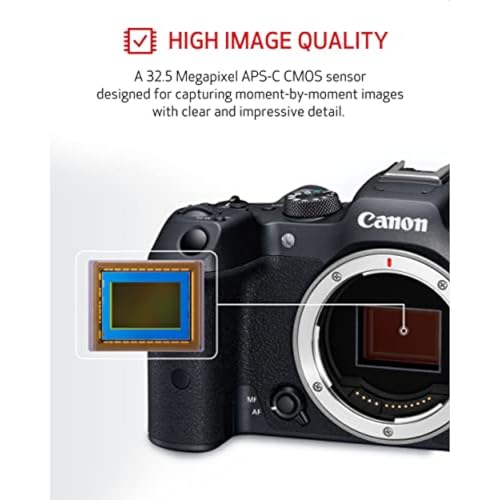


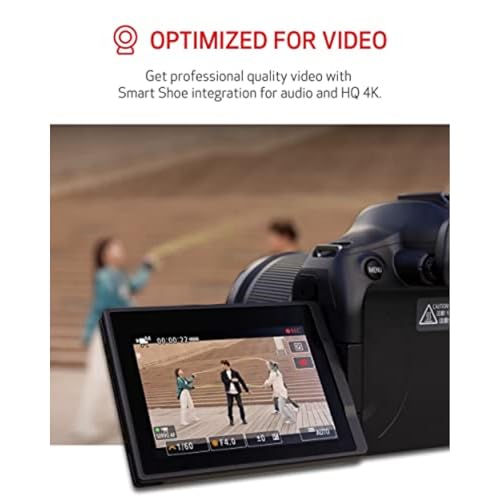
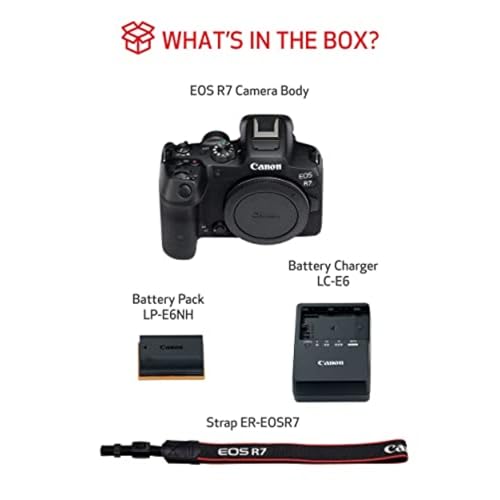
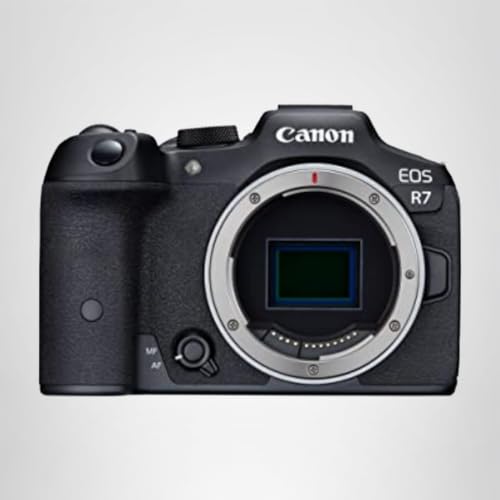
The 32.5MP APS-C sensor delivers excellent resolution for the sensor size. In 4K30 HQ mode, the camera oversamples from the full sensor width for noticeably sharper, more detailed footage than line-skipped 4K. Stepping up to 4K60 adds a 1.81x crop, which is quite aggressive and narrows the field of view significantly. For vlogging at 4K60, this means you need an extremely wide lens like the RF-S 10-18mm to maintain a reasonable framing at arm’s length.
Build quality is a step above the R10 and R50. The magnesium alloy body is fully weather-sealed against dust and moisture, and the LP-E6NH battery (shared with the R6 series) provides longer shooting sessions than the smaller LP-E17 in the R10 and R50. Dual SD card slots allow backup or overflow recording. For outdoor content creators who shoot in unpredictable conditions, the R7’s combination of IBIS, sealing, and battery endurance makes it the most dependable Canon APS-C body. The Canon EOS R7 Mark II is also rumored to be in development with a new 39MP stacked sensor.
Pricing & Where to Buy
The Canon EOS R7 body is priced at $1,449 (as of March 2026).
- Buy on Amazon — Prime shipping available
- Check price at B&H Photo
- Check price at Adorama
- Check used prices at KEH — save with certified pre-owned
Canon EOS R8 Mirrorless Camera Body
Travel vloggers and content creators who want full-frame image quality in the lightest possible Canon body.
- Full-frame 24.2MP sensor at just 461g — lightest Canon full-frame body
- Oversampled 4K60 with Canon Log 3 and 10-bit 4:2:2
- Next-gen Dual Pixel AF II with the same subject detection as the R6 III
- Both mic input and headphone jack for proper audio monitoring
- Same full-frame image quality and low-light performance as the R6 Mark II
- No IBIS — handheld video requires IS lenses and digital stabilization
- Single SD card slot — no backup recording option
- No weather sealing — not ideal for outdoor shooting in rough conditions
The R8 strips the R6 II down to essentials: same sensor, same AF, same video specs, but without IBIS, weather sealing, or dual card slots. The trade-off is a body that weighs 209g less and costs $550 less. For creators who use tripods, gimbals, or IS lenses, the R8 delivers full-frame results without the bulk.
The Canon EOS R8 is Canon’s entry point for full-frame video creators who want excellent image quality without the weight and cost of the R6 series. The 24.2MP sensor is shared with the R6 Mark II, meaning image quality, dynamic range, and high-ISO performance are effectively identical between the two bodies.
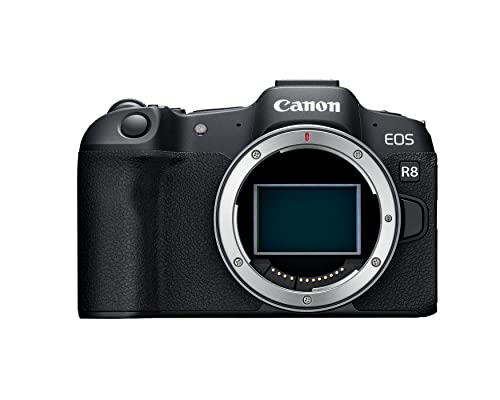


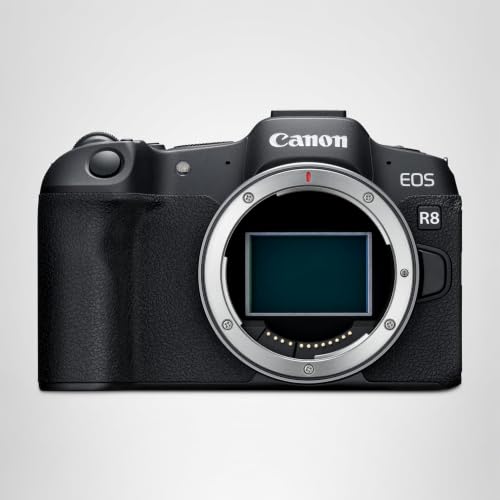
Where the R8 separates itself is weight: at 461 grams, it is the lightest full-frame Canon body available. For vlogging rigs that already include a microphone, light, and cage, the reduced body weight makes a meaningful difference in fatigue during long handheld sessions. The 3-inch vari-angle touchscreen flips and rotates with the same range and responsiveness as every other RF body. For SD card recommendations, see our guide to the best SD cards for the Canon EOS R8.

The absence of IBIS is the primary trade-off. Walk-and-talk footage without a stabilized lens will show more shake compared to the R6 II or R7. Pairing the R8 with an IS lens like the RF 24-105mm f/4L or RF 15-30mm IS STM and enabling digital IS produces acceptable results for static or slow-moving vlog setups, but aggressive walking motion will still be visible. Both a 3.5mm mic input and headphone jack are included, which is notable — the cheaper R10 and R50 lack headphone monitoring.
Pricing & Where to Buy
The Canon EOS R8 body is priced at $1,449 (as of March 2026).
- Buy on Amazon — Prime shipping available
- Check price at B&H Photo
- Check price at Adorama
- Check used prices at KEH
Canon EOS R10 (Body Only), Mirrorless Vlogging Camera
Intermediate creators who want better burst performance and video specs than the R50 without the R7’s size and price.
- 24.2MP APS-C sensor with Dual Pixel AF II and deep-learning subject detection
- 15fps mechanical shutter / 23fps electronic — fast action performance
- 4K60 video (with 1.56x crop) and 4K30 oversampled from full sensor width
- Compact 429g body with comfortable DSLR-style grip
- Multi-Function Shoe for digital microphones and accessories
- No IBIS — relies on lens IS and digital stabilization only
- No headphone jack for audio monitoring
- Single SD card slot with no backup option
The R10 sits between the budget R50 and the feature-packed R7. It offers faster burst shooting and 4K60 capability that the R50 lacks, while staying lighter and cheaper than the R7. The missing IBIS is felt during walk-and-talk vlogging, but for tripod-based YouTube setups and travel shooting, it delivers excellent results.
The Canon EOS R10 is the middle child of Canon’s APS-C RF lineup, and that is not a bad place to be. It takes the same Dual Pixel CMOS AF II system found in the R7, adds 4K60 capability that the cheaper R50 lacks, and packages it all in a 429g body with a proper DSLR-style grip that feels natural in the hand.

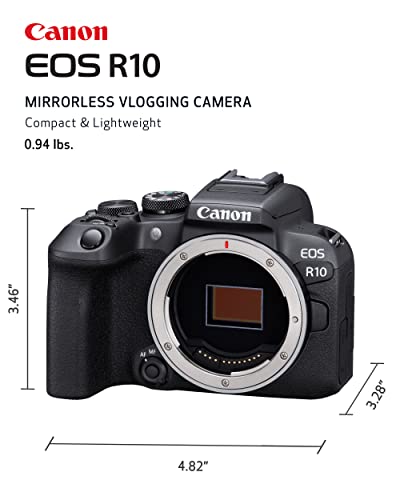
For stills, the R10 punches above its price class. 15fps with the mechanical shutter and 23fps electronic gives you serious action-shooting capability. The AF system tracks people, animals, and vehicles across the full frame, making it competent for sports and wildlife at a fraction of the R7’s price. The vari-angle touchscreen works identically to every other RF body for self-framing and creative angles.

Video-wise, 4K30 uses oversampled readout from the full sensor width for the sharpest APS-C 4K Canon offers. Stepping up to 4K60 applies a 1.56x crop on top of the existing 1.6x APS-C factor, resulting in a 2.5x total crop — very tight, but usable with the RF-S 10-18mm. Audio includes a 3.5mm mic input and the Multi-Function Shoe, but no headphone jack. For most YouTube setups where audio is monitored on a separate recorder or through post, this is not a dealbreaker.
Pricing & Where to Buy
The Canon EOS R10 body is priced at $999 (as of March 2026). Kit options with RF-S 18-45mm or RF-S 18-150mm lenses are available at a small premium.
- Buy on Amazon — Prime shipping available
- Check price at B&H Photo
- Check price at Adorama
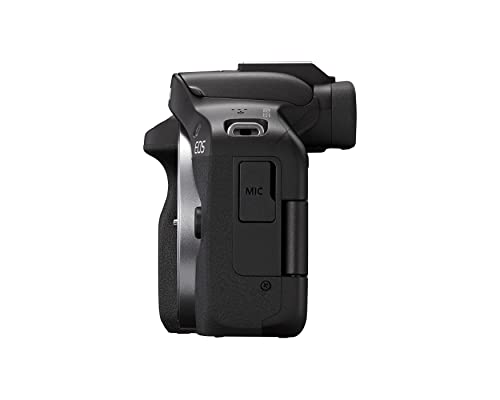
Canon EOS R50 Mirrorless Vlogging Camera (Body Only/Black)
Budget-conscious beginners and vloggers who want Canon RF image quality and autofocus at the lowest possible price.
- Most affordable Canon RF camera at $679 body-only
- Featherweight 375g body — the lightest Canon mirrorless with a flip screen
- Oversampled 4K30 with Dual Pixel AF II subject detection
- Content Creator Kit option bundles mic, tripod, and lens in one box
- Clean, beginner-friendly menu system with guided modes
- No 4K60, no slow motion above 1080p60
- No IBIS, no headphone jack, no weather sealing
- Single SD card slot and smaller LP-E17 battery
The R50 is the gateway to Canon’s RF mirrorless system. At 375g it disappears in a bag, and the oversampled 4K30 output is genuinely sharp. The AF II subject detection is the same technology used in cameras costing three times as much. For creators who shoot primarily at 4K30 or 1080p and want rock-solid autofocus on a budget, the R50 delivers.
The Canon EOS R50 is Canon’s most affordable mirrorless camera with a vari-angle flip screen. At 375 grams, it is lighter than many smartphones with a case, making it the most portable option in this guide. The compact body still includes a proper grip, a hot shoe, and the same 3-inch vari-angle touchscreen found on Canon’s more expensive bodies.

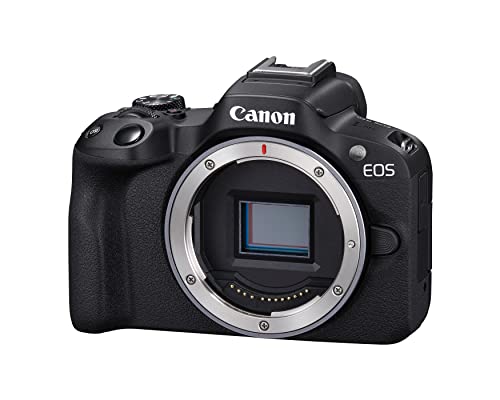

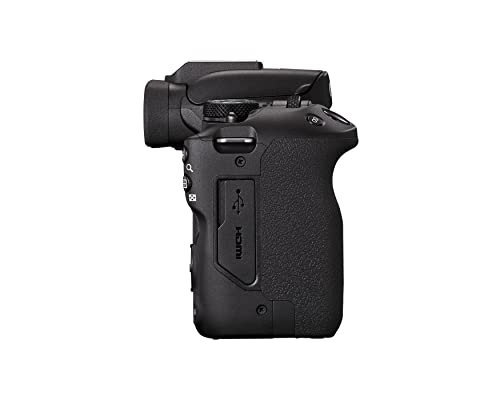
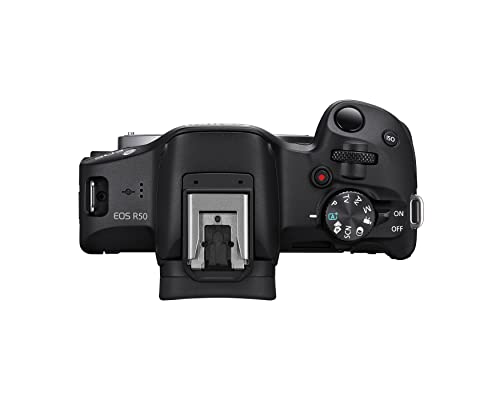
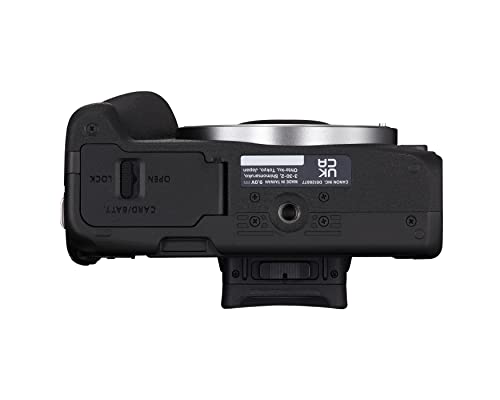
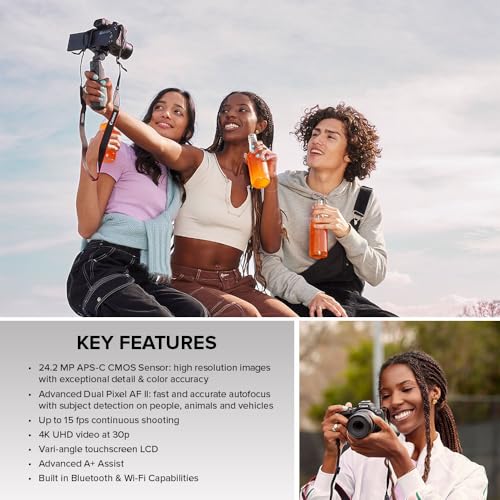
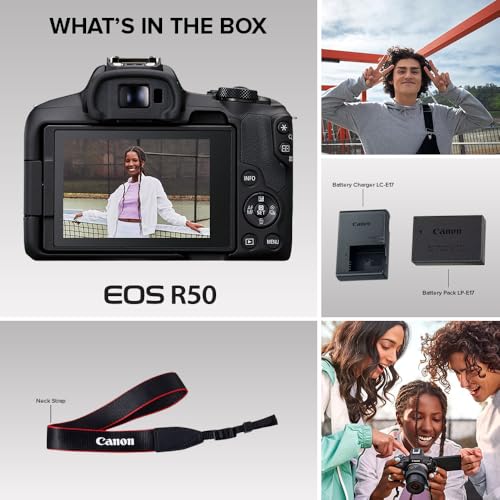
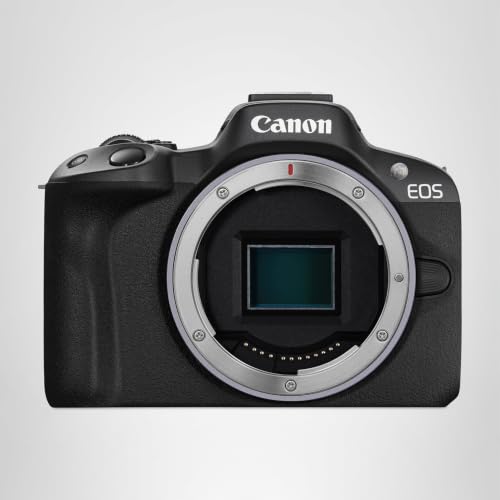
The 24.2MP APS-C sensor shares the same Dual Pixel CMOS AF II system as the R10 and R7, including deep-learning subject detection for people, animals, and vehicles. Autofocus accuracy for self-shooting is excellent — the camera locks onto your face immediately when you flip the screen forward and holds focus reliably as you move. This is one area where Canon’s system consistency really pays off: even the cheapest body gets the same AF intelligence. For more on this camera in the context of entry-level options, see our best cameras for beginners guide.

The video spec ceiling is the R50’s main limitation. 4K30 is the maximum resolution — there is no 4K60 option and slow motion tops out at 1080p60. For YouTube vlogs, talking-head content, and social media clips, 4K30 is perfectly adequate. Creators who need 4K60 for action or slow motion should step up to the R10 or R7. Audio includes a 3.5mm mic input and the Multi-Function Shoe, but no headphone jack.
Pricing & Where to Buy
The Canon EOS R50 body is priced at $679 (as of March 2026). The Content Creator Kit with RF-S 18-45mm lens, DM-E1D microphone, and HG-100TBR tripod grip is available for around $900.
- Buy on Amazon — Prime shipping available
- Check price at B&H Photo
- Check price at Adorama
Canon EOS RP Full Frame Mirrorless Vlogging Portable Digital Camera
Photographers who want full-frame image quality and a flip screen on the tightest possible budget.
- Full-frame 26.2MP sensor under $1,000 — cheapest Canon full-frame body
- Pleasing Canon color science with strong skin tones
- Compact 485g body with vari-angle touchscreen
- Both mic input and headphone jack included
- Compatible with the entire Canon RF lens ecosystem
- 4K video is heavily cropped (1.6x) and uses contrast-detect AF — treat as 1080p-first
- Older Dual Pixel AF lacks deep-learning subject detection
- No IBIS, no weather sealing, slower burst speed (5fps max)
The EOS RP is an aging body in a fast-moving market, but it fills a unique role: the cheapest way to get a Canon full-frame sensor behind a flip screen. Stills image quality remains excellent, and the full-frame look with shallow depth of field is appealing. Just do not buy it for 4K video — the heavy crop and contrast AF in 4K make it a 1080p video camera in practice.
The Canon EOS RP was Canon’s first budget full-frame mirrorless camera when it launched in 2019, and it remains in the lineup as an entry point for photographers who want the full-frame look without a large investment. The 26.2MP CMOS sensor produces images with excellent dynamic range, Canon’s signature color science, and beautiful background blur that APS-C sensors cannot easily replicate.




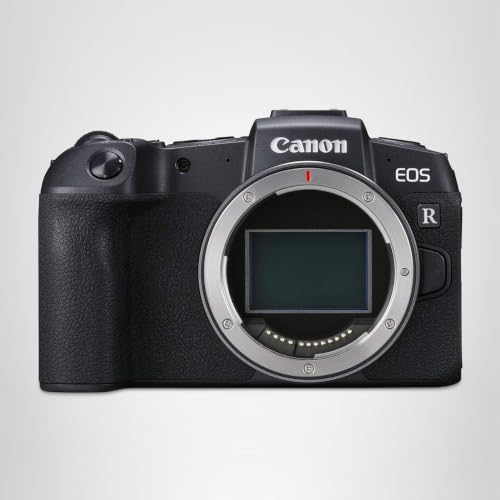
The vari-angle touchscreen works exactly as expected — same flip-and-rotate mechanism as every other RF body. The RP includes both a 3.5mm mic input and a headphone jack, which is worth noting since the newer R10 and R50 lack headphone monitoring. For studio-style YouTube setups where the camera sits on a tripod and records talking-head content in 1080p, the RP is perfectly capable.

The limitations are real, though. 4K recording applies a 1.6x crop and switches to contrast-detect AF, which is slower and less reliable than Dual Pixel AF. The autofocus system is the older generation without deep-learning subject detection — it tracks faces and eyes well enough, but lacks the animal, vehicle, and advanced body tracking of newer bodies. Burst shooting maxes out at 5fps, and there is no IBIS. At $949 body-only, the RP makes sense primarily as a stills-focused camera with a beautiful full-frame rendering — not as a video-first tool.
Pricing & Where to Buy
The Canon EOS RP body is priced at $949 (as of March 2026). As one of Canon’s older models, refurbished and used options may be available at significant discounts.
- Buy on Amazon — Prime shipping available
- Check price at B&H Photo
- Check used prices at KEH — save with certified pre-owned
Best Lenses for Canon Flip Screen Vlogging
A flip screen camera is only as good as the lens in front of it. For vlogging and content creation, wide-angle lenses with image stabilization are ideal. Here are the top picks by sensor size:
For Full-Frame Bodies (R6 III, R5 II, R6 II, R8, RP)
- RF 16mm f/2.8 STM — Ultra-compact, ultra-wide, affordable. Perfect for arm’s-length vlogging on a budget. No IS, but works well with IBIS bodies.
- RF 15-30mm f/4.5-6.3 IS STM — The widest zoom with image stabilization. Great for walk-and-talk on non-IBIS bodies like the R8 and RP.
- RF 24-105mm f/4L IS USM — The do-everything zoom. Excellent IS, fast AF, and a versatile range from wide to short telephoto. Heavier but covers every scenario.
- RF 35mm f/1.8 IS Macro STM — A versatile normal prime with IS and a fast aperture for beautiful background blur.
For APS-C Bodies (R7, R10, R50)
- RF-S 10-18mm f/4.5-6.3 IS STM — The vlogging lens for APS-C. At 10mm (16mm equivalent), it captures a wide enough view for arm’s-length self-shooting with built-in IS.
- RF-S 18-45mm f/4.5-6.3 IS STM — The standard kit lens. Compact and stabilized, a solid all-rounder for creators on a budget.
- RF-S 18-150mm f/3.5-6.3 IS STM — The travel superzoom. IS throughout, covers wide to telephoto in one lens. Ideal paired with the R7 for travel vlogging.
For a deeper dive into Canon video lenses, see our full guide to the best Canon lenses for video.
Choose the Best Canon Flip Screen Camera
The right Canon flip screen camera depends on what you shoot, where you shoot it, and how much you are willing to spend. Here is a quick decision framework:
Best overall for most creators: The Canon EOS R6 Mark III combines the best autofocus, IBIS, video specs, and resolution in the lineup. If budget allows, it is the camera to get.
Best value with IBIS: The Canon EOS R6 Mark II delivers 90% of the R6 III experience at $800 less. The 20MP resolution is the only real compromise.
Best budget pick: The Canon EOS R50 at $679 is the most affordable way into Canon’s RF system with a flip screen. Its AF and 4K30 output punch well above the price.
Best for wildlife and sports: The Canon EOS R7 pairs APS-C crop reach with IBIS and weather sealing — a combination no other Canon APS-C body offers.
Best lightweight full-frame: The Canon EOS R8 gives you the same sensor and AF as the R6 II in a body that weighs 209g less. No IBIS, but pair it with an IS lens and the results are impressive.
Frequently Asked Questions
Do all Canon mirrorless cameras have a flip screen?
Almost. Every Canon RF mirrorless camera has a fully articulating vari-angle touchscreen, with one exception: the Canon EOS R100, which has a fixed rear screen that does not tilt or flip. All 8 cameras in this guide feature the flip-out vari-angle design.
What is the difference between a vari-angle screen and a tilt screen?
A vari-angle (flip) screen swings out to the side and can rotate to face forward, backward, or any angle. A tilt screen only moves up and down on a fixed hinge. Canon’s RF cameras all use the vari-angle design, which is more versatile for vlogging because you can see yourself while shooting handheld or on a tripod.
Which Canon flip screen camera is best for YouTube?
For most YouTube creators, the Canon EOS R6 Mark III offers the best combination of 4K video quality, autofocus reliability, and stabilization. On a tighter budget, the EOS R50 is an excellent starter that still delivers sharp 4K30 and Canon’s best-in-class face tracking AF.
Can I use Canon EF lenses on RF-mount cameras with a flip screen?
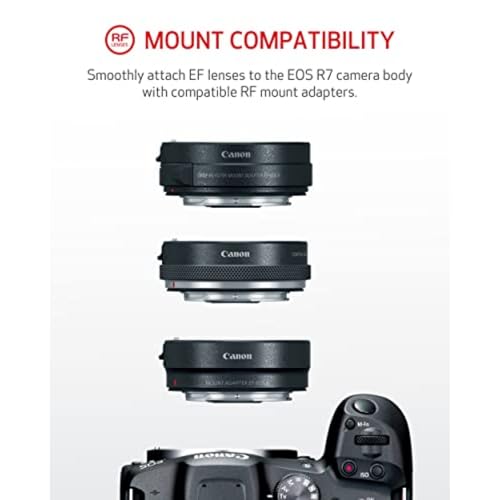
Yes. Canon’s EF-EOS R mount adapter allows any Canon EF or EF-S lens to work on RF-mount cameras with full autofocus and stabilization support. This is a great way to use existing glass while transitioning to the RF system.
Is IBIS necessary for vlogging with a Canon camera?
Not strictly necessary, but it helps significantly for walk-and-talk style content. IBIS bodies (R6 III, R5 II, R6 II, R7) produce noticeably smoother handheld footage than non-IBIS bodies. If your camera lacks IBIS, pair it with an IS lens and enable digital stabilization for the best results.
Featured image: Photo by Dimitri Karastelev on Unsplash.
Related Posts
Final Recommendations by Category
Canon EOS R6 Mark III
Canon EOS R5 Mark II
Canon EOS R6 Mark II
Canon EOS R7
Canon EOS R8
Canon EOS R50
Disclosure/Disclaimer: As an Amazon Associate, we earn from qualifying purchases. Certain content was provided "as is" from Amazon and is subject to change or removal at any time. Product prices and availability: Amazon prices are updated daily or are accurate as of the date/time indicated and are subject to change. Any price and availability information displayed on Amazon.com at the time of purchase will apply to the purchase of this product.