


- Sony E 11mm F1.8 is the top pick for ZV-E10 vloggers – ultra-wide at arm’s length, featherweight, and snappy autofocus.
- Sigma 16mm f/1.4 DC DN is the most popular first upgrade – fast aperture for low light with a versatile wide-angle field of view.
- Sigma 18-50mm f/2.8 DC DN is the best all-around zoom – constant f/2.8, compact, and covers wide to short tele.
- Tamron 11-20mm f/2.8 is the sharpest ultra-wide zoom – constant f/2.8 across a true ultra-wide range.
- Sigma 30mm f/1.4 DC DN is the best budget prime for talking-head and portrait content.
- All 10 lenses use Sony E-mount natively – no adapters needed, and all support the ZV-E10’s face/eye autofocus.
Finding the Right Lens for the Sony ZV-E10
The Sony ZV-E10 remains one of the most popular cameras for vloggers, content creators, and anyone shooting video-first. Its compact APS-C body, flip-out screen, and excellent autofocus make it a go-to choice – but the kit lens holds it back. A lens upgrade is the single biggest improvement most ZV-E10 owners can make.
The challenge is that the ZV-E10 is a tiny, lightweight camera. Mounting a heavy full-frame zoom defeats the purpose of owning one. The best lenses for this camera balance optical quality with size, weight, and video-friendly features like fast autofocus, minimal focus breathing, and wide apertures for low-light shooting. The ZV-E10 also lacks in-body image stabilization (IBIS), so lens-based stabilization or ultra-wide focal lengths that naturally minimize shake become important considerations.
This guide covers 10 lenses tested against what ZV-E10 buyers actually need: wide-angle primes for arm’s-length vlogging, fast zooms for versatility, and affordable options that match the camera’s price point. Every lens here uses the Sony E-mount natively and supports the ZV-E10’s Real-time Eye AF and face tracking.
When you buy through links on our site, we may earn a commission at no cost to you. We evaluate products independently. Commissions do not affect our evaluations. As an Amazon Associate, we earn from qualifying purchases.
Top Picks




Best Lenses for Sony ZV-E10: Side-by-Side Comparison
| Specifications | ||||||||||
|---|---|---|---|---|---|---|---|---|---|---|
| Best For | Vlogging | Low-Light Wide | All-Around Zoom | Pro Video Zoom | Portraits | Ultra-Wide Zoom | Stabilized Zoom | Stabilized Prime | Budget Ultra-Wide | Run-and-Gun |
| Focal Length | 11mm | 16mm | 18-50mm | 10-20mm | 30mm | 11-20mm | 17-70mm | 35mm | 13mm | 18-105mm |
| Max Aperture | f/1.8 | f/1.4 | f/2.8 | f/4 | f/1.4 | f/2.8 | f/2.8 | f/1.8 | f/1.4 | f/4 |
| Stabilization | No | No | No | No | No | No | VC (Yes) | OSS (Yes) | No | OSS (Yes) |
| Weight | 181g | 405g | 290g | 178g | 265g | 335g | 525g | 154g | 420g | 427g |
| Filter Size | 55mm | 67mm | 55mm | 62mm | 52mm | 67mm | 67mm | 49mm | 67mm | 72mm |
| AF Motor | Dual Linear | Stepping | Stepping | Linear | Stepping | RXD | RXD | Linear | STM | Linear |


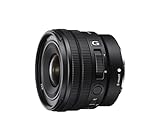
Sony E 11mm F1.8 APS-C Ultra-Wide-Angle Prime for APS-C Cameras SEL11F18
ZV-E10 vloggers and solo content creators who need the widest possible field of view for arm’s-length shooting with reliable autofocus and minimal weight.
- Ultra-wide 11mm on APS-C (16.5mm equivalent) – the widest dedicated vlogging prime for Sony E-mount
- Just 181g with internal focus – the ZV-E10 stays balanced and compact for one-handed shooting
- Dual linear-motor AF with minimal focus breathing – fast, quiet, and reliable for face/eye tracking in video
- No optical image stabilization – relies on electronic SteadyShot (which crops the frame further)
- Ultra-wide perspective can exaggerate facial features when shooting very close – works best at arm’s length or slightly beyond
This is the lens Sony designed specifically for cameras like the ZV-E10. At 11mm (16.5mm equivalent), it captures a wide enough field of view to keep your face and background in frame even at arm’s length. The f/1.8 aperture handles indoor and low-light shooting cleanly, and the dual linear-motor autofocus locks onto eyes quickly and quietly. At just 181g, the ZV-E10 barely notices it’s there. The only real downside is the lack of optical stabilization, but at this focal length, the ultra-wide perspective naturally minimizes visible shake.
The Sony E 11mm F1.8 is the lens most ZV-E10 owners should buy first. Sony built it specifically for APS-C vlogging cameras, and it shows in every design choice – the compact size, the fast autofocus, and the wide field of view that keeps you in frame during arm’s-length shooting.




At 11mm on APS-C (16.5mm equivalent), this lens captures a significantly wider view than the kit zoom at its widest setting. That extra width is critical for vlogging – it means viewers see your face plus enough background to establish context, even when the camera is on a selfie stick or tripod at close range. The f/1.8 aperture lets in roughly four times more light than the kit lens at f/3.5, which translates to cleaner footage in indoor environments, cafes, and evening shoots.
The dual linear-motor autofocus system is a standout. It locks onto faces and eyes quickly, tracks smoothly as you move, and operates nearly silently – important since the ZV-E10’s built-in microphone will pick up lens noise from noisier AF motors. Focus breathing is minimal, so the image doesn’t visibly shift when the camera pulls focus between subjects.
Weight is where this lens truly shines on the ZV-E10. At 181g, the combined camera-and-lens package stays under 525g – lighter than most smartphones with a case. This makes a real difference during extended handheld shooting sessions. The internal focus design means the lens length never changes, which keeps microphone and lighting rigs stable.
Pricing & Where to Buy
The Sony E 11mm F1.8 is priced at $698 (as of March 2026). It’s not the cheapest option on this list, but it’s the most purpose-built lens for ZV-E10 vlogging.
- Buy on Amazon – Prime shipping available
- Check price at B&H Photo
- Check price at Adorama
- Buy used at KEH Camera – save with certified pre-owned
Sigma 16mm f/1.4 DC DN Contemporary Lens for Sony E (402965)
ZV-E10 creators who want the fastest wide-angle prime for low-light shooting, indoor content, and cinematic B-roll with strong background blur.
- f/1.4 aperture – the fastest wide-angle option here, excellent for low light and subject separation
- 24mm equivalent field of view works for vlogging, street, and general content creation
- Nearly 5,800 reviews with 4.8-star rating – proven reliability and optical quality at an accessible price
- 405g is heavier than the Sony 11mm – adds noticeable front-weight to the ZV-E10 during extended handheld use
- No optical stabilization and 24mm equivalent is less forgiving of shake than ultra-wide options
The Sigma 16mm f/1.4 is the most recommended first lens upgrade in ZV-E10 communities for good reason. The f/1.4 aperture is a full stop faster than the Sony 11mm’s f/1.8, which means visibly cleaner footage in low light and noticeably more background blur. At 16mm (24mm equivalent), it’s still wide enough for vlogging in most situations, though it works best on a small tripod or at arm’s length rather than handheld close-up. The tradeoff is size – at 405g, it’s heavier than the Sony 11mm but still manageable on the ZV-E10.
The Sigma 16mm f/1.4 DC DN is the lens you’ll see recommended most often in ZV-E10 forums and Reddit threads. Its combination of fast aperture, wide-angle coverage, and reasonable price makes it the default first upgrade for creators who’ve outgrown the kit lens.


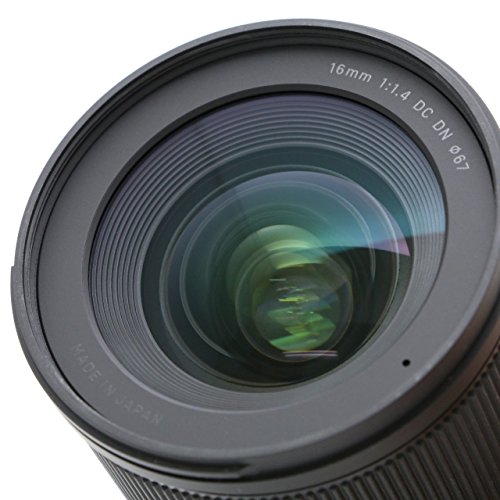
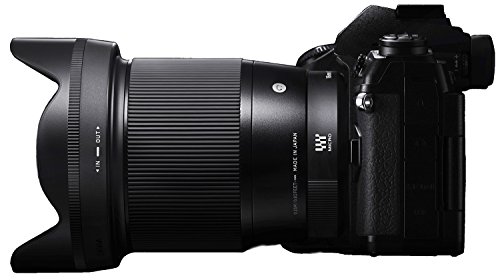
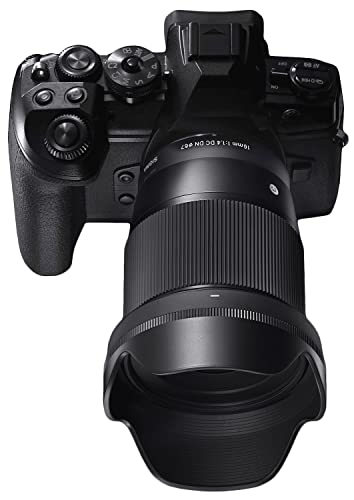
The f/1.4 maximum aperture is the headline feature. It lets in roughly twice as much light as f/2.0 and four times as much as f/2.8, which directly translates to lower ISO settings and cleaner footage in challenging lighting. For indoor content, evening street shoots, or any situation where you can’t control lighting, this extra speed makes a visible difference in image quality. The wider aperture also produces noticeably more background blur than slower lenses, giving footage a more cinematic look.
At 16mm (24mm equivalent on APS-C), the field of view hits a sweet spot. It’s wide enough for arm’s-length vlogging with a bit of background visible, versatile enough for wide-angle street photography, and still flattering for face-to-camera content. Compared to the Sony 11mm, you lose some of that ultra-wide environmental framing, but you gain a more natural perspective that’s less prone to facial distortion at close range.
The stepping motor autofocus is reliable with the ZV-E10’s face and eye detection, though it’s not quite as fast or silent as Sony’s dual linear-motor designs. For most content creation scenarios – talking to camera, walking shots, product reviews – it tracks well and stays locked on. With nearly 5,800 reviews and a 4.8-star average, this is one of the most battle-tested lenses in the APS-C E-mount ecosystem.
Pricing & Where to Buy
The Sigma 16mm f/1.4 DC DN is priced at $539 (as of March 2026). That’s a strong value for an f/1.4 wide-angle prime with this level of optical quality.
- Buy on Amazon – Prime shipping available
- Check price at B&H Photo
- Check price at Adorama
- Buy used at KEH Camera – save with certified pre-owned
Sigma 18-50mm F2.8 DC DN Contemporary Lens for Sony E
ZV-E10 creators who want one lens that covers everything – vlogging, B-roll, product shots, and interviews – without carrying multiple primes.
- Constant f/2.8 across the entire zoom range – consistent exposure and background blur from wide to tele
- Just 290g – the lightest constant f/2.8 standard zoom available for Sony E-mount APS-C
- Versatile 18-50mm (27-75mm equivalent) range covers vlogging, interviews, B-roll, and product shots in one lens
- 18mm on APS-C (27mm equivalent) is not wide enough for close arm’s-length vlogging without a selfie stick
- No optical stabilization – relies on the ZV-E10’s electronic SteadyShot for shake reduction
If you only want to own one lens for your ZV-E10, this is the strongest contender. The 18-50mm range (27-75mm equivalent) covers wide-angle content creation through short telephoto for portraits and product close-ups, all at a constant f/2.8. At 290g, it’s remarkably light for a constant-aperture zoom and balances well on the ZV-E10. The main compromise is that 18mm (27mm equivalent) isn’t ultra-wide enough for tight arm’s-length selfie vlogging, so you’ll want a tripod or selfie stick for face-to-camera shots.
The Sigma 18-50mm f/2.8 DC DN is the zoom lens Digital Camera World and most camera reviewers recommend first for the ZV-E10. Its combination of constant f/2.8 brightness, compact size, and useful zoom range makes it the most versatile single lens for content creation.
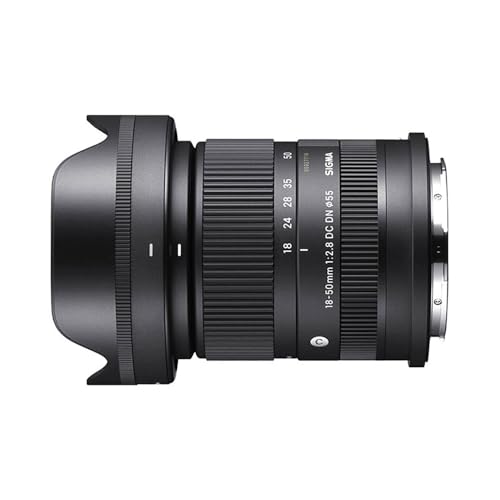

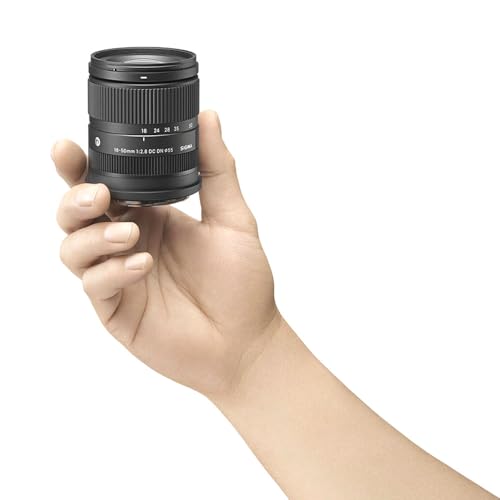
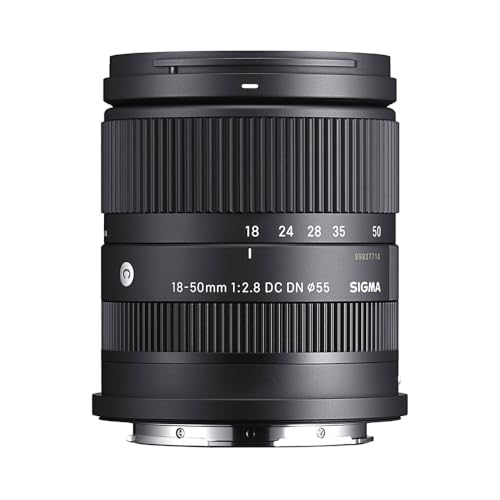
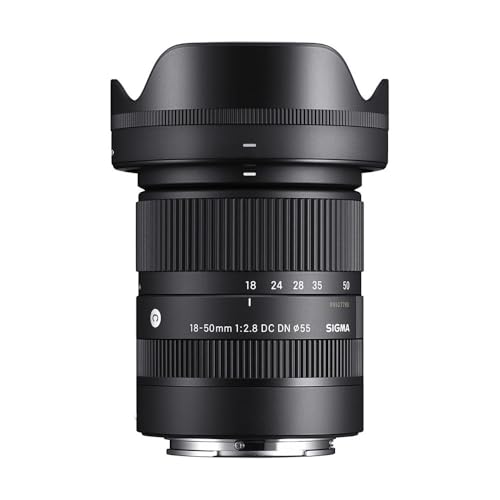
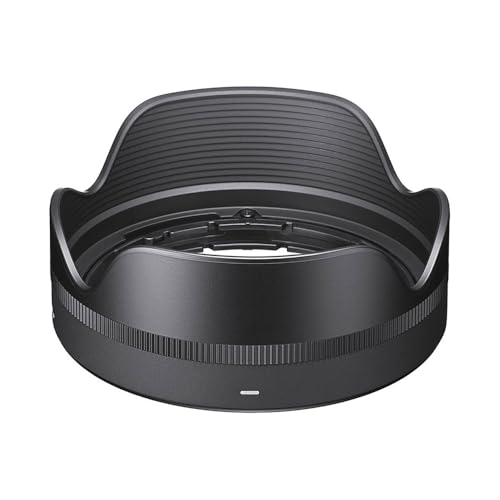
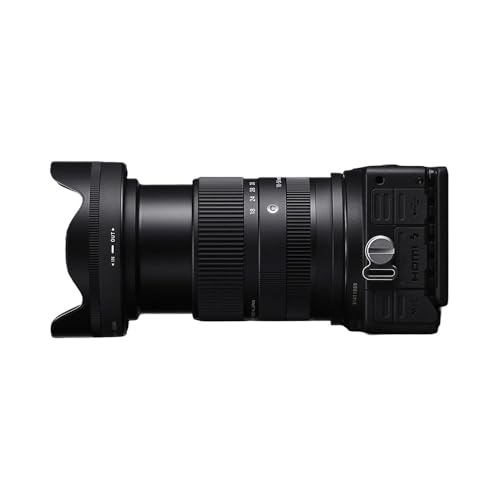
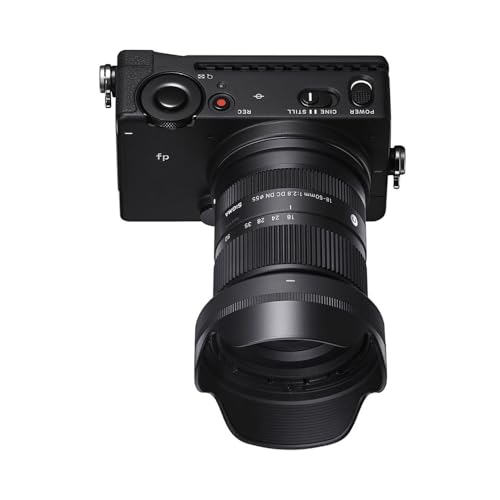


The constant f/2.8 aperture is what sets this apart from variable-aperture kit zooms. When you zoom from 18mm to 50mm, the exposure stays the same – no sudden darkening that forces auto-ISO to compensate and introduce grain. This consistency matters for video, where exposure shifts during a zoom pull look amateurish. The f/2.8 brightness also produces noticeably more background blur than the f/3.5-5.6 kit lens, especially at the 50mm end.
At 290g, this zoom weighs less than many prime lenses. The compact barrel barely extends beyond the ZV-E10 body, maintaining the camera’s grab-and-go portability. For creators who travel, this weight advantage compounds – one lens in the bag instead of two or three primes, with less total weight.
The zoom range covers most content creation needs. At 18mm (27mm equivalent), it’s wide enough for environmental B-roll, product flat lays, and vlogging with a selfie stick. At 50mm (75mm equivalent), it isolates subjects for interview-style talking-head shots and product close-ups. The stepping motor autofocus is quiet and reliable with the ZV-E10’s tracking system, though not quite as snappy as Sony’s linear motors on fast-moving subjects.
Pricing & Where to Buy
The Sigma 18-50mm f/2.8 DC DN is priced at $659 (as of March 2026) for the lens-only version.
- Buy on Amazon – Prime shipping available
- Check price at B&H Photo
- Check price at Adorama
- Buy used at KEH Camera – save with certified pre-owned
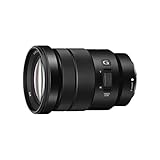
Sony E PZ 10-20mm f/4 G Lens
Serious ZV-E10 video creators who need smooth electronic zoom, ultra-wide coverage, and professional power zoom control for polished video production.
- Power zoom with smooth electronic control – professional zoom pulls for video production
- Ultra-wide 10-20mm range (15-30mm equivalent) with internal zoom – lens length stays constant
- Just 178g – the lightest lens on this list, perfect for gimbal-free handheld shooting on the ZV-E10
- f/4 maximum aperture is significantly slower than f/1.4 or f/1.8 primes – less effective in low light
- At $948, it’s the most expensive lens on this list – premium pricing for the power zoom feature
This is Sony’s premium ultra-wide zoom designed for video-first APS-C cameras. The power zoom ring enables smooth, repeatable zoom pulls that look professional on screen. At 10mm (15mm equivalent), it’s even wider than the Sony 11mm prime, and the internal zoom design means the lens length never changes during zooming. At 178g, it’s the lightest zoom on this list. The tradeoff is the f/4 aperture, which is slower than the prime options and limits low-light performance and background blur.
The Sony E PZ 10-20mm f/4 G is designed for creators who treat the ZV-E10 as a professional video tool. Its headline feature is the power zoom – a smooth electronic zoom ring that produces buttery, consistent zoom movements impossible to replicate with a manual zoom barrel.


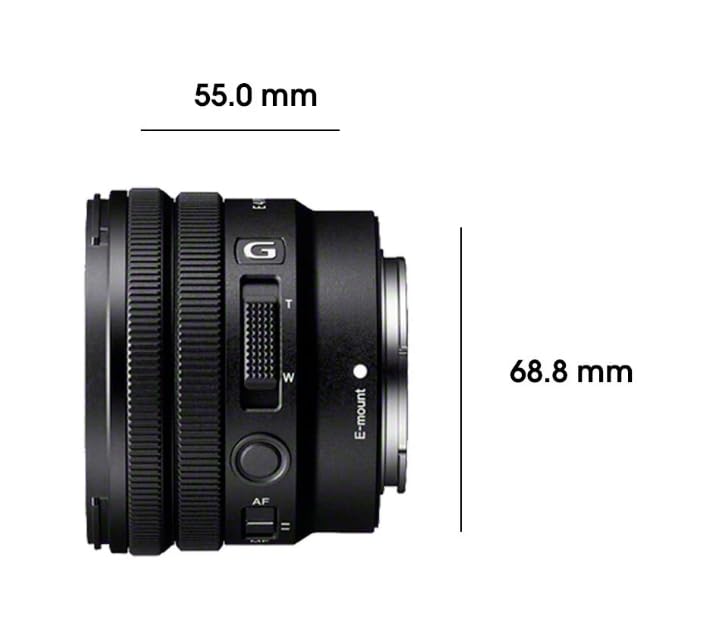
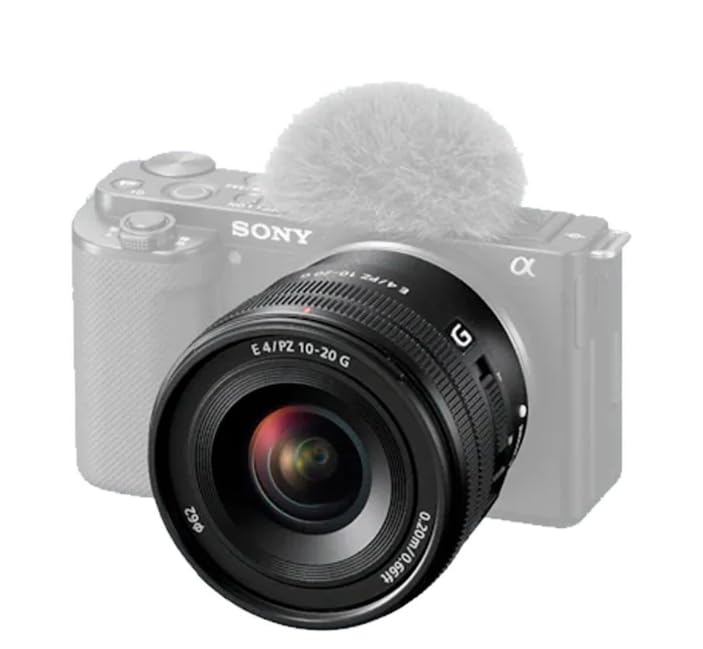


The 10-20mm range on APS-C (15-30mm equivalent) covers ultra-wide establishing shots at 10mm through a natural wide-angle perspective at 20mm. This makes it incredibly versatile for video – zoom out for environmental context, zoom in for a slightly tighter talking-head framing, all in one smooth movement. The internal zoom design means the physical lens length never changes, which is critical for gimbal balance and prevents the lens from bumping into external microphones.
At 178g, this is actually lighter than the ZV-E10 body itself. The combined setup feels like holding a point-and-shoot camera, which makes extended shooting sessions comfortable. The G-series optics deliver sharp results across the frame, and the linear autofocus motor is fast and silent – matching the quality of the Sony 11mm prime.
The main limitation is the f/4 aperture. In well-lit environments and outdoors, this isn’t an issue. But in dim interiors, the ZV-E10 will need to push ISO higher than it would with an f/1.4 or f/1.8 prime, introducing more grain. For creators who primarily shoot in controlled lighting or outdoors, the power zoom capability more than compensates. For low-light specialists, pair this with a fast prime like the Sigma 16mm f/1.4 for indoor work.
Pricing & Where to Buy
The Sony E PZ 10-20mm f/4 G is priced at $948 (as of March 2026). It’s the priciest option here, reflecting the premium power zoom engineering and G-series optics.
- Buy on Amazon – Prime shipping available
- Check price at B&H Photo
- Check price at Adorama
- Buy used at KEH Camera – save with certified pre-owned
Sigma 30mm F1.4 Contemporary DC DN Lens for Sony E
ZV-E10 creators shooting talking-head content, interviews, product reviews, and cinematic B-roll who want a natural perspective with strong background blur.
- f/1.4 aperture delivers beautiful background blur and excellent low-light performance at just $419
- 45mm equivalent gives a natural, flattering perspective for talking-head and portrait content
- Over 4,800 reviews with 4.7-star rating – the most proven APS-C prime in the Sigma lineup
- 45mm equivalent is too tight for arm’s-length vlogging – strictly a tripod/desk lens for face-to-camera content
- No optical stabilization – handheld video at this focal length shows shake more than wider options
The Sigma 30mm f/1.4 is the go-to portrait and talking-head lens for the ZV-E10. At 30mm (45mm equivalent), it provides a natural field of view similar to what the human eye sees, making it ideal for sit-down content, product reviews on a desk, and cinematic B-roll. The f/1.4 aperture creates beautiful background blur that separates you from your environment. At $419, it’s also the most affordable lens on this list. The tradeoff is obvious – 45mm equivalent is too tight for arm’s-length vlogging, so this is strictly a secondary lens for most vloggers.
The Sigma 30mm f/1.4 DC DN is the best value proposition on this list. At $419, it delivers f/1.4 speed and optical quality that rivals lenses costing twice as much. For ZV-E10 creators who shoot talking-head content, product reviews, or cinematic B-roll, it’s an essential second lens.
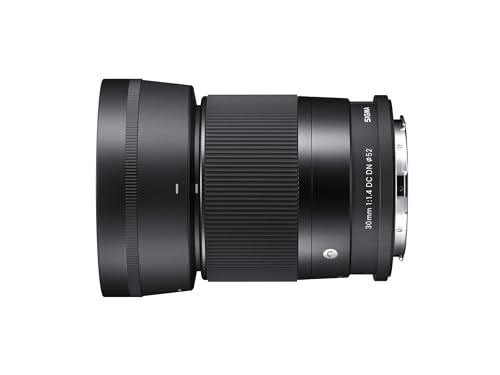
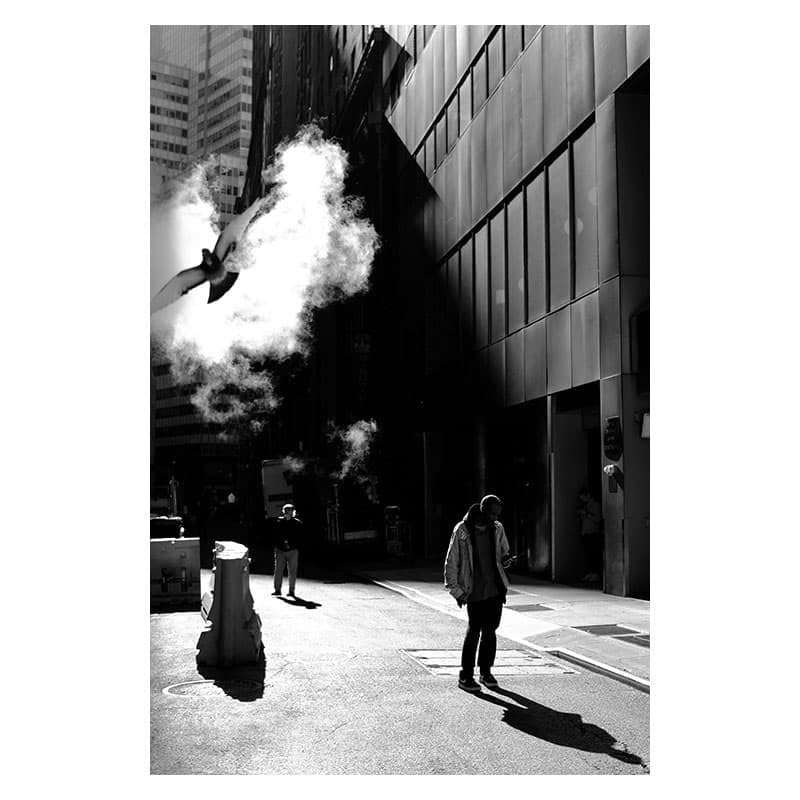
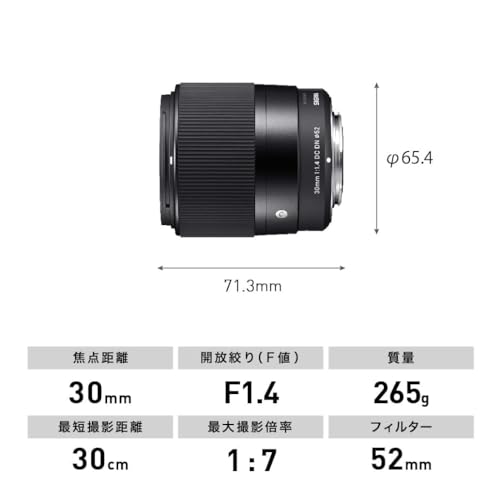

The 30mm focal length (45mm equivalent on APS-C) gives a perspective that closely matches how the human eye sees a scene. This makes footage look natural and cinematic rather than wide-angle distorted. For desk setups, interview-style content, and product reviews, this focal length frames the subject cleanly with enough context visible in the background. The f/1.4 aperture then blurs that background into a creamy wash that keeps viewer attention on the subject.
Image quality is excellent. Center sharpness is outstanding even wide open at f/1.4, and stopping down to f/2.0 makes the entire frame razor-sharp. Color rendering is neutral and natural, matching well with the ZV-E10’s color science. The stepping motor autofocus tracks faces reliably for video, though it can occasionally hunt in very low contrast situations.
The practical limitation is clear: 45mm equivalent is too tight for vlogging where you hold the camera at arm’s length. This is a lens for setups where the camera sits on a tripod or desk mount at a comfortable distance. Many Sigma lens users pair the 30mm with either the Sigma 16mm f/1.4 or the Sony 11mm for a versatile two-lens kit that covers both wide vlogging and tight portrait work.
Pricing & Where to Buy
The Sigma 30mm f/1.4 DC DN is priced at $419 (as of March 2026) – the most affordable lens on this list.
- Buy on Amazon – Prime shipping available
- Check price at B&H Photo
- Check price at Adorama
- Buy used at KEH Camera – save with certified pre-owned
TAMRON 11-20MM F/2.8 DI III-A RXD for Sony E APS-C Mirrorless Cameras
ZV-E10 creators who want ultra-wide zoom flexibility with a fast constant f/2.8 aperture for vlogging and environmental content.
- Constant f/2.8 across an ultra-wide 11-20mm range – combines wide vlogging coverage with low-light capability
- Sharp optics with quiet RXD autofocus – reliable face/eye tracking for solo video creators
- Compact at 335g with 67mm filter thread – balances well on the ZV-E10 for handheld shooting
- No optical stabilization – the ZV-E10 relies on electronic SteadyShot, which crops the already-wide frame
- Limited 11-20mm zoom range means you’ll need a second lens for anything tighter than 30mm equivalent
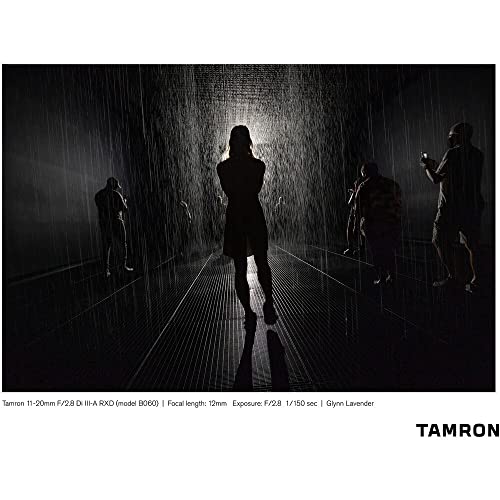
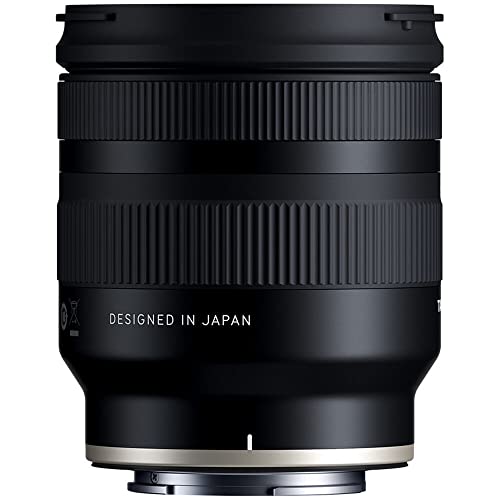
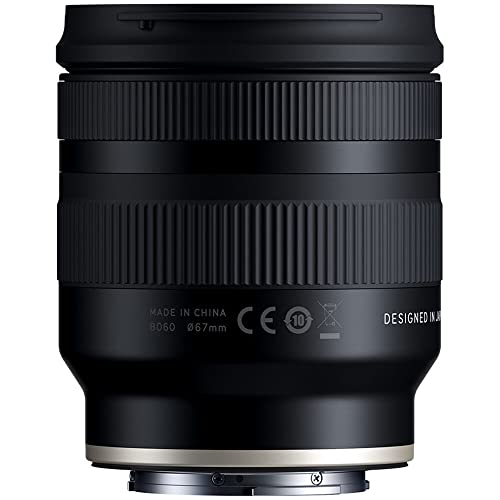
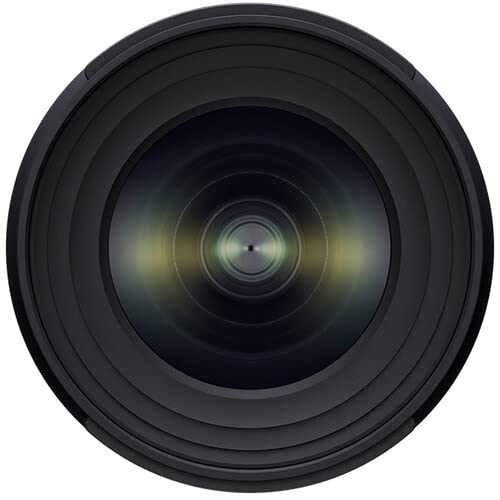
The Tamron 11-20mm f/2.8 combines ultra-wide coverage with the brightness of a constant f/2.8 aperture. At 11mm (16.5mm equivalent), it matches the Sony 11mm prime’s field of view. At 20mm (30mm equivalent), it provides a natural wide-angle perspective. The f/2.8 aperture is slower than the primes on this list, but significantly faster than the Sony PZ 10-20mm f/4. At 335g, it’s heavier than the Sony ultra-wide options but lighter than the Tamron 17-70mm. The RXD autofocus motor is quiet and reliable for video.
The Tamron 11-20mm f/2.8 splits the difference between the fixed-focal-length primes and the wider-range zooms. It delivers ultra-wide coverage with the light-gathering advantage of a constant f/2.8 aperture – something neither the Sony PZ 10-20mm (f/4) nor any prime (fixed focal length) can match simultaneously.


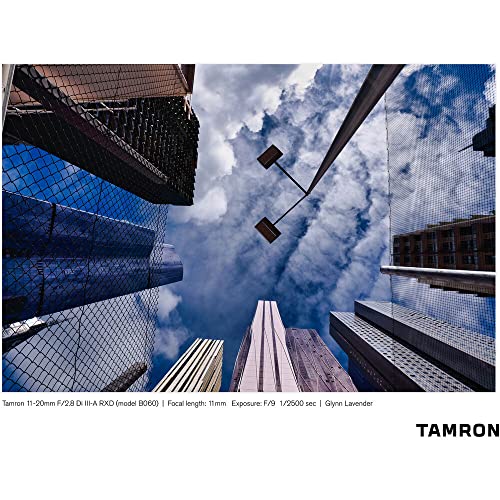
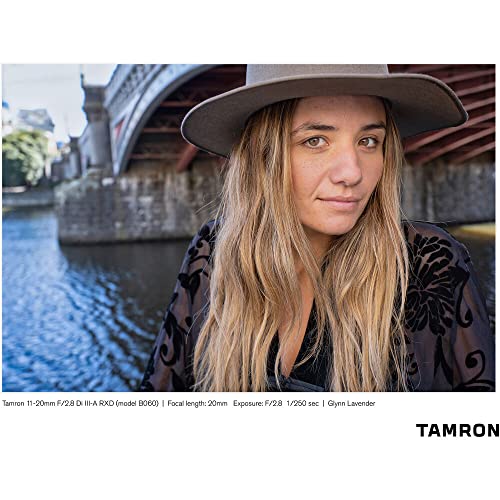
The 11mm end matches the Sony 11mm prime’s ultra-wide vlogging perspective, while 20mm (30mm equivalent) provides a slightly tighter framing useful for environmental B-roll and walking shots. Having both in one lens eliminates the need to swap between a wide prime and a normal prime during a shoot. The constant f/2.8 means exposure stays consistent when zooming, which is essential for video.
Optical quality is a Tamron strength. The lens is sharp across the frame even wide open, with well-controlled chromatic aberration and distortion that the ZV-E10’s in-camera corrections handle cleanly. The RXD (Rapid eXtra-silent stepping Drive) autofocus motor is fast and nearly inaudible, making it a good match for the ZV-E10’s sensitive built-in microphone.
At 335g and about 86mm in length, this is noticeably more compact than the Tamron 17-70mm f/2.8 (525g). It won’t unbalance the ZV-E10 the way heavier zooms can, though it’s still about twice the weight of the Sony 11mm prime. For creators who want ultra-wide zoom flexibility without the bulk, this is the sweet spot.
Pricing & Where to Buy
The Tamron 11-20mm f/2.8 is priced at $659 (as of March 2026).
- Buy on Amazon – Prime shipping available
- Check price at B&H Photo
- Check price at Adorama
- Buy used at KEH Camera – save with certified pre-owned
Tamron 17-70mm f/2.8 Di III-A VC RXD Lens for Sony E Mount
ZV-E10 creators who want the widest zoom range possible with optical stabilization and constant f/2.8 brightness – ideal for travel and run-and-gun shooting.
- Only lens here with optical stabilization (VC) – genuine shake reduction that complements the ZV-E10’s electronic SteadyShot
- Massive 17-70mm (25.5-105mm equivalent) range at constant f/2.8 – covers wide, normal, and short telephoto in one lens
- Excellent optical quality with fast, silent RXD autofocus – sharp across the frame with reliable tracking
- At 525g, it’s front-heavy on the 343g ZV-E10 body – extended handheld shooting is tiring without a rig
- 17mm on APS-C (25.5mm equivalent) is not ultra-wide enough for close arm’s-length vlogging
The Tamron 17-70mm f/2.8 is objectively one of the best APS-C zooms ever made. It covers an enormous 25.5-105mm equivalent range at a constant f/2.8, and it’s the only lens on this list with optical vibration compensation (VC). The catch for ZV-E10 users: at 525g, it’s significantly front-heavy on the 343g camera body. Extended handheld vlogging gets tiring, and the balance feels off without a cage or grip. For tripod-based work, travel, and creators who need one lens for everything including telephoto reach, it’s outstanding. But for handheld vlogging, lighter options rank higher.
The Tamron 17-70mm f/2.8 Di III-A VC RXD is the most capable zoom on this list by the numbers. A constant f/2.8 aperture across a 4.1x zoom range, optical stabilization, and fast autofocus – on paper, it’s everything a creator needs in one lens. The reason it ranks seventh instead of first comes down to one factor: weight.

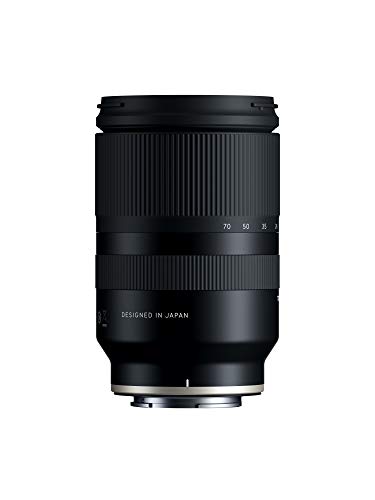
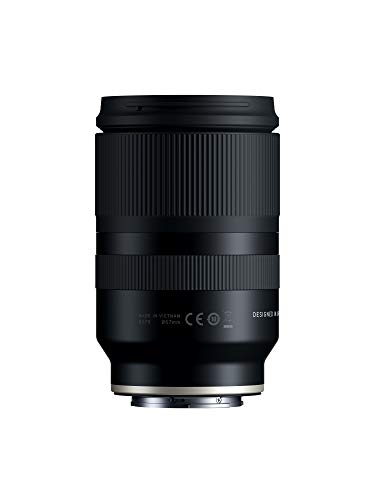
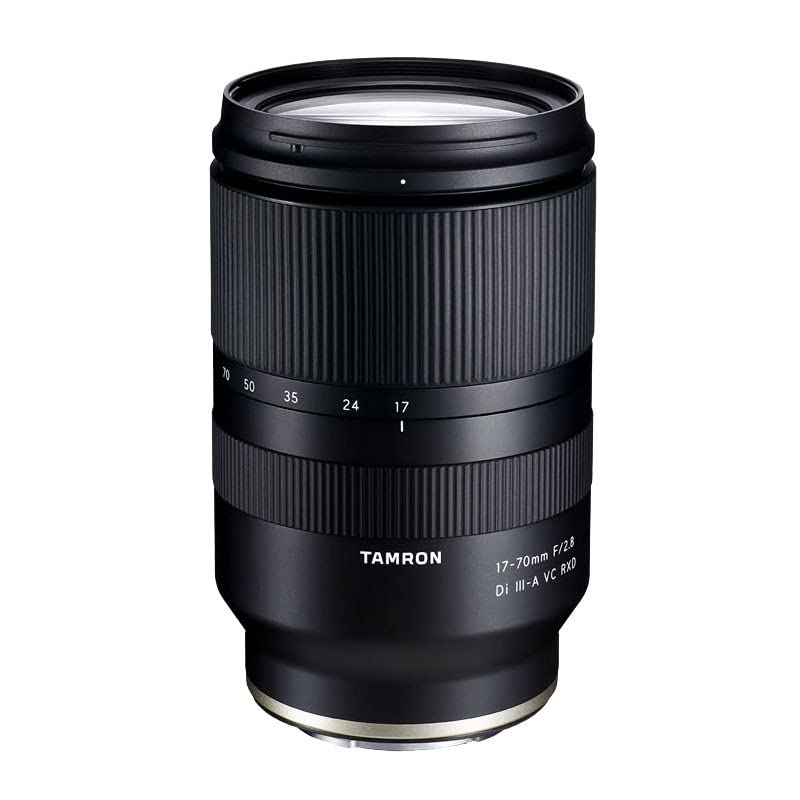

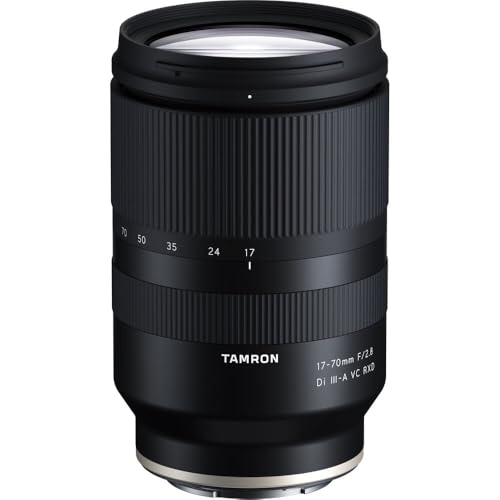
At 525g, the Tamron weighs more than the ZV-E10 body itself. Mounting it creates a front-heavy combination that pulls the camera forward during one-handed shooting. After 15-20 minutes of handheld vlogging, most creators feel the weight. This matters because ZV-E10 buyers specifically chose this camera for its compact size – pairing it with a lens that doubles the system weight works against that decision.
That said, the Tamron 17-70mm excels in specific use cases. The optical VC stabilization is the only genuine in-lens shake reduction on this list, and it stacks with the ZV-E10’s electronic SteadyShot for even smoother footage. The 17-70mm range (25.5-105mm equivalent) means you can go from wide environmental shots to tight headshots without swapping lenses. For travel content, event coverage, and tripod-based studio work, this versatility is hard to beat.
Optical quality is outstanding. The lens is sharp across its entire zoom range and performs well even wide open at f/2.8. The RXD autofocus motor tracks quickly and silently, and focus breathing is minimal. For creators who prioritize versatility and stabilization over portability, or who use a cage/grip that redistributes weight, this remains one of the best APS-C zooms available.
Pricing & Where to Buy
The Tamron 17-70mm f/2.8 Di III-A VC RXD is priced at $599 (as of August 2026).
- Buy on Amazon – Prime shipping available
- Check price at B&H Photo
- Check price at Adorama
- Buy used at KEH Camera – save with certified pre-owned
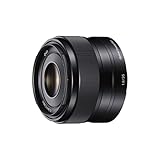
Sony SEL35F18 35mm f/1.8 Prime Fixed Lens
ZV-E10 creators who need optical stabilization in a compact prime for handheld B-roll, product close-ups, and walking shots.
- Built-in OSS optical stabilization – the only stabilized prime here, stacks with the ZV-E10’s electronic SteadyShot
- Just 154g – one of the lightest lenses available, maintains the ZV-E10’s compact profile
- Classic 52.5mm equivalent perspective with f/1.8 – excellent for product shots, food content, and natural-looking B-roll
- 52.5mm equivalent is too tight for any form of vlogging or self-shooting – strictly a secondary content lens
- Older optical design (2013) – autofocus is reliable but audibly noisier than newer linear-motor lenses
The Sony E 35mm f/1.8 OSS is the only stabilized prime on this list. At 35mm (52.5mm equivalent), it gives a classic normal perspective that’s ideal for product shots, food content, and cinematic B-roll. The built-in OSS provides genuine optical stabilization that stacks with the ZV-E10’s electronic SteadyShot – a real advantage for smooth handheld walking shots. At just 154g, it’s also one of the lightest lenses here. The tradeoff: 52.5mm equivalent is too tight for any form of self-shooting, making this purely a B-roll and secondary content lens.
The Sony E 35mm f/1.8 OSS fills a specific niche: it’s the only APS-C prime with built-in optical stabilization for the ZV-E10. That OSS system makes a meaningful difference for handheld video, especially at this slightly longer focal length where shake is more visible than on ultra-wide lenses.
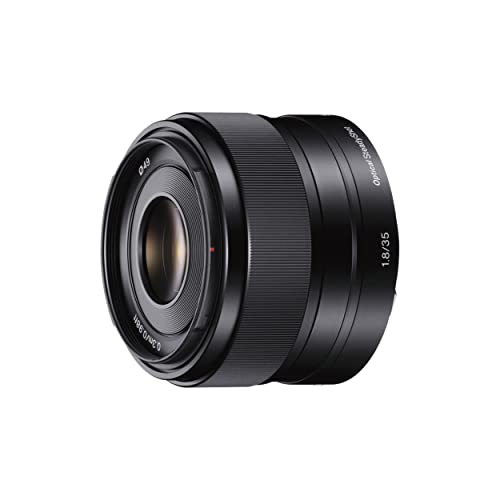



The 35mm focal length (52.5mm equivalent on APS-C) provides a normal perspective that photographers have relied on for decades. It’s ideal for product photography, food content, detail shots, and cinematic B-roll where you want the scene to look natural without the environmental context of a wide-angle lens. The f/1.8 aperture produces pleasant background blur and handles low-light shooting cleanly.
At 154g, this is the second-lightest lens on the list after the Sony PZ 10-20mm. Combined with the ZV-E10, the total kit weight stays under 500g – pocket-friendly for casual shooting. The compact barrel doesn’t extend beyond the camera grip, maintaining a balanced feel.
The main limitation is the older autofocus motor design. While reliable for face tracking, it’s audibly louder than newer stepping and linear motor lenses. The ZV-E10’s built-in microphone may pick up focus motor noise in quiet environments, so an external microphone is recommended. Despite its 2013 launch, the optical quality holds up well – sharp center performance wide open and excellent edge-to-edge sharpness stopped down to f/2.8.
Pricing & Where to Buy
The Sony E 35mm f/1.8 OSS is priced at $598 (as of March 2026).
- Buy on Amazon – Prime shipping available
- Check price at B&H Photo
- Check price at Adorama
- Buy used at KEH Camera – save with certified pre-owned
VILTROX 13mm F1.4 f/1.4 e Mount Lens Super Wide Angle APS-C Prime Lens for Sony E Mount
Budget-conscious ZV-E10 creators who want ultra-wide coverage with a fast f/1.4 aperture for low-light vlogging without paying Sony prices.
- Ultra-wide 13mm (19.5mm equivalent) with f/1.4 aperture – faster than the Sony 11mm at a lower price
- Step-less aperture ring and face/eye AF support – video-friendly design for content creation
- USB-C firmware update support – future-proofing through software improvements
- 420g is significantly heavier than the Sony 11mm (181g) – adds front-weight to the ZV-E10
- Third-party AF tracking can be less consistent than native Sony lenses in challenging conditions
The Viltrox 13mm f/1.4 offers a compelling value proposition: ultra-wide framing similar to the Sony 11mm (19.5mm vs 16.5mm equivalent) combined with an f/1.4 aperture that’s a full stop faster. At $486, it costs $212 less than the Sony 11mm. The tradeoff is refinement – the STM autofocus is reliable but occasionally less consistent than Sony’s linear motors, edge sharpness isn’t quite as clean, and at 420g it’s more than twice the weight of the Sony 11mm. For creators on a budget who want wide and fast, it delivers. For those prioritizing weight and AF reliability, the Sony 11mm remains the better investment.
The Viltrox 13mm f/1.4 is an interesting alternative for creators who want the ultra-wide vlogging experience but can’t justify the Sony 11mm’s $698 price tag. At $486, it saves over $200 while delivering a faster f/1.4 aperture that’s genuinely useful in low-light situations.

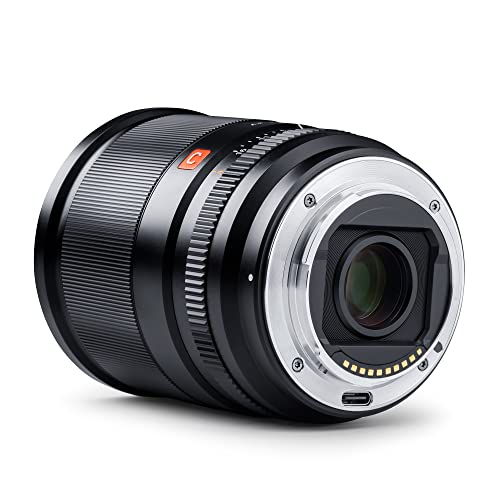
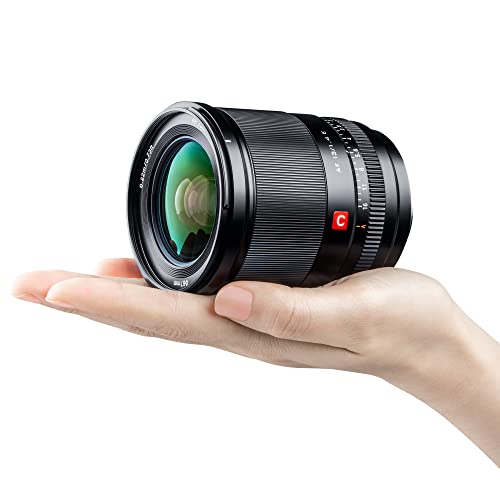
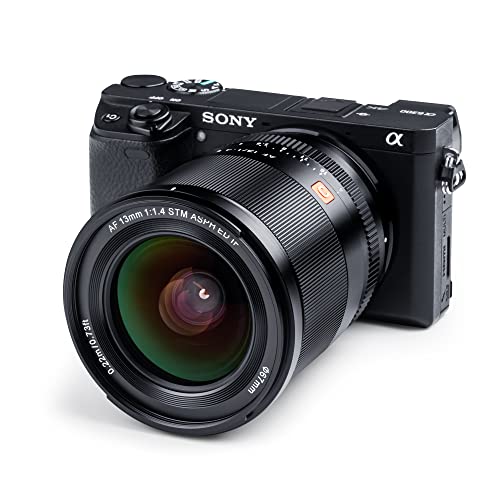
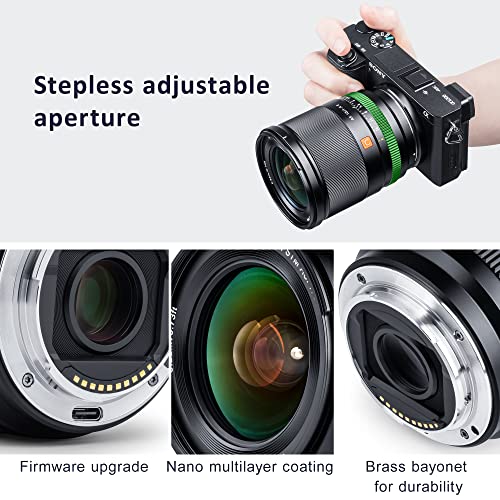
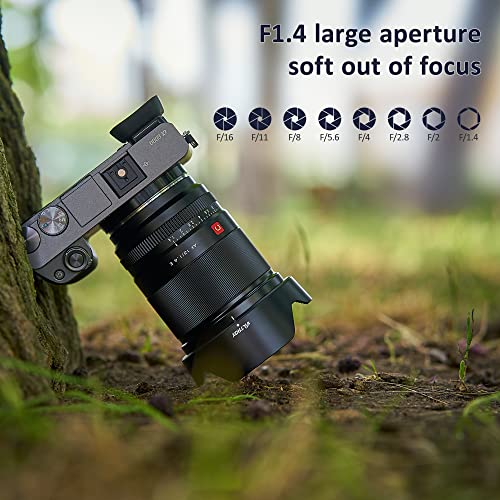
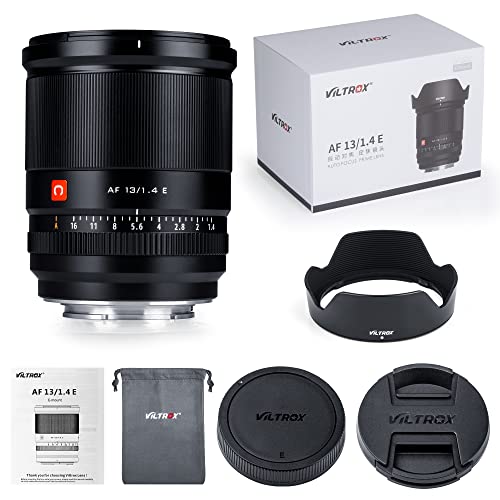
The 13mm focal length (19.5mm equivalent) is slightly tighter than the Sony 11mm’s 16.5mm equivalent, but still wide enough for arm’s-length vlogging with background context visible. The f/1.4 aperture compensates by letting in significantly more light – useful for indoor content, evening shoots, and situations where the Sony’s f/1.8 might require higher ISO.
Build quality is solid with a metal barrel and smooth focus ring. The step-less aperture ring is a thoughtful video feature that prevents exposure jumps when adjusting aperture during recording. USB-C firmware updates allow Viltrox to improve AF performance and compatibility over time – a feature that’s already been used to improve tracking on newer Sony bodies.
The weight difference from the Sony 11mm is the biggest practical concern. At 420g versus 181g, the Viltrox more than doubles the mass on the front of the ZV-E10. This creates a noticeably front-heavy feel during extended handheld use. AF tracking is good but can occasionally hunt in low-contrast situations where Sony’s native lenses lock on more confidently.
Pricing & Where to Buy
The Viltrox 13mm f/1.4 is priced at $486 (as of March 2026).
- Buy on Amazon – Prime shipping available
- Check price at B&H Photo
- Check price at Adorama
Sony E PZ 18-105mm f/4.0 G OSS Lens for Sony E Camera
ZV-E10 creators who need maximum zoom versatility with power zoom, optical stabilization, and professional video features for run-and-gun production work.
- Massive 18-105mm (27-157mm equivalent) range with power zoom – covers wide-angle to telephoto with smooth electronic zoom control
- Built-in OSS optical stabilization plus constant f/4 aperture – steady handheld footage across the entire zoom range
- G-series optics with proven reliability – sharp, well-corrected images backed by nearly 2,850 reviews at 4.5 stars
- f/4 maximum aperture is the slowest on this list – limits low-light performance and background blur compared to f/1.4-f/2.8 options
- 427g and extending barrel design adds front-weight and may interfere with external microphone positioning
The Sony E PZ 18-105mm f/4 G OSS is the do-everything video zoom. It combines power zoom, optical stabilization (OSS), a massive 5.8x zoom range, and constant f/4 aperture in one package. For event coverage, travel content, and run-and-gun production where you can’t swap lenses, nothing else on this list matches its range. The tradeoffs are the f/4 aperture (slower than every other lens here in low light) and 427g weight. For creators who prioritize versatility and stabilization over low-light performance, it’s the most feature-packed zoom option.
The Sony E PZ 18-105mm f/4 G OSS is the longest-range zoom on this list and the only one that combines power zoom with optical stabilization. It’s a favorite among filmmakers and run-and-gun video producers who need the flexibility to go from wide establishing shots to tight close-ups without stopping to swap glass.
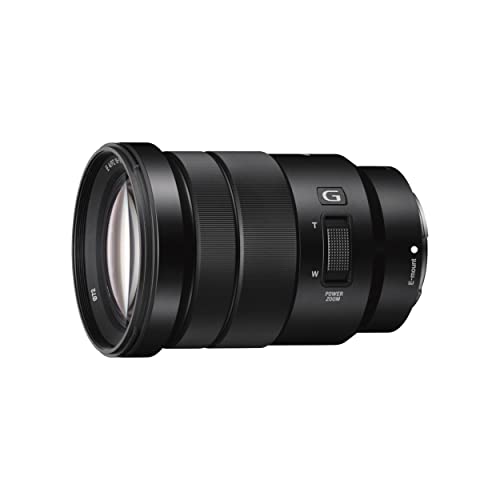

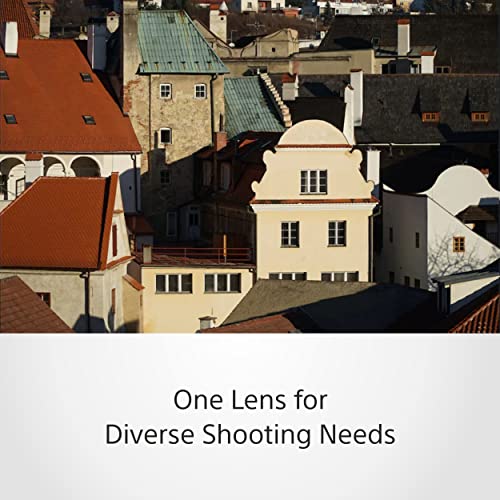


The 18-105mm range (27-157mm equivalent on APS-C) is remarkably versatile. At 18mm, you can capture environmental B-roll and wide-angle establishing shots. Zoom to 35mm for a natural perspective. Push to 70-105mm for tight headshots, product detail shots, or isolating subjects from a distance. The power zoom ring makes all transitions smooth and repeatable – essential for professional-looking video that manual zoom barrels can’t consistently deliver.
The built-in OSS stabilization is the other standout feature. Combined with the ZV-E10’s electronic SteadyShot, it produces noticeably smoother footage than unstabilized lenses – particularly important at longer focal lengths where shake is amplified. This is one of only three lenses on this list (alongside the Tamron 17-70mm and Sony 35mm OSS) that offers genuine optical stabilization.
The f/4 aperture is the most significant limitation. In well-lit conditions, it’s perfectly adequate. But in dim interiors and evening shoots, the ZV-E10 will push ISO higher than it would with an f/1.4 or f/2.8 lens, introducing visible grain. For creators who work primarily in controlled or daylight conditions, the versatility easily outweighs this limitation. For low-light specialists, this should be a secondary lens paired with a fast prime.
Pricing & Where to Buy
The Sony E PZ 18-105mm f/4 G OSS is priced at $848 (as of March 2026).
- Buy on Amazon – Prime shipping available
- Check price at B&H Photo
- Check price at Adorama
- Buy used at KEH Camera – save with certified pre-owned
Choose the Best Lens for Your ZV-E10
The right lens depends entirely on how you use the ZV-E10. For dedicated vloggers who hold the camera at arm’s length, the Sony E 11mm F1.8 is the clear first choice – its ultra-wide field of view and featherweight design were purpose-built for this exact camera and use case.
For creators who want one lens that handles everything, the Sigma 18-50mm f/2.8 DC DN covers vlogging through portraits at a constant f/2.8 in a remarkably compact package. It’s the most versatile option that still respects the ZV-E10’s small form factor.
Budget-conscious buyers should look at the Sigma 30mm f/1.4 DC DN at $419 – it’s the most affordable lens here with exceptional optical quality for talking-head content. Pair it with the Sigma 16mm f/1.4 for a fast two-prime kit that covers wide vlogging and portrait work for under $1,000 combined.
All 10 lenses on this list use the Sony E-mount natively, support face and eye autofocus, and are currently in stock. Match the lens to your shooting style, and the ZV-E10 will deliver results that punch well above its price class.
Product specifications, ratings, and prices were verified against live Amazon listings and manufacturer pages in August 2026 and are subject to change.
Manufacturer Specifications
- Sony, official E-mount lens and Alpha ZV-E10 pages – E 11mm F1.8, E 35mm F1.8 OSS, PZ 10-20mm G, PZ 18-105mm G optical specs and ZV-E10 body weight
- Tamron, official Di III-A lens pages – 17-70mm f/2.8 VC RXD and 11-20mm f/2.8 RXD focal range, VC stabilization, and weight figures
- Sigma, official Contemporary lens pages – 16mm f/1.4, 18-50mm f/2.8, and 30mm f/1.4 DC DN specs for Sony E APS-C
Image Sources
- Amazon.com product listings – Lens product-gallery photography for each pick shown in this guide
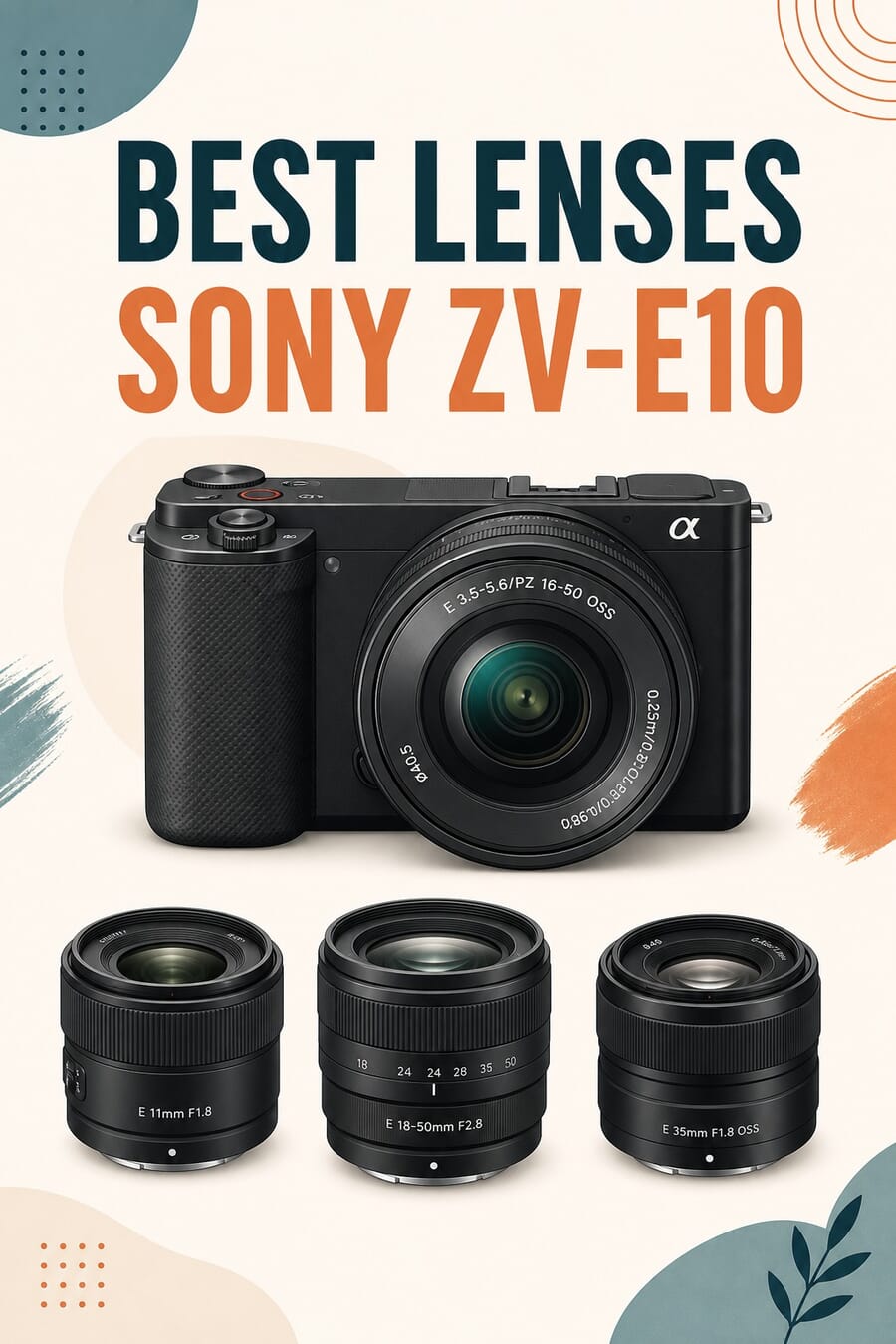
- PhotoWorkout editorial – Pin graphic and comparison layout created in-house
PhotoWorkout is reader-supported. When you buy through links on our site we may earn an affiliate commission at no extra cost to you.


Disclosure/Disclaimer: As an Amazon Associate, we earn from qualifying purchases. Certain content was provided "as is" from Amazon and is subject to change or removal at any time. Product prices and availability: Amazon prices are updated daily or are accurate as of the date/time indicated and are subject to change. Any price and availability information displayed on Amazon.com at the time of purchase will apply to the purchase of this product.