


- A Pennsylvania bill (House Bill 2603, Rep. Joe Ciresi) would legally require smart glasses and other wearable recording devices sold and used in PA to show a visible indicator when they’re recording video or audio.
- It would make it illegal to record someone without their actual knowledge using a wearable whose indicator is missing — or has been disabled, temporarily or permanently.
- It’s one of the first US state efforts aimed squarely at smart-glasses recording, and it plugs into Pennsylvania’s existing two-party-consent wiretap law — there’s no federal equivalent.
- For photographers, this is privacy law meeting camera gear: discreet capture devices like the Ray-Ban Meta glasses are exactly what it targets, and the “don’t disable the light” clause speaks to modders who’ve been removing the LED.
- It’s only introduced, not law yet — but if it passes it sets a template other states tend to copy, so anyone shooting with wearables should track it.
The recording light on a pair of smart glasses has, until now, been a courtesy — a small LED you trust the wearer not to tape over. Pennsylvania wants to make it the law. State Representative Joe Ciresi has introduced House Bill 2603, which would require smart glasses and other wearable recording devices sold and used in Pennsylvania to carry a visible indicator whenever they’re capturing video or audio. As Gizmodo and Android Authority report, it’s one of the first US state moves aimed specifically at the privacy problem these face-cameras create — and it matters to anyone who shoots, or gets shot, with a camera that doesn’t look like one.

What HB 2603 Actually Says
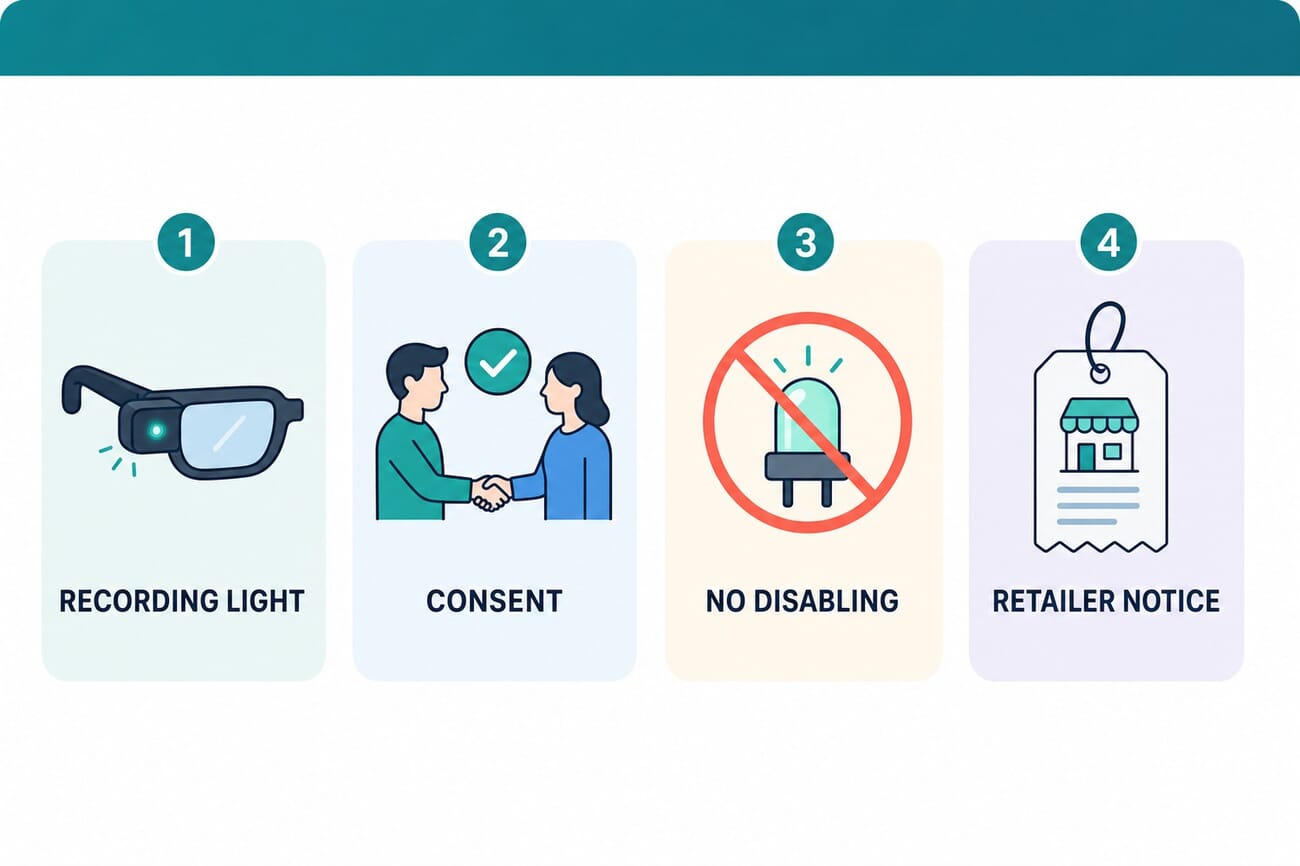
The bill, announced in early June, has a few concrete parts. The device must have a visible indicator that shows when it’s recording audio or video. It would be illegal to use a wearable recording device to capture another person without that person’s actual knowledge if the device lacks that indicator — or if the indicator has been disabled, temporarily or permanently. And retailers selling these devices in Pennsylvania would have to inform buyers about the state’s existing laws on recording people.
Ciresi has framed it as an update that sits under Pennsylvania’s current wiretapping laws rather than a brand-new recording regime. That’s the important legal hook: Pennsylvania is a two-party-consent state, meaning everyone in a private conversation generally has to consent to being recorded. A visible light is how the bill ensures the other person has the “actual knowledge” that consent law assumes. Penalties aren’t spelled out in the early coverage; that detail waits on the full bill text.
Why Photographers Should Care
This is where privacy law meets camera gear. Smart glasses like the Ray-Ban Meta and Google’s new glasses are appealing precisely because they capture discreetly — no raised phone, no obvious lens. That’s a gift for candid and street-style work and a problem for everyone who didn’t agree to be filmed. HB 2603 lands on the second concern. If you shoot with a wearable, the takeaway is simple: the recording indicator is becoming a legal obligation, not an etiquette nicety, and disabling it could expose you to liability under consent law. The same logic extends to any tiny wearable camera that can roll without an obvious tell.
The bill’s explicit ban on disabling the indicator is pointed. There’s already a small scene of modders removing or covering the Ray-Ban Meta’s LED to turn the glasses into covert cameras — exactly the behavior lawmakers are reacting to. For working photographers, the reputational and legal risk of being mistaken for that crowd is real, and a mandated, tamper-evident light actually protects the honest shooter as much as the bystander.
Will It Actually Become Law?
Not yet — and maybe not soon. HB 2603 has only been introduced; it hasn’t passed either chamber, and tech-hardware mandates at the state level are notoriously tricky to enforce (a Pennsylvania law can’t easily dictate how a global device is manufactured). Coverage has already flagged the practical gaps: out-of-state devices, software-only recording, and enforcement against someone who quietly disabled a light. But the direction of travel is what matters. As face-cameras go mainstream, recording-consent rules aimed at them are going to keep appearing, and states often copy each other’s privacy templates. If you build any part of your work around wearable capture, this is the first domino worth watching.
Frequently Asked Questions
What would Pennsylvania’s smart-glasses bill require?
House Bill 2603 would require smart glasses and other wearable recording devices sold and used in Pennsylvania to show a visible indicator when recording audio or video, and would make it illegal to record someone without their actual knowledge using a device that lacks the indicator or has it disabled.
Is it law yet?
No. The bill has been introduced by Rep. Joe Ciresi but has not passed either chamber or been enacted. It’s an early-stage proposal.
How does it relate to existing law?
It plugs into Pennsylvania’s existing wiretapping statute. Pennsylvania is a two-party-consent state, so everyone in a private conversation must generally consent to being recorded; a visible light helps establish the “actual knowledge” that consent requires.
Does it affect photographers specifically?
Indirectly but meaningfully. It targets discreet wearable cameras like smart glasses. If you shoot with a wearable, a working recording indicator would become a legal requirement, and disabling it could create liability under consent law.
Is this the first US law like it?
It’s among the first state-level efforts aimed specifically at smart-glasses recording indicators. There is no federal rule requiring a recording light on these devices.
The Bottom Line
A mandatory recording light sounds small, but it’s the first real attempt to write the etiquette of face-cameras into law — and it arrives just as smart glasses go mainstream. For photographers, the message isn’t alarm, it’s awareness: discreet capture is exactly what regulators are now watching, consent laws already apply to you, and the little LED you might be tempted to ignore is on its way to becoming a legal obligation. Pennsylvania is first, but it almost certainly won’t be last.
Primary Coverage
- PA House — Rep. Ciresi news release on HB 2603 – Primary announcement of the smart-glasses recording-indicator bill
- Gizmodo — Smart glasses would legally require a recording light – What the bill requires and its consent-law context
- Android Authority — Proposed smart-glasses recording law – Bill details, status and enforcement gaps
Image Sources
- PhotoWorkout illustrations – The featured image, requirements infographic and pin are original PhotoWorkout illustrations (no brand devices depicted)