


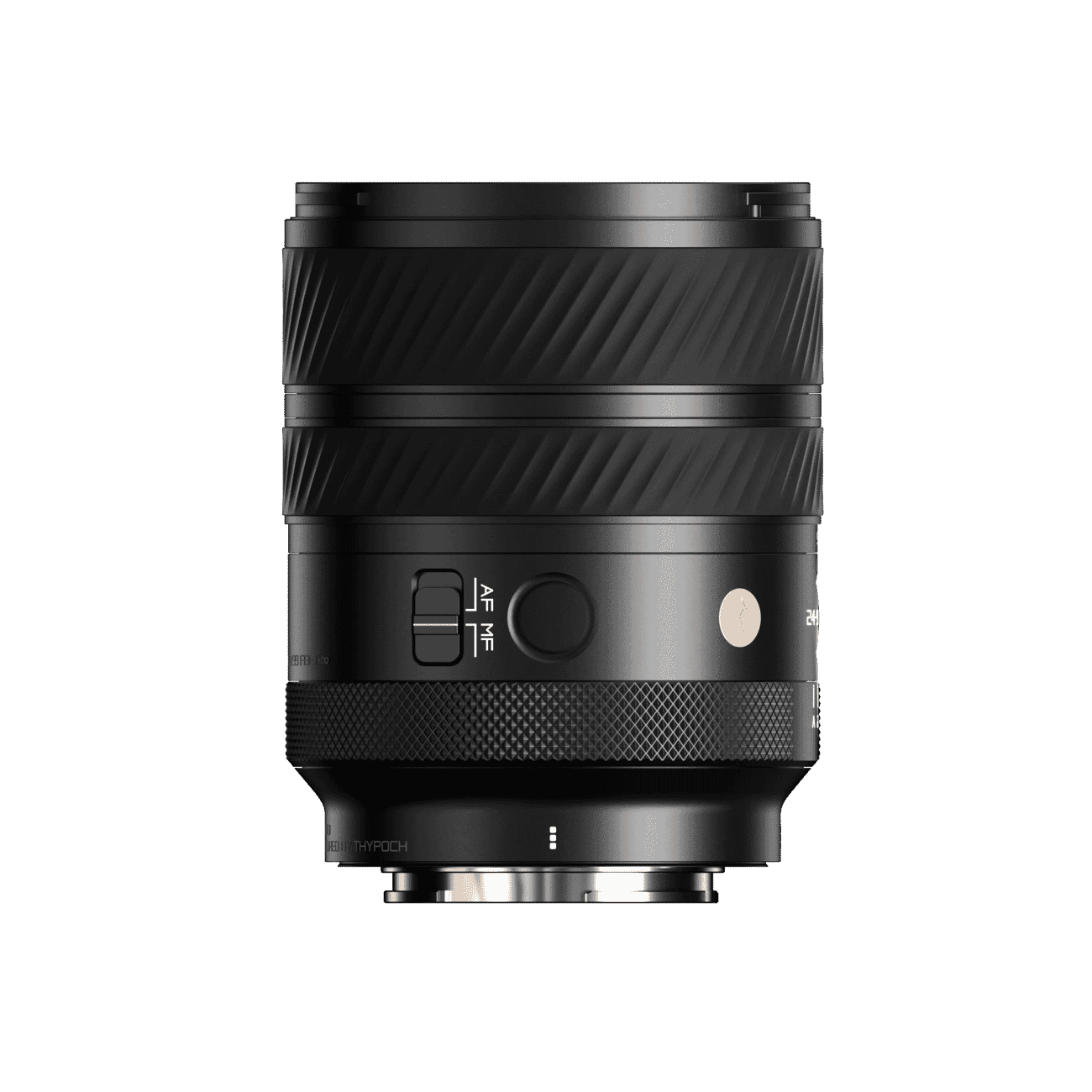
- Thypoch officially launched the Voyager 24-50mm f/2.8 on May 14, 2026 — the company’s first-ever autofocus lens AND first zoom lens, simultaneously. Sony E-mount full-frame.
- Pre-order pricing: $649 standard, with a launch promotion at $619 from May 14 through May 31. That’s roughly half the price of the Sony FE 24-50mm f/2.8 G ($1,198) — the most direct competitor.
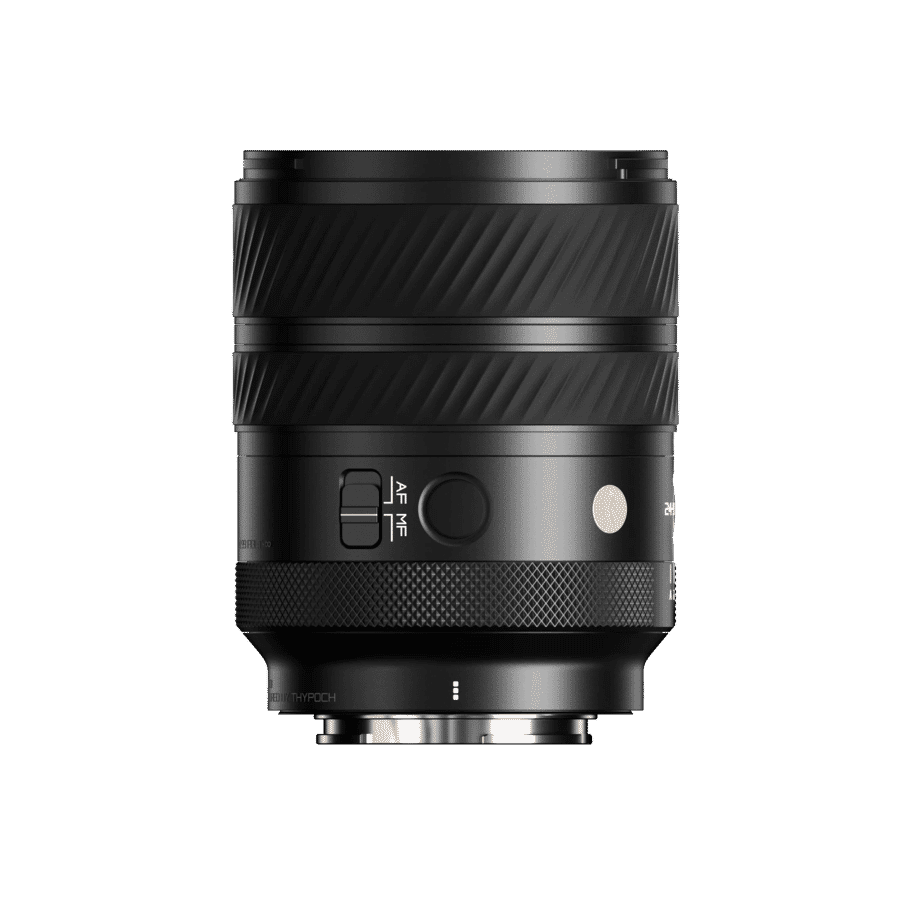
- Spec highlights: 16 elements / 13 groups, internal zoom (no extension during use), 432g weight, 92.8mm length, dust + moisture resistance, fast quiet AF with Sony Eye AF + subject tracking support.
- Christopher Frost has a hands-on review live on YouTube as of launch day. Photo Rumors published a side-by-side comparison vs the Sony 24-50 G, Tamron 28-75mm G2, and Sigma 28-70mm DG DN — Thypoch comes in dramatically cheaper across the board.
Thypoch officially launched the Voyager 24-50mm f/2.8 on May 14, 2026 — and the launch is meaningful for two structural reasons. It’s the company’s first-ever autofocus lens, and its first zoom lens, simultaneously. The Chinese lens maker built its reputation on premium manual-focus primes (the Simera, Eureka, and Ksana series for Leica M and Nikon Z mounts); the Voyager represents a complete strategic pivot into the autofocus competitive space, on Sony E-mount.
PhotoWorkout covered the prototype reveal at The Photography & Video Show 2026 in Birmingham back in March. Today’s launch closes that loop with confirmed specs, pricing, pre-order, and the first hands-on reviews from Christopher Frost and others. The headline number: $619 promotional pricing through May 31, regular $649 thereafter — roughly half what Sony charges for its native FE 24-50mm f/2.8 G.
From Manual-Focus Primes to AF Zooms — A Strategic Pivot
Thypoch’s existing lineup spans three series, all manual focus, all primes:
- Simera Series — Fast f/1.4 primes at 21mm, 28mm, 35mm, 50mm, and 75mm for Leica M-mount, plus a Nikon Z 50mm and a Simera-C cine prime line for Sony E
- Eureka Series — More compact primes including a 28mm f/2.8 and 50mm f/2
- Ksana Series — Character-driven lenses with vintage-inspired coatings (the 21mm f/3.5 specifically references 1970s Canon FD glass)
Every one of those lenses is manual focus. Adding autofocus AND zoom in a single product launch isn’t an incremental step — it’s a complete engineering category change. Required: AF motor integration, electronic body communication, complex variable-focal-length optical design, and the firmware infrastructure to support Sony Eye AF, subject tracking, and IS-coordinate signals. None of that existed in Thypoch’s lens R&D stack three years ago.
This is the move that signals Chinese third-party lens brands are now competing on every front. Viltrox, Samyang, and TTArtisan have shipped AF zooms before; Thypoch was conspicuously absent from the AF category until today. With the Voyager, the gap closes.
Confirmed Specifications
- Mount: Sony E (full-frame)
- Focal range: 24-50mm
- Maximum aperture: constant f/2.8
- Optical construction: 16 elements in 13 groups
- Special elements: aspherical + high-refractive-index elements
- Coatings: nano-coatings to reduce flare and aberrations
- Zoom mechanism: internal zoom — total length stays constant during use
- Weight: 432g
- Length: 92.8mm
- Autofocus: fast and quiet, with Sony Eye AF + subject tracking support
- Weather sealing: dust and moisture resistant
- Filter thread: confirmed at announcement (Thypoch publishes the exact spec on the product page)
The internal zoom design is the standout structural choice. Most affordable f/2.8 zooms physically extend during use, which throws off gimbal balance and creates wear points where dust enters. Internal zoom designs like the Voyager’s are typically reserved for premium pro-tier glass (the Sony FE 24-70mm f/2.8 GM II uses internal zoom; most Tamron G2 zooms do not). Including internal zoom at the $619 price point is unusual.
Where the Voyager Sits vs the Established Competition
Photo Rumors published a side-by-side comparison on launch day covering the four most-relevant alternatives for Sony E-mount standard-zoom shoppers. The pricing gap is the headline:
- Thypoch Voyager 24-50mm f/2.8: $619 (launch promo) / $649 (after May 31)
- Sony FE 24-50mm f/2.8 G: $1,198 — exact focal-range match, native Sony, ~440g
- Tamron 28-75mm f/2.8 Di III VXD G2: $899 — wider zoom range, more reach, ~540g
- Sigma 28-70mm f/2.8 DG DN Contemporary: $899 — middle-range option, ~470g
The Voyager undercuts the Sony G by roughly $580. Even against the Tamron and Sigma, it’s $250-280 cheaper. For shoppers who want a constant f/2.8 standard zoom for Sony E and aren’t committed to native Sony glass, the Voyager is the cheapest serious option in the category by a meaningful margin.
The trade-off: Thypoch is a newer brand without the long-term firmware-update track record of Sony, Tamron, or Sigma. Future Sony body releases may require Thypoch firmware updates to maintain full AF compatibility — a question that doesn’t apply to native Sony glass and is well-managed by Tamron and Sigma based on their 2018-2026 history. For first-purchase Sony E buyers building a kit on a budget, the Voyager looks like the best-value option in the category. For working professionals shooting paid weddings or events where AF reliability is paramount, the established brands carry less risk.
Christopher Frost’s Hands-On Review (Launch Day)
Christopher Frost — one of the most-watched independent lens reviewers on YouTube — published a hands-on review of the Voyager on launch day. Reviews going live concurrent with the launch (rather than weeks later) is a notable signal: Thypoch is confident enough in the lens to sample it to a known-skeptical reviewer ahead of mass shipping. Frost’s coverage is the first independent voice on the Voyager beyond the press release.
The review is embedded on YouTube and worth watching for the practical-use observations — autofocus speed in low light, sharpness across the zoom range, real-world bokeh character, and whether Thypoch’s “prime-like rendering” claim holds up at 24mm and 50mm. For shoppers weighing the Voyager against the established competition, the Frost review is the most credible independent data point available before the lens ships in volume.
The Photo Rumors comparison page links to the exact B&H comparison page covering all four lenses on a single side-by-side spec sheet — a useful resource for spec-driven buyers.
Pre-Order, Pricing, and Shipping
- Promotional pricing: $619 (May 14 through May 31, 2026)
- Regular pricing: $649 (after May 31)
- Pre-order direct: Thypoch online store
- Pre-order at retailers: B&H Photo, Adorama, plus authorized regional retailers
Shipping starts shortly after pre-order, with Thypoch indicating early-batch shipments alongside the May 14 launch. The promotional $30 discount through May 31 is a meaningful saver — the difference between $619 and $649 is small in absolute terms but reflects Thypoch’s launch incentive to push pre-orders rather than wait-and-see buyers.
Bottom Line
The Thypoch Voyager 24-50mm f/2.8 is a meaningful product on two levels. As a strategic shift, it signals that Chinese third-party lens makers — historically committed to manual-focus prime niches — are now ready to compete head-to-head with established AF-zoom manufacturers. As a buyer-decision option, it offers a constant f/2.8 standard zoom for Sony E at roughly half the price of the equivalent native Sony glass, with internal zoom design typically found on lenses twice its price.
For Sony E-mount shooters building a first-purchase standard-zoom kit on a budget, the Voyager is the new value benchmark in the category. For working professionals where AF firmware-update reliability matters more than the upfront $250-580 saved, the established Sony/Tamron/Sigma options remain the safer choice. Christopher Frost’s launch-day review is the data point worth watching before committing — independent reviewer access to the lens at launch is itself a confidence signal from Thypoch worth noting.
Manufacturer
- Thypoch Store — Voyager 24-50mm f/2.8 Product Page – Thypoch's official product page with confirmed specs, pre-order, and product photography.
Primary Coverage
- Imaging Resource — Thypoch Unveils Its First Autofocus Zoom Lens – Imaging Resource's launch coverage with full spec sheet and pricing details.
- Photo Rumors — Comparing the Voyager 24-50mm f/2.8 to the Competition – Photo Rumors' comparison page covering Thypoch vs Sony, Tamron, and Sigma alternatives in the same category.
- Christopher Frost — Voyager 24-50mm f/2.8 Hands-On Review (YouTube) – Independent hands-on review live on launch day — the most credible practical-use data point on the Voyager before mass shipping.
Image Sources
- Thypoch Store — Voyager Product Photography – Featured + lead image is Thypoch's official Voyager 24-50mm product photo from the manufacturer's online store. Image credit: Thypoch.