


- The final photograph of Oscar Wilde — taken about three hours after his death on November 30, 1900 — sold at Bonhams London in February 2026 for $375,000 (£279,800).
- It carried a presale estimate of just £3,000–£5,000, so the hammer price came in roughly 7,400% over the high estimate.
- The value wasn’t about technical quality — a faded, amateur snapshot — but about provenance, rarity, and the cultural weight of its subject and moment.
- For working photographers, it’s a reminder that historical significance, authenticity, and a documented story can outweigh sharpness — and that matters more in the AI era, not less.
A small, faded photograph just sold for the price of a house. At Bonhams in London this February, the last known image of Oscar Wilde — a blurry, amateur shot taken roughly three hours after his death in 1900 — hammered for $375,000. Its presale estimate had been £3,000 to £5,000. It closed around 7,400% above the high end.
By any technical measure, it’s a poor photograph: out of focus, heavily aged, the kind of frame most photographers would delete. So what turns a snapshot like that into a six-figure artifact? The answer says a lot about how photographs accrue value — and what actually makes an image irreplaceable.
What Actually Sold at Bonhams
The photograph was taken by Maurice Gilbert, a young French marine infantryman who had befriended Wilde near the end of his life. Wilde died on November 30, 1900, at the Hôtel d’Alsace in Paris, impoverished and in exile after his imprisonment. Gilbert photographed him about three hours later, laid out in a white gown amid flowers — a quiet, intimate post-mortem image rather than a formal portrait.
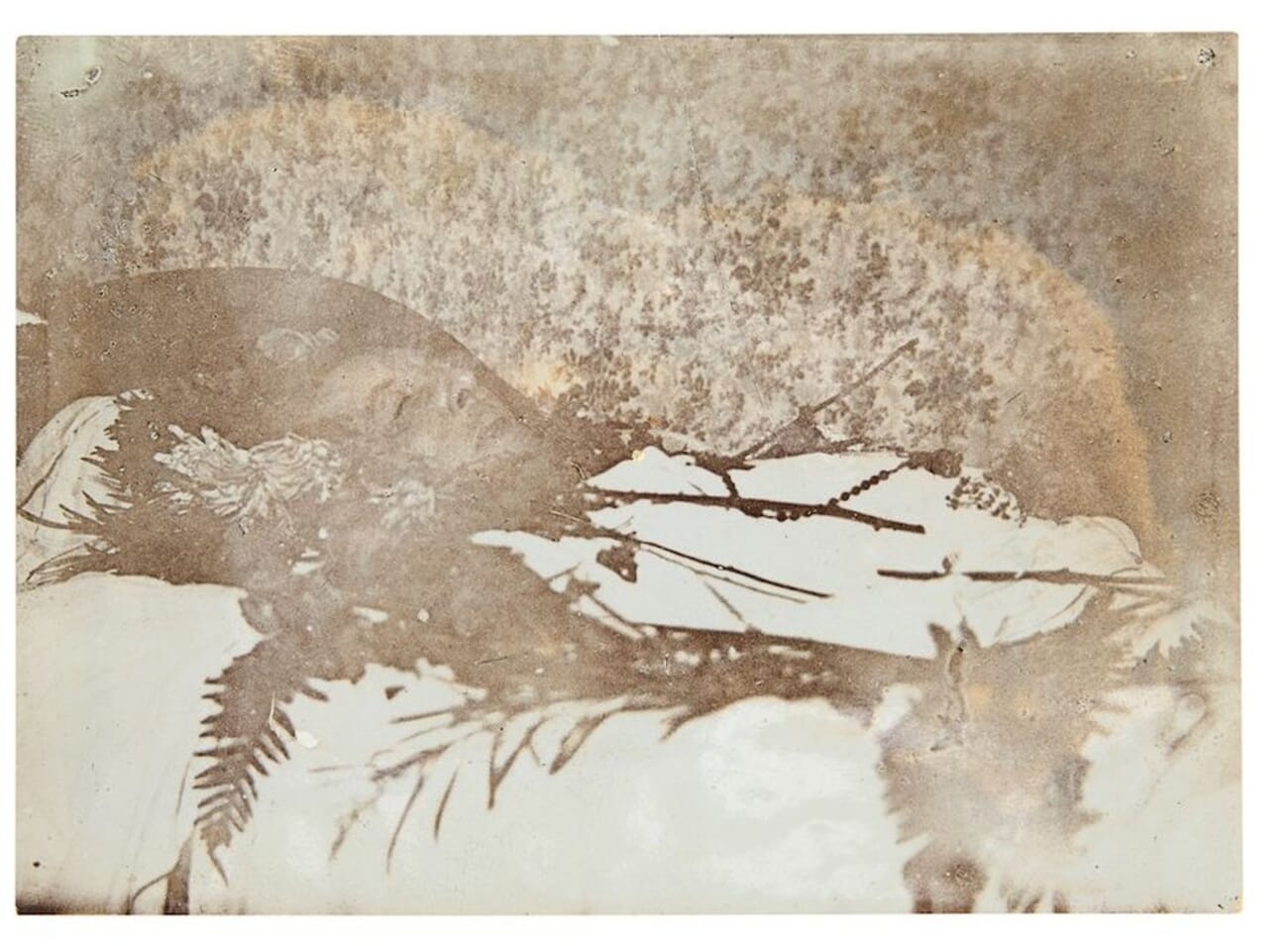
It didn’t sell in a vacuum. The print headlined a roughly $2 million Bonhams sale of Wilde material, and its provenance was unusually strong: it spent more than 60 years in the collection of Jeremy Mason, a Wilde specialist, and carries a handwritten inscription on the back attributed to Robert Ross — Wilde’s friend and literary executor, who was in the room when he died. That paper trail is a large part of why a faded snapshot outran its estimate by two orders of magnitude.
Why a Faded Snapshot Beats a Technically Perfect One
Photography’s auction market runs on a logic that can feel backwards to anyone who obsesses over sharpness and dynamic range. Technical quality is rarely the driver. Four other things are:
- Irreplaceability. This is the last photograph of Wilde, of a moment that can never be re-shot. Scarcity that’s absolute — not “rare,” but singular — is what bidders chase.
- The subject and the moment. Wilde is one of the most culturally resonant figures of the 19th century, and the image documents the end of his story. The photograph is a relic as much as a picture.
- Provenance. A documented chain of custody and an authenticated inscription by someone who was present transform a print from “an old photo” into a verified historical object.
- Story. Collectors don’t just buy an image; they buy everything attached to it. The richer and more verifiable the narrative, the higher the ceiling.
What Collectors Actually Pay For
In fine-art photography, the gap between a $50 reprint and a six-figure print usually comes down to factors that have nothing to do with the picture’s resolution: whether it’s a vintage print made close to the time of exposure, who has owned it, its condition, and how tightly its history is documented. A modern reprint of a famous negative is a poster. A vintage, provenanced print is an artifact — and the market prices the difference brutally.
Where It Sits Among Record Photographs
To be clear, $375,000 doesn’t approach the top of the photography market. Man Ray’s Le Violon d’Ingres sold for about $12.4 million in 2022, the auction record for a photograph; Andreas Gursky’s Rhein II brought roughly $4.3 million in 2011; Edward Steichen’s The Pond — Moonlight went for nearly $2.9 million back in 2006. What’s striking about the Wilde print is the source of its value. Those record-holders are celebrated as artworks — composition, technique, vision. The Wilde photograph is valued almost entirely for who is in it and what it documents, despite being, photographically, a throwaway. Both paths lead to serious money; they just start from opposite ends.
What It Means for Photographers Today
The takeaway isn’t that you should chase deathbed photos. It’s that an image’s lasting worth often lives in things many shooters undervalue: documenting a real moment, preserving context, and being able to prove what a picture is and where it came from. That last point is sharpening fast. As AI-generated images flood every feed — and as AI-made work reaches festivals and even slips into major photo competitions — authenticated, human-made photographs with a verifiable provenance look less like nostalgia and more like the scarce asset. The same instinct that drives collectors to pay for a documented Wilde print is the one quietly raising the value of anything provably real, a tension we also unpacked in the AI ‘Ansel Adams’ copyright saga.
FAQ
Who took the last photo of Oscar Wilde?
Maurice Gilbert, a French marine infantryman who had befriended Wilde shortly before his death, made the image at the Hôtel d’Alsace in Paris on November 30, 1900, roughly three hours after Wilde died.
Why did it sell so far above its estimate?
Two forces collided: an exceptionally documented provenance (60+ years in a noted collection, with an inscription attributed to Robert Ross) and a singular, irreplaceable subject. When more than one determined bidder wants the only object of its kind, estimates stop meaning much.
What is the most expensive photograph ever sold?
At auction, Man Ray’s Le Violon d’Ingres (1924) holds the record, selling for about $12.4 million at Christie’s in 2022. Andreas Gursky’s Rhein II held the title before that at roughly $4.3 million.
Is the photograph in the public domain?
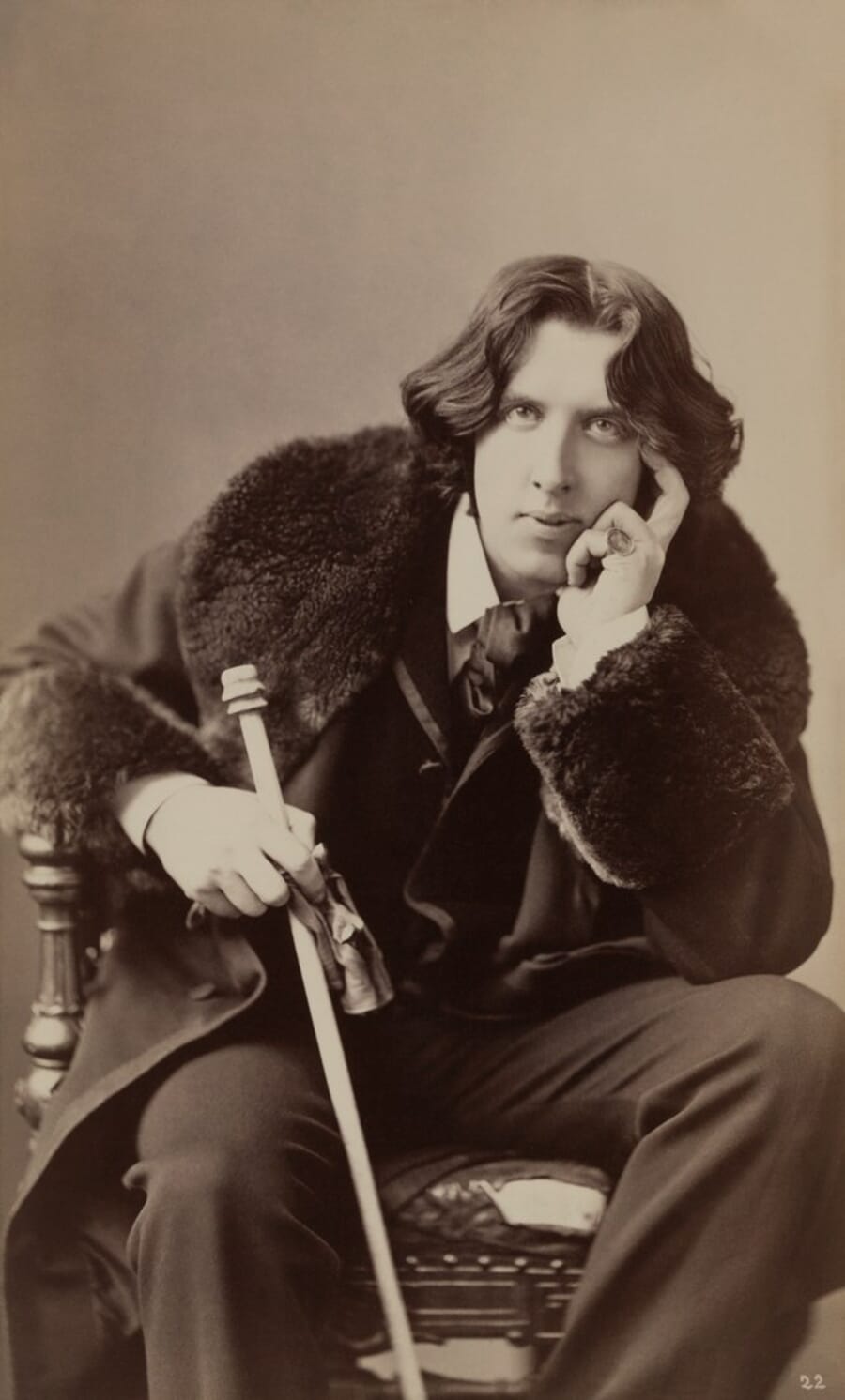
The 1900 image is old enough to be out of copyright in most jurisdictions, but the physical print’s market value comes from its provenance and rarity, not its reproduction rights. The famous Sarony studio portraits of Wilde from 1882 are firmly in the public domain.
The Bottom Line
A $375,000 hammer price for a blurry post-mortem snapshot looks absurd until you stop judging it as a photograph and start seeing it as a historical document. Value in this corner of the market is built from rarity, subject, provenance, and story — and the cleaner that story, the higher it climbs. In an era when anyone can generate a flawless image in seconds, the photographs that hold their worth will be the ones that are unmistakably, verifiably real.
Featured image: Napoleon Sarony, Oscar Wilde (1882), public domain via The Metropolitan Museum of Art.
Primary Coverage
- Digital Camera World — “Eerie photograph of Oscar Wilde on his deathbed sells for US$375,000” – Sale price, estimate, and the photograph's backstory.
- Bonhams — Lot 115, Wilde death-bed photograph (Maurice Gilbert), 30 November 1900 – The auction lot listing for the photograph.
- Artnet News — “Final Photograph of Oscar Wilde Leads $2 Million Sale of His Artifacts” – Context on the wider Bonhams Wilde sale.
- PetaPixel — “The Story Behind the Last Photograph of Oscar Wilde on His Death Bed” – Maurice Gilbert and the circumstances of the photograph.
Image Sources
- Napoleon Sarony portraits of Oscar Wilde (1882) — public domain via The Metropolitan Museum of Art; gallery image via Unsplash (Franco Debartolo) – Public-domain studio portraits and illustrative photography.
Disclosure: This article contains affiliate links. When you purchase through these links, we may earn a commission at no additional cost to you. This helps support our research and allows us to continue providing free buying guides. All opinions and recommendations are based on our independent research and analysis.