


- Fujifilm’s Imaging business has become a genuine profit engine: FY2026 (year ended March 2026) revenue hit ¥627.1 billion (about $3.9 billion, +15.7%) and operating income ¥160.0 billion (about $1.0 billion, +14.9%).
- Imaging now contributes roughly 37% of group operating profit — up from about 27% a year earlier — for a company better known for healthcare and film.
- The X100VI has been supply-constrained for over two years. Fujifilm doubled production to about 15,000 units a month and raised the US price from $1,599 to $1,799, yet it still sells above MSRP used.
- Whether the scarcity is deliberate is hotly debated — Fujifilm denies engineering shortages, and sensor supply is genuinely tight — but the effect is the same: scarcity protects desirability, pricing power and margins.
- The growth flywheel is Gen-Z: Instax instant cameras hook young buyers, who later upgrade to the X-series. If you want an X100VI, expect waitlists and above-MSRP pricing as the new normal.
For two years, the most frustrating camera to actually buy has also been one of the most desirable. The Fujifilm X100VI is perpetually out of stock, sells for over its sticker price on the used market, and shows no sign of becoming easy to get. The obvious read is that Fujifilm simply can’t make enough of them. The more interesting read — and the one Fujifilm’s own financials quietly support — is that the shortage isn’t a problem the company is racing to fix. It’s a feature of how Fujifilm now makes money.
Behind the memes about endless waitlists is a real business story: cameras have quietly become one of Fujifilm’s biggest profit drivers, and scarcity is doing a lot of the heavy lifting. Here’s what the numbers show, why the “deliberate shortage” theory is both compelling and contested, and what it all means if you’re the one trying to buy a camera.
When you buy through links on our site, we may earn a commission at no cost to you. We evaluate products independently. Commissions do not affect our evaluations.
Imaging Is Now Carrying Fujifilm
Fujifilm is a sprawling conglomerate — healthcare, semiconductor materials, document solutions — where cameras have historically been a smaller, sentimental slice of the business. That’s changed. In the fiscal year ended March 2026, the Imaging segment posted revenue of ¥627.1 billion (about $3.9 billion), up 15.7% year over year, and operating income of ¥160.0 billion (about $1.0 billion), up 14.9%. Most strikingly, Imaging now accounts for roughly 37% of the entire group’s operating profit, up from about 27% a year earlier.
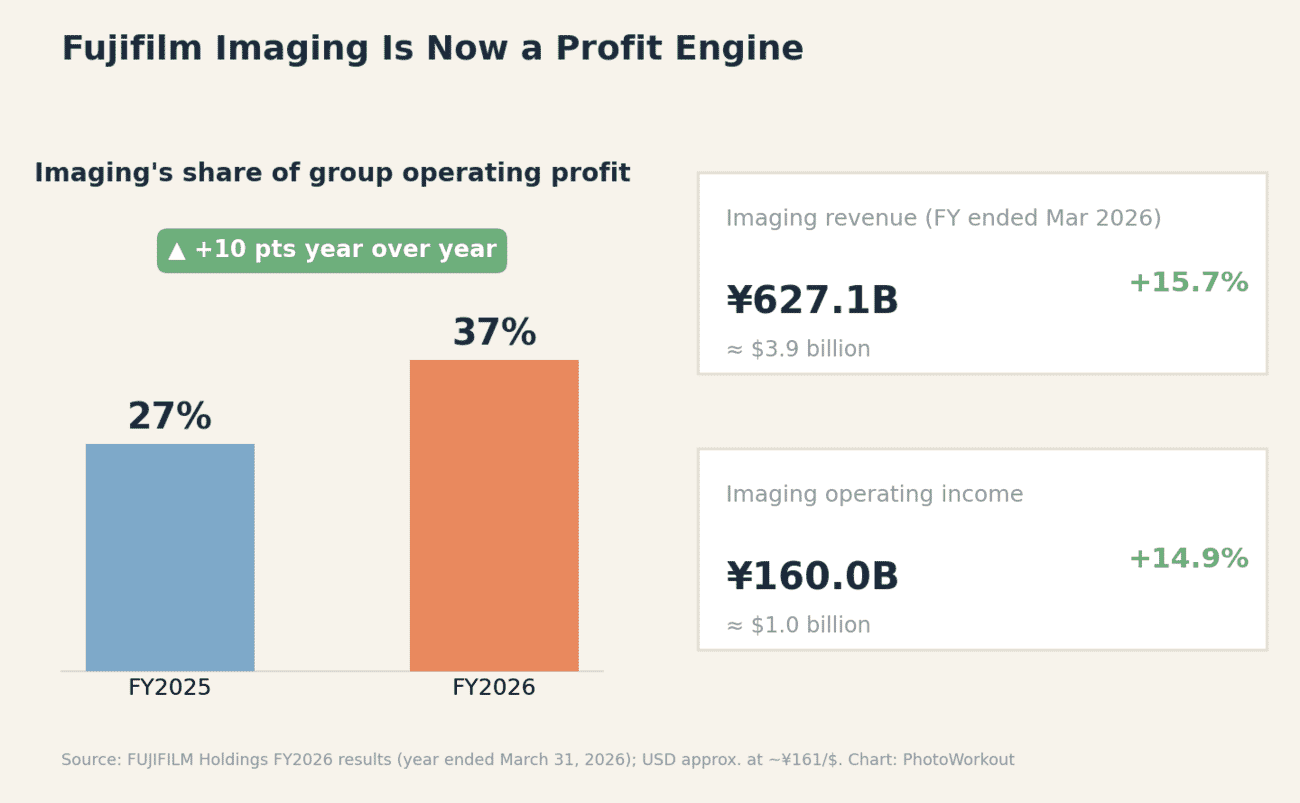
That’s a remarkable shift for a division many assumed was in slow, dignified decline a decade ago. When a third of a conglomerate’s profit comes from cameras, the people running it start protecting that profit very carefully — and that’s exactly where the shortage conversation begins.
The X100VI Shortage That Won’t End
The X100VI has been hard to buy since launch — and we’re now past the two-year mark with no real relief. Fujifilm has responded the way you’d expect a company chasing demand to: it reportedly doubled production to around 15,000 units a month and raised the US price from $1,599 to $1,799. And yet the camera still routinely sells above MSRP on the secondhand market, where a used copy can cost more than a new one you can’t find. Demand has simply refused to cool, and supply has never caught up.
A price increase that does nothing to dampen demand is, in business terms, a gift. It tells you the company has pricing power it isn’t fully using — and that’s the backdrop against which the “deliberate scarcity” argument gets made.
Is the Scarcity Deliberate? The Honest Answer
This is where it’s worth being careful, because there are two credible sides. The provocative version, argued by outlets like Fstoppers, is that Fujifilm is choosing not to fully chase demand — keeping the X100VI scarce protects its desirability, supports premium pricing, and avoids the risk of over-investing in factory capacity for a boom that might not last. Under-supplying a hot product, the argument goes, is the rational move when your confidence in long-term demand is high and your margins improve the tighter supply stays.
The counter-argument is just as serious, and Fujifilm itself rejects the idea that it manufactures shortages. Camera production depends on components — image sensors above all — that come from a small number of suppliers, and semiconductor capacity has been genuinely strained across the industry. It’s entirely plausible that Fujifilm underestimated X100VI demand and physically cannot ramp faster without sensor supply it doesn’t control. “Deliberate” implies a lever the company may not actually have.
The honest conclusion sits in the middle: intent is unprovable from the outside, but it almost doesn’t matter. Whether by strategy or by constraint, the effect is a textbook scarcity play — sustained desirability, durable pricing power, and a halo that lifts the whole X-series. And a company booking record imaging profits has very little incentive to flood the market and break the spell. That’s the part that reads as strategy regardless of how it started.
The Gen-Z Flywheel Behind the Demand
None of this works without demand that keeps regenerating, and that’s where Fujifilm’s real long game shows. Over the past five years the company has built unusual brand love among young buyers — a demographic most camera makers have struggled to reach. The mechanism is a flywheel: Instax instant cameras pull Gen-Z into the brand cheaply and socially, and a meaningful share of those buyers later graduate to the X-series when they want “a real camera” that still feels fun. The retro design language ties the two worlds together.
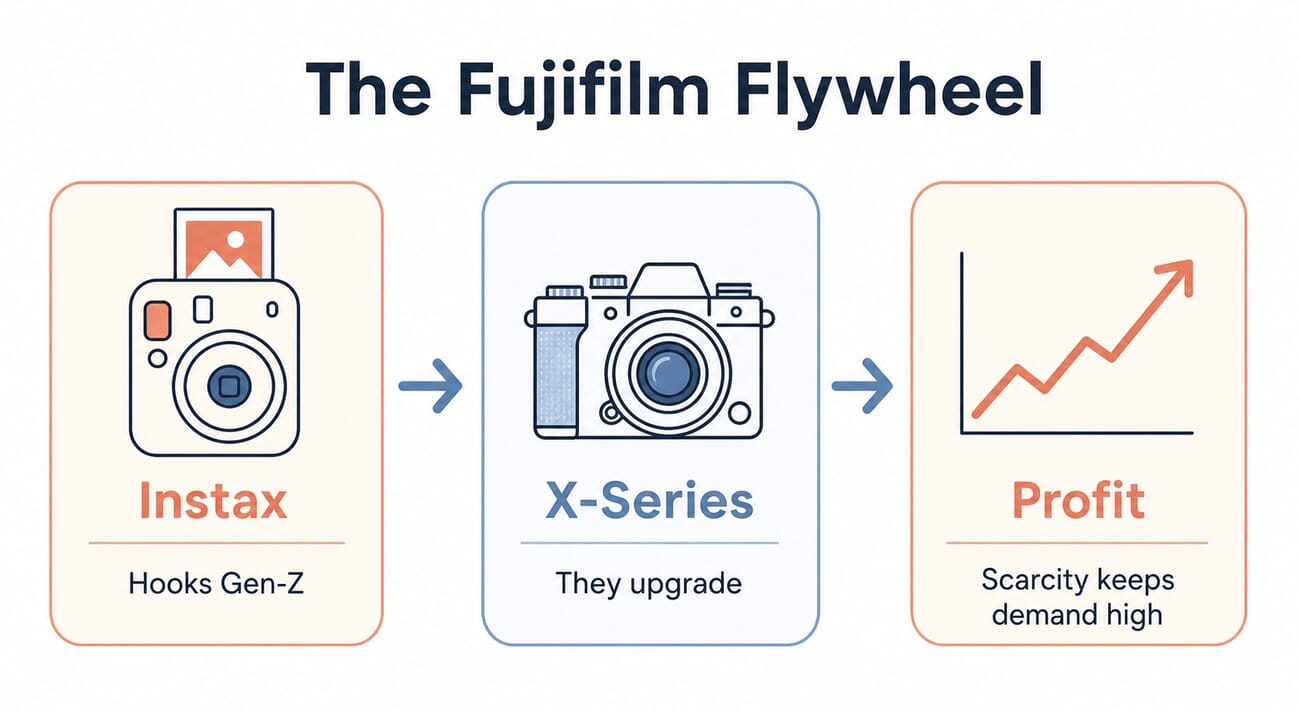
That funnel is why the X100VI frenzy isn’t a one-off. It sits inside a broader resurgence of interest in compact, characterful cameras among younger shooters — a trend we’ve tracked in our look at the best compact cameras for Gen-Z. Fujifilm didn’t just get lucky with one viral camera; it built the audience that made the camera go viral.
Why It Matters for the Whole Camera Industry
Fujifilm’s run is happening against a strange industry backdrop. Analysts at outlets like RedShark have characterized 2026 as a year of overall slowdown paired with a surprising compact-camera revival and a deepening memory-and-semiconductor supply crisis. In that environment, a maker that can sell every unit it builds — at rising prices, to a loyal young audience — is the envy of the industry. It’s no coincidence the compact revival has pulled in Canon too, or that we’ve seen similar demand surges around other enthusiast compacts.
The uncomfortable takeaway for buyers is that constrained supply and premium pricing may be the new normal for the most desirable cameras, not a temporary blip. When scarcity is this profitable, there’s little pressure to make the hottest products easy to buy.
What It Means If You Actually Want an X100VI
Practically speaking: don’t wait for the shortage to “blow over” or for the price to fall — neither looks likely. If you want one, get on official retailer waitlists at B&H and Amazon rather than overpaying a reseller, and treat any in-stock alert as something to act on quickly. If the specific X100VI rangefinder look isn’t the point for you, the wider X-series and other enthusiast compacts deliver much of the same appeal with far less hunting — and we keep a running eye on X100VI pricing and availability as it shifts.
Frequently Asked Questions
Is Fujifilm keeping the X100VI scarce on purpose?
Fujifilm says no, and real sensor-supply constraints support that. But the camera’s persistent scarcity clearly benefits the company — it protects desirability and pricing power — so whether or not it’s intentional, it functions like a strategy.
How big is Fujifilm’s camera business now?
In the year ended March 2026, Imaging brought in ¥627.1 billion (about $3.9 billion) in revenue (+15.7%) and ¥160.0 billion (about $1.0 billion) in operating income (+14.9%), making up roughly 37% of the group’s operating profit — up from about 27% a year earlier.
Will the X100VI ever get cheaper or easier to buy?
Don’t count on it. Fujifilm already raised the US price to $1,799 and demand didn’t drop, and used copies still sell above MSRP. Constrained supply and premium pricing look like the new normal for its most wanted cameras.
Why does Gen-Z love Fujifilm so much?
Fujifilm spent years building brand love with younger buyers, largely through Instax instant cameras, then converted that goodwill into X-series sales. The retro styling and film-simulation looks travel well on social media, reinforcing the cycle.
The Bottom Line
The never-ending X100VI shortage looks less like a supply failure and more like the visible edge of a business that’s working extremely well. Cameras now drive a third of Fujifilm’s operating profit, scarcity keeps the brand hot and margins healthy, and a Gen-Z flywheel keeps the demand coming. Whether the shortage is engineered or merely embraced, Fujifilm has little reason to end it — and that’s the real story behind every “out of stock” you’ve been staring at.
Financial figures and analysis were drawn from the following sources.
Image Sources
- Fujifilm X100VI product image — courtesy Fujifilm – Featured image and pin
- Imaging financials chart and Gen-Z flywheel infographic — PhotoWorkout – Created in-house from FUJIFILM FY2026 figures