


- LOFIC gives every pixel a tiny overflow capacitor: highlight charge that would clip to white spills into the reservoir instead, so a single exposure captures both the neon sign and the shadows under it.
- The first dedicated camera with a LOFIC sensor is already on sale: DJI’s Osmo Pocket 4P (CNY 3,799, about $525) pairs a 50MP 1-inch LOFIC chip with claims of up to 17 stops, and PetaPixel’s early testing says its footage rivals full-frame.
- Sony made LOFIC official for phones on June 17: the LYTIA L910 (about 50MP, 100 dB, 4K60 HDR) enters mass production this summer and is expected in Q4 flagship phones.
- The catch for US readers: the Pocket 4P is not officially sold in the US. The grey market and its rebadged twin, the Xtra Muse 2 Pro, are the current routes.
Every few years a sensor idea escapes the lab and lands in something you can actually buy. High dynamic range used to mean bracketing three frames and praying nothing moved. LOFIC, short for Lateral Overflow Integration Capacitor, moves that entire problem into the silicon, and 2026 is the year it went from conference papers to store shelves.
The surprise is where it landed first. Not in a $6,000 cinema body, and not yet in a flagship phone: the first dedicated camera shipping with a LOFIC sensor is DJI’s roughly $525 Osmo Pocket 4P, and Sony’s newly announced LYTIA L910 will push the same architecture into flagship phones by winter. PhotoWorkout unpacked the physics when Sony announced the chip; this is the “it’s real, and you can buy it” follow-up.
LOFIC in 60 Seconds: A Bucket With an Overflow Tank
A pixel is a bucket for light. When a scene’s highlights fill the bucket, everything beyond the brim is simply lost; that is why blown skies and neon signs clip to featureless white. Every HDR trick of the past two decades (bracketing, dual-gain readout, staggered exposures) has been a workaround for that one hard ceiling.
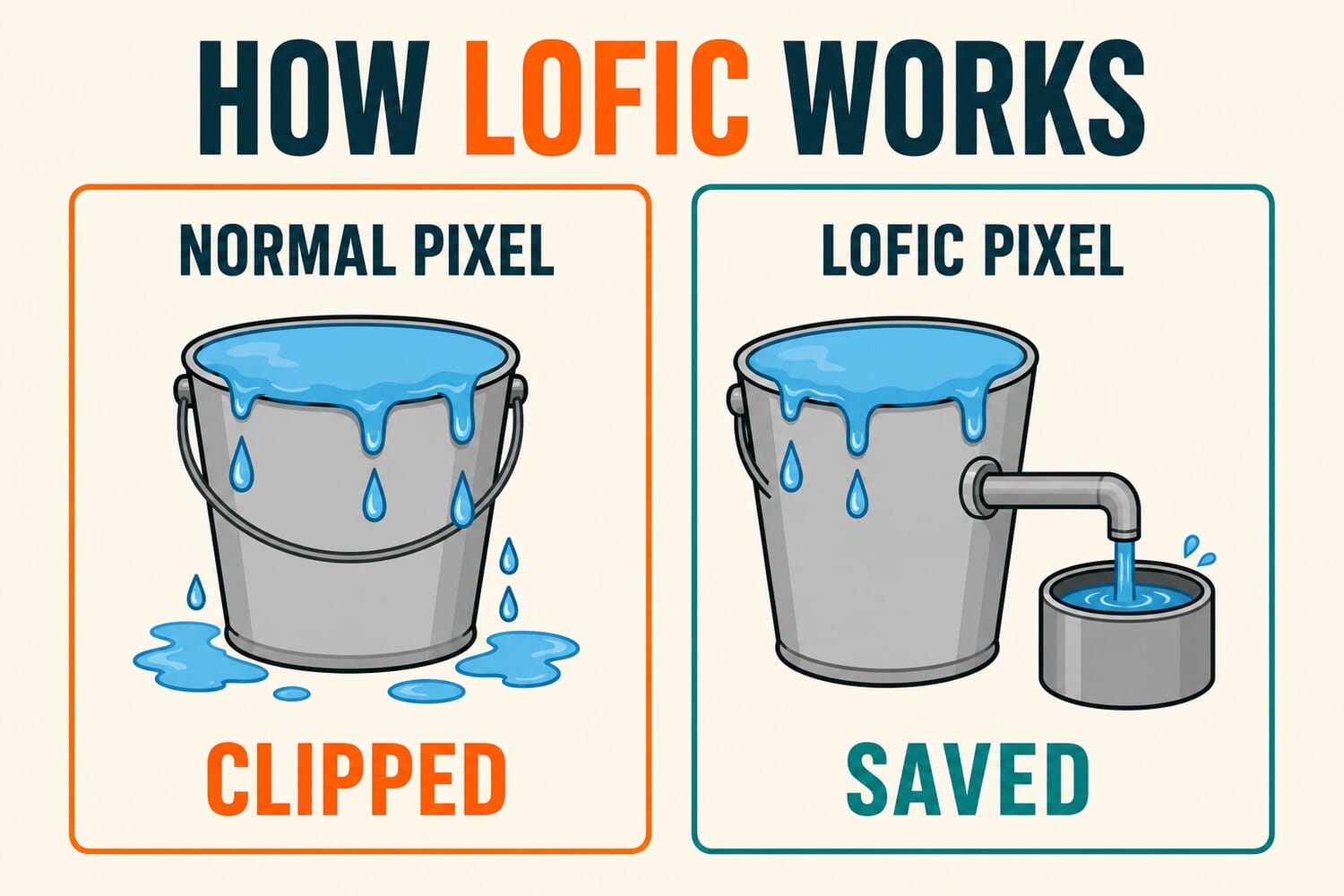
LOFIC drills a drain hole near the brim. Excess charge flows laterally into a tiny capacitor attached to each pixel, is read out separately, and gets merged back in. The result is one exposure that holds both ends of a high-contrast scene, with none of the ghosting, motion smear, or flicker that multi-frame HDR introduces, because there is nothing to align and nothing to synthesize. The deep dive on the architecture, including triple conversion gain and its honest caveats, is in PhotoWorkout’s LOFIC explainer.

The Pocket 4P: 17 Stops From a Camera That Fits in a Jacket
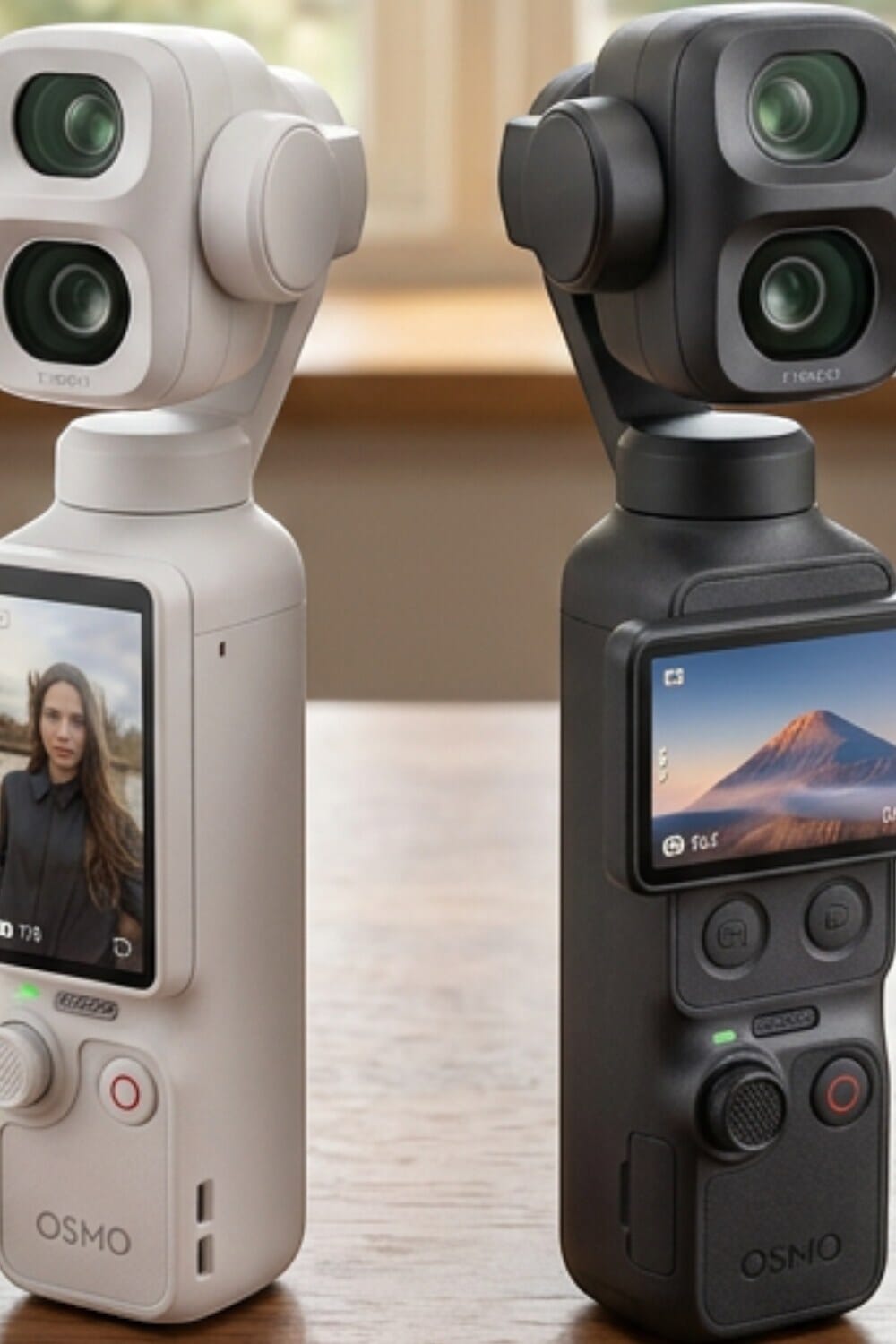
DJI officially launched the Osmo Pocket 4P in China in late June at CNY 3,799 (about $525) for the standard kit, and it is a genuinely different machine from the single-lens Pocket 4: a dual-camera gimbal head, D-Log 2 recording, and, at its heart, a brand-new 50-megapixel 1-inch LOFIC sensor with a claimed dynamic range of up to 17 stops.
PetaPixel, testing the camera ahead of its global embargo, reports that its footage “looks nearly identical to full frame’s best.” Sit with that comparison for a second: a full-frame sensor has roughly seven to eight times the surface area of a 1-inch chip. Dynamic range has been the last stronghold of the big-sensor argument, and a $525 pocket gimbal just walked into it.
CineD’s Focus Check crew dug into exactly that dynamic-range claim in their first look, and it is worth the watch for the sample footage alone:
One genuinely interesting wrinkle: DJI is not saying who makes the sensor. Sony is the usual supplier for DJI products, but the only LOFIC mobile sensor Sony has announced (the L910 below) starts mass production this summer, and Xiaomi’s 17 Ultra, the first consumer device with LOFIC, used an OmniVision chip back in February. Whoever built it, the technology is no longer exclusive to anyone.
A caution before importing one: claimed stops are measured to engineering thresholds, not to what survives a real grade, and DJI’s 17-stop figure will deserve independent lab numbers. The early footage is persuasive; the marketing math still needs the usual discount. And US buyers have an extra hurdle covered below.
For a hands-on view that includes the rough edges, not just the highlight reel, this early review walks through where the 4P impresses and where it stumbles:
Sony’s L910 Makes It Official for Phones
On June 17, Sony Semiconductor announced the LYTIA L910, the first LOFIC sensor in its LYTIA mobile line: approximately 50 effective megapixels on a 1/1.28-type chip, 100 dB of single-exposure dynamic range (about 16.6 stops), and 4K60 HDR video at low power. Mass production starts this summer, which in practice means Q4 flagship phones, with Chinese flagships the likely first wave.
The 100 dB figure is the headline, but the power story matters just as much. Because LOFIC captures HDR in one exposure, the phone skips the multi-frame capture-and-merge pipeline entirely, which is exactly the processing that drains batteries and adds shutter lag in night modes today. Sony is pitching better HDR that costs less power, not more.
For the camera industry the direction of travel is uncomfortable and clarifying at once. The honest answer to the evergreen “does a bigger sensor still matter?” question is shifting from “yes, always” to “yes, but architecture can leapfrog area.” Pixel-level innovations like LOFIC arrive in phones and pocket cameras first, because those product cycles are annual; dedicated cameras refresh sensors roughly every four years. Expect the spec sheets of 2027 mirrorless bodies to lean hard on this technology, and expect phones to have it first.
The US Catch (Of Course There Is One)
The Pocket 4P is currently a China-first launch that DJI is rolling out country by country, and the US is not on the public list. That is the same import mess PhotoWorkout mapped for the standard Pocket 4: the options come down to the grey market, with its warranty and pricing tradeoffs, or the officially-importable rebadge route via the Xtra Muse 2 Pro, the Pocket 4P’s twin under another name.
Grey-market pricing on hot DJI gear typically lands 15 to 30 percent above the converted China price, which would put a Pocket 4P in the $600 to $700 range from US resellers once stock flows. Whether that premium is worth paying before independent dynamic-range tests land is a personal call; the rebadge route has so far tracked closer to official pricing.
Frequently Asked Questions
What does LOFIC stand for and what does it do?
LOFIC is Lateral Overflow Integration Capacitor. Each pixel gets a small capacitor that catches the charge overflowing from the photodiode in bright areas, instead of letting it clip. The sensor reads both the pixel and its capacitor, merging them into one exposure with far more highlight headroom, roughly 16 to 17 claimed stops in the current generation.
Is the DJI Pocket 4P really the first LOFIC camera?
It is the first dedicated camera shipping with a LOFIC sensor. The first consumer device overall was Xiaomi’s 17 Ultra phone in February 2026, which used an OmniVision LOFIC chip. DJI has not disclosed who manufactures the Pocket 4P’s sensor.
Can you buy the Pocket 4P in the US?
Not officially. It launched in China (CNY 3,799, about $525) and is expanding country by country without a US date, part of the broader DJI import situation. US buyers currently rely on grey-market imports at a markup or on the Xtra Muse 2 Pro, the same hardware sold under a different brand.
Does this mean sensor size no longer matters?
Size still matters for noise, depth of field, and resolution headroom. What LOFIC changes is that dynamic range is no longer purely an area game: a small sensor with overflow capacitors can match or beat a larger conventional one in high-contrast scenes. The honest summary is that architecture now competes with area, and architecture ships in small devices first.
The Bottom Line
Single-exposure HDR was the last big promise left in sensor design, and it stopped being a promise this year. A $525 pocket camera is shipping it now, Sony is mass-producing it for phones this summer, and the bracketing workflow photographers have treated as a law of nature is quietly becoming optional.
The pragmatic take: nobody needs to import a Pocket 4P today. But anyone deciding between camera upgrades in the next two years should watch LOFIC the way they once watched backside illumination: it started in small sensors, and then it was simply everywhere.
Primary Coverage
- Sony Semiconductor Solutions: LOFIC-equipped CMOS image sensor with 100 dB dynamic range – June 17, 2026 press release: LYTIA L910 specs and summer 2026 mass production
- PetaPixel: The DJI Pocket 4P's sensor is so good, footage looks nearly identical to full frame's best – July 2 pre-embargo testing of the Pocket 4P's LOFIC sensor
- PetaPixel: Sony's first LOFIC image sensor promises nearly 17 stops of dynamic range – L910 announcement coverage
- Y.M.Cinema: Sony's new LOFIC high-end 50MP sensor brings 16.6 stops to flagship smartphones – L910 technical breakdown, 100 dB to stops conversion
- RedShark News: DJI Osmo Pocket 4P specs and price confirmed as China pre-orders open – CNY 3,799 launch pricing and kit details
- CineD Focus Check: DJI Osmo Pocket 4P, 17 stops of dynamic range? – Video first look discussing the dynamic-range claim (embedded above)
- TechAvid: DJI Osmo Pocket 4P is not perfect, here is why – Hands-on video review with caveats (embedded above)
Image Sources
- DJI Osmo Pocket 4P product images: courtesy DJI (featured image and vertical shot, staged via Photoroom) – Official DJI press renders
- Neon alleyway in Seoul: photo by Shawn – High-contrast example scene, via Unsplash, curated on SampleShots
- LOFIC diagram: PhotoWorkout illustration – Editorial diagram created by PhotoWorkout