


- A magnitude 7.1 earthquake struck Kumamoto, Japan on July 28, 2026, at about 4:27pm local time, in the heart of the world’s camera-sensor manufacturing, forcing Sony, Fujifilm, and TSMC to evacuate plants.
- Sony Semiconductor’s Kikuyo fab, which builds up to 4 million image sensors a day for phones and cameras, has suspended operations. In Sony’s own words, damage to the building and manufacturing lines is currently being evaluated.
- This is the plant behind the main sensor in most flagship phones and countless mirrorless cameras, so any prolonged outage would ripple across the entire industry.
- The precedent is the story: the 2016 Kumamoto quake shut this exact Sony plant for months and disrupted iPhone and camera sensor supply. Kumamoto concentrates fabs because of its ultra-pure water, which is also why the risk is concentrated there.
- Nothing is confirmed yet, and no casualties were reported at the plants. Treat this as a supply scare with strong historical precedent, not a confirmed shortage. If you are planning a sensor-heavy purchase this fall, watch for restart news.
Update (August 2026): Sony has answered the single-point-of-failure question this quake raised. It is reportedly forming a $6.3 billion joint venture with TSMC to mass-produce next-generation image sensors at the same Kumamoto hub. Read the full story: Sony’s $6.3 Billion Answer to the Quake.
Most people never think about where the camera in their phone actually comes from. As of July 28, 2026, they might have to. A magnitude 7.1 earthquake struck Kumamoto, on Japan’s southern island of Kyushu, at around 4:27pm local time, and it hit the one region the entire imaging world quietly depends on. The plants that make the sensors inside your iPhone, your Pixel, your mirrorless camera, and almost everything else with a lens were evacuated, and at least one of them has gone dark.
The situation is live and unresolved, and the honest framing matters: this is a supply scare with a very unsettling precedent, not a confirmed shortage. But the reason it is worth paying attention to now, before any of that is clear, is that we have watched almost this exact scenario play out before, and it cost the industry months.
What Happened, and Where
The quake cut power to tens of thousands of homes, halted rail service, triggered aftershock and tsunami warnings, and caused serious structural damage in the region, including a collapsed shopping mall with people reported trapped. For the camera and phone industry, the critical fact is what sits in and around the town of Kikuyo, in Kumamoto Prefecture.
Sony Semiconductor Manufacturing halted operations at its Kumamoto Technology Center and, as of its July 29 statement, remains suspended. In the company’s own words, damage to the site’s building and manufacturing lines is currently being evaluated, and no resumption timeline has been given. Sony noted that its other centers in Nagasaki, Oita, and Kagoshima were unaffected, and reported no injuries at the site.
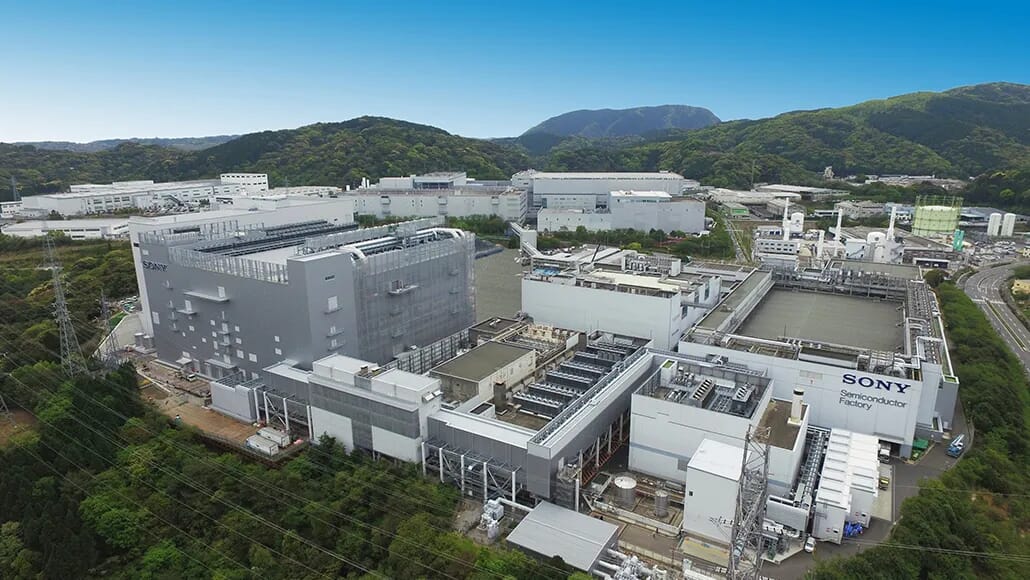
Fujifilm evacuated its Kikuyo facility, which makes color-filter components used in its X-Trans sensors, along with films for LCD screens and polishing materials for semiconductor manufacturing. TSMC, the Taiwanese chipmaker with a major presence in Kumamoto, also evacuated but has so far reported no significant damage, with operations gradually resuming. So of the three, Sony is the one that matters most and the one with the least clarity.
Why This One Plant Matters More Than You Think
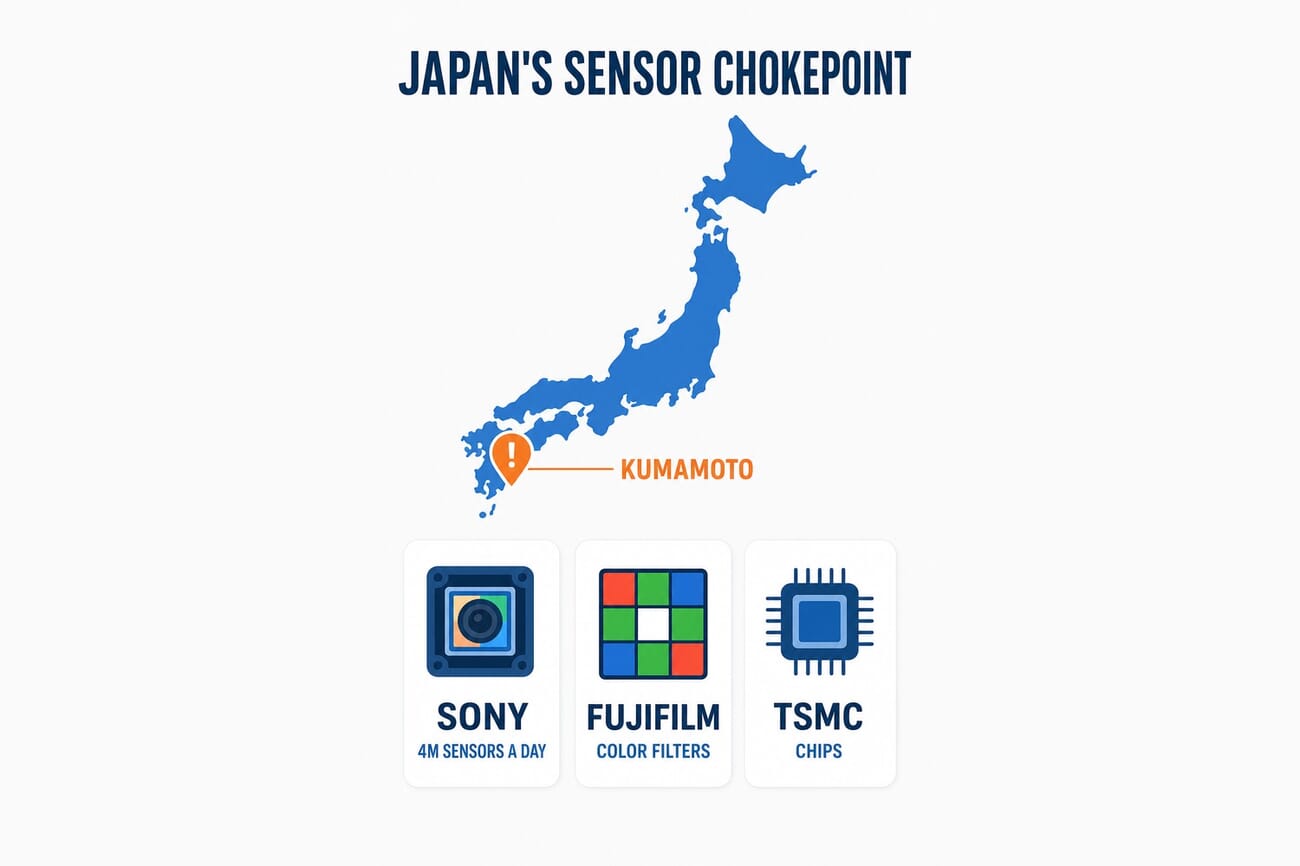
Sony is the dominant force in image sensors. It supplies the main camera sensor in a huge share of the world’s flagship smartphones, the same Sony silicon sits behind the lenses of the iPhone, Pixel, Galaxy, and Xiaomi flagships, and it powers a large slice of the mirrorless market too. The Kikuyo fab alone is reported to produce as many as four million sensors a day. There is no quick second source for that volume; sensor fabs take years and billions to build, which is precisely why a disruption here is so hard to route around.
Fujifilm’s role is narrower but real: its Kumamoto color-filter components feed its distinctive X-Trans sensors, so a prolonged outage there would land on Fujifilm’s own cameras specifically. Layer that on top of the film and instant-camera supply strain the company is already managing, which we covered in Fujifilm’s shortage strategy, and the timing is not kind.
We Have Seen This Movie Before: 2016 and 2011
This is the part that turns a news alert into a genuine concern. In April 2016, a pair of powerful earthquakes hit this same Kumamoto region and shut down this same Sony image-sensor plant for several months. The fallout was concrete: sensor production for the iPhone and other handsets was disrupted, and the delays rippled through the camera world at the time. It was not a hypothetical; it happened, at this exact site.
Go back further and the pattern holds. The 2011 Tohoku earthquake and tsunami disrupted facilities tied to Nikon, Canon, Sony, Tamron, and Sigma, and produced global shortages and delayed launches across the industry. Japan makes a disproportionate share of the world’s imaging hardware, and its geography means that hardware sits on some of the most seismically active ground on Earth. When a big quake lands in the wrong prefecture, the whole planet’s camera roll feels it eventually.
Why So Much Sits in Kumamoto: the Water
It is fair to ask why so much irreplaceable manufacturing is concentrated in one earthquake-prone spot. The answer is water. Semiconductor fabrication needs enormous volumes of ultra-pure water to rinse wafers, and Kumamoto sits on abundant, exceptionally clean groundwater fed by the Mount Aso watershed. That natural resource is exactly why Sony, TSMC, and others clustered their fabs there. The same feature that makes Kumamoto ideal for building sensors is what concentrates the industry’s risk into a single seismic zone. It is an efficient arrangement right up until the ground moves.
What’s Confirmed, and What Isn’t
Being clear about the uncertainty is essential here. What is confirmed: the quake, the evacuations, and that Sony’s Kikuyo operations are suspended with damage under assessment. What is not confirmed: whether the plant sustained the kind of serious damage that took it offline for months in 2016, or whether it escaped with a precautionary shutdown and a fast restart, the way TSMC appears to have.
Both outcomes are genuinely on the table. If Sony’s assessment comes back clean, the headline in a week is “the industry dodged a 2016 repeat.” If it does not, this is the opening day of an unfolding sensor shortage. Anyone telling you which one it will be right now is guessing. What is not a guess is that the plant is offline and the clock is running.
What It Means If You’re Buying This Fall
For most people the practical takeaway is simple: watch for restart news. If you were planning a sensor-heavy purchase this autumn, a new flagship phone or a new mirrorless body, the 2016 episode is the reference point, and it showed lead times stretching by months when this plant goes down. That does not mean panic-buy today. It means that if Sony’s damage assessment turns negative in the coming days, availability and pricing on new sensor-dependent gear could tighten into the holiday season, on top of the component-cost pressure the industry is already under from the memory and storage squeeze.
If you have a specific launch you are waiting on, keep an eye on whether it uses a Sony sensor and whether the maker sources from Kumamoto. And if you already own the camera you need, this is a good week to feel fine about that.

Frequently Asked Questions
Did the Kumamoto earthquake damage Sony’s sensor factory?
Sony has suspended operations at its Kikuyo (Kumamoto) plant and says damage to the building and manufacturing lines is being evaluated, as of its July 29 statement. It has not confirmed the extent of any damage or a restart date. No injuries were reported at the site.
Will this cause a camera or phone shortage?
It is too early to say. It is a supply scare, not a confirmed shortage. If the plant escaped serious damage it may restart quickly. If not, history is a warning: the 2016 Kumamoto quake shut this same Sony plant for months and disrupted iPhone and camera sensor supply.
Which devices use Sony’s Kumamoto sensors?
Sony is the leading image-sensor supplier and provides the main camera sensor in a large share of flagship smartphones (including iPhone, Pixel, Galaxy, and Xiaomi models) and many mirrorless cameras. The Kikuyo fab is reported to make up to four million sensors a day for these products.
Why are so many sensor plants in Kumamoto?
Because of water. Chipmaking needs vast amounts of ultra-pure water, and Kumamoto has abundant, exceptionally clean groundwater from the Mount Aso watershed. That is why Sony, TSMC, and others built fabs there, and also why so much of the industry’s risk sits in one seismic zone.
The Bottom Line
An earthquake in Japan is not usually a photography story, but this one is, because it landed on the single most important node in the global camera-sensor supply chain. Right now the facts are limited and the outcome is genuinely uncertain, which is exactly why the responsible read is a supply scare backed by hard precedent rather than a declared crisis. The plant is offline, Sony is assessing the damage, and the industry has a very clear memory of what happened the last time this fab went dark in 2016. We will update this as Sony and Fujifilm report what they find.
Featured image, sensor-chokepoint infographic, and pin: stylized illustrations created by PhotoWorkout. Plant photo courtesy Sony Semiconductor Manufacturing.
Primary & Reporting
- Sony Semiconductor Solutions – Status of the July 28 earthquakes in the Kumamoto region – Official July 29 statement: operations suspended, damage under evaluation.
- Digital Camera World – Japan's 7.1 earthquake hit a key region for camera sensor manufacturing – On the 4-million-sensors-a-day figure, Fujifilm and TSMC status, and the 2016 precedent.
- CNBC – Major quake hits southern Japan, disrupts transport and power – Quake magnitude, timing, and regional impact.
- CNN – Japan's Kyushu region struck by 7.1 magnitude tremor – Independent confirmation of the earthquake and damage.
Image Sources
- Sony Semiconductor Manufacturing plant (Kikuyo, Kumamoto), image courtesy Sony – Plant photo.
- Featured image, Japan sensor-chokepoint infographic, and vertical pin, created by PhotoWorkout – Editorial illustrations.