


- Japanese manufacturers shipped 168,847 compact cameras vs just 35,055 DSLRs in January — a nearly 5-to-1 ratio
- Compact camera shipments grew 36% year-over-year, while DSLR shipments fell 36% — an almost perfect inverse
- Mirrorless cameras continue dominating the interchangeable lens market with 418,488 units shipped (+16% YoY)
- The compact camera surge is driven by premium models like the Fujifilm X100VI and Ricoh GR IIIx, plus growing demand from content creators
- Every major manufacturer has stopped developing new DSLRs — Canon, Nikon, and Sony have all shifted R&D to mirrorless
For every DSLR that shipped in January, nearly five compact cameras left the factory. That ratio alone tells you everything about where the camera industry is headed.
The Camera and Imaging Products Association (CIPA) just released its January 2026 global shipment report, and the numbers paint a stark picture: Japanese manufacturers shipped 168,847 fixed-lens compact cameras worldwide, compared to just 35,055 DSLRs. Meanwhile, mirrorless cameras continue to dominate the interchangeable lens segment with 418,488 units shipped.
These aren’t just abstract numbers. They reflect a fundamental shift in what photographers – from professionals to casual shooters – actually want from their cameras.
The Numbers: What CIPA’s January Data Shows
Here’s the breakdown from CIPA’s January 2026 global shipment data, compared to January 2025:
- DSLRs: 35,055 units shipped (-36% year-over-year in units, -45% in shipped value)
- Compact cameras: 168,847 units shipped (+36% year-over-year in units, +34% in value)
- Mirrorless cameras: 418,488 units shipped (+16% year-over-year in units, +12% in value)
The symmetry is almost poetic: compact camera growth of 36% almost perfectly mirrors the DSLR’s 36% decline. One format’s loss is quite literally another’s gain.
Lens data tells its own story. Lenses for smaller-than-35mm sensors grew 10% in units and 9% in value, while full-frame lenses grew just 4% in units and actually declined 5% in shipped value. The lens-to-body ratio dropped to 1.59 from 1.62 a year ago – a sign that the compact camera boom (which doesn’t involve separate lens purchases) is reshaping the overall market math.
Why Compacts Are Surging
The compact camera comeback isn’t a fluke, and it’s not just one thing driving it. Several forces have converged to pull dedicated compact cameras out of the near-death spiral smartphones pushed them into a decade ago.
The X100VI Effect
The Fujifilm X100VI became arguably the most hyped camera of 2024-2025, with waitlists stretching months and resale prices exceeding retail. It proved that a premium compact with a fixed lens, retro design, and excellent image quality could generate iPhone-level buzz. The demand was so intense that Fujifilm publicly apologized for supply shortages.

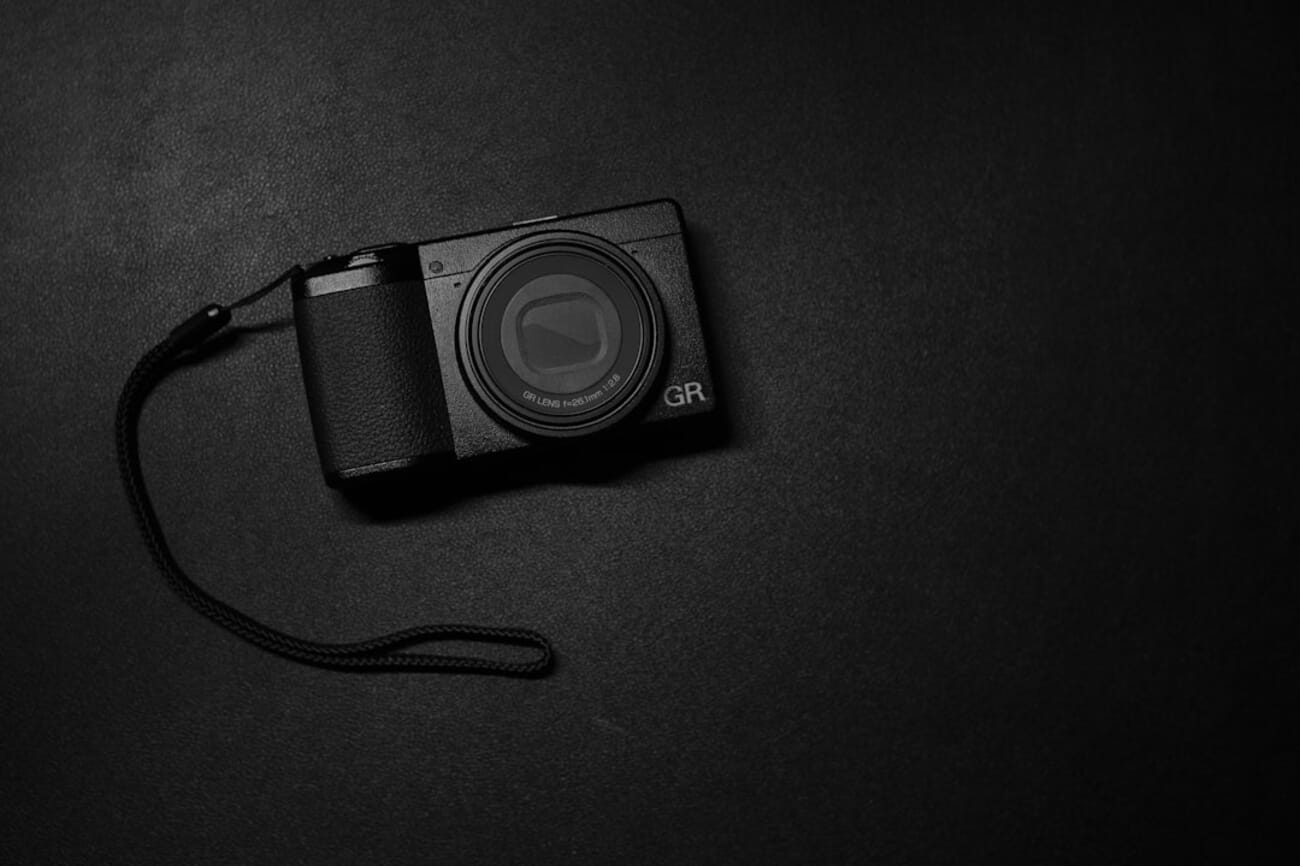
But it’s not just Fujifilm. The Ricoh GR III and GR IIIx have maintained cult followings among street photographers. Canon recently announced a 50% increase in compact camera production to meet rising demand. Even budget options like the Kodak Pixpro FZ55 – a $140 point-and-shoot – have dominated Japan’s bestseller charts for months.
Content Creators and Smartphone Fatigue
There’s a growing segment of photographers and content creators who want a dedicated camera that isn’t a phone but also isn’t a bulky DSLR or mirrorless setup with multiple lenses. Compact cameras hit that sweet spot perfectly – pocketable, purpose-built, and increasingly capable of excellent video.
The “retro aesthetic” trend on TikTok and Instagram has also introduced an entirely new generation to dedicated cameras. Young photographers are discovering that the look and feel of photos from a real camera – complete with film-like rendering and optical character – can’t be fully replicated by computational photography on a smartphone.
Two Trends, One Category
The compact resurgence is actually two parallel movements. On one end, premium compacts like the X100VI and Ricoh GR III command $1,500+ price tags and target enthusiasts. On the other, ultra-affordable point-and-shoots under $200 appeal to Gen Z buyers who want a “dumb camera” for social media content that feels more authentic than phone photos.
Both segments are growing, which is why the overall compact category is posting such strong numbers.
The DSLR Decline: How Fast Is It Happening?
To appreciate how dramatic the DSLR’s fall has been, you need historical context.
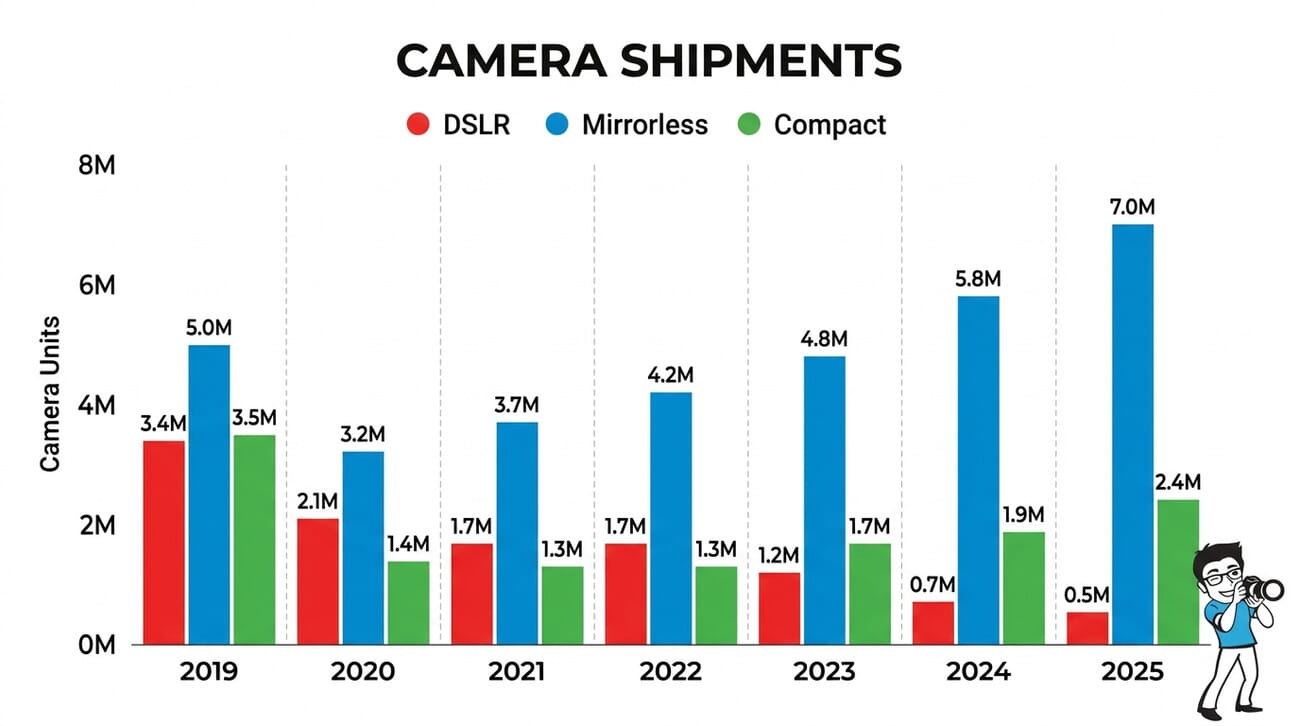
In 2019, manufacturers shipped roughly 3.4 million DSLRs worldwide. By 2023, that number had plummeted to 1.2 million. In 2024, it fell further to around 700,000. And based on the January 2026 trajectory – 35,055 units in a single month, down 36% from an already-low baseline – full-year DSLR shipments could dip below 400,000 units.
For perspective, interchangeable lens camera shipments peaked at over 20 million units in 2012. DSLRs made up the vast majority of that figure. Today, they account for less than 5% of ILC shipments.
Every major manufacturer has effectively stopped developing new DSLR bodies. Canon, Nikon, and others have shifted R&D entirely to mirrorless systems. The DSLR isn’t just declining – it’s being actively phased out by the companies that built the format.
That said, the DSLR shipped value dropping 45% (faster than the 36% unit decline) suggests that even the remaining DSLR sales are skewing toward cheaper, entry-level models rather than professional bodies. The high end has already migrated to mirrorless.
Mirrorless: Steady Growth, Mature Market
While the compact-vs-DSLR story grabs headlines, mirrorless cameras remain the engine of the interchangeable lens market. January’s 418,488 units represent a healthy 16% year-over-year increase.
But the growth rate is stabilizing. After years of double-digit gains as photographers migrated from DSLRs, the mirrorless market is entering a mature phase. Most enthusiasts and professionals who planned to switch have already done so. Future growth will come from upgrades within the mirrorless ecosystem and new photographers entering the hobby.
Interestingly, CIPA actually predicts a slight 2.6% decline in mirrorless shipments for full-year 2026, to about 6.82 million units (down from 7 million in 2025). That would be the first year-over-year drop for the format in recent memory. The prediction might reflect longer upgrade cycles as camera technology matures – today’s mirrorless bodies are so capable that the incentive to upgrade every cycle has diminished.
What This Means for Photographers
If you’re still shooting DSLR: Your gear isn’t suddenly worse, and used DSLR lenses remain excellent value. But new DSLR bodies, lenses, and accessories will become increasingly scarce. If you’re planning a major gear investment, mirrorless is the only future-proof direction for interchangeable lens systems.
If you’re considering a compact: The market has never been better. From premium options like the Fujifilm X100VI and compact cameras with viewfinders to budget point-and-shoots, there’s a compact camera for nearly every need and budget. Just be aware that high-demand models still have supply constraints.
If you’re a beginner: The data confirms what many photographers already know intuitively – the “best” camera is the one you’ll actually carry. For many people, that’s a compact. The days when buying a DSLR was the default “serious photographer” move are definitively over.
CIPA forecasts that approximately 2.77 million fixed-lens cameras will ship throughout 2026, a 13.6% increase over 2025. With January already showing 36% growth, the actual number could come in even higher. The compact camera revival isn’t a trend – it’s the new normal.
Featured image: Photo by Aleksandrs Karevs on Unsplash.
Sources used for this article:
Related Posts
Get the Weekly Photography News Digest
Join photographers who get our top stories delivered every Monday morning. No spam, unsubscribe anytime.