

- Pixii, the French maker of screen-less digital rangefinder cameras and the only non-Leica option built around the Leica M lens mount, has entered judicial liquidation.
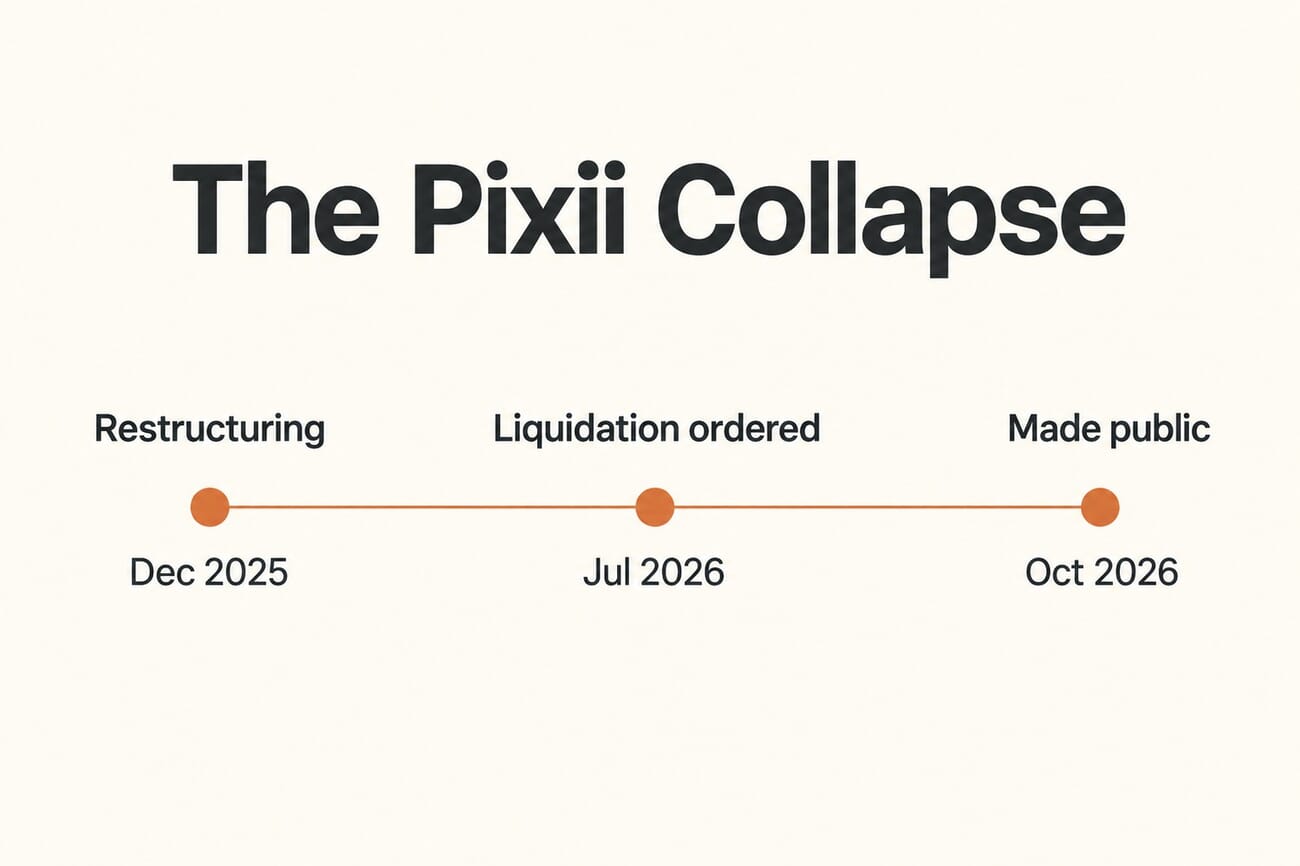
- A court in Besancon, France moved the company from a restructuring process (opened December 2025) into liquidation, ordered July 22, 2026, with authorization to keep trading only through July 31. The news surfaced publicly through the French business registry in October 2026.
- Cameras are still listed for sale, including the full-frame 24.5MP Pixii Max, with discounts of up to $800 at B&H and the Max down to $4,499. But firmware updates, repairs, warranty support, and the promised next-generation model are now in serious doubt.
- If you already own a Pixii it keeps shooting and your M-mount lenses are unaffected. If you are tempted by the discount, treat it as an eyes-open orphan purchase, not a supported system.
One of the most interesting independent camera companies of the last decade is shutting down. Pixii, the small French manufacturer that built the only mass-market digital rangefinder not made by Leica, has entered judicial liquidation. For a niche that most of the industry had written off as Leica-only territory, it is the end of a genuine alternative, and a cautionary tale about how hard it is to survive as a boutique camera maker in 2026.
The court paperwork is actually a few months old, but the story only reached the wider photography world this week, after the liquidation showed up in France’s public business registry. Pixii’s cameras, including the full-frame Pixii Max, are still sitting on shelves at retailers like B&H, often at a discount, which raises an awkward question for rangefinder fans: is a cut-price Pixii a bargain, or a soon-to-be orphan? Here is what happened, and what it means whether you own one or were thinking about it.
When you buy through links on our site, we may earn a commission at no cost to you. We evaluate products independently. Commissions do not affect our evaluations.
What happened to Pixii
According to France’s corporate and legal registry, Pixii’s road to liquidation ran in stages. The company first entered a court-supervised restructuring before the Commercial Court of Besancon in December 2025, a process meant to give a struggling business room to reorganize and find new funding. That effort did not succeed. On July 22, 2026 the court converted the case into a judicial liquidation, the French equivalent of winding the company down, and authorized Pixii to continue operating only until the end of July.
Behind the legal timeline was a familiar problem: money and scale. Pixii had been openly seeking additional funding and partners to finance a next-generation camera, a model originally targeted for the summer of 2026 and later pushed toward 2027. Without that investment, a company selling a few thousand very specialized cameras a year simply could not keep going. The public only connected the dots in October, when the liquidation appeared in the business registry and photography outlets picked it up.
Why Pixii mattered
To understand why this is a loss, you have to understand how rare Pixii was. A rangefinder is a very particular kind of camera: you focus by aligning two images in an optical window rather than looking through the lens, a slow, deliberate, film-era way of shooting that a devoted group of photographers love. In the digital world, that experience has effectively belonged to Leica alone, at Leica prices.
Pixii was the exception. Founded in France by David Barth and built around the same Leica M lens mount, it took a radically minimalist approach: many models were screen-less, sending images to your phone instead of a rear LCD, with the pure optical rangefinder and viewfinder left to do the work. The latest and most ambitious model, the full-frame 24.5MP Pixii Max, put a modern BSI sensor into a compact machined-aluminum body for well under the cost of a comparable Leica M. It was never going to outsell a Sony, but for photographers who wanted the rangefinder experience without the Leica tax, it was the only game in town.
What it means if you already own one
First, the good news: your camera does not stop working. A Pixii that shoots today will keep shooting tomorrow, and because it uses the universal Leica M mount, every one of your lenses stays perfectly usable, on the Pixii or on any other M-mount body you move to later. Nothing about the glass is stranded.
The losses are everything around the camera. With the company wound down, you should assume there will be no more firmware updates, no official repairs, and no honored warranty claims. For a software-driven, phone-connected camera like the Pixii, the firmware point matters most: bug fixes, new features, and compatibility updates all stop. Spare parts and board-level repairs become a question of whatever stock and goodwill survive the liquidation, or third-party specialists willing to take it on. In practice, treat any current Pixii as a camera frozen in its present state, good as it is today, but not getting better or officially fixable.
Should you buy a discounted Pixii now?
This is the tempting part. Because the cameras are being cleared out, Pixii bodies are on sale, with reductions of up to $800 across the range and the full-frame Pixii Max dropping to around $4,499. You can still find Pixii cameras listed at B&H, and on paper a discounted, genuinely unusual full-frame M-mount rangefinder looks like a collector’s bargain.
Go in clear-eyed, though. At that price you are buying an orphan: no warranty, no firmware roadmap, and uncertain repair options if anything fails. That is a very different proposition from buying a supported camera, even a niche one. It can still be the right call for the right person, a rangefinder enthusiast who wants the experience, understands the risk, and can treat the Pixii as a self-contained object rather than a system they will lean on for a decade. For everyone else, a used Leica M or a mirrorless body with ongoing support is the safer home for that money. If you want the deal, buy the camera you can see and test today, not the promise of support that no longer exists.
Pixii’s collapse also fits a wider pattern we have tracked all year, as the camera market squeezes out its smaller and more specialized players. It echoes OnePlus pulling back from the US and Europe and the excellent Xiaomi flagships Americans cannot easily buy, while nostalgia-driven niches like the retro Yashica compacts keep finding buyers. Being interesting, it turns out, is not the same as being sustainable.
Frequently Asked Questions
Is Pixii going out of business?
Yes. Pixii has entered judicial liquidation in France, the legal process for winding a company down. A court in Besancon ordered the liquidation on July 22, 2026 and authorized the company to keep operating only through the end of that month. The news became widely known in October 2026.
Will my Pixii camera still work?
Yes. Liquidation does not disable the hardware. Your Pixii will keep shooting, and because it uses the Leica M mount, all of your M-mount lenses remain fully usable. What you lose is ongoing support: firmware updates, official repairs, and warranty service should be assumed to be ending.
Should I buy a discounted Pixii Max?
Only with your eyes open. The full-frame Pixii Max has been discounted to around $4,499, and bodies are up to $800 off, but you would be buying an orphan with no warranty, no firmware roadmap, and uncertain repairs. It can make sense for a rangefinder enthusiast who accepts that risk; for most buyers, a supported camera is the wiser choice.
What made Pixii different from Leica?
Pixii built the only mainstream digital rangefinder not made by Leica, using the same Leica M lens mount but at a lower price. Many models were screen-less, sending images to a phone instead of a rear LCD, and the cameras were designed and made in France. It offered the rangefinder shooting experience without Leica-level pricing.
The bottom line
Pixii was a rare thing: a small, opinionated company that gave photographers a real alternative in a corner of the market everyone else had ceded to Leica. Its liquidation does not brick the cameras already out there, and M-mount owners keep their lenses, but it does close the door on new development, official support, and the next-generation model that was supposed to come. If you own one, enjoy it for exactly what it is today. If you are chasing the clearance price, buy the camera in front of you, not the company behind it, because that company is now gone.
Based on France's public corporate and legal registry and photography-industry reporting from October 2026, plus Pixii's own product information. Verified as of October 22, 2026.
Primary Coverage
- DPReview – Pixii, the non-Leica digital rangefinder maker, is in liquidation – Confirms the judicial liquidation and operate-until-July-31 authorization.
- The Phoblographer – What the Pixii Liquidation Means for Rangefinder Fans – Context on Pixii's screen-less design and what it means for owners.
- Leica Rumors – Pixii camera is in judicial liquidation – The registry timeline and the B&H discount details.
- PetaPixel – Leica Competitor Pixii Is Facing Financial Collapse – Confirms the Pixii Max at $4,499 after a $500 discount.
- Pixii – Pixii Max product page – Official specs: 24.5MP full-frame BSI sensor, Leica M mount, machined-aluminum body.
Image Sources
- Pixii digital rangefinder product image (featured) – Featured image and pin: official Pixii product photos. Credit Pixii.
- PhotoWorkout collapse-timeline infographic and pin – Original PhotoWorkout editorial illustrations.
When you buy through links on our site, we may earn a commission at no cost to you.