


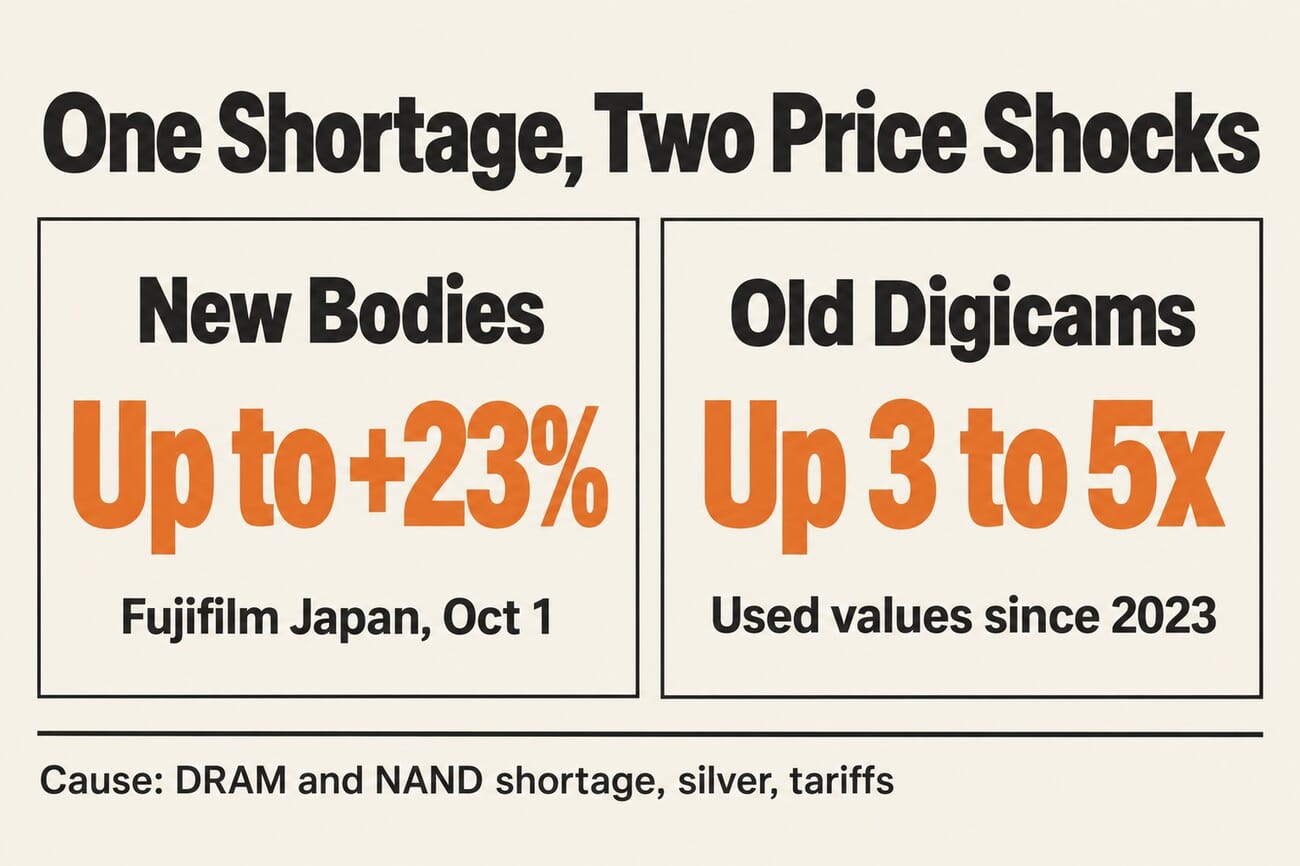
- The memory shortage that spiked SD-card prices has now reached the camera body. Fujifilm raised Japanese prices by up to 23% on October 1, 2026, across cameras, lenses and Instax, and the rest of the industry is expected to follow.
- Canon has confirmed it is already baking higher DRAM and NAND costs into its 2026 pricing. The driver is components, not corporate greed: a severe memory shortage, record silver prices, and tariffs.
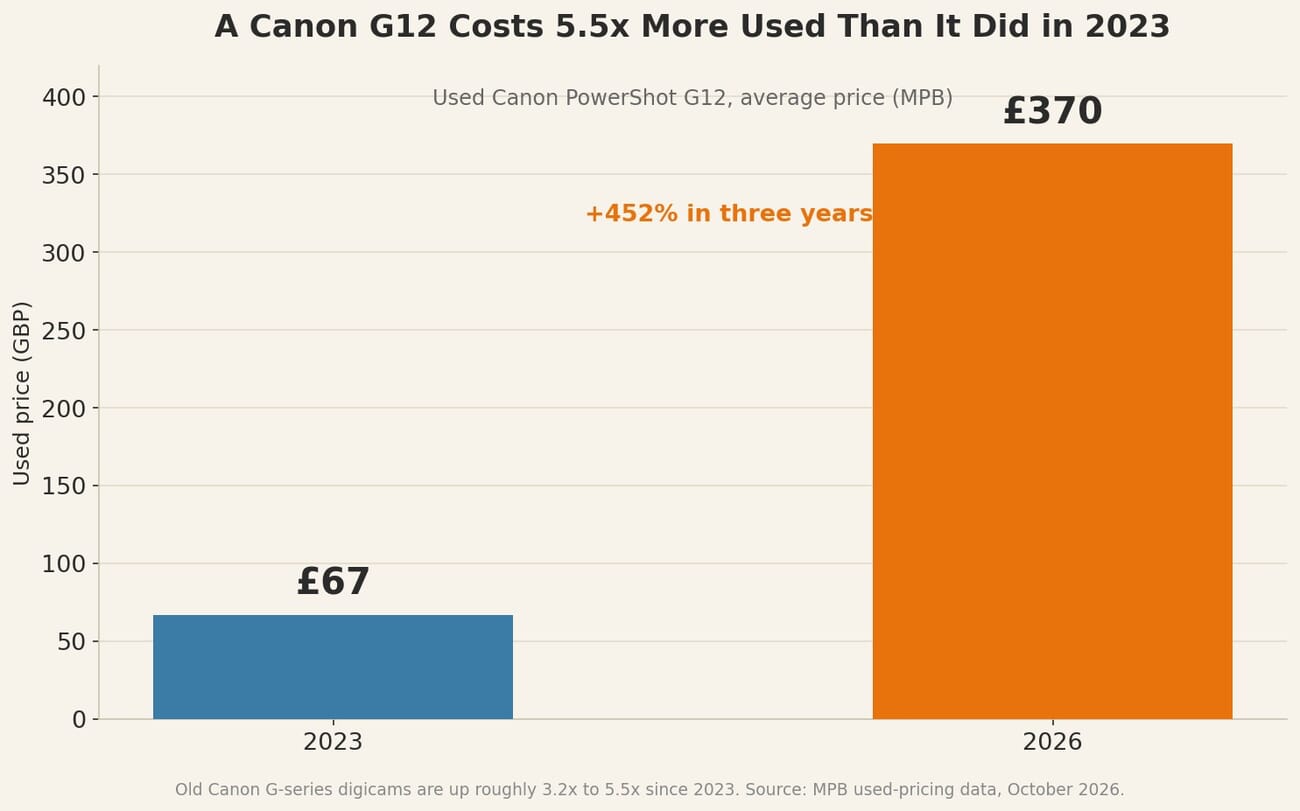
- There is a flip side. As new gear gets pricier, used digicams are appreciating like an asset. MPB data shows old Canon G-series compacts up roughly 3.2 to 5.5 times since 2023, with the PowerShot G12 jumping from about £67 to £370.
- Practical takeaway: if you have been eyeing new gear, prices are more likely to rise than fall. And that old point-and-shoot in your drawer is probably worth far more than you think.
For the past year, the memory crisis has been a story about storage. NAND flash prices leapt, and the SD card you buy to feed your camera got noticeably more expensive. That squeeze has now jumped from the card to the camera itself. On October 1, 2026, Fujifilm raised prices in Japan by up to 23% across its camera lineup, its lenses, and even Instax, and it is almost certainly not going to be the last to do so.
Here is the part nobody has connected yet: the same shortage that is making new bodies more expensive is quietly turning old cameras into appreciating assets. New gear up, used gear up, one root cause. This is how the memory crunch is repricing photography from both ends, and what it means if you are about to buy or sell.
The shortage reached the camera body
Fujifilm moved first and moved hard. Effective October 1, the company lifted Japanese prices on a broad swath of its lineup, with increases running from roughly 6% up to 23% depending on the model. That spans the medium-format GFX system, the perpetually sold-out X100VI, newer bodies like the X-T50 and X-E5, and the Instax instant line. The cheaper, higher-volume cameras took some of the steepest percentage hikes.
Crucially, this is not a one-brand problem. Canon has publicly confirmed it is already factoring higher memory costs into its 2026 pricing, and Sony and Nikon are widely expected to follow as the same component pressures hit every manufacturer. In other words, the Fujifilm hike is the leading edge of an industry-wide reset, not an outlier. If you have been watching a specific body and waiting for a deal, the direction of travel is now up, not down. We have been tracking this squeeze since it first hit storage, in our report on memory card prices leaping as NAND rose 70% in Q2.
This is cost, not greed
It is tempting to read any price hike as companies cashing in, but the honest version of this story is more boring and more sympathetic. Modern cameras are full of memory. They need DRAM for buffers and processing and NAND for firmware and internal storage, and the prices of both have surged in what the industry has started calling “RAMageddon,” as AI data-center demand swallows supply. On top of that, the silver used in electronics and sensors has hit record highs, and tariffs are adding another layer of cost on imported gear.
Stack those together and manufacturers are absorbing genuinely higher input costs on every unit. Fujifilm and Canon are passing through a real bill, not inventing a reason to charge more. We saw the same dynamic reshape smartphones, where the memory crunch is quietly changing how much optical zoom you get for your money. Cameras are simply the next category to feel it, and being clear-eyed about the cause matters: this is a supply shock working through the system, and it is unlikely to ease before the memory market loosens, which analysts do not expect until late 2027.
The flip side: your old digicam is now an asset
Now the part that makes this more than a gloomy price story. While new gear climbs, the used compact market has quietly started behaving like an asset class. Fresh data from used-gear specialist MPB shows older Canon PowerShot G-series digicams up roughly 3.2 to 5.5 times in just three years. The standout is the PowerShot G12, which has gone from around £67 in 2023 to about £370 now, a jump of more than 450%. A camera that was effectively worthless a few years ago is now a genuinely valuable object.
This is where the two halves of the story connect. The Gen Z digicam boom we covered in our guide to the best budget digicams young buyers actually want created the demand. The rising cost of new gear, driven by the same shortage repricing the bodies above, is now adding fuel: when a new compact gets more expensive, a cheap used one looks better, and prices on the good old models climb. It is also why brands like Yashica are launching cheap retro digitals like the $119 Y16, to capture buyers priced out of, or simply uninterested in, the appreciating vintage market.
What it means if you are buying or selling
For buyers of new gear, the calculus has shifted. With Fujifilm already raised and others expected to follow, waiting for a body to get cheaper is now a bet against the trend. If there is a camera or lens you genuinely need and can find at today’s price, buying sooner rather than later is the rational move, at least until the memory market eases.
For everyone else, check your drawers. That old point-and-shoot you stopped using when phones got good may now be worth several times what you paid, or what you could have sold it for even two years ago. If you are not using it, this is a strong moment to sell into a hot market. If you love it, hold onto it, because a tight used-supply plus a climbing new market is not a combination that pushes prices back down any time soon.

Frequently Asked Questions
Why are camera prices going up in 2026?
Mainly components. A severe DRAM and NAND memory shortage (nicknamed “RAMageddon,” largely driven by AI data-center demand) has spiked the cost of the memory inside modern cameras. Record silver prices and tariffs add more. Fujifilm raised Japanese prices up to 23% on October 1, 2026, and Canon has confirmed it is passing higher memory costs through. This is cost pass-through, not price gouging.
Will Sony, Canon and Nikon raise prices too?
Canon has already confirmed it is factoring higher memory costs into its 2026 pricing. Sony and Nikon face the same component pressures and are widely expected to follow, so industry-wide increases look likely rather than isolated to one brand.
Is my old digital compact actually worth money now?
Quite possibly. MPB’s data shows older Canon G-series compacts up roughly 3.2 to 5.5 times since 2023, with the PowerShot G12 rising from about £67 to around £370. Sought-after older point-and-shoots, especially Canon G-series and similar enthusiast compacts, have appreciated sharply as the digicam trend met tight supply. Check recent sold prices for your exact model before you assume it is junk.
When will camera prices come back down?
Not soon. The core cause is the memory shortage, and analysts do not expect meaningful relief in the DRAM and NAND market before late 2027. Until supply loosens, the pressure on new-camera pricing, and the support under used values, is likely to persist.
The bottom line
The memory crisis has graduated from your SD card to the camera body, and it is repricing photography from both ends at once: new gear is getting more expensive, and old gear is getting more valuable, driven by the same shortage. The fair read is that this is a supply shock, not corporate greed, and it is unlikely to ease before the memory market does. If you are buying new, buy sooner. If you are sitting on an old digicam, you may be holding more value than you realize.
Pricing moves and market data verified against company announcements and used-gear pricing data at the time of publication.