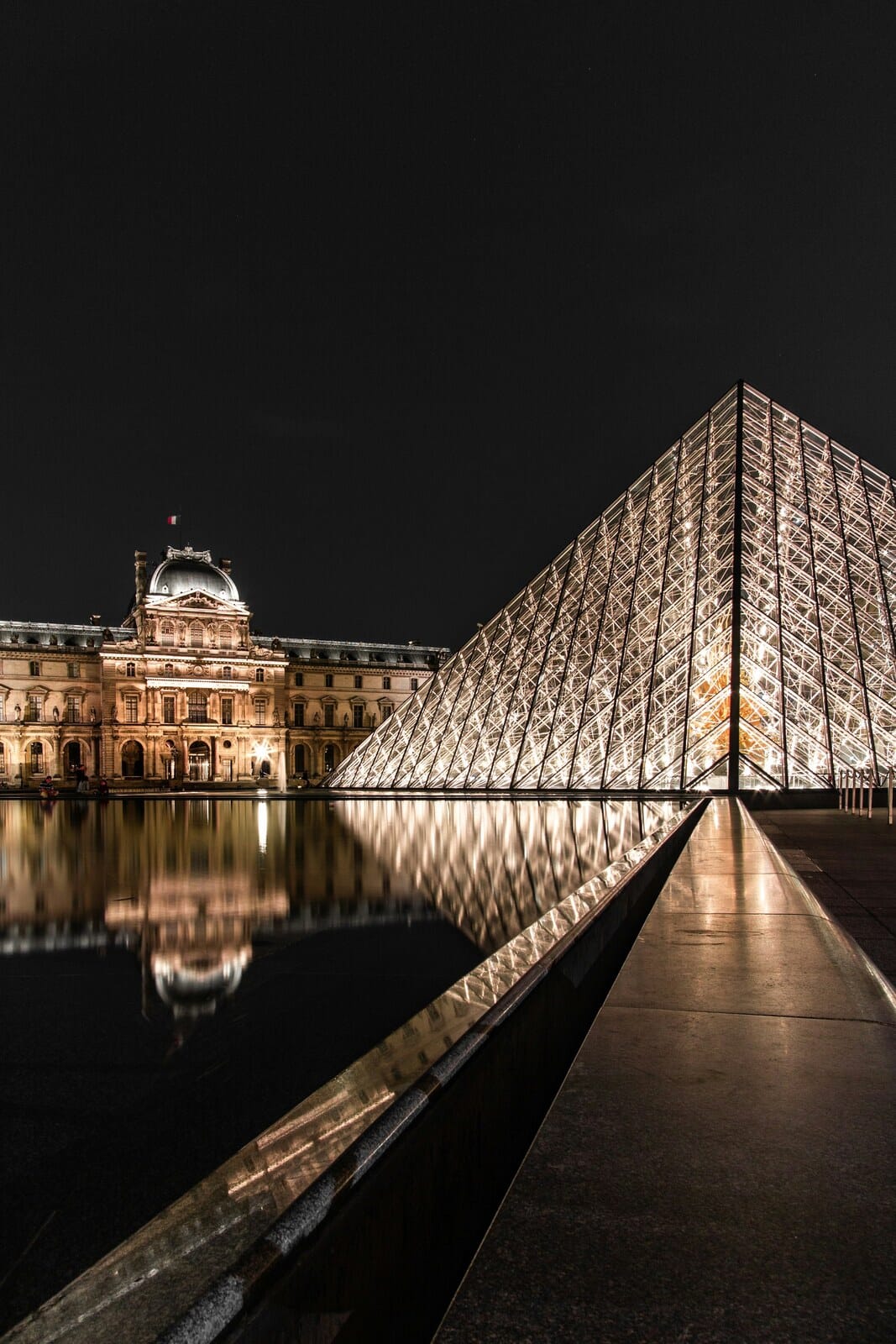


- Triangles are the strongest shape in composition: they add stability when they sit on their base, energy when they tilt, and depth when converging lines form them.
- The three working types are the symmetrical triangle (calm, monumental), the scalene triangle (dynamic, tense), and the implied triangle formed by three points of interest.
- Triangle composition is the backbone of portrait posing: single subjects form triangles with arms and stance, and groups arrange into triangles with staggered head heights.
- Painters have leaned on pyramidal composition for five centuries (the Mona Lisa is a triangle), and every one of those lessons transfers directly to photography.
Triangle composition is the fastest upgrade available to most photographers. Rectangles feel static and circles feel closed, but a triangle gives the eye a base to rest on and an apex to travel toward, which is exactly what a photograph needs: structure plus movement.
This guide covers the types of triangles worth hunting for, triangle posing for portraits and groups, how diagonals build triangles, and what five centuries of painting teach about the shape. Two of the examples are interactive: drag the slider and the hidden triangle appears.
Why Triangles Work in Composition
Triangles do three jobs. Sitting on a wide base, they read as stable and monumental, which is why mountains feel eternal. Tipped onto a point or cut at an angle, they create tension and energy. And because a triangle is built from converging lines, it naturally pulls the eye along those lines toward its corners.
The shape is also everywhere once you start looking. Drag the handle to reveal the structure holding this frame together:
The triangle hiding in a classic landscape
What Is Triangle Composition in Photography?
Triangle composition (sometimes called the rule of triangles) means arranging the key elements of a frame so they form a triangle, or building the frame around a triangular shape that already exists. It works alongside the other tools in the composition toolkit, and it often does its job invisibly: viewers rarely notice the triangle, they just feel that the image holds together.
Some triangles are literal objects, like a sail, a roofline, or a mountain:
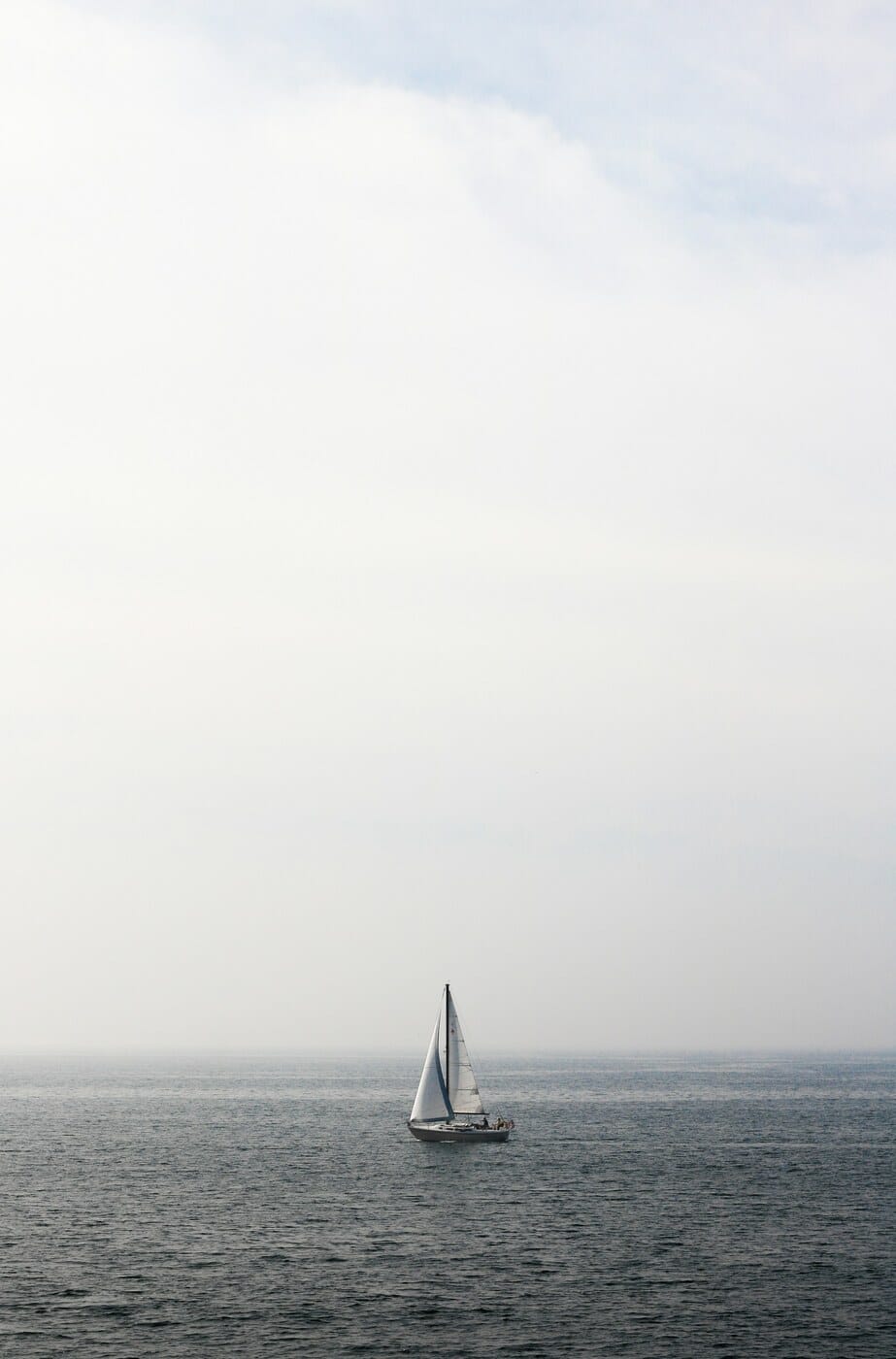
Others are built from arrangement: three subjects, a pose, or converging lines. Both kinds follow the same rules, and the sections below cover each.
Types of Triangles in Photography
The Symmetrical (Stable) Triangle
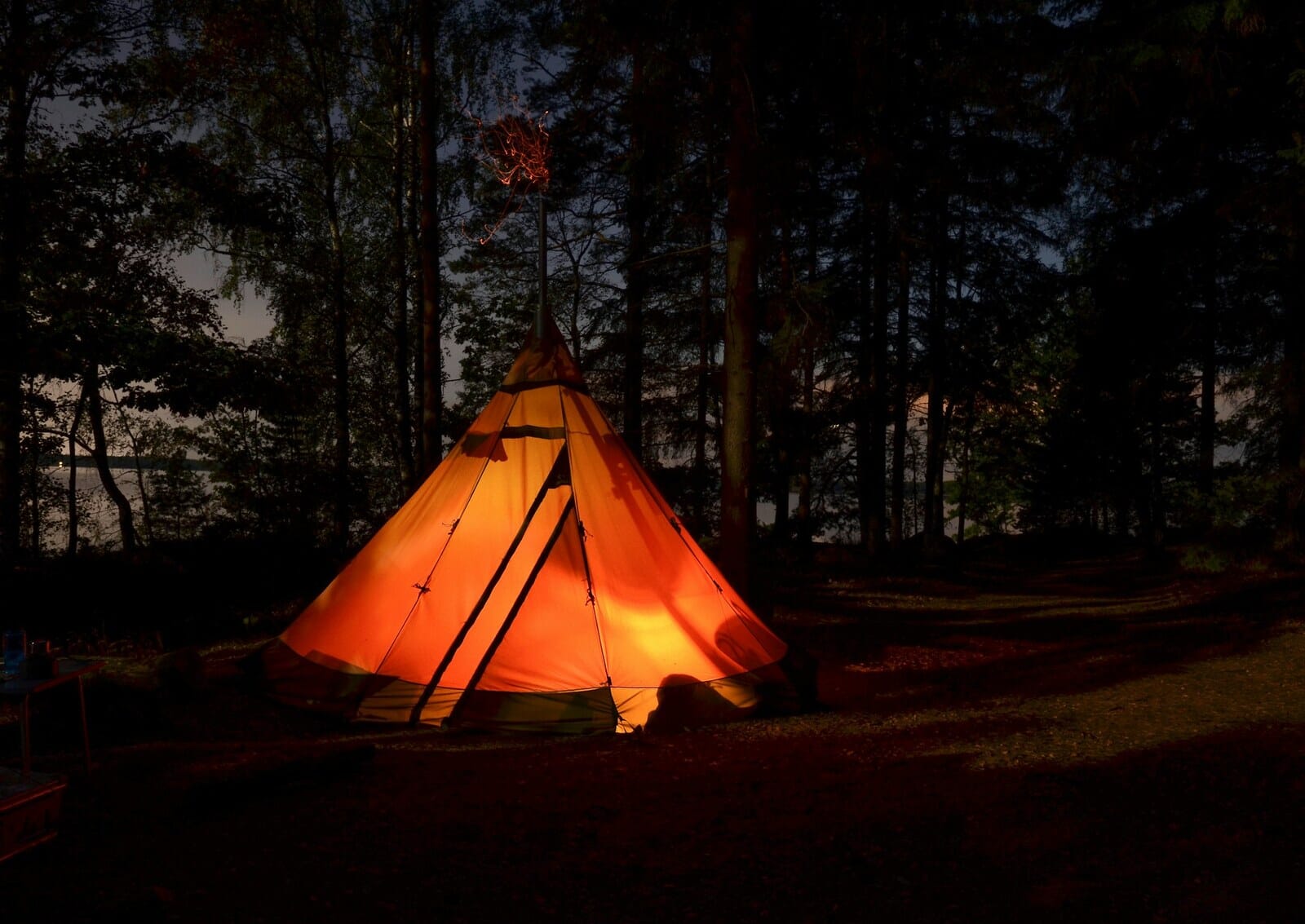
A triangle resting on its base with roughly even sides is the most stable arrangement in visual art. Mountains, tents, pyramids, and steeples all carry it. Use it when the mood should be calm, grand, or permanent, and expect the frame to feel quiet rather than exciting.
The Scalene (Dynamic) Triangle
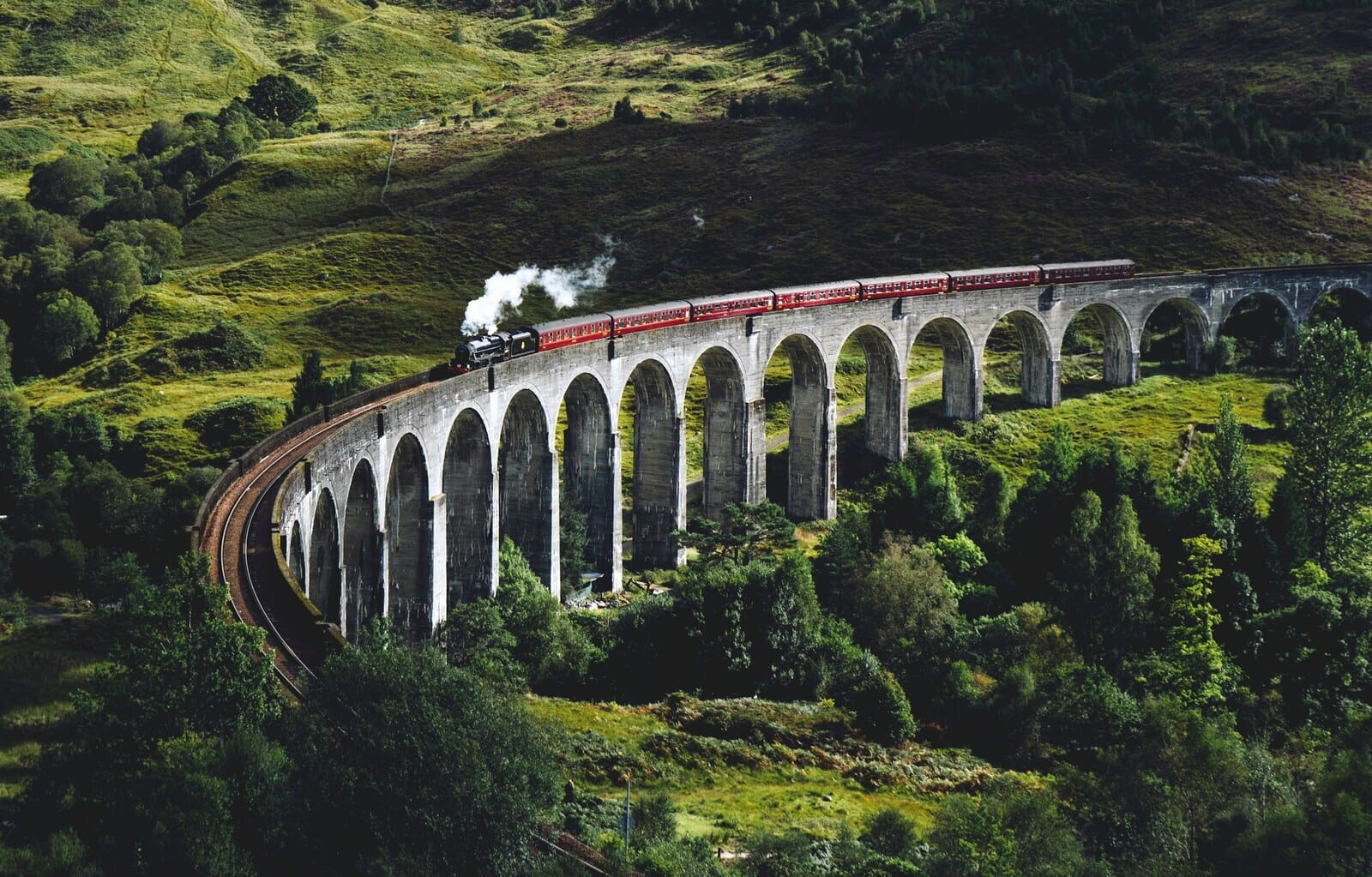
Scalene triangles, with unequal sides and angles, are the energetic siblings. Because they look like they might tip over, they inject movement and tension. Architecture shot from a corner, roads climbing a hill, and any strong diagonal that meets another line will hand you one.
The Implied Triangle
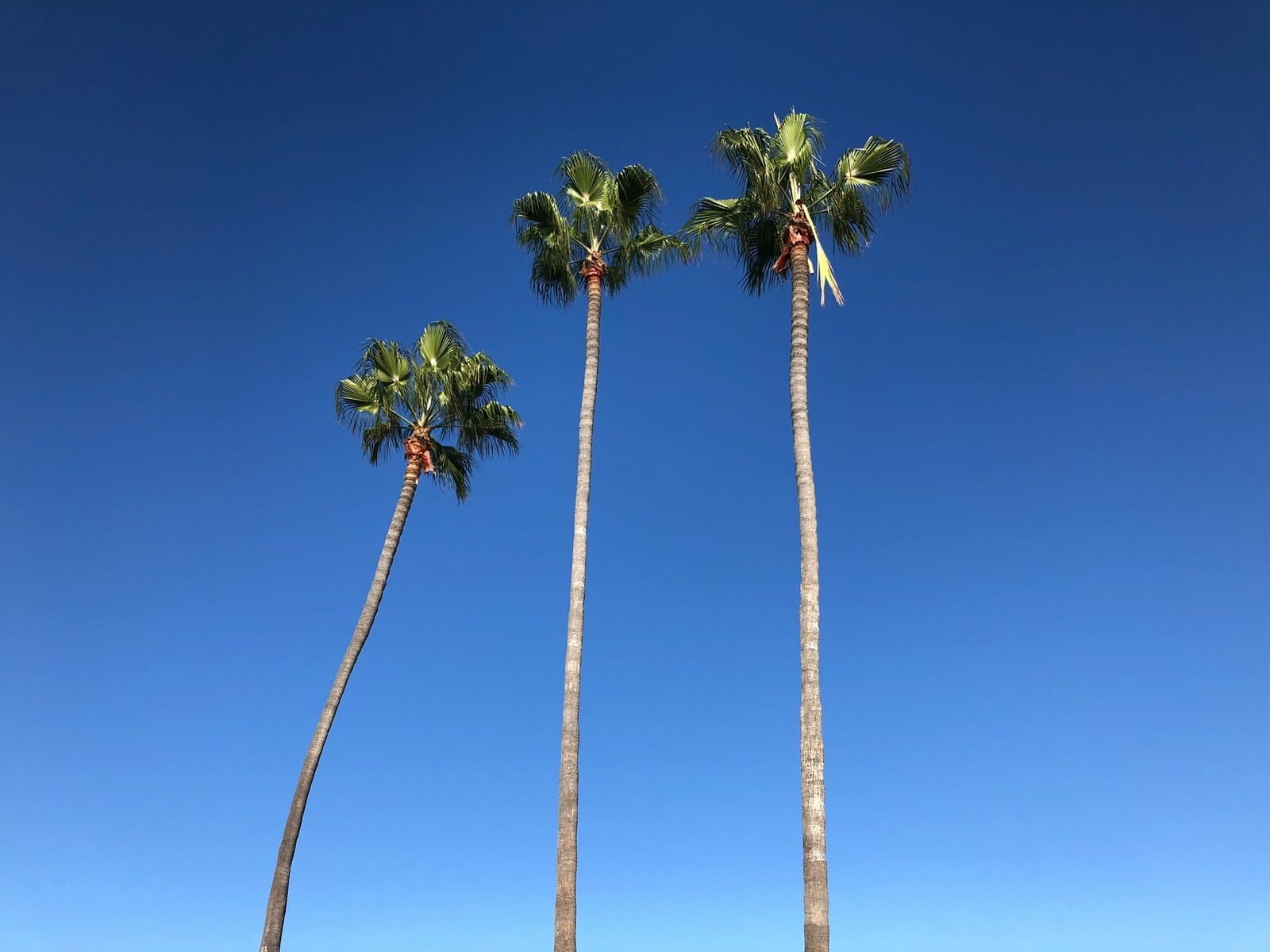
The implied triangle is the most useful of all because it needs no triangular object: any three points of interest form one, and the viewer’s eye circulates between them instead of sliding out of the frame. Three people, three rocks in a seascape, three highlights in a still life. Odd numbers beat even numbers in composition largely because of this effect.
The Golden Triangle
The golden triangle is a compositional grid rather than a shape in the scene: divide the frame with one corner-to-corner diagonal, then drop perpendiculars from the other two corners, and place your subject along those lines. It deserves its own explanation, and the dedicated golden triangle guide covers the grid, when to use it over the rule of thirds, and worked examples.
Triangle Composition in Portraits
Portraiture is where triangle composition earns its keep daily. A standing subject is a boring rectangle until the pose breaks it: hands on hips turn arms into two triangles, a wide stance builds a stable base, and a head tilt turns the whole silhouette into a directional shape.
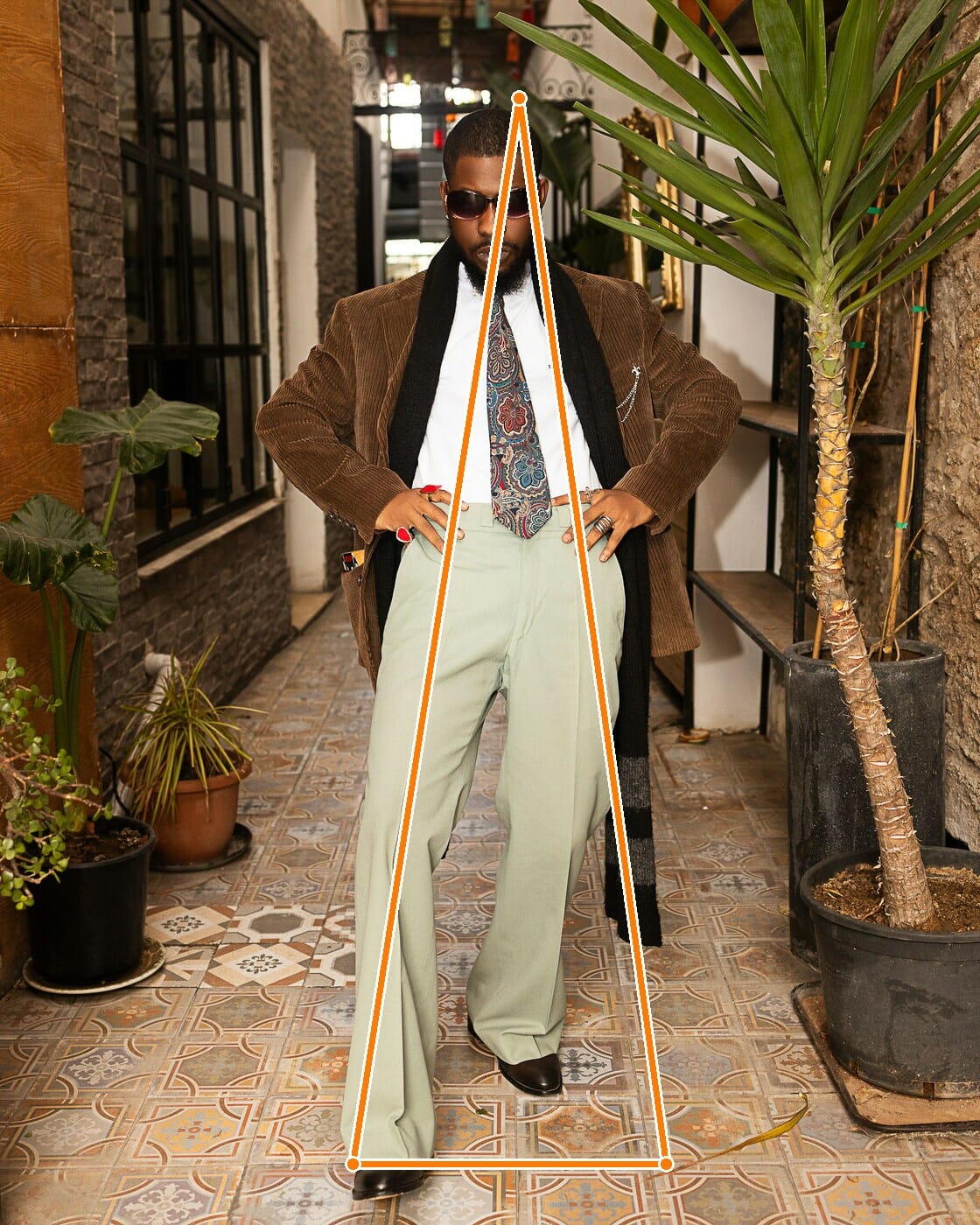
The same thinking drives every posing guide ever written: bend limbs, create negative space, avoid straight-on symmetry unless it is deliberate. The posing guide has thirty-plus poses, and nearly all of them are triangle factories.
Group Portrait Triangle Composition
Groups are where amateurs line heads up in a row and professionals build triangles. Stagger the heights so faces form triangles, seat some people and stand others, and the group reads as connected instead of queued. Drag to see the structure:
The triangle inside a group portrait
The working recipe for any group: pick the anchor person, then place every additional face slightly higher or lower than its neighbors, never level. Stairs, benches, and leaning walls do the staggering for you.
Diagonals and Triangles
Diagonals and triangles in photography are the same subject wearing two names. Every strong diagonal wants to meet another line, and the moment it does, a triangle appears. The most reliable version is convergence: parallel lines receding toward a vanishing point compress into a long triangle that pulls the viewer into the depth of the frame.
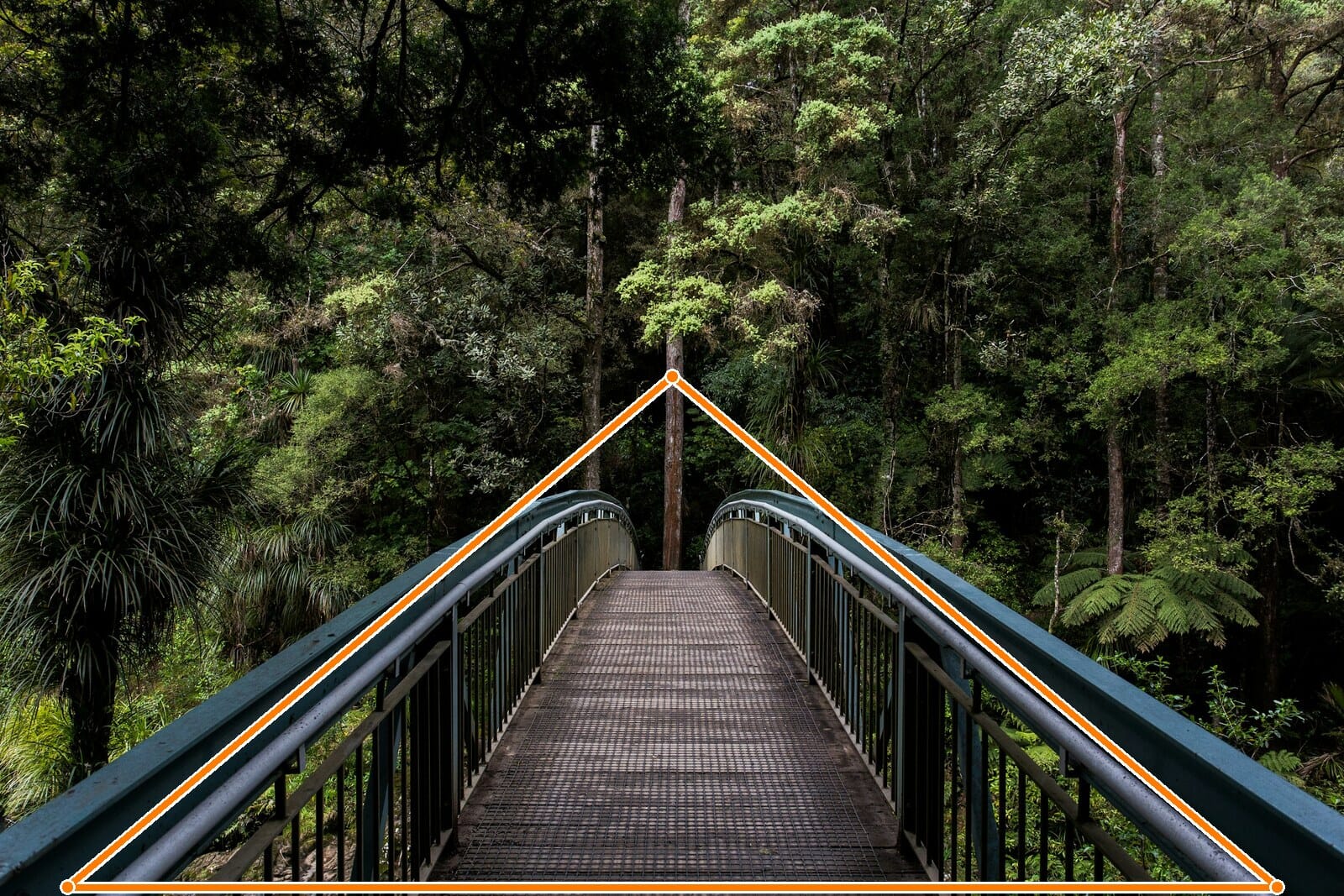
To use it deliberately, put something worth finding near the apex: a figure on the path, a doorway, a patch of light. Convergence without a destination reads as empty. Strong diagonals also pair naturally with symmetry, as in this example, where the left-right mirror doubles the triangle’s strength.
Triangular Composition in Art: What Photographers Can Steal
Search for triangular composition examples and half the results are paintings, because painters worked this out more than three hundred years before cameras existed. Renaissance artists called it pyramidal composition: build the figure as a triangle, wide and stable at the base, apex at the head.
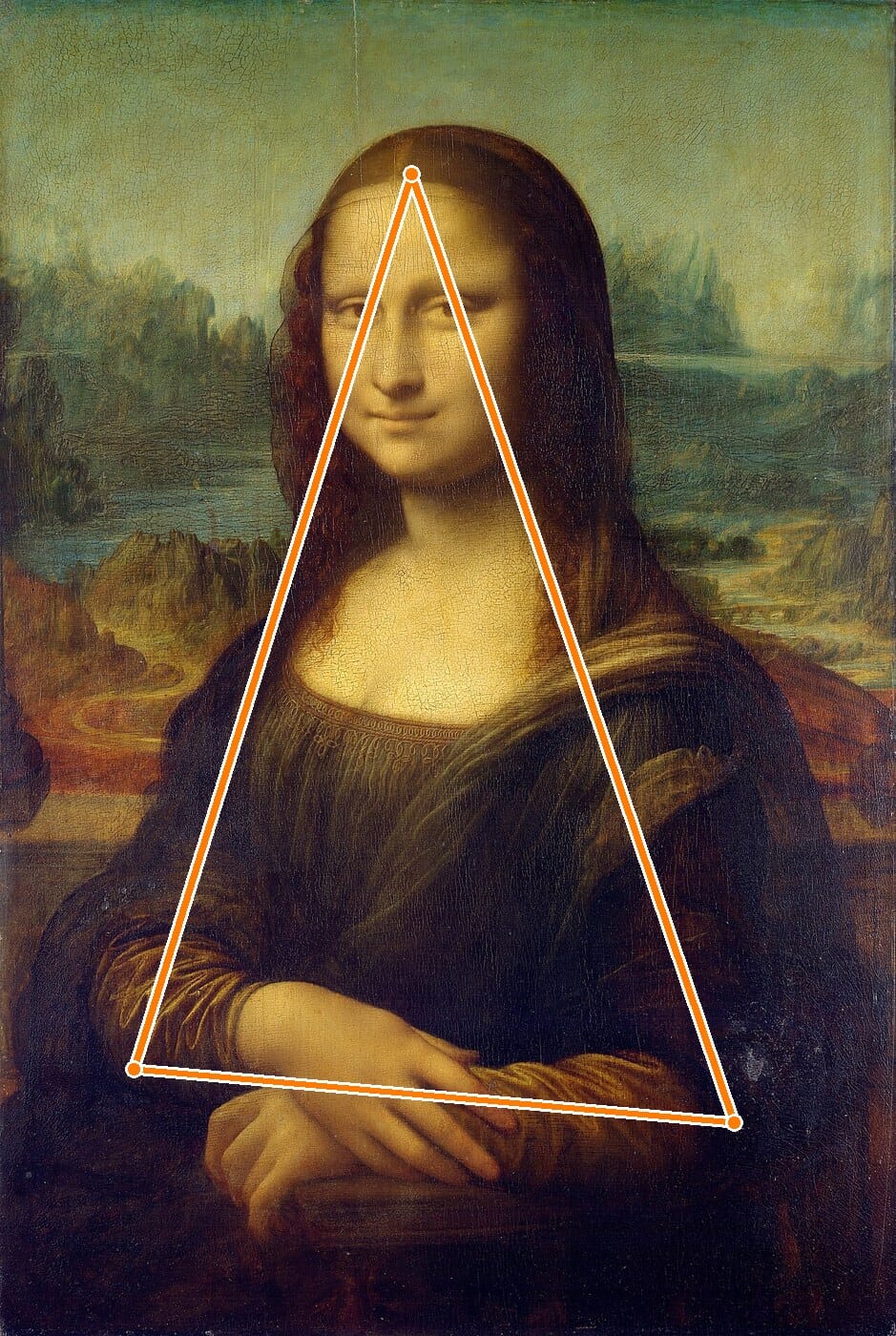
Leonardo’s Mona Lisa is the textbook case, and da Vinci’s Last Supper goes further: Christ forms a central triangle while the apostles cluster into four more groups of three. Raphael built entire Madonnas on the same pyramid.
The transferable lessons: seat your subject and let folded arms build the base (every formal portrait since is this move); put the most important face at the apex of a group’s triangle; and when a composition feels scattered, reduce it to one dominant triangle and remove whatever fights it.
How to Find Triangles in Any Scene
Four places to look, roughly in order of reliability. First, architecture: rooflines, bridges, stairwells, and anything shot from a corner produces triangles on demand.
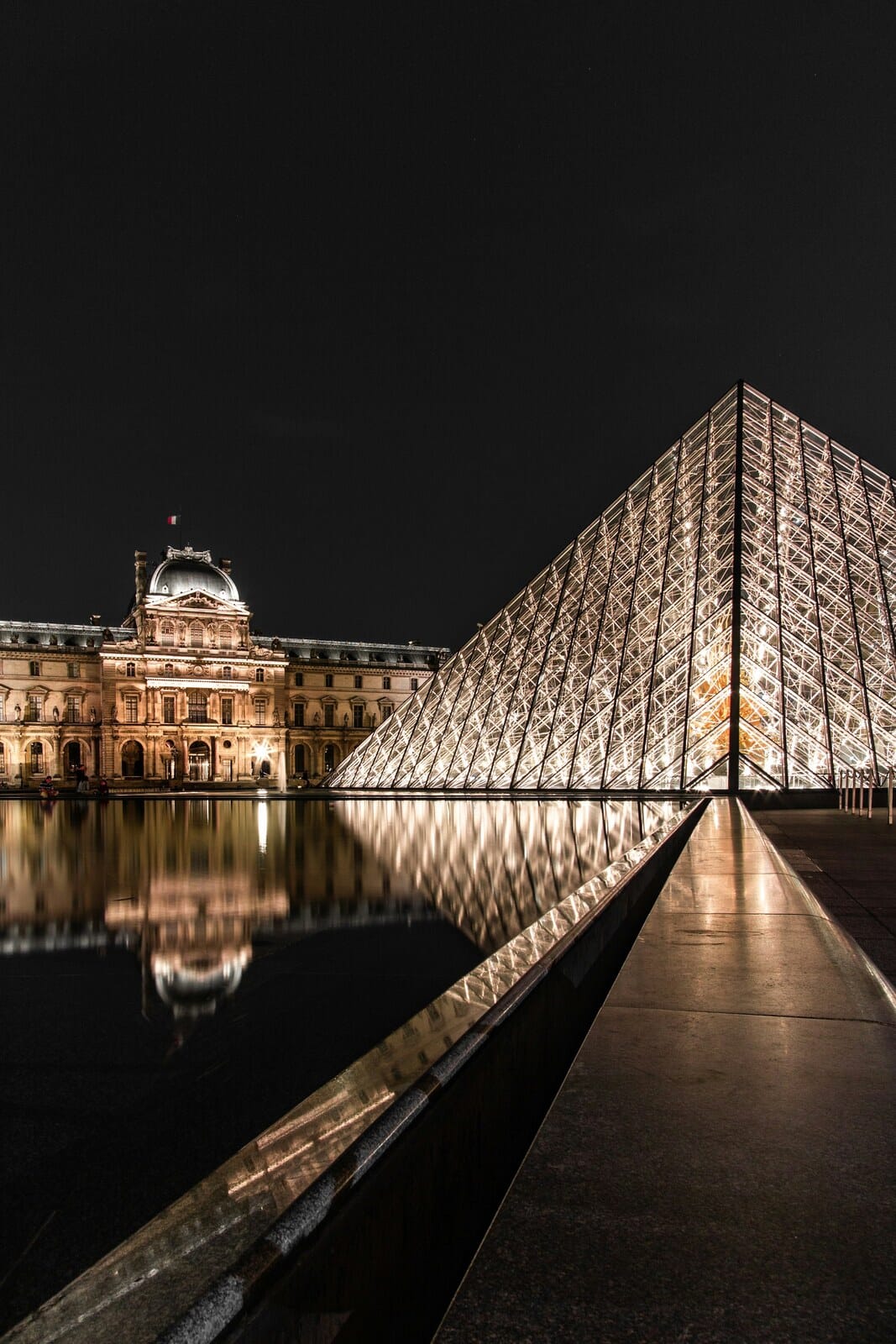
Second, viewpoint: triangles appear and vanish as you move. Two steps sideways turn parallel lines into converging ones; crouching turns a flat path into a depth triangle. If a scene has no triangle, the fix is usually your feet, not the scene.
Third, arrangement: in still life, food, and product work you control the objects, so default to trios and place them with one item dominant. Arrangement also covers posing, as the portrait section above showed.
Fourth, light: shadows, light beams, and reflections build triangles that exist for minutes. Hard afternoon light throwing diagonal shadows across a wall is a triangle generator, and the same low sun powers the drama in shadow photography.
Common Triangle Composition Mistakes
1. Forcing it. Not every scene contains a meaningful triangle, and hunting shapes at the cost of the actual subject produces sterile images. The triangle serves the photo, never the reverse.
2. Cutting the apex. A triangle loses its power when its point exits the frame; the eye follows the converging lines and falls out of the photo. Either include the apex or crop decisively so no triangle is implied.
3. Even-numbered groups arranged evenly. Four people at two matched heights form a static rectangle. Break it: stagger three heights minimum, or split four into a three-plus-one.
4. Ignoring what the triangle points at. Triangles are arrows. If the apex aims at an exit sign, a stranger, or blank sky, the composition ushers the viewer to the wrong place.
5. One triangle, no support. Strong frames usually layer shapes: a main triangle plus echoes of it. A single lonely triangle in a chaotic scene gets shouted down by the chaos.
Frequently Asked Questions
What is triangle composition in photography?
Triangle composition means structuring a photograph around a triangular shape, either a literal one (a mountain, a sail, a roofline) or one implied by the arrangement of elements (three subjects, a pose, converging lines). The triangle gives the viewer’s eye a stable base and a clear path, which makes the image feel organized without the viewer noticing why.
What is the rule of triangles?
The rule of triangles is the informal name for composing with triangles: arrange key elements as three points, pose subjects so their bodies form triangles, or use converging lines to build one. Unlike the rule of thirds it is not a grid; it is a shape-hunting habit, and the two rules combine well.
How do you pose a group in a triangle composition?
Stagger head heights so no two neighboring faces are level: seat some people, stand others, and use stairs or furniture to create levels. Place the most important person at the apex or at the front-center base, and keep faces close enough that the triangle reads as one connected shape. Odd-numbered groups arrange themselves almost automatically; even-numbered groups need a deliberate split, like three plus one.
Are triangular compositions actually useful, or is this overthinking?
They are useful precisely because they work below conscious attention. Viewers never say “nice triangle,” they say the photo feels balanced or powerful. Triangles also survive cropping and social-media formats better than edge-dependent compositions, since the shape travels with the subject.
What is a good example of triangular composition in art?
The Mona Lisa: Leonardo built the figure as a pyramid, head at the apex, folded hands and elbows as the base, and that stability is a large part of why the portrait feels so composed. His Last Supper does it at group scale, and Raphael’s Madonnas repeat the formula. Photographers borrow the exact same pyramid every time they seat a subject with folded arms.
Do all scenes include triangles?
No, and that is fine. Triangles are one tool: some scenes are about symmetry, some about a single line or a color. When a scene lacks a triangle, changing your viewpoint often creates one from converging lines, but if it fights the subject, compose with something else.
Use Triangles to Improve Your Compositions
The shape-hunting habit takes about a week to install. On your next three outings, force one deliberate triangle per shoot: a posed one, an architectural one, and an implied trio. After that the triangles start finding you.
From there, stack the skill with the rest of the compositional toolkit: the full composition guide covers the other structures, and the golden triangle grid is the natural next step for diagonal-heavy scenes.
Image Sources
- Mount Fuji at twilight: photo by Clay Banks – Symmetrical triangle slider, via Unsplash, curated on SampleShots
- Sailboat: photo by Christina Ambalavanar – Literal triangle example, via Unsplash, curated on SampleShots
- Tipi at night: photo by Chris Schog – Stable triangle example, via Unsplash, curated on SampleShots
- Glenfinnan Viaduct: photo by Jack Anstey – Dynamic triangle example, via Unsplash, curated on SampleShots
- Three palms: photo by Tyler Mower – Implied triangle example, via Unsplash, curated on SampleShots
- Standing pose: photo by Dion Martins – Posing triangle example, via Unsplash, curated on SampleShots
- Group on steps: photo by Joel Muniz – Group portrait slider, via Unsplash, curated on SampleShots
- Forest footbridge: photo by Tim Swaan – Converging diagonals example, via Unsplash, curated on SampleShots
- Louvre pyramid at night: photo by Michael Fousert – Architecture example and pin image, via Unsplash, curated on SampleShots
- Mona Lisa by Leonardo da Vinci: public domain – Public-domain painting via Wikimedia Commons, shown with a PhotoWorkout composition overlay
- Triangle overlays and slider annotations: PhotoWorkout illustrations – Composition annotations drawn by PhotoWorkout on the credited photos