


- OpenAI announced on May 19, 2026 that all images generated by ChatGPT and the OpenAI API now carry both C2PA provenance metadata and Google’s SynthID invisible watermark. A public Verify tool at openai.com/verify checks both signals against any uploaded image.
- Eight days earlier, on May 11, Canon launched its C2PA-compliant Authenticity Imaging System for newsrooms — EOS R1 and EOS R5 Mark II only, EMEA first, Reuters as the pilot partner. The cameras cryptographically sign each capture; Canon issues public certificates and trusted timestamps that verify all the way through publication.
- These two announcements are the same week the authenticity stack finally converged. Hardware-side: a working camera signs real photos at the sensor. Software-side: the largest AI image vendor marks its own outputs and lets anyone verify them. Both sides speak the same protocol (C2PA).
- Practical gaps remain: Canon’s system is paid-activation only and EMEA-first; SynthID does not survive every transformation; neither system catches genuinely-captured-then-AI-edited images (sky replacements, generative fill). But for the first time, both endpoints of the chain — capture and generation — are publishing signed assertions about what they made.
Two announcements eight days apart just finished what photography journalism has been waiting a decade for: a verifiable answer to the question “did a camera take this, or did a model make it?” On May 11, Canon launched its C2PA-compliant Authenticity Imaging System for newsrooms — Reuters as the pilot. On May 19, OpenAI announced its image outputs would carry C2PA metadata and Google’s SynthID invisible watermark, paired with a public verifier at openai.com/verify.
One company makes images that ought to be trusted because a sensor saw them. The other makes images that should be flagged because a model generated them. Until this month they were solving the same problem from opposite ends with no shared protocol. Now they share one: C2PA. That convergence — not either announcement on its own — is the photography story.
What OpenAI Actually Shipped on May 19
The substance of the OpenAI announcement is more concrete than the press cycle made it sound. Three deliverables:
- C2PA conformance for ChatGPT and API image outputs. Every image generated through ChatGPT or the OpenAI API now ships with a Content Credentials manifest in its metadata. The manifest declares the image was AI-generated, when, by which model, and through which OpenAI endpoint. Any C2PA reader — Adobe’s verifier, Microsoft’s verifier, Canon’s newsroom system, or OpenAI’s own tool — can read it.
- SynthID watermark embedding. The same images also get Google’s invisible watermark embedded in the pixel data. SynthID was designed to survive transformations that erase metadata: screenshots, format conversion, crops, color grading. Metadata gives detail; the watermark gives durability. Layered, they cover each other’s failure modes.
- A public verifier at openai.com/verify. Upload any image and the tool checks for both signals — C2PA metadata and SynthID watermark — and reports what it finds. If it sees either, it tells the user the image came from an OpenAI model. If it sees neither, the tool is explicit that absence of a signal is not proof of absence — the watermark or metadata could be missing for legitimate reasons or could have been spoofed.
The watermark-plus-metadata combination matters because each layer has a known weakness. C2PA metadata is rich but easy to strip — a screenshot or a re-save through software that doesn’t preserve metadata removes it. SynthID survives screenshots but encodes far less information. OpenAI is the largest image generator to ship both, and the first to make verification a public web tool rather than a developer API.
OpenAI joins Nvidia, Kakao, and ElevenLabs as commercial adopters of SynthID. Google has watermarked more than 100 billion images, videos, and audio clips with the technology through its own products since launch. The standard is no longer a research project — it is the de facto baseline for “did an AI make this” detection in 2026.
What Canon Shipped Eight Days Earlier
Canon’s May 11 press release framed this as a system for news organizations, not as a consumer feature. The architecture is worth understanding because it sets the template for how cryptographic image provenance will be packaged commercially.
- Supported cameras: EOS R1 and EOS R5 Mark II only. Both ship with C2PA-capable firmware that signs each capture with a hardware-bound private key. The signature records the camera body, the timestamp, and a cryptographic hash of the captured image data. Tampering breaks the signature.
- Paid activation. The Authenticity Imaging System is a subscription service, not a free firmware feature. Canon issues the public certificates that verify each signed capture, runs the timestamp authority, and provides the workflow for newsroom editors to apply and audit edits. The price has not been published.
- EMEA first. Europe, Middle East, and Africa launch in May 2026. Other regions follow on a country-by-country schedule Canon has not detailed publicly.
- Reuters as pilot partner. The agency tested R1 and R5 Mark II bodies in field workflows ahead of launch. The report from Reuters: authenticated provenance data could be generated reliably at the point of capture and survived the editing pipeline through to publication.
This is materially different from the firmware-only Content Credentials Canon shipped to the R1 and R5 Mark II in July 2025. That earlier rollout signed photos at capture but stopped there — there was no public certificate authority, no timestamp infrastructure, no workflow for newsroom editors to add their own signed assertions about edits. May 11 closed that gap. Canon is now operating the full chain: capture, certify, timestamp, verify at publication.
Why the Convergence Matters More Than Either Announcement
For most of the C2PA standard’s history the talk has been entirely camera-side. Adobe, Microsoft, Sony, Canon, Leica, Nikon, and the BBC built out the protocol with photojournalism in mind: prove a real photo is real. The problem with that framing alone is asymmetric. A signed image proves provenance for the small percentage of images that came from cooperating cameras. It says nothing about the vastly larger universe of images people actually share online — the ones from phones, screenshots, social uploads, and AI generators.
OpenAI joining C2PA on the generation side flips the asymmetry. Now the largest source of synthetic images is also signed — declaring itself as synthetic, in the same machine-readable format newsroom verifiers already parse for Canon and Sony captures. A photojournalism workflow that already reads C2PA on the way in now reads it on the way out, too. The verifier doesn’t need a separate logic branch for “is this an AI image” — that question becomes the same query as “is this signed.”
The practical implication: photo competitions, news desks, and stock libraries that build verification into intake can finally separate three populations cleanly: signed real captures, signed AI outputs, and unsigned everything-else. Today the third bucket — unsigned — is still everything posted from a phone, every screenshot, and every AI image generated by a smaller vendor that hasn’t joined the standard. That bucket shrinks over time as adoption widens, but the convergence this week is what makes the stack workable in the first place.
What This Means in Practice for Photographers
The change is not abstract. There are four working photographers’ workflows that look different in 2026 because of it.
Newsroom and editorial assignment work
Photojournalists working for Reuters, AP, AFP, or wire-syndicated outlets will see C2PA-signed capture become a contract requirement within the next 12 to 24 months. The technology exists, the agency that consumes the most editorial imagery in the world has piloted it, and the editorial liability for publishing an AI image as news is now unbounded. If a desk has the option of mandating signed capture, it will. Pros shooting on R1 and R5 Mark II bodies already have the hardware; the only question is whether the agency pays for activation or whether the photographer is expected to.
Photo competitions
PhotoWorkout’s May 19 analysis of the Hasselblad Masters 2026 incident made the case that contests need to mandate C2PA-signed source files at entry to close the AI-content vector. The OpenAI side of the convergence reinforces that argument: a contest that requires signed source files on intake AND runs every entry through the OpenAI Verify tool catches both kinds of cheating — fully synthetic AI entries fail the source-file check, and edited-on-top-of-AI entries get flagged by the verifier. Two complementary tools, both free, both reading the same C2PA standard.
Stock and licensing
Stock libraries already separate AI-generated submissions from photographer submissions, mostly via self-declaration plus reviewer judgment. C2PA on both sides makes this enforceable rather than honor-system. Expect Getty, Adobe Stock, Shutterstock to start requiring C2PA-signed source files for editorial-tier licensing within the year. The commercial-license market is harder — buyers care less — but editorial use, where authenticity is the product, moves first.
Personal portfolio and social work
For working photographers whose client base is wedding, portrait, real-estate, or commercial — most of the field — none of this matters yet. Social platforms have not committed to reading C2PA in feed contexts (Meta said it would, then quietly de-prioritized; TikTok has not committed). Until Instagram displays a “Content Credentials verified” badge next to images, the average viewer has no way to consume the signal even if the file carries it. That layer is the next domino to fall, and it has not.
What’s Still Broken
Three open problems remain after this week’s convergence — none of them disqualifying, all of them worth tracking:
- The “photograph the screen” attack still works. An AI image displayed on a high-resolution monitor and then captured with a Canon R1 produces a signed image that genuinely was photographed — but the subject inside the frame is synthetic. The C2PA chain certifies the capture event, not what the camera was pointed at. In practice this requires noticeable physical setup and leaves moiré or screen artifacts a forensic tool can flag, but it is the cleanest theoretical bypass and remains the gap researchers focus on.
- Edited-on-top-of-real images get murky. A genuinely-captured photo that goes through Photoshop’s generative fill, sky replacement, or Topaz Sharpen still passes Canon’s C2PA chain at the capture step. The C2PA standard expects subsequent edits to add their own signed assertions about what was changed, and Adobe does write these for some operations — but consumer-grade workflows routinely strip or skip those assertions. A signed capture says “this body shot this frame at this time.” It does not say “and nothing was generatively altered downstream.”
- Adoption is the entire game. A Sony Alpha shooting alongside a Canon R1 today still produces unsigned files unless Sony Verify is enabled (and the specifics differ from Canon’s protocol). A Nikon Z9 photographer with the latest C2PA firmware is in better shape than a Nikon shooter on older firmware. The fragmentation will narrow over time, but the C2PA standard is only useful in a workflow that mandates it on intake.
What to Do This Week
Concrete steps a working photographer can take in response to the convergence:
- If you shoot Canon R1 or R5 Mark II for editorial work, ask your agency whether they intend to pay for Canon’s Authenticity Imaging System activation, and whether signed source files are about to become a delivery requirement. The conversation is easier to have before a contract revision than after.
- If you shoot Sony Alpha or Nikon Z bodies that support C2PA capture, enable Verify (Sony) or the Content Credentials firmware option (Nikon) and confirm the signed metadata survives your delivery pipeline. The Sony depth-data approach to AI detection in video is one piece; the C2PA Verify mode on Alpha stills is the other.
- If you enter photo competitions, ask the organizing body whether they plan to mandate C2PA-signed source files at intake in the next cycle. PhotoWorkout’s Hasselblad Masters analysis documents why this matters and what the procedural fixes look like.
- If you supply stock, check whether your library has begun accepting C2PA-signed manifests as a quality signal. Some already do for editorial-tier; commercial follows.
- For everyone: bookmark openai.com/verify alongside Adobe’s Content Authenticity verifier. When an image in your inbox or a client deck looks too clean, run it through both. The dual check takes 15 seconds and now covers the largest synthetic-image source plus the broader C2PA chain.
The decade-old question — “how does a photographer prove their work is real, and how does anyone prove an AI image is AI” — has not been fully solved. But this week was the first time both halves of the answer were on the table at once, in the same protocol, with working public tooling from both ends. That is the headline that should travel further than either of the press releases that created it.
FAQ
How do I check if an image was made by ChatGPT or DALL-E?
Upload it to openai.com/verify. The tool reads C2PA metadata and the SynthID watermark and reports whether the image was produced by ChatGPT or the OpenAI API. Both signals can be missing from older images generated before the May 19, 2026 rollout, and absence of a signal is not proof an image was not AI-generated — it could have been stripped or could come from a different model.
Does Canon’s C2PA system work on the EOS R6 V or older R-series bodies?
As of the May 11, 2026 launch, Canon’s Authenticity Imaging System officially supports only the EOS R1 and EOS R5 Mark II. The R5 and R6 (Mark I) received basic Content Credentials capture via firmware in 2024, but they are not part of the newsroom-grade certificate chain Canon launched this month. The freshly-announced EOS R6 V — covered in PhotoWorkout’s launch piece — is not on the supported list yet either, which is notable for a video-first body that ships to working pros in late June.
Is OpenAI’s Verify tool free?
Yes, openai.com/verify is a free public tool that does not require an OpenAI account. It only verifies images against C2PA metadata and SynthID watermarks for OpenAI-generated content. Adobe’s broader C2PA verifier at verify.contentauthenticity.org covers the entire Content Credentials ecosystem including Canon, Sony, Nikon, and Leica captures.
Can SynthID watermarks be removed?
SynthID is designed to survive most common transformations — screenshots, resizing, format conversion, moderate cropping and color adjustment. Aggressive transformations such as heavy compression, large-area inpainting, and re-rendering through a different AI model can weaken or remove the signal. The watermark is far more durable than C2PA metadata against casual stripping, but it is not impossible to defeat. Defense-in-depth — watermark plus metadata plus forensic detection — is why OpenAI ships all three signals together rather than choosing one.
When will Sony and Nikon match Canon’s newsroom-grade system?
Sony Verify is operational on certain Alpha bodies and a parallel video-detection approach is described in PhotoWorkout’s coverage of Sony’s autofocus-depth deepfake detection. Nikon shipped C2PA capture firmware to the Z9 in mid-2025. Neither manufacturer has announced a fully-operated newsroom certificate and timestamp authority equivalent to what Canon launched with Reuters on May 11. Expect catch-up announcements at Photokina or in the Q3 2026 firmware cycle.
The Authenticity Stack Has Two Working Halves
The story of image authenticity in 2026 stopped being “will the camera side ever ship?” or “will the AI side ever cooperate?” Both shipped this month. The new question is adoption velocity — how quickly newsrooms, contests, stock libraries, and social platforms wire up to read what is now being broadcast in a shared format. The hard cryptography is done. The plumbing is mostly built. The remaining work is procedural and political, and it travels faster than the technology did.
For working photographers, the practical posture in May 2026 looks like this: shoot with C2PA-aware bodies when the workflow rewards it, run inbound images through both verifiers when the stakes warrant the 15 seconds it takes, and watch which competitions and outlets move first on intake-side enforcement. The ones that move first will become the credible ones. The ones that wait will keep providing Hasselblad-style incidents that look like detection failures but are really procurement failures — fixable by mandate, not by more careful looking.
Image sources: Featured image — Engin Akyurt / Unsplash. Canon EOS body — Zoshua Colah / Unsplash.
Reporting, primary documents, and prior PhotoWorkout coverage cited in this article:
Primary Documents
- OpenAI — Image provenance via C2PA and SynthID – Official OpenAI announcement of C2PA conformance and SynthID embedding for ChatGPT and API image outputs, May 19, 2026.
- OpenAI — Verify (public tool) – Public verification page that checks uploaded images for OpenAI-generated provenance signals.
- Canon Global — C2PA-Compliant Authenticity Imaging System for News Organizations – Official Canon press release, May 11, 2026. EMEA-first rollout, EOS R1 and R5 Mark II, Reuters as pilot partner.
Reporting
- TechCrunch — OpenAI is making it easier to check if an image was made by their models – Walkthrough of the dual C2PA + SynthID approach and the Verify tool launch.
- Digital Trends — OpenAI's new website to check if an image is real or AI – Coverage of the Verify tool, partner ecosystem (Nvidia, Kakao, ElevenLabs), and limitations of the watermark + metadata combination.
- Digital Camera World — Canon rolls out C2PA-compliant image verification for newsrooms – Camera-side reporting on the Canon Authenticity Imaging System launch and Reuters pilot.
Standards and Tools
- Coalition for Content Provenance and Authenticity (C2PA) – The cryptographic image-provenance standards body cited throughout this article.
- Adobe — Content Authenticity Initiative verifier – Free public C2PA verifier covering the broader Content Credentials ecosystem (Canon, Sony, Nikon, Leica, Adobe outputs).
- Google DeepMind — SynthID – Background on the invisible watermark technology now embedded in OpenAI image outputs.
Image Sources
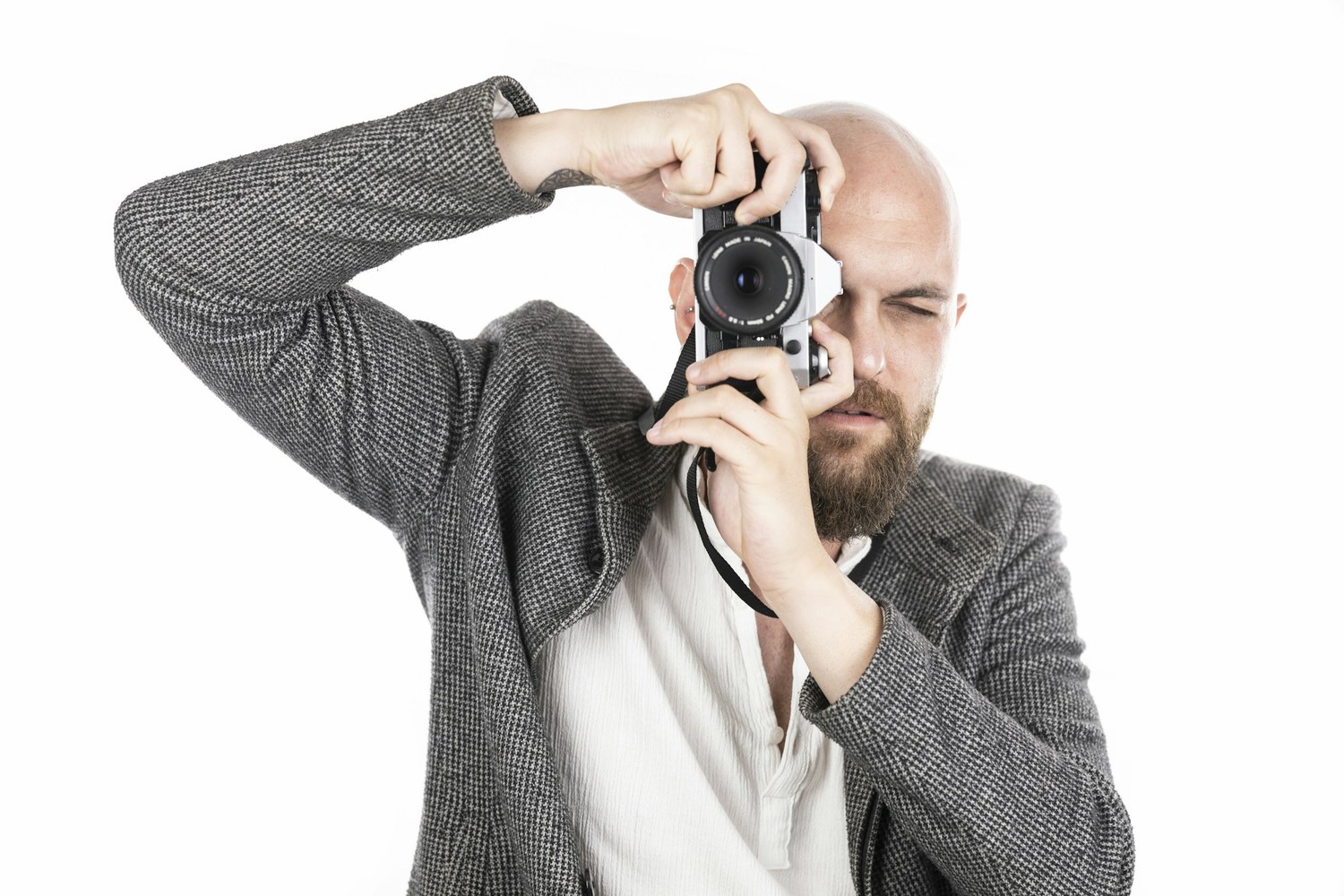
- Engin Akyurt — Press photographer (Unsplash) – Featured image of the photojournalist on assignment.
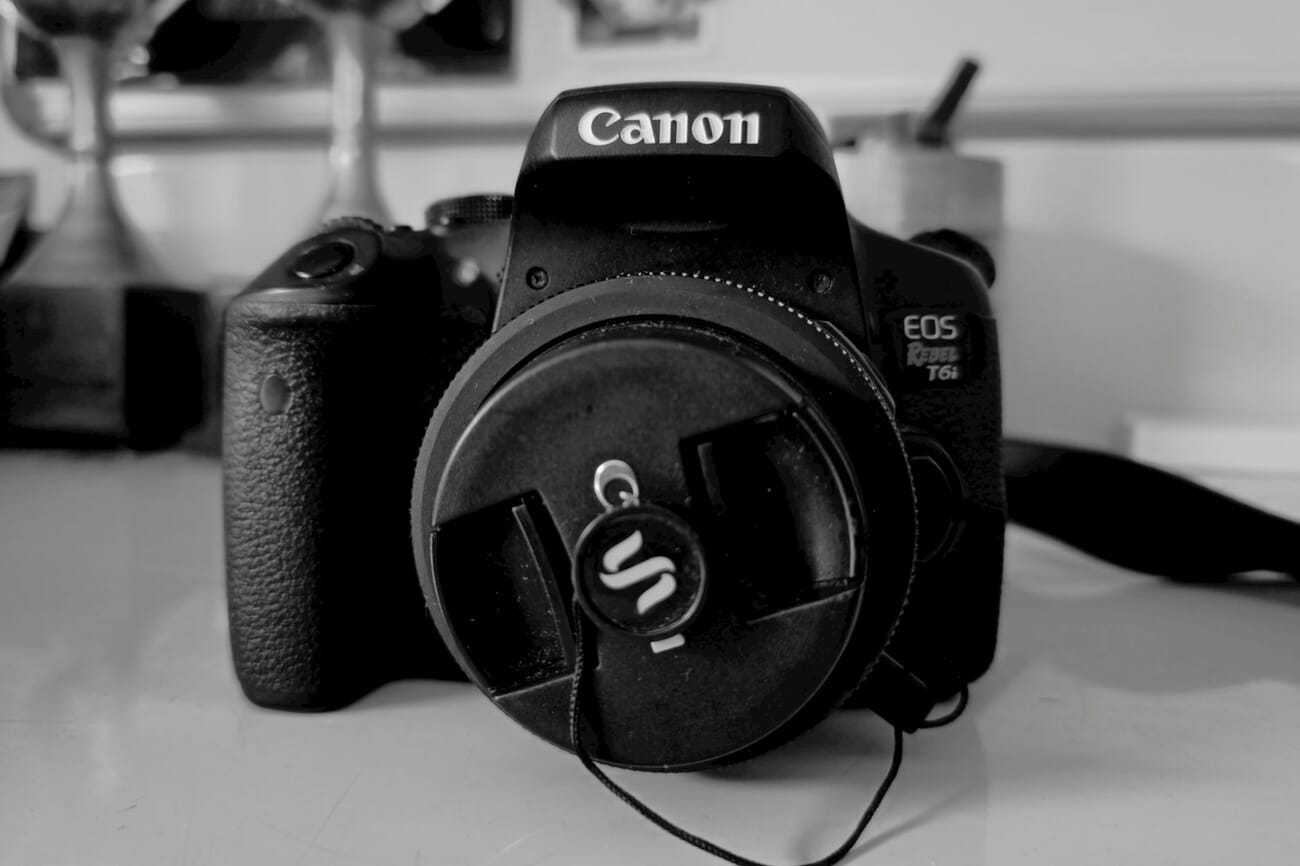
- Zoshua Colah — Canon EOS camera (Unsplash) – In-body image representing the Canon camera side of the authenticity stack.