


- You don’t need to spend $500–$1,800 to get the retro ‘digicam’ look — a handful of real point-and-shoot cameras come in under $200 and nail the aesthetic Gen Z is chasing.
- The Kodak PIXPRO line dominates this price band for a reason: the FZ55 (~$130) is the best-reviewed budget pick, the FZ45 (~$100) is the cheapest credible camera, the C1 (~$100) adds a selfie flip screen, and the WPZ2 (~$189) is waterproof.
- Manage expectations: these have small 1/2.3-inch sensors, so they shine in daylight, struggle indoors, and shoot 1080p (not 4K). That softness is part of the look many people actually want.
- Avoid the $40–$60 no-name ‘4K 64MP’ cameras — the megapixel and 4K claims are interpolated, and reliability is hit-or-miss. A real brand at $100 is the smarter buy.
- If you can stretch the budget, the dream digicams (Fujifilm X100VI, Ricoh GR, Sony ZV-1) are a different league — but they’re $500+ and often out of stock.
The cheap point-and-shoot camera is having a genuine comeback, and you don’t need a $1,800 Fujifilm to join in. A wave of buyers — Gen Z especially — has rediscovered the chunky little “digicam,” and the most interesting part of the trend is happening at the bottom of the price chart: real cameras you can buy brand new for under $200. They’re simple, pocketable, and they produce exactly the slightly-soft, of-the-moment look that phones spend thousands of dollars trying to avoid.
This guide is about that budget end specifically — the best digital cameras under $200, what they realistically do, and where the cheapest options cross the line into junk. We’ll cover the picks worth buying, a quick note on the pricier “dream” digicams if you can save up, and how to choose without overpaying.
When you buy through links on our site, we may earn a commission at no cost to you. We evaluate products independently. Commissions do not affect our evaluations.
Why Cheap Digicams Are Back
The revival is part aesthetic, part rebellion. After a decade of phones making every photo clinically sharp, a younger generation has decided that the imperfect look of a 2000s point-and-shoot — the flat flash, the slightly noisy shadows, the limited dynamic range — feels more real and more fun. Carrying a separate little camera is also a deliberate break from the phone. The expensive end of this trend gets the headlines, but the under-$200 cameras are what most people actually pick up first, because the whole appeal is being casual and low-stakes. It’s the same impulse driving the broader compact-camera revival across the industry.
One reality worth planning for: a dedicated camera adds a step that phones removed. Shots live on an SD card, so sharing means either the camera’s Wi-Fi (only some budget models, like the WPZ2, have it) or popping the card into a reader later. For a lot of people that friction is actually the appeal — you shoot in the moment and relive the roll later, instead of doom-scrolling your own photos. But if instant posting matters to you, factor in a card reader or a Wi-Fi-equipped model before you buy. Battery life is the other practical note: AA-powered models like the FZ45 are easy to keep alive on the road, while built-in batteries mean carrying a cable.
The Best Budget Digicams Under $200
Kodak PIXPRO FZ55 Budget Compact Camera (16MP, 5x Optical Zoom)

Anyone who wants the authentic point-and-shoot ‘digicam’ look and feel for the lowest realistic price from an actual camera brand
- Real 5x optical zoom plus a useful 28mm-equivalent wide angle
- The most-reviewed budget digicam on Amazon (7,600+ ratings at 4.5 stars) — a known quantity
- Truly pocketable, dead simple, and runs on easy-to-find batteries
- Tiny 1/2.3-inch sensor gets noisy in low light
- 1080p video only — no 4K
Want that retro digicam vibe without gambling on a no-name camera? The FZ55 is the most-reviewed budget point-and-shoot going — 16MP, a real 5x optical zoom and a 28mm-equivalent wide angle, all for around $130. It nails the look Gen Z is after and it is genuinely pocketable and dead simple. The tradeoff is the tiny 1/2.3-inch sensor: great in daylight, noisy indoors, and video tops out at 1080p.
The FZ55 is what most first-time buyers actually walk away with, and the reason is boring but real: over 7,600 reviews at 4.5 stars mean returns are rare and the camera does what it says. In daylight the images look surprisingly clean for the price, with the slightly compressed colors and mild vignette that give the ‘digicam’ tag its meaning. Indoors and after sunset is where the small sensor shows its age, but if the point is a casual party or a golden-hour walk, the FZ55 quietly gets the job done.
One buyer note that matters: the FZ55 uses a proprietary rechargeable battery, not AAs. Pack a spare (they run about $12 on Amazon) if a full day out is on the plan. That is the tradeoff for the smaller body versus the FZ45 below.
Kodak PIXPRO FZ45 Cheapest Point-and-Shoot (16MP, 4x Zoom)

The absolute cheapest way into a dedicated camera — a perfect first camera for a teen or a no-stress travel/party cam
- About $100 — the cheapest credible point-and-shoot
- Runs on AA batteries, so no proprietary charger to lose
- Backed by nearly 6,000 reviews
- Shorter 4x zoom than the FZ55
- Small sensor and basic 1080p video
If $130 is still too much, the FZ45 is the cheapest real camera worth buying at around $100. You get 16MP, a 4x optical zoom and a 27mm wide angle, and it runs on AA batteries so you can keep shooting anywhere without hunting for a charger. It is the textbook ‘throw it in a bag and don’t worry about it’ camera. Expect the same small-sensor limits and 1080p video.
The FZ45 loses just enough to the FZ55 that it saves real money without losing the core appeal. The zoom drops from 5x to 4x, the exact same 16MP sensor is inside, and the images look nearly identical in the daylight conditions this class of camera actually wants. If the honest use case is ‘a camera to leave in a bag for the summer,’ the FZ45 is arguably the smarter pick.
The AA batteries are the underrated feature here. When the battery dies mid-trip, walk into any convenience store, buy a two-pack, and keep shooting. That is genuinely rare in modern electronics, and it is what makes the FZ45 a defensible choice for teens, festivals, hikes, and anywhere a charger is not going to be.
Kodak PIXPRO C1 Flip-Screen Vlogging Compact (13MP)
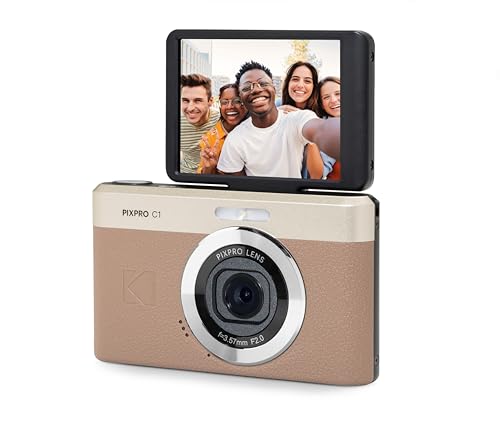
Creators and selfie-shooters who want a flip-up screen to frame themselves, on a sub-$100 budget
- 180-degree flip screen for selfies and vlogging
- Compact and around $100
- 4x optical zoom and 1080p capture
- Lower 13MP resolution
- Small sensor; modest in low light
The C1 is the pick if you point the camera at yourself. Its 180-degree flip screen lets you frame selfies and vlogs the way a phone does, but with the chunky digicam aesthetic — and it is about $100. The 13MP sensor and 4x zoom keep things basic, but for casual vlogging and self-portraits at this price it does the one thing the others do not.
The C1 makes the most sense for anyone whose first instinct is to point the camera at themselves. The 180-degree flip screen changes the whole ergonomics: a phone-native user can frame selfies and low-angle shots without guessing, which the FZ55 and FZ45 cannot do without a lot of hope.
The tradeoff is a step down to a 13MP sensor from the 16MP of the other Kodaks, which shows up mostly when cropping. For social output that maxes at 1080 or 1440 wide, it is invisible. Anyone using the C1 as a still-first camera should probably grab an FZ55 instead; anyone using it for casual vlogs and self-portraits will be happy at $100.
Kodak PIXPRO WPZ2 Waterproof Rugged Compact (16MP)

Pool, beach, kids and adventure use — a camera you genuinely do not have to baby
- Waterproof, shockproof and dustproof — rugged by design
- Built-in Wi-Fi for quick transfers
- Still under $200 at around $189
- Chunkier and pricier than the other Kodaks
- Small sensor; 1080p video
The WPZ2 is the one you hand to a kid or take in the water. It is waterproof, shockproof and dustproof, with 16MP, a 4x zoom and built-in Wi-Fi to move shots to your phone — and it still sneaks in under $200 at about $189. It is the most specialized pick here, but for anyone who wants a worry-free camera for summer, it is the obvious budget choice.
The WPZ2 is billed as ‘the specialized pick,’ but the built-in Wi-Fi is quietly what makes it the best all-around Kodak on this list for one specific kind of buyer: anyone who wants shots off the camera and onto Instagram the same day without carrying a card reader. Nothing else at this price bundles waterproofing, ruggedness, and same-day sharing in one body.
Think of it less as a niche summer camera and more as an outdoor everyday pick. The bulk is real, and it will not fit in a jeans pocket the way the FZ55 will, but for beach days, kayak trips, and anywhere kids are involved, the ability to hand it over without flinching is worth the small price bump.
The pattern here is hard to miss: at this price, Kodak’s PIXPRO line is the credible default. That isn’t a sponsorship — it’s that the alternatives are mostly anonymous brands, and the PIXPRO cameras are the ones with thousands of real reviews and a recognizable name behind them.
Want to Spend More? The “Dream” Digicams
If your budget can stretch well past $200, the cameras that actually started this craze are a different class entirely — bigger sensors, real lenses and proper controls. The Fujifilm X100VI is the icon (and the hardest to buy — it’s been sold out for two years, which is its own business story). The Ricoh GR series is the pocketable street-photography cult favorite, and Sony’s ZV-1 line is the go-to for vloggers who want a small sensor camera with serious video. Just know you’re looking at roughly $500 to $1,800, and several of them are perpetually out of stock — the opposite of the grab-it-today appeal of the budget picks above.
How to Choose a Budget Digicam Under $200
Three things matter at this price. First, buy a real brand: the $40–$60 “4K, 64-megapixel” cameras that flood Amazon use interpolated specs (the sensor isn’t really 64MP and the 4K is upscaled), and reliability is a coin flip — a $100 Kodak or a used name-brand compact is a far safer bet. Second, decide what you actually need: optical zoom (FZ55), the lowest price (FZ45), a selfie flip screen (C1), or waterproofing (WPZ2). Third, accept the small-sensor reality — these are daylight cameras, and the look you get indoors or at night is grainy by nature. If you want that grain, great; if you don’t, save toward a larger-sensor compact instead. Brands like Minolta sell similar sub-$100 cameras, but their ratings sit noticeably lower than the PIXPRO line, so we’d steer budget buyers to Kodak first.

Frequently Asked Questions
What is the best digital camera under $200?
For most people, the Kodak PIXPRO FZ55 (~$130) — it’s the best-reviewed budget point-and-shoot, with a 5x optical zoom and the authentic digicam look. Drop to the FZ45 (~$100) for the cheapest option, or the WPZ2 (~$189) if you need waterproofing.
Are cheap digicams actually good, or just a trend?
Both. In good light they take perfectly shareable photos with a distinctive look, and the simplicity is the point. But the small sensors mean weak low-light performance and 1080p video — they’re a fun second camera, not a phone replacement for every situation.
Should I buy a $50 ‘4K 64MP’ camera instead?
Generally no. Those numbers are interpolated rather than true sensor specs, and build quality and support are unreliable. A real-brand camera around $100 — or a used name-brand compact — will serve you far better for not much more money.
Do these shoot 4K video?
No — the budget PIXPRO cameras shoot 1080p. True 4K at this quality level means stepping up to a larger-sensor compact like the Sony ZV-1, which costs several times more.
The Bottom Line
You can absolutely get in on the digicam revival for under $200. The Kodak PIXPRO FZ55 is the best all-round budget pick, the FZ45 is the cheapest one worth owning, the C1 adds a selfie screen, and the WPZ2 takes a swim — all real cameras with the look people are after. Skip the no-name bargain-bin models, match the pick to how you’ll shoot, and keep your expectations sized to the sensor. Then, if the bug really bites, you’ll know exactly which $500-plus dream camera to save for.
Pricing, ratings and availability were verified against Amazon at the time of this update.
Image Sources


Disclosure/Disclaimer: As an Amazon Associate, we earn from qualifying purchases. Certain content was provided "as is" from Amazon and is subject to change or removal at any time. Product prices and availability: Amazon prices are updated daily or are accurate as of the date/time indicated and are subject to change. Any price and availability information displayed on Amazon.com at the time of purchase will apply to the purchase of this product.