


- A commentary in Nature Ecology and Evolution warns that wildlife photographers using generative AI to “enhance” bird photos are polluting the citizen-science databases scientists rely on, including iNaturalist and the Cornell Lab’s Macaulay Library.
- The problem is not obvious fakes. It is small edits: asking AI to remove a branch or make a shot look better can silently alter the field marks used to identify a species, manufacturing a false record.
- A real case: a reported first sighting of a North American red-winged blackbird in Brazil turned out to be a common epaulet oriole that an AI editor had rebuilt after the photographer asked it to look better.
- Scale is unknown. Hundreds of altered images have been found, yet only about 1,400 of iNaturalist’s 610 million photos have been flagged for AI, so the true count could be far higher.
- The proposed fix is provenance: C2PA Content Credentials plus human review. iNaturalist is already debating it, and it lands just before the EU AI Act’s August 2 transparency rules for AI-generated content.
The AI-authenticity fight has spent a year playing out in photo contests and courtrooms. It just jumped somewhere with higher stakes: conservation science. A new commentary from ecologists warns that wildlife photographers who reach for a generative AI tool to perfect a bird shot are, often without realizing it, corrupting the exact records scientists use to track where species live.
The mechanism is quietly alarming. A single “make it look better” or “remove that branch” request can rewrite the small plumage details that separate one species from another. Upload the result to a citizen-science platform, and a beautiful photo becomes a false ecological record. Here is what the researchers found, the bird that broke a record, and how to keep enhancing your photos without faking the science.
“Wildlife photographers can be quite obsessed with getting a beautiful photo,” Lees said, “but there’s a risk that the image might actually cause problems down the line when AI has been used to edit it.”
The Bird That Broke a Record
The clearest example in the commentary reads like a cautionary tale. A photographer in central Brazil captured what looked like a red-winged blackbird, a North American species never before recorded in that region. It would have been a genuinely notable first sighting.
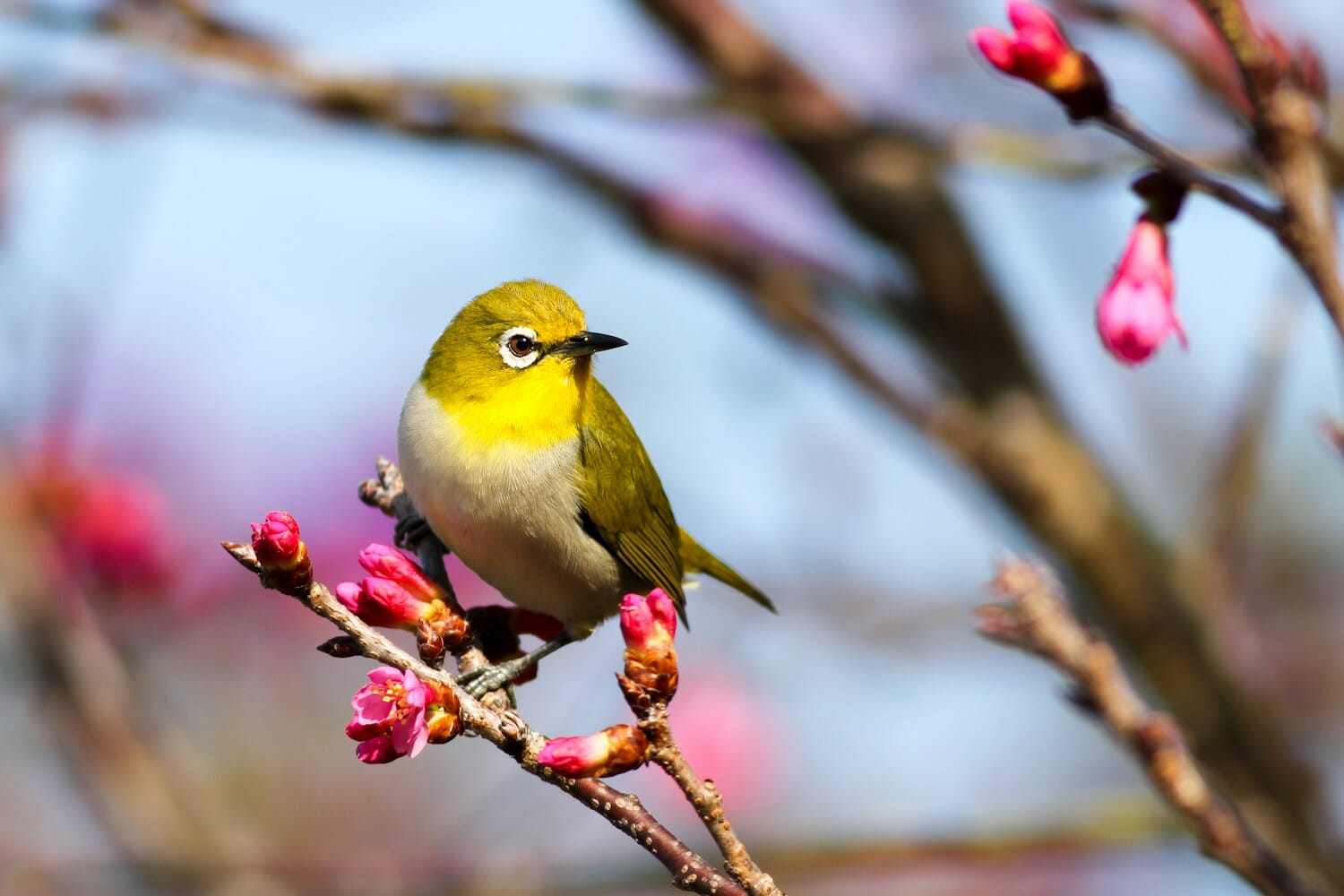
It was not real. The bird was a common epaulet oriole, a species found throughout the area, including in Serra da Canastra National Park. The photographer had asked an AI platform to make the image “look better,” and during that edit the tool added features of a red-winged blackbird that were never there. The result was a convincing photo of a bird that did not exist in that frame, filed as a scientific first.
How a Harmless Edit Manufactures a False Record
This is the part every photographer should understand, because it is not about deliberate hoaxes. Outright fakes, as Lees put it, are usually easy to catch: nobody is falling for a toucan sighting in Siberia. The real danger is the well-meaning edit.
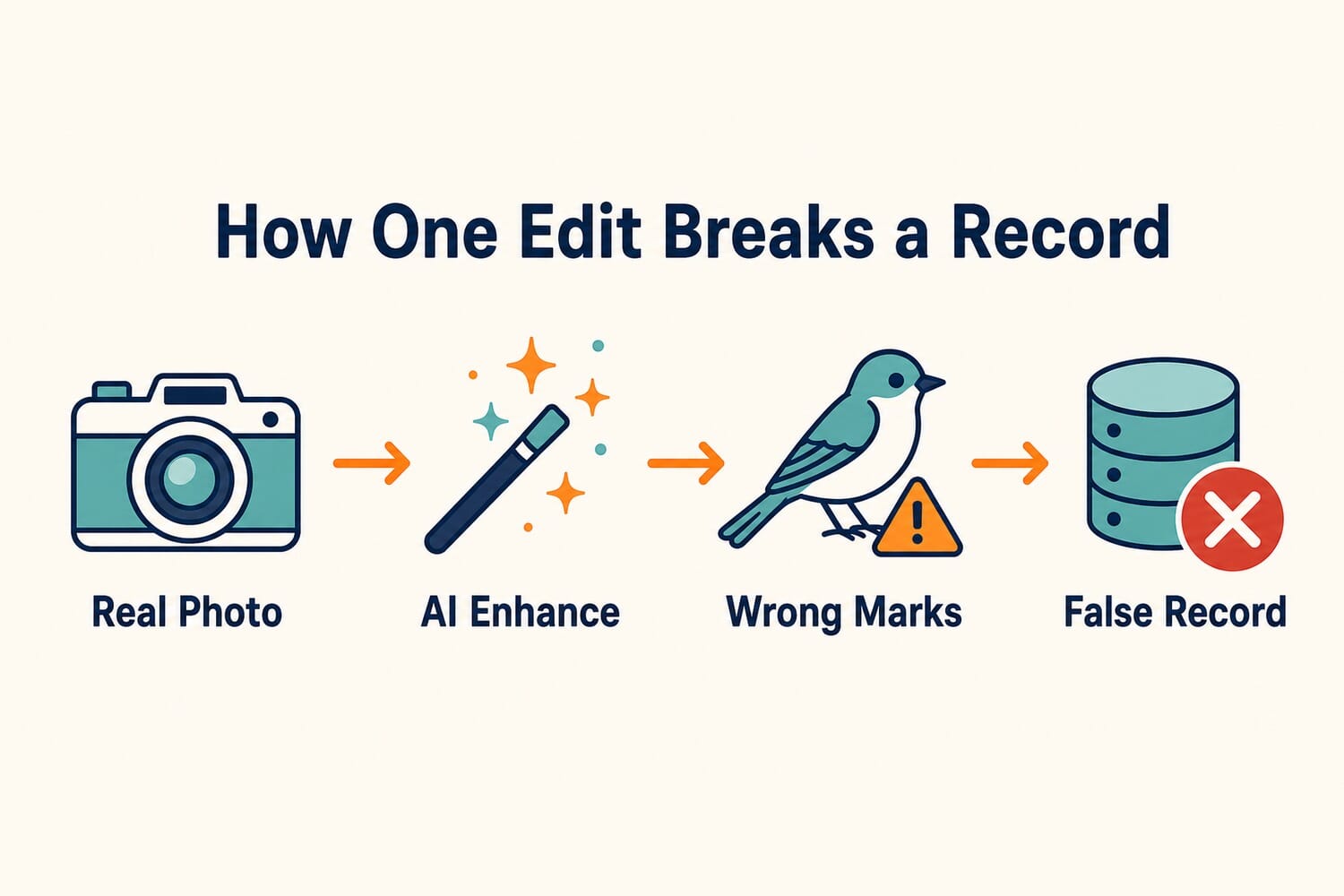
Species identification hinges on field marks: the precise pattern of a wing bar, the color of an eye ring, the shape of a bill, the streaking on a breast. These are small, specific, and exactly the kind of detail a generative model will happily invent or smooth over. Ask an AI to remove a distracting branch, and it may repaint the feathers behind it with plausible but wrong plumage. Ask it to “enhance” a soft shot, and it can sharpen a blurry marking into a crisp one that belongs to a different species.
The photographer sees a cleaner, prettier bird. A reviewing scientist sees a diagnostic feature that changes the identification. Neither necessarily knows the pixels were generated rather than captured. This is the same authenticity problem we have tracked in proving a photo is not AI, now with an ecological price tag attached.
Nobody Knows How Big the Problem Is
The most unsettling detail is the uncertainty. Researchers have already identified hundreds of fake or altered images on species-recording databases. But that is almost certainly a floor, not a ceiling. On iNaturalist, only around 1,400 images out of more than 610 million uploaded have been flagged for AI use at all.
That gap, 1,400 flagged against 610 million total, is the whole problem in two numbers. Detection is manual, sporadic, and easily outpaced by tools that improve every month. Dr. Lees noted that a large share of wildlife photos he now sees on social media are simply AI-generated, which makes the idea of mining those images to understand where species live, he said, “very difficult.”
The Fix: Provenance, Not Prohibition
The researchers are not asking photographers to stop editing. They are asking the platforms, and the industry, to make edits traceable. The proposed answer is provenance: cryptographic Content Credentials that travel with an image and record what was done to it, paired with human review of notable sightings.
That standard already exists. C2PA Content Credentials, backed by Adobe, camera makers, and a growing list of companies, embed a tamper-evident history in a file: captured here, edited there, AI used or not. iNaturalist’s community is actively debating whether to adopt it, with some members enthusiastic and others skeptical that credentials alone can solve a social problem. It is the same constructive answer we covered when we looked at why AI detectors keep failing: prove what is real rather than guess what is fake.
The timing is not a coincidence. The warning lands just ahead of August 2, 2026, when the EU AI Act’s Article 50 transparency rules begin to apply, requiring that AI-generated content be marked as such. Provenance is about to move from good practice to legal expectation, and wildlife databases are one of the places it will matter most.
How to Enhance Responsibly as a Wildlife Shooter
None of this means your edits are the enemy. Exposure, contrast, cropping, and noise reduction are normal, honest parts of processing a photo. The line is between adjusting what you captured and generating what you did not. A few habits keep you on the right side of it.
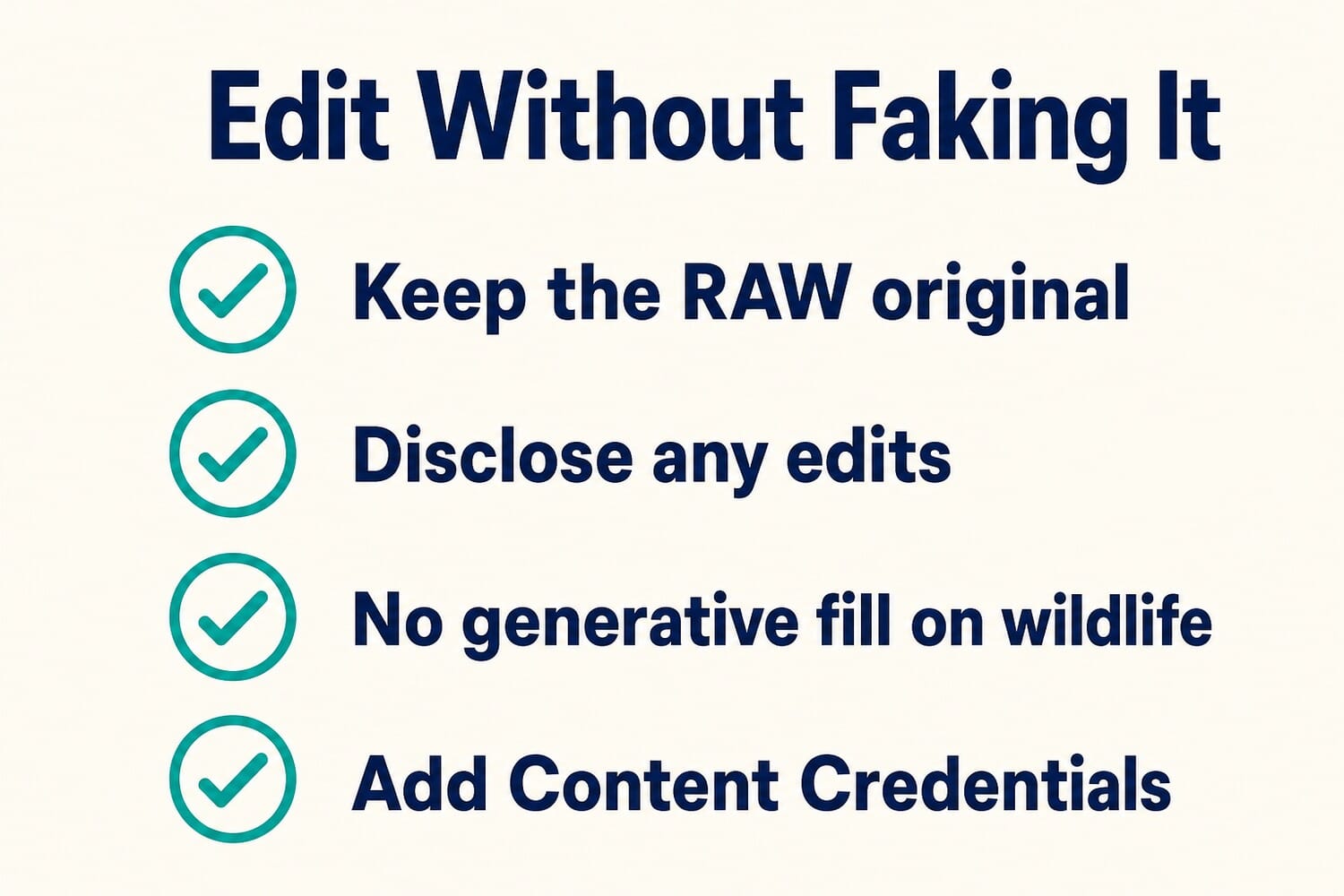
- Keep the RAW original. An untouched file is your proof of what was actually in front of the lens. It is also your best defense if a sighting is ever questioned.
- Avoid generative tools on anything you will submit as a record. Content-aware fill, generative remove, and “reimagine” features are the ones that invent detail. Keep them away from field marks.
- Disclose your edits. When you post, say what you did. A note that an image was cropped and denoised, but not generatively altered, is exactly the context a reviewer needs.
- Turn on Content Credentials if your camera or editor supports them. As more platforms read C2PA data, a credentialed image will carry more trust than one without.
- When in doubt, submit the unedited frame. For a genuine rarity, an accurate soft photo is worth infinitely more to science than a gorgeous fake.
If AI editing is part of your creative work elsewhere, that is fine, just keep it out of the record. Our look at AI photo editing with Gemini covers what these tools can do, and this story is the clearest case yet for knowing when not to.
Frequently Asked Questions
Is normal photo editing a problem for citizen science?
No. Adjusting exposure, contrast, white balance, cropping, and noise reduction changes how a photo looks without inventing detail that was not captured. The concern is specifically generative AI, tools that add, remove, or reimagine parts of the image, because those can alter the field marks used to identify a species.
What are Content Credentials (C2PA)?
C2PA Content Credentials are a tamper-evident record attached to an image that logs how it was created and edited, including whether AI was used. Backed by Adobe, camera manufacturers, and others, they let a viewer or platform verify a photo’s history rather than guess whether it is real. iNaturalist is currently debating whether to support them.
Can AI-edited wildlife photos really create false scientific records?
Yes. A documented case involved a reported first sighting of a red-winged blackbird in Brazil that was actually a common epaulet oriole, altered by an AI editor after the photographer asked it to look better. Because databases like iNaturalist and the Macaulay Library feed real research, a false record can contaminate studies of where species live.
Does the EU AI Act affect this?
Indirectly, and soon. The EU AI Act’s Article 50 transparency obligations begin to apply on August 2, 2026, requiring AI-generated content to be identifiable as such. That legal push toward labeling and provenance aligns with what the researchers are asking citizen-science platforms to adopt.
The Bottom Line
The lesson is not to fear your editing software. It is to understand that a wildlife photo is sometimes more than art, it is data, and generative AI can quietly turn true data into false. Adjust your images all you like, but keep the originals, keep generative tools off anything a scientist might rely on, and let provenance carry the proof. The most beautiful bird photo in the world is worthless to research if it shows a bird that was never there.
Primary Coverage
- Nature Ecology and Evolution – Citizen science platforms must mitigate against the threat of generative AI – The commentary, lead author Dr. Alexander Lees.
- The Guardian – AI-altered images on birdwatching forums putting research at risk – Lees interview, the blackbird case, and the scale figures.
- PetaPixel – Scientists Warn Wildlife Photographers AI-Enhanced Bird Photos Could Threaten Research – Photo-press coverage of the commentary.
- iNaturalist Forum – C2PA Content Credentials and media assets in iNaturalist – The community debate over adopting provenance.
- EU AI Act – Article 50 transparency obligations (apply August 2, 2026) – The labeling rules for AI-generated content.
Image Sources
- Ray Hennessy – featured Northern Cardinal in snow – Shot at 500mm, f/5.6. Via Unsplash, curated on SampleShots.
- Boris Smokrovic – yellow songbird among blossom – Via Unsplash, curated on SampleShots.
- Zdenek Machacek – two owls – Via Unsplash, curated on SampleShots.
- PhotoWorkout – flow and checklist infographics and the pin – Original PhotoWorkout editorial graphics.