


- Camera Intelligence opened the software of its Caira camera to owners on November 16 with Creative Sandbox, a development environment inside its Linux-based Camera Intelligence OS where you build your own features with AI coding tools like Claude Code or ChatGPT.
- It is the first manufacturer response to the AI “vibe coding” camera-hacking wave of the past two months, in which photographers have been rewriting firmware on Sony, Canon and even Hasselblad bodies without permission.
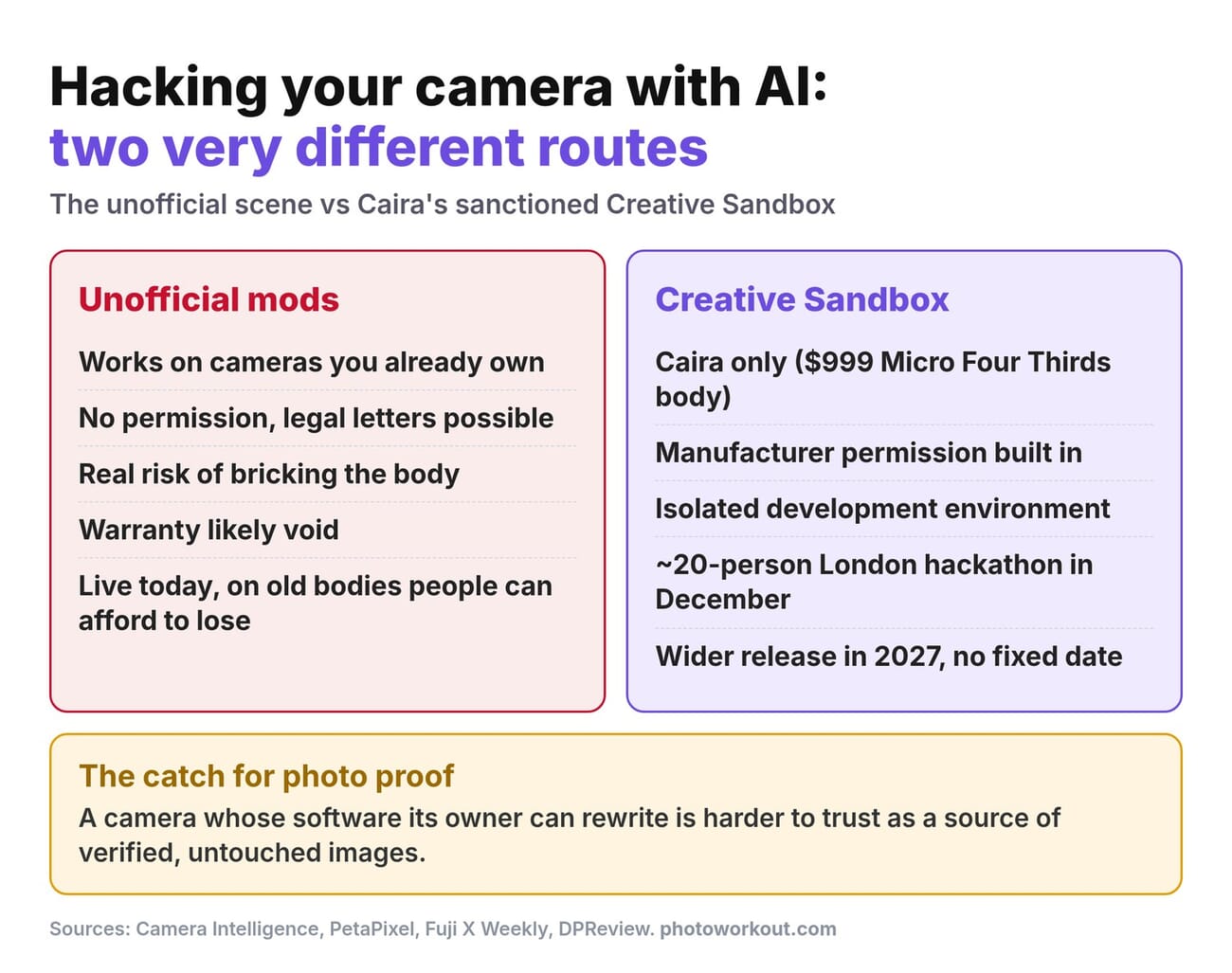
- Access starts small: a one-day London hackathon in December for about 20 people, with a wider public release planned for 2027 and no firmer date promised.
- A sanctioned sandbox lowers the risk, but does not remove it. Running custom code on any camera still carries some risk, and the unofficial scene exists precisely because mods can brick expensive bodies.
- The hidden trade-off: a camera whose software its owner can freely rewrite is harder to trust as proof that a photo is real, just as the industry pushes C2PA capture credentials.
For two months, photographers have been doing something camera makers never planned for: asking AI coding assistants to read, reverse-engineer and rewrite the software inside their cameras. The results range from film looks on 20-year-old DSLRs to new video modes on modern mirrorless bodies. DPReview just called it a movement. Now a camera company has stopped fighting it and started selling it.
Camera Intelligence, the London startup behind the Caira, has opened its camera’s operating system to owners through what it calls Creative Sandbox. It is a small company and a small first step, but it is the first time a manufacturer has said the quiet part out loud: go ahead and hack it.
The Vibe-Coding Wave, Briefly
Camera hacking is not new. CHDK opened up Canon compacts years ago, and Magic Lantern still runs on Canon DSLRs today. What changed this autumn is who can do it. In mid-October, The Phoblographer used AI to restore a feature Sony had removed from an a7. In late October, the Northrup channel published a widely shared walkthrough. PetaPixel reported a Hasselblad X2D II running new software, and people with no coding background began “vibe coding”, describing what they want in plain language and letting the AI write the code.
The skeptics have a point, and Fuji X Weekly put it best: “AI is better than a novice, but not as good as an expert, so the risk is much higher.” Unofficial flashing can brick a body, void a warranty, and invite legal letters. That is why most people experiment on old cameras they can afford to lose.
What Caira’s Creative Sandbox Is
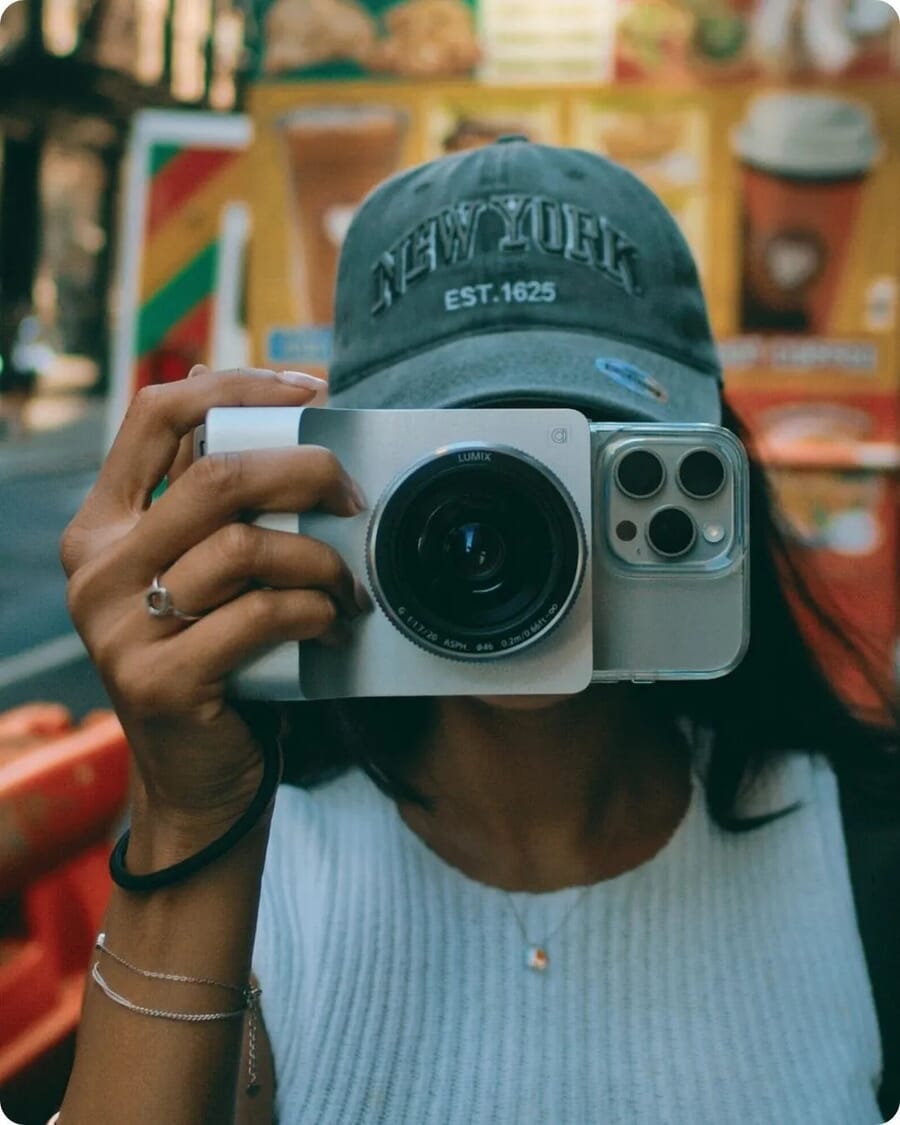
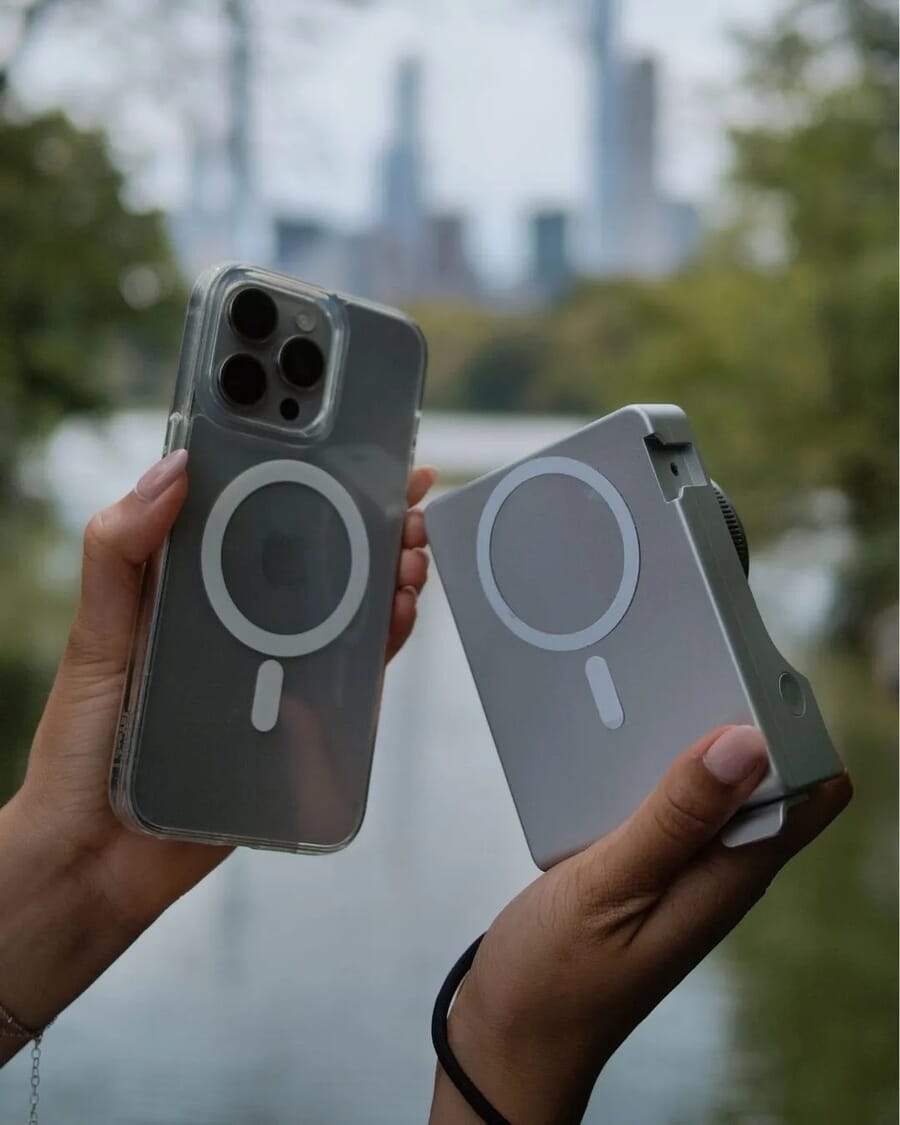
Caira is a Micro Four Thirds mirrorless camera that attaches magnetically to an iPhone, the successor to the earlier Alice Camera. It raised $459,668 from 611 backers on Kickstarter and now sells for $999 for the body. Crucially for this story, it runs Camera Intelligence OS, a Linux-based system the company says was designed from day one to change through software.
Creative Sandbox is a development environment inside that OS. Owners can access, change and create camera features using the AI coding tools they already use. The company’s examples are deliberately modest: a custom color profile, a rearranged control layout, or “something entirely new that we haven’t thought of.” CEO Vishal Kumar frames it as the sanctioned alternative to the unofficial scene, where people “vibe code these modifications without permission or a safety net, and some are bricking expensive cameras in the process.”
Starting With 20 People in a Room
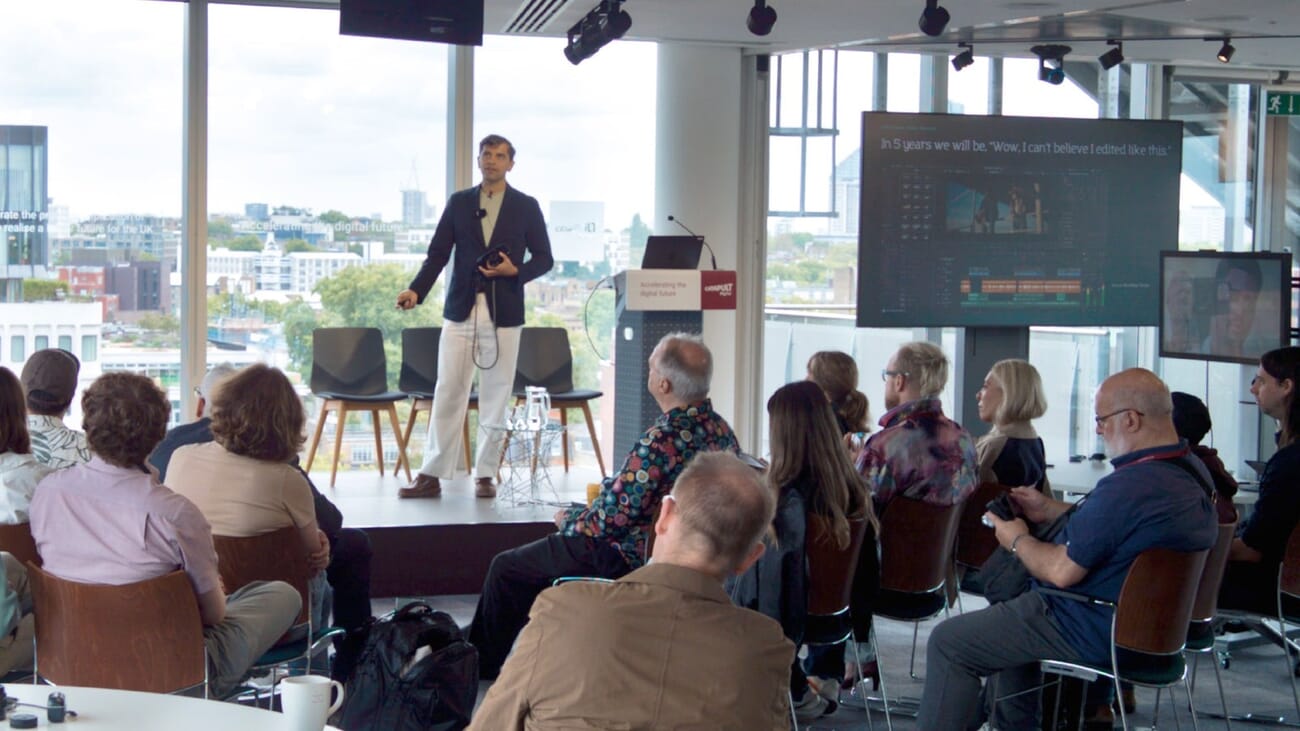
The rollout is cautious, by the company’s own description. In December, Camera Intelligence will host the Holiday Camera Hack in London: one day, about 20 photographers, creators and developers, each with a loaner Caira and the company’s engineers beside them. Applications are open, and no coding experience is required. What people build and where they get stuck will shape the version that ships more widely in 2027. The company says it will not put dates on anything beyond that, or promise specific features before people have built them.
It is also unusually candid about timing. Asked by PetaPixel whether this was always the plan, Kumar wrote that the recent wave of owners hacking their cameras “is what made us move now.” The software-first foundation was planned; the invitation is a response to the moment. And Camera Intelligence has a track record of reversing course when owners push back: in March it pulled the open prompt window from its generative editing feature after criticism and replaced it with templates.
Safer, Not Safe
It is tempting to read “sanctioned sandbox” as “no risk”. That would be a mistake. A development environment built and supported by the manufacturer is a far better place to experiment than flashing an unofficial image onto a Sony body, and having permission removes the legal and warranty anxiety. But running code you or an AI wrote on any device can still go wrong, and the company itself says opening up a camera “has to be done carefully.” The honest framing: safer, not safe.
The Catch Nobody Is Talking About: Proof
There is a wrinkle that the hacking coverage mostly skips, and it matters to anyone who cares whether photos can be trusted. The industry is racing to make cameras vouch for their own images, with C2PA content credentials that sign a photo at the moment of capture. That chain of trust only works if the camera’s software is what the manufacturer says it is.
A camera whose owner can rewrite its software is, by design, a weaker witness. That does not make Caira’s sandbox a bad idea; owner control and verified capture are both legitimate goals. But they pull in opposite directions, and nobody has yet shown a camera that does both well. PhotoWorkout has already reported how C2PA capture credentials were forged through a flaw in the standard, and how Apple’s most prominent defender of authentic capture just retired. Hackable cameras add a third pressure point to the same question: when a camera can be told to do anything, what does its signature on a photo actually prove?
Why It Matters Beyond One Startup
Caira is a niche camera from a small company, and one hackathon will not change Sony’s or Canon’s firmware policies. But the direction is worth noticing. The same AI tools that let one developer vibe-code free Photoshop and Lightroom clones are now letting owners decide what their hardware can do. For photographers who already feel cameras are built for planned obsolescence, as our piece on lenses built to die explored, a camera that grows through owner-written software is an appealing idea. Whether the big manufacturers answer with sandboxes of their own, or with more legal letters, is the next chapter.

Frequently Asked Questions
What is vibe coding a camera?
It means using an AI coding assistant such as Claude Code or ChatGPT to modify a camera’s software by describing the change in plain language, without writing the code yourself. Owners have used it to add film looks, video modes and features their manufacturers removed or never shipped.
What is Caira’s Creative Sandbox?
It is a development environment inside Caira’s Linux-based Camera Intelligence OS that lets owners build their own camera features with AI coding tools, with the manufacturer’s permission. It starts with a one-day London hackathon in December 2026 for about 20 people, with a wider release planned for 2027.
Can hacking camera firmware brick my camera?
Yes. Unofficial firmware modifications can leave a camera unusable and usually void the warranty, which is why most people experiment on older bodies. A manufacturer-supported sandbox lowers that risk, but running custom code on any device still carries some risk.
How much does the Caira camera cost?
The Caira body sells for $999 on Camera Intelligence’s store. It is a Micro Four Thirds camera that attaches to an iPhone via MagSafe, and it raised $459,668 from 611 backers on Kickstarter.
Bottom Line
The AI camera-hacking wave just got its first official home. Caira’s Creative Sandbox swaps legal letters for an invitation, and that alone makes it worth watching. Just read the fine print honestly: it is one small camera, a 20-person start, a 2027 rollout, and a sandbox that makes experimenting safer rather than risk-free. And the more freely a camera can be rewritten, the less its word counts as proof.
Facts and quotes were verified against the company's announcements and the coverage below on November 23, 2026.
Primary Sources
- Camera Intelligence: Camera Intelligence Embraces Camera Hacking With AI – November 16, 2026 announcement and hackathon details
- Camera Intelligence: Introducing the Creative Sandbox – CEO post on scope, rollout and what the company won't do
- Kickstarter: Caira campaign – $459,668 from 611 backers
Coverage and Context
- DPReview: The vibe code revolution – Feature on AI-driven camera hacking, November 21, 2026
- PetaPixel: Caira is jumping on the vibe-coded camera train – Kumar's bricking quote
- Fuji X Weekly: My opinion on AI vibe-coded camera firmware – The risk counter-argument
- Digital Camera World: this 2025 mirrorless will soon be built for hackers – Industry context
Image Sources
- Featured and product images: Camera Intelligence – Official product and event images
- Comparison infographic – Infographic by PhotoWorkout
- Pinterest graphic – PhotoWorkout graphic using a Camera Intelligence product image