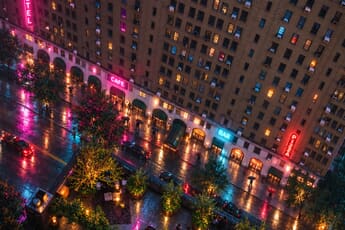
FAA Will Fine World Cup Drone Pilots Up to $100,000 — Here’s Where You Can’t Fly

Key Takeaways
FAA Will Fine World Cup Drone Pilots Up to $100,000 — Here’s Where You Can’t Fly
  • The FAA has turned every U.S. World Cup 2026 stadium into a no-fly zone on match days — drones are banned within 3 nautical miles and below 3,000 feet unless air traffic control clears them.
  • Penalties are not symbolic: up to $75,000 in civil fines, criminal fines up to $100,000, drone confiscation, and possible federal charges and arrest.
  • The FBI and local police will actively watch the airspace and are authorized to jam or seize drones. Fan festivals get their own smaller 1-mile, 1,000-foot bubbles.
  • There is no realistic waiver for hobby or photo flights near venues. Check active NOTAMs before every flight and plan aerial work well away from host cities on match days.

If your plan for the 2026 World Cup involved sending a drone up over a packed stadium for that money shot, scrap it. The Federal Aviation Administration has designated every U.S. tournament venue a strict “No Drone Zone,” and the agency is backing it with penalties that climb to six figures — plus the FBI, local police, and counter-drone hardware built to knock an unauthorized aircraft out of the sky.

For aerial photographers, this is the single most important airspace story of the summer. The restrictions are broad, the fines are real, and the window where they apply overlaps with exactly the moments worth photographing. Here is what the FAA actually banned, which cities it covers, and how to come away with footage instead of a federal case.

What the FAA Actually Locked Down

The core mechanism is the Temporary Flight Restriction, or TFR — a chunk of airspace that switches from open to off-limits for a defined window. On match days, the FAA is imposing a TFR around each stadium that bans all aircraft operations, drones included, within a 3-nautical-mile radius and up to 3,000 feet above ground level, unless air traffic control specifically authorizes the flight. Three nautical miles is roughly 3.5 standard miles, so the bubble does not just cover the field — it swallows the parking lots, fan plazas, and most of the neighborhoods around the venue.

Fan festivals and official event sites carry their own, smaller restrictions: drone flights are prohibited within a 1-nautical-mile radius and up to 1,000 feet. And the FAA has been explicit that the map can grow — additional no-fly zones may appear around team hotels, training facilities, and base camps as the tournament approaches.

Aerial view of a packed sports stadium and the surrounding grounds
The match-day no-fly bubble runs 3 nautical miles wide and 3,000 feet high — wide enough to cover not just the field but the parking lots and neighborhoods around it. Photo: CHUTTERSNAP / Unsplash

The Penalties Aren’t a Bluff

This is where it stops being a paperwork problem. Fly into an active World Cup TFR without authorization and you are exposed to civil penalties up to $75,000 per violation and criminal fines up to $100,000. The FAA can confiscate the aircraft, and operators can face federal criminal charges and immediate arrest.

Enforcement is not a passive warning sign, either. The FAA says it will work with the FBI and local law enforcement to monitor the airspace around games and related events, and the FBI is authorized to use specialized mitigation tools to intercept and seize drones. “Drone operators should expect swift action if they violate restricted airspace,” FAA Administrator Bryan Bedford said. Translation: the days of assuming a small quadcopter slips under the radar are over for these venues.

If that sounds familiar, it should — 2026 has been a brutal year for drone operators on the regulatory front. The import-side squeeze documented in our look at DJI’s FCC crackdown hit which drones you can even buy; this hits where you can fly the ones you already own.

Which Cities and Venues Are Off-Limits

The restrictions apply on match dates at the eleven U.S. host stadiums spread across the country. If you shoot in or travel through any of these metros this summer, assume the airspace overhead is spoken for:

  • Atlanta — Mercedes-Benz Stadium
  • Boston — Gillette Stadium (Foxborough)
  • Dallas — AT&T Stadium (Arlington)
  • Houston — NRG Stadium
  • Kansas City — GEHA Field at Arrowhead Stadium
  • Los Angeles — SoFi Stadium
  • Miami — Hard Rock Stadium
  • New York / New Jersey — MetLife Stadium (host of the Final)
  • Philadelphia — Lincoln Financial Field
  • San Francisco Bay Area — Levi’s Stadium
  • Seattle — Lumen Field

The tournament runs June 11 through July 19, 2026, and the restrictions are tied to match dates and fan-event schedules rather than blanketing the entire stretch. That sounds like breathing room, but with matches rotating across all eleven cities and fan festivals running alongside them, the practical advice is to treat any host metro as restricted on game days. Note too that the FAA’s authority covers the U.S. venues only — the Mexican and Canadian host cities fall under their own civil aviation regulators, with their own rules worth checking separately.

What “Unauthorized” Really Means for Photographers

Here is the part that trips people up. “Unauthorized” means any flight that lacks explicit air traffic control approval — and for a stadium TFR, there is no consumer-friendly path to that approval. The automated LAANC system that recreational and Part 107 commercial pilots lean on for controlled airspace does not grant access to an active TFR. A Part 107 certificate, a registered drone, even a flawless safety record buys you nothing inside that bubble during the restricted window.

This builds on rules already on the books. A standing FAA restriction has long banned drone flights within 3 nautical miles of large stadiums during major sporting events, from one hour before to one hour after. The World Cup measures layer dedicated, higher-profile TFRs on top of that baseline — with sharper enforcement and far bigger numbers attached. The realistic takeaway for anyone who is not a credentialed broadcast operator working directly with the tournament: you are not getting cleared to fly near these venues.

A drone pilot operating a quadcopter with a handheld controller
Before every flight near a host city, check active TFRs in a current NOTAM app — a stadium restriction can switch on hours before kickoff and won’t appear on last week’s map. Photo: Joel Meyer / Unsplash

How to Shoot the Tournament Without a $100,000 Mistake

None of this means aerial work is impossible this summer — it means planning around the bubbles instead of into them. A few habits keep you legal:

  • Check a live NOTAM source before every flight. The FAA’s B4UFLY service (now delivered through the Aloft app) shows active TFRs and controlled airspace in real time. A restriction can activate hours before kickoff, so last week’s check is worthless on match day.
  • Bookmark the FAA’s tournament hub. The agency is posting World Cup-specific airspace guidance at faa.gov/fifaworldcup2026 and will update it as new zones around hotels and training sites come online.
  • Fly well outside the radius. If you want a city skyline or an establishing aerial, set up several miles clear of any venue and shoot on a non-match day where possible.
  • Reach for a long lens instead. A ground-based telephoto from a legal vantage point gets you compression and crowd energy with zero airspace risk — often a stronger editorial frame than a generic top-down anyway.
  • Plan travel around match dates. If you are passing through a host city, the same care you’d give your gear bag — like the latest airline battery rules — should extend to checking whether the sky overhead is restricted that day.

FAQ

Can a photographer get a waiver to fly near a stadium?

Not in any practical sense. The TFRs prohibit flight unless specifically authorized by air traffic control, and that authorization is reserved for operations directly tied to the event or to public safety. The standard LAANC approval path does not apply to TFRs, so recreational and Part 107 pilots alike are locked out during the restricted windows.

Do these rules apply to sub-250-gram drones like a DJI Mini?

Yes. The lightweight-drone exemption from FAA registration does not exempt you from a TFR. A Mini-class aircraft flown into restricted World Cup airspace is just as illegal as a larger rig — and just as likely to be seized.

When exactly do the restrictions start and stop?

They are tied to specific match dates and fan-event schedules between June 11 and July 19, 2026, not a single continuous block. Because the exact windows shift by venue and can be announced close to the event, the only reliable answer is to check active NOTAMs for that location on that day.

What about the Mexico and Canada venues?

The FAA’s restrictions cover U.S. airspace only. Matches in Mexico and Canada fall under those countries’ aviation authorities, which have their own drone rules and event restrictions. If you are shooting across the border, research the local regulator before you pack a drone at all.

The Bottom Line

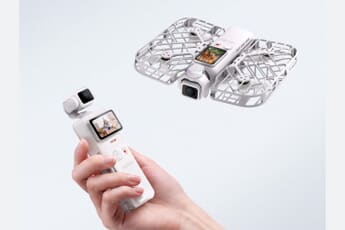
The 2026 World Cup is shaping up to be one of the most photographed events ever held on U.S. soil — and one of the hardest to shoot from the air. The FAA has drawn the lines clearly and attached numbers serious enough to end a career. The photographers who come away with great tournament work won’t be the ones who gambled on an unauthorized flight; they’ll be the ones who checked the NOTAM, parked the drone, and found the shot from the ground. Curious where this airspace rabbit hole started? It began with the self-flying HOVERAir AQUA and a simple question about where you’re actually allowed to launch one.

Featured image: Jason Mavrommatis / Unsplash.

Don’t miss this week’s photography news

Every Sunday: camera launches, lens announcements, and the photography moves that matter — curated before the big sites catch up.

By signing up you agree to receive our newsletter and accept our Privacy Policy. Your newsletter may contain affiliate links. Unsubscribe anytime.

Written by

Andreas De Rosi

Andreas De Rosi is the founder and editor of PhotoWorkout.com and an active photographer with over 20 years of experience shooting digital and film. He currently uses the Fujifilm X-S20 and DJI Mini 3 drone for real-world photography projects and personally reviews gear recommendations published on PhotoWorkout.