


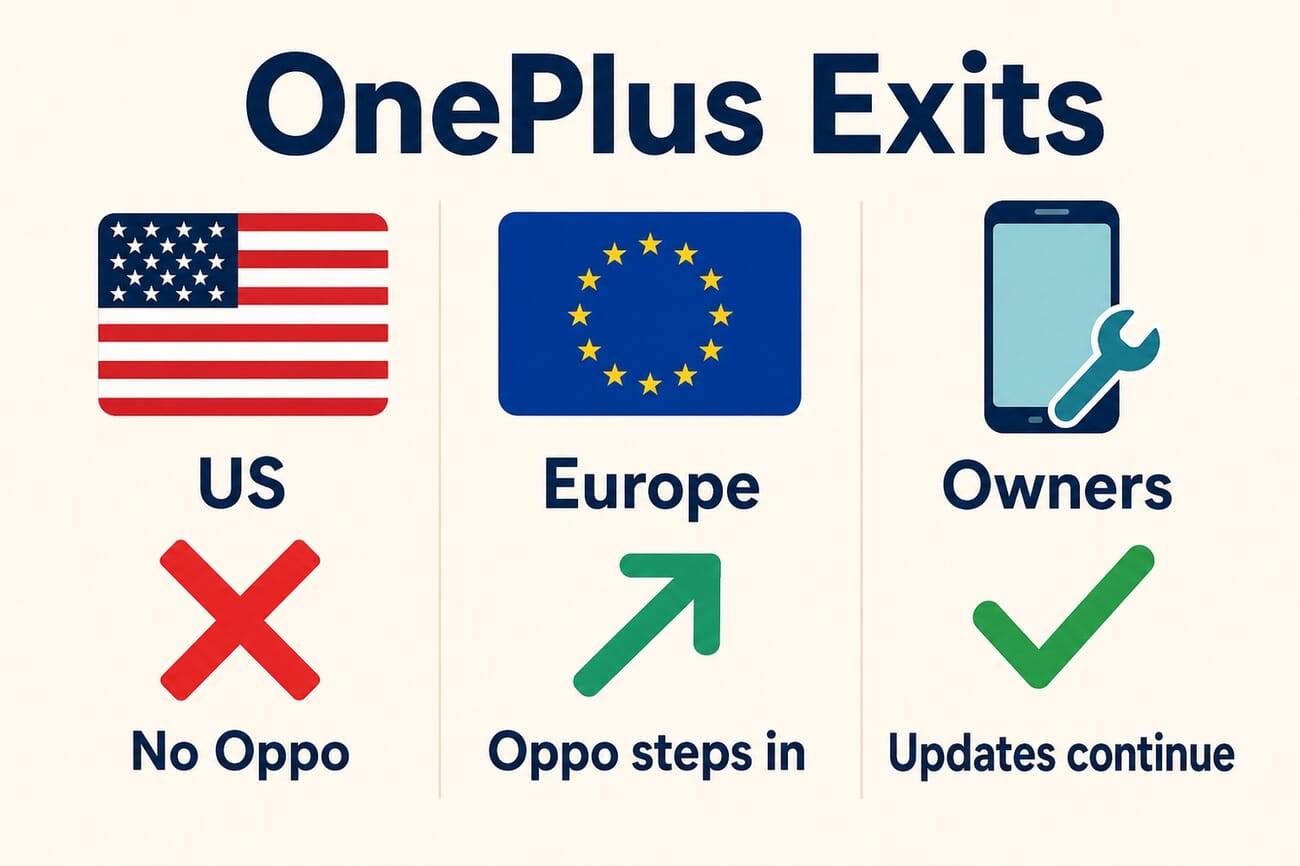
- OnePlus confirmed on July 16, 2026 that it will stop launching phones in North America and Europe. The OnePlus 15 is its last release in both regions, and remaining stock sells until it runs out.
- Existing owners keep software updates, warranty, and repairs, but OxygenOS is being retired. Devices move to Oppo’s ColorOS starting with Android 17.
- Europe gets Oppo as the replacement brand. The US gets nothing: Oppo has no plans to enter the American market, so US buyers lose the whole Oppo family in one move.
- For photographers, the exit removes one of the last sub-$1,000 camera flagships from the US market, months after OnePlus had already ended its Hasselblad partnership.
OnePlus, the brand that spent a decade proving a great phone (and a genuinely good camera) did not need to cost $1,200, is leaving the United States and Europe. The company confirmed the news on July 16, 2026 in a post on its community forum: no more product launches in either region, effective immediately. The OnePlus 15 is the end of the line.
Parent company Oppo absorbs everything. In Europe, that means Oppo phones will fill the shelf space OnePlus leaves behind. In the US, it means the shelf just stays empty. Here is what actually changes, what happens to the phones people already own, and why this matters more for camera-first buyers than for anyone else.
The End of a 12-Year Run
“Today, our hearts are undoubtedly heavy and mixed with emotion,” the company wrote in its farewell post, announcing it would “conclude new product rollouts in Europe and North America.” Founded in 2013 by Pete Lau and Carl Pei, OnePlus built a cult following on invite-only drops, aggressive pricing, and the “Never Settle” promise of flagship hardware at midrange money.
The retreat was not sudden. OnePlus merged most operations into Oppo back in 2021. The OnePlus Open 2 foldable was delayed, then quietly canceled. Pei left in 2020 to found Nothing, which now occupies the exact “value flagship” niche OnePlus invented. And Lau recently rejoined Oppo as chief product officer, which tells you where the decisions were already being made.
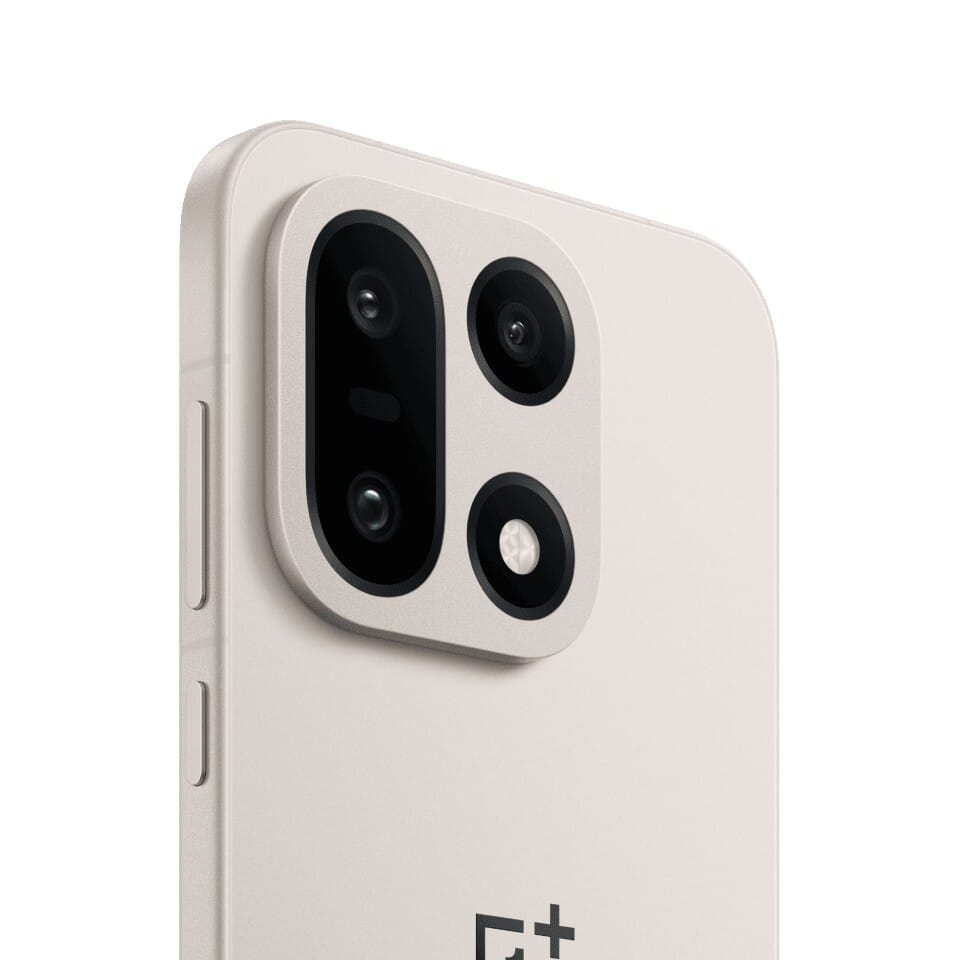
Remaining OnePlus 15 inventory stays on sale in both regions until it sells through, and the company says demand still exists. But there will be no restock and no OnePlus 16 outside Asia. OnePlus continues in China, and its Indian arm insists business runs as usual, though reporting from 9to5Google suggests India may wind down in early 2027 as well.
What Happens to Your OnePlus Phone
The practical news is better than the headline suggests. OnePlus and Oppo have guaranteed existing user rights: software updates continue on their promised schedules, security patches keep coming, and warranty and repair channels stay open in both regions.
The one real change is the software itself. OxygenOS, the clean Android skin that was half the reason enthusiasts bought these phones, is being retired. Starting with the Android 17 update, OnePlus devices in the US and Europe migrate to Oppo’s ColorOS. The two systems have shared a codebase since 2022, so the day-to-day difference will be smaller than longtime fans fear, but the OxygenOS name dies with the transition.
For anyone shooting seriously on a OnePlus, the sensible move is to keep using it. A OnePlus 13 or 15 remains a very capable camera phone, and the update guarantee means RAW capture, the camera app, and security support are not going anywhere for several years.
The Camera Angle: One Less Serious Player
This is where the story stings for photographers. OnePlus spent five years co-developing its cameras with Hasselblad, from the OnePlus 9 through the OnePlus 13, and that partnership produced some of the best color science in Android. The company ended the Hasselblad deal in September 2025 and shipped the OnePlus 15 with its own in-house DetailMax imaging engine, a change many reviewers considered a step sideways at best.
Hasselblad did not disappear. It moved to Oppo, where the Find X9 Ultra carries dual 200MP Hasselblad-tuned cameras and a 10x optical-zoom telephoto, priced at £1,449 in the UK. Europeans can buy that phone today, and Oppo says European flagship launches are becoming a bigger priority. So European camera buyers trade a $900 Hasselblad alternative for a £1,449 one: a worse deal, but the technology stays available.
American buyers get the short end. Oppo has explicitly said it has no plans to launch phones in the US, so the OnePlus exit removes the entire Oppo family from the market in one stroke. The realistic US camera-phone lineup is now iPhone, Pixel, and Galaxy, with everything else requiring the gray-import route we mapped for the Xiaomi 17 Ultra and the Leica-tuned Xiaomi 17T Pro: no warranty, patchy band support, and full import pricing.
Less competition is bad for camera development specifically. OnePlus, Oppo, Xiaomi, and Vivo have been the brands pushing computational photography hardest: bigger sensors, faster glass, and periscope zooms at prices Apple and Samsung would not touch. Xiaomi’s next-generation LOFIC sensor work shows where that race is heading. As of this week, none of those four brands officially sells a phone in the United States.
Why This Happened Now
OnePlus frames the exit as strategy, not failure: “the right brand does the right thing in the right market,” as executives put it in this week’s briefing. The market data behind that diplomatic phrasing is brutal. Global smartphone shipments fell year over year in Q1 2026 according to IDC, breaking a growth streak that had run since mid-2023. Counterpoint Research reported this week that shipments have dropped to their lowest level since 2013.
Record-high memory prices are squeezing every manufacturer at the same time, forcing price increases across the board. In that environment, running two overlapping brands through expensive Western retail channels, with regulatory compliance, carrier certification, and after-sales networks duplicated for each, stopped making sense. Analyst Paolo Pescatore of PP Foresight put it plainly: OnePlus “built its reputation as a disruptive flagship killer, but higher prices, a broader portfolio and closer integration with Oppo left it looking increasingly like another premium Android brand in an already crowded market.”
The uncomfortable question for US readers: if a brand with OnePlus’s fanbase could not justify the American market, which challenger can? For now the answer looks like Nothing, and nobody else.

Frequently Asked Questions
Will my OnePlus phone still get updates?
Yes. OnePlus says OS and security updates continue on the schedules already promised for each device, and warranty and repair services remain in place. The change is cosmetic but real: with the Android 17 update, OxygenOS is replaced by Oppo’s ColorOS.
Can I still buy a OnePlus 15?
Yes, for now. Remaining inventory stays on sale through the OnePlus store and retailers in the US and Europe until it sells out, and no restocks are planned. Expect clearance pricing, and weigh it against the fact that the OnePlus 15 dropped Hasselblad tuning for the in-house DetailMax engine.
Is Oppo replacing OnePlus in the US?
No. Oppo will expand in Europe, where its CEO for the region calls it “a key market,” but the company has stated it has no plans to launch phones in the United States. The US loses the entire Oppo family with this move.
What should camera-first buyers get instead?
In the US, the practical picks are the Pixel and iPhone Pro lines for computational photography and the Galaxy Ultra for zoom reach. Enthusiasts willing to import can look at the Oppo Find X9 Ultra or Xiaomi’s 17 series, accepting the warranty and band-support tradeoffs. Whatever the phone, technique still moves the needle most: our smartphone exposure guide and roundup of add-on lenses for Android phones apply to every brand.
The Bottom Line
OnePlus leaving the US and Europe is not a catastrophe for current owners, who keep their updates and warranties. It is a quiet loss for everyone else. The brand that forced Apple, Samsung, and Google to justify their flagship prices is gone from the West, its Hasselblad-honed camera know-how now lives inside phones Americans cannot officially buy, and the US camera-phone market just got smaller, more expensive, and less interesting. “Never Settle” was the slogan. American buyers no longer get the choice.
Primary Coverage
- OnePlus Community Forum — official farewell announcement – The July 16, 2026 post confirming the end of new product rollouts in Europe and North America.
- CNET — It's Official: OnePlus Is Dead. Long Live Oppo – Confirmation, Realme restructuring, and IDC/Counterpoint market context.
- 9to5Google — OnePlus officially shuts down in the US and Europe – ColorOS migration details with Android 17 and India reporting.
- Android Authority — OnePlus is officially exiting North America and Europe – Media briefing details, executive quotes, and remaining-inventory plans.
- Engadget — OnePlus is officially leaving the US and Europe – Oppo Europe strategy, Elvis Zhou quotes, and Pete Lau's return as Oppo CPO.
- Android Authority — OnePlus ends Hasselblad partnership – The September 2025 end of the five-year Hasselblad camera partnership.
Image Sources
- OnePlus — OnePlus 15 official product renders (staged via Photoroom) – Featured image and camera-module render from the official OnePlus 15 product page.
- PhotoWorkout — editorial infographic and pin illustration – Stylized PhotoWorkout illustrations created for this article.