

- CanvasDiscount delivered three canvases and a rigid photo panel; every print arrived undamaged with clean gallery wraps, mitered corners and a hanging kit per piece.
- Print quality on first inspection is strong: sharp detail on a demanding firewood test image, punchy color on the rigid panel, and no visible banding. Detailed file-versus-print comparisons follow below.
- Canvas prices start at $4.30 for the smallest size, with free US shipping over $85 and near-permanent coupon promotions. Budget pricing is the brand’s whole pitch.
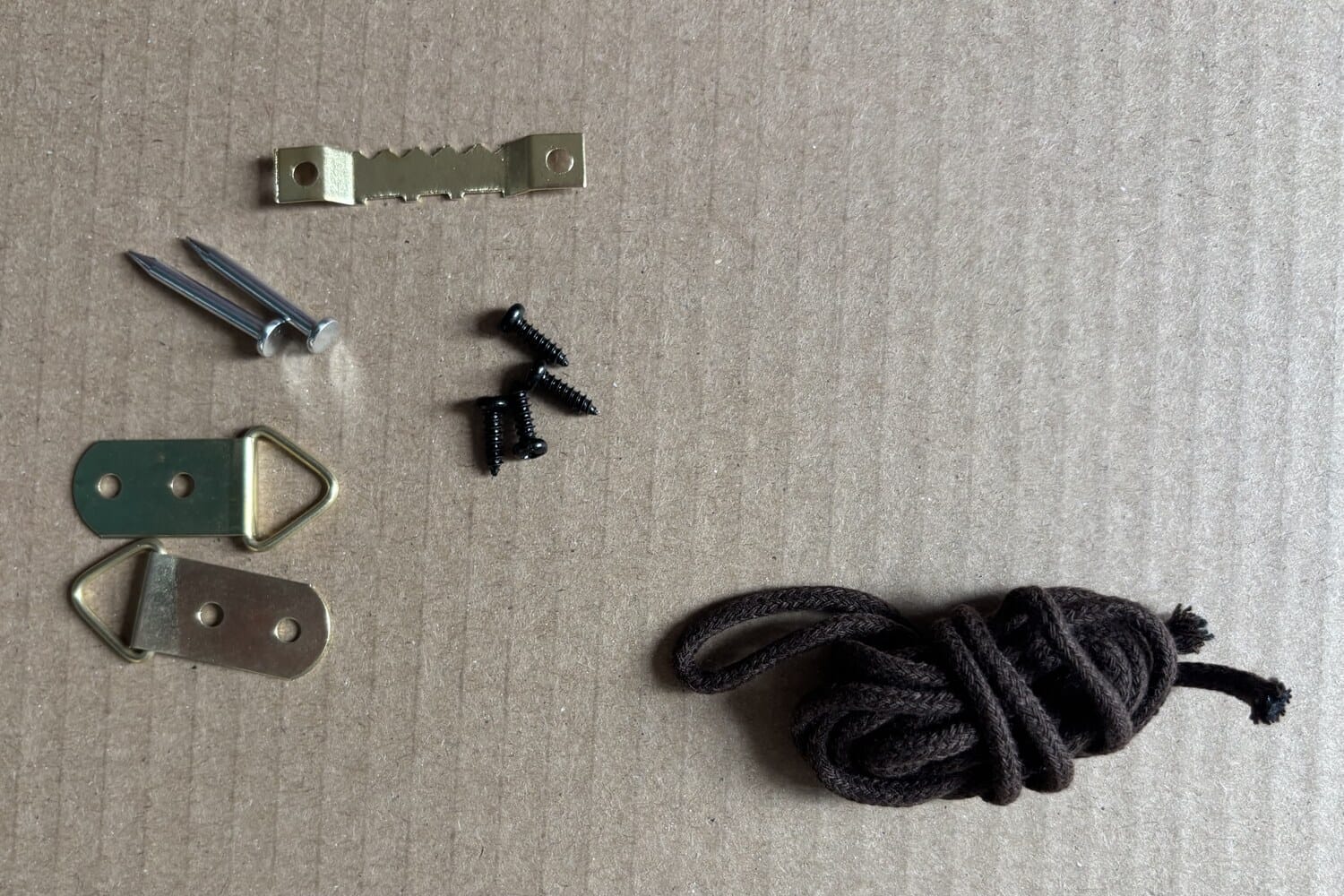
- Hanging hardware is an optional add-on at checkout, not automatic: a kit per canvas with sawtooth hanger, D-rings, cord, nails and screws. Tick it when ordering; nothing comes pre-mounted.
- The test order was provided by CanvasDiscount for this review. The verdict, including everything critical, is PhotoWorkout’s alone.
Canvas prints are the default way photographers put their own work on a wall, and CanvasDiscount is the brand that turned them into an impulse purchase: the smallest canvas costs less than a coffee, and the site runs discounts so constantly that paying list price is practically a user error.
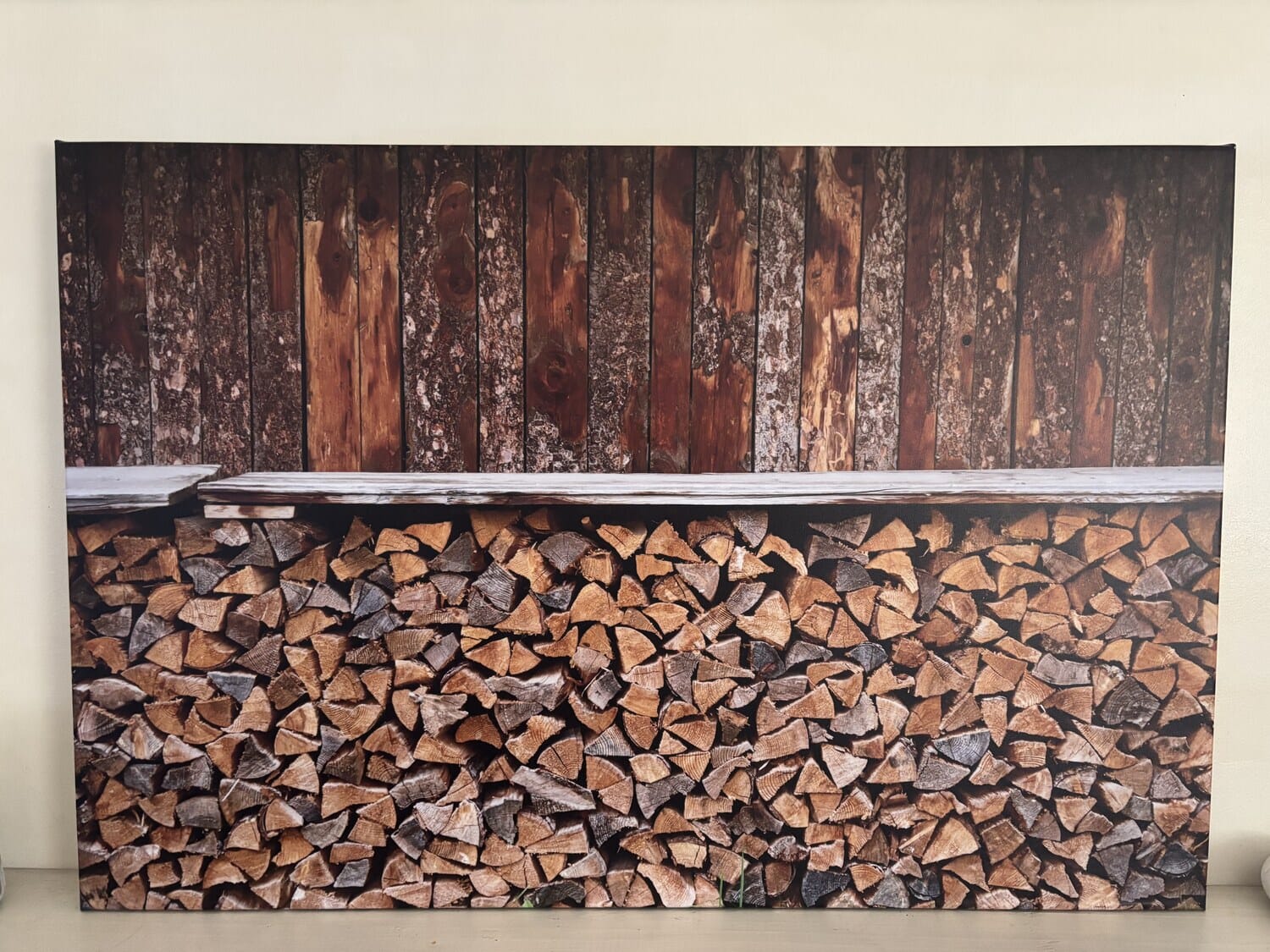
The usual question with budget printing is where the cost was cut. To find out, PhotoWorkout ordered a real test set: a large 90×60 cm (36×24 inch) canvas of a detail-heavy firewood stack, two smaller canvases, and a rigid photo panel, then inspected everything from the shipping box to the stretcher staples. The review covers the whole arc: the order and delivery, the unboxing and build quality, the hanging hardware, and print quality tested the hard way, with side-by-side crops against the original files and the prints up on the wall.
Disclosure: CanvasDiscount covered the cost of this test order through its affiliate program. The company had no input on the testing or the verdict, and this page says so where it disagrees with the marketing.
When you buy through links on our site, we may earn a commission at no cost to you. We evaluate products independently. Commissions do not affect our evaluations.
What We Ordered
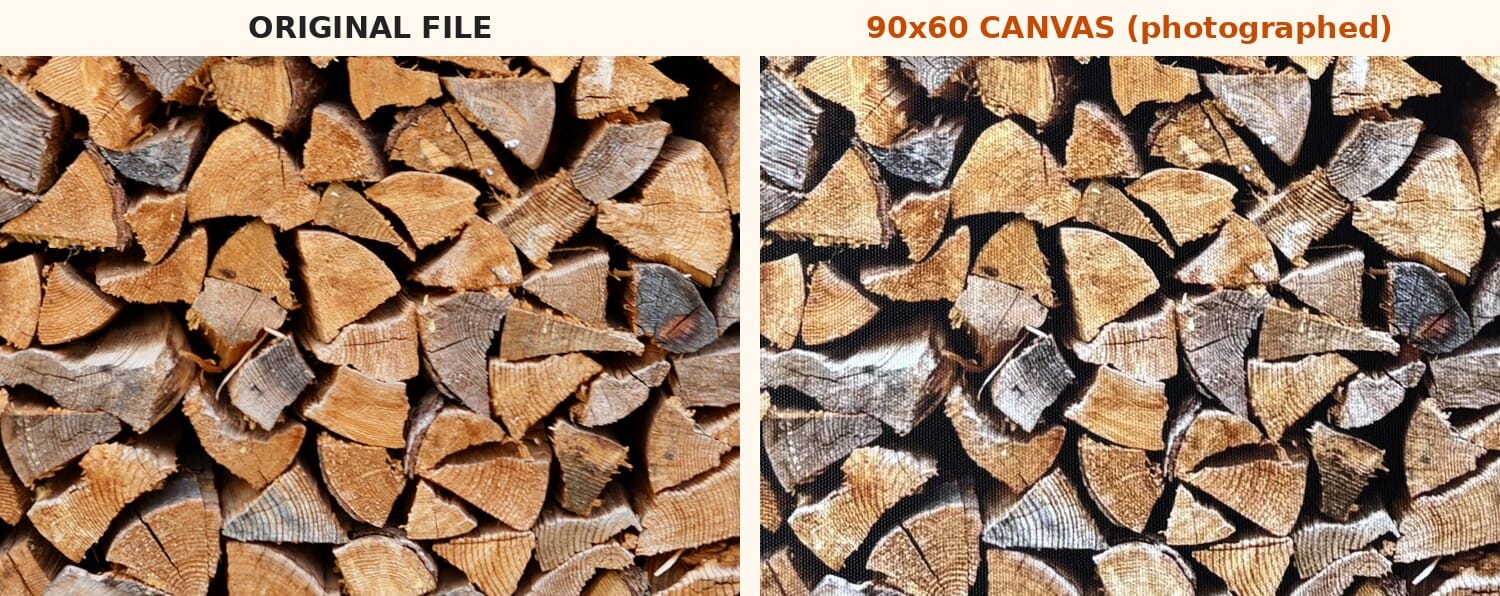
- 90×60 cm canvas (36×24 inches), a firewood stack photographed head-on. Chosen deliberately: hundreds of small high-contrast wood faces make softness, compression artifacts or banding instantly visible.
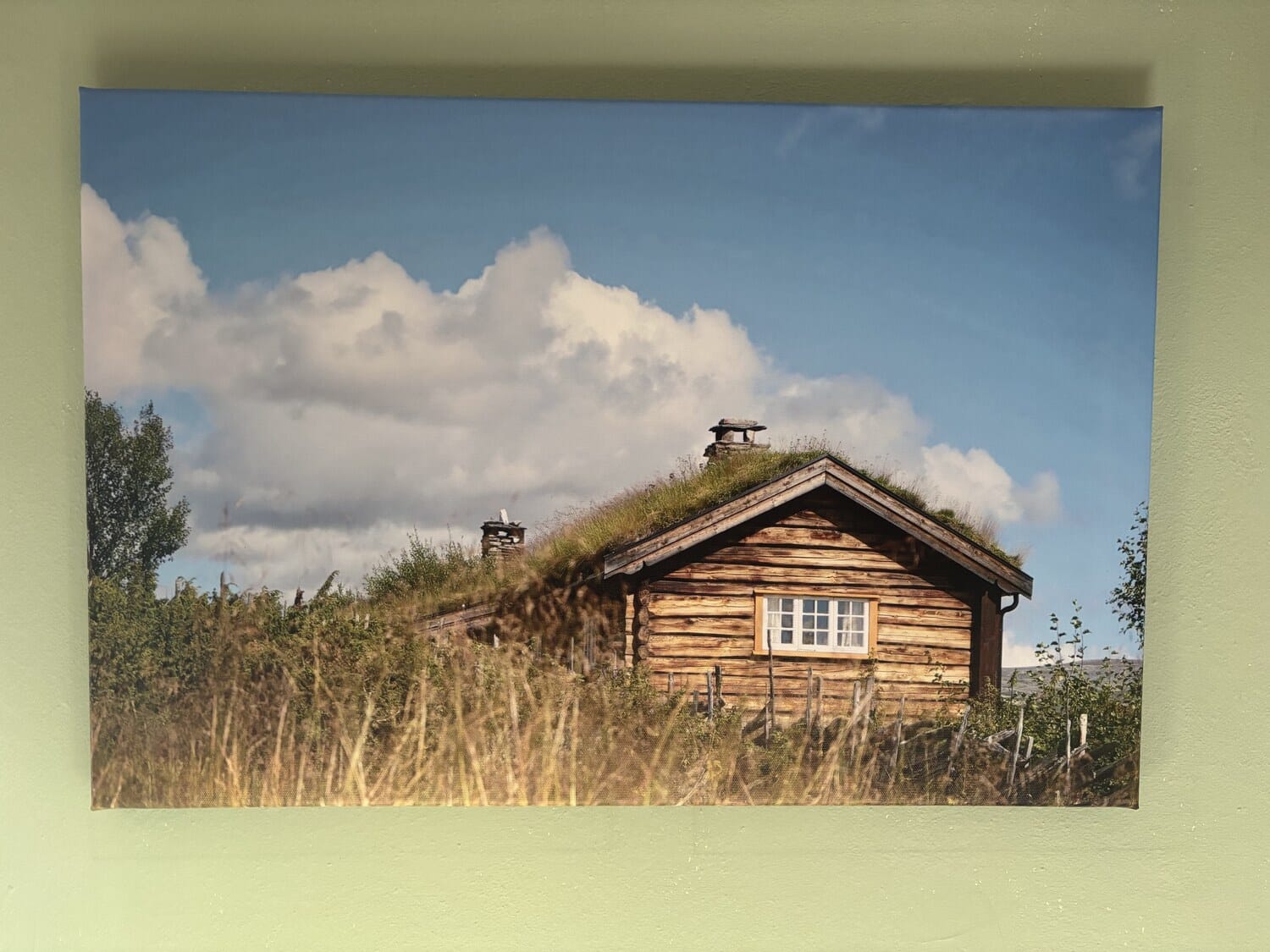
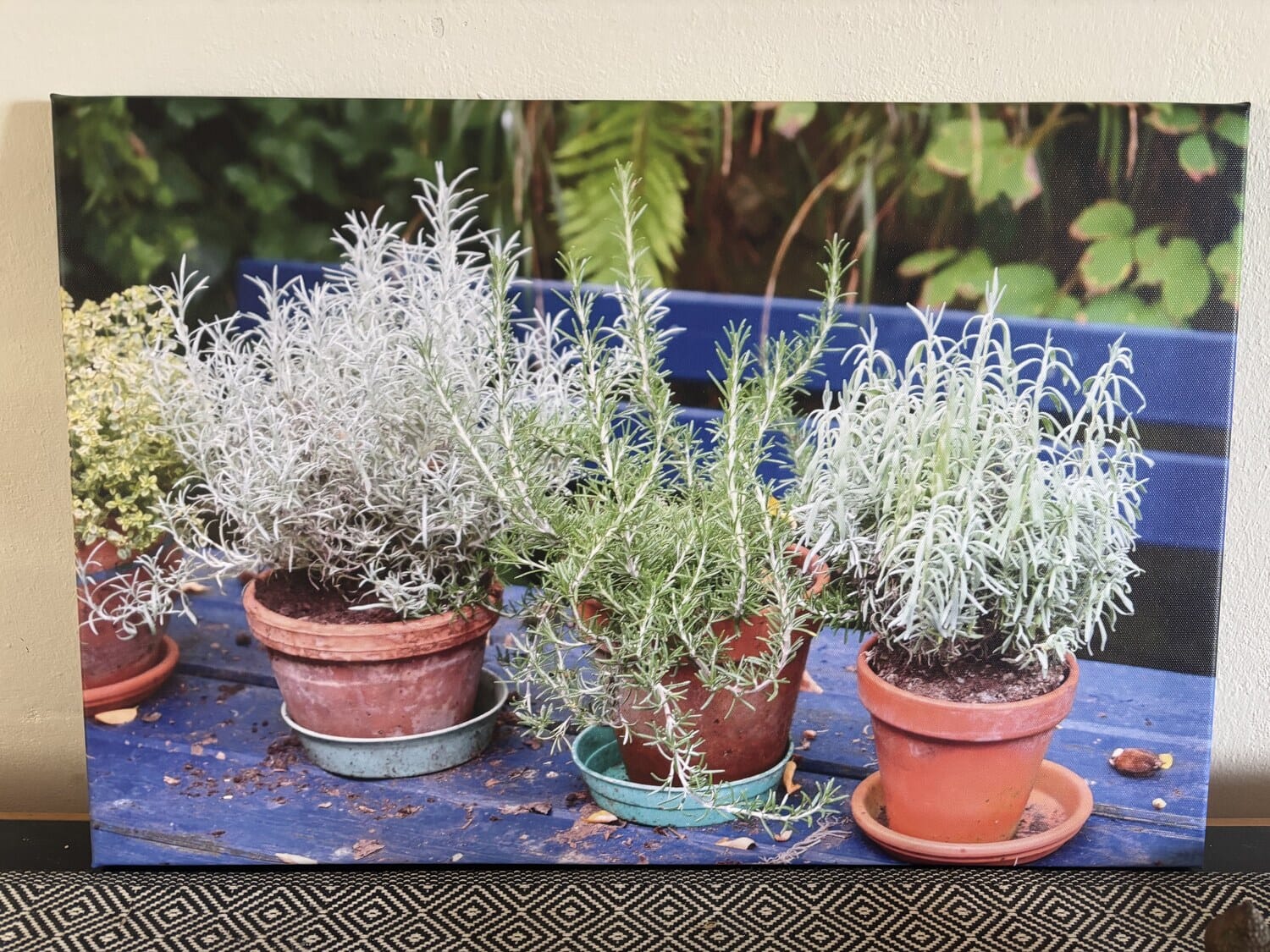
- Two 60×40 cm canvases: a grass-roof cabin landscape and a lavender still life, to check consistency across sizes.
- One aluminium photo print with an adhesive wall mount, a high-contrast street scene with hard shadows. The shipping manifest lists the order plainly: printed canvas and aluminium prints.
The order went in on October 27 through the brand’s European shop, and the production stamps on the stretcher backs carry that same date: printed the day it was ordered. It shipped October 29 from the group’s production site in Prenzlau, Germany, and arrived in Italy on November 3. Order to door in exactly one week, all four prints in one 4 kg box with UPS Standard. CanvasDiscount produces for the US market in the USA, so US delivery times differ; the products themselves are the same across shops.
Unboxing and Build Quality
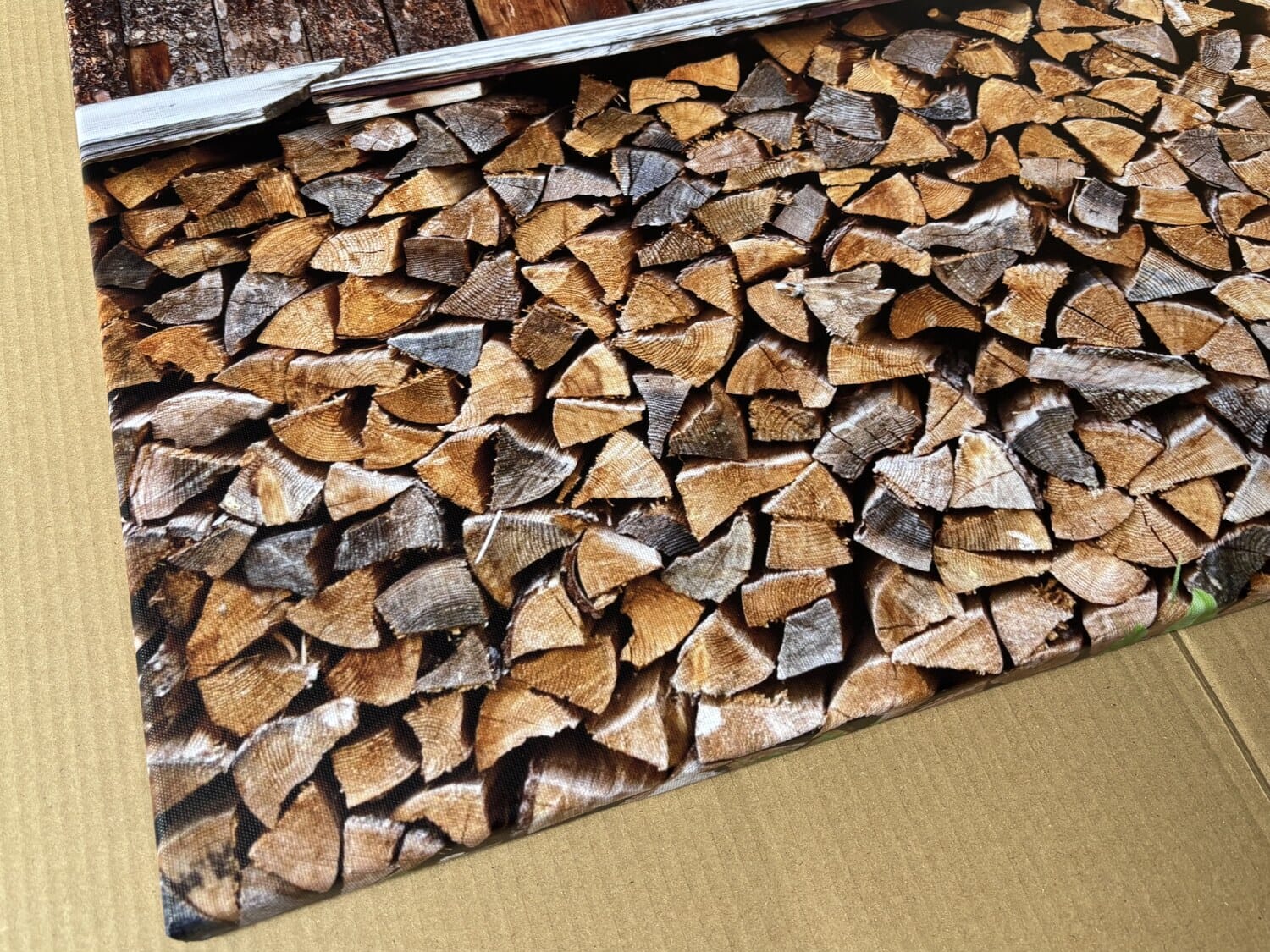
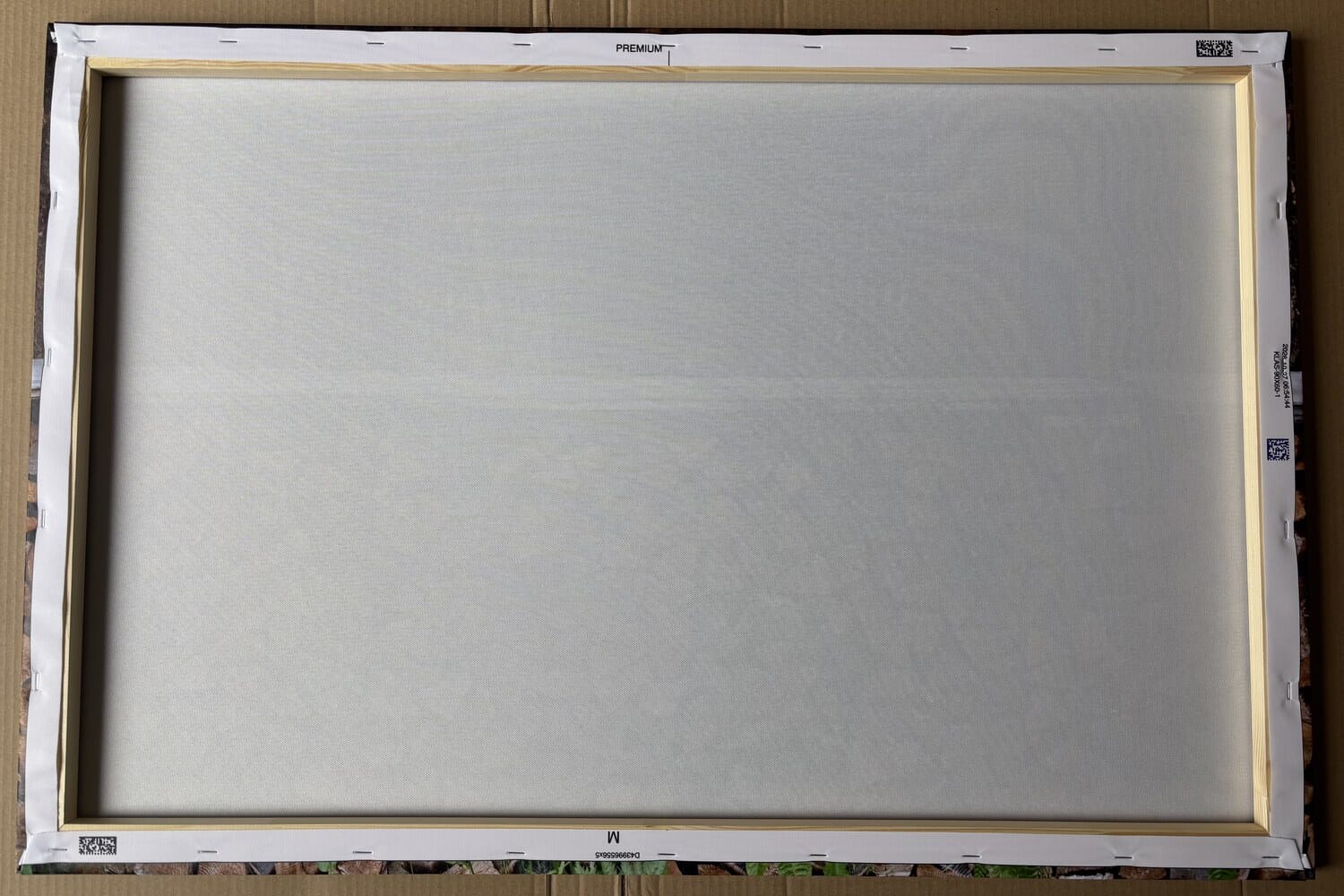
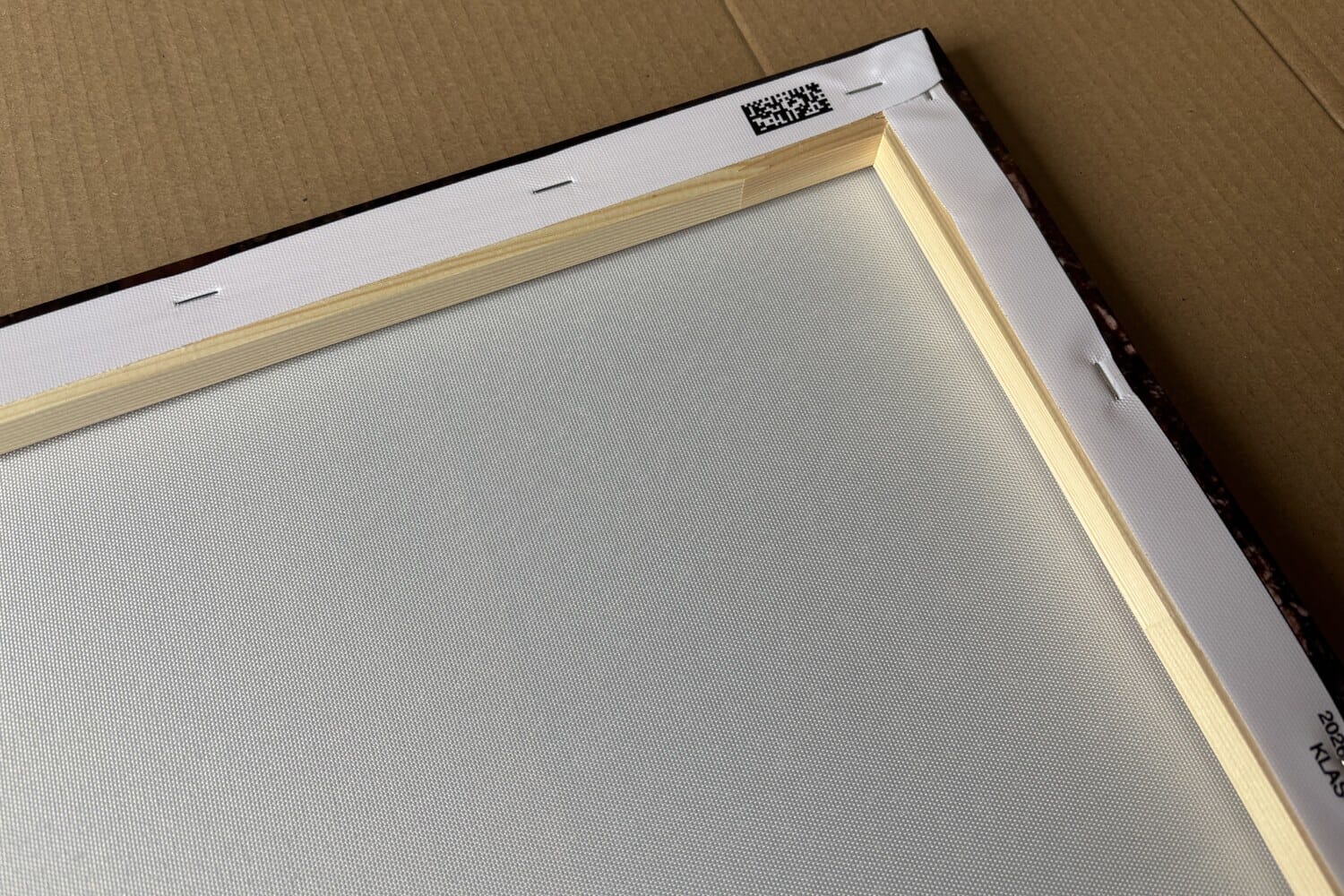
All four prints arrived in one cardboard box, each wrapped in plastic film, with the smaller pieces packed nested inside the larger stretcher frames and the aluminium print foam-wrapped. There are no corner protectors, which looks brave for a 4 kg box, but nothing arrived dented or scuffed. The canvases come on pine stretcher frames labeled “PREMIUM”, and the construction details are the kind usually associated with pricier labs: true gallery wraps with the image continuing around the sides, flush folded corners, mitered frame joints, and staples set on the back rather than the sides.
The Hanging Kit
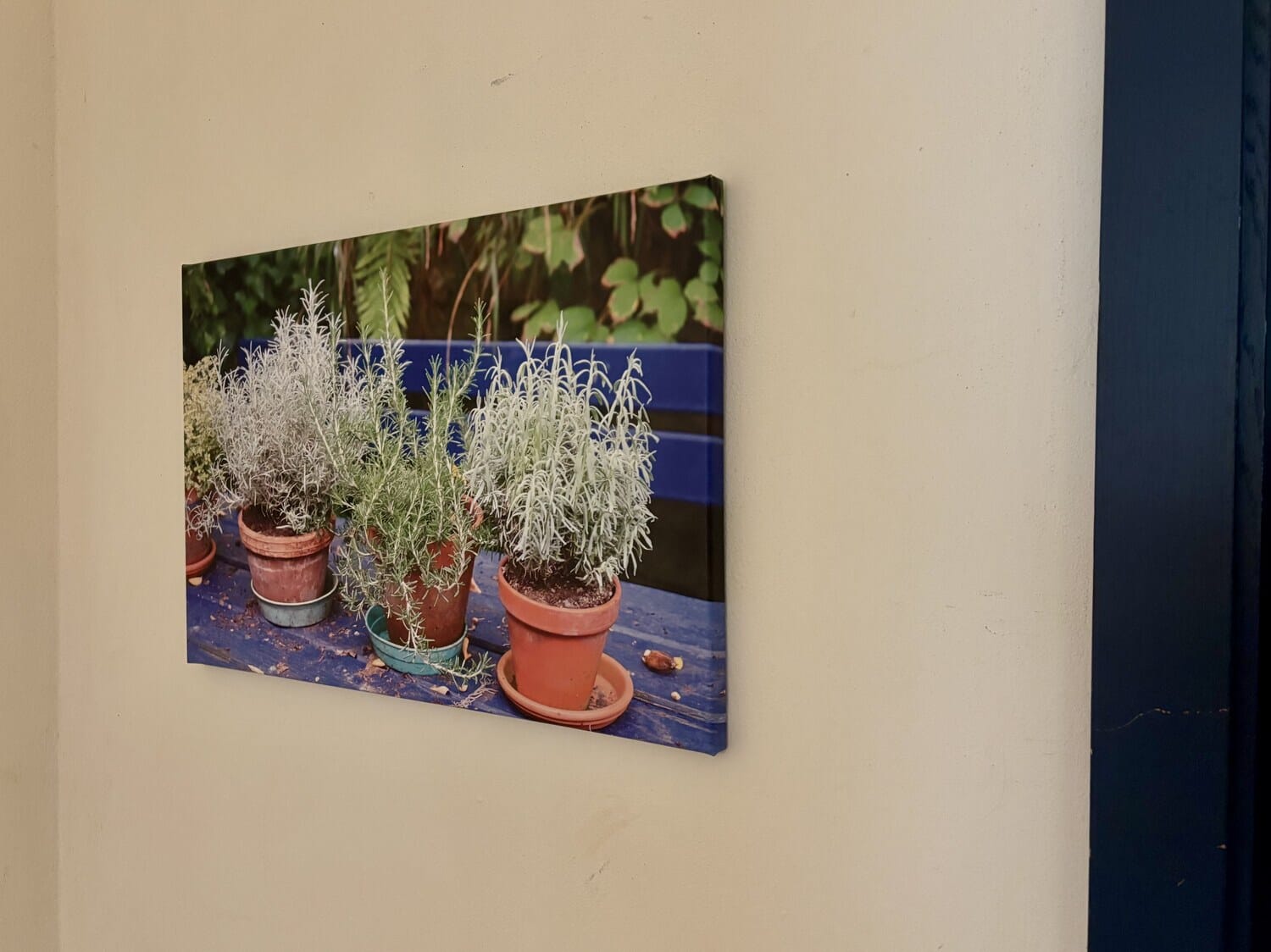
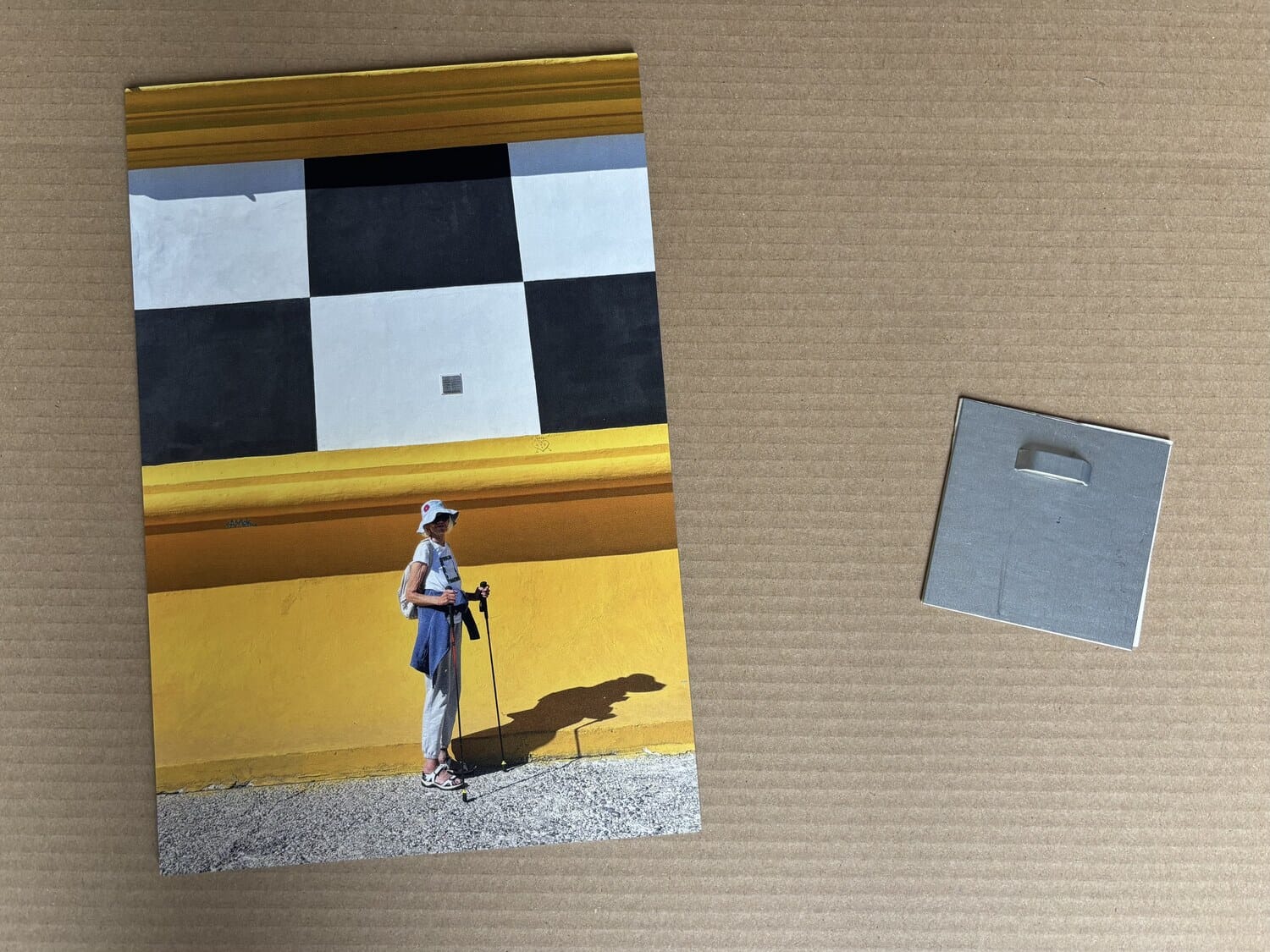
One thing to know at checkout: the hanging kit is an optional add-on, not part of every canvas by default. Added to this test order, each canvas got its own zip bag: a sawtooth hanger, two D-rings, hanging cord, wall nails and screws. That covers both common hanging styles, but nothing is attached out of the box, so plan ten minutes with a screwdriver, and remember to add the kit when ordering if you do not have hooks at home. For large formats like the 90×60, the sturdiest setup is the two D-rings on the side rails with the cord strung between them, hung on two wall hooks spaced about 40 cm apart; a single center hook lets a canvas this size tilt forward and drift off level. For the smaller canvases, the centered sawtooth hanger on one nail is quicker and sits flush. The rigid panel uses a different system: a self-adhesive metal plate with a hanger bracket, plus two clear bumpers for the bottom corners.
The Rigid Panel
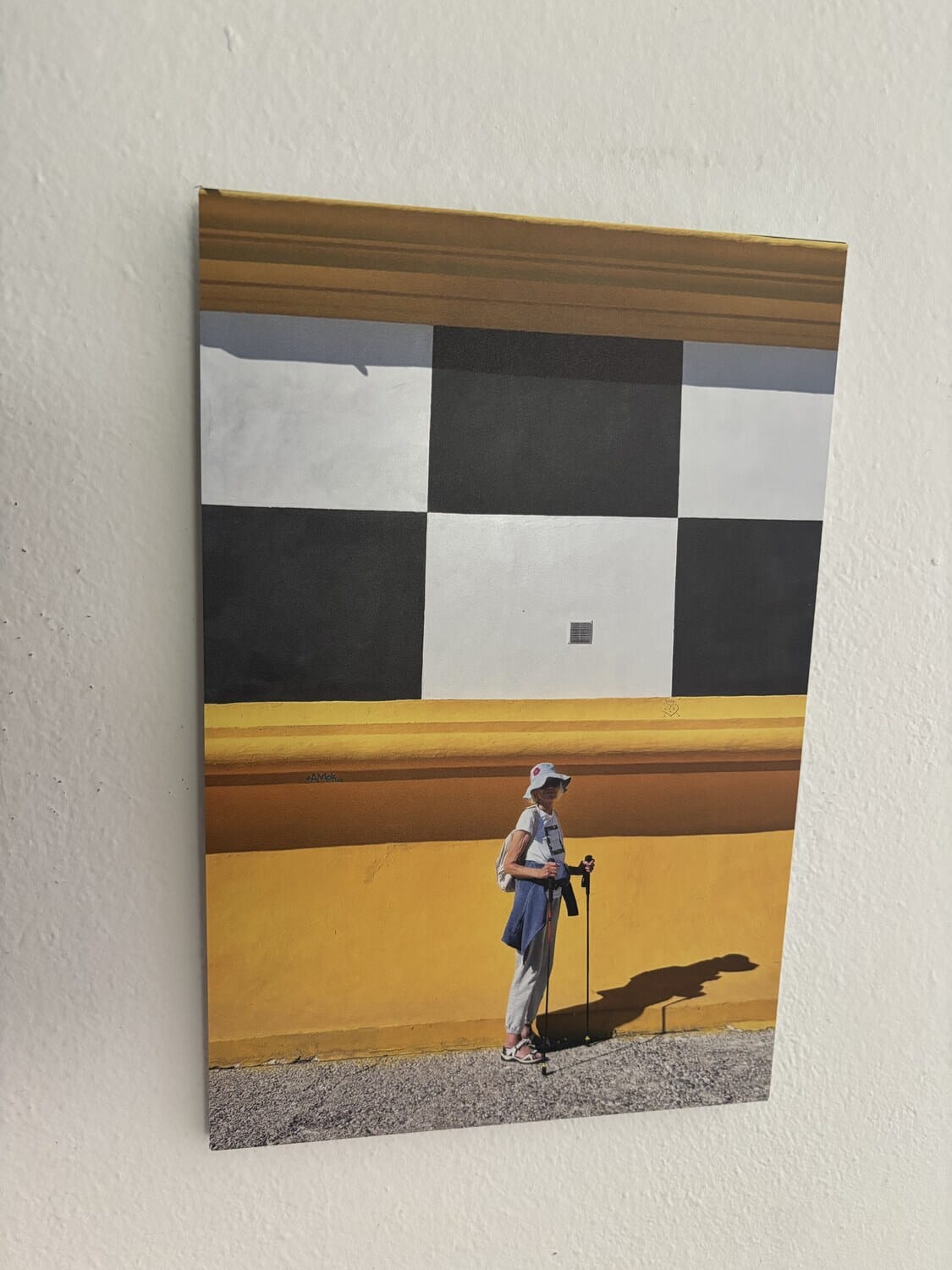
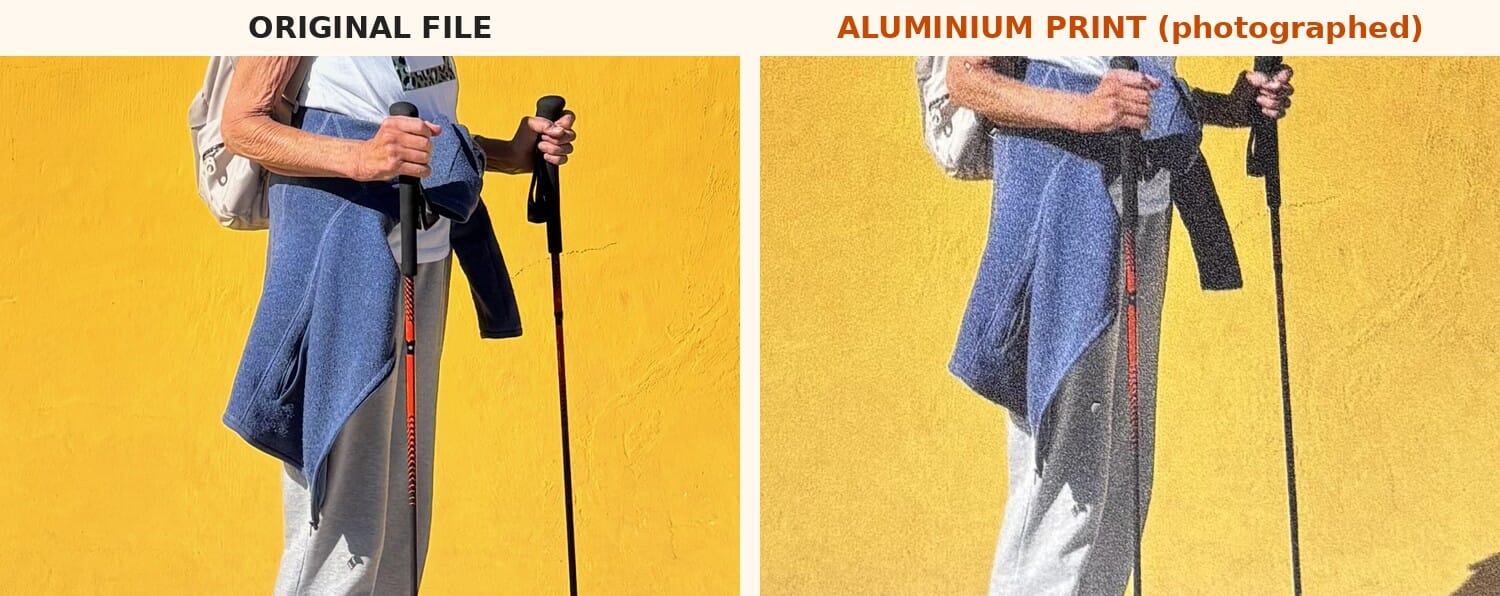
The fourth piece is an aluminium print with a matte white back, mounted via a self-adhesive plate. First impressions of the print are strong: the test image’s hard shadows hold clean edges, the yellows are punchy without tipping into neon, and the panel is dead flat. A detailed comparison against the canvas prints of the same lab follows with the wall testing.
Print Quality: The Verdict
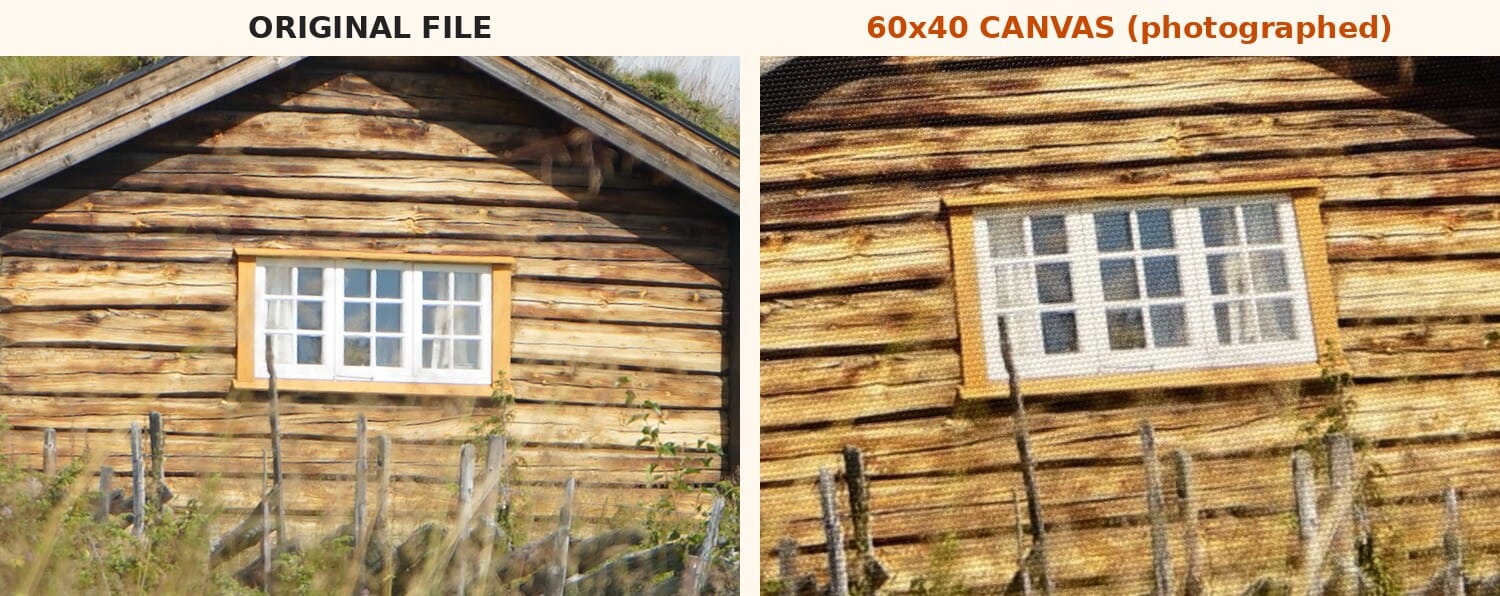
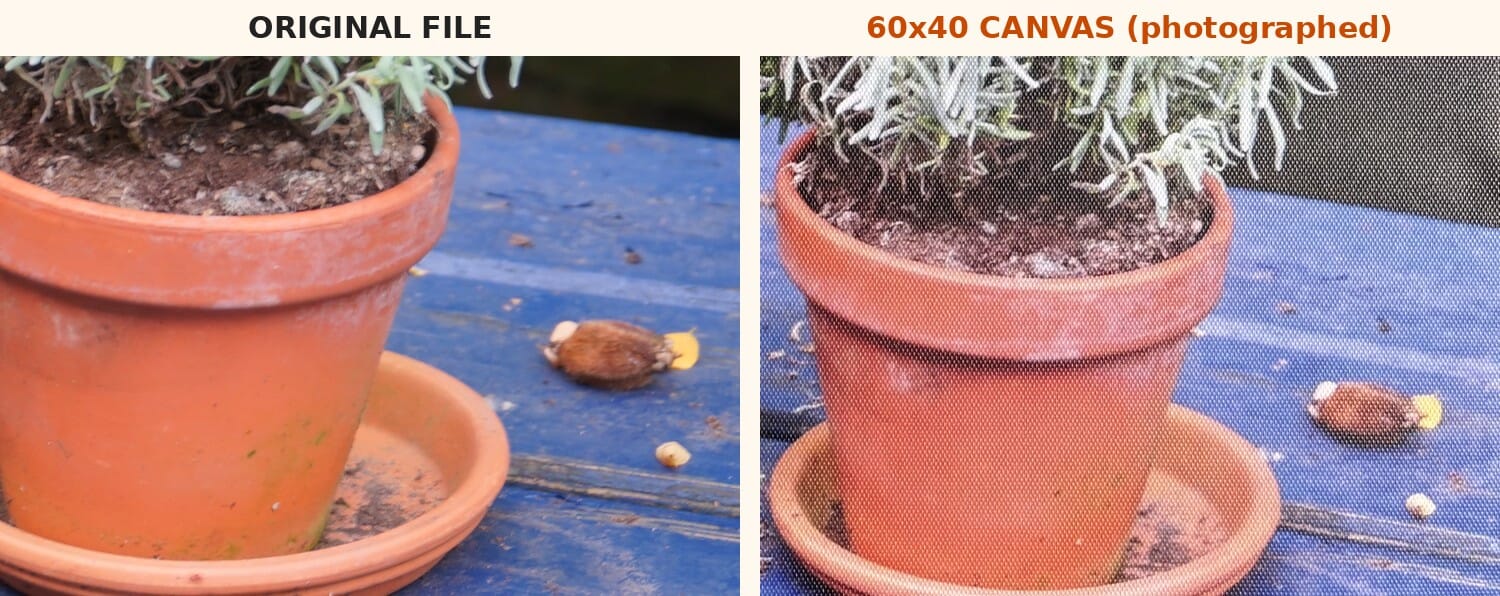
The short version after unboxing and close inspection: the prints clear the bar comfortably, and at this price that is the headline. Sharpness on the 90×60 firewood canvas holds at normal viewing distance, there is no visible banding in the smooth sky areas, and no color casts in neutral grays. The first side-by-side against an original file is below: the same section of the aluminium print’s source photo, next to the delivered print photographed in ambient light. Fabric texture and fine details like the pole grips still resolve, and the color lands close to the file; any slight darkening is the reproduction photo, not the print. The canvas comparison below tells the same story with one nuance: a slightly warmer, more saturated rendering than the source file. The firewood comparison below closes the case. And on the wall, where a canvas actually lives, the verdict gets easier: at normal viewing distance the weave disappears, the colors hold, and the frameless gallery wrap looks intentional rather than budget.

Pricing and Coupons
CanvasDiscount’s pitch is factory-direct pricing, and the US numbers back it up (verified November 5, 2026): an 8×8 inch canvas is $4.30, a 16×20 is $31, and the 24×36 size equivalent to the large canvas tested here lists at $57. Production is quoted at 24 hours, with a lowest-price-in-the-USA guarantee and solvent-free HP latex inks.
PhotoWorkout readers get an extra cut on top: the exclusive PhotoWorkout deal page applies an automatic 15% discount on orders over $35 (10% below that), valid through the end of 2026, no code to type; it is applied in the cart. That brings the tested 24×36 down to roughly $48, and CanvasDiscount additionally takes 20% off every second and further canvas in the same order. For scale: the entire four-print test order would retail around the price of a single large canvas at a premium lab.
Frequently Asked Questions
Is CanvasDiscount good quality for the price?
Based on the physical inspection: yes. Gallery wraps, mitered pine stretchers and back-mounted staples are construction details budget labs often skip, and the print sharpness on a detail-heavy test image holds up at viewing distance. The full verdict, including file-versus-print color accuracy, follows in the testing section above.
Does CanvasDiscount include hanging hardware?
Only if you add it: the hanging kit is an optional extra at checkout rather than a standard inclusion. Each kit covers one canvas with a sawtooth hanger, two D-rings, cord, nails and screws, shipped loose; nothing is pre-mounted on the frame. The rigid panels use a self-adhesive hanger plate instead.
Where does CanvasDiscount print?
US orders are produced in the USA; the brand’s parent group (Picanova / The Customization Group) also runs European production, including the Prenzlau, Germany site that produced this review’s test order. Ordered October 27, delivered in Italy November 3: one week door to door.
How big can CanvasDiscount print?
The standard canvas lineup goes up to large-format sizes suitable for sofa walls; the 90×60 cm (36×24 inch) size tested here is the sweet spot where print flaws would become obvious, and it stayed clean. For what subjects work at size, see the canvas ideas guide linked below.
Bottom Line
Rating: 4.5/5. Budget canvas printing earns its reputation one corner fold at a time, and CanvasDiscount’s construction is more solid than the price suggests: real gallery wraps, clean miters, included hardware and prints that survive a detail-heavy test subject. The side-by-sides against the original files and the wall test both held, with one honest half-point deduction for the slightly warm color shift and the self-assembly hardware. At these prices, with the PhotoWorkout 15% on top, the value case is hard to argue with.
Sources
- CanvasDiscount: canvas prints – Pricing from $4.30 and free-shipping threshold verified November 5, 2026.
- Test order – Four-print review order produced via The Customization Group's European shop, received November 2026. Provided by CanvasDiscount; no editorial input.
Image Sources
- All product photos: PhotoWorkout – Unboxing and detail photos taken by PhotoWorkout on November 4-5, 2026, of the review units.
- Pin image: stylized PhotoWorkout illustration – AI-generated illustration featuring the PhotoWorkout mascot.
CanvasDiscount provided the test order for this review. PhotoWorkout earns a commission on purchases made through links on this page, at no extra cost to the buyer. The assessment is independent.