


- Canon RF 24-70mm f/2.8L IS USM is the top overall pick for video, with optical IS, fast f/2.8 aperture, and outstanding autofocus tracking.
- Canon RF 50mm f/1.8 STM is the best budget option at just $219, delivering smooth video AF and a natural field of view.
- Two new VCM-motor lenses (RF 35mm f/1.4L and RF 50mm f/1.4L) are purpose-built for video with virtually zero focus breathing.
- The buying guide covers the six factors that matter most for video: aperture, stabilization, autofocus motor, breathing, focal length, and weight.
- Every lens includes multi-retailer pricing from Amazon, B&H Photo, Adorama, and KEH for the best deals.
Choosing the Right Canon RF Lens for Video
Shooting video on a Canon EOS R-series camera opens up a world of cinematic possibilities, but the lens mounted on the front matters just as much as the body behind it. Autofocus motor type, optical stabilization, focus breathing, and maximum aperture all play a critical role in how footage looks and feels. The wrong lens can introduce distracting focus shifts, visible breathing during rack focuses, or shaky handheld footage that no amount of post-stabilization can fix.
Canon’s RF mount lineup has matured significantly, now spanning everything from a $219 budget prime to cinema-grade L-series zooms with built-in IS. Newer VCM (Voice Coil Motor) lenses like the RF 35mm f/1.4L VCM and RF 50mm f/1.4L VCM were designed from the ground up for video shooters, with near-zero focus breathing and whisper-quiet autofocus. This guide compares 11 Canon RF lenses that deliver the best video performance across different budgets and shooting styles, from run-and-gun documentary work to controlled studio interviews.
Whether pairing with an EOS R5 Mark II, R6 III, or R8, the right lens choice can transform footage quality. Each lens below has been evaluated for video-specific criteria: autofocus smoothness, IS effectiveness, breathing control, and overall image rendering in motion.
When you buy through links on our site, we may earn a commission at no cost to you. We evaluate products independently. Commissions do not affect our evaluations. As an Amazon Associate, we earn from qualifying purchases.
Top Canon RF Lenses for Video


How to Choose a Canon RF Lens for Video
Not every sharp photo lens makes a great video lens. Video demands different optical qualities than stills photography, and understanding these factors helps avoid expensive mistakes. Here are the six most important criteria when evaluating a Canon RF lens for video work.

Canon RF Video Lenses Compared
| Specifications | |||||||||||
|---|---|---|---|---|---|---|---|---|---|---|---|
| Focal Length | 24-70mm | 24-105mm | 50mm | 70-200mm | 15-35mm | 35mm | 50mm | 28-70mm | 85mm | 35mm | 70-200mm |
| Max Aperture | f/2.8 | f/4 | f/1.8 | f/2.8 | f/2.8 | f/1.4 | f/1.4 | f/2.8 | f/2 | f/1.8 | f/4 |
| IS (Stabilization) | Yes (5 stops) | Yes (5 stops) | No | Yes (5 stops) | Yes (5 stops) | No | No | Yes (5.5 stops) | Yes (5 stops) | Yes (4 stops) | Yes (5 stops) |
| AF Motor | Nano USM | Nano USM | STM | Dual Nano USM | Nano USM | VCM | VCM | STM | STM | STM | Nano USM |
| Weight | 900g | 700g | 160g | 1,070g | 840g | 773g | 585g | 490g | 500g | 305g | 695g |
| Price (Mar 2026) | $2,599 | $1,399 | $219 | $2,799 | $2,399 | $1,599 | $1,499 | $1,099 | $589 | $499 | $1,599 |


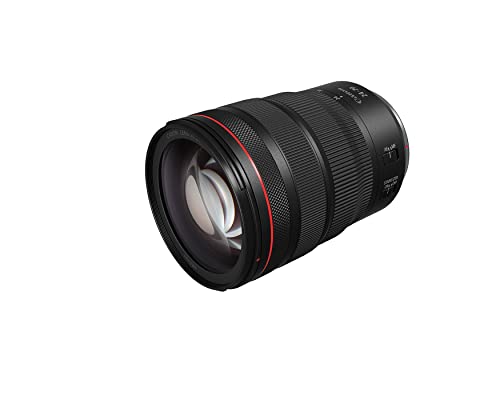
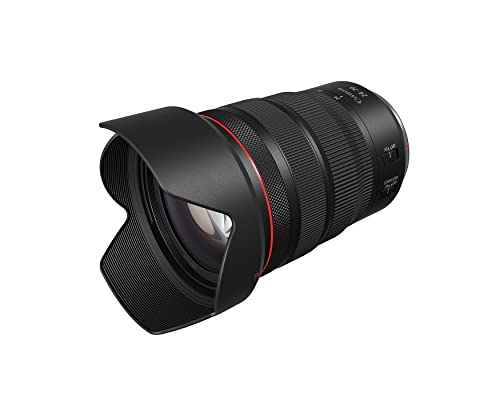
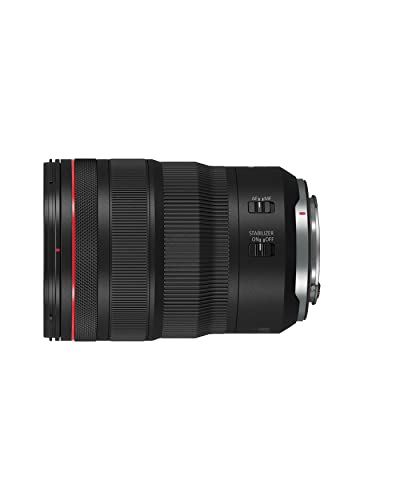
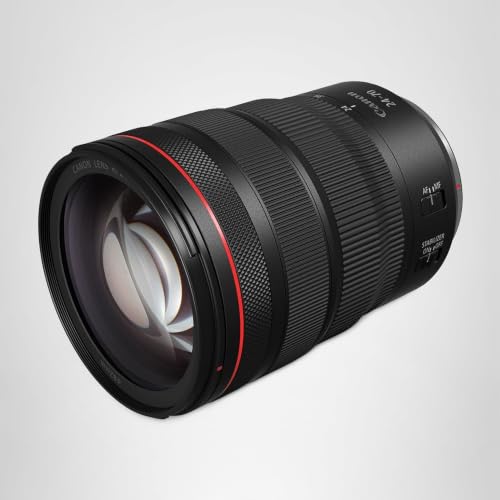
Canon RF 24-70mm f/2.8L IS USM
Professional video shooters who need the most versatile high-end zoom
- Built-in optical IS works with IBIS for up to 8 stops of stabilization
- Nano USM autofocus is fast, silent, and tracks subjects smoothly
- Constant f/2.8 aperture delivers consistent exposure across zoom range
- Outstanding optical quality with minimal chromatic aberration
- Weather-sealed L-series build handles tough shooting conditions
- Heavy at 900g, challenging for extended gimbal use
- Premium price at $2,599 (as of March 2026)
- Some visible focus breathing at wider focal lengths
The gold standard for Canon RF video zooms. The 24-70mm focal range covers everything from wide establishing shots to medium close-ups, and the built-in IS makes handheld footage remarkably stable.
The Canon RF 24-70mm f/2.8L IS USM sits at the top of this list for good reason: it combines the most useful zoom range for video with optical stabilization, fast autofocus, and L-series build quality. For run-and-gun documentary work, event coverage, or narrative filmmaking, this single lens can handle the majority of shooting scenarios without a lens swap.
What sets this lens apart for video is the combination of Nano USM autofocus and built-in 5-stop IS. The autofocus tracks subjects with the kind of smooth, gradual transitions that look natural in video, and when paired with IBIS-equipped bodies like the EOS R5 II or R6 III, the coordinated stabilization system delivers up to 8 stops of shake reduction. Handheld walking shots that would normally require a gimbal come out remarkably smooth.
The constant f/2.8 aperture maintains consistent exposure and depth of field as the zoom changes, which is essential for video. Zooming during a shot with a variable-aperture lens causes visible exposure shifts that are difficult to correct in post. At 900g, the RF 24-70mm f/2.8L is heavier than some alternatives, but the trade-off in image quality and versatility is worth it for serious video work.



Pricing & Where to Buy
The Canon RF 24-70mm f/2.8L IS USM is priced at $2,599 (as of March 2026). It’s a significant investment, but this is the lens that stays on the camera for most professional video work.
- Buy on Amazon — Prime shipping available
- Check price at B&H Photo
- Check price at Adorama
- Buy used at KEH Camera — save with certified pre-owned
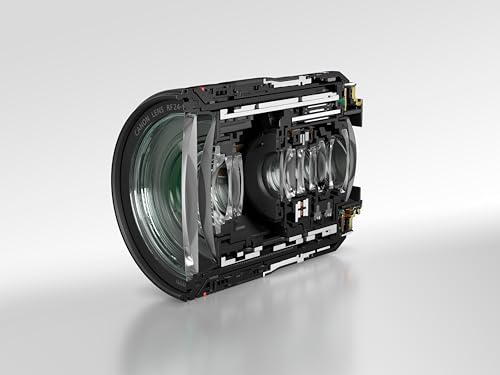
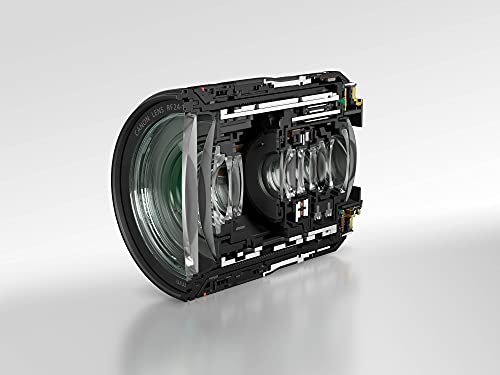
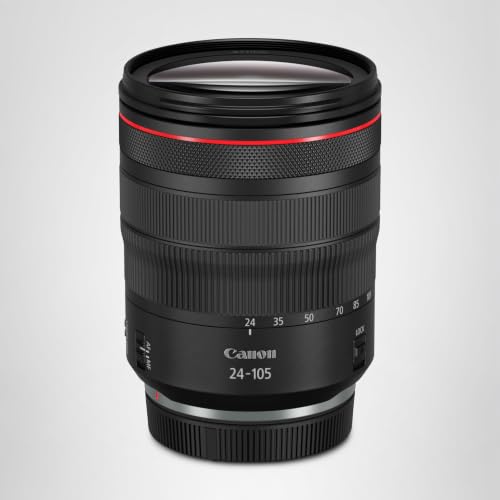
Canon RF 24-105mm f/4L IS USM
Solo shooters and content creators who need one lens to cover everything
- Widest useful zoom range (24-105mm) covers most video scenarios in one lens
- Built-in IS with up to 8 stops when paired with IBIS bodies
- Nano USM autofocus is smooth and silent for video
- $1,200 less than the 24-70mm f/2.8L with more reach
- Lighter at 700g, better balanced on smaller bodies
- f/4 maximum aperture limits shallow DOF and low-light performance
- Not as sharp wide open at the edges as the 24-70mm f/2.8L
- Variable performance at 105mm compared to a dedicated telephoto
The best one-lens video solution in Canon’s RF lineup. The 24-105mm range eliminates most lens changes, and the f/4 aperture keeps the weight and price reasonable for content creators.
The Canon RF 24-105mm f/4L IS USM is the most practical single-lens solution for video on any Canon RF body. The 24-105mm focal range covers wide establishing shots, standard interview framing, and moderate telephoto compression all without changing glass. For solo shooters, content creators, and documentary filmmakers who can’t afford to miss a moment swapping lenses, this is the lens to own.
The Nano USM autofocus motor is the same technology found in Canon’s more expensive L zooms, delivering smooth, silent focus transitions that look natural in video. Combined with 5-stop optical IS (up to 8 stops with IBIS), handheld video is remarkably stable even at the 105mm end where shake is most noticeable.
The trade-off compared to the top-ranked RF 24-70mm f/2.8L is depth of field control. At f/4, backgrounds won’t blur as dramatically, and low-light performance drops by about a stop. But at $1,399 (as of March 2026) and 700g, the 24-105mm f/4L is significantly more affordable and easier to handle on a gimbal or for extended shoots.




Pricing & Where to Buy
The Canon RF 24-105mm f/4L IS USM is priced at $1,399 (as of March 2026). It’s frequently bundled as a kit lens with Canon EOS R bodies, so check for kit deals that can save $200-300.
- Buy on Amazon — Prime shipping available
- Check price at B&H Photo
- Check price at Adorama
- Buy used at KEH Camera — save with certified pre-owned
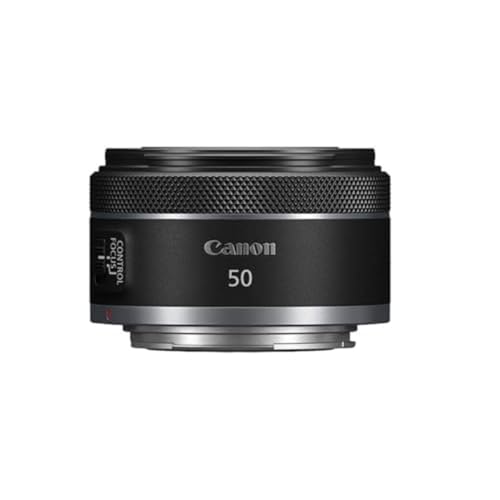
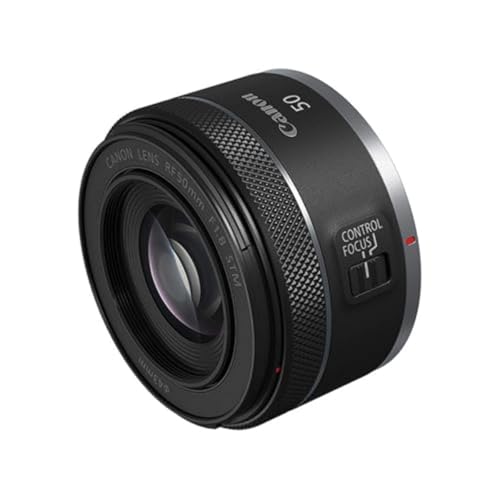
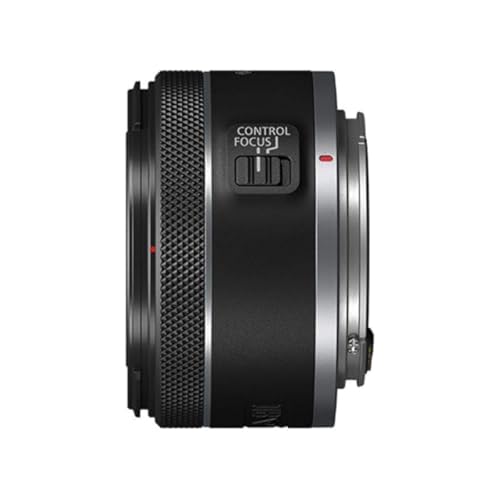
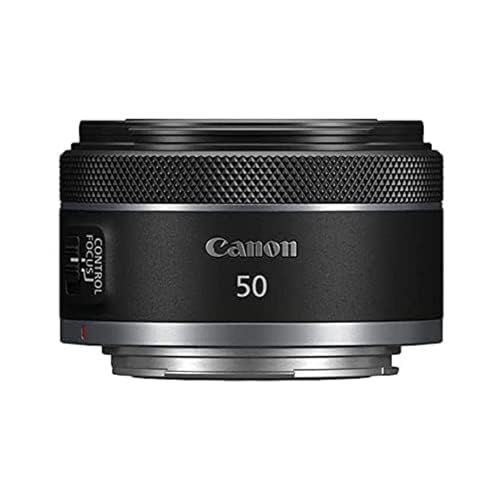
Canon RF 50mm f/1.8 STM
Budget-conscious video shooters and beginners looking for cinematic depth of field
- Incredible value at just $219 with f/1.8 aperture
- STM autofocus is smooth and quiet enough for video
- Extremely lightweight at 160g, perfect for gimbals
- Natural 50mm field of view is ideal for interviews and narrative work
- 3,025 Amazon reviews with 4.7-star rating confirms reliability
- No optical image stabilization
- Build quality is plastic and basic compared to L-series
- Some noticeable focus breathing during rack focuses
The best entry point into cinematic Canon RF video. At $219, there’s no reason not to own this lens. The shallow depth of field at f/1.8 instantly elevates video quality over kit zoom footage.
The Canon RF 50mm f/1.8 STM is proof that great video lenses don’t have to be expensive. At $219 (as of March 2026), this 50mm prime delivers the kind of shallow depth of field and subject separation that makes footage look immediately more cinematic. The natural 50mm perspective closely matches how the human eye sees, making it ideal for interviews, talking-head content, and narrative filmmaking.
The STM (Stepping Motor) autofocus is designed for smooth, quiet operation during video recording. It’s not as fast or as refined as the Nano USM or VCM motors in Canon’s more expensive lenses, but for video at this price point, the AF performance is genuinely impressive. Focus transitions are gradual and natural-looking, exactly what video demands.
At just 160g, the RF 50mm f/1.8 is the lightest lens in this roundup by a significant margin. It’s perfect for gimbal work, vlogging setups, and any situation where weight matters. The lack of optical IS is the main compromise, but on IBIS-equipped bodies like the R6 III or R8, the in-body stabilization compensates well. For anyone starting out with video on a Canon RF camera, this should be the first lens purchase after the kit zoom. Also check the full Canon 50mm lens comparison for more options.


Pricing & Where to Buy
The Canon RF 50mm f/1.8 STM is priced at $219 (as of March 2026), making it the most affordable RF lens in this roundup by far.
- Buy on Amazon — Prime shipping available
- Check price at B&H Photo
- Check price at Adorama
- Buy used at KEH Camera — save with certified pre-owned
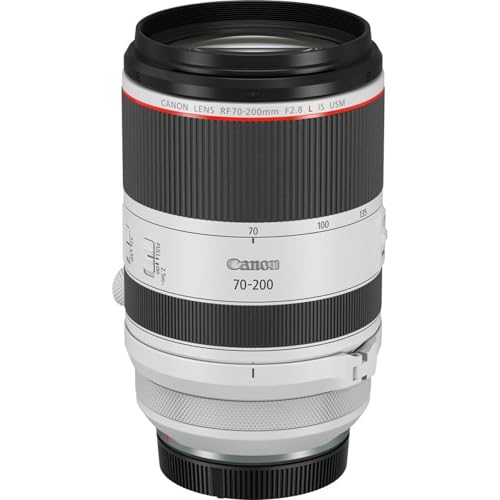
Canon RF 70-200mm f/2.8L IS USM
Interview setups, event coverage, and cinematic telephoto compression
- Telephoto compression creates beautiful background separation for interviews
- Dual Nano USM AF is extremely fast and smooth for tracking moving subjects
- 5-stop optical IS plus IBIS coordination for stable handheld telephoto video
- Constant f/2.8 with stunning bokeh rendering at 200mm
- Internal zoom design maintains balance and weather sealing
- Heaviest lens in this roundup at 1,070g
- $2,799 price point (as of March 2026) is a serious investment
- Requires more working distance, limiting use in tight spaces
The ultimate telephoto for Canon RF video work. The background compression at 200mm f/2.8 creates a look that wide-angle lenses simply cannot replicate, making it essential for interviews and documentary b-roll.
The Canon RF 70-200mm f/2.8L IS USM delivers a look that no wider lens can replicate: compressed backgrounds, creamy bokeh, and subject isolation that immediately signals professional production value. For sit-down interviews, the 85-135mm range within this zoom provides the most flattering facial proportions, while the 200mm end is perfect for isolating subjects in crowded environments during event coverage.
The Dual Nano USM autofocus system is Canon’s fastest and smoothest, tracking moving subjects with the precision needed for sports, live events, and documentary work. Combined with 5-stop IS that coordinates with IBIS bodies, handheld telephoto video at 200mm is achievable without a tripod, something that was nearly impossible with DSLR-era telephoto zooms.
At 1,070g, the RF 70-200mm f/2.8L is the heaviest lens in this roundup and can be tiring for extended handheld use. For shooters who need telephoto reach but prioritize weight, the RF 70-200mm f/4L at 695g is a compelling alternative. But for maximum image quality and light-gathering ability, the f/2.8 version remains the professional choice. Pair it with a Canon camera with a flip screen for versatile monitoring angles.







Pricing & Where to Buy
The Canon RF 70-200mm f/2.8L IS USM is priced at $2,799 (as of March 2026). It’s Canon’s flagship telephoto zoom for the RF system.
- Buy on Amazon — Prime shipping available
- Check price at B&H Photo
- Check price at Adorama
- Buy used at KEH Camera — save with certified pre-owned
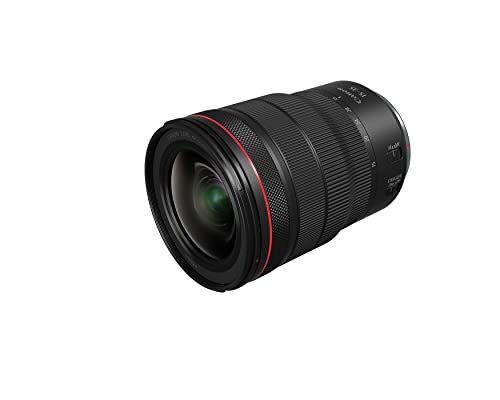
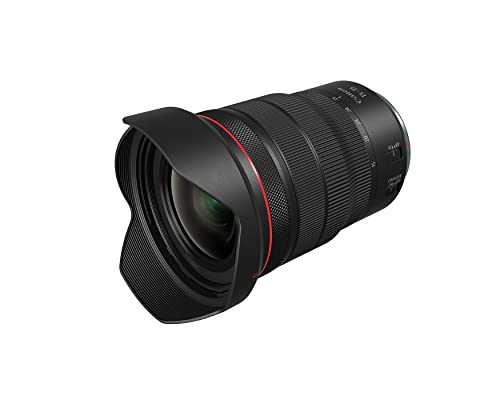
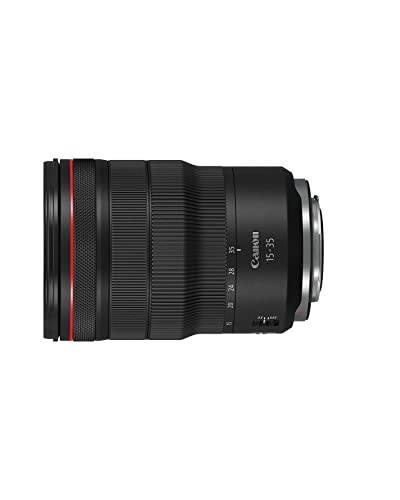
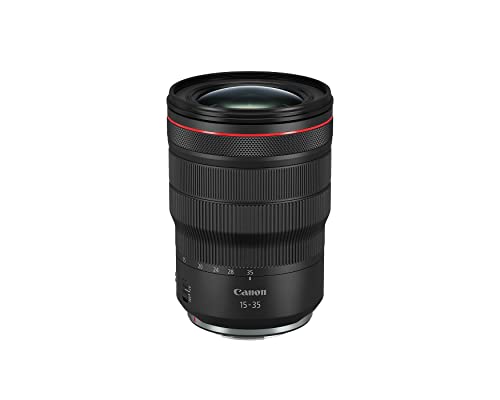
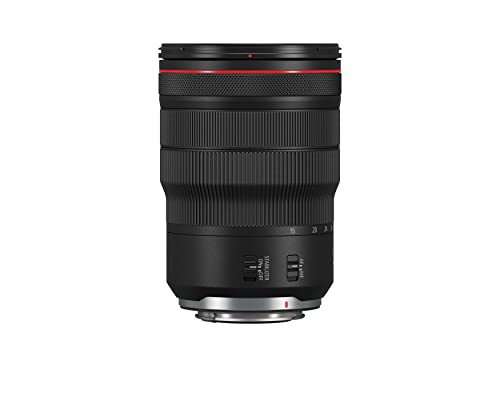
Canon RF 15-35mm f/2.8L IS USM
Wide-angle video, establishing shots, vlogging, and real estate videography
- Ultra-wide 15mm to standard 35mm range covers establishing shots and vlogging
- Built-in IS with IBIS coordination for stable wide-angle handheld video
- Constant f/2.8 aperture for low-light and depth of field control
- Nano USM autofocus with smooth, silent operation
- Minimal distortion for a wide-angle zoom
- Heavy at 840g for a wide-angle zoom
- $2,399 price point (as of March 2026)
- 15mm is so wide that it can introduce perspective distortion on close subjects
The best wide-angle zoom for Canon RF video. The 15-35mm range with IS is perfect for establishing shots, real estate walkthroughs, and vlogging where you need to be close to the camera.
The Canon RF 15-35mm f/2.8L IS USM completes Canon’s holy trinity of f/2.8 zooms for the RF system, and it’s indispensable for video shooters who need ultra-wide coverage. At 15mm, the field of view is expansive enough for dramatic establishing shots, real estate walkthroughs, and action sequences where the environment is part of the story. Zoom to 35mm and the perspective becomes more natural for walking-and-talking sequences.
For vloggers and solo content creators, the 15-35mm range at f/2.8 is particularly valuable. The wide end keeps the background visible for context while the fast aperture adds depth separation. Built-in IS working with IBIS keeps walking footage smooth, which is critical for run-and-gun content creation.
The optical quality is outstanding for a wide-angle zoom, with well-controlled distortion and minimal chromatic aberration. At $2,399 (as of March 2026), the RF 15-35mm f/2.8L is a premium investment, but video shooters who regularly need wide-angle coverage will find it invaluable. For those looking at Canon’s overall lens ecosystem, the sharpest Canon lenses guide covers how this zoom compares optically.
Pricing & Where to Buy
The Canon RF 15-35mm f/2.8L IS USM is priced at $2,399 (as of March 2026).
- Buy on Amazon — Prime shipping available
- Check price at B&H Photo
- Check price at Adorama
- Buy used at KEH Camera — save with certified pre-owned
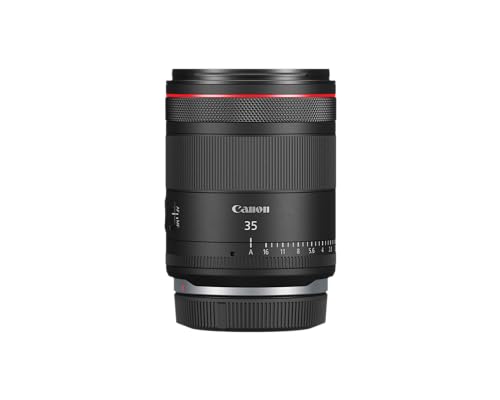
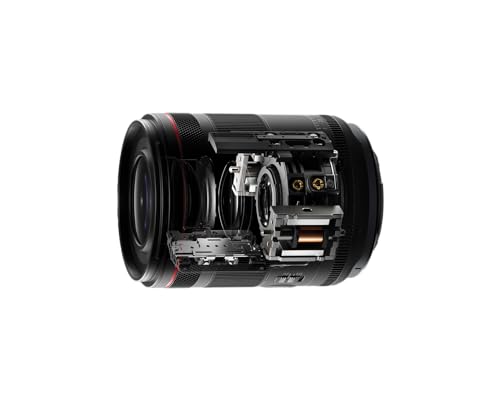
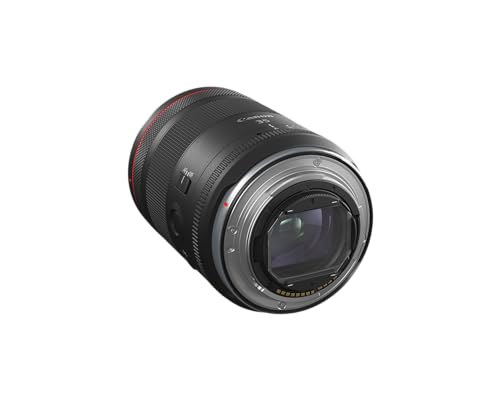
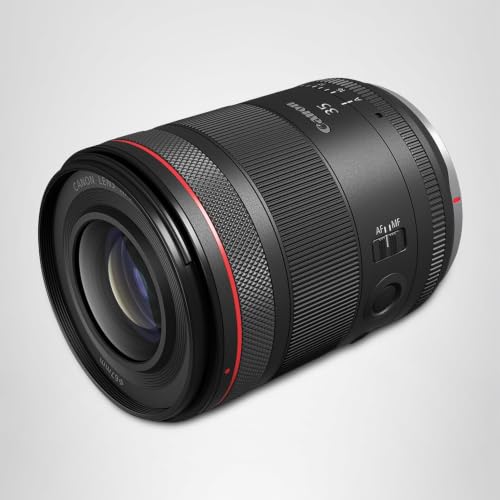
Canon RF 35mm f/1.4L VCM
Hybrid photo/video shooters who want Canon’s newest video-optimized prime technology
- VCM (Voice Coil Motor) designed specifically for smooth, silent video AF
- Virtually zero focus breathing for professional rack focus pulls
- f/1.4 aperture delivers stunning shallow depth of field
- 35mm focal length is versatile for documentary and narrative work
- L-series build quality with weather sealing
- No optical image stabilization (relies on IBIS)
- $1,599 price point (as of March 2026)
- Only 32 Amazon reviews so far (relatively new lens)
Canon’s first VCM lens represents a new generation designed from the ground up for video. The near-zero breathing and whisper-quiet AF make it the most video-friendly 35mm prime in Canon’s lineup.
The Canon RF 35mm f/1.4L VCM represents Canon’s clearest statement yet that video is a first-class citizen in RF lens design. The VCM (Voice Coil Motor) is a fundamentally different autofocus technology from the Nano USM and STM motors in older lenses. It uses electromagnetic force for nearly instantaneous, completely silent focus adjustments with virtually zero focus breathing.
Focus breathing is the subtle zoom effect visible when pulling focus between subjects. In professional video work, it looks amateur and distracting. The RF 35mm f/1.4L VCM essentially eliminates this problem at the optical level, making rack focus pulls look smooth and cinematic without relying on digital correction from the camera body.
The 35mm focal length is a documentary filmmaker’s favorite. It’s wide enough to include environmental context but not so wide that perspective distortion becomes an issue with close subjects. At f/1.4, background separation is dramatic, and low-light performance is exceptional. The lack of optical IS means IBIS-equipped bodies are recommended for handheld work, but the RF 35mm f/1.4L VCM paired with an R5 II or R6 III creates one of the best hybrid photo/video setups available.

Pricing & Where to Buy
The Canon RF 35mm f/1.4L VCM is priced at $1,599 (as of March 2026). As one of Canon’s newest lenses, discounts are rare, but it’s worth checking multiple retailers.
- Buy on Amazon — Prime shipping available
- Check price at B&H Photo
- Check price at Adorama
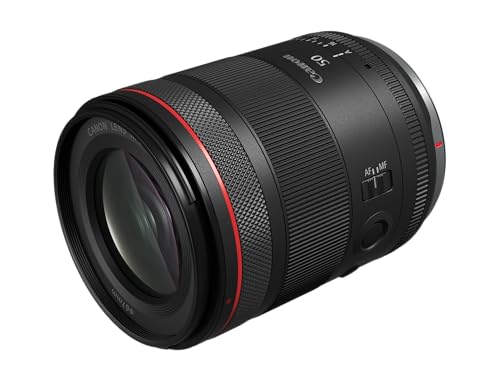
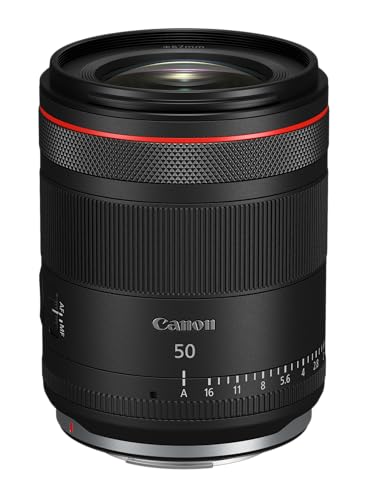
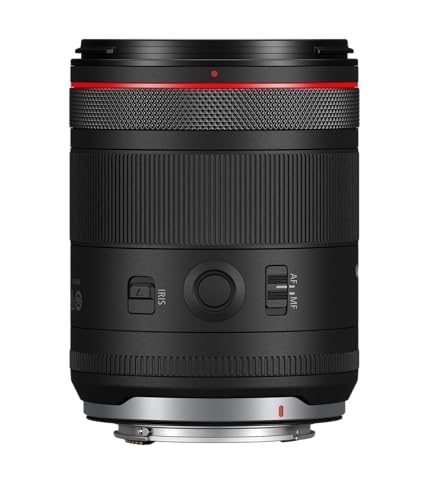
Canon RF 50mm f/1.4L VCM
Narrative filmmakers and portrait videographers who want the standard prime perspective with VCM video technology
- VCM motor for silent, breathing-free video autofocus
- f/1.4 aperture for cinematic shallow depth of field at 50mm
- Lighter than expected for an L-series f/1.4 at 585g
- 4.8-star rating from early adopters confirms optical excellence
- Customizable control ring for aperture or ISO adjustment during video
- No optical IS (needs IBIS for handheld stabilization)
- $1,499 is expensive compared to the $219 RF 50mm f/1.8
- Limited review count (40 reviews) as a newer lens
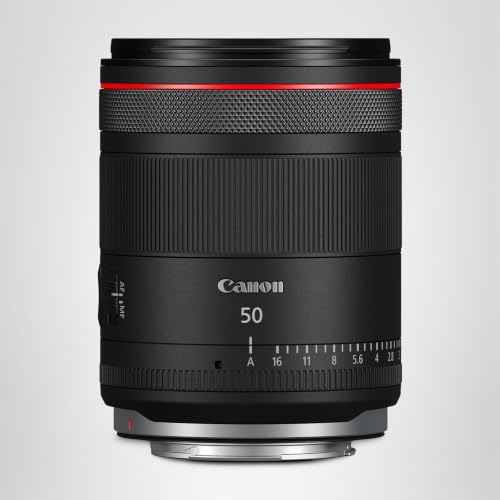
The video-focused alternative to Canon’s RF 50mm f/1.2L. The VCM motor and lower weight make it better suited for video production than the heavier, more expensive f/1.2 version.
The Canon RF 50mm f/1.4L VCM is Canon’s answer to video shooters who wanted the 50mm f/1.2L’s image quality but with modern video-optimized autofocus. The VCM motor delivers the same near-zero breathing and silent operation as the RF 35mm f/1.4L VCM, making smooth rack focus pulls between subjects effortless and professional-looking.
Compared to the $2,599 RF 50mm f/1.2L USM, this lens trades half a stop of aperture for a VCM motor, lower weight (585g vs 950g), and a $1,100 price saving. For video-first shooters, the VCM motor and weight advantage make the f/1.4 version the better choice. The f/1.2’s extra half stop rarely makes a meaningful difference in video, where ISO flexibility and electronic ND filters compensate easily.
The customizable control ring on the RF 50mm f/1.4L VCM is particularly useful for video. Assigning it to aperture allows smooth, stepless aperture transitions during recording, and assigning it to ISO enables exposure adjustments without touching the camera body. At $1,499 (as of March 2026), it sits at the sweet spot between the budget RF 50mm f/1.8 and the premium RF 50mm f/1.2L.

Pricing & Where to Buy
The Canon RF 50mm f/1.4L VCM is priced at $1,499 (as of March 2026).
- Buy on Amazon — Prime shipping available
- Check price at B&H Photo
- Check price at Adorama
Canon RF 28-70mm f/2.8 IS STM
Budget-conscious video shooters who want f/2.8 zoom performance without L-series pricing
- Constant f/2.8 aperture at half the price of the 24-70mm f/2.8L
- Built-in IS with 5.5 stops of stabilization
- 0.5x macro capability adds creative close-up video options
- Lightweight at 490g, excellent for gimbal work
- STM autofocus is smooth and quiet for video
- Narrower 28mm wide end compared to the 24mm on the L version
- Not weather-sealed like L-series lenses
- Optical quality is good but not L-series sharp at the edges
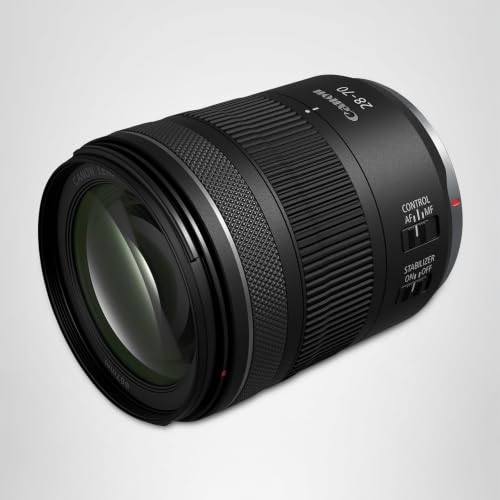
The most affordable f/2.8 constant-aperture zoom in Canon’s RF lineup. At $1,099 and 490g, it’s the practical choice for video shooters who want f/2.8 performance without the L-series weight and price.
The Canon RF 28-70mm f/2.8 IS STM is one of Canon’s smartest recent releases for video shooters. It delivers the constant f/2.8 aperture that’s essential for professional video (consistent exposure, good depth of field control, decent low-light) at $1,099, which is $1,500 less than the L-series 24-70mm f/2.8. For independent filmmakers and content creators working within a budget, this is a game-changer.
The built-in IS is rated at 5.5 stops, slightly better than the L-series version, and the STM autofocus motor delivers smooth, quiet operation well-suited to video. The 0.5x macro capability is a bonus that allows creative close-up b-roll shots without carrying a separate macro lens.
The trade-offs are real but manageable: the 28mm wide end is slightly less versatile than 24mm, the build doesn’t include weather sealing, and edge sharpness isn’t quite at L-series levels. But at 490g, the RF 28-70mm f/2.8 IS STM is less than half the weight of the L-series 24-70mm, making it dramatically easier to use on a gimbal. For the full picture of Canon standard zooms, check the best 24-70mm lenses for Canon comparison.


Pricing & Where to Buy
The Canon RF 28-70mm f/2.8 IS STM is priced at $1,099 (as of March 2026).
- Buy on Amazon — Prime shipping available
- Check price at B&H Photo
- Check price at Adorama
Canon RF 85mm f/2 Macro IS STM
Interview setups and portrait videography on a moderate budget
- 85mm is the classic portrait/interview focal length with flattering compression
- f/2 aperture provides beautiful background separation for interviews
- Built-in IS for stable handheld telephoto video
- Half-macro capability (0.5x) for creative detail shots
- Affordable at $589 with 679 reviews and 4.6-star rating
- STM motor is slightly slower and noisier than Nano USM
- Fixed focal length limits versatility compared to a zoom
- Some focus breathing visible during rack focus pulls
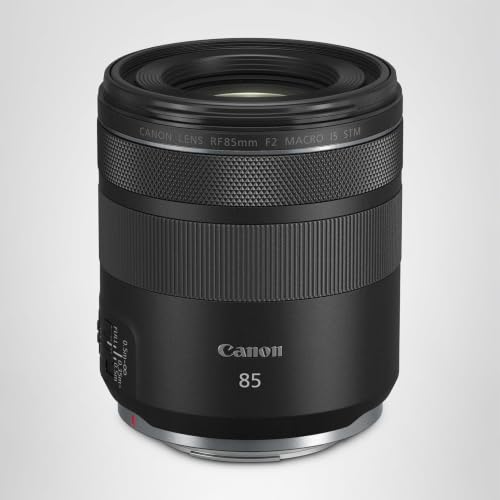
The best value for interview and portrait video on Canon RF. The 85mm perspective with f/2 depth of field creates that professional interview look at a fraction of the 70-200mm f/2.8L price.
The Canon RF 85mm f/2 Macro IS STM is a dedicated interview and portrait video lens at a price that won’t break the bank. The 85mm focal length is considered the gold standard for talking-head videos because it compresses facial features in the most flattering way, avoiding the wide-angle distortion that makes noses look larger and faces wider.
At f/2, the background melts into a smooth, creamy blur that keeps all attention on the speaker. Combined with built-in IS, handheld interview footage is stable and professional-looking. The half-macro capability (0.5x magnification) is a bonus for detail shots, product reviews, and b-roll of small objects, adding versatility beyond straight portrait work.
The STM autofocus motor is adequate for video but not as refined as the Nano USM or VCM motors in more expensive lenses. Focus transitions can occasionally be slightly steppy, and there’s some audible motor noise if recording with the on-camera microphone. At $589 (as of March 2026), though, the RF 85mm f/2 IS offers exceptional value for interview-focused video work. For more portrait lens options, check the best portrait lenses guide.


Pricing & Where to Buy
The Canon RF 85mm f/2 Macro IS STM is priced at $589 (as of March 2026).
- Buy on Amazon — Prime shipping available
- Check price at B&H Photo
- Check price at Adorama
- Buy used at KEH Camera — save with certified pre-owned
Canon RF 35mm f/1.8 IS Macro STM
Budget-minded shooters who want a stabilized wide prime for handheld video
- Built-in IS is rare for a budget prime, excellent for handheld video
- f/1.8 aperture with 0.5x macro capability adds versatility
- Lightweight at 305g, ideal for gimbal and travel video
- 1,339 reviews with 4.7-star rating proves long-term reliability
- Affordable at $499 for an IS-equipped prime
- STM motor can produce slight noise in very quiet environments
- Some visible focus breathing during rack focus
- Not as sharp wide open as the RF 35mm f/1.4L VCM
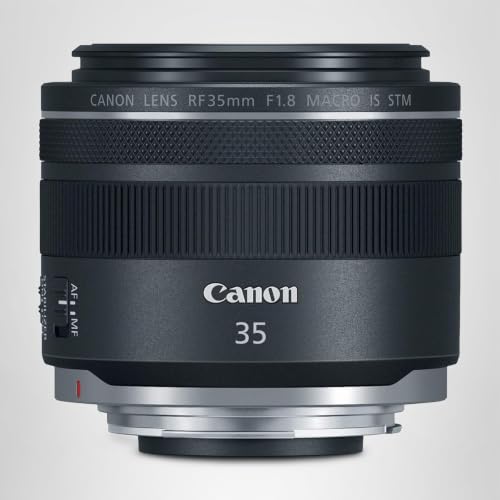
The only budget Canon RF prime with built-in IS, making it uniquely valuable for handheld video. The 35mm perspective with stabilization is hard to beat for run-and-gun content creation.
The Canon RF 35mm f/1.8 IS Macro STM holds a unique position in Canon’s RF lineup: it’s the only affordable prime lens with built-in optical image stabilization. For video shooters who rely on handheld work and don’t have an IBIS-equipped body, this IS advantage is significant. The 4-stop IS smooths out walking footage and handheld pans in a way that non-stabilized primes simply can’t match.
The 35mm field of view is widely regarded as the most natural and versatile focal length for video. It’s wide enough for environmental storytelling but tight enough to avoid the perspective distortion that wider lenses introduce. The f/1.8 maximum aperture provides good depth of field separation and low-light capability, while the 0.5x macro mode opens up creative possibilities for detail shots and product close-ups.
At $499 (as of March 2026) and just 305g, the RF 35mm f/1.8 IS Macro is an incredible value proposition for video-focused shooters on a budget. It’s the lens to pair with the RF 50mm f/1.8 for a lightweight two-prime video kit that covers most shooting scenarios. The macro capability also makes it worth considering alongside the best Canon macro lenses.


Pricing & Where to Buy
The Canon RF 35mm f/1.8 IS Macro STM is priced at $499 (as of March 2026).
- Buy on Amazon — Prime shipping available
- Check price at B&H Photo
- Check price at Adorama
- Buy used at KEH Camera — save with certified pre-owned
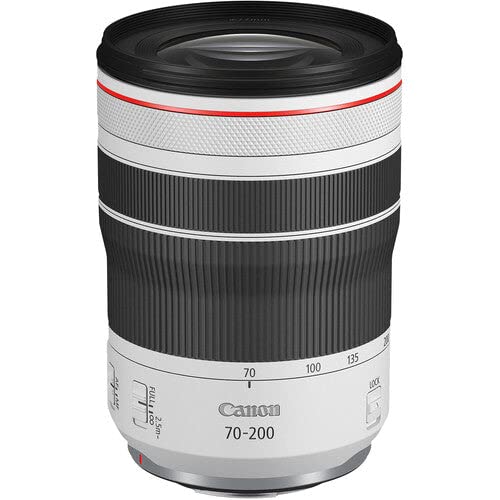
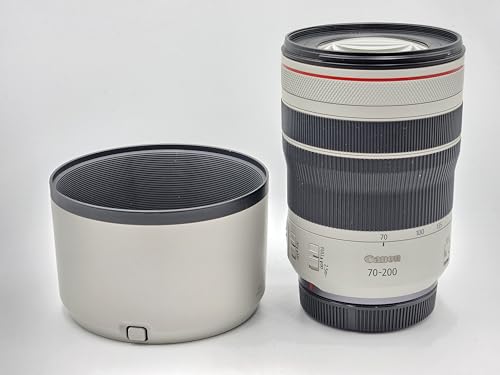
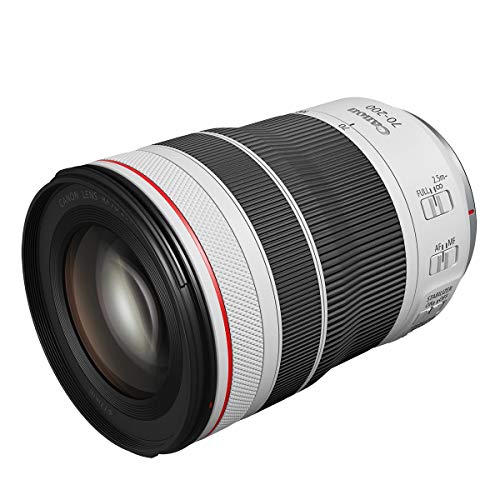
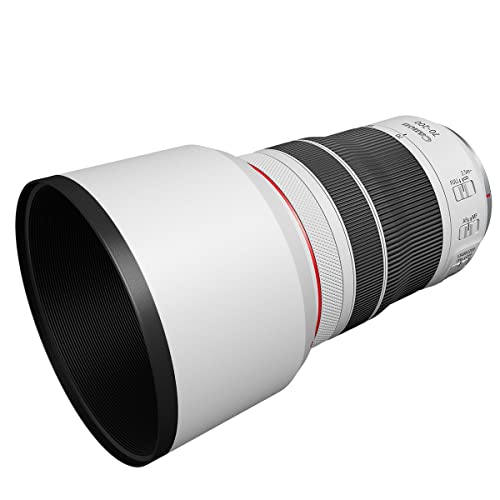
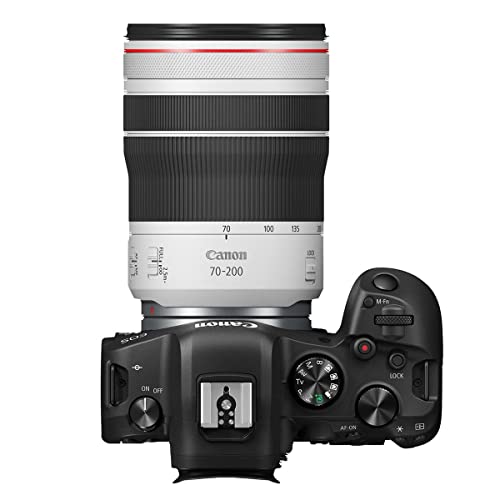
Canon RF 70-200mm f/4L IS USM
Video shooters who need telephoto reach without the weight and bulk of the f/2.8 version
- 375g lighter than the f/2.8 version at 695g, much easier on gimbals
- 5-stop IS with IBIS coordination for stable telephoto handheld video
- Nano USM autofocus is fast and silent
- $1,200 less expensive than the f/2.8 version
- Compact internal zoom design maintains balance during zooming
- f/4 limits depth of field separation compared to f/2.8
- Lower light-gathering ability restricts indoor/low-light video
- Background bokeh is less pronounced than the f/2.8 version
The smart telephoto choice for weight-conscious video shooters. The RF 70-200mm f/4L saves nearly 400g compared to the f/2.8 while retaining L-series optical quality and Nano USM autofocus.
The Canon RF 70-200mm f/4L IS USM makes a compelling case for choosing f/4 over f/2.8 in certain video workflows. At 695g, it’s 375g lighter than the f/2.8 version, a difference that becomes significant during extended shoots, gimbal work, or travel. The compact design maintains a consistent length during zooming, which means the camera’s center of gravity doesn’t shift, keeping gimbal balance stable.
The Nano USM autofocus and 5-stop IS deliver the same smooth, silent, stabilized video performance as the more expensive f/2.8 model. Image quality is excellent throughout the zoom range, with the characteristic sharp, contrasty look of Canon’s L-series optics. For outdoor video work, event coverage in good light, or any situation where weight matters more than maximum aperture, this lens delivers.
The f/4 aperture is the primary trade-off. Background separation at 200mm f/4 is still good, but it’s noticeably less dramatic than f/2.8, especially at shorter focal lengths. Low-light video performance also drops by a stop. For shooters who primarily work outdoors or in well-lit environments, the RF 70-200mm f/4L saves both money and back strain. For those working in sports or action video, also consider the best Canon sport lenses roundup for more telephoto options.




Pricing & Where to Buy
The Canon RF 70-200mm f/4L IS USM is priced at $1,599 (as of March 2026).
- Buy on Amazon — Prime shipping available
- Check price at B&H Photo
- Check price at Adorama
- Buy used at KEH Camera — save with certified pre-owned
Choose the Best Canon RF Lens for Video
The right Canon RF lens for video depends on shooting style, budget, and the type of content being produced. For professional videographers who need one zoom to cover most scenarios, the Canon RF 24-70mm f/2.8L IS USM remains the gold standard with its combination of optical IS, constant f/2.8 aperture, and Nano USM autofocus. Solo content creators and documentarians who prioritize versatility over maximum aperture will find the Canon RF 24-105mm f/4L IS USM covers more ground in a single, lighter package.
Budget-conscious shooters should start with the Canon RF 50mm f/1.8 STM at $219, which delivers cinematic depth of field and smooth video AF at an unbeatable price. Pairing it with the Canon RF 35mm f/1.8 IS Macro STM at $499 creates a lightweight two-lens kit with IS coverage that handles most video work.
For shooters investing in future-proof video technology, Canon’s new VCM lenses, the RF 35mm f/1.4L VCM and RF 50mm f/1.4L VCM, represent the cutting edge of video-optimized optics with virtually zero focus breathing and silent autofocus. Paired with the right body and an external SSD for video editing, these lenses form the foundation of a professional Canon RF video kit.
Final Picks by Category
Canon RF 24-70mm f/2.8L IS USM
Canon RF 24-105mm f/4L IS USM
Canon RF 50mm f/1.8 STM
Canon RF 70-200mm f/2.8L IS USM
Canon RF 35mm f/1.4L VCM
Canon RF 28-70mm f/2.8 IS STM
Related Posts
Disclosure/Disclaimer: As an Amazon Associate, we earn from qualifying purchases. Certain content was provided "as is" from Amazon and is subject to change or removal at any time. Product prices and availability: Amazon prices are updated daily or are accurate as of the date/time indicated and are subject to change. Any price and availability information displayed on Amazon.com at the time of purchase will apply to the purchase of this product.