


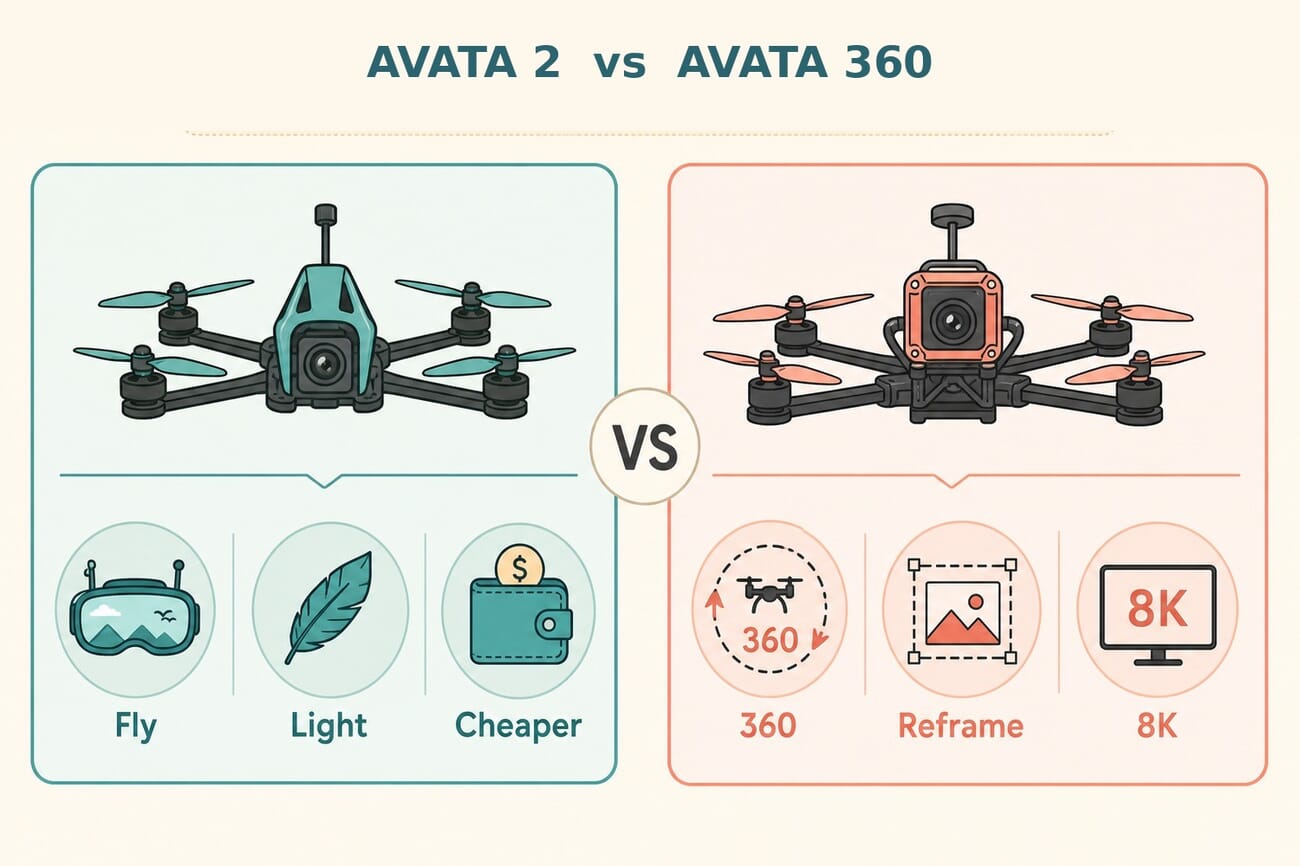
- DJI now sells two very different Avata FPV drones, and DroneDJ’s framing is right: the Avata 2 and Avata 360 are built for completely different users.
- The Avata 2 (from about $719, recently discounted from $999) is the pilot’s drone — agile cinematic FPV you frame in the air and upload fast.
- The Avata 360 (from about $719 drone-only) captures the whole sphere in 8K, so you reframe in post — and a Single Lens mode turns it into a classic 4K/60 FPV drone too.
- Buy the Avata 2 if you love flying and want the simplest shoot-to-upload workflow; buy the Avata 360 if you want angle flexibility after the flight and don’t mind heavier edits and storage.
- Both weigh over 250g (so both need FAA registration), and both face a regulatory cloud — DJI is on the FCC’s Covered List, so it’s a genuine buy-while-stock-lasts situation.
When the DJI Avata 360 went on sale in the US this spring, it looked like a straight upgrade to the Avata 2. It isn’t. As DroneDJ puts it, the two drones now serve “completely different types of users” — and if you’re a photographer or videographer deciding between them, that distinction is the whole ballgame. One is a drone you fly; the other is a drone you harvest footage from.
They look similar — both are compact, propeller-guarded, goggle-flown FPV drones — and they’re even priced similarly right now. But they reward opposite skill sets and workflows. Here’s exactly what each one is for, and which belongs in your bag.
When you buy through links on our site, we may earn a commission at no cost to you. We evaluate products independently. Commissions do not affect our evaluations.
Two Drones, Two Philosophies
The Avata 2 asks you to be a pilot: you compose the shot in the air, in real time, by flying well. The Avata 360 asks you to be an editor: it records everything around it, and you choose the angle later at your desk. That single difference — framing in the air versus framing in post — cascades into weight, price, workflow and who each drone is actually for.
DJI Avata 2: The Pilot’s Drone
The Avata 2 is DJI’s 2024 cinematic FPV drone, and it’s still excellent. A 1/1.3-inch sensor shoots 4K/60fps HDR with a dramatic 155° ultrawide field of view, it weighs just 377g, flies about 23 minutes, and hits 27 m/s (roughly 60 mph) in manual mode. It ships with Goggles 3 and the intuitive RC Motion 3 controller, so you can tilt and steer your way into immersive, swooping shots with a surprisingly gentle learning curve.
This is the drone for people who enjoy flying and want the shot finished in-camera: you fly it, you nail the move, you edit and upload, done. It’s lighter and more agile than the 360, and it’s the cheaper way in right now — the Fly More Combo has dropped from its $999 launch price to roughly $719–$859 depending on the battery bundle, clearly to clear room for the 360. Check the current Avata 2 price on Amazon.
DJI Avata 2
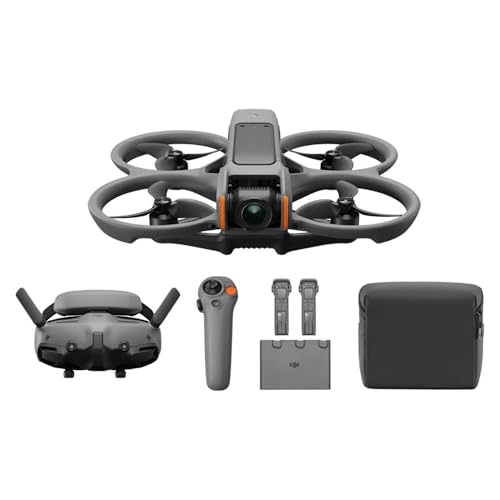
The flyer who wants cinematic, agile FPV and the simplest shoot-to-upload workflow.
- Lighter (377g) and more agile — the better pure flyer
- 4K/60 HDR with a dramatic 155° field of view
- Intuitive Goggles 3 + RC Motion 3; cheaper after recent price cuts
- You must fly well — the shot is framed in the air, not in post
- Over 250g, so FAA registration and Remote ID are required
A lighter, more agile cinematic FPV drone you frame in the air — 4K/60, a 155° field of view, and a gentle learning curve.
DJI Avata 360: Capture Everything, Choose Later
The Avata 360 is the genuinely new idea. It carries a dual-sensor system that captures a full spherical view in 8K/60fps HDR, plus 120-megapixel spherical stills, with 42GB of internal storage so you don’t even need a card for a typical flight. Because it records everything at once, you frame the shot after you land — pulling horizontal YouTube cuts and “impossible” virtual camera moves out of a single take. A Single Lens mode collapses it back into a familiar forward-facing 4K/60 FPV drone, so it can do classic immersive flying too.
The trade-offs are real. It’s heavier and less nimble than the Avata 2, the 8K spherical files mean a much heavier edit and storage load, and there’s a US-specific catch: cheaper Avata 360 bundles ship with the standard RC 2 controller rather than the motion controller, because motion accessories had limited US availability at launch. Pricing starts around $719 drone-only, with Fly More combos near $979. It’s the tool for creators who’d rather capture once and decide later than risk missing the framing in the air. Browse the Avata 360 on Amazon.
DJI Avata 360
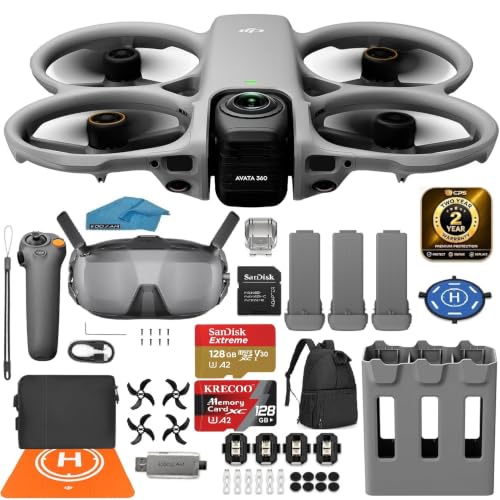
The run-and-gun creator who values reframe-in-post flexibility over piloting precision.
- 8K spherical capture — reframe and pull multiple angles from one flight
- Single Lens mode also does classic 4K/60 FPV
- Forgiving on framing: fix the shot at your desk, not in the air
- Heavier, with much bigger edit and storage demands
- US bundles often ship with the RC 2, not the motion controller
Captures a full 8K spherical view so you choose the angle after you land — plus a Single Lens mode that flies as a classic 4K FPV drone.
Which Should a Photographer Actually Buy?
Match the drone to how you like to work, not to the bigger spec sheet. Buy the Avata 2 if you want true FPV piloting, lighter and sportier flight, the simplest shoot-to-upload workflow, and the lowest cost of entry. It rewards flying skill and gives you a finished cinematic clip straight off the goggles.
Buy the Avata 360 if you’re a run-and-gun content creator who values reframe-in-post flexibility over piloting precision — capture the whole scene, then pull several angles from one flight — and you want the option of classic FPV via Single Lens mode. It asks for more editing time, more storage and a heavier drone in the air, but it forgives framing mistakes the Avata 2 won’t. One more practical note for either: both are over 250g, so FAA registration and Remote ID are mandatory — neither qualifies for the sub-250g exemption that lighter camera drones enjoy.
The Catch: This Is a Buy-While-You-Can Market
There’s a regulatory shadow over both. In December 2025 the FCC added DJI to its Covered List, which blocks new DJI drones from getting the equipment authorization they need to be sold in the US. The Avata 360 squeaked through because it was approved on November 19, 2025 — weeks before the designation — so it, the Avata 2 and DJI’s other current drones keep selling from existing inventory. DJI has sued the FCC to overturn the ruling, and the outcome is unresolved. None of this stops you buying either drone today, but it does mean future stock and new models are genuinely uncertain — part of the same US-market squeeze bearing down on DJI’s whole lineup, from drones to the Osmo Pocket. If a specific Avata is the one you want, it’s reasonable not to wait indefinitely.
Frequently Asked Questions
What’s the main difference between the DJI Avata 360 and Avata 2?
The Avata 2 is a cinematic FPV drone you frame in the air by flying well (4K/60, 377g, agile). The Avata 360 captures a full 8K spherical view so you reframe the shot in post, and it can also fly as a classic 4K FPV drone via Single Lens mode.
Which is better for beginners?
The Avata 2 is lighter, more agile and pairs with the intuitive RC Motion 3 controller, making it the friendlier flyer. The Avata 360 is more forgiving on framing (you fix it later) but heavier in the air and a bigger edit/storage commitment.
How much do they cost in 2026?
The Avata 2 Fly More Combo has dropped to roughly $719–$859 (from $999 at launch). The Avata 360 starts around $719 drone-only, with Fly More combos near $979. Prices move, so check live before buying.
Do these drones need FAA registration?
Yes. Both weigh more than 250g (the Avata 2 is 377g; the Avata 360 is around 400g or more), so both require FAA registration and broadcast Remote ID. Neither qualifies for the sub-250g exemption.
Can I still buy DJI drones in the US?
For now, yes. Existing models including the Avata 2 and Avata 360 keep selling from inventory. DJI is on the FCC’s Covered List, which blocks new models, and DJI has sued to reverse it — so future availability is uncertain.
The Bottom Line
The Avata 360 isn’t a replacement for the Avata 2 — it’s a different tool for a different job, and DJI is wise to sell both. If you love flying and want a finished cinematic clip off the goggles, the lighter, cheaper, more agile Avata 2 is still the one. If you’d rather capture everything and decide the angle later, the Avata 360’s 8K spherical reframe-in-post workflow is genuinely new and genuinely powerful. Pick the philosophy that matches how you work — and given the regulatory cloud over DJI in the US, don’t dawdle if you already know which one you want.
Primary Coverage & Specs
- DroneDJ — DJI Avata 360 (different users framing) – The comparison angle and Avata 360 details
- DroneDJ — DJI Avata 360 US price – US pricing and bundles
- DJI — Avata 2 official specifications – Avata 2 sensor, video, weight and flight specs
- DroneLife — DJI sues FCC over Covered List – The US regulatory situation
Image Sources
- PhotoWorkout original illustrations – The featured image, infographic and pin are original PhotoWorkout illustrations (generic drones, no brand hardware depicted)
This post contains affiliate links. If you buy through them we may earn a small commission, at no extra cost to you.


Disclosure/Disclaimer: As an Amazon Associate, we earn from qualifying purchases. Certain content was provided "as is" from Amazon and is subject to change or removal at any time. Product prices and availability: Amazon prices are updated daily or are accurate as of the date/time indicated and are subject to change. Any price and availability information displayed on Amazon.com at the time of purchase will apply to the purchase of this product.