


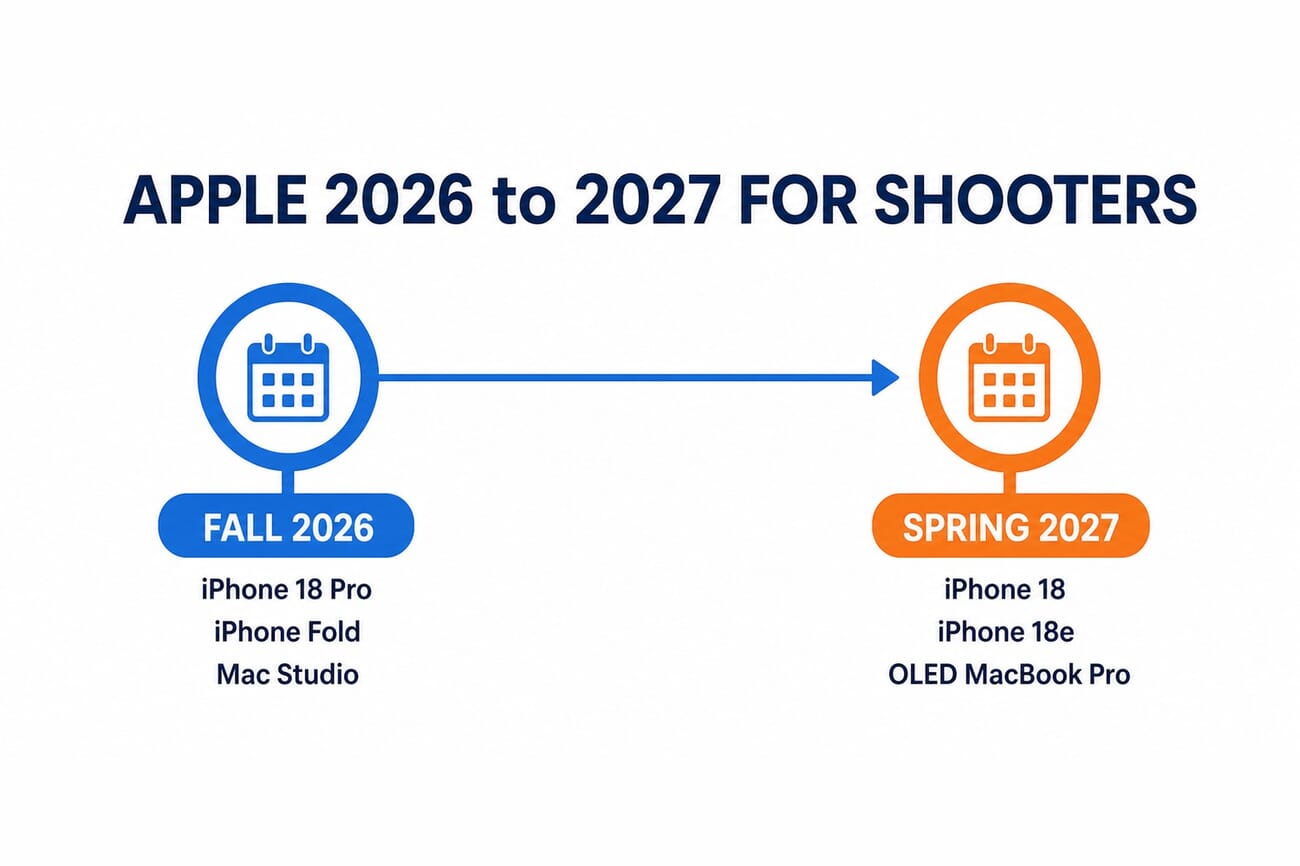
- Apple is splitting its next wave in two: a premium fall 2026 round (iPhone 18 Pro, the first iPhone Fold, and a new Mac Studio) and a more affordable spring 2027 round (iPhone 18 and 18e).
- The headline feature for shooters is the iPhone 18 Pro’s rumored variable-aperture main camera, an adjustable iris around f/1.6 to f/4.0. It is the first time an iPhone would offer real optical aperture control rather than software blur.
- Temper the hype on resolution: the much-discussed 200MP sensor now looks years away. This cycle is about image quality and control, not a megapixel jump.
- Editors are already covered. The M5 Pro and M5 Max MacBook Pros have shipped since March 2026 (with a price bump), so the fast machine you want is here now.
- The heaviest desktops, an M5 Ultra Mac Studio and a redesigned OLED touchscreen MacBook Pro, are the wait-if-you-can picks, with the OLED model reportedly pushed into 2027 by the memory-chip shortage.
Apple is heading into one of its busiest stretches in years, and for photographers and videographers it is shaping up to be one of the most interesting. The company is expected to split its next wave of products across two launches: a premium round in fall 2026 and a more affordable one in spring 2027. Buried in the rumors is a genuine camera-nerd feature that phone photographers have wanted for a long time.
Below is what is coming, and what actually matters if you shoot stills or video. Treat the dates and specs as well-sourced rumor, not confirmation, but the overall shape of the lineup is now fairly clear.
The Headline: a Real Aperture Dial on a Phone
The standout upgrade is the iPhone 18 Pro and 18 Pro Max, expected around September 8 or 9, 2026, and their rumored variable-aperture main camera. Instead of a single fixed f-stop, reliable reports (and a camera module that reportedly entered production in April) point to an adjustable iris spanning roughly f/1.6 to f/4.0, a first for iPhone.
If it holds up, it genuinely changes how you shoot. A wide f/1.6 pulls in more light for dim scenes and produces shallow, optical background blur, the real thing rather than a software cutout. Stopping down toward f/4.0 does the opposite: it sharpens the frame edge to edge and deepens the zone of focus, exactly what you want for landscapes, architecture, and group shots. For the first time an iPhone would hand you the kind of aperture control photographers take for granted on a dedicated camera.
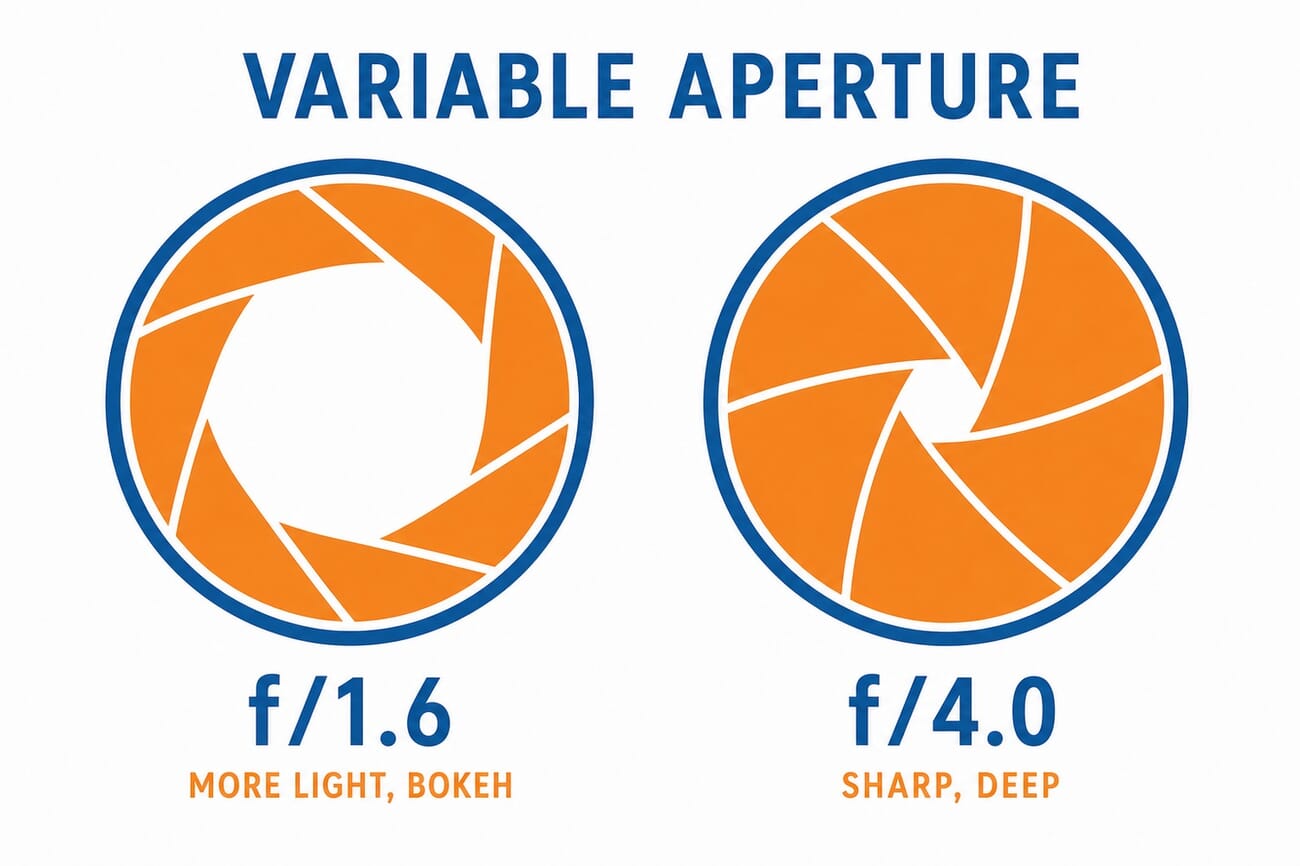
We went deep on exactly how this mechanism works, and where the f/1.6 to f/4.0 range came from, in our dedicated breakdown of the iPhone 18 Pro Max variable-aperture camera. This roundup is the wider view: how that one feature fits into everything else Apple is about to ship.
The Rest of the iPhone 18 Pro Camera
Aperture aside, the iPhone 18 Pro is expected to bring an upgraded telephoto with a larger aperture, better sensor-shift stabilization, and improved portrait rendering, all riding on a new A20 Pro chip built on a 2-nanometer process that should help computational photography and video encoding. The main sensor stays in the 48-megapixel class, so the gains are about capture quality and control, not raw resolution.
One expectation to reset: the much-hyped 200-megapixel sensor now looks to be several years out, reportedly part of a longer, multi-year camera roadmap rather than this release. So do not hold out for a giant megapixel leap in 2026. If you want the resolution story, it is not this cycle. This one is a control story, and for most shooters that matters more anyway.
A Folding iPhone Joins the Lineup
Alongside the Pro models, Apple’s first iPhone Fold is expected in September 2026, with a roughly 7.6-inch inner display and a 5.3-inch outer screen. For photo and video work its appeal is less about the cameras and more about the canvas: a tablet-sized screen that lives in your pocket makes reviewing shots, culling keepers, and doing light edits far more comfortable than a standard phone. If you already edit on the go, or you have been eyeing an iPad mini purely for field review, the Fold is the one to watch. It follows the second-camera thinking we saw in the iPhone Air 2, where Apple is rethinking form factor around how people actually shoot.
For Editors: the M5 MacBook Pros Are Already Here
If your bottleneck is the edit rather than the capture, the good news is that you do not have to wait at all. Apple’s MacBook Pro with M5 Pro and M5 Max chips has been shipping since March 2026, and it is a large jump over older Apple silicon. For video editors that means smoother timelines, faster ProRes and 8K work, and quicker exports; for photographers it means snappier handling of huge raw libraries and the increasingly heavy AI-based tools in Lightroom and Photoshop.
The one asterisk is cost. That March refresh came with a price increase that hit photographers and editors, so factor the higher entry point into your decision. If you want the lighter, cheaper option, the M5 MacBook Air is a capable photo-editing machine for anyone not pushing sustained 8K video. And if storage is your real constraint, our guide to the best laptops for storing photos is worth a look before you buy.
What Is Coming in Early 2027
The second, more affordable wave arrives in the first months of 2027. Expect the standard iPhone 18 and a cheaper iPhone 18e around March or April, which typically inherit some of the Pro camera improvements at a lower price, a good option if you want better phone photography without the flagship cost.
On the desktop side, timing is messier. A new Mac Studio with M5 Max and M5 Ultra is still expected around late 2026, and it is the machine for serious colorists and the heaviest video projects. The redesigned OLED touchscreen MacBook Pro, by contrast, has reportedly slipped into 2027 largely because of the industry-wide memory-chip shortage. If you specifically want that OLED redesign, patience is unfortunately the only option; if you just need power now, the current M5 Max MacBook Pro already delivers it.
Should You Buy Now or Wait?
If you mostly shoot on your phone, the iPhone 18 Pro is worth waiting for. Variable aperture is that rare phone-camera feature that changes how you take the photo, not just how it is processed afterward. Holding your current phone until September costs you nothing.
If you are an editor, the calculus flips. The M5 Pro or M5 Max MacBook Pro is already on shelves and is a safe buy today, unless you need the absolute top end, in which case the late-2026 Mac Studio or the 2027 OLED MacBook Pro are worth the wait. Either way, the next six to nine months are a strong stretch to be a photographer or videographer in Apple’s ecosystem.
Frequently Asked Questions
When does the iPhone 18 Pro come out?
Reports point to a launch around September 8 or 9, 2026, alongside the iPhone 18 Pro Max and the first iPhone Fold. The cheaper standard iPhone 18 and iPhone 18e are expected later, in spring 2027, as part of Apple’s split launch strategy.
What is variable aperture on the iPhone 18 Pro, and why does it matter?
Variable aperture means the main camera can physically change its opening, rumored to range from about f/1.6 to f/4.0. Wide open (f/1.6) gathers more light and creates real optical background blur; stopped down (f/4.0) increases sharpness and depth of field for landscapes and group shots. It is the first time an iPhone would offer this kind of hardware-level control instead of software simulation.
Is the iPhone 18 Pro getting a 200-megapixel camera?
Not this cycle. A 200-megapixel sensor is rumored to be part of a longer, multi-year camera roadmap and is now believed to be years away. The iPhone 18 Pro is expected to keep a 48-megapixel-class main sensor, with the real gains coming from variable aperture, a new telephoto, and improved stabilization rather than resolution.
Should I buy an M5 MacBook Pro now or wait for the OLED redesign?
For most editors, buy now. The M5 Pro and M5 Max MacBook Pros have shipped since March 2026 and are more than fast enough for demanding photo and video work. The redesigned OLED touchscreen MacBook Pro has reportedly slipped into 2027 due to a memory-chip shortage, so waiting means waiting a while. Only hold out if the OLED redesign or an M5 Ultra Mac Studio is specifically what you want.
When is the iPhone Fold coming, and is it good for photo editing?
Apple’s first foldable iPhone is expected in September 2026, with an inner display around 7.6 inches. Its value for photographers is the large, pocketable screen, which makes on-the-go reviewing, culling, and light editing much more comfortable than a standard phone. The cameras themselves are not expected to outclass the iPhone 18 Pro.
The Bottom Line
Strip away the noise and the story is simple. The one feature that changes how you shoot, variable aperture, is on the phone side and worth waiting for. The fast machine most editors need is already here in the M5 MacBook Pro. And the true high-end desktops are the only pieces that reward patience. It is a genuinely good window for anyone shooting or editing in Apple’s ecosystem, and we will update this as Apple confirms the details.
Featured image and infographics: stylized illustrations created by PhotoWorkout. No Apple branding is used or implied.
Rumor Reporting & Roadmaps
- MacRumors – iPhone 18 Rumors and Release Date roundup – Ongoing tracker for iPhone 18 Pro specs, dates, and camera rumors.
- MacRumors – iPhone 18 Pro Variable Aperture Camera Enters Production – On the variable-aperture module reportedly entering production.
- MacRumors – What to Expect From Apple in 2026 – Full-year roadmap including the iPhone Fold and Mac lineup.
- Macworld – 2026 Mac Studio (M5) release date, specs, and RAM delay – On the M5 Max and M5 Ultra Mac Studio timing.
- AppleInsider – Mac Studio and touchscreen MacBook Pro delayed by memory shortages – On the memory-chip shortage pushing the OLED MacBook Pro into 2027.
Image Sources
- Featured image, 2026 to 2027 timeline, variable-aperture explainer, and vertical pin – created by PhotoWorkout – Editorial illustrations, no Apple branding used.