


- Film photography is in a genuine boom: the market hit roughly $613 million in 2026, wholesale orders are up about 127% since 2020, and 35mm makes up around 60% of US film use.
- Lomography, the Vienna outfit that started the fun-first analog movement in 1992, is one of the most accessible ways in, known for playful cameras and wild, experimental films.
- Best film pick: LomoChrome Purple 35mm (around $21), the signature color-shift film that turns greens purple and skies teal. It is the buy if you already own a 35mm camera.
- Best camera pick: the Lomo’Instant Automat (around $129), which reviewers rate above cheaper Instax models for control and print quality.
- Buy tip: Amazon is fastest for the mainstream films and cameras, but Lomography’s own store has exclusive editions, bundles, and the current 35mm flagship, the LomoApparat. We link both on each pick.
Film photography was supposed to be dead a decade ago. Instead it is one of the fastest-growing corners of the camera world, powered by a generation that grew up entirely on screens and now wants something they can hold. Grain, light leaks, the wait for a lab scan, the whole imperfect, tactile process is exactly the point. And no brand leans into that spirit harder than Lomography.
If you are curious about shooting film but do not want to hunt down a fragile vintage body or spend a fortune, Lomography is the easiest and most fun way in. This is a look at how real the film revival actually is, who Lomography are, and, with live pricing and reviews checked, exactly what is worth buying right now, from a $21 roll of their signature purple film to their best instant camera.
When you buy through links on our site, we may earn a commission at no cost to you. We evaluate products independently. Commissions do not affect our evaluations.
The Film Revival Is Real, and It’s Not Slowing Down
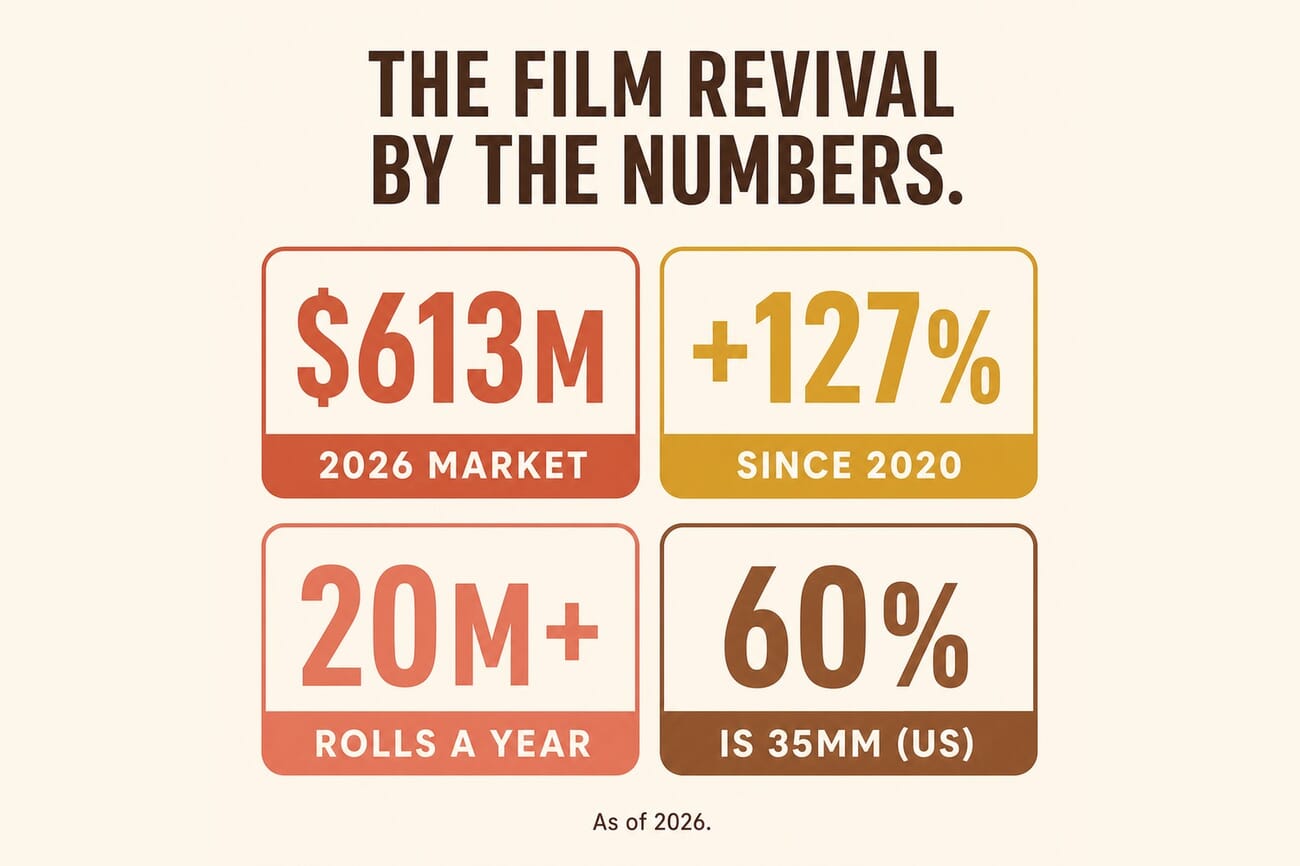
The numbers behind the revival are not a rounding error. The film market reached roughly $613 million in 2026, with wholesale orders up about 127% since 2020. More than 20 million rolls of film sold globally in a recent year, and in the US, 35mm accounts for around 60% of all film shot. This is not nostalgia among a few holdouts; it is a durable shift, and manufacturers are treating it that way. Harman, the maker of Ilford film, is investing to double its 35mm production capacity for the next 25 to 30 years.
The one catch is cost. Film and processing are far pricier than they were, which we broke down in how film came to cost three times what it did in 2016. That makes choosing the right film and camera the first time matter more than it used to, which is where a brand built around affordable, fun analog gear earns its place.
Who Lomography Actually Is
Lomography started in Vienna in 1992, when a group of Austrian students got hold of a quirky Soviet-era camera, the LOMO LC-A, and fell for its saturated colors, vignetting, and unpredictability. They founded the Lomographic Society International, wrote a tongue-in-cheek manifesto (rule number ten: “Don’t worry about any rules”), and turned snapshot imperfection into a whole philosophy. The company behind it, Lomographische GmbH, is still independent and privately held, with around 105 staff across three continents. Its co-founders, Matthias Fiegl, Wolfgang Stranzinger, and Sally Bibawy, built a community brand rather than a mass manufacturer.
Worth being straight about the business: Lomography is a niche, creative player, not a Kodak or Fujifilm. Third-party estimates put its online-store sales around $24 million in 2025, down from the year before, with a rebound projected in 2026 as the film wave lifts the whole category. What it sells is not clinical sharpness. It is character: cross-processed color, plastic-lens softness, multi-exposure chaos, and film stocks nobody else makes. If that sounds like a downside, it is not the brand for you. If it sounds like fun, read on.
The Best Lomography Buys Right Now
These picks are based on current Amazon pricing and review data, cross-checked against Lomography’s own store. Each one links to both, because the best place to buy depends on what you want. Prices are accurate as of publication and do move.
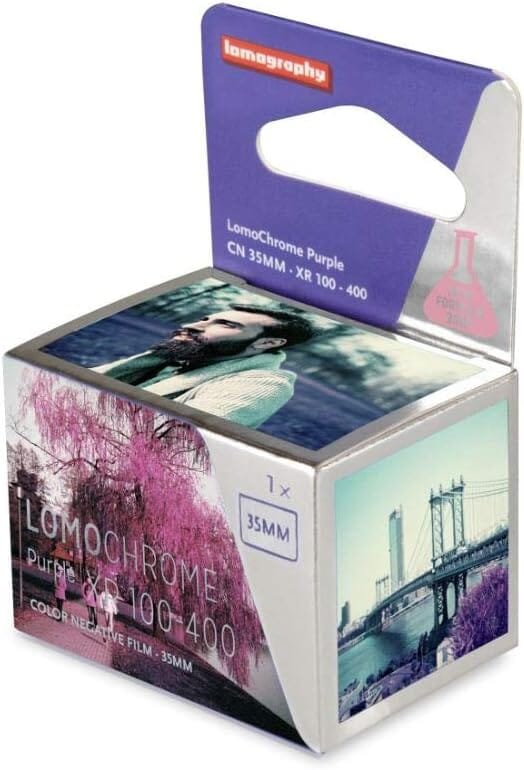
LomoChrome Purple 35mm (best film pick)
Lomography’s signature film and the one to start with. It shifts colors in a dreamy, controlled way, greens turn purple, blue skies go teal, skin takes on a warm cast, all optically, no editing. It rates at ISO 100 to 400 so you can pull different looks from the same roll. If you already own any 35mm camera, this is the cheapest, most fun way to shoot something nobody can replicate in Lightroom. Around $21.
Check price on Amazon Buy direct at Lomography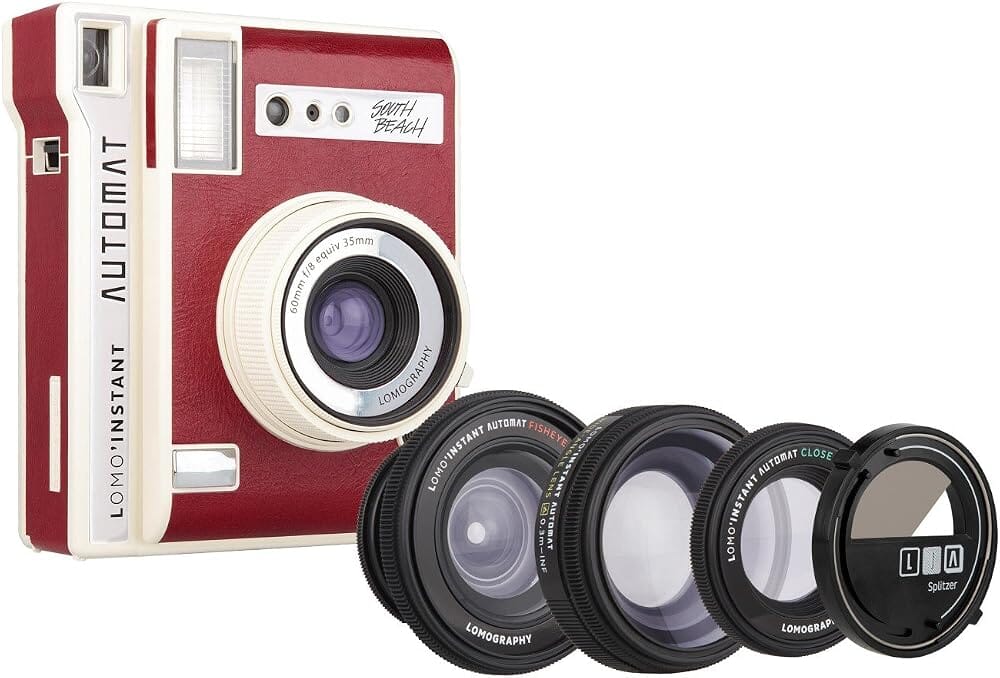
Lomo’Instant Automat (best camera pick)
The pick if you want prints in your hand. It is fully automatic with smart flash metering, unlimited multiple exposures on one print, a bulb mode for long exposures, and it ships with wide-angle, close-up, and fisheye lens attachments. Amazon reviewers consistently rate it above cheaper Instax cameras for control and image quality. It shoots Instax Mini film, which is cheap and everywhere. Around $129.
Check price on Amazon Buy direct at Lomography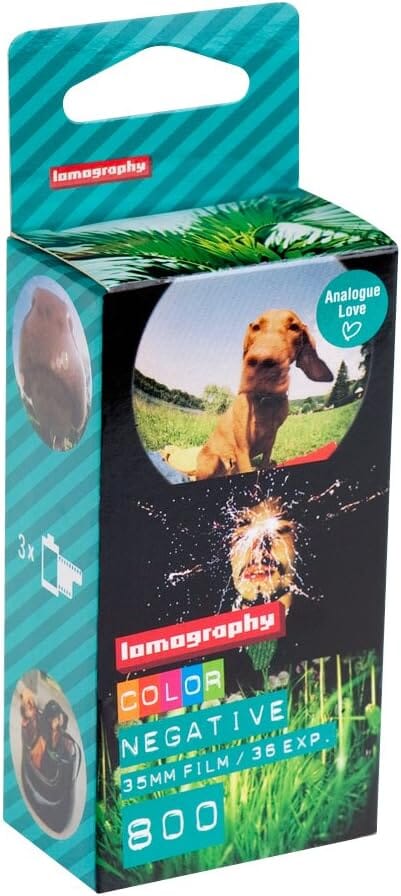
Color Negative 800 (best value film)
The versatile everyday choice. This high-speed color negative film handles low light, indoor scenes, and overcast days that would leave slower film underexposed, while keeping Lomography’s punchy, saturated color. The three-pack works out cheaper per roll than buying singles, which matters when film prices are what they are. Around $58.
Check price on Amazon Buy direct at LomographyTwo more worth knowing. If you want a proper reusable 35mm camera rather than film for one you own, Lomography’s current flagship is the LomoApparat, a 21mm ultra-wide with multi-exposure and splitzer tricks for around $99. Its Amazon listings are a fragmented mess of editions with thin reviews, so this is the rare case where you should buy direct from Lomography rather than Amazon. And if you just want to dip a toe for under $30, the reloadable Simple Use camera comes pre-loaded and can be refilled, a low-stakes first film camera.
How to Choose: Film, Instant, or a Reusable Camera
Match the buy to what you actually want out of it.
- You already own a 35mm camera: just buy the film. Start with LomoChrome Purple for the signature look, or Color Negative 800 for versatile everyday shooting.
- You want instant prints on the spot: the Lomo’Instant Automat is the pick, and it uses cheap, widely available Instax Mini film.
- You want a fun reusable 35mm camera: the LomoApparat (buy direct) is the current flagship; the Simple Use is the sub-$30 starter.
- You are cost-conscious: remember the ongoing cost is film and developing, not the camera. Factor a few dollars a roll plus lab fees into the decision.
Amazon or Buy Direct? Use Both
For the mainstream films and the Automat, Amazon is usually the fastest and simplest route, with Prime shipping and easy returns. For anything special, the LomoApparat, limited-edition camera colorways, film bundles, and their subscription packs, Lomography’s own store is the better bet and often the only place to get it. It also sends more of your money to the small company keeping these odd, wonderful films in production. That is why every pick above links to both.
Frequently Asked Questions
Is film photography really making a comeback?
Yes, and it is measurable, not just vibes. The film market reached roughly $613 million in 2026, wholesale orders are up about 127% since 2020, and film makers like Harman are investing to expand 35mm production for decades to come. It is driven largely by younger shooters seeking a tactile, screen-free process.
Is Lomography film good, or just a gimmick?
It depends on what you want. Lomography film is not about clinical accuracy; it is about character, color shifts, saturation, and looks you cannot easily fake in editing. For creative and experimental shooting it is genuinely fun and well regarded (LomoChrome Purple rates 4.6 stars on Amazon). For neutral, true-to-life color, a standard Kodak or Fujifilm stock is a better fit.
What is the best Lomography camera for a beginner?
For instant prints, the Lomo’Instant Automat, which reviewers rate above cheaper Instax models. For reusable 35mm, the LomoApparat is the current flagship, or the sub-$30 Simple Use if you just want to try film without commitment. If you already own a 35mm camera, skip the camera and buy their film instead.
Should I buy Lomography on Amazon or from their store?
Both work. Amazon is fastest for mainstream films and the Automat, with Prime shipping and returns. Lomography’s own store is the place for the LomoApparat, limited editions, and film bundles, and buying direct supports the small company that makes these films. The picks above link to both so you can choose.
The Bottom Line
The film revival is real, durable, and, thanks to rising costs, worth being deliberate about. Lomography is not the brand for pixel-perfect precision, and it does not pretend to be. It is the brand for the fun, experimental, slightly unpredictable side of analog, which is exactly what is drawing people back to film in the first place. Start cheap with a roll of LomoChrome Purple in a camera you already have, or grab the Automat if you want prints in your hand, and go make some happy accidents.
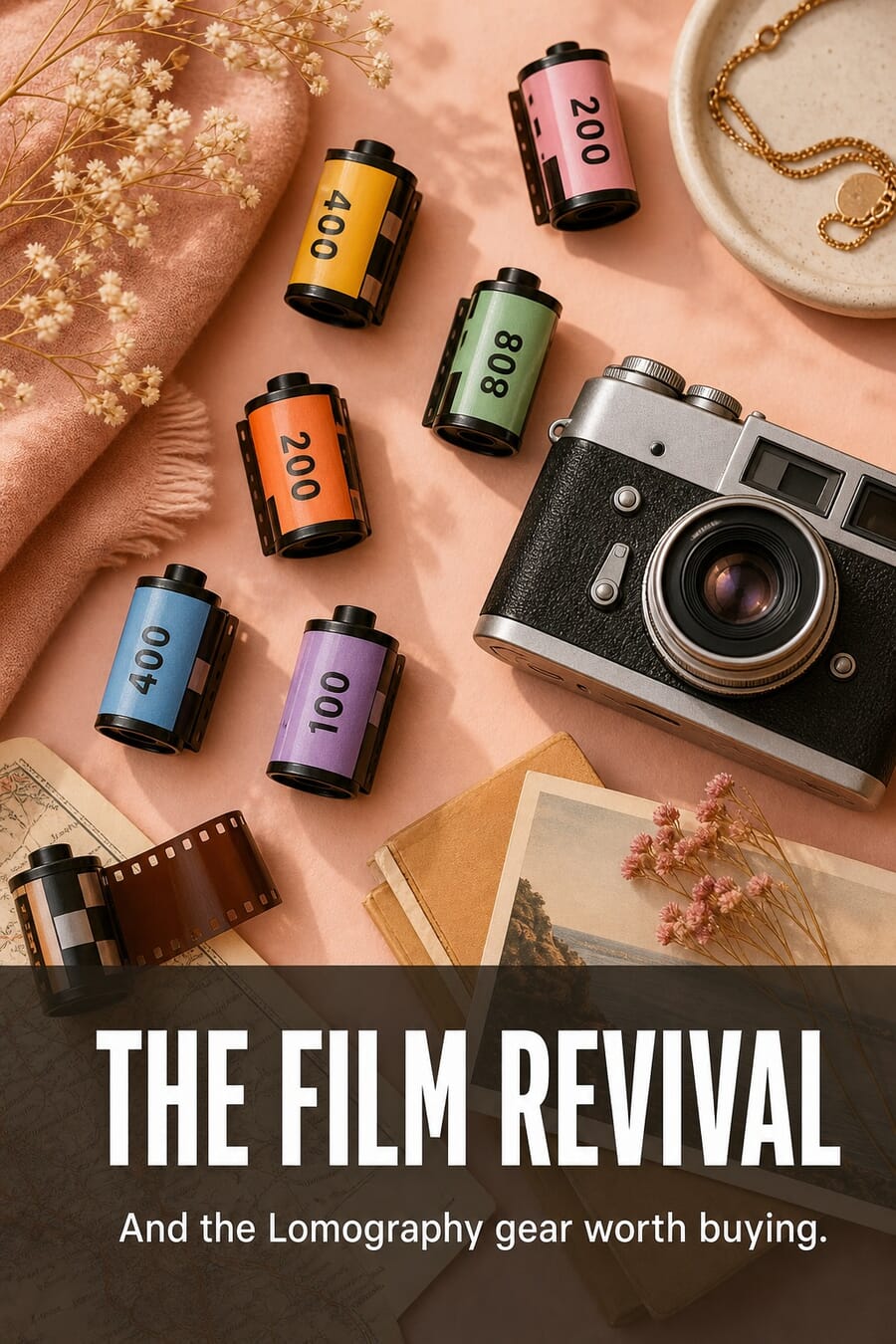
Product images courtesy Lomography (via Amazon). Featured image, infographic, and pin: stylized illustrations created by PhotoWorkout.
Market & Company Data
- Pellica – Film Photography Revival: 2026 Stats ($613M, +127%) – Market size and wholesale growth figures.
- Serrano Rey – Why Film Photography Is Surging in 2026 – Demand drivers and 35mm share of US film use.
- Grips Intelligence – lomography.com eCommerce Revenue – Third-party estimate of Lomography online-store sales.
- Lomography – History – Company founding, LOMO LC-A origins, and the Lomographic Society.
Image Sources
- Lomography product images (LomoChrome Purple, Lomo'Instant Automat, Color Negative 800), courtesy Lomography via Amazon – Product images.
- Film-revival featured image, stats infographic, and vertical pin, created by PhotoWorkout – Editorial illustrations.