


- On July 31, 2026, the NSF-DOE Vera C. Rubin Observatory released Early Data Preview 2 (EDP2), the first science-grade data ever produced by its 3.2-gigapixel LSST Camera, the largest digital camera ever built.
- The headline image is a stacked deep view of the famous COSMOS field packing more than 500,000 galaxies and roughly 50,000 stars into a single frame.
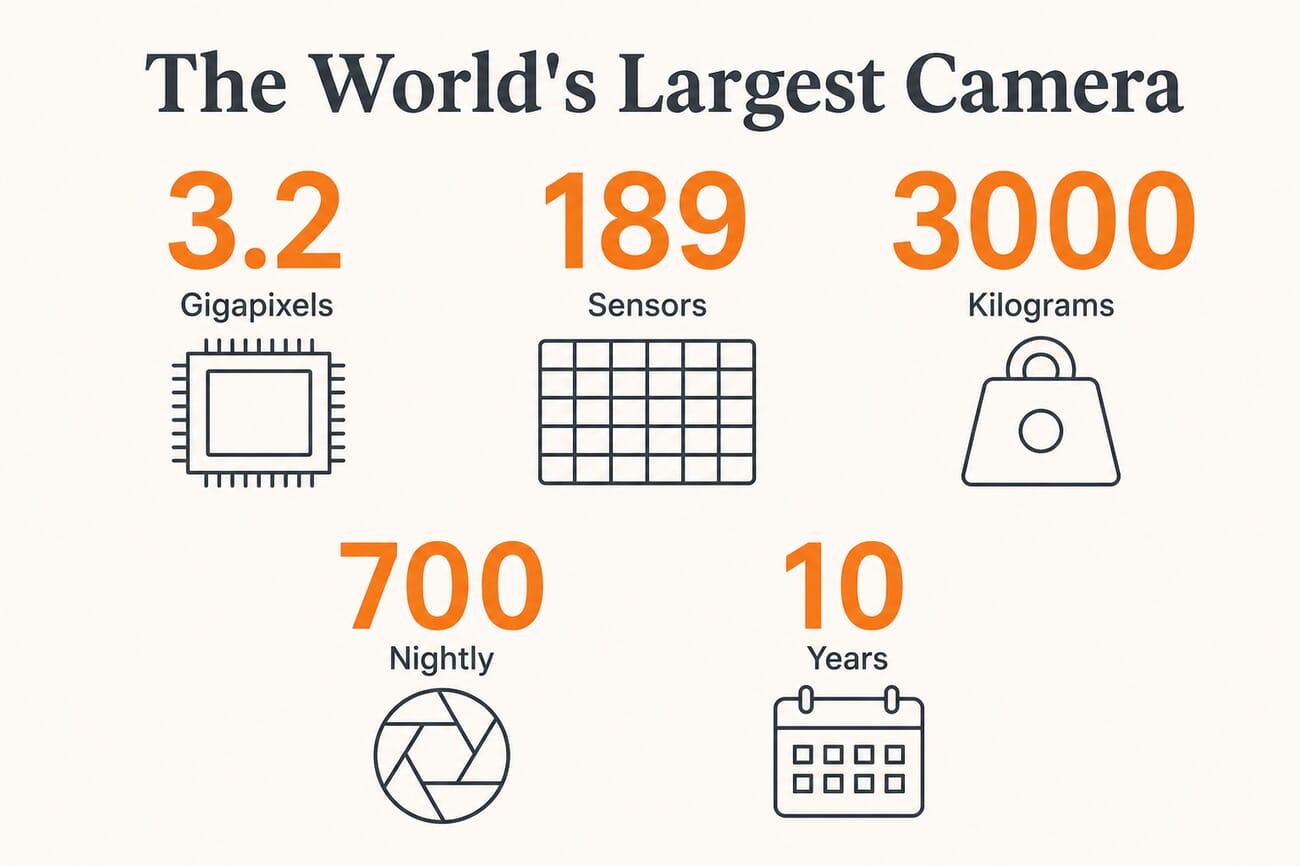
- The camera is the size of a small car, weighs about 3,000 kilograms, and carries 189 individual sensors behind the 8.4-meter Simonyi Survey Telescope in Chile.
- EDP2 also ships a catalog covering around 3,000 square degrees of sky, a first taste of the data firehose to come.
- This is the opening frame of the Legacy Survey of Space and Time, a 10-year project that will shoot roughly 700 images every night to build a time-lapse movie of the entire southern sky.
The world’s largest camera just showed the world what it can do. On July 31, 2026, the NSF-DOE Vera C. Rubin Observatory published Early Data Preview 2, or EDP2, the first science-grade data product built from observations by its 3.2-gigapixel LSST Camera. The centerpiece is one of the most staggering photographs ever assembled: a deep image of the COSMOS field holding more than 500,000 galaxies in a single view.
For photographers, the numbers alone are hard to process. A modern flagship phone captures around 50 megapixels. This camera captures 3,200. It is a piece of hardware the size of a small car, bolted to an 8.4-meter telescope on a mountaintop in Chile, and it has just begun a decade-long mission to photograph the entire southern sky over and over again. Here is what dropped, why it matters, and how a camera this absurd actually works.
A Half-Million Galaxies in a Single Frame
The image everyone is sharing is not a single exposure. It is a stack of hundreds of individual frames of the COSMOS field, combined to pull faint, distant light out of the dark. The result contains more than 500,000 galaxies and roughly 50,000 stars, each a smudge or pinprick that represents an entire island of billions of suns, much of it light that left its source billions of years ago.
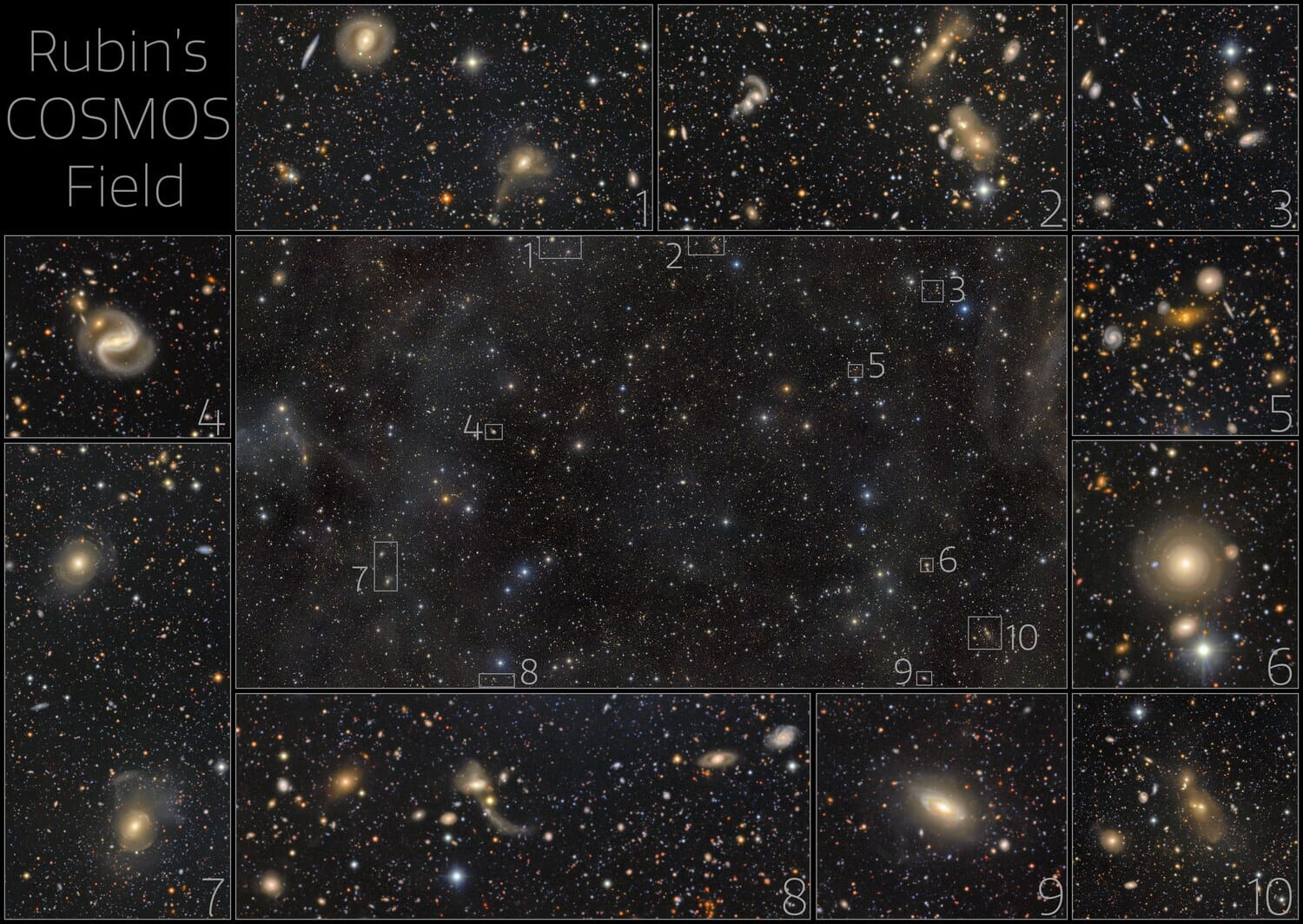
To feel the scale, consider that the Milky Way is up to 120,000 light-years across, and even our own galaxy is a single point in this picture. Rubin is not chasing one pretty object. It is surveying the sky at a depth and width that lets astronomers study how galaxies are distributed, how they cluster, and how they change, all at once.
The Camera: 3.2 Gigapixels the Size of a Car
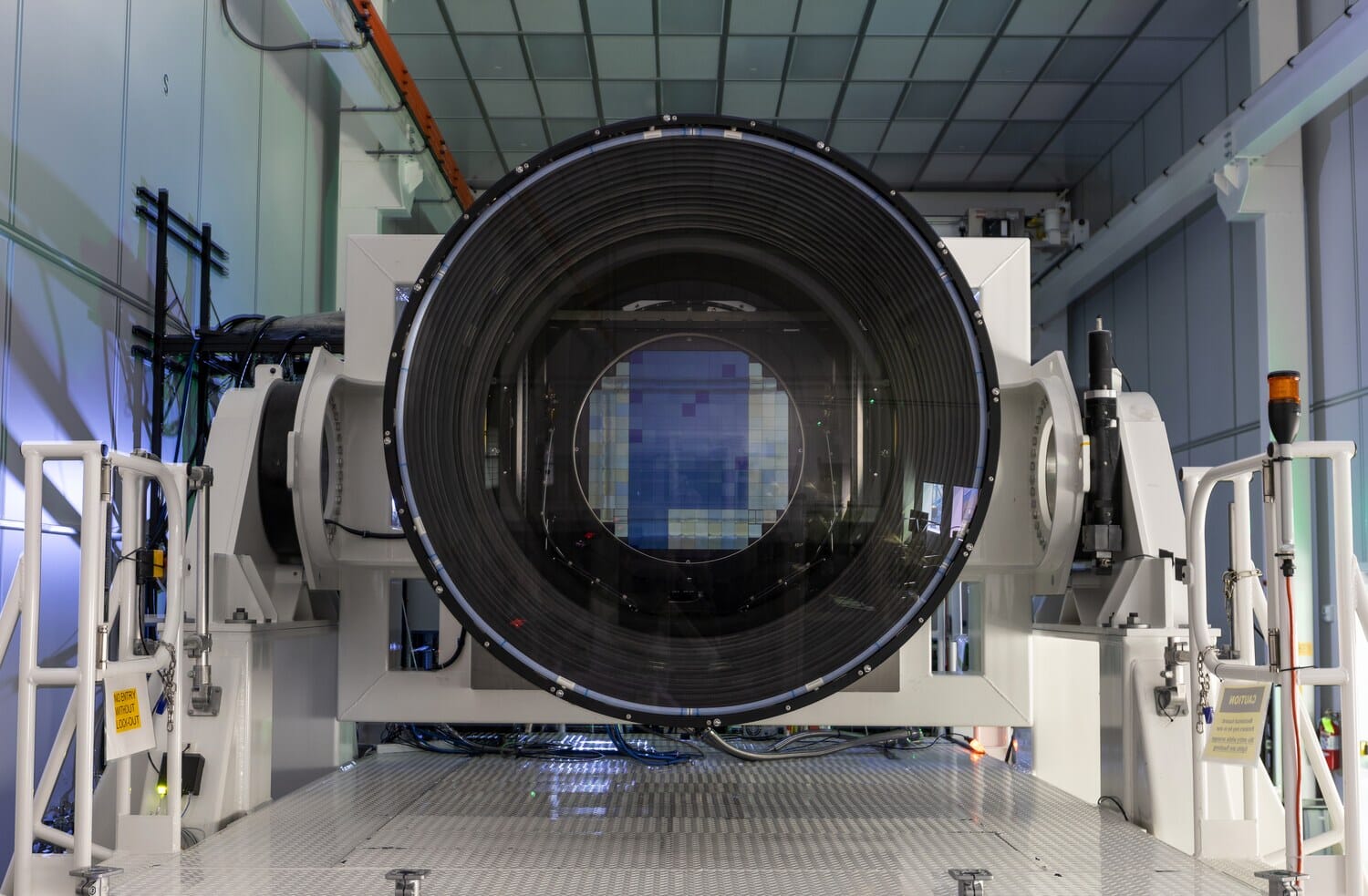
The LSST Camera is the only instrument on the Rubin Observatory, and it is a record-breaker on every axis. Its focal plane is built from 189 individual CCD sensors, tiled together into a single surface large enough to capture a piece of sky about 40 times the area of the full moon in one frame. Its resolution is high enough that, in the observatory’s own comparison, you could spot a golf ball from 15 miles away.
The whole assembly weighs close to 3,000 kilograms and sits behind the 8.4-meter Simonyi Survey Telescope high on Cerro Pachon in Chile. The project is jointly funded by the U.S. National Science Foundation and the Department of Energy’s Office of Science, and it took the better part of two decades to design, build, and commission. Put simply, there is nothing else like it on Earth.
Why Point It at the COSMOS Field?
The COSMOS field, short for Cosmic Evolution Survey, is one of the most studied patches of sky in astronomy. The Hubble Space Telescope stared at it from 2003 to 2005, and telescopes on the ground and in space have returned to it ever since. Over two million galaxies of every type and age have already been identified there, which makes it a kind of open-air laboratory for studying how galaxies evolve.
That deep back catalog is exactly why Rubin chose it for a debut. Because so much is already known about COSMOS, it is the perfect place to check the new camera’s work against decades of prior data, and to prove that Rubin can add genuinely new detail. If you have ever tried backyard deep-sky imaging yourself, the principle is familiar even if the scale is not: our guide to photographing the Milky Way leans on the same idea of stacking many frames to reveal faint light.
What EDP2 Actually Contains
The pretty picture is the hook, but the real product is the data. Early Data Preview 2 is the first science-grade release drawn from the actual LSST Camera rather than earlier commissioning test shots. Alongside the COSMOS image, it delivers a measured catalog covering roughly 3,000 square degrees of sky, the kind of structured, searchable table of positions, brightnesses, and colors that scientists actually build discoveries on.
It is worth being precise about the milestones. Rubin’s June 2025 first-look images were a commissioning showcase, a composite that already revealed millions of galaxies and thousands of new asteroids. EDP2, in July 2026, is the step that turns the observatory from a spectacular demo into a working scientific instrument producing data the community can use.
What Comes Next: a 10-Year Movie of the Sky
This single frame is the opening shot of something much larger. The LSST Camera has now begun the Legacy Survey of Space and Time, a 10-year program in which it will capture on the order of 700 high-resolution images every night. It will photograph the entire visible southern sky every few nights, then do it again, and again, for a decade.
Repetition is the point. By imaging the same sky over and over, Rubin builds a time-lapse record of everything that moves or changes: asteroids drifting through the solar system, stars that flare or explode, and distant objects that brighten and fade. The observatory will issue millions of automated alerts every night when something changes. For a sense of how fast our own sky shifts on a human timescale, our roundup of night-sky events worth photographing is a gentler place to start.
And if you want a reminder that great astrophotography is not only about the biggest gear, it is worth remembering the hobbyist who recently shot Jupiter with a Game Boy Camera through a 60-inch telescope. Rubin sits at the opposite extreme of the same obsession: pointing the best glass we can build at the oldest light we can find.
Frequently Asked Questions
How many megapixels is the LSST Camera?
The LSST Camera has a 3.2-gigapixel sensor, which is 3,200 megapixels. Rubin Observatory notes that is roughly the same pixel count as 260 modern phone cameras combined, making it the highest-resolution and largest digital camera ever built.
What is EDP2?
EDP2 stands for Early Data Preview 2. Released on July 31, 2026, it is the first science-grade data product created from observations by the finished LSST Camera, including the deep COSMOS field image and a catalog covering about 3,000 square degrees of sky.
How can a single image contain 500,000 galaxies?
The image is not one exposure. It is a stack of hundreds of individual frames of the COSMOS field combined to reveal extremely faint, distant light. Each of the more than 500,000 galaxies is a separate, distant system, most of them far too dim to see in any single shot.
Where is the Vera C. Rubin Observatory?
It sits on Cerro Pachon, a mountain in northern Chile, and houses the LSST Camera behind the 8.4-meter Simonyi Survey Telescope. It is jointly funded by the U.S. National Science Foundation and the Department of Energy’s Office of Science.
What is the Legacy Survey of Space and Time?
The LSST is Rubin’s core mission: a 10-year survey in which the camera captures around 700 images per night and photographs the entire southern sky repeatedly, building a time-lapse record used to track asteroids, supernovae, and anything else that moves or changes.
The Bottom Line
EDP2 is the moment the world’s largest camera stopped being a headline about hardware and started being a scientific instrument. A single frame with half a million galaxies is a spectacular calling card, but the real story is the decade of nightly imaging now underway. For photographers, it is a humbling reminder of what a sensor can do when resolution, aperture, and patience are pushed to their absolute limits.
Reference
- NSF-DOE Rubin Observatory Opens Deep Window on Famous Cosmic Field – Official July 31, 2026 announcement of the EDP2 COSMOS release.
- Rubin Observatory: LSST Camera technology – Camera specifications: 3,200 megapixels, 189 sensors, focal plane scale.
- PetaPixel: 3.2-Gigapixel LSST Camera Captures Over Half a Million Galaxies – Photography-industry coverage of the EDP2 image and hardware.
Image Sources
- COSMOS field deep image and galaxy-cluster collage – Featured image and body collage. Credit: NSF-DOE Vera C. Rubin Observatory/NOIRLab/SLAC/AURA (CC BY 4.0).
- LSST Camera hardware photograph – Credit: SLAC National Accelerator Laboratory.
- LSST Camera by-the-numbers infographic – Stylized PhotoWorkout illustration.
- Pinterest graphic – Stylized PhotoWorkout illustration.