

- The HoverAir Aqua, the world’s first fully waterproof self-flying camera drone, has been named one of TIME’s Best Inventions of 2026, adding to a Red Dot design award and a CES 2026 Innovation Award nomination.
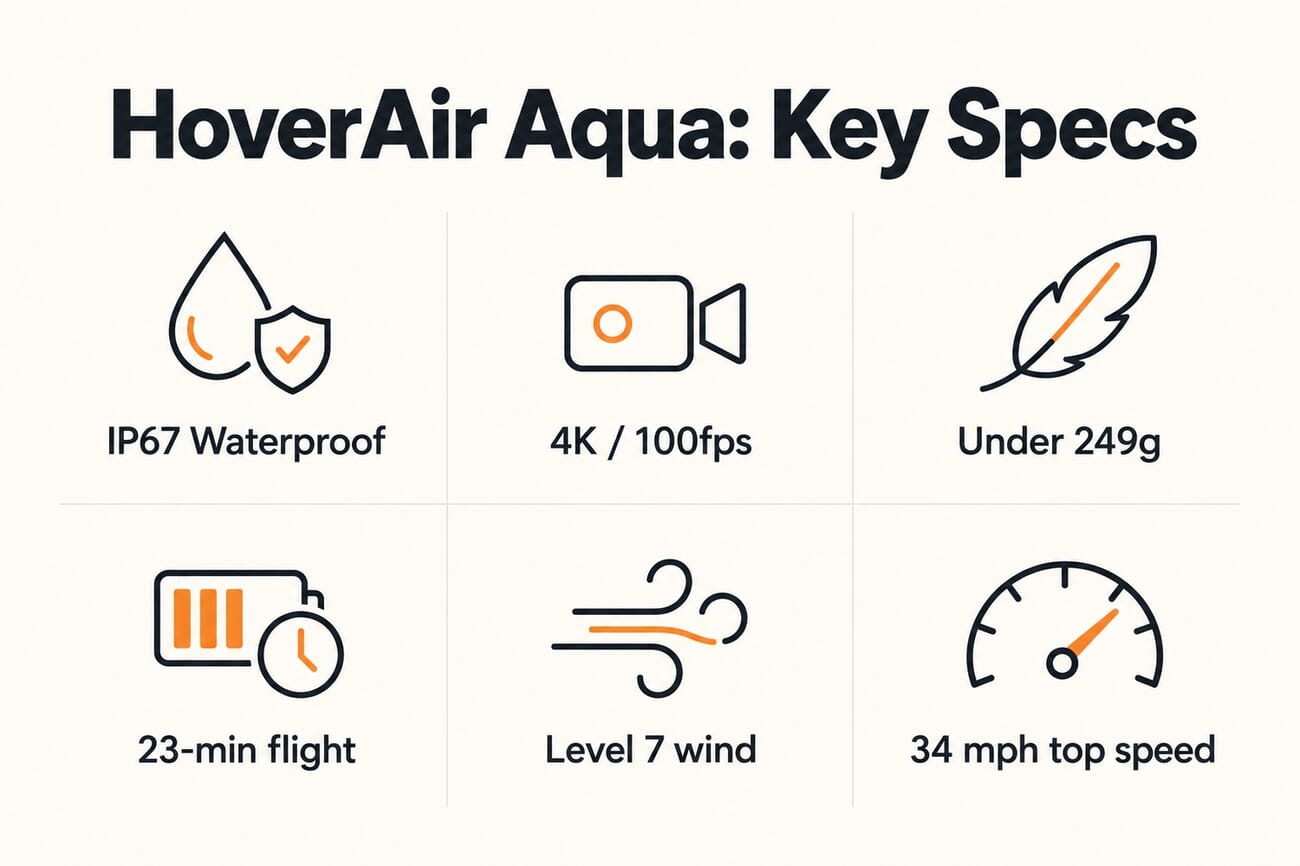
- It is IP67 waterproof and neutrally buoyant, so it floats and can take off and land directly from water. It shoots 4K at 100fps on a 1/1.28-inch sensor, weighs under 249g, flies about 23 minutes, handles Level 7 winds, and tops out at 34 mph.
- The catch for US readers: it launched in more than 50 countries but not the United States. It is not in the FCC’s approved-device database, and the same tightened foreign-drone rules squeezing DJI are blocking its US authorization.
- We saw the Aqua in person at IFA, floating in a demo tank. Priced from about $999, it is a genuinely clever tool for water-sports creators, and, for now, one more piece of standout gear Americans cannot legally buy.
A self-flying camera that shrugs off a splash, floats on the surface, and lifts off again straight from the water just earned one of tech journalism’s most visible honors. The HoverAir Aqua, billed as the world’s first fully waterproof self-flying camera drone, has been named one of TIME’s Best Inventions of 2026, a mainstream nod for a product built around a problem most consumer drone makers have quietly avoided: water.
We got a close look at it in person at IFA, where HoverAir was demoing the Aqua bobbing in a glass tank of water on the show floor. It is a genuinely impressive little machine. There is just one problem for our mostly US readership, and it is a big one: you cannot actually buy it in America. Here is what the Aqua does, why it won the award, and why it is stuck outside the US border.
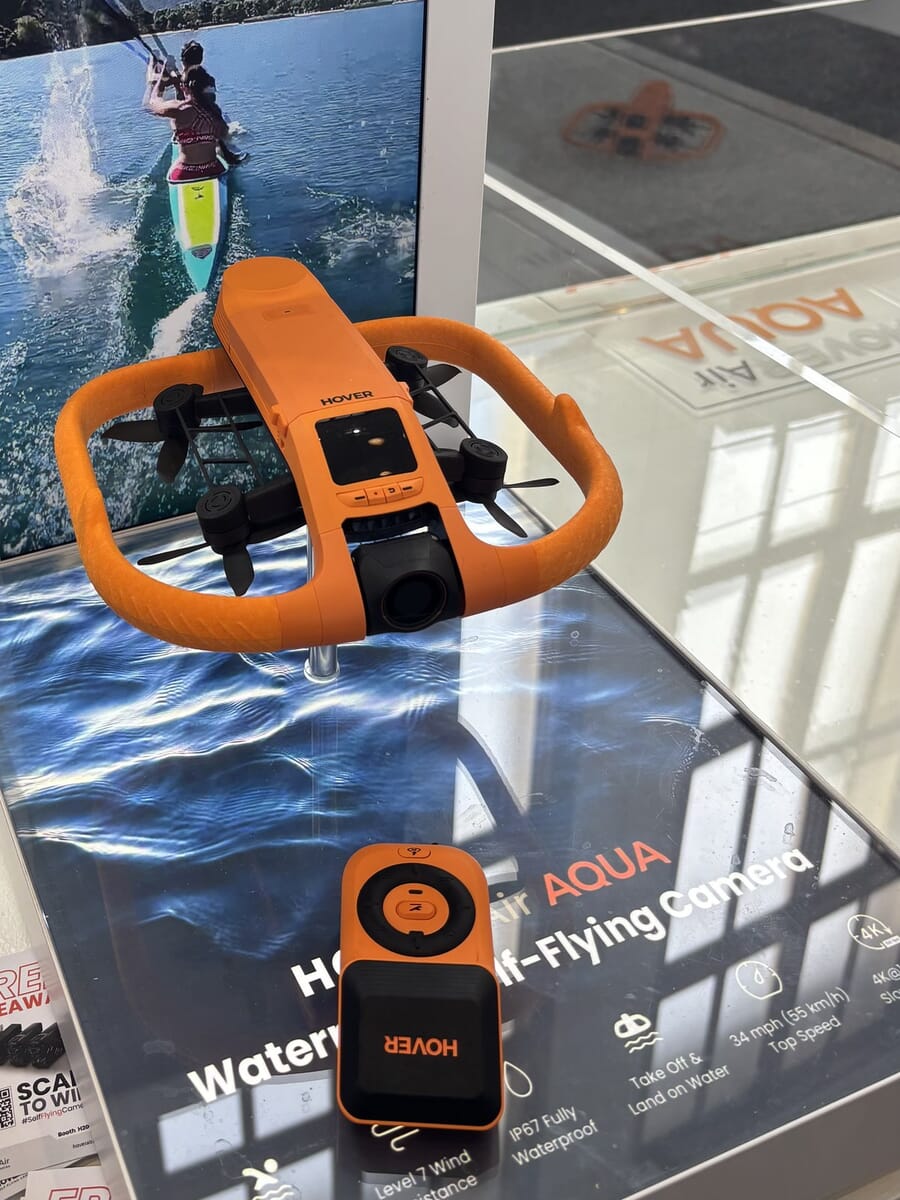
What the HoverAir Aqua actually is
The Aqua is the water-ready member of HoverAir’s self-flying camera family, which already includes the palm-sized X1 and X1 Pro and the modular HoverAir Versa. Like its siblings, it is a “self-flying” camera: you launch it from your hand or the water, it tracks you automatically through a set of flight paths, and it films you without a pilot or a controller in your hands. What makes the Aqua different is that it is engineered from the ground up to live on the water.
The headline numbers are strong for something this small. It is IP67 waterproof and, crucially, neutrally buoyant, so it does not sink: it sits on the surface and can take off and land directly from water, no launch pad or dry hand required. The camera records 4K video at up to 100fps for slow motion on a relatively large 1/1.28-inch sensor, with 10-bit H-Log, 12MP HDR stills, and a hydrophobic, self-heating lens coating to shed droplets and fog. HoverAir’s SmoothCapture stabilization keeps footage steady, and dedicated water-sport modes are tuned for surfing, wing foiling, and kayaking.
The rest of the spec sheet backs up the pitch. The Aqua weighs under 249g, the threshold that exempts it from registration in many regions, flies for roughly 23 minutes per charge, shrugs off Level 7 winds (up to around 33 knots), and hits a 34 mph (55 km/h) top speed to keep pace with fast-moving subjects. For a camera you can toss in a lake and have fly back to you, that is a serious set of tools.
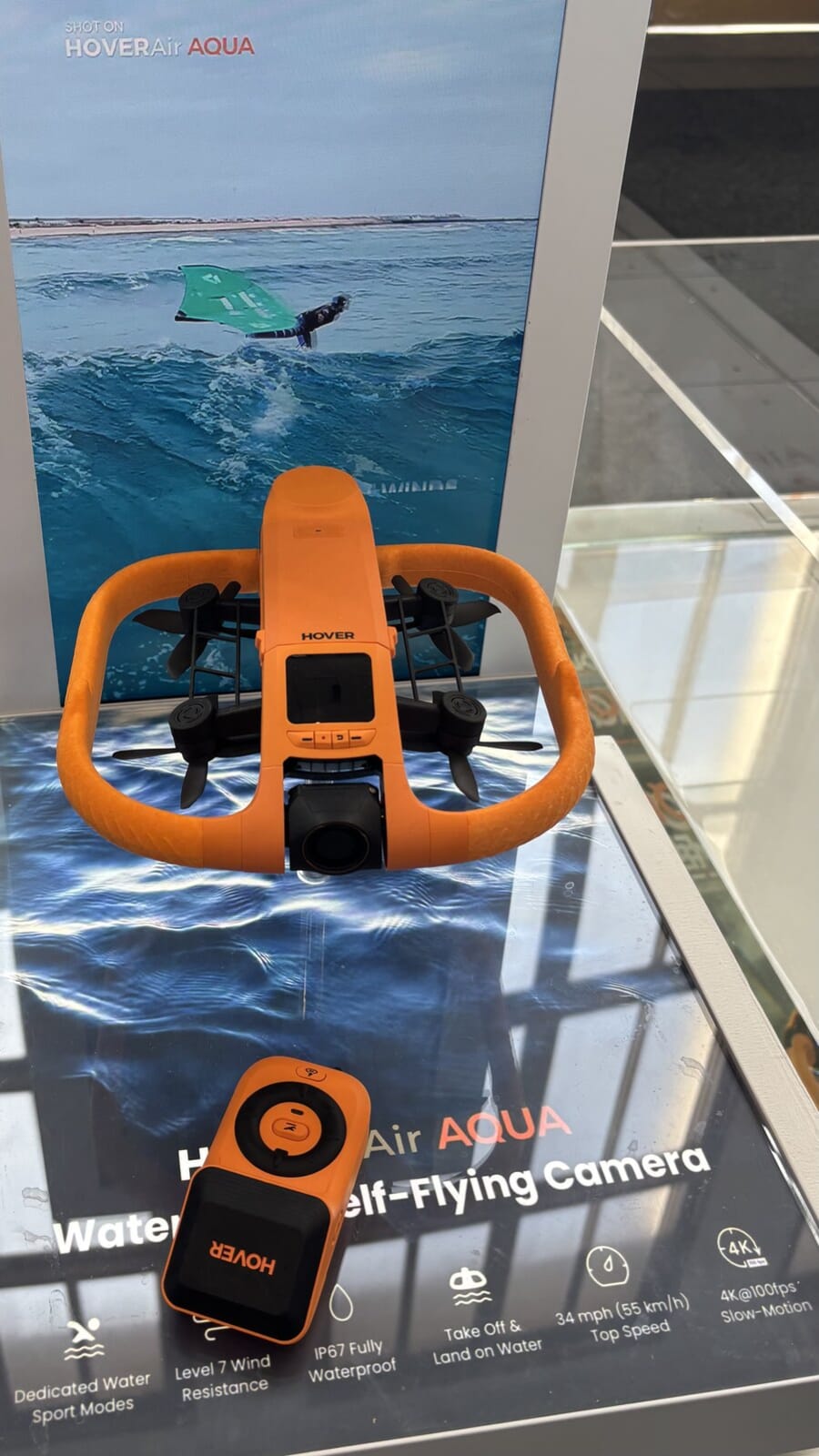
Why it earned the TIME nod
Waterproofing a flying camera sounds simple until you try it. Props, motors, open electronics, and a gimbal are exactly the parts that hate moisture, which is why most consumer drones treat a splash as a crash. HoverAir’s pitch, as TIME summarized it, was essentially to conquer the one environment that had beaten other makers. Pulling that off in a sub-249g body that still shoots 4K and floats is the kind of focused, single-idea engineering that award judges reward.
The TIME honor is not the Aqua’s first trophy, either. It picked up a Red Dot Award for design and was a CES 2026 Innovation Award nominee when it premiered in Las Vegas. Together, those nods mark it as one of the more genuinely novel camera products of the year, not just another incremental drone. If you want the broader context on where self-flying cameras are heading, our look at the pocket selfie-drone race and the robots that film you on the move shows how fast this category is moving.
The catch: Americans still cannot buy it
Here is where the celebration hits a wall. The Aqua launched in more than 50 countries, but the United States was pointedly left off the list. The reason is regulatory, not technical. The drone does not appear in the FCC’s database of authorized devices, and the agency has since tightened its rules on foreign-made drones, making that authorization far harder to secure. In short, the Aqua is caught in the same net as DJI’s US availability problems.
This is now a familiar pattern. Washington’s scrutiny of Chinese-made drones has moved from tariffs to outright authorization fights, including a proposed retroactive FCC ban and new drone tariffs that keep pushing prices up and products out. An award-winning waterproof camera that half the world can order and American buyers cannot is simply the latest, most frustrating example of that divide.
Should you care, and can you get one?
If you shoot on or around water, surfing, wing foiling, kayaking, sailing, the Aqua is exactly the kind of tool that did not exist a year ago, and at roughly $999 to start it undercuts a lot of traditional drone-plus-waterproofing setups. For a creator outside the US, it is an easy recommendation to at least watch closely. For US-based photographers, the honest answer is that there is no clean, legal way to buy and fly it at home today, and importing a drone that lacks FCC authorization is not a workaround we would suggest.
The practical takeaway: admire the engineering, note the award, and keep your expectations regional. If you need a waterproof shooting solution in the US right now, a rugged action camera or a proper waterproof camera remains the realistic path. And if the FCC picture shifts, as this fast-moving drone-policy story keeps doing, the Aqua is the first product we would expect to see finally cross the border.
Frequently Asked Questions
What makes the HoverAir Aqua special?
It is the first fully waterproof self-flying camera drone. It is IP67 rated and neutrally buoyant, so it floats and can take off and land directly from water, then film you automatically with no controller. It shoots 4K at 100fps, weighs under 249g, and is tuned for water sports, which is why TIME named it a Best Invention of 2026.
Can you buy the HoverAir Aqua in the US?
No. The Aqua launched in more than 50 countries but not the United States. It is not listed in the FCC’s database of authorized devices, and tightened US rules on foreign-made drones are blocking its authorization, the same regulatory squeeze affecting DJI. There is no clean, legal path to buy and fly it in the US right now.
How much does the HoverAir Aqua cost?
Internationally it starts at roughly $999, with fuller bundles (extra batteries, the controller, carry cases) costing more. US pricing is not applicable, since it is not sold there.
What are the HoverAir Aqua camera specs?
A 1/1.28-inch sensor shooting 4K video up to 100fps for slow motion, 10-bit H-Log, 12MP HDR photos, and 2x digital zoom, behind a hydrophobic, self-heating lens. It flies about 23 minutes, resists Level 7 winds, and reaches a 34 mph top speed.
The bottom line
The HoverAir Aqua is a legitimately clever piece of engineering: a self-flying camera that treats water as home rather than a hazard, now with a TIME Best Invention badge to prove the idea landed. Seeing it float calmly in a tank at IFA, it is easy to understand the hype. The frustration is purely geographic. Until the US drone-authorization picture changes, this award winner stays a look-but-do-not-touch product for American buyers, a small, orange symbol of just how wide the US gear gap has become.
Based on HoverAir's official specifications, TIME's Best Inventions 2026 listing, and industry reporting, plus first-hand observation at IFA. Verified as of October 23, 2026.
Primary Coverage
- TIME – The Best Inventions of 2026: HoverAir Aqua – The award citation and HoverAir's waterproofing rationale.
- Videomaker – TIME names waterproof HoverAir Aqua a Best Invention of 2026 – Coverage of the award and the Aqua's place in the DJI US gap.
- HoverAir – AQUA product page and specifications – IP67, neutral buoyancy, 4K/100fps, 1/1.28-inch sensor, 23-min flight, pricing.
- DroneDJ – How new US rules may sink HoverAir's waterproof drone Aqua – The FCC authorization problem and US availability block.
Image Sources
- HoverAir Aqua at IFA 2026 (featured and in-body photos) – Photographed by PhotoWorkout at IFA 2026.
- PhotoWorkout key-specs infographic and pin – Original PhotoWorkout editorial illustrations.