


- Canon EOS R50 takes the top spot as the best overall beginner camera – compact, lightweight, and packed with features that make learning photography enjoyable.
- Canon EOS R100 offers the most affordable entry into mirrorless photography without sacrificing image quality.
- Nikon Z50 II stands out for its refined ergonomics, excellent color presets, and strong autofocus system.
- Fujifilm X-S20 delivers the most creative shooting experience with its signature Film Simulation modes and retro design.
- Every camera on this list uses an interchangeable lens system, allowing beginners to grow their kit over time as skills develop.
- Prices range from $549 to $1,599 with kit lens – the conclusion breaks down which camera fits each budget and shooting style.
Choosing a First Camera for Photography
Picking a first real camera is one of the most exciting decisions a new photographer can make – and one of the most overwhelming. The market offers dozens of mirrorless cameras across multiple brands, sensor sizes, and price points, each promising to be the ideal starting point. Cutting through the marketing noise requires understanding what actually matters for someone just getting started.
This guide compares 10 of the best cameras for beginners currently available, spanning budgets from around $550 to $1,600 with a kit lens included. Every pick is a mirrorless interchangeable-lens camera (ILC), which means each one accepts different lenses as skills grow – a critical advantage over fixed-lens alternatives. The focus is on cameras that balance approachable controls with room to grow, strong autofocus for reliable results, and solid image quality that clearly outperforms a smartphone.
Whether the goal is travel photography, portraits, video content, or simply learning the fundamentals of exposure and composition, the right beginner camera should make that process enjoyable rather than frustrating. The Canon EOS R50 leads this roundup as the best overall pick, but each camera on this list earns its place for a specific type of beginner.
When you buy through links on our site, we may earn a commission at no cost to you. We evaluate products independently. Commissions do not affect our evaluations. As an Amazon Associate, we earn from qualifying purchases.
Top Cameras for Beginners





How to Choose a Beginner Camera
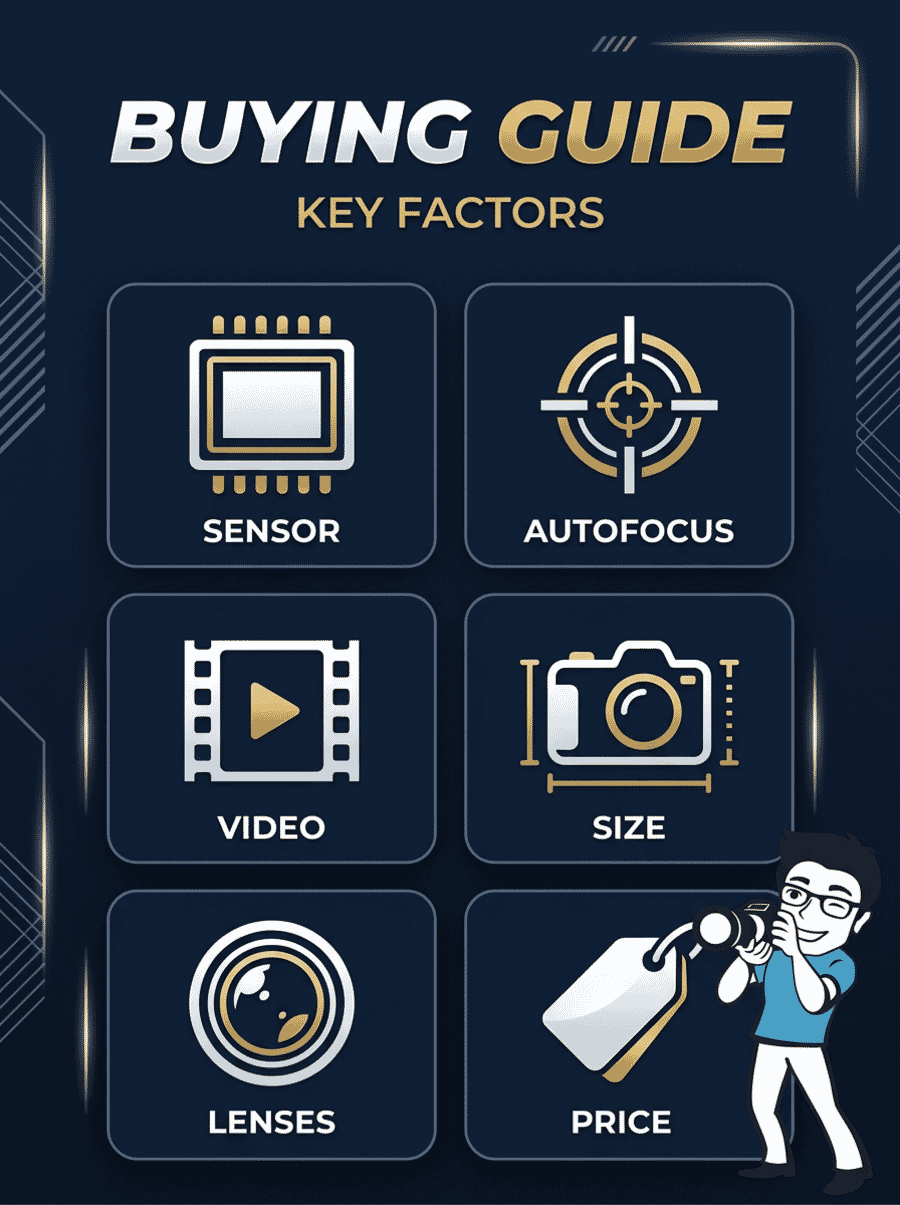
Before diving into individual recommendations, it helps to understand the key factors that separate beginner cameras from each other. Not every spec matters equally for someone just starting out – here is what to prioritize.
Camera Comparison Table
Beginner Camera Specs Comparison
| Specifications | ||||||||||
|---|---|---|---|---|---|---|---|---|---|---|
| Sensor | APS-C | APS-C | APS-C | APS-C | APS-C | APS-C | APS-C | Micro 4/3 | Full-Frame | Full-Frame |
| Megapixels | 24.2 MP | 24.1 MP | 20.9 MP | 20.9 MP | 24.2 MP | 26 MP | 26.1 MP | 16 MP | 24.2 MP | 26.2 MP |
| Autofocus Points | 651 | 143 | 209 | 209 | 425 | 759 | 425 | 49 | 1,053 | 4,779 |
| Burst Speed | 15 fps | 6.5 fps | 11 fps | 11 fps | 11 fps | 10 fps | 30 fps | 8 fps | 40 fps | 5 fps |
| Video | 4K 30p | 4K 24p | 4K 30p | 4K 60p | 4K 30p | 4K 60p | 6.2K 30p | 4K 30p | 4K 60p | 4K 24p |
| Viewfinder | EVF | EVF | None | EVF | EVF | None | EVF | EVF | EVF | EVF |
| Weight (body) | 375g | 356g | 350g | 405g | 403g | 389g | 491g | 410g | 461g | 485g |
| IBIS | No | No | No | No | No | No | Yes | No | No | No |
| Flip Screen | Yes | No | Yes | Yes | Yes | Yes | Yes | Yes | Yes | Yes |
| Mount | Canon RF | Canon RF | Nikon Z | Nikon Z | Sony E | Sony E | Fuji X | MFT | Canon RF | Canon RF |


Canon EOS R50 Mirrorless Camera with RF-S 18-45mm Kit
Beginners who want the best all-around starter camera with room to grow
- Advanced Dual Pixel CMOS AF II with subject detection for people, animals, and vehicles
- Compact, lightweight body (375g) that is easy to carry everywhere
- 15 fps electronic shutter burst mode for capturing fast action
- 6K oversampled 4K video for sharp, detailed footage
- Scene Intelligent Auto mode makes getting great shots effortless
- No in-body image stabilization (relies on lens-based IS)
- Single SD card slot limits professional backup workflows
- 4K video limited to 30fps (no 4K 60p)
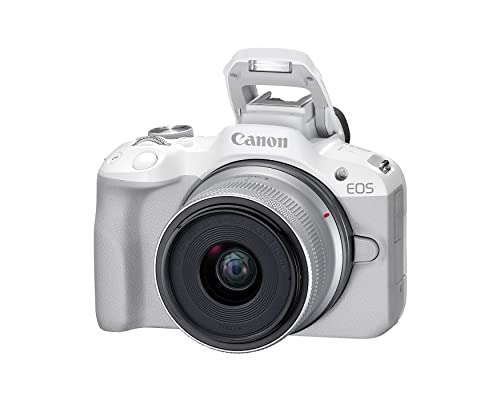
The Canon EOS R50 is the most well-rounded beginner camera available. It pairs Canon’s latest autofocus technology with a lightweight body, intuitive controls, and the vast RF lens ecosystem. For most beginners, this is the camera to get.
The Canon EOS R50 earns the top spot in this roundup because it delivers the most balanced combination of image quality, autofocus performance, and ease of use at a reasonable price. The 24.2MP APS-C sensor paired with Canon’s DIGIC X processor produces clean, detailed images with natural color rendition – a noticeable step up from smartphone photography.




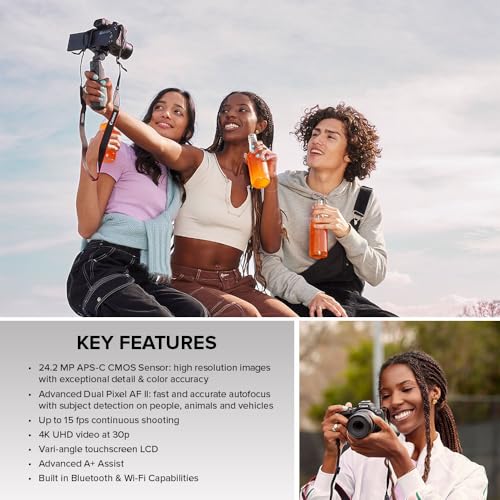
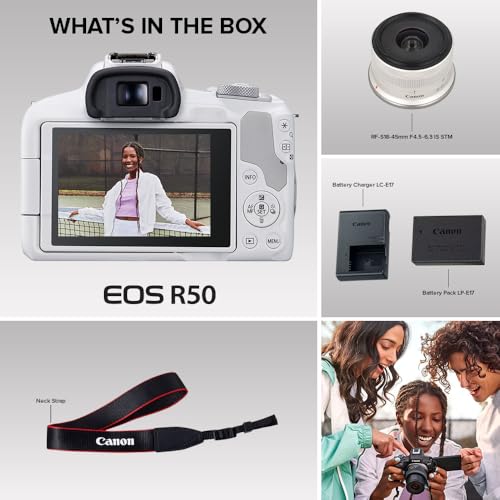
Where the R50 truly shines for beginners is its autofocus system. The Dual Pixel CMOS AF II covers 100% of the frame with 651 AF zones and features automatic subject detection for people, animals, and vehicles. Point the camera at a person, and it locks onto their eyes instantly – no manual focus point selection needed. This alone eliminates one of the biggest frustrations for new photographers.
The fully articulating touchscreen makes selfies and vlogging straightforward, while the built-in electronic viewfinder provides a clear view in bright sunlight. Canon’s Creative Assist mode lets beginners adjust background blur, brightness, and color tone with simple slider controls – a genuinely useful teaching tool that bridges the gap between auto mode and full manual control.
Video capabilities are solid with 6K-oversampled 4K at 30fps, which produces notably sharp footage. The 15fps burst mode with electronic first curtain shutter handles fast-moving subjects well, making the R50 capable of everything from family events to beginner sports photography.
Pricing & Where to Buy
The Canon EOS R50 with the RF-S 18-45mm kit lens is priced at $799 (as of March 2026). A two-lens kit with the RF-S 18-45mm and RF-S 55-210mm is also available for around $1,029, which provides a solid starting range from wide-angle to telephoto.
- Buy on Amazon – Prime shipping available
- Check price at B&H Photo
- Check price at Adorama
- Buy used at KEH Camera – save with certified pre-owned
- Canon official store
Canon EOS R100 Mirrorless Camera with RF-S 18-45mm Kit
Budget-conscious beginners who want a reliable mirrorless camera without overspending
- Most affordable Canon mirrorless camera at $549 with kit lens
- Ultra-compact and lightweight body at just 356g
- 24.1MP APS-C sensor delivers excellent image quality
- Dual Pixel CMOS AF with face and eye detection
- Simple, uncluttered controls ideal for absolute beginners
- Fixed rear screen – no tilt or flip for selfies or vlogging
- 4K video limited to 24fps with slight crop
- No Creative Assist mode (available on the R50)
The Canon EOS R100 proves that getting into mirrorless photography does not require a massive investment. It delivers Canon’s core image quality and autofocus at the lowest price point in the RF mount system.
The Canon EOS R100 is the most accessible entry point into Canon’s mirrorless ecosystem. At $549 with the RF-S 18-45mm kit lens (as of March 2026), it undercuts most competitors while still delivering a 24.1MP APS-C sensor and Dual Pixel CMOS AF with face and eye detection.
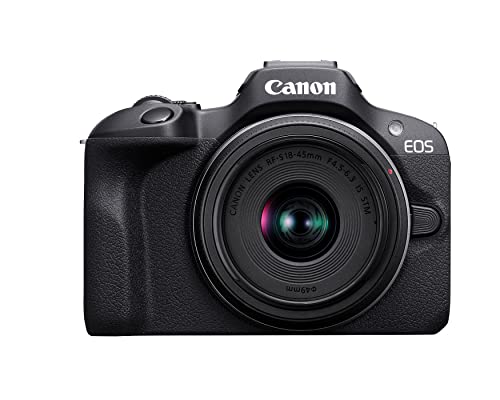


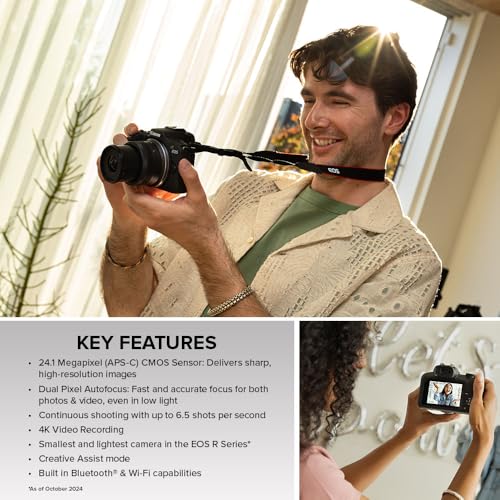
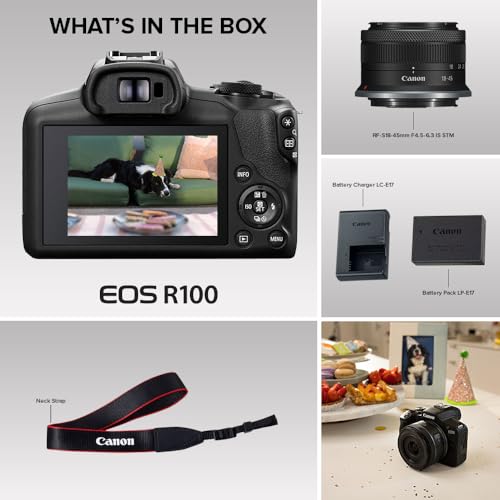
This camera takes a deliberate “less is more” approach. The control layout is clean and unintimidating, with a mode dial, a single command dial, and a straightforward menu system. For someone picking up a dedicated camera for the first time, this simplicity is a feature, not a limitation. The built-in electronic viewfinder is a welcome inclusion at this price point, providing a clear view for composing shots.
The main trade-offs compared to the pricier R50 are a fixed rear screen (no tilting or flipping), slightly slower burst shooting at 6.5fps, and 4K video capped at 24fps. For photographers focused primarily on stills rather than video or vlogging, these compromises are easy to live with. The image quality from the 24.1MP sensor is nearly identical to the R50, producing sharp, color-accurate photos that can be cropped and printed with confidence.
Because it uses the same Canon RF mount as the R50, R8, and Canon’s professional bodies, every RF and RF-S lens works seamlessly. Beginners can start here and upgrade the body later while keeping all their lenses – a smart long-term investment.
Pricing & Where to Buy
The Canon EOS R100 with RF-S 18-45mm kit lens is priced at $549 (as of March 2026). A two-lens kit with the 18-45mm and 55-210mm telephoto is available for around $749.
- Buy on Amazon – Prime shipping available
- Check price at B&H Photo
- Check price at Adorama
- Buy used at KEH Camera – save with certified pre-owned
- Canon official store
Nikon Z30 Mirrorless Camera with 16-50mm Kit
Vloggers and content creators who want a dedicated camera for YouTube and social media
- Ultra-compact body designed specifically for vlogging and content creation
- Fully articulating flip-out touchscreen for selfie shooting
- Built-in stereo microphone with adjustable sensitivity
- Plug-and-play USB-C webcam functionality
- Red REC tally light confirms recording at a glance
- No electronic viewfinder – LCD screen only
- 20.9MP sensor is adequate but lower resolution than competitors
- No in-body image stabilization
The Nikon Z30 is purpose-built for creators who plan to shoot as much video as stills. Its vlogging-focused features and compact form factor make it the most portable option on this list.
The Nikon Z30 takes a different approach than most cameras on this list. Instead of trying to be everything to everyone, it leans hard into content creation. The result is Nikon’s most compact mirrorless camera – a tiny body that weighs just 350g and fits comfortably in one hand.


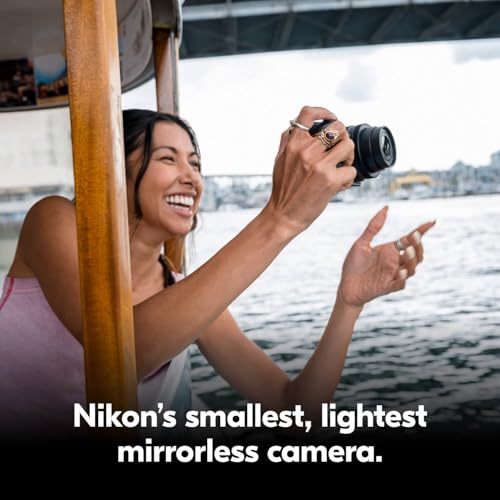



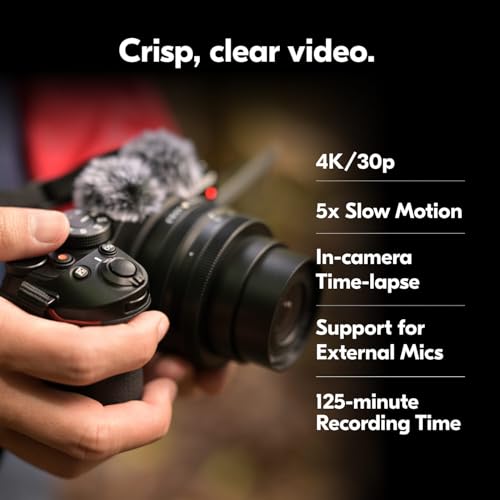

The fully articulating screen flips forward for selfie recording, and the built-in stereo microphone with adjustable sensitivity captures decent audio without an external mic. A red recording tally light on the front confirms when video is rolling – a small detail that matters when filming solo. USB-C plug-and-play webcam mode makes it simple to use as a high-quality streaming camera.
The trade-off for this compact size is the absence of an electronic viewfinder (EVF). All composition happens on the rear LCD, which works fine for video but can be challenging for stills in bright sunlight. The 20.9MP APS-C sensor captures clean, detailed images with Nikon’s excellent color science, and the 209-point autofocus system reliably tracks faces and eyes.
For beginners whose primary goal is building a YouTube channel or creating social media content, the Z30 hits the sweet spot of price, portability, and video features. Nikon’s growing Z-mount lens ecosystem ensures room to expand as skills develop.
Pricing & Where to Buy
The Nikon Z30 with the 16-50mm kit lens is priced at $697 (as of March 2026). The body-only option is available for around $607, and a two-lens kit with the 50-250mm telephoto is priced at $947.
- Buy on Amazon – Prime shipping available
- Check price at B&H Photo
- Check price at Adorama
- Buy used at KEH Camera – save with certified pre-owned
- Nikon official store
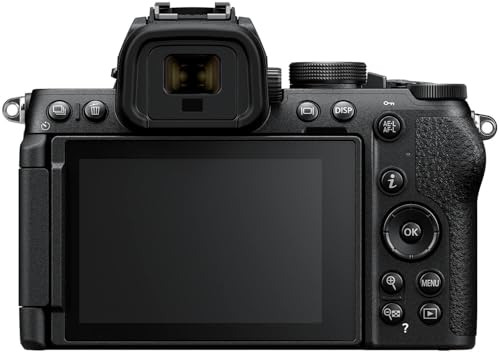
Nikon Z50 II Mirrorless Camera with 16-50mm Kit
Beginners who want a versatile camera with a viewfinder and refined handling
- 31 built-in Picture Control color presets for in-camera creative styles
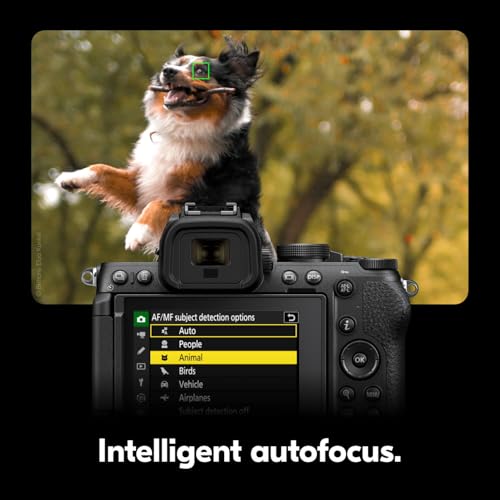
- Improved autofocus with detection for people, dogs, cats, birds, and vehicles
- 4K 60p video recording with in-camera slow motion
- Built-in electronic viewfinder and flash
- Wireless photo sharing directly to smartphones
- Higher price than the Z30 while sharing the same 20.9MP sensor
- No in-body image stabilization
- Relatively new with limited long-term user reviews
The Nikon Z50 II refines everything that made the original Z50 popular and adds modern features like enhanced autofocus and creative color presets. It is Nikon’s most capable entry-level camera.
The Nikon Z50 II is the newest camera on this list, released in late 2024 as the successor to the popular Z50. It addresses the original’s weaknesses while adding features that bring it closer to Nikon’s mid-range bodies. The 20.9MP APS-C sensor is carried over, but nearly everything else has been upgraded.

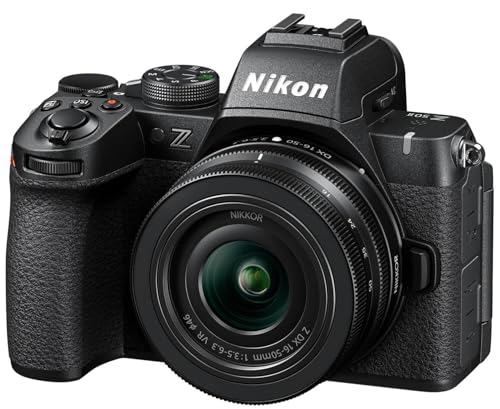
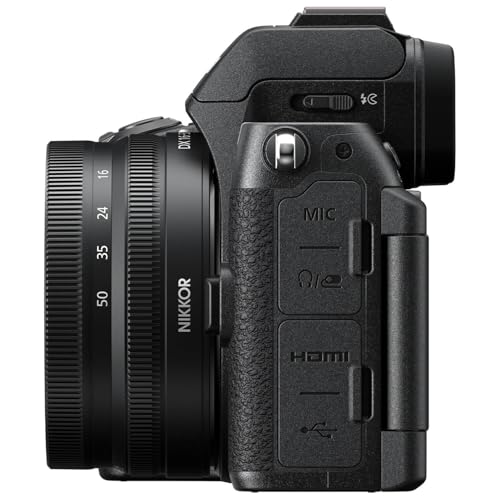
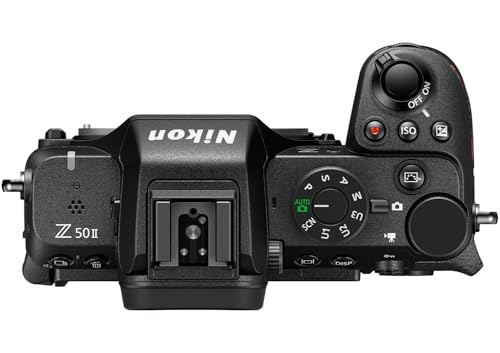

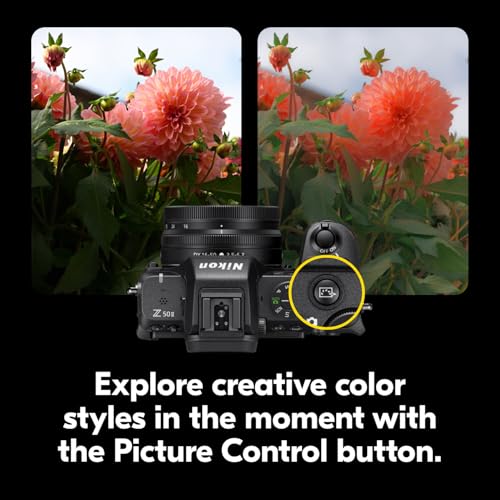
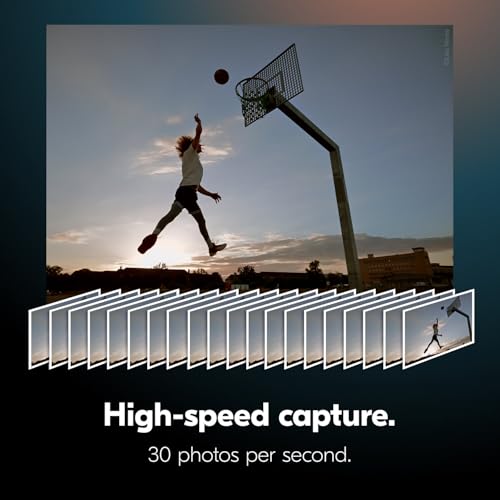
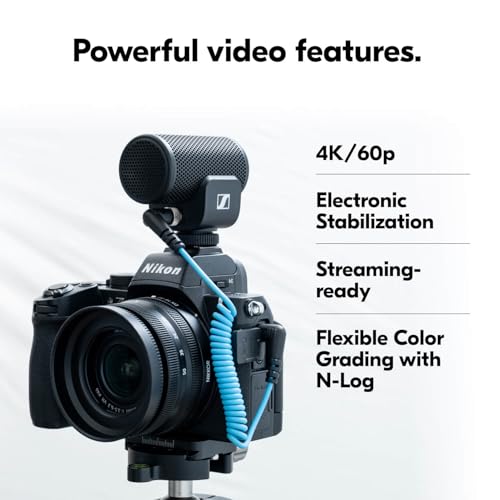
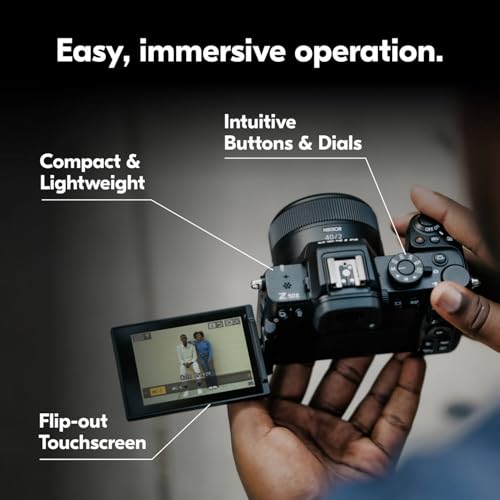
The standout addition is the Picture Control button, which provides quick access to 31 built-in color presets. These work similarly to Fujifilm’s Film Simulations, allowing beginners to give photos a distinctive look straight out of camera without post-processing. Presets range from natural to vivid to retro film-inspired styles, and the results are genuinely appealing.

Autofocus has been significantly improved over the first generation, with subject detection for people, dogs, cats, birds, and vehicles. The hybrid AF system covers a wide area of the frame and locks on quickly, even in challenging light. Video capabilities jump to 4K 60p, with in-camera 120fps slow motion in Full HD – a meaningful upgrade for creators.
Unlike the Z30, the Z50 II includes both an electronic viewfinder and a built-in flash, making it better suited for dedicated photography. The viewfinder is particularly useful for composing shots in bright outdoor conditions where rear screens can wash out.
Pricing & Where to Buy
The Nikon Z50 II with the 16-50mm kit lens is priced at $1,147 (as of March 2026). The body-only option runs $1,007, and a two-lens kit with the 50-250mm telephoto is available for $1,397.
- Buy on Amazon – Prime shipping available
- Check price at B&H Photo
- Check price at Adorama
- Buy used at KEH Camera – save with certified pre-owned
- Nikon official store
Sony Alpha a6400 Mirrorless Camera with 16-50mm Kit
Beginners who prioritize fast, reliable autofocus for portraits, pets, and action
- Industry-leading Real-Time Eye AF and subject tracking
- 425 phase-detection AF points covering 84% of the sensor
- 11fps continuous shooting for capturing fast action
- Robust, weather-sealed magnesium alloy body
- Massive Sony E-mount lens ecosystem with hundreds of options
- Released in 2019 – the menu system and interface feel dated compared to newer rivals
- No in-body image stabilization
- 4K video limited to 30fps with slight crop
The Sony a6400 remains one of the most capable autofocus cameras in this price range. Its tracking performance rivals cameras costing twice as much, making it ideal for beginners who shoot moving subjects.
The Sony a6400 is the oldest camera on this list, but its autofocus performance still punches above its weight class. The 425 phase-detection AF points covering 84% of the sensor deliver fast, sticky tracking that locks onto eyes and follows subjects across the frame with impressive reliability.
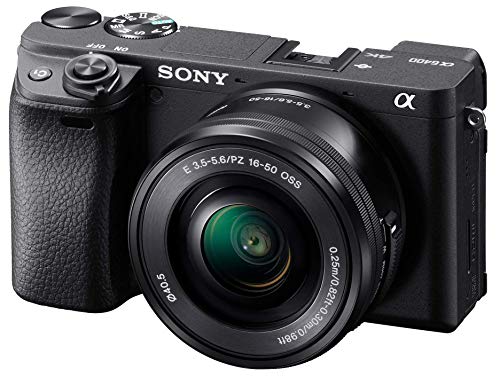


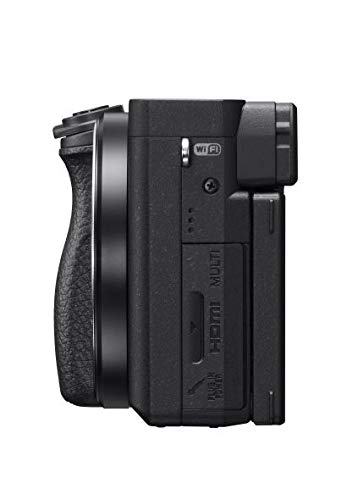
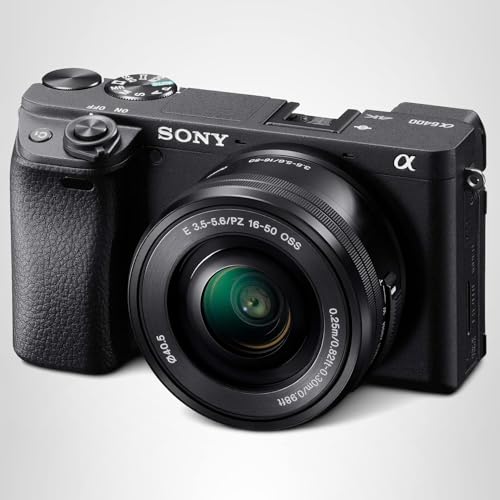
Real-Time Eye AF was groundbreaking when Sony introduced it, and it remains one of the best implementations available. For beginners shooting portraits of friends and family, or trying to photograph pets, this feature is transformative – the camera handles focus so reliably that the photographer can concentrate entirely on composition and timing.
The 24.2MP APS-C sensor produces clean images with good dynamic range, and the camera handles high ISO settings well for indoor and low-light shooting. The magnesium alloy body feels more substantial than plastic-bodied competitors, with a dust and moisture-resistant design that adds confidence for outdoor shooting. At 11fps continuous shooting, it can keep up with moderately fast action.
The main drawback is its age. The menu system predates Sony’s newer, more intuitive interface, and the 180-degree tilt screen (rather than a fully articulating flip screen) is less versatile for video. Still, the Sony E-mount lens ecosystem is the largest in mirrorless photography, offering beginners the widest choice of lenses at every price point.
Pricing & Where to Buy
The Sony a6400 with the 16-50mm kit lens is priced at $898 (as of March 2026). The body-only option typically runs around $798.
- Buy on Amazon – Prime shipping available
- Check price at B&H Photo
- Check price at Adorama
- Buy used at KEH Camera – save with certified pre-owned
- Sony official store
Sony ZV-E10 II Mirrorless Camera with 16-50mm Kit
Content creators who need a compact interchangeable-lens camera optimized for video
- 26MP back-illuminated sensor with excellent low-light video performance
- 4K 60fps video and 120fps Full HD slow motion
- Real-Time Eye AF with subject recognition for people, animals, birds, and more
- Creative Look function for in-camera color grading
- Compact body with fully articulating touchscreen
- No electronic viewfinder – screen-only composition
- Higher price than the Nikon Z30 for a similar creator-focused concept
- Some users report overheating during extended 4K recording
The Sony ZV-E10 II is Sony’s answer to the growing creator economy. It packs serious video capabilities into a small body, backed by the massive E-mount lens ecosystem.
The Sony ZV-E10 II represents Sony’s most refined content-creation camera. Released in mid-2024, it pairs a new 26MP back-illuminated Exmor R CMOS sensor with Sony’s latest autofocus algorithms, delivering a meaningful upgrade over the original ZV-E10.





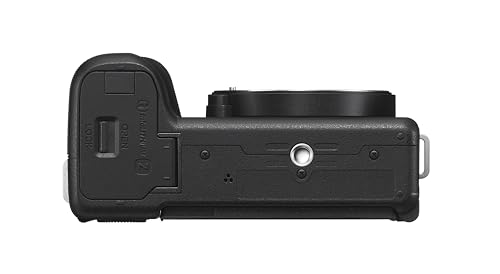
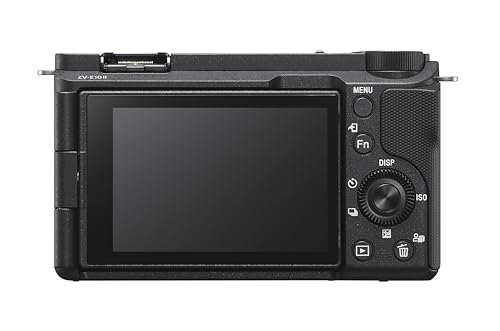
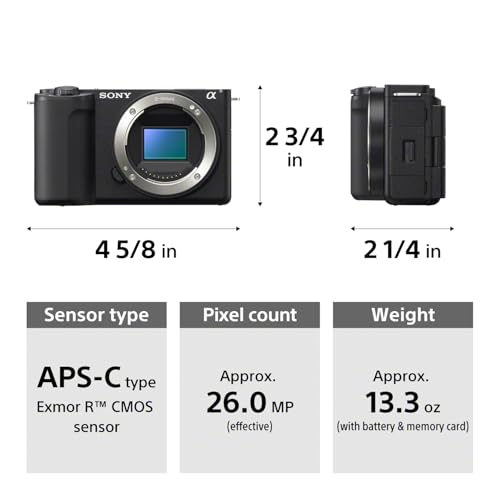
Video is where this camera excels. It shoots 4K at up to 60fps and Full HD at 120fps for dramatic slow-motion footage. The Creative Look function provides various in-camera color profiles that can be applied to both stills and video, allowing beginners to develop a consistent visual style without learning complex editing software. Sony’s Real-Time Eye AF recognizes faces and eyes of people, animals, birds, insects, cars, and trains – one of the most comprehensive subject detection systems available.
Like the Nikon Z30, the ZV-E10 II lacks an electronic viewfinder, relying entirely on its fully articulating touchscreen for composition. This is fine for video work but less ideal for still photography in bright conditions. The body is compact at 389g, though slightly heavier than the Z30. Built-in optical and digital stabilization helps smooth handheld video.
The higher price tag compared to the Z30 buys a newer sensor, faster video frame rates, and access to Sony’s deep E-mount lens library. For beginners who see themselves primarily as video creators and want the most future-proof lens ecosystem, the ZV-E10 II is a strong choice.
Pricing & Where to Buy
The Sony ZV-E10 II with 16-50mm kit lens is priced at $1,298 (as of March 2026). The body-only option is available for around $1,198.
- Buy on Amazon – Prime shipping available
- Check price at B&H Photo
- Check price at Adorama
- Buy used at KEH Camera – save with certified pre-owned
- Sony official store
Fujifilm X-S20 Mirrorless Camera with XC 15-45mm Kit
Creative shooters who want Film Simulation modes and a camera that inspires experimentation
- 19 Film Simulation modes including Classic Negative, Nostalgic Neg., and Eterna for unique in-camera looks
- In-body image stabilization (IBIS) – the only APS-C camera on this list with it
- 6.2K 30p video recording with 10-bit 4:2:2 color depth
- 30fps electronic shutter burst for capturing split-second moments
- Upgraded battery life compared to previous Fujifilm models
- Highest price on this list at $1,599 with kit lens
- Fujifilm X-mount has fewer lens options than Canon RF or Sony E
- Menu system can feel overwhelming for complete beginners
The Fujifilm X-S20 is the most feature-rich APS-C camera on this list. Its Film Simulations produce distinctive, beautiful images straight out of camera – something no other brand replicates as well.
The Fujifilm X-S20 occupies a unique position in this roundup. It is the most expensive APS-C option, but it also delivers the most distinctive shooting experience. Fujifilm’s Film Simulation modes – including the wildly popular Classic Negative, Nostalgic Neg., and Eterna – produce images with a character that simply cannot be replicated by other brands’ in-camera processing.


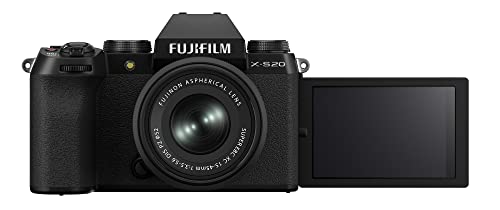

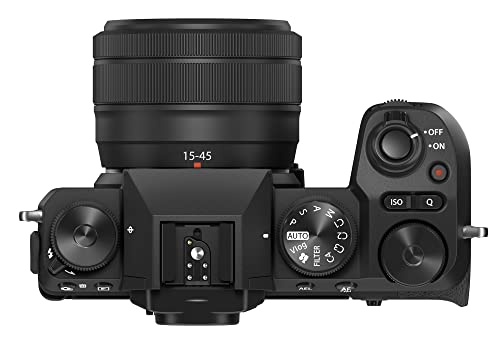
The X-S20 is also the only APS-C camera on this list with in-body image stabilization (IBIS), providing up to 7 stops of shake correction. This is a genuine advantage for handheld shooting in low light and for smooth video footage without a gimbal. The 26.1MP X-Trans CMOS 4 sensor paired with the X-Processor 5 engine delivers excellent image quality with Fujifilm’s trademark color rendition.

Video capabilities are seriously impressive for the price class: 6.2K 30p, 4K 60p, and Full HD 240fps slow motion, all with 10-bit 4:2:2 color depth. For beginners who aspire to more cinematic content, the X-S20 provides tools that can grow with them for years. The autofocus system detects faces, eyes, animals, birds, cars, motorcycles, bicycles, airplanes, and trains.
The higher price reflects genuine added capability. Beginners willing to invest more upfront get IBIS, superior video specs, and the most engaging creative shooting experience of any camera on this list. The Fujifilm community around Film Simulation recipes adds another layer of enjoyment.
Pricing & Where to Buy
The Fujifilm X-S20 with the XC 15-45mm kit lens is priced at $1,599 (as of March 2026). A kit with the higher-quality XF 16-50mm f/2.8-4.8 lens is available for $1,899.
- Buy on Amazon – Prime shipping available
- Check price at B&H Photo
- Check price at Adorama
- Buy used at KEH Camera – save with certified pre-owned
- Fujifilm official store
Panasonic LUMIX G7 4K Camera with 14-42mm Kit
Budget-focused beginners who want the most camera for the least money, especially for video
- Excellent value – often found under $700 with a kit lens
- 4K video recording with 4K Photo mode for extracting 8MP stills from video
- High-resolution OLED electronic viewfinder
- Dual control dials for quick exposure adjustments
- Micro Four Thirds mount offers small, affordable lenses
- 16MP sensor resolution is lower than APS-C competitors
- Contrast-detect autofocus is slower than phase-detection systems
- Older design lacks modern subject-detection AF features
The Panasonic Lumix G7 delivers remarkable value for beginners on a strict budget. Its 4K video and intuitive dual-dial controls punch above its price point, though the autofocus cannot match newer rivals.
The Panasonic Lumix G7 is the value champion of this roundup. Originally released in 2015, it remains available at a price that makes it one of the most affordable interchangeable-lens cameras with 4K video capability. For beginners working within a tight budget, the G7 offers genuine camera features – dual control dials, a high-resolution EVF, and 4K recording – at a fraction of the cost of newer models.


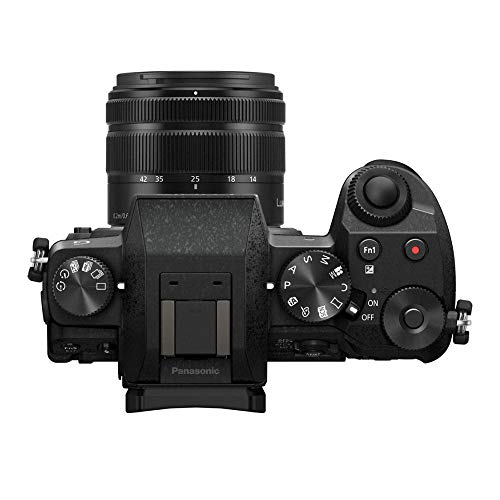
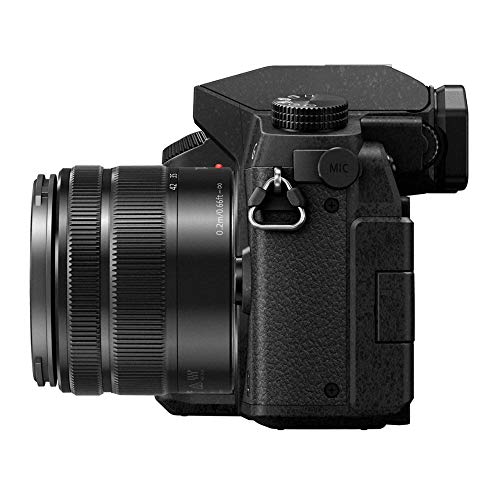

The 16MP Micro Four Thirds sensor is smaller than the APS-C sensors in other cameras on this list, which means slightly less background blur (bokeh) and modestly lower low-light performance. However, the trade-off is a more compact body and significantly smaller, lighter lenses. The Micro Four Thirds ecosystem offers dozens of affordable lenses, making it easier for budget-conscious beginners to build a versatile kit.
The G7’s 4K Photo mode is a standout feature that extracts 8MP still images from 4K video footage at 30fps. This is an excellent learning tool for beginners who struggle with timing – record a burst of video and select the perfect moment afterward. The dual control dials (front and rear) provide direct control over aperture and shutter speed, encouraging beginners to learn manual exposure.
The main limitation is the contrast-detect autofocus system, which is noticeably slower and less sticky than the phase-detection systems in newer cameras. It lacks subject-detection AF for faces and eyes in its most basic form. For slow-moving subjects and landscapes, this is not an issue – but for action, pets, or sports, newer cameras perform significantly better.
Pricing & Where to Buy
The Panasonic Lumix G7 with the 14-42mm kit lens is priced at $690 (as of March 2026). It can often be found for less during sales, and used examples are available well under $400.
- Buy on Amazon – Prime shipping available
- Check price at B&H Photo
- Check price at Adorama
- Buy used at KEH Camera – save with certified pre-owned
- Panasonic official store
Canon EOS R8 Mirrorless Camera Body
Ambitious beginners ready to invest in a full-frame camera they will not outgrow
- Full-frame 24.2MP sensor with superior low-light performance and dynamic range
- Dual Pixel CMOS AF II with 1,053 AF zones and comprehensive subject detection
- 4K 60p oversampled from 6K for exceptionally sharp video
- Lightest full-frame RF mount camera at just 461g
- 40fps electronic shutter burst mode
- Body-only price of $1,449 requires additional lens investment
- No in-body image stabilization
- Single SD card slot
The Canon EOS R8 is a full-frame camera disguised as a beginner-friendly body. It offers professional-grade autofocus and image quality in a compact, lightweight package that ambitious beginners can grow into for years.
The Canon EOS R8 is the first full-frame camera in this roundup, and it represents a compelling option for beginners who are willing to invest more upfront in exchange for a camera they will not outgrow. The full-frame 24.2MP sensor captures noticeably more light than APS-C alternatives, producing cleaner high-ISO images, shallower depth of field, and wider dynamic range.
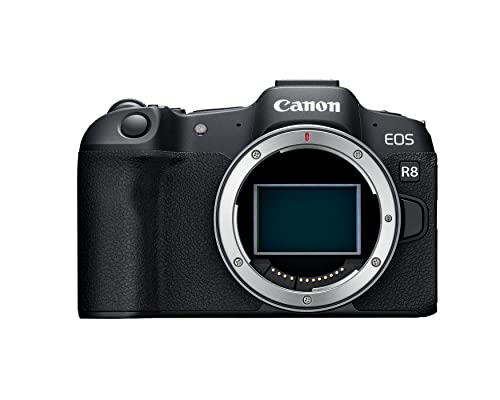


The autofocus system is identical to what Canon puts in cameras costing over $3,000. The Dual Pixel CMOS AF II covers the entire frame with 1,053 zones and detects people, animals, birds, cars, trains, and airplanes. This is professional-grade tracking in a body that weighs just 461g – making it the lightest full-frame camera in Canon’s lineup.
Video capabilities are equally impressive: uncropped 4K at 60fps oversampled from 6K, Full HD at 180fps for dramatic slow motion, and Canon Log 3 for professional color grading. The 40fps electronic shutter burst mode is the fastest on this list, capable of capturing even the most fleeting moments.
The main consideration is cost. The R8 is sold body-only at $1,449, meaning a kit lens must be purchased separately. The RF 24-105mm f/4-7.1 IS STM adds around $300, bringing the total starter investment to roughly $1,750. For beginners certain they want to pursue photography seriously, this upfront investment pays dividends as the camera body will remain capable for many years.
Pricing & Where to Buy
The Canon EOS R8 body is priced at $1,449 (as of March 2026). Pair it with the RF 24-105mm f/4-7.1 IS STM lens (around $300 separately) for a solid starting kit under $1,800.
- Buy on Amazon – Prime shipping available
- Check price at B&H Photo
- Check price at Adorama
- Buy used at KEH Camera – save with certified pre-owned
- Canon official store
Canon EOS RP Full-Frame Camera with RF 24-105mm Kit
Beginners who want full-frame image quality at the lowest possible price
- Most affordable full-frame mirrorless camera with kit lens at $1,249
- 26.2MP full-frame sensor with excellent color and dynamic range
- Lightweight 485g body – compact for a full-frame camera
- Versatile 24-105mm kit lens covers wide-angle to telephoto
- Full compatibility with Canon’s RF lens ecosystem
- Older Dual Pixel CMOS AF (not AF II) with fewer AF zones and limited subject detection
- 4K video limited to 24fps with a heavy crop
- Slower 5fps burst speed – not ideal for action photography
The Canon EOS RP remains the most affordable path to full-frame mirrorless photography. Its image quality holds up well, but the older autofocus and limited video specs show its age compared to newer options.
The Canon EOS RP has been the gateway to full-frame photography for thousands of photographers since its release. At $1,249 with the RF 24-105mm f/4-7.1 IS STM kit lens (as of March 2026), it offers full-frame image quality at a price that undercuts many APS-C alternatives.


The 26.2MP full-frame sensor delivers rich color, excellent dynamic range, and that distinctive shallow depth-of-field look that smaller sensors struggle to match. For portrait photography especially, the difference between full-frame and APS-C is immediately visible in the background blur and subject separation. The included 24-105mm kit lens provides a useful range from wide-angle to moderate telephoto, covering most everyday shooting scenarios.

Where the RP shows its age is the autofocus system. It uses the original Dual Pixel CMOS AF (not the newer AF II), with fewer AF zones and more limited subject detection. Face and eye detection works, but it lacks the animal, vehicle, and bird detection found in newer models. The 5fps burst speed is the slowest on this list, and 4K video is limited to 24fps with a significant crop that narrows the field of view.
For beginners primarily focused on still photography – landscapes, portraits, travel, and street photography – these limitations rarely matter. The RP excels at slower, more deliberate shooting where image quality is the priority. It remains one of the best values in full-frame photography.
Pricing & Where to Buy
The Canon EOS RP with RF 24-105mm f/4-7.1 IS STM kit lens is priced at $1,249 (as of March 2026). The body alone can be found for around $899, though the kit offers significantly better value.
- Buy on Amazon – Prime shipping available
- Check price at B&H Photo
- Check price at Adorama
- Buy used at KEH Camera – save with certified pre-owned
- Canon official store
Choose the Best Beginner Camera
The best beginner camera depends entirely on what a new photographer plans to shoot and how much they are willing to invest. For most beginners, the Canon EOS R50 offers the best combination of image quality, autofocus, video capability, and beginner-friendly controls at a fair price. It is the safest recommendation for someone who is unsure what kind of photography they will pursue.
Budget-conscious beginners should look closely at the Canon EOS R100 at $549 – it delivers 95% of the R50’s image quality at a meaningfully lower price. For vloggers and YouTube creators, the Nikon Z30 and Sony ZV-E10 II are purpose-built for content creation with flip screens and strong video features.
Beginners who value creative expression should consider the Fujifilm X-S20 for its unmatched Film Simulation modes and built-in stabilization. And for those ready to commit to full-frame photography from the start, the Canon EOS R8 provides professional-level autofocus and image quality in a body that will not be outgrown for years to come.
Whichever camera ends up in the bag, the most important thing is to start shooting. Every camera on this list is capable of producing excellent photographs – the difference is made by the person behind the viewfinder.
Final Recommendations by Category
Canon EOS R50
Canon EOS R100
Nikon Z30
Sony a6400
Fujifilm X-S20
Canon EOS R8
Related Articles
Disclosure/Disclaimer: As an Amazon Associate, we earn from qualifying purchases. Certain content was provided "as is" from Amazon and is subject to change or removal at any time. Product prices and availability: Amazon prices are updated daily or are accurate as of the date/time indicated and are subject to change. Any price and availability information displayed on Amazon.com at the time of purchase will apply to the purchase of this product.