


- Japanese retailer BCN’s sales data shows the Sony ZV-E10 II overtaking the Canon EOS R10 — for years the country’s go-to beginner mirrorless — for the top spot.
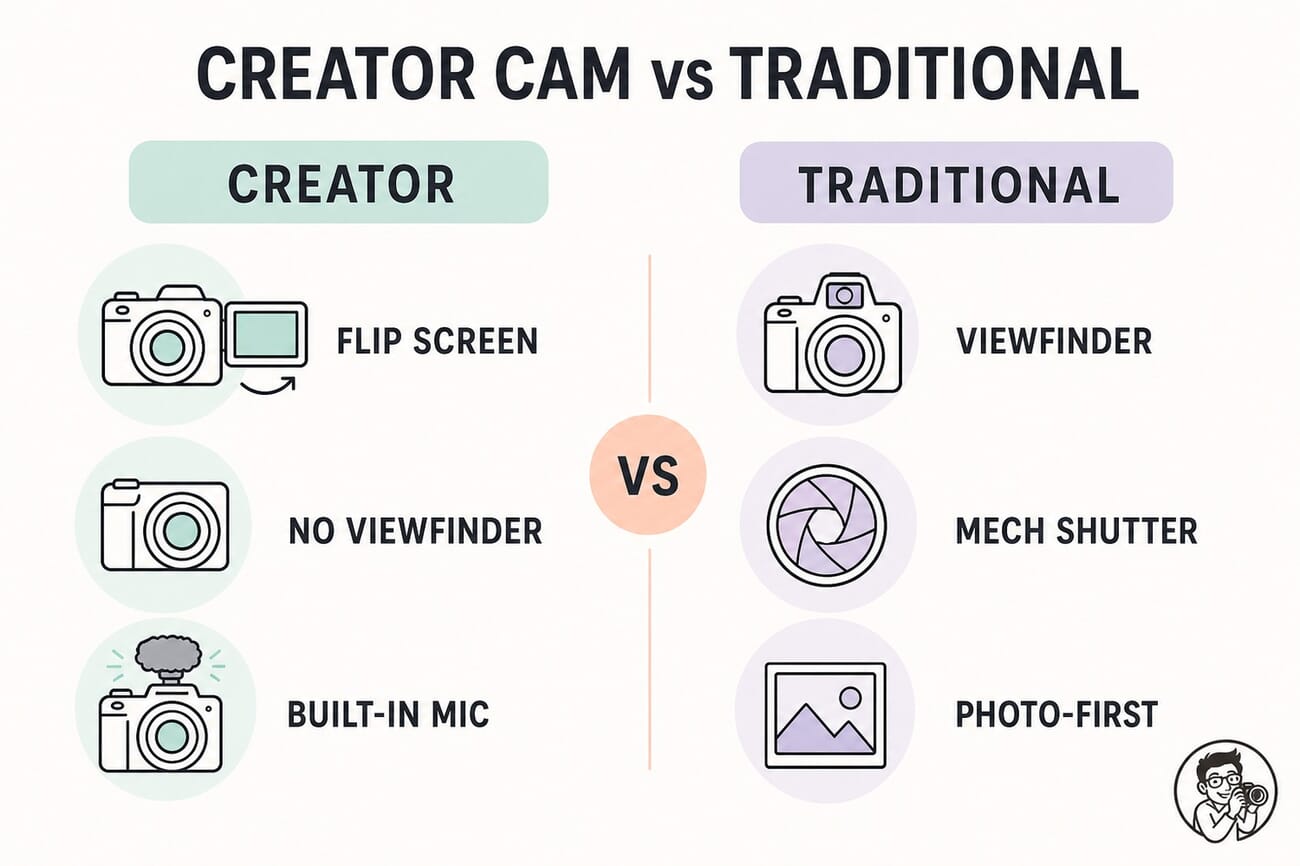
- The twist: the ZV-E10 II has no viewfinder and no mechanical shutter. It’s built around a flip-out screen for creators, not eye-level stills shooting.
- For its target buyer — vloggers, hybrid shooters, social creators — dropping the viewfinder is a feature, not a compromise: it frees up cost and space for creator tools.
- If you shoot mostly stills in bright light, action, or anything that needs an eye-level finder, a traditional model like the R10 still makes more sense. Buy for how you actually shoot.
Japan’s camera sales charts are one of the most-watched leading indicators in the industry — what sells there tends to hint at where the global market is heading. So it’s worth paying attention that, after years of a traditional beginner camera sitting at the top, the new number one is a camera that deliberately leaves out the one feature photographers have treated as essential for a century: the viewfinder.
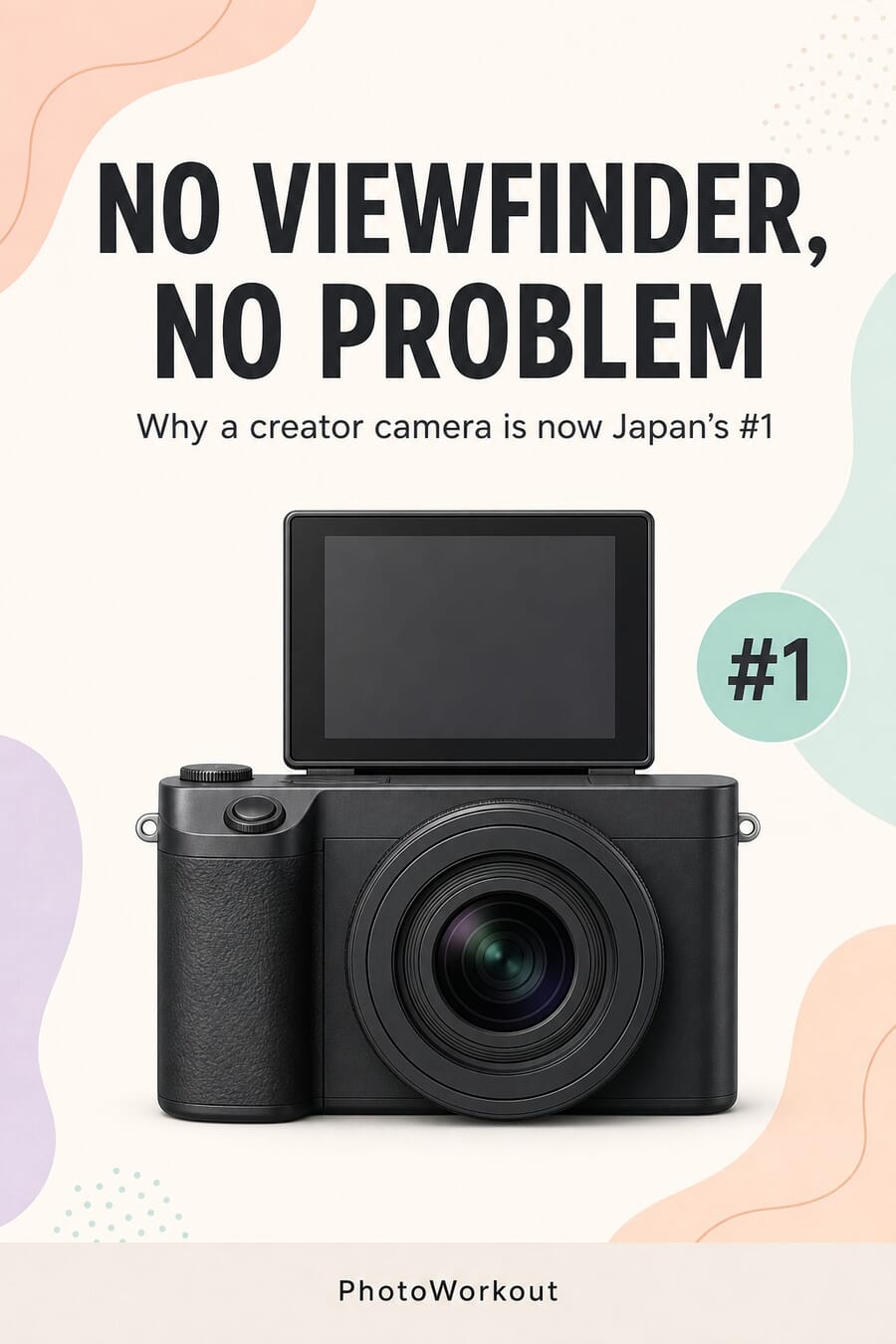
The camera is the Sony ZV-E10 II, and its rise past the long-reigning Canon EOS R10 is less about one product winning a month and more about who manufacturers now think the entry-level buyer is. Here’s what actually happened, why the missing viewfinder is the point, and how to read it if you’re shopping for a first or second camera.
When you buy through links on our site, we may earn a commission at no cost to you. We evaluate products independently. Commissions do not affect our evaluations.
What Actually Happened
For much of the last few years, the Canon EOS R10 — a conventional APS-C mirrorless with an electronic viewfinder, a mechanical shutter, and a photo-first feature set — has been one of Japan’s best-selling cameras, the default recommendation for someone buying their first “real” camera.
According to the latest figures from Japanese retail tracker BCN, that’s changed: the Sony ZV-E10 II has taken the top spot. On paper the two cameras share a class — compact APS-C interchangeable-lens bodies around the same price — but they’re built for almost opposite users. The R10 is a small camera for photographers. The ZV-E10 II is a small camera for creators.
Wait — It Doesn’t Have a Viewfinder?
Correct. The ZV-E10 II has no electronic viewfinder at all, and no mechanical shutter either — it’s fully electronic. You compose entirely on the large vari-angle rear screen that flips out to the side and faces forward. Under the hood it’s genuinely capable: the same 26-megapixel APS-C sensor and processing found in Sony’s pricier mirrorless bodies, 4K video, fast autofocus with subject tracking, and a body that sells for around $1,000.
For a stills photographer raised on putting a camera to their eye, no viewfinder sounds like a glaring omission. For the buyer this camera was designed for, it’s the opposite.
Why No Viewfinder Is a Feature, Not a Bug
The ZV line exists because how a huge slice of new camera buyers actually shoot has changed. They are not pressing a camera to one eye to freeze a decisive moment — they are talking to a flip screen, filming themselves, vlogging at arm’s length, or shooting low and high angles where an eye-level finder is useless anyway. For that, the rear screen is the viewfinder, and a better one for the job.
Removing the EVF isn’t just acceptable for that user — it’s actively helpful. It takes cost and bulk out of the body, which Sony reinvests in the things creators do use: a forward-facing articulating screen, a built-in directional mic with a wind muff, one-touch Background Defocus, a Product Showcase mode that racks focus to whatever you hold up, and strong active stabilization for walking-and-talking video. A viewfinder would add price and size to deliver a feature this audience would rarely touch.
Who the ZV-E10 II Is Really For
This is the buyer the camera fits like a glove:
- Video-first and hybrid creators — YouTubers, TikTok/Reels makers, and anyone whose output is mostly footage with some stills.
- Self-recorders and vloggers who need to see themselves in frame and want clean audio and steady walking video out of the box.
- Upgraders from a phone who want a real sensor and interchangeable lenses, but a phone-like, screen-based shooting experience rather than a traditional camera’s.
If that’s you, the ZV-E10 II isn’t a compromised photo camera — it’s a focused creator tool, and its sales rank reflects how many people now shoot exactly this way.
Sony ZV-E10 II — The Viewfinder-Free Creator Pick

- Same 26MP APS-C sensor as much pricier Sony cameras
- Forward-facing vari-angle screen for self-recording
- Built-in directional mic, Product Showcase & Background Defocus
- Fast, reliable autofocus with subject tracking
- Strong value for a creator-focused body
- No viewfinder – harder in bright sun and for action
- Fully electronic shutter (no mechanical shutter)
- Body only – you’ll need to add a lens
Who Should Still Buy a Traditional Beginner Camera
The chart-topping headline shouldn’t push the wrong buyer toward it. You’re better served by a conventional model like the Canon EOS R10, Sony a6400, or one of our best cameras for beginners if:
- You shoot mostly stills — portraits, street, landscapes, travel — and compose by eye.
- You work in bright sunlight, where a rear screen washes out and a viewfinder is far easier to see.
- You shoot fast action or sports, where an eye-level finder and a mechanical shutter still have real advantages.
- You simply prefer the steadiness and immersion of holding a camera to your eye.
None of that is nostalgia — those are real, ergonomic reasons a viewfinder earns its place. The point isn’t that one design won; it’s that the entry tier has split in two.
What This Signals for the Market
A single month’s chart is noise. A multi-year bestseller being displaced by a viewfinder-free creator camera is signal. It’s the clearest sign yet that manufacturers have redefined who the default entry-level buyer is — from “a new photographer” to “a new creator” — and are designing, pricing, and marketing accordingly. It dovetails with the broader move away from traditional camera form factors that the industry’s own shipment data has been tracing for years.
Expect more of it: more bodies that drop the viewfinder to add creator features, more aggressive ZV-style branding, and a first-camera conversation that increasingly starts with “what do you want to make?” rather than “do you want to learn photography?”
Frequently Asked Questions
Can you still take good photos with the ZV-E10 II?
Yes — it uses the same 26MP APS-C sensor as much pricier Sony cameras, so image quality is excellent. The catch is composing on the rear screen only, which is harder in bright light and for fast action.
Why does no mechanical shutter matter?
A fully electronic shutter can show rolling-shutter skew on very fast motion and may have restrictions with some flashes. For typical creator and everyday photo use it’s a non-issue, but sports and studio-flash shooters should be aware.
Is the ZV-E10 II a good first camera?
For someone whose goal is making video and social content, it’s one of the best value picks available. For someone who wants to learn traditional photography, a body with a viewfinder is usually the better teacher.
The Bottom Line
The Sony ZV-E10 II topping Japan’s charts isn’t a referendum on viewfinders — it’s a snapshot of who’s buying cameras now. For creators, a flip screen and a fat feature set beat an eye-level finder they’d never use, and the sales data says a lot of people agree. For photographers who compose by eye, a traditional beginner body is still the right call. The smart move has never changed: buy for how you actually shoot, not for what’s number one.
Featured image and infographic: PhotoWorkout editorial illustration.
Sales data and specifications from primary coverage and the manufacturer.
Coverage & Data
- Digital Camera World – Creator camera overtakes traditional models in Japan (BCN data) – Primary report
- Sony – ZV-E10 II specifications – Official specs
PhotoWorkout is reader-supported. If you buy through the Amazon link on this page, we may earn a commission at no extra cost to you. It never affects our coverage.


Disclosure/Disclaimer: As an Amazon Associate, we earn from qualifying purchases. Certain content was provided "as is" from Amazon and is subject to change or removal at any time. Product prices and availability: Amazon prices are updated daily or are accurate as of the date/time indicated and are subject to change. Any price and availability information displayed on Amazon.com at the time of purchase will apply to the purchase of this product.