


- 188,000 photographers used AI culling/editing tools on Aftershoot alone in 2025, saving an estimated 89 million hours of post-processing time.
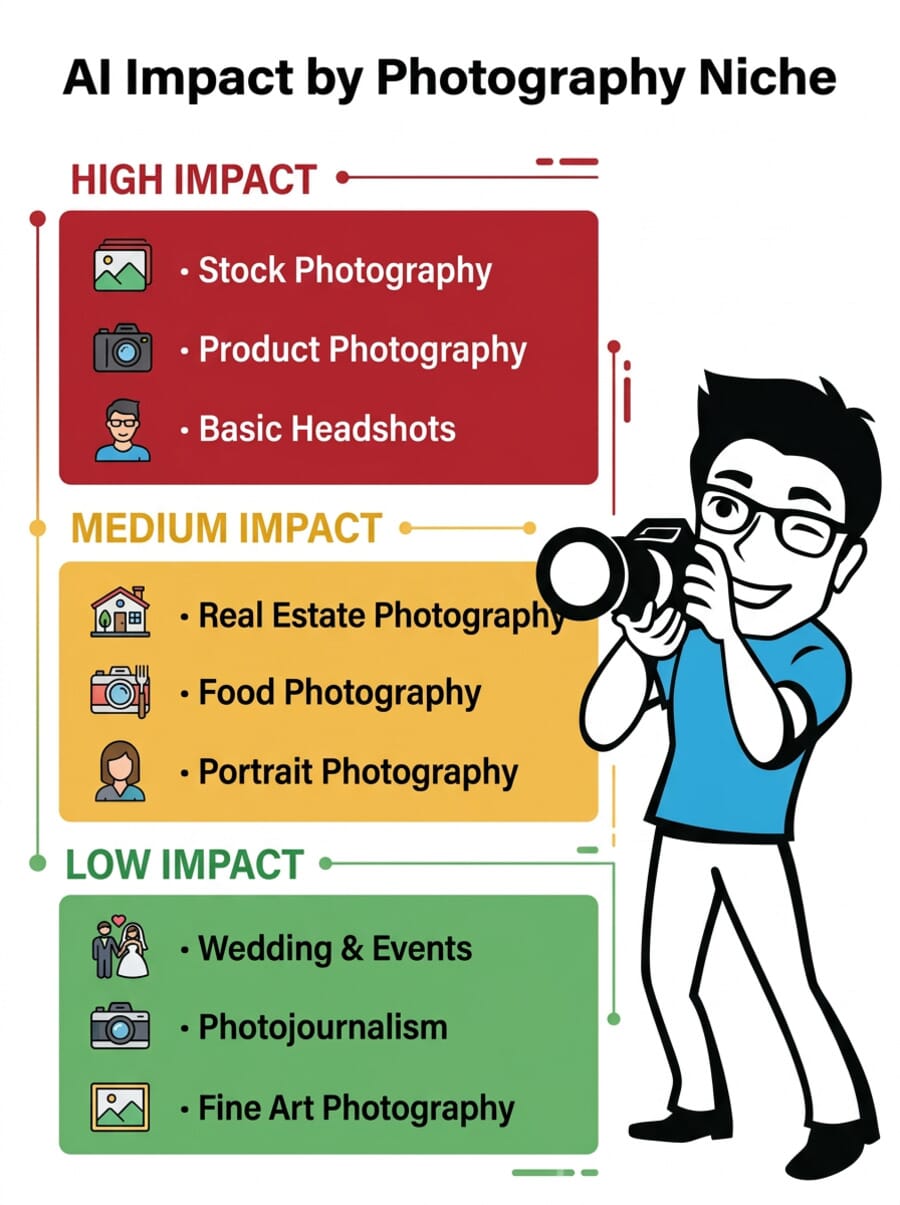
- Stock photography and basic headshots face the highest disruption — the AI headshot market grew 150% year-over-year — while wedding, event, and fine art photography remain largely AI-proof.
- 81% of photographers using AI workflows report reclaiming their work-life balance, primarily through automated culling and editing.
- The photography services market is still growing (projected to reach $81.8 billion by 2032), but the type of work is shifting — adaptability is the key skill.
Here’s a number that should get your attention: in 2025, photographers processed 8.8 billion images through a single AI culling platform — Aftershoot — saving a collective 89 million hours of editing time. That’s more photos than traditional photography produced in its first 150 years of existence.
AI isn’t coming for photography. It’s already here, embedded in the tools photographers use every day. But the real story isn’t about robots replacing artists — it’s about a fundamental reshuffling of what photography work looks like, who does it, and how it gets done.
This isn’t a hype piece or a doom-and-gloom prediction. It’s a data-driven look at what’s actually happening — which jobs are shrinking, which are growing, and how working photographers are adapting.
AI Tools Photographers Are Actually Using
Forget the hypothetical debates about whether AI will “replace” photographers. The more relevant question is: which AI tools are photographers already using, and what impact are they having?
According to Aftershoot’s 2025 Photography Workflow Report (surveying over 1,000 AI-adopting photographers worldwide), 90% are using AI primarily for post-processing — but only 57% have adopted it for business and admin tasks. That gap represents a massive untapped opportunity.
AI Culling and Editing
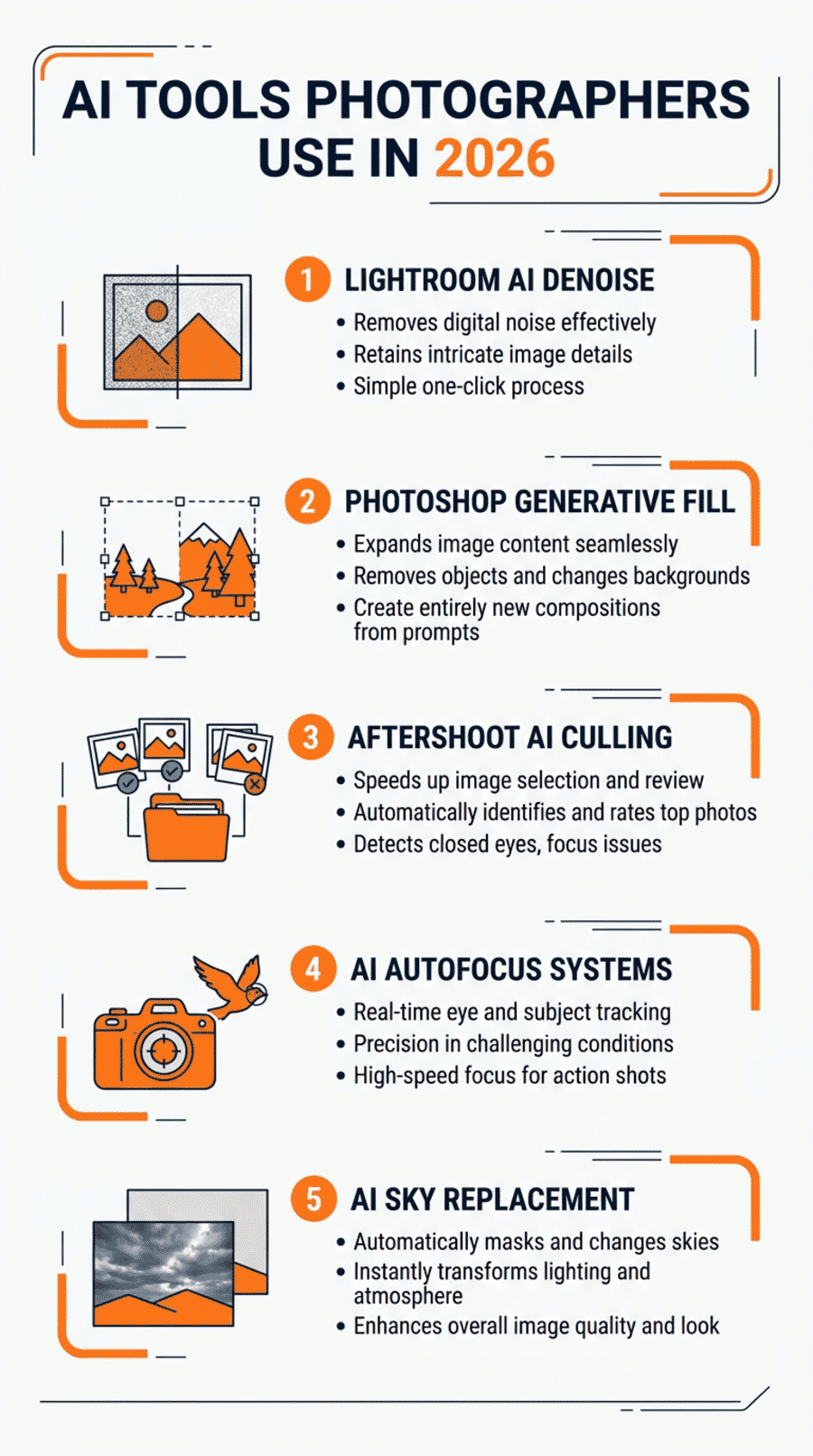
This is where AI has made the biggest real-world impact. Tools like Aftershoot and Narrative Select can cull thousands of wedding or event photos in 20–30 minutes — a task that used to take 4–6 hours manually. Aftershoot alone serves 188,000+ active photographers globally.
The workflow typically runs in two passes: AI handles the first pass (culling rejects, applying base edits that match your style), then the photographer does a focused human review to polish key images and finalize the gallery. The machine gives you back time. Your taste keeps the work yours.
Adobe Lightroom and Photoshop AI Features
Lightroom’s AI Denoise has become one of the most universally praised AI features among photographers. It rescues high-ISO shots that would have been unusable just a few years ago, producing clean results without destroying detail. Since its 2023 debut, Adobe has continued expanding it — the June 2025 update made Denoise, Raw Details, and Super Resolution non-destructive edits within the main edit stack.
Photoshop’s Generative Fill, powered by Adobe Firefly, lets photographers extend backgrounds, remove distracting elements, or even generate new content within a scene. It’s controversial among purists, but practically useful for commercial and product photography workflows where speed matters more than documentary authenticity.
Lightroom’s 2025 updates also introduced AI-powered distraction removal — automatically removing reflections and unwanted people from shots, particularly useful for travel and street photography. For a deeper look at how to use these tools, see our complete guide to editing in Lightroom.
AI-Powered Camera Features
AI isn’t just in software — it’s increasingly built into camera hardware. Modern mirrorless cameras use AI for real-time subject tracking (eyes, animals, vehicles), scene recognition, and computational photography that combines multiple exposures in-camera. Sony’s Real-time Tracking, Canon’s Deep Learning AF, and Nikon’s 3D Tracking all leverage AI to keep autofocus locked on moving subjects with a reliability that was impossible five years ago.
Photography Jobs Most Affected by AI
Not all photography niches are equally exposed to AI disruption. The pattern is clear: the more repeatable, template-driven, and commodity-oriented the work, the more vulnerable it is.
Stock Photography
Stock photography is facing the most significant disruption. The global stock photography market was valued at $4.65 billion in 2024, but the AI image generator market is growing at 17–38% annually and could reach anywhere from $917 million to $60.8 billion by 2030, depending on the estimate.
The numbers tell the story: Getty Images’ Creative revenue declined 4.5% in 2024. Shutterstock’s traditional licensing margins fell to just 3.8% net. By early 2025, the two companies announced a merger — a defensive move that industry analysts read as a direct response to AI-generated image competition.
If AI displaces just 5–15% of stock image demand, that represents $232–698 million in annual lost revenue globally, according to modeling by Kaptur. Agencies commanding 40–60% of the market could see their share of that loss range from $93–418 million per year. For photographers who once relied on selling stock photos as passive income, the landscape has fundamentally changed.
Basic Headshots
The AI headshot market has exploded. As of late 2024, it was valued at over $200 million, with a 150% year-over-year growth rate heading into 2025. Services like HeadshotPro, Aragon AI, and BetterPic generate professional-looking headshots from selfies for $15–30 — a fraction of what a photographer charges for a session.
For basic corporate headshots — the kind where everyone stands against a gray backdrop with the same lighting — AI generators are becoming “good enough” for many use cases. LinkedIn profiles, internal company directories, and conference speaker pages increasingly feature AI-generated headshots. Our coverage of AI headshots disrupting South Korea’s job market shows how rapidly this trend is globalizing.
That said, high-end headshot photography isn’t going anywhere. Executive portraits, actor headshots, and personal branding photography require directing, styling, and an ability to capture authentic personality — things AI can’t replicate from a few selfies. The commodity tier is shrinking; the premium tier is holding steady. If you want to learn how to position yourself in that premium space, check out our guide on how to take professional headshots.
Product Photography
E-commerce product photography is getting squeezed from multiple angles. AI tools can now generate product images on virtual backgrounds, create 360-degree spins from a handful of photos, and even generate entirely synthetic product shots for catalog use.
For small businesses selling commodity products, the math increasingly favors AI: generate 50 basic product images for $50 vs. hiring a photographer for $500–2,000. But for high-end brands, food photography, and anything requiring tactile authenticity, real photography still wins. The middle ground — mid-range e-commerce shoots — is where the squeeze is tightest.
Photography Niches That Are (Mostly) AI-Proof
While some photography segments are under pressure, others are proving remarkably resilient — and some are actually benefiting from AI tools.
Wedding and Event Photography
You can’t send an AI to a wedding. Period.
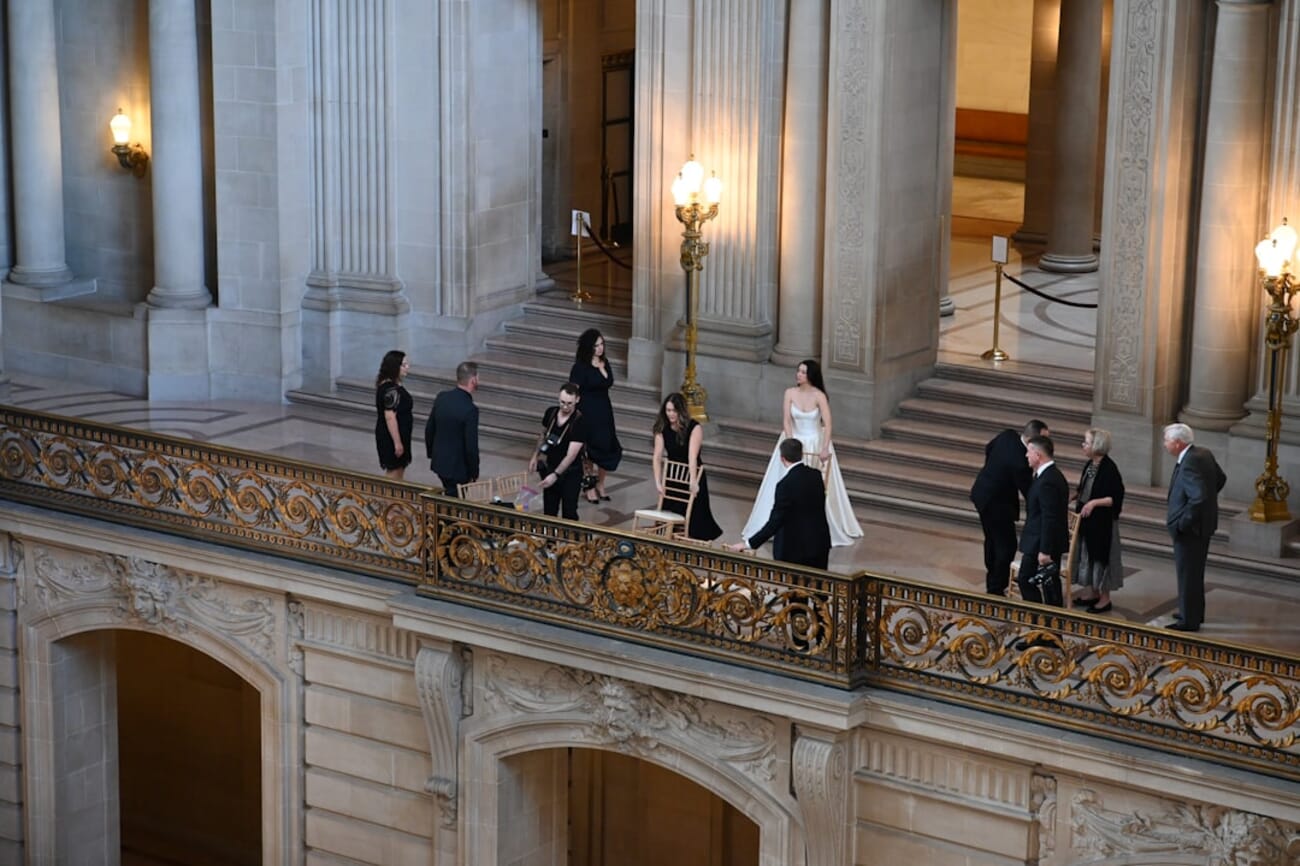
Wedding and event photography requires physical presence, emotional intelligence, split-second timing, and the ability to direct groups of stressed humans in unpredictable environments. No AI model can capture the father-daughter dance, read the room to anticipate a candid moment, or calm a nervous bride.
In fact, AI is making wedding photographers more competitive, not less. Aftershoot’s data shows that AI-adopting photographers are offering faster delivery (7 days or less, compared to the industry standard of 4–12 weeks) and reinvesting saved time into premium client experiences. According to their 2025 report, 60% of photographers are leaning into premium experiences rather than cutting prices.
Photojournalism and Documentary Photography
Authenticity is the currency of photojournalism. News organizations, publications, and documentary projects need images that document unadulterated reality. AI-generated or AI-altered images aren’t just undesirable in this context — they’re a credibility risk.
Major wire services and publications have established strict policies against AI-generated content in editorial contexts. If anything, concerns about AI-manipulated imagery have increased demand for verified, authenticated photojournalism with clear provenance.
Fine Art and Landscape Photography
Fine art photography’s value comes from the artist’s vision, their physical journey to a location, their patience, and their singular creative perspective. A Sebastião Salgado print isn’t valuable because of technical quality — it’s valuable because of who made it and why.
Landscape photography, similarly, rewards the photographers who wake up at 4 AM, hike to remote locations, and wait for the light. AI can generate a convincing landscape, but it can’t create the story behind an image — and that story is increasingly what collectors and publications pay for.
New Opportunities AI Has Created
It’s easy to focus on what AI is disrupting. But it’s also creating entirely new categories of work that didn’t exist three years ago.
AI-Assisted Editing Services
Photographers who master AI editing workflows can offer dramatically faster turnaround times as a competitive advantage. Some are building entire businesses around rapid-delivery editing services, offering 48-hour turnaround tiers at premium prices. The 2025 Aftershoot report found that clients overwhelmingly don’t care how photos are edited — only 1% expressed concerns about AI use. What they care about is speed and consistency.
Creative Direction and AI Prompt Engineering
As companies increasingly use AI to generate visual content, there’s growing demand for people who understand visual storytelling, composition, lighting, and brand aesthetics — i.e., trained photographers — to direct AI output. “AI creative director” and “prompt engineer” roles specifically seek people with photography and visual arts backgrounds.
Knowing how light works, understanding composition, and having a trained eye for what looks “right” makes photographers uniquely qualified to guide AI image generation. It’s a twist: the same skills that make someone a good photographer also make them a good AI image director.
Hybrid Photography + AI Services
Some photographers are building hybrid service offerings: shoot real photos on location, then use AI tools for background replacement, virtual staging (especially in real estate photography), or extended editing. This “best of both worlds” approach lets them charge premium rates while delivering more volume.
Others are using AI to offer services that were previously impractical: same-day wedding sneak peeks (AI-culled and batch-edited within hours), tiered delivery packages, or personalized style transfers that automatically apply a photographer’s signature look to thousands of images.
How to Future-Proof Your Photography Career
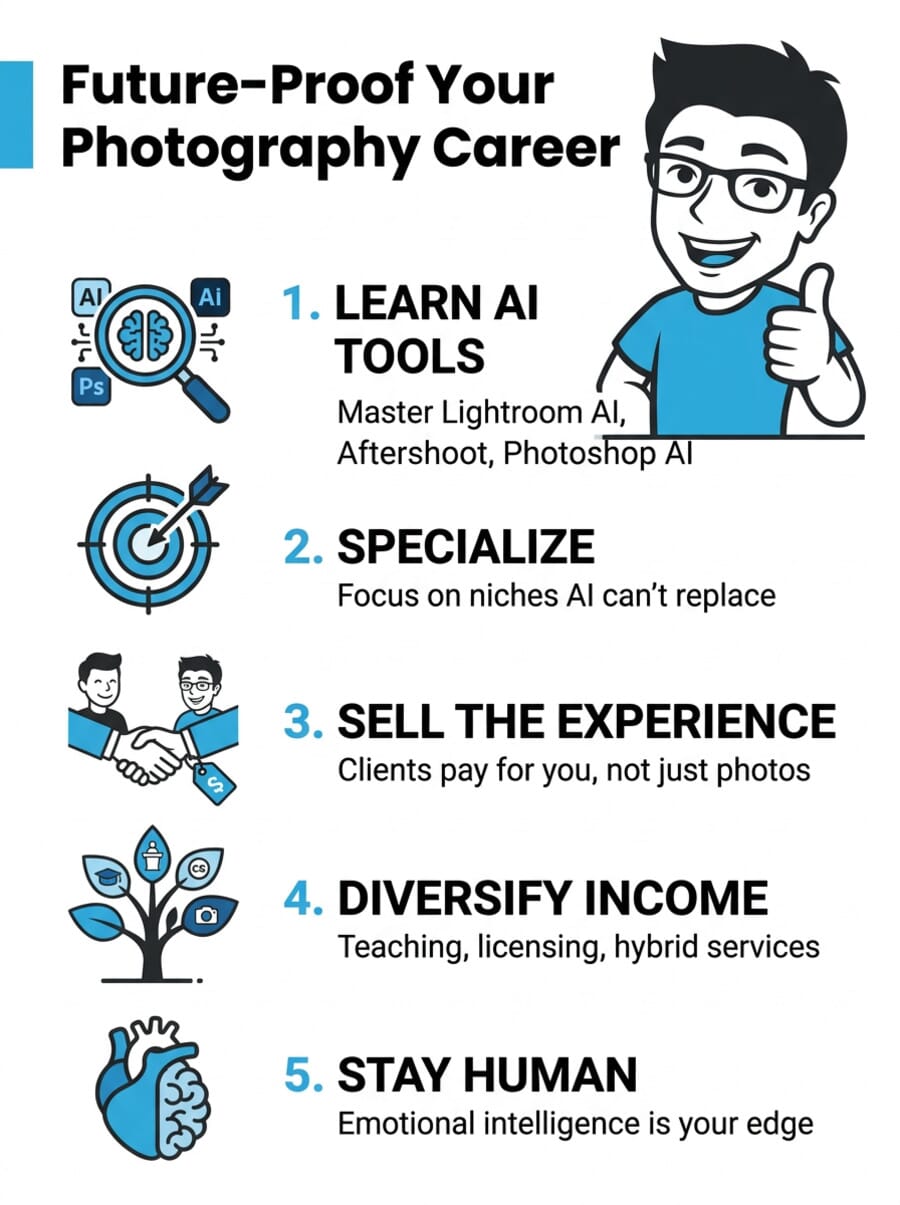
Based on the data, here’s what’s actually working for photographers who are thriving in the AI era:
1. Learn the AI Tools — Don’t Resist Them
81% of photographers using AI workflows say they’ve reclaimed work-life balance. The photographers who are struggling most are the ones who refuse to engage with AI tools at all — not because AI replaced them, but because their competitors got faster and more efficient. Start with AI photo editing tools that complement your existing workflow.
2. Specialize in Niches AI Can’t Touch
If your photography requires physical presence, emotional intelligence, or creative interpretation, you’re in a strong position. Wedding, event, documentary, fine art, and high-end portrait photographers have natural moats against AI disruption. The more your work depends on being there and being you, the safer it is.
3. Sell the Experience, Not Just the Files
60% of AI-adopting photographers are investing in premium client experiences rather than competing on price. In-person reveals, luxury albums, same-day edits, styled consultations — these are things clients value that AI can’t provide. The highest-paying photography jobs have always been about the full experience, not just image delivery.
4. Diversify Your Income Streams
Smart photographers are building multiple revenue streams: teaching workshops, licensing their AI-editing presets, offering mentorship, creating educational content, and building hybrid service packages. The time AI saves on editing can be reinvested into building these additional income sources.
5. Double Down on Human Skills
Client communication, creative direction, emotional intelligence, storytelling — these are the skills that compound in value as AI handles more technical tasks. The photographers who will thrive are the ones who are great with people, not just great with cameras.
What the Data Actually Shows
Let’s cut through the noise and look at the hard numbers:
The photography market is still growing. The global photography services market was valued at $55.6 billion in 2023 and is projected to reach $81.83 billion by 2032, growing at 4.4% annually (Business Research Insight). The U.S. Bureau of Labor Statistics projects 4% job growth for photographers from 2023 to 2033 — right at the national average — with approximately 13,700 annual job openings.
AI adoption is accelerating but uneven. Over 15 billion images have been created using AI text-to-image tools since 2022 — matching what traditional photography produced over 150 years. Yet 90% of photographers using AI apply it to post-processing, while only 57% use it for business tasks. There’s a significant efficiency gap waiting to be closed.
Client perception is a non-issue. Aftershoot’s survey found that only 1% of clients expressed concerns about AI use in photography workflows. 30% actually praised the faster delivery and more consistent results. The fear that clients would reject AI-assisted work has proven largely unfounded.
Stock photography is bleeding. Getty’s Creative revenue dropped 4.5% in 2024. Adjacent creative fields show similar patterns: 26% of illustrators reported losing work to AI by early 2024, and 37% saw reduced income (Society of Authors). Photography-specific displacement data is harder to pin down, but the trajectory is clear.
Delivery expectations are compressing. 54% of clients now expect photo delivery within 14 days, with 13% expecting 48-hour turnaround. AI-adopting photographers are meeting these demands; those who aren’t are losing competitive ground.
The Bottom Line
AI isn’t killing photography — it’s reshaping it. The photographers who thrive will be the ones who treat AI as a tool, not a threat. Learn to cull with Aftershoot, edit with Lightroom AI, and use Photoshop’s generative tools where they make sense. But don’t lose sight of what clients are actually paying for: your eye, your presence, your ability to connect with people and capture moments that matter.
The data is clear: the overall photography market is growing, not shrinking. But it’s growing in different directions. Commodity work — basic headshots, generic stock, template product shots — is moving to AI. Premium work — weddings, events, editorial, fine art, high-end portraits — is holding strong and in many cases getting stronger as AI handles the grunt work.
The most dangerous position isn’t being a photographer in the age of AI. It’s being a photographer who pretends AI doesn’t exist.
If you’re just getting started in photography, our photography tips for beginners will help you build the foundational skills that remain valuable regardless of how AI evolves.
Sources and data cited in this article:
Featured image: Photo by Vitaly Gariev on Unsplash.